

Introduction
While effective medical billing is crucial for the financial stability of mental health clinics, many practices face significant challenges. Mastering revenue cycle management enables clinics to improve cash flow and allows healthcare providers to concentrate on patient care. Given the rising claim rejection rates and evolving compliance requirements, what strategies can mental health practices implement to optimize billing processes and achieve sustainable growth?
Understand the Role of Medical Billing in Mental Health Clinics
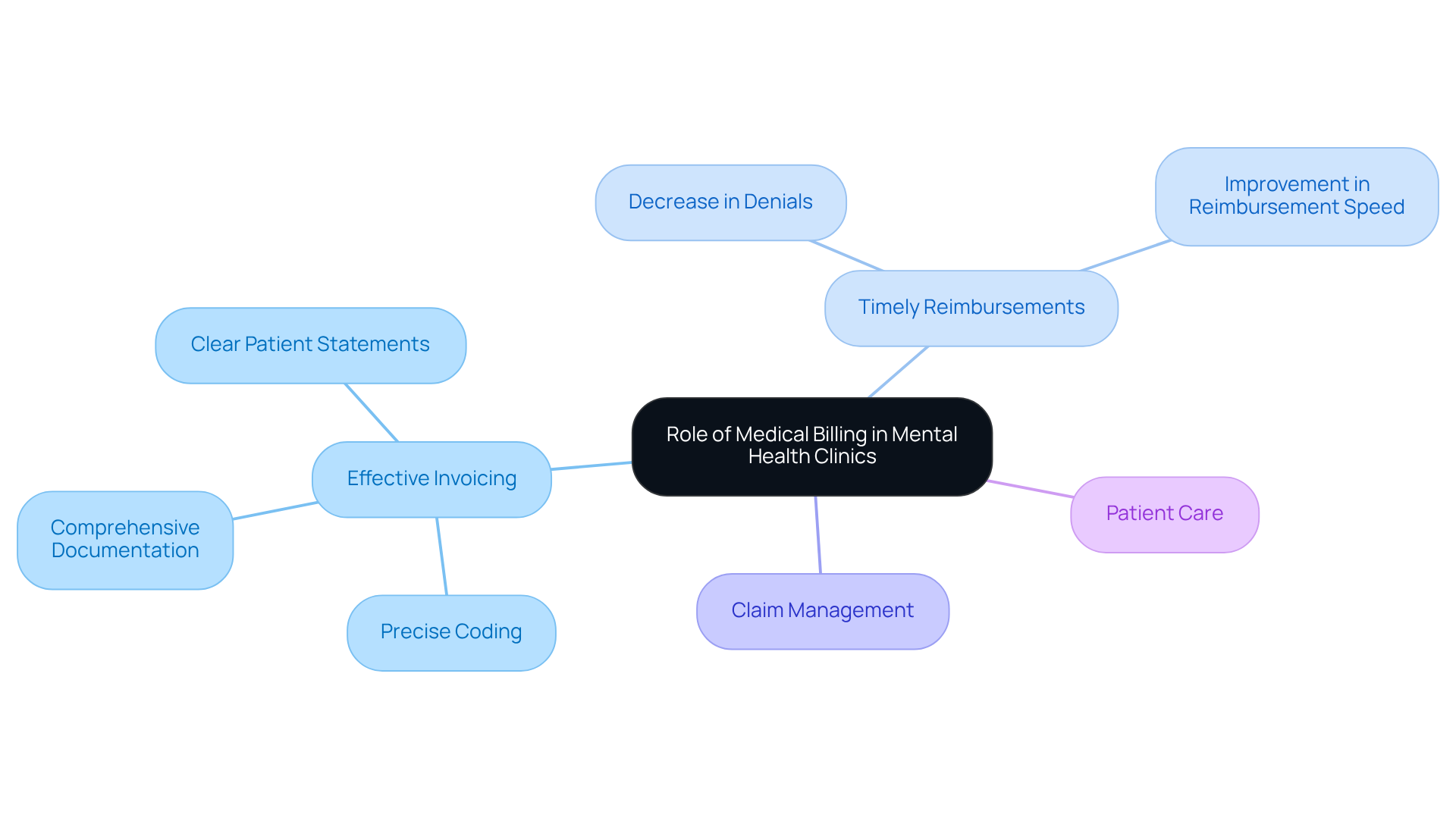
In mental wellness clinics, effective medical invoicing is essential for maintaining financial health and compliance with healthcare regulations. Timely reimbursements are a direct result of effective invoicing practices, which also enhance the clinic’s capacity to deliver quality care. Clinics can significantly reduce claim rejections and improve cash flow by mastering the complexities of mental health reimbursement. This includes:
For instance, clinics that implement comprehensive payment systems often see a 20-30% decrease in denials and a 15-25% improvement in reimbursement speed within 30-90 days. This efficiency enables clinicians to concentrate on patient care, which in turn enhances patient experiences by alleviating financial worries. Furthermore, a well-structured payment process fosters a therapeutic relationship by ensuring that financial aspects do not interfere with the quality of care provided. Moreover, maintaining balance in follow-up is essential for managing underpayments and overdue accounts, further enhancing the clinic’s financial stability. Ultimately, a robust invoicing system not only secures financial health but also elevates the standard of care delivered to patients.
Identify Common Billing Challenges in Mental Health Practices
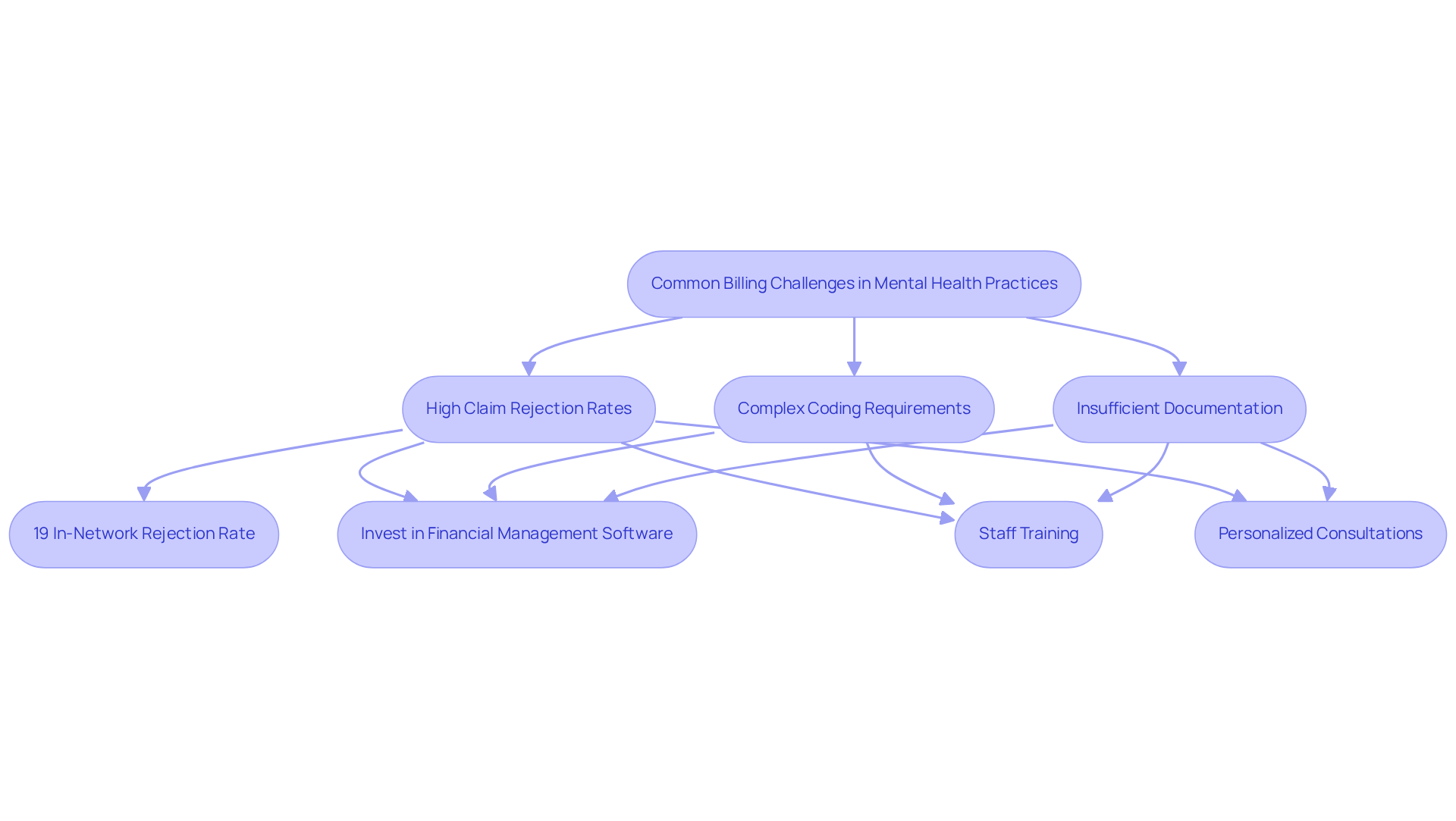
The revenue cycle for mental wellness practices is increasingly jeopardized by high claim rejection rates. The high rejection rates of behavioral health claims create significant financial strain on practices, with an average in-network rejection rate of 19% in 2024, nearly double that of general medical claims. Insufficient documentation, incorrect coding, and challenges in obtaining pre-authorizations are common reasons for these claim refusals. For instance, practices that fail to document medical necessity adequately may experience substantial revenue loss, as a single weak progress note can trigger retroactive denials across an entire treatment episode.
The complexity of coding requirements further complicates the invoicing process. Mental wellness invoicing relies heavily on time-based services and subjective clinical evaluations, making accurate documentation crucial. In 2026, the challenges related to invoicing for behavioral services are expected to intensify, as payers have significantly increased their utilization review cycles, resulting in confusion and greater complexity.
Mental health clinics can tackle these challenges by investing in specialized financial management software and ensuring their staff is well-trained in compliance and coding standards. Implementing scorecard-driven adjustments tied to claims accuracy and denial rates can enhance operational rigor, potentially leading to a 20-30% reduction in claim denials and a 15-25% faster reimbursement within 30-90 days. Additionally, clinics can benefit from personalized consultations to identify optimal administrative solutions tailored to their specific needs. By addressing these financial challenges, practices can not only improve their revenue cycle but also enhance the quality of care they provide to patients.
Choose the Right Medical Billing Partner for Your Clinic
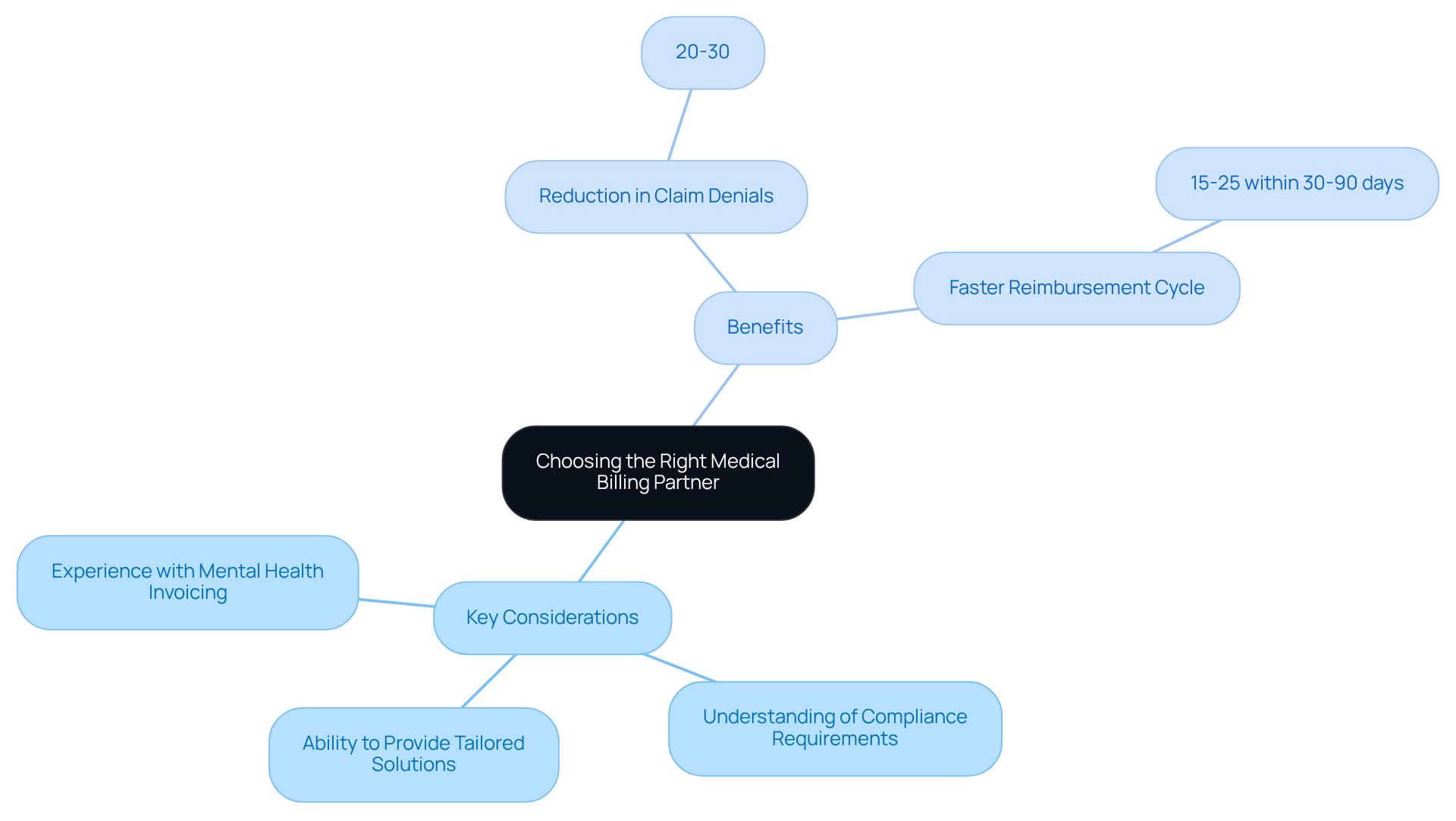
Selecting the right medical invoicing partner can significantly impact the operational efficiency of mental wellness clinics. Key considerations include:
- The partner’s experience with mental health invoicing
- Their understanding of compliance requirements
- Their ability to provide tailored solutions
It is essential to collaborate with partners who provide comprehensive services, including:
- Eligibility verification
- Request submissions
- Rejection management
Utilizing advanced technology is vital; effective invoicing software can enhance operational efficiency and minimize errors. Clinics that work with specialized financial services often experience:
- A 20-30% reduction in claim denials
- A 15-25% faster reimbursement cycle within 30-90 days
This efficiency allows practices to focus on delivering high-quality patient care while alleviating administrative burdens. This underscores the importance of making an informed choice when selecting a financial partner.
Implement Strategies for Optimizing Billing Processes
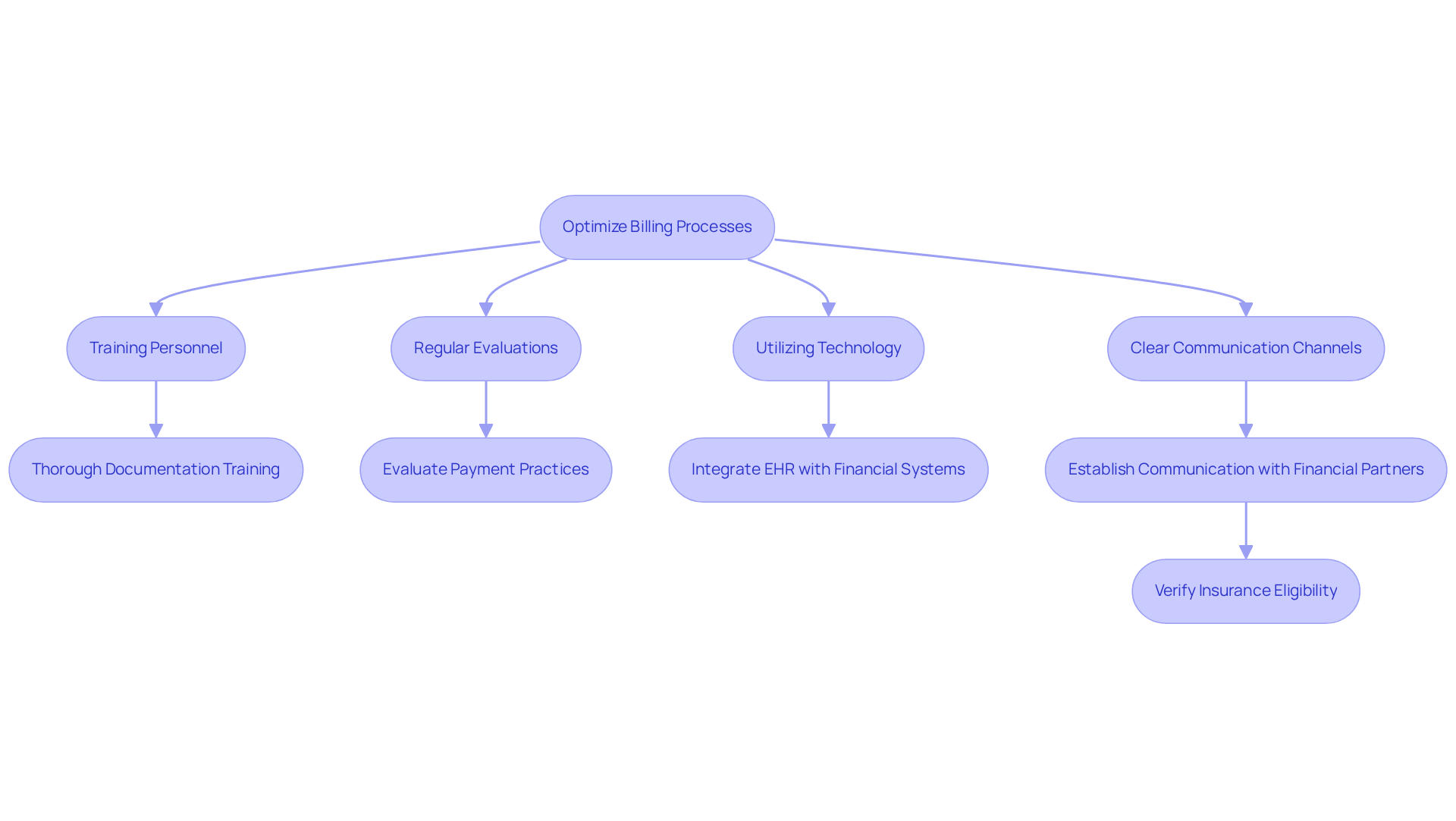
To optimize financial processes in mental health clinics, a compliance-focused strategy is essential. First, thorough training for all personnel in precise documentation and coding practices is crucial, as this significantly minimizes claim denials and ensures adherence to regulations. Regular evaluations of payment practices assist in recognizing areas for enhancement and ensuring compliance, particularly in managing overdue requests. Utilizing technology, especially through the integration of electronic health records (EHR) with financial systems, optimizes workflows and minimizes errors, thereby improving operational efficiency.
Establishing clear communication channels with financial partners is essential for facilitating timely submission of requests and follow-ups. For instance, clinics that proactively verify insurance eligibility prior to patient appointments frequently report fewer payment issues and enhanced cash flow. With 39 years of experience and as a veteran-owned company, Healthcare Partners Consulting & Billing, LLC (HPC) asserts the necessity of these strategies, which can lead to a reduction in claim denials by 20-30% and expedite reimbursement timelines by 15-25% within 30-90 days. Ultimately, these strategies not only improve financial outcomes but also enhance the quality of patient care delivered by clinics.
Conclusion
The complexities of medical billing can significantly impact the operational success of mental health clinics. Effective billing is not just about financial stability; it allows clinics to focus on what truly matters – patient care. Mastering billing processes allows clinics to enhance operational efficiency, reduce claim denials, and improve care quality. Compliance and tailored solutions are essential for navigating mental health reimbursement complexities.
Throughout this article, we have explored the importance of:
- Precise coding
- Comprehensive documentation
- Selecting the right billing partner
The challenges faced by mental health practices, such as high claim rejection rates and the need for specialized knowledge, underscore the necessity of investing in effective billing strategies. Implementing robust financial management systems and training staff helps clinics overcome hurdles and create a supportive environment for patients.
In conclusion, the significance of partnering with a knowledgeable and compliant medical billing service like Healthcare Partners Consulting & Billing, LLC (HPC) cannot be overstated. With 39 years of experience and a veteran-owned status, HPC empowers healthcare providers by alleviating administrative burdens, allowing them to concentrate on delivering exceptional patient care. Optimizing billing processes is essential for clinics to maintain financial health while prioritizing patient wellness. For further assistance, reaching out to HPC at info@hpcbilling.com or calling 888-517-4992 can provide the necessary support to elevate billing practices and improve overall clinic efficiency.
Frequently Asked Questions
Why is effective medical billing important in mental health clinics?
Effective medical billing is essential for maintaining financial health and compliance with healthcare regulations, leading to timely reimbursements and enhancing the clinic’s capacity to deliver quality care.
How can clinics improve their cash flow and reduce claim rejections?
Clinics can improve cash flow and reduce claim rejections by mastering the complexities of mental health reimbursement, which includes precise coding, comprehensive documentation, and clear patient statements.
What impact can comprehensive payment systems have on claim denials and reimbursement speed?
Clinics that implement comprehensive payment systems often see a 20-30% decrease in denials and a 15-25% improvement in reimbursement speed within 30-90 days.
How does effective medical billing enhance patient care?
Efficient billing practices enable clinicians to concentrate on patient care, alleviating financial worries for patients and enhancing their overall experience.
What role does follow-up play in managing underpayments and overdue accounts?
Maintaining balance in follow-up is essential for managing underpayments and overdue accounts, which further enhances the clinic’s financial stability.
What are the overall benefits of a robust invoicing system in mental health clinics?
A robust invoicing system secures financial health and elevates the standard of care delivered to patients, ensuring that financial aspects do not interfere with the quality of care provided.