
Introduction
In healthcare, the role of precise medical coding services is critical to financial success and compliance. As practices face growing complexities in healthcare regulations, the ability to accurately translate diagnoses and procedures into standardized codes is essential for ensuring proper reimbursement and financial stability. This article delves into best practices that empower healthcare providers to enhance their revenue cycle management through precise coding strategies, compliance adherence, and the integration of innovative technology. Achieving accurate coding is a challenge that directly impacts reimbursement and financial stability. Providers must navigate these complexities to safeguard their financial health and compliance.
Understand Medical Coding Services and Their Importance
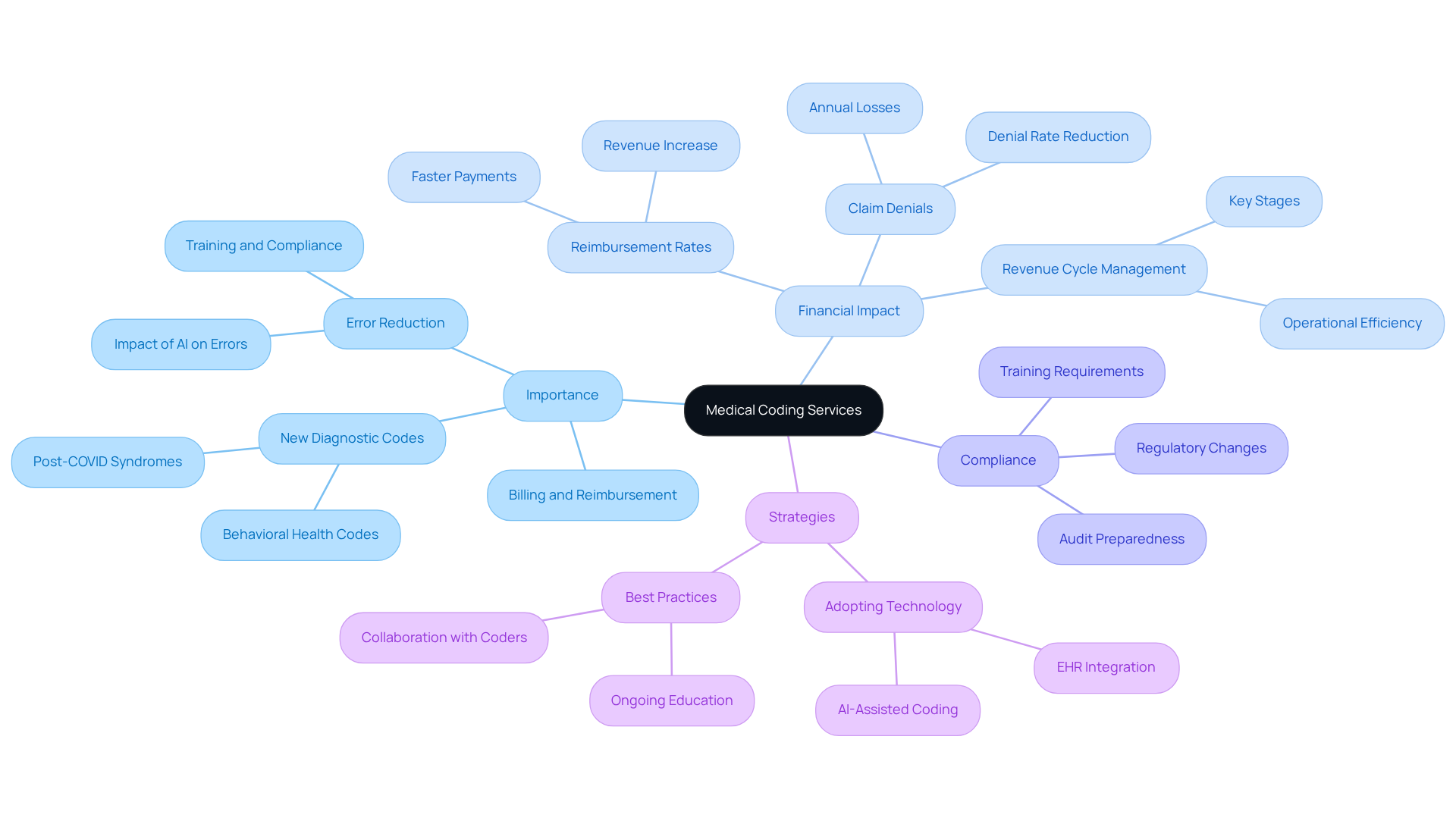
In an evolving healthcare landscape, the role of medical coding services has never been more critical. Medical coding services refer to the systematic process of converting healthcare diagnoses, procedures, medical treatments, and equipment into standardized alphanumeric codes. These codes are essential for billing and reimbursement within medical coding services, ensuring that healthcare providers receive suitable compensation for their work. Precision in programming is vital, impacting the financial cycle from patient registration to claim submission and payment processing.
In 2026, the importance of medical coding services is underscored by the introduction of hundreds of new diagnostic codes, particularly in behavioral health and post-COVID syndromes. Healthcare providers must adjust rapidly to ensure compliance and enhance financial performance. Practices that adopt accurate documentation strategies can see a decrease in claim denials by 20-30% and achieve quicker reimbursement rates of 15-25% within 30-90 days, leading to improved financial outcomes and reduced operational stress.
Furthermore, the growing intricacy of classification systems, including updates to ICD-10 and CPT codes, requires that healthcare providers stay informed about the latest practices in this area. For example, a research analysis showed that a hospital employing AI-assisted documentation achieved a 30% decrease in errors, resulting in an additional $1 million in monthly income. This highlights the critical link between accurate medical coding services and financial performance in revenue cycle management.
At Healthcare Partners Consulting & Billing, LLC (HPC), we emphasize a compliance-first approach, ensuring that our clients benefit from tailored solutions designed specifically for behavioral and mental health services. With 39 years of experience in medical and mental health billing, our veteran-owned firm is uniquely positioned to serve our clients effectively.
In summary, effective medical documentation is essential for healthcare organizations aiming to enhance their financial outcomes and ensure compliance with evolving regulations. By embracing precise documentation practices, healthcare providers can not only improve their financial health but also enhance patient care quality. For more information or to schedule a meeting, please contact us at info@hpcbilling.com or call 888-517-4992.
Implement Effective Coding Strategies for Revenue Optimization
Inaccurate coding can lead to significant financial losses for healthcare providers, making effective coding strategies essential. To optimize revenue through effective coding strategies, healthcare providers should consider the following best practices:
- Regular Training and Education: Ensure that programming personnel receive ongoing instruction on the latest guidelines and regulations. Ongoing education is essential, as it has been demonstrated to decrease errors and improve accuracy in programming. This ultimately results in enhanced revenue outcomes.
- Conduct Regular Audits: Implement routine assessments to identify and rectify errors. These audits not only assess adherence but also enhance the overall quality of programming methods. This can significantly lower denial rates by 20-30%.
- Utilize Programming Software: Invest in advanced programming software, such as Computer-Assisted Coding (CAC), which can automate the documentation process. This technology improves accuracy and efficiency. As a result, reimbursement cycles can be completed in as little as 30 to 90 days. Healthcare Partners Consulting & Billing, LLC (HPC) specializes in providing these solutions tailored to mental health organizations, ensuring compliance and maximizing revenue.
- Standardize Documentation: Establish clear documentation protocols that align with programming requirements. Consistent and thorough documentation ensures that coders have all necessary information to assign accurate codes, reducing the likelihood of claim denials. HPC highlights how crucial this practice is for improving billing accuracy and efficiency.
- Engage in Cross-Department Collaboration: Foster communication between clinical and administrative staff to ensure that coding accurately reflects the care provided. This collaboration is crucial for capturing all billable offerings and can lead to enhanced financial performance through optimized revenue cycle management. HPC provides dedicated administrative support solutions, including scheduling and client intake, to streamline this process.
Adopting these optimal approaches is essential; otherwise, clinics may face cash flow issues and increased administrative burdens, jeopardizing their operational efficiency. With HPC’s expertise and tailored services, including flexible service plans and transparent pricing models, practices can transform their billing processes and achieve sustainable growth.

Ensure Compliance and Accurate Documentation in Coding Practices
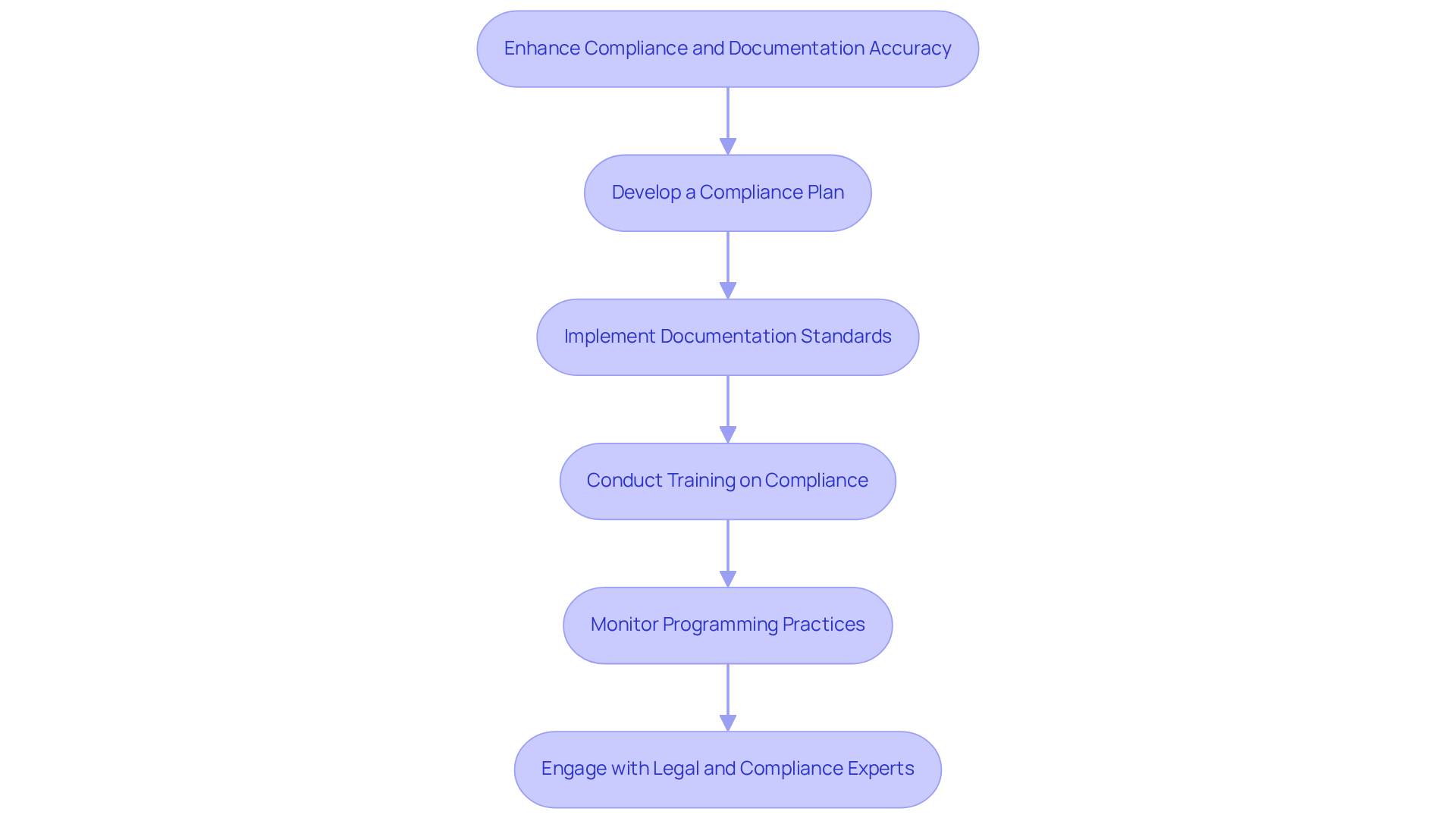
Adherence in medical documentation is critical for securing timely and accurate reimbursements for healthcare providers. To enhance compliance and improve documentation accuracy, implementing the following best practices is essential:
- Develop a Compliance Plan: Developing a robust compliance strategy that outlines clear policies, procedures, and responsibilities is essential for effective documentation. Regularly reviewing and updating this plan to align with evolving regulations ensures it remains relevant and effective.
- Implement Documentation Standards: Establish standardized templates for clinical documentation that fulfill billing criteria. This approach ensures that all essential information is captured accurately and consistently, minimizing the risk of errors.
- Conduct Training on Compliance: Offer regular training sessions for staff focused on compliance issues, including updates on regulations and ethical billing practices. Highlighting the significance of precise documentation in supporting decision-making is crucial for ensuring compliance.
- Monitor Programming Practices: Utilize audits and reviews to assess adherence to standards. Promptly addressing any discrepancies mitigates risks associated with non-compliance, which can lead to claim denials and payment delays.
- Engage with Legal and Compliance Experts: Collaborate with legal and compliance professionals to ensure that coding methods meet all regulatory requirements. This partnership can help identify potential compliance risks and develop strategies to address them effectively.
Furthermore, if you’re uncertain which solution is most suitable for your operations, consider arranging a 30-minute consultation with Healthcare Partners Consulting. During this call, we’ll outline your current workflow and direct you toward the services that will create the most significant impact for your organization, including our comprehensive cycle management services tailored specifically for behavioral and mental health settings. We also integrate effortlessly with EHR and management platforms like TherapyNotes and SimplePractice, ensuring that your documentation and billing processes are efficient and compliant.
By prioritizing these approaches, healthcare providers can significantly reduce claim denials by 20-30% and improve reimbursement timelines by 15-25% within 30 to 90 days, ultimately enhancing their revenue cycle performance. Staying proactive in compliance readiness will not only safeguard against financial setbacks but also position your organization for sustainable growth in a dynamic regulatory landscape.
Leverage Technology to Enhance Coding Efficiency
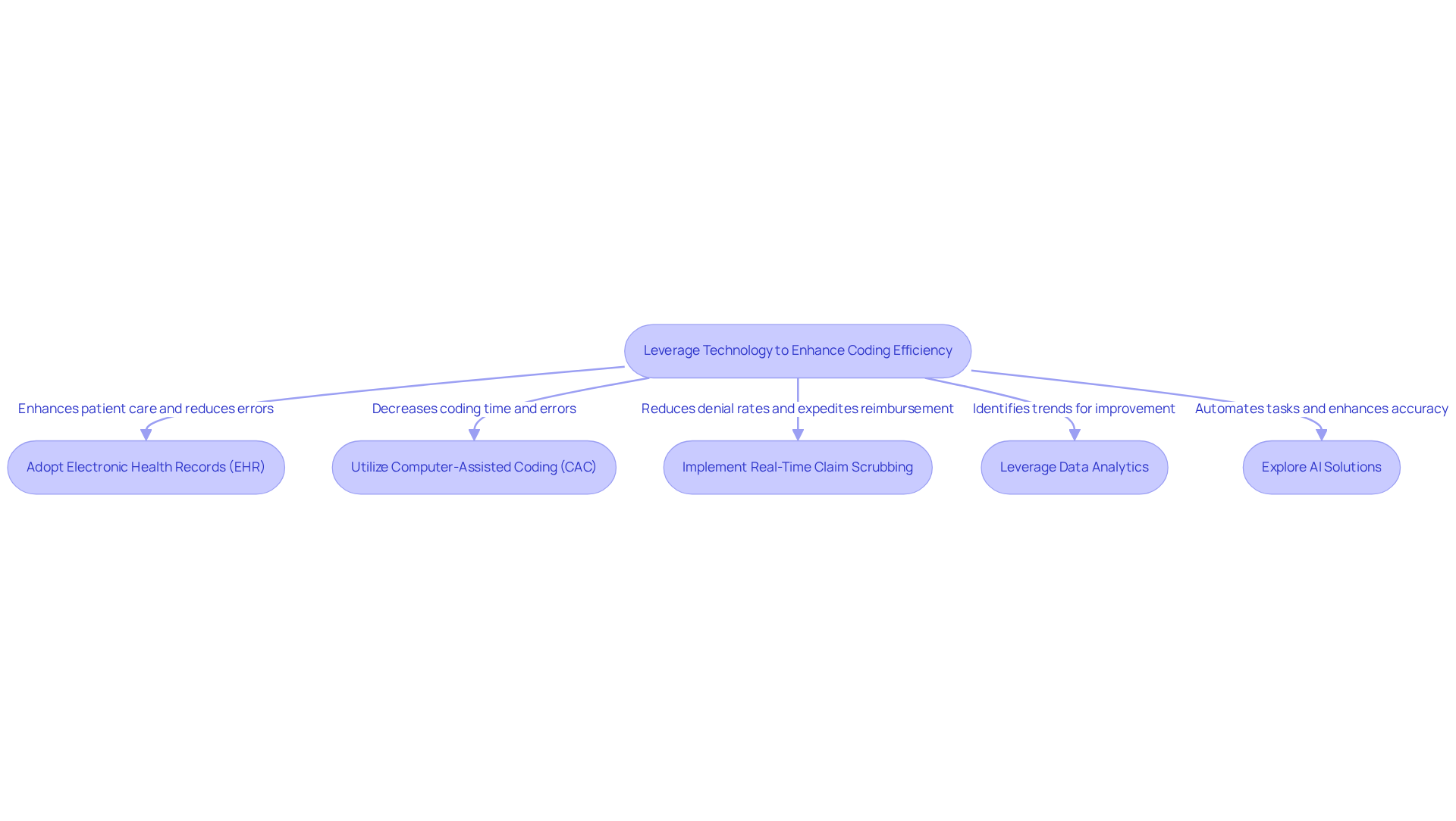
In an era where precision in medical documentation is paramount, the integration of technology emerges as a critical solution to longstanding inefficiencies. Here are some effective strategies to leverage technology:
- Adopt Electronic Health Records (EHR): Implement EHR systems that integrate features for data entry. By adopting EHRs, facilities have not only enhanced patient care but also significantly reduced the incidence of medical errors, thereby improving overall operational efficiency. Furthermore, addressing errors in programming through EHRs can result in a decrease of 20-30% in claim denials, which is essential for sustaining financial well-being.
- Utilize Computer-Assisted Coding (CAC): Invest in CAC tools that assist coders by suggesting appropriate codes based on clinical documentation. This technology decreases the time spent on programming and minimizes errors, leading to a more efficient billing process. Facilities that implement AI-driven programming solutions have observed expenses decrease by up to 40%, illustrating the financial advantages of adopting innovation in programming practices.
- Implement Real-Time Claim Scrubbing: Utilize software that conducts real-time claim scrubbing to detect potential errors in claims before they are submitted. This proactive approach can reduce denial rates, which have increased for 73% of providers since 2022, and expedite the reimbursement process, potentially improving cash flow by 15-25% within 30-90 days.
- Leverage Data Analytics: Utilize data analytics to monitor trends in programming and identify areas for improvement. Examining data related to programming assists organizations in understanding their performance and making informed choices to improve revenue cycle management, ultimately resulting in enhanced financial outcomes.
- Explore AI Solutions: Consider adopting AI-driven programming solutions that automate repetitive tasks and enhance accuracy. AI can analyze large volumes of data quickly, allowing coders to focus on more complex cases. As the healthcare industry prepares for the transition to ICD-11, integrating AI technologies will be essential for maintaining compliance and accuracy in coding practices.
Ultimately, the strategic adoption of these technologies not only enhances operational efficiency but also positions healthcare facilities for sustainable financial success in a competitive landscape.
Conclusion
Effective medical coding services are crucial for the financial stability of healthcare providers, especially in the behavioral and mental health sectors. By prioritizing accurate coding practices, healthcare organizations can significantly reduce administrative burdens, allowing them to focus more on patient care. This empowerment is vital for creating a compliant and efficient revenue cycle management process that benefits both providers and patients.
We have identified key strategies that can maximize revenue through effective medical coding. These include:
- Regular training for coding personnel
- Conducting audits to identify errors
- Utilizing advanced coding software
- Standardizing documentation
- Fostering collaboration between clinical and administrative teams
Each of these practices contributes to improved accuracy, reduced claim denials, and faster reimbursement cycles, reinforcing the importance of a compliance-first approach in medical billing.
In conclusion, the integration of technology and adherence to best practices in medical coding are not just operational necessities; they are vital for the sustainability and growth of healthcare practices. Failure to implement these strategies can lead to increased claim denials and financial instability. By embracing these strategies, healthcare providers can navigate the complexities of coding with confidence, ensuring they remain compliant while optimizing their financial performance. If you’re looking to improve your coding processes and revenue cycle management, consider contacting Healthcare Partners Consulting & Billing, LLC (HPC) for tailored solutions that meet the specific needs of your practice.
Frequently Asked Questions
What are medical coding services?
Medical coding services involve the systematic process of converting healthcare diagnoses, procedures, medical treatments, and equipment into standardized alphanumeric codes, which are essential for billing and reimbursement.
Why are medical coding services important?
They ensure that healthcare providers receive appropriate compensation for their work, impacting the financial cycle from patient registration to claim submission and payment processing.
How will the introduction of new diagnostic codes in 2026 affect medical coding?
The introduction of hundreds of new diagnostic codes, especially in behavioral health and post-COVID syndromes, will require healthcare providers to rapidly adjust their coding practices to ensure compliance and enhance financial performance.
What benefits can practices achieve by adopting accurate documentation strategies?
Practices can see a decrease in claim denials by 20-30% and achieve quicker reimbursement rates of 15-25% within 30-90 days, leading to improved financial outcomes and reduced operational stress.
How does the complexity of classification systems impact healthcare providers?
The growing intricacy of classification systems, including updates to ICD-10 and CPT codes, necessitates that healthcare providers stay informed about the latest practices to maintain compliance and optimize financial performance.
What is the significance of AI-assisted documentation in medical coding?
AI-assisted documentation can lead to a 30% decrease in errors, which can result in significant financial benefits, such as an additional $1 million in monthly income for hospitals.
What approach does Healthcare Partners Consulting & Billing, LLC (HPC) take in medical coding services?
HPC emphasizes a compliance-first approach, providing tailored solutions specifically designed for behavioral and mental health services, backed by 39 years of experience in medical and mental health billing.
How can effective medical documentation benefit healthcare organizations?
Effective medical documentation is essential for enhancing financial outcomes and ensuring compliance with evolving regulations, ultimately improving both financial health and patient care quality.