
Introduction
As budget constraints tighten and operational demands escalate, healthcare organizations must navigate an increasingly complex financial landscape. Effective budgeting is fundamental to the management of healthcare organizations, enabling providers to allocate resources efficiently while enhancing the quality of patient care.
Healthcare organizations face significant challenges in aligning financial strategies with operational goals due to rising costs and regulatory complexities. Failure to address these challenges may lead to compromised patient care and operational inefficiencies.
This article examines the essential components of budgeting in healthcare, highlighting its significance, the challenges faced, and innovative approaches that can enable organizations to thrive under financial pressures.
Define Budgeting in Healthcare Organizations
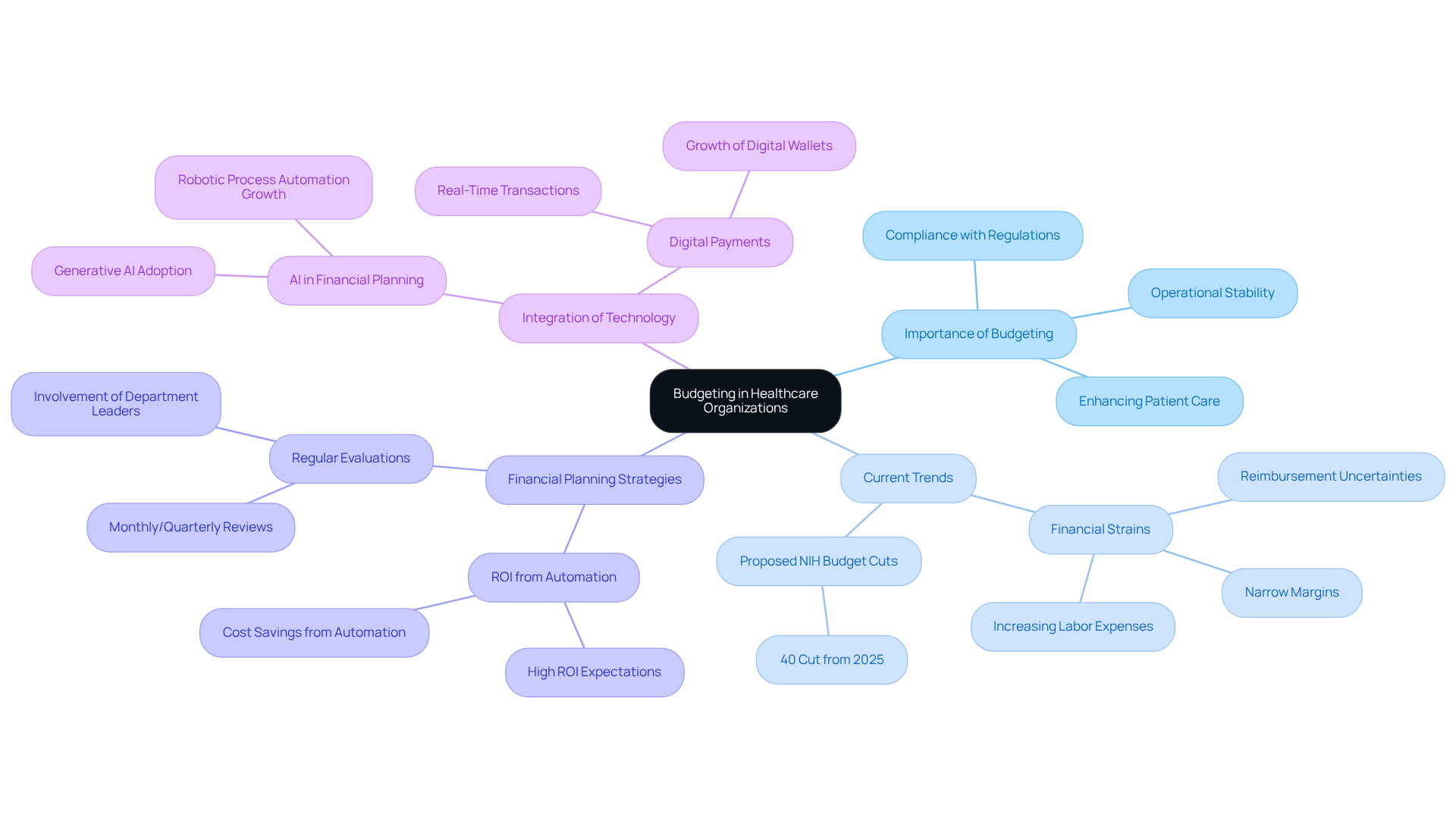
In an era of tightening budgets, medical organizations must navigate complex financial landscapes to ensure sustainable operations. Budgeting in healthcare organizations is a systematic method for planning, allocating, and controlling resources, ensuring that services are delivered efficiently and effectively. This process involves estimating revenues and expenses for a specific period, usually a fiscal year. It serves as a financial roadmap for healthcare providers. Effective budgeting in healthcare organizations is crucial for maintaining operational stability, ensuring compliance with regulations, and ultimately enhancing patient care. It enables entities to prioritize expenditures, manage expenses, and align resources with strategic objectives, thus promoting improved health outcomes for patients.
Current trends suggest that medical entities are experiencing considerable financial strains due to narrow margins, reimbursement uncertainties, and increasing labor expenses. In 2026, proposed budget cuts to the National Institutes of Health (NIH) could significantly impact funding for vital medical initiatives. Furthermore, medical organizations are increasingly acknowledging the significance of incorporating advanced technologies, such as AI and automation, into their financial planning processes to improve efficiency and alleviate administrative burdens.
Case studies emphasize the effectiveness of financial planning strategies in the medical field. For instance, executives in the medical field are optimistic about the long-term returns from automation, with many expecting high ROI from revenue cycle management (RCM) technology over the next five years. Furthermore, studies suggest that fully automating high-volume transactions could save the industry approximately $19 billion, underscoring the potential for substantial cost savings and productivity gains.
Integrating regular evaluations and modifications into the planning process is crucial for aligning monetary strategies with organizational objectives. This means looking at staffing needs, checking changes in insurance premiums, and planning for salary increases. By involving department leaders in budgeting in healthcare organizations, medical entities can ensure precision and responsibility, ultimately leading to enhanced financial performance and improved patient care. Without strategic financial planning, the future of patient care may be jeopardized, leading to broader implications for public health.
Explain the Importance of Budgeting in Healthcare
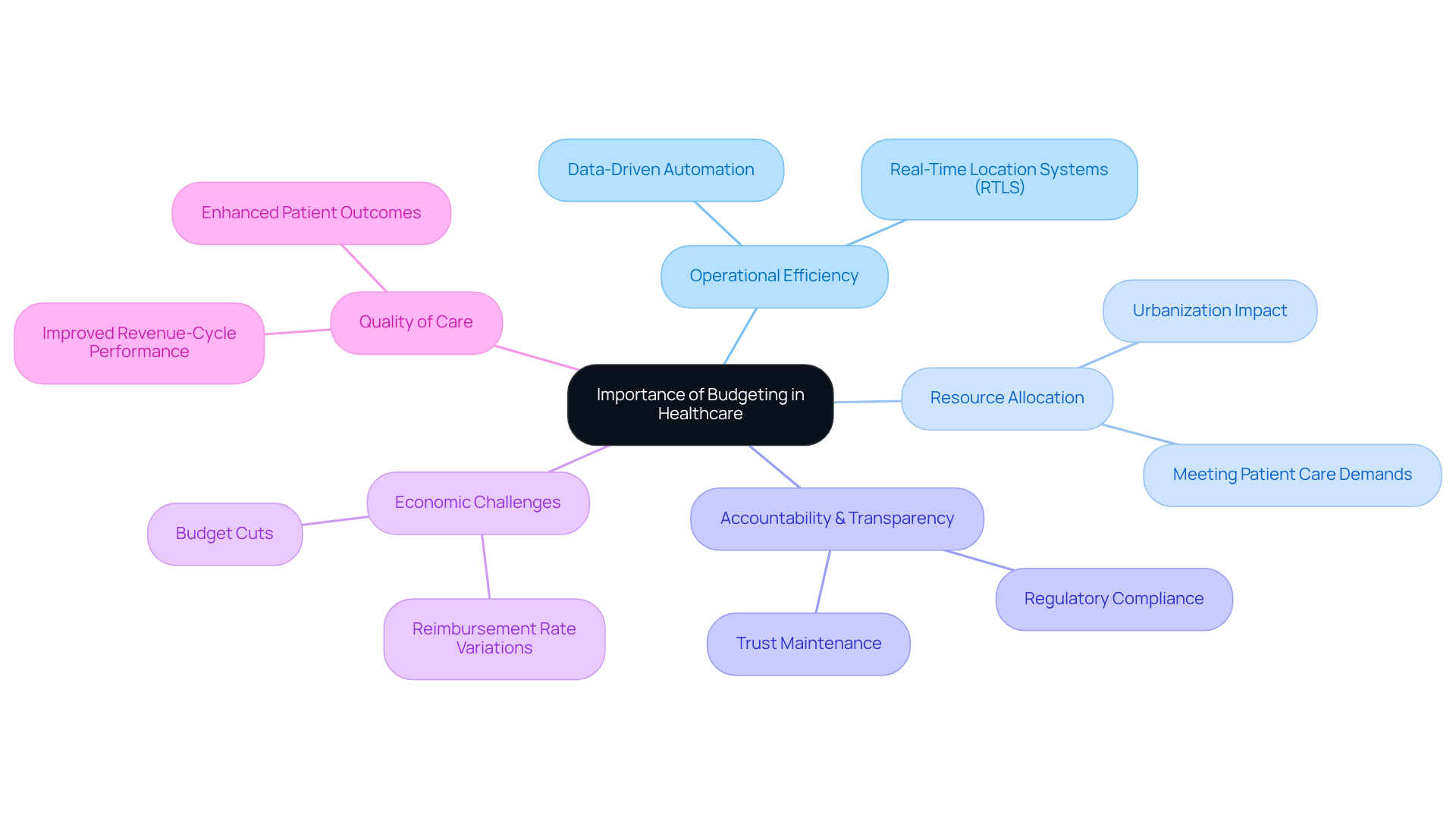
Effective healthcare management hinges on robust budgeting in healthcare organizations that ensures both operational efficiency and patient care quality. Budgeting in healthcare organizations serves multiple vital functions, ensuring efficient resource allocation that allows these entities to meet patient care demands without overspending. In a heavily regulated sector, effective budgeting in healthcare organizations promotes accountability and transparency, which are essential for maintaining trust and compliance. Moreover, it enables healthcare organizations to foresee and manage economic challenges, such as variations in patient volumes and alterations in reimbursement rates.
Aligning budgeting in healthcare organizations with clinical objectives not only enhances operational efficiency but also improves the quality of care delivered to patients. For example, precise financial planning can lead to better charge capture and claims management, as illustrated by case studies showing improved revenue-cycle performance through real-time data capture. In 2026, healthcare finances may face significant reductions, including a proposed 30.4% cut for the Administration for a Healthy America. This makes effective financial management crucial for maintaining economic viability and ensuring healthcare providers can meet community needs.
Furthermore, integrating effective financial management practices can significantly influence the handling of patient statements and claims, addressing underpayments and unprocessed claims. Healthcare organizations can find better financial solutions by working with tailored consultation services from Healthcare Partners Consulting. This suggests that urban areas, with their higher population density, may benefit from improved resource allocation through strategic financial planning. Ultimately, a well-organized budgeting in healthcare organizations process not only fosters long-term growth but also enables organizations to provide high-quality services while navigating the complexities of the medical landscape. Inadequate financial strategies could jeopardize the ability of healthcare providers to serve their communities effectively.
Outline Key Components and Types of Healthcare Budgets
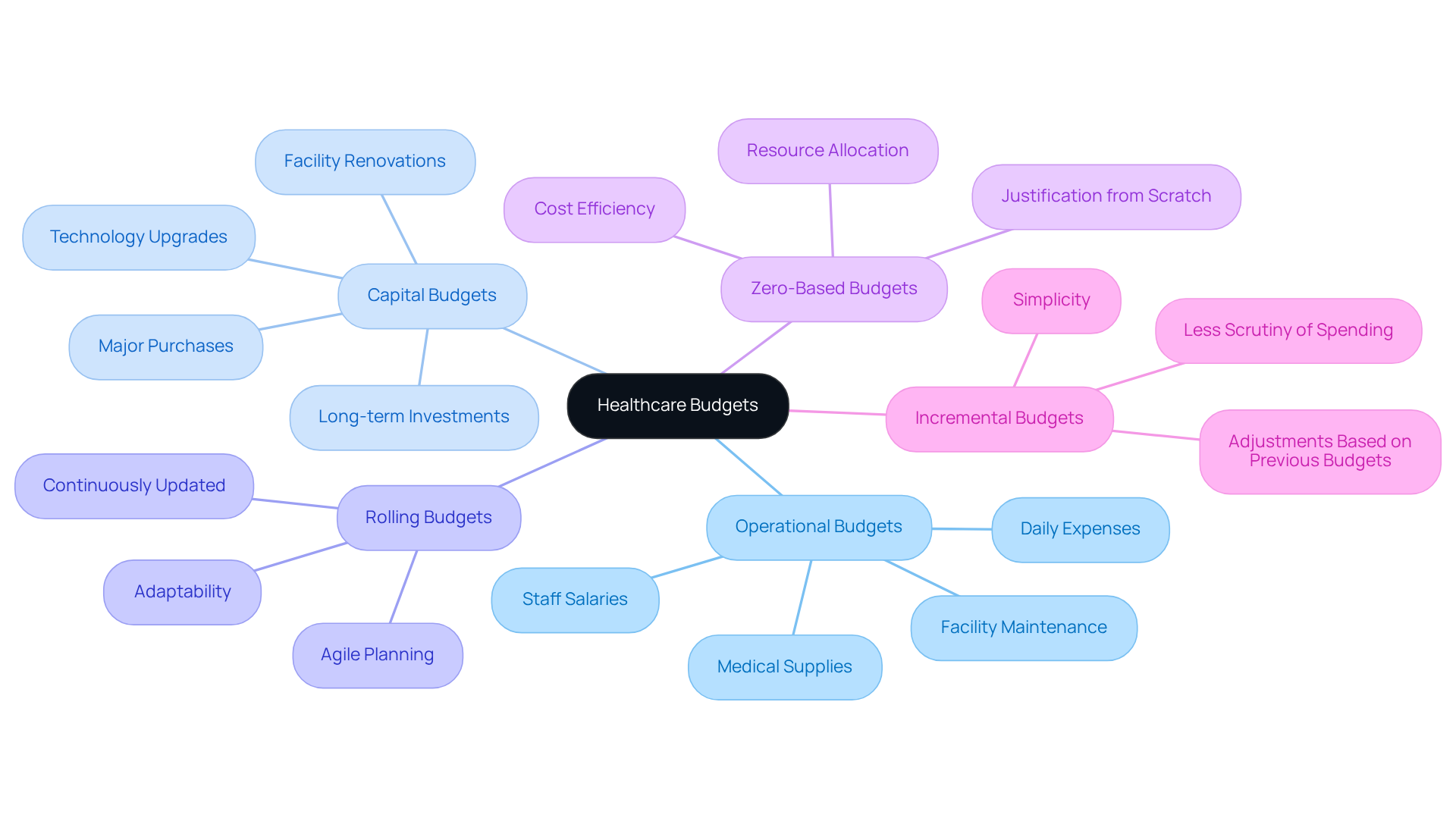
In an era of rising healthcare costs, understanding the various types of budgets is crucial for effective budgeting in healthcare organizations. Healthcare budgets can be categorized into several types, each serving distinct purposes.
- Operational Budgets: These budgets encompass the daily expenses of operating a medical facility, including staff salaries, medical supplies, and facility maintenance. They are essential for ensuring that day-to-day operations run smoothly.
- Capital Budgets: Focused on long-term investments, capital budgets allocate funds for major purchases such as new equipment, facility renovations, or technology upgrades. This type of budget is critical for maintaining and enhancing the quality of care provided.
- Rolling Budgets: These budgets are continuously updated to reflect changes in economic conditions, allowing for more agile planning. This adaptability is vital in a rapidly changing healthcare landscape.
- Zero-Based Budgets: This method requires each department to justify its budget from scratch, promoting cost efficiency and resource allocation based on current needs rather than historical spending. This approach can lead to more strategic financial decisions.
- Incremental Budgets: This approach adjusts previous budgets based on expected changes in revenue and expenses, often leading to less scrutiny of spending. While simpler, it may not always address inefficiencies.
Ultimately, the strategic application of these budget types is vital for budgeting in healthcare organizations to navigate financial challenges and enhance patient care.
Identify Challenges in Healthcare Budgeting
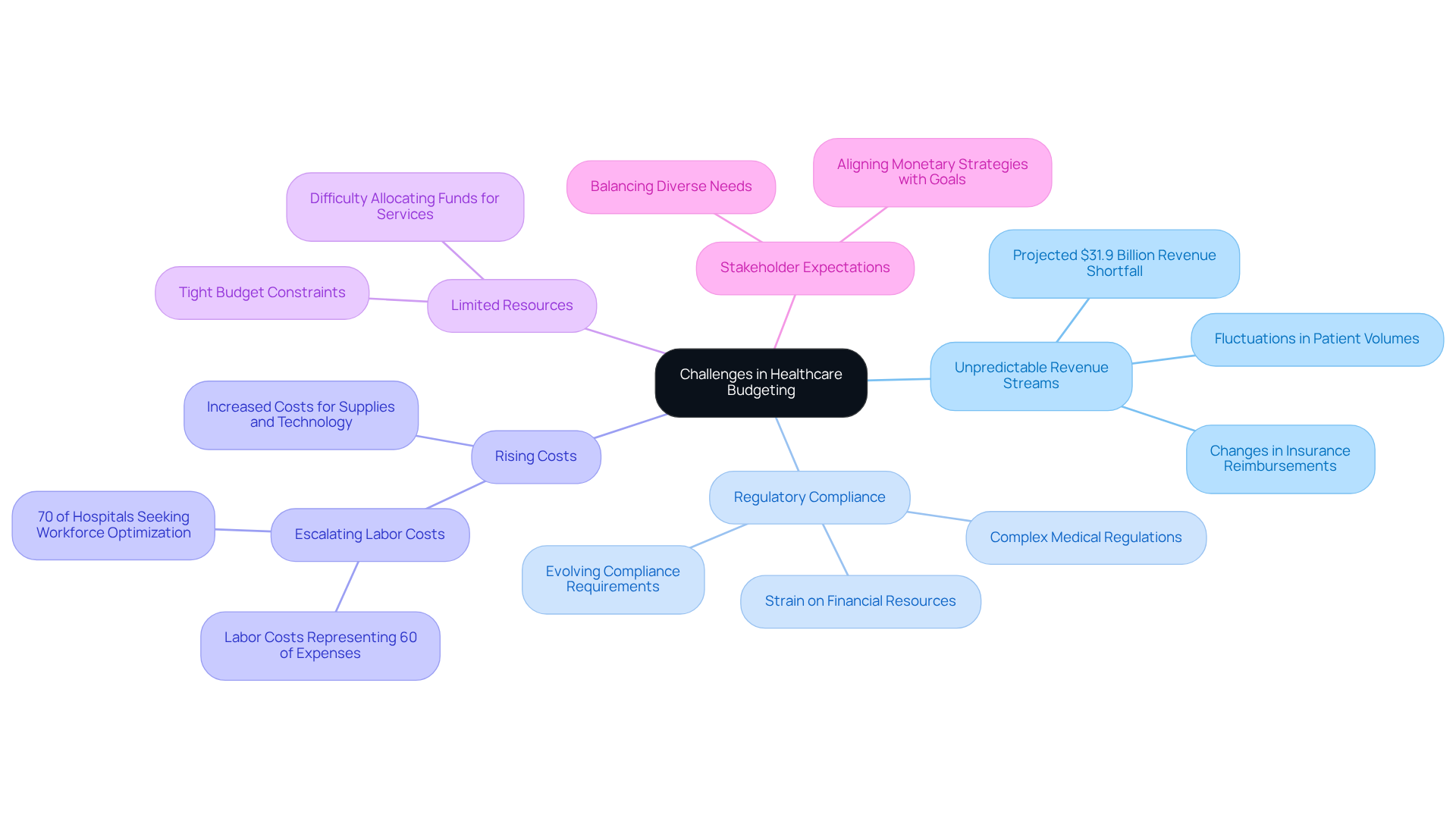
Healthcare organizations face numerous challenges in budgeting that threaten their financial sustainability and operational efficiency.
- Unpredictable Revenue Streams: Fluctuations in patient volumes and changes in insurance reimbursements create substantial uncertainty in revenue forecasting. Projected for 2026, medical organizations may experience a $31.9 billion revenue shortfall due to proposed federal funding cuts, intensifying existing challenges.
- Regulatory Compliance: Adhering to complex medical regulations complicates the budgeting process. Organizations must navigate evolving compliance requirements, straining financial resources and necessitating careful planning.
- Rising Costs: The medical sector is grappling with escalating costs for labor, supplies, and technology. Labor costs alone have surged, representing nearly 60% of average hospital expenses, prompting many entities to seek workforce optimization strategies.
- Limited Resources: Operating under tight budget constraints makes it difficult for many healthcare organizations to allocate sufficient funds for all necessary services. A recent report indicated that 70% of hospitals are exploring ways to optimize their workforce amid rising operational costs.
- Stakeholder Expectations: Balancing the diverse needs and expectations of stakeholders-including patients, staff, and regulatory bodies-complicates budget decisions. Organizations must ensure that their monetary strategies align with the goals of various stakeholders while maintaining high-quality patient care.
Addressing these challenges requires strategic planning, flexibility, and a commitment to continuous improvement in budgeting. Leveraging predictive analytics and fostering strategic partnerships can enhance financial health while ensuring exceptional patient care.
Conclusion
Budgeting in healthcare organizations is a pivotal factor that directly influences both patient care quality and operational efficiency. A systematic approach to resource allocation enables healthcare providers to effectively manage financial complexities while prioritizing patient needs. The insights shared throughout this article illustrate just how vital budgeting is in the realm of healthcare management. The discussion covers various types of budgets, including:
- Operational budgets
- Capital budgets
- Rolling budgets
- Zero-based budgets
- Incremental budgets
Each serving distinct purposes in the financial landscape. Challenges such as unpredictable revenue streams, regulatory compliance, rising costs, and stakeholder expectations create significant hurdles for healthcare organizations, making strategic financial planning essential. By integrating advanced technologies and fostering collaboration among department leaders, healthcare organizations can enhance their budgeting processes, ensuring they remain agile and responsive to changing circumstances.
In summary, effective budgeting is a cornerstone of operational stability and quality patient care in healthcare organizations. With rising financial pressures, healthcare providers must adopt a compliance-first approach and utilize innovative financial management practices. By prioritizing budgeting as a strategic tool, healthcare organizations can ensure they are well-equipped to meet the evolving needs of their communities. For tailored consultation services that empower healthcare providers, consider reaching out to Healthcare Partners Consulting & Billing, LLC (HPC) at info@hpcbilling.com or call 888-517-4992.
Frequently Asked Questions
What is budgeting in healthcare organizations?
Budgeting in healthcare organizations is a systematic method for planning, allocating, and controlling resources to ensure efficient and effective service delivery. It involves estimating revenues and expenses for a specific period, typically a fiscal year, and serves as a financial roadmap for healthcare providers.
Why is effective budgeting important in healthcare?
Effective budgeting is crucial for maintaining operational stability, ensuring compliance with regulations, and enhancing patient care. It helps organizations prioritize expenditures, manage expenses, and align resources with strategic objectives, promoting improved health outcomes for patients.
What current financial challenges are healthcare organizations facing?
Healthcare organizations are experiencing financial strains due to narrow margins, reimbursement uncertainties, and increasing labor expenses. Proposed budget cuts to the National Institutes of Health (NIH) in 2026 could also significantly impact funding for vital medical initiatives.
How are advanced technologies impacting budgeting in healthcare?
Medical organizations are increasingly recognizing the importance of incorporating advanced technologies, such as AI and automation, into their financial planning processes to improve efficiency and reduce administrative burdens.
What are the potential benefits of automating financial processes in healthcare?
Executives in the medical field are optimistic about the long-term returns from automation, particularly in revenue cycle management (RCM) technology. Fully automating high-volume transactions could save the industry approximately $19 billion, highlighting the potential for significant cost savings and productivity gains.
How can healthcare organizations ensure effective budgeting?
Integrating regular evaluations and modifications into the budgeting process is essential for aligning financial strategies with organizational objectives. This includes assessing staffing needs, monitoring changes in insurance premiums, and planning for salary increases. Involving department leaders in the budgeting process can enhance precision and accountability.
What are the implications of poor financial planning in healthcare?
Without strategic financial planning, the future of patient care may be jeopardized, leading to broader implications for public health. Effective budgeting is necessary to ensure that healthcare organizations can continue to provide quality care.