

Introduction
The verification of physician qualifications is essential for ensuring competent patient care in healthcare settings. Physician credentialing services not only safeguard patient safety but also enhance the overall quality of healthcare delivery by adhering to regulatory standards. The increasing complexity of healthcare regulations complicates the credentialing process for providers, raising critical questions about efficiency and focus on patient care. This complexity demands innovative solutions to enhance efficiency and prioritize patient care amidst regulatory demands.
Define Physician Credentialing Services
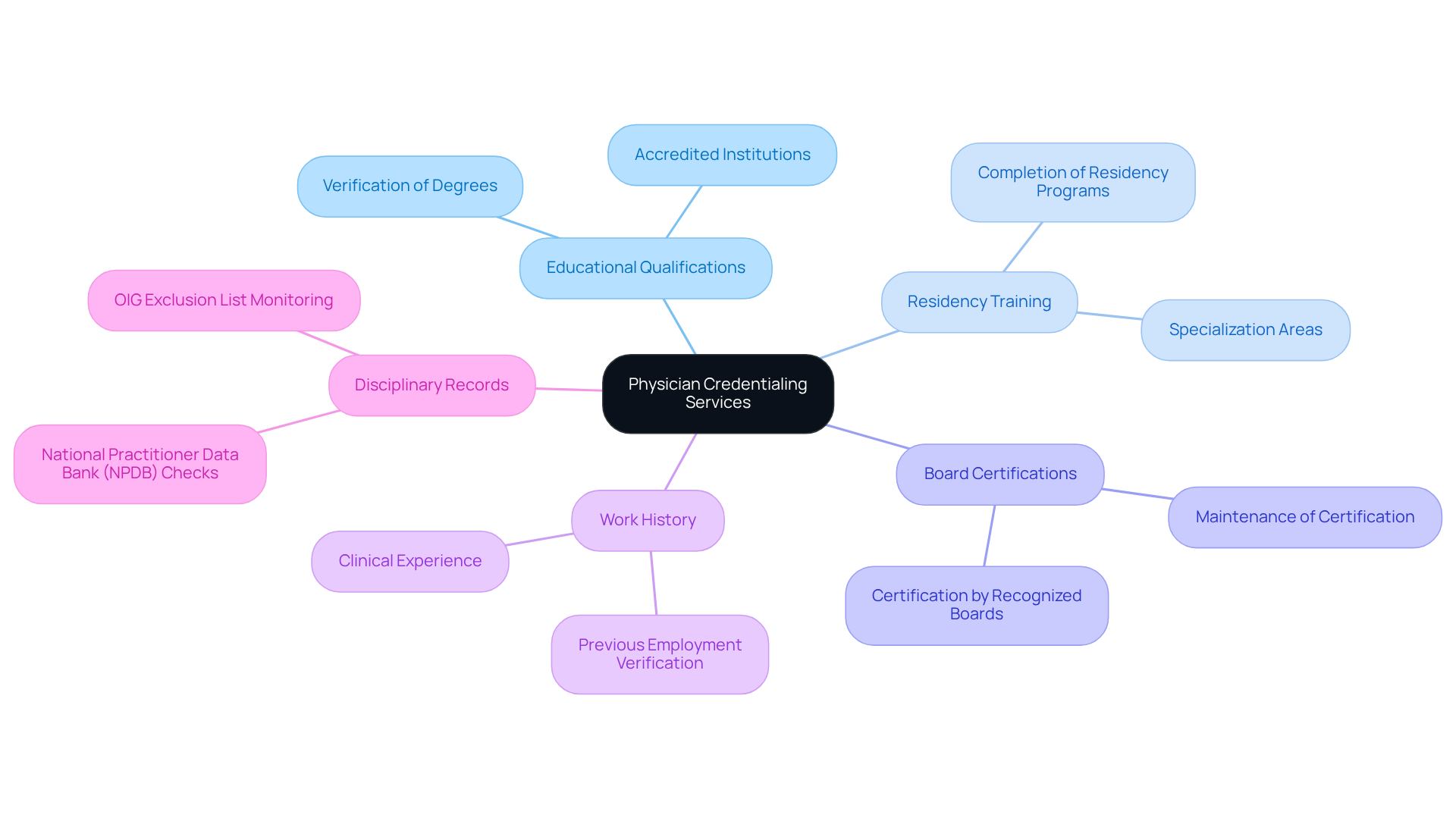
The systematic verification of physician qualifications is essential for ensuring patient safety and care quality. The process of physician credentialing service involves systematically confirming the qualifications, experience, and professional background of medical providers, especially physicians. This process assesses:
- Educational qualifications
- Residency training
- Board certifications
- Work history
- Disciplinary records
Credentialing ensures that medical providers possess the necessary qualifications to deliver safe and effective patient care.
This process is vital for medical organizations to uphold adherence to regulatory standards and cultivate trust among individuals and stakeholders. Without proper credentialing, the quality of care may be compromised, leading to adverse outcomes for patients. Ultimately, thorough credentialing is not just a regulatory requirement; it is a fundamental component of patient safety and trust in healthcare.
Contextualize the Importance of Credentialing in Healthcare
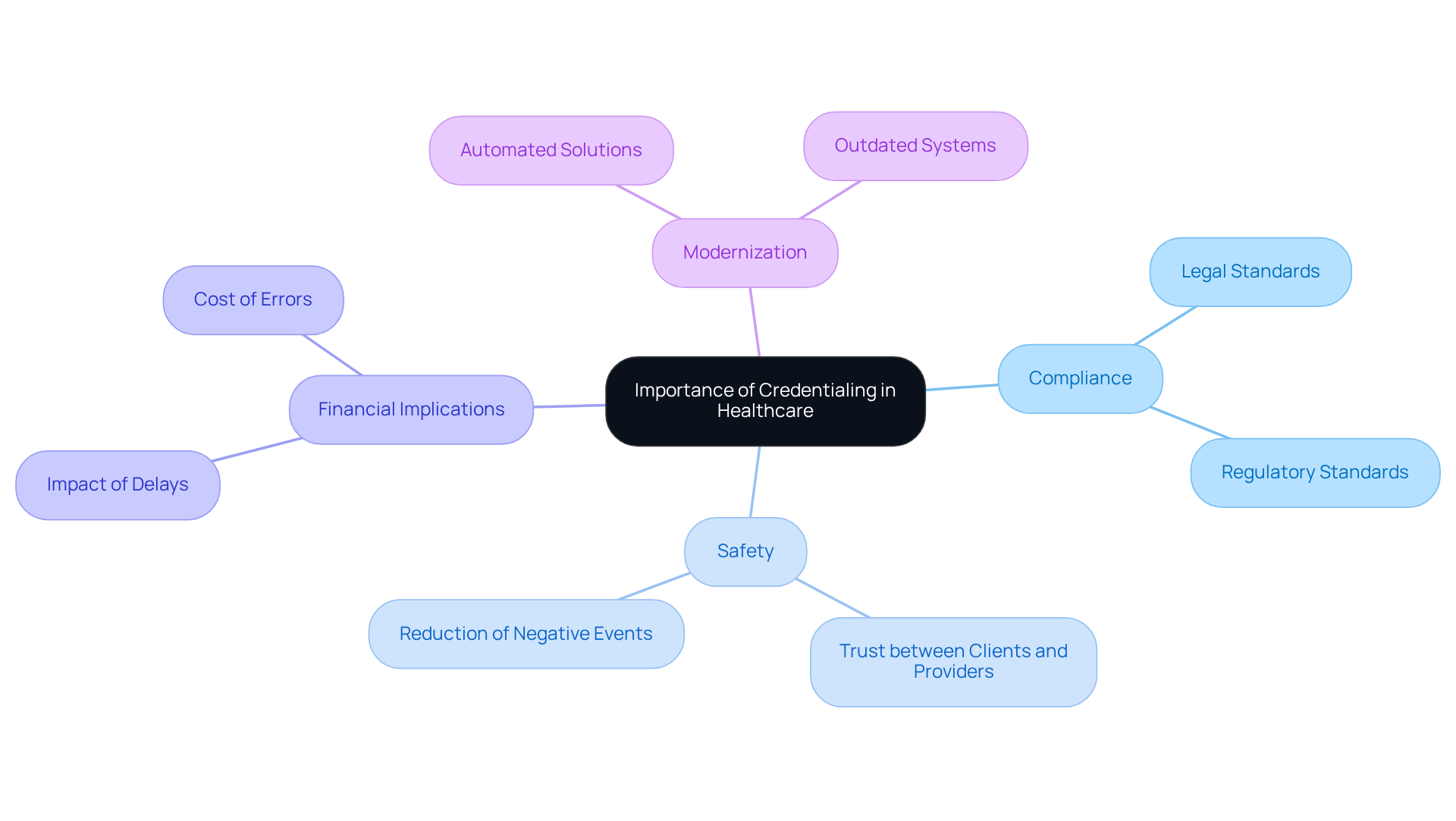
Credentialing is not just a procedural formality; it is a critical safeguard that ensures only qualified professionals deliver medical care. It plays essential roles such as ensuring compliance with legal and regulatory standards and improving safety for individuals receiving care. As medical providers face increasing scrutiny regarding their qualifications, verification acts as a crucial safeguard against malpractice and negligence. This process enhances trust between clients and providers, guaranteeing that patients receive care from competent professionals, which is vital for maintaining high standards in healthcare delivery.
Furthermore, obtaining necessary qualifications is a prerequisite for participation in insurance networks, directly influencing a provider’s ability to offer services and receive reimbursement. The importance of strong verification processes has grown, especially with the 2026 changes that have prolonged verification timelines by 30 to 45 days for practices handling it independently. Providers struggle with the lengthy verification process, which can hinder their ability to deliver timely care. This delay can result in substantial opportunity costs, estimated between $45,000 to $75,000 for providers generating $30,000 to $50,000 monthly in collections. Reducing six weeks from the timeline for obtaining credentials can greatly lessen these expenses, highlighting the financial effects of efficient processes.
Case studies emphasize the financial consequences of qualification errors, which can threaten organizational stability and the safety of individuals. For example, stringent verification practices have been demonstrated to decrease negative safety events involving individuals receiving care by up to 25%. The case study ‘How Credentialing Impacts Revenue Cycle Management (RCM)’ illustrates this connection, highlighting how timely provider enrollment is essential for both patient safety and financial stability.
As medical systems advance, the need for effective verification becomes increasingly essential, ensuring that organizations can provide high-quality care while adhering to compliance standards. In this context, adopting automated solutions for provider verification is crucial, particularly given that 73% of healthcare organizations indicate reliance on outdated systems for this process. Modernizing these systems can streamline operations, reduce errors, and improve visibility into provider qualifications, ultimately protecting both patient care and organizational integrity. Without modernizing verification processes, healthcare organizations risk not only financial losses but also the quality of care they provide.
Trace the Evolution of Physician Credentialing
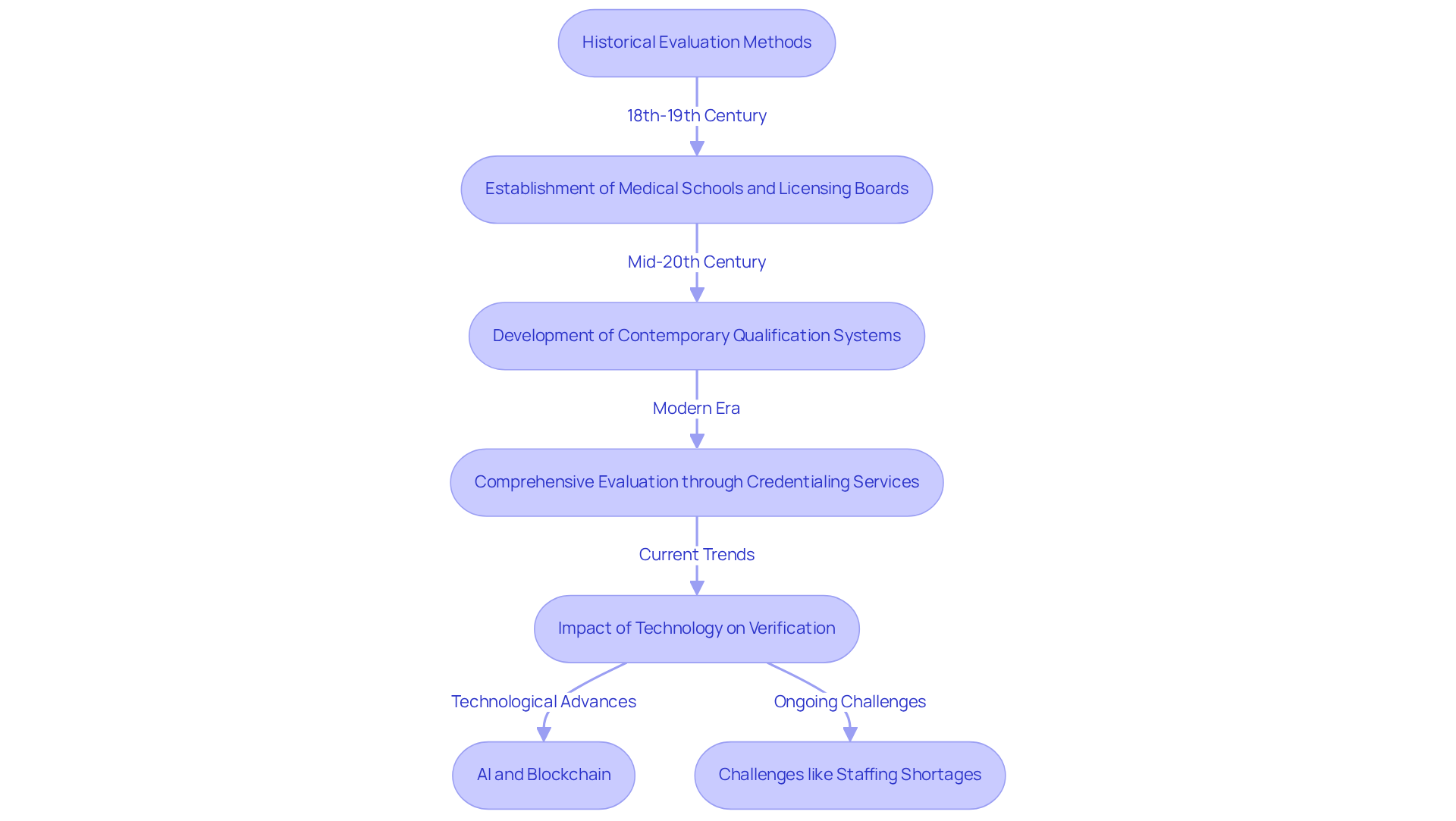
The evolution of physician credentialing service reflects a growing need for structured assessment in the medical profession. Historically, practitioners were evaluated based on reputation and personal recommendations. As the medical field became more organized, the demand for a systematic qualification framework emerged. The establishment of medical schools and licensing boards in the 18th and 19th centuries marked significant milestones in the history of qualifications. By the mid-20th century, a contemporary qualification system began to take shape, driven by the necessity for standardized practices to ensure patient safety and quality care. This process involves a comprehensive evaluation of a physician’s qualifications through a physician credentialing service, ensuring adherence to established standards, including primary source verification of education, training, and licensure.
Historical case studies reveal that medical organizations with streamlined verification systems experience 30% fewer claim denials related to provider enrollment issues, highlighting the financial and operational advantages of a strong verification framework. Moreover, transitioning from manual to digital verification has significantly boosted efficiency, with 63% of healthcare organizations reporting shorter turnaround times through automation. Advanced technologies such as AI and blockchain are also playing a vital role in enhancing accuracy and compliance in verification methods.
Despite advancements, many departments struggle with staffing shortages, hindering effective verification. This understaffing not only affects operational efficiency but also poses risks to patient safety. As healthcare continues to evolve, the demand for robust physician credentialing services will only intensify, highlighting their role in safeguarding patient care.
Identify Key Components of Credentialing Services
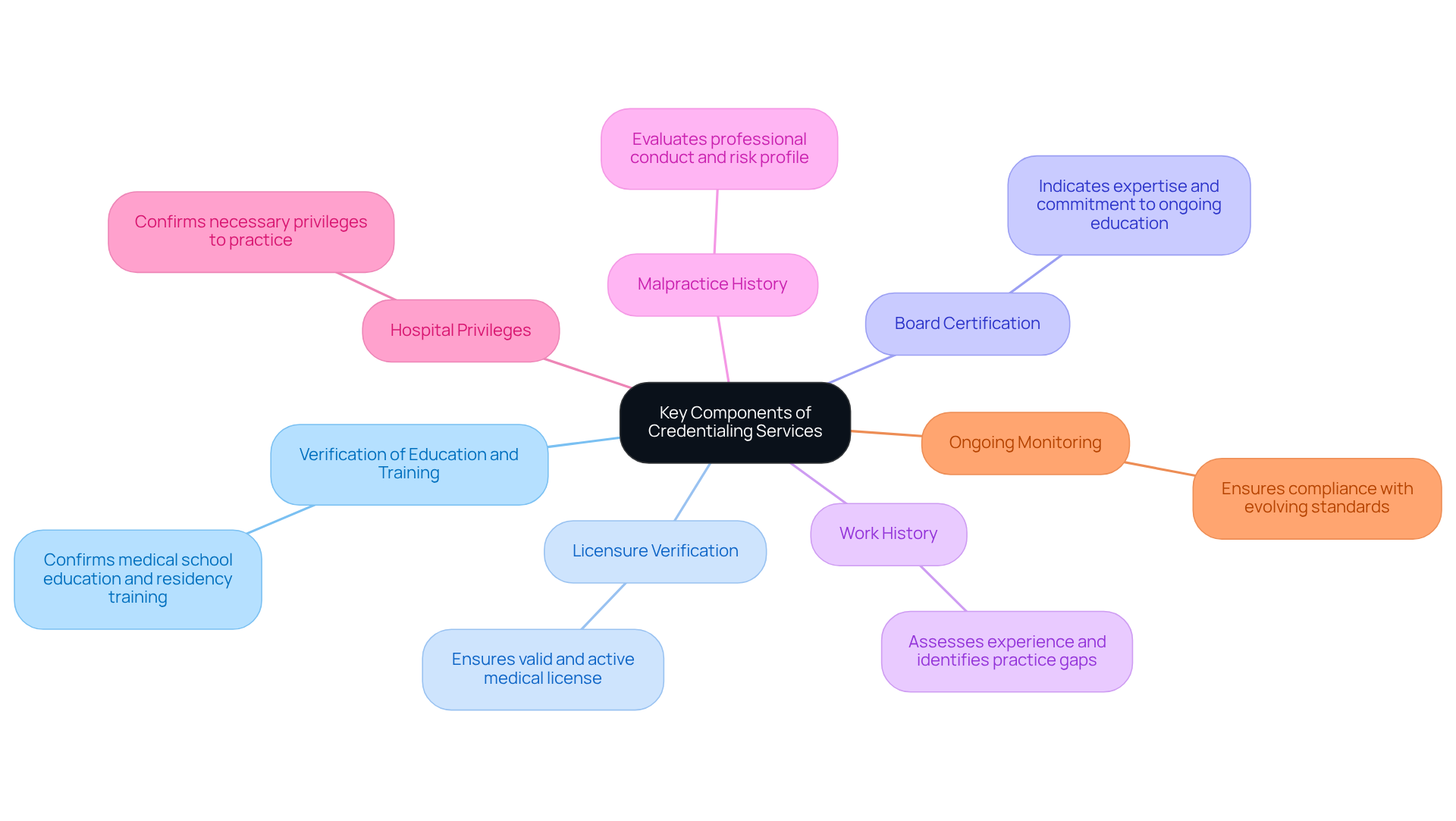
The complexities of the physician credentialing service can significantly impact the efficiency of healthcare delivery. Key components of a physician credentialing service include:
- Verification of Education and Training: This process confirms the physician’s medical school education, residency training, and any completed fellowships, ensuring they have the foundational knowledge required for practice.
- Licensure Verification: It is crucial to ensure that the physician holds a valid and active medical license in the state where they practice, as this is a legal requirement for providing care.
- Board Certification: Checking for board certification in the physician’s specialty indicates a higher level of expertise and commitment to ongoing education.
- Work History: A thorough review of the physician’s employment history assesses their experience and identifies any gaps in practice that may need addressing.
- Malpractice History: Investigating past malpractice claims or disciplinary actions is essential for evaluating the physician’s professional conduct and risk profile.
- Hospital Privileges: Confirming that the physician has the necessary privileges to practice at specific medical facilities is vital for ensuring they can provide care in those settings.
- Ongoing Monitoring: Implementing a system for continuous oversight of the physician’s credentials ensures compliance with evolving standards and regulations, which is increasingly important as medical regulations change.
These components collectively ensure that medical providers are qualified to deliver safe and effective patient care, which is supported by a physician credentialing service, thereby enhancing the overall quality of medical services. For example, organizations that implement continuous monitoring have reported enhanced compliance and reduced risks related to credential lapses, as emphasized in the case study on Continuous Credential Monitoring. Furthermore, with over 50% of healthcare providers facing revenue declines due to delays in obtaining necessary qualifications, as highlighted by the Medical Group Management Association, efficient qualification procedures are crucial for sustaining financial stability in practices. As technology evolves, the potential for credentialing to enhance operational efficiency and patient safety becomes increasingly evident.
Conclusion
The role of physician credentialing services is critical in ensuring healthcare providers are qualified to deliver safe and effective patient care. Credentialing verifies the qualifications and backgrounds of medical professionals, ensuring regulatory compliance and fostering trust between patients and providers. This process is essential for maintaining high standards in healthcare delivery, ultimately safeguarding patient safety and enhancing the quality of care.
Throughout the article, key insights have been highlighted regarding the importance of credentialing in healthcare. The evolution of credentialing practices reflects a growing need for structured assessments, moving from informal evaluations to comprehensive verification processes. The financial implications of efficient credentialing are significant, with streamlined systems reducing claim denials and enhancing operational efficiency. Moreover, the integration of modern technologies can further improve the accuracy and compliance of credentialing practices, ensuring that healthcare organizations can meet the demands of an evolving medical landscape.
Given these insights, healthcare providers, particularly in behavioral and mental health, must prioritize strong credentialing processes. Healthcare practices should prioritize compliance and use advanced verification solutions to protect financial stability and focus on delivering exceptional patient care. Emphasizing the importance of credentialing is not just about meeting regulatory requirements; it is about fostering a culture of safety, trust, and excellence in healthcare. Engaging with credentialing experts can significantly enhance the quality of care delivered to patients.
Frequently Asked Questions
What are physician credentialing services?
Physician credentialing services involve the systematic verification of a physician’s qualifications, experience, and professional background to ensure patient safety and care quality.
What qualifications are assessed during the credentialing process?
The credentialing process assesses educational qualifications, residency training, board certifications, work history, and disciplinary records of medical providers.
Why is credentialing important for medical organizations?
Credentialing is important for medical organizations to ensure adherence to regulatory standards and to cultivate trust among individuals and stakeholders, ultimately safeguarding the quality of patient care.
What could happen if proper credentialing is not conducted?
Without proper credentialing, the quality of care may be compromised, potentially leading to adverse outcomes for patients.
Is credentialing only a regulatory requirement?
No, thorough credentialing is not just a regulatory requirement; it is a fundamental component of patient safety and trust in healthcare.