

Introduction
The financial landscape of mental health clinics presents significant challenges that can threaten their operational viability. With intricate payer requirements and high rejection rates, these challenges can lead to significant financial strain, threatening the sustainability of mental health clinics. By effectively managing the revenue cycle, clinics can ensure they remain focused on what truly matters: providing quality patient care.
Clinics must consider how to implement best practices in RCM to enhance financial health while ensuring compliance and efficiency. This article delves into the essential steps and innovative technologies that can transform the revenue cycle, ultimately leading to improved patient outcomes and sustainable growth.
Understand Revenue Cycle Management in Mental Health Clinics
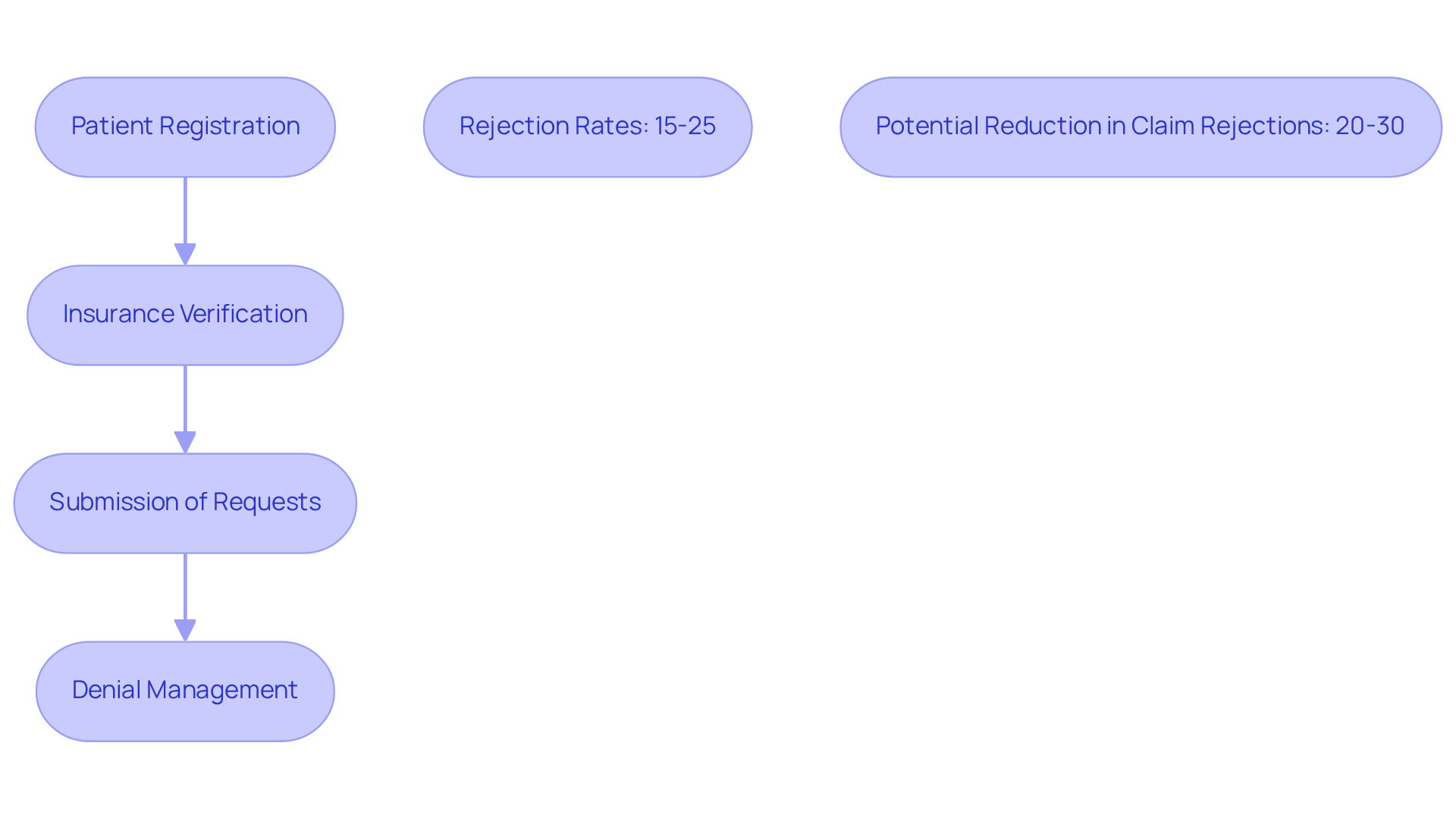
The financial journey of a patient in mental wellness clinics is fraught with unique challenges that require effective physician revenue cycle management services. Unlike conventional medical settings, mental wellness practices encounter distinct obstacles, including intricate payer requirements, elevated rejection rates, and the need for comprehensive documentation of medical necessity. These challenges create significant hurdles for clinics striving to maintain financial health. Rejection rates for mental health submissions, ranging from 15% to 25%, can severely impact a clinic’s revenue. Effective physician revenue cycle management services guarantee accurate and consistent reimbursements, which are crucial for financial stability and allow providers to prioritize patient care.
Key components of RCM include:
- Patient Registration: Accurate data collection at the outset is crucial for smooth billing processes.
- Insurance Verification: Confirming patient eligibility and benefits helps prevent reimbursement issues.
- Submission of Requests: Timely and accurate submission of requests is essential for prompt reimbursement.
- Denial Management: Proactively addressing rejections can lead to a reduction of 20-30% in claim rejections and faster reimbursement of 15-25% within 30-90 days.
Furthermore, monitoring rejection rates by payer is crucial for planning billing strategies and enhancing overall financial performance. Comprehending these elements is essential for mental wellness clinics to navigate the complexities of billing and ensure a sustainable financial model with physician revenue cycle management services. By implementing scorecard-driven adjustments linked to accuracy of submissions, denial rates, and days in accounts receivable, clinics can demonstrate operational rigor and enhance overall financial performance.
Healthcare Partners Consulting & Billing, LLC (HPC) specializes in billing assistance, tackling issues like underpayments and unprocessed submissions, allowing clinics to focus on patient care. With 39 years of experience and a veteran-owned status, HPC provides tailored administrative support services that empower providers to deliver quality patient care. Integrations with EHR platforms like TherapyNotes and SimplePractice enhance the efficiency of billing processes. Case studies, such as the partnership with Hispanic Counseling Center, illustrate how HPC’s customized solutions can lead to improved efficiency and financial outcomes. Ultimately, the right billing strategies can transform these challenges into opportunities for growth and improved patient care.
Implement Key Steps for Effective RCM Services
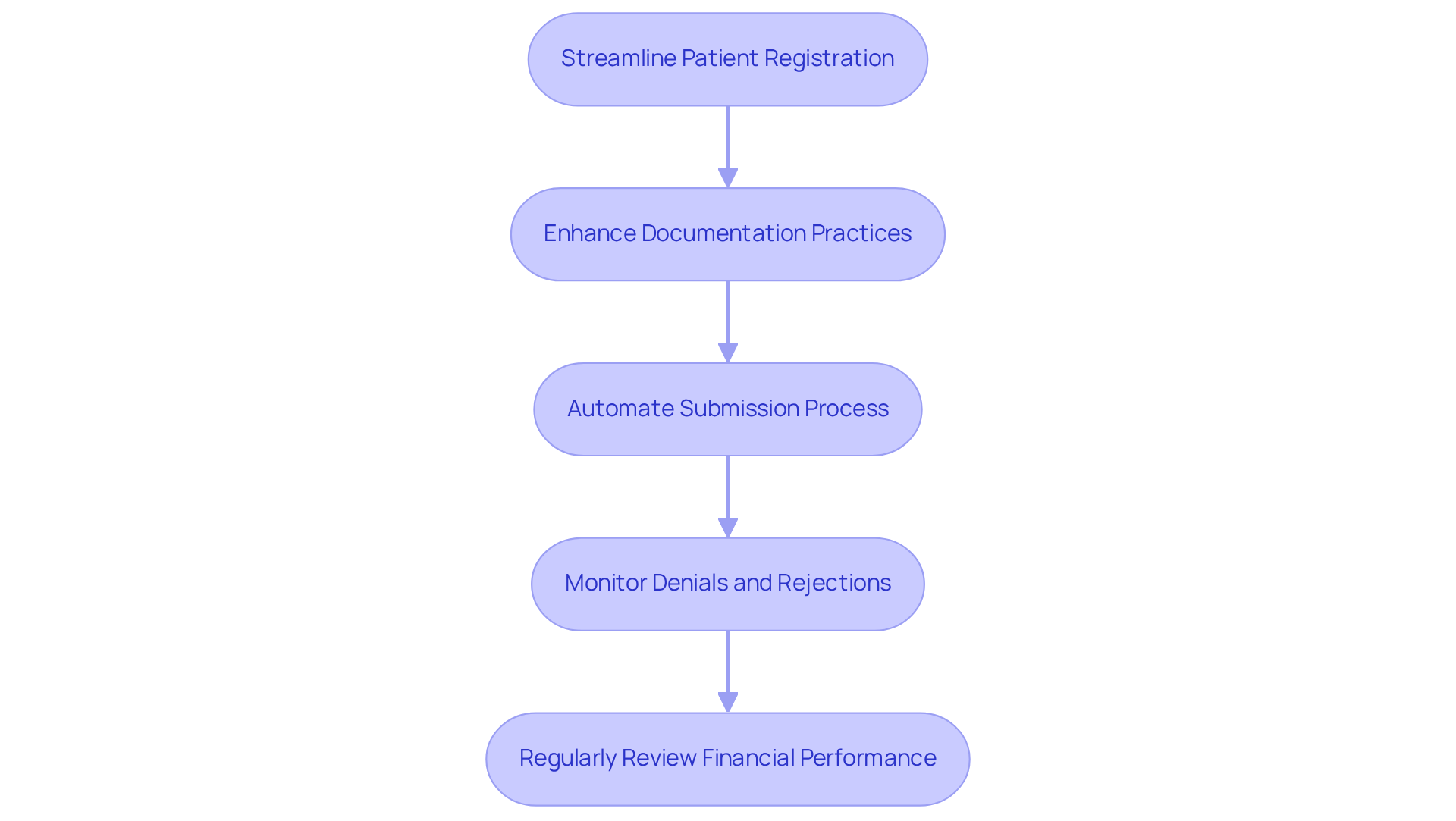
Inefficient processes in physician revenue cycle management services can significantly hinder the financial health of mental health clinics. To implement effective revenue cycle management (RCM) services, mental health clinics should focus on several key steps:
- Streamline Patient Registration: Ensure that the registration process is efficient and includes thorough insurance verification to minimize eligibility errors, which can lead to significant revenue losses.
- Enhance Documentation Practices: Train staff to document medical necessity thoroughly, as this is essential for approval and can prevent expensive rejections.
- Automate Submission Process: Utilize technology to streamline the submission process, minimizing errors and accelerating payments, which can result in quicker reimbursements of 15-25% within 30-90 days.
- Monitor Denials and Rejections: Establish a system for tracking and analyzing claim denials to identify patterns and address root causes, as effective denial management can reduce denials by 20-30%.
- Regularly Review Financial Performance: Conduct periodic assessments of the revenue cycle to identify areas for improvement and ensure compliance with payer requirements, which is essential for maintaining financial stability.
Ultimately, enhancing physician revenue cycle management services allows clinics to prioritize patient care, leading to better health outcomes.
Utilize Technology and Automation for Streamlined RCM
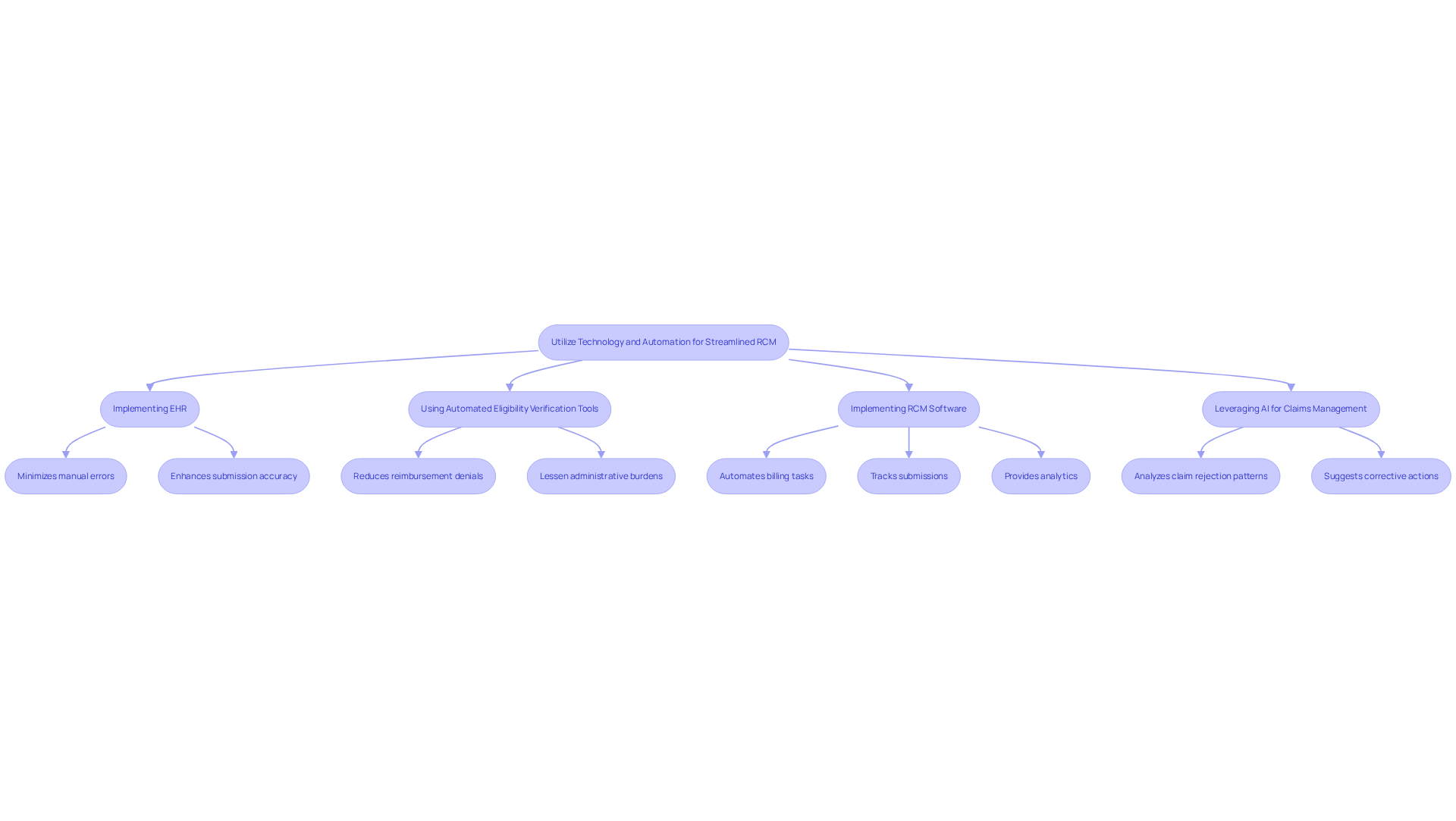
Integrating technology into physician revenue cycle management services is essential for enhancing operational efficiency in mental health clinics. Key strategies include:
- Implementing Electronic Health Records (EHR): EHR systems seamlessly integrate clinical documentation with billing workflows, ensuring that all necessary information is readily available for processing submissions. This integration minimizes manual errors and enhances submission accuracy, resulting in faster reimbursements.
- Using Automated Eligibility Verification Tools: These tools quickly confirm patient insurance coverage, reducing the likelihood of reimbursement denials due to eligibility issues. By automating this process, healthcare facilities can enhance their operational efficiency and lessen administrative burdens.
- Implementing physician revenue cycle management services involves specialized RCM software that automates billing tasks, tracks submissions, and provides analytics to monitor financial performance. This technology allows clinics to identify trends and make data-driven decisions, ultimately enhancing revenue cycle outcomes.
- Leveraging AI for Claims Management: Artificial intelligence can analyze patterns in claim rejections and suggest corrective actions, streamlining the overall process. Clinics that utilize AI tools have reported denial reductions of 20-30% and faster reimbursement timelines of 15-25% within 30-90 days.
By adopting these technologies, mental wellness facilities reduce administrative burdens and improve cash flow. This, in turn, enhances patient satisfaction and positions clinics for sustainable growth in a competitive environment.
Engage and Train Staff for RCM Success
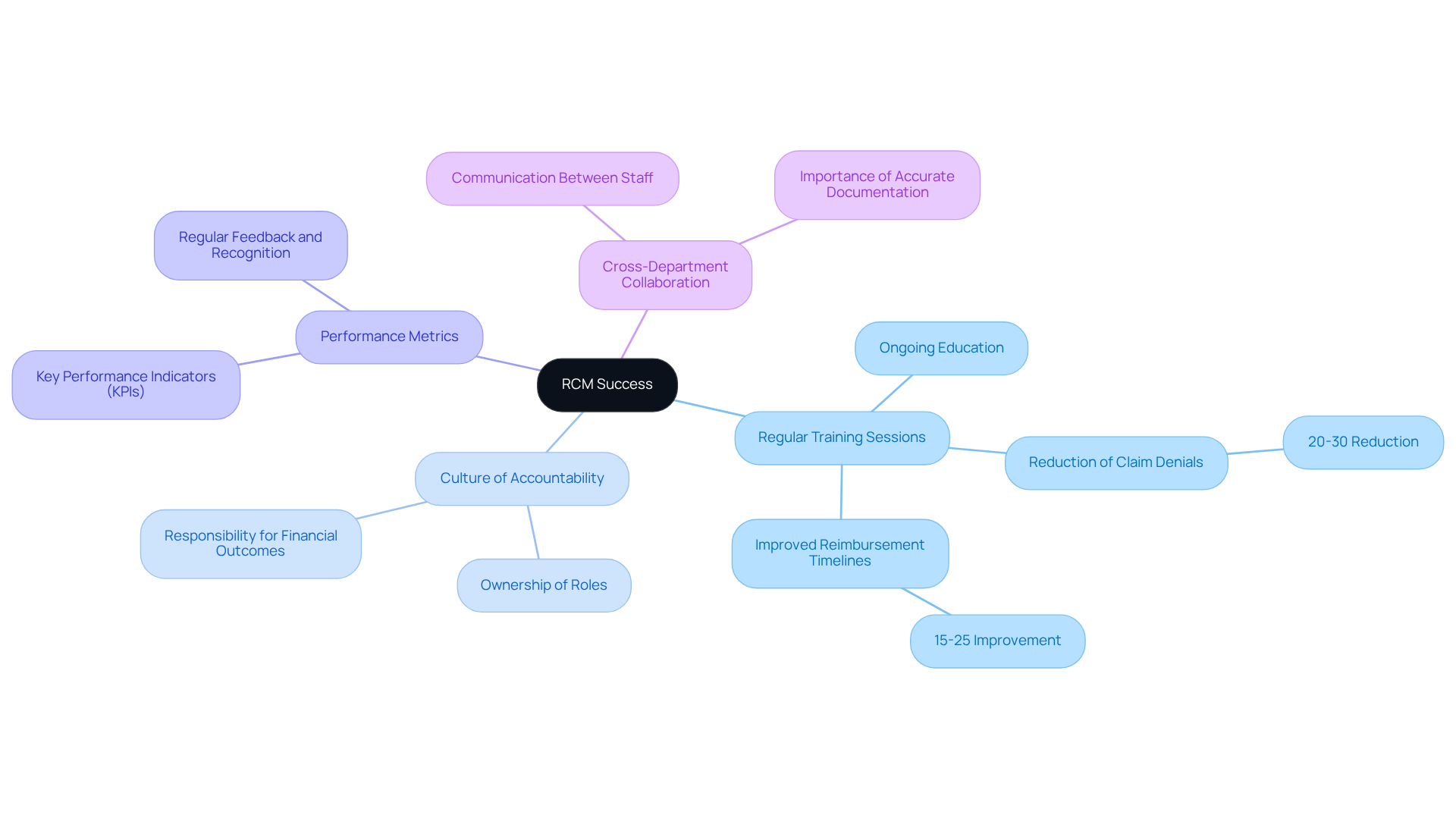
To excel in revenue cycle management (RCM), mental health organizations must prioritize staff engagement and training as foundational elements of success. Key strategies for success are:
- Conducting Regular Training Sessions: Ongoing education on billing practices, coding updates, and compliance requirements is essential to keep staff informed and competent. Such initiatives can result in a reduction of claim denials by 20-30% and improve reimbursement timelines by 15-25% within a 30 to 90-day period.
- Fostering a Culture of Accountability: Encouraging staff to take ownership of their roles in the revenue cycle promotes a sense of responsibility for financial outcomes, which is crucial for maintaining operational efficiency.
- Utilizing Performance Metrics: Implementing key performance indicators (KPIs) enables healthcare facilities to assess staff performance in billing and collections. Regular feedback and recognition for achievements can motivate staff and enhance overall performance.
- Encouraging Cross-Department Collaboration: Facilitating communication between clinical and administrative staff ensures that everyone understands the importance of accurate documentation and timely billing. This collaboration is vital for minimizing errors and optimizing revenue collection.
Investing in staff engagement and training significantly enhances physician revenue cycle management services, ensuring that patient care remains a priority alongside financial sustainability. Additionally, leveraging effective practice management strategies such as clean claims, fast follow-up, and clear reporting can significantly streamline operations, allowing healthcare providers to focus more on delivering exceptional patient care.
Conclusion
Effective revenue cycle management is crucial for mental health clinics aiming to achieve financial stability while ensuring high-quality patient care. Clinics that recognize the unique challenges of high rejection rates and complex payer requirements can implement targeted strategies to improve operational efficiency. The focus on empowering healthcare providers by alleviating administrative burdens allows them to concentrate on what truly matters: delivering quality care to their patients.
It’s clear that streamlining processes, leveraging technology, and engaging staff are vital for effective RCM. From improving patient registration and documentation to utilizing automated tools for eligibility verification, each step contributes to reducing claim denials and accelerating reimbursements. Furthermore, fostering a culture of accountability and continuous training among staff ensures that everyone is aligned with the clinic’s financial goals while maintaining compliance with payer requirements.
In conclusion, the role of effective revenue cycle management services is critical for success. By adopting best practices and innovative technologies, mental health clinics can transform their financial challenges into opportunities for growth. Clinics that fail to prioritize RCM may find themselves struggling to sustain their operations and provide the care their patients deserve. For clinics looking to optimize their RCM processes, partnering with experts like Healthcare Partners Consulting & Billing, LLC (HPC) can provide the necessary support and guidance to navigate this complex landscape effectively.
Frequently Asked Questions
What is Revenue Cycle Management (RCM) in mental health clinics?
Revenue Cycle Management (RCM) in mental health clinics refers to the financial processes that manage the journey of a patient from registration to payment, ensuring accurate and consistent reimbursements to maintain financial health.
What unique challenges do mental wellness clinics face in RCM?
Mental wellness clinics encounter challenges such as intricate payer requirements, elevated rejection rates, and the need for comprehensive documentation of medical necessity, which can significantly impact their revenue.
What are the typical rejection rates for mental health submissions?
Rejection rates for mental health submissions typically range from 15% to 25%.
What are the key components of RCM?
The key components of RCM include:
- Patient Registration: Accurate data collection at the outset.
- Insurance Verification: Confirming patient eligibility and benefits.
- Submission of Requests: Timely and accurate submission for prompt reimbursement.
- Denial Management: Proactively addressing rejections to reduce claim rejections and expedite reimbursements.
How can denial management impact claim rejections and reimbursement times?
Effective denial management can lead to a reduction of 20-30% in claim rejections and faster reimbursement of 15-25% within 30-90 days.
Why is monitoring rejection rates by payer important?
Monitoring rejection rates by payer is crucial for planning billing strategies and enhancing overall financial performance in mental wellness clinics.
How can clinics improve their financial performance through RCM?
Clinics can improve financial performance by implementing scorecard-driven adjustments linked to submission accuracy, denial rates, and days in accounts receivable.
What services does Healthcare Partners Consulting & Billing, LLC (HPC) provide?
HPC specializes in billing assistance, addressing issues like underpayments and unprocessed submissions, allowing clinics to focus on patient care.
What experience does HPC have in the field?
HPC has 39 years of experience in billing services and is veteran-owned, providing tailored administrative support to enhance patient care.
How do integrations with EHR platforms benefit billing processes?
Integrations with EHR platforms like TherapyNotes and SimplePractice enhance the efficiency of billing processes in mental health clinics.