

Introduction
Mental health clinics encounter significant operational challenges that impede their capacity to deliver effective patient care, primarily due to substantial administrative burdens and intricate billing processes. These challenges create significant obstacles for clinics, diverting their focus from patient care. The necessity for precise documentation and compliance in mental health billing often leads to high claim denial rates, which can destabilize a clinic’s financial health.
This article examines the critical role that specialized medical billing companies, such as Healthcare Partners Consulting & Billing, LLC (HPC), play in alleviating these burdens, allowing providers to refocus on patient care. Neglecting these essential billing services can lead to operational inefficiencies, while a partnership with a dedicated billing expert can enhance both operational efficiency and patient outcomes.
Identify Key Challenges in Mental Health Clinic Operations
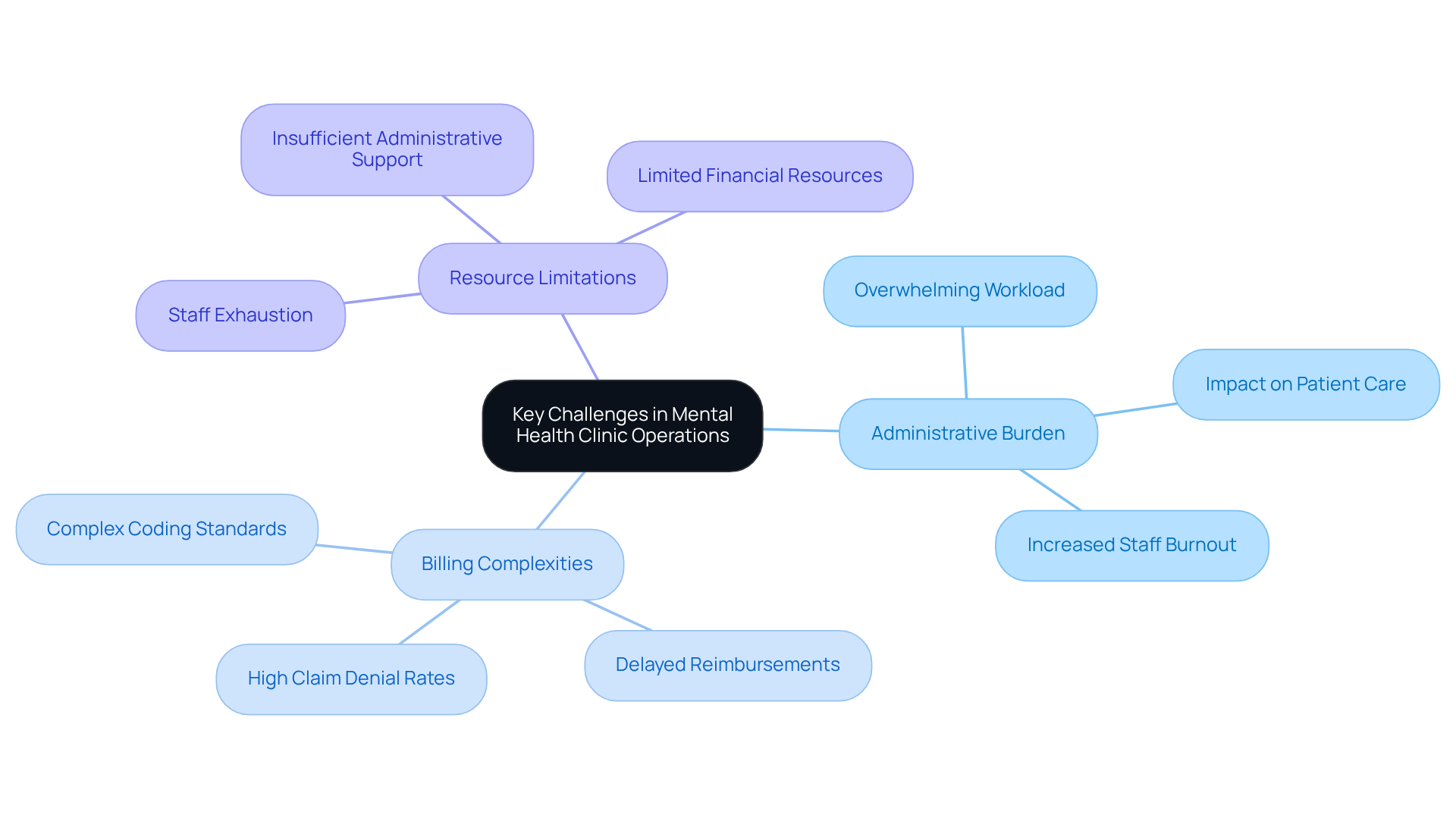
Mental health clinics encounter significant operational challenges that impede both efficiency and patient care quality. A primary concern is the overwhelming administrative burden that healthcare providers face, which is intensified by intricate payment processes, stringent compliance requirements, and the necessity for precise documentation. Mental health billing, in particular, differs from general medical billing due to unique coding and documentation standards, leading to high claim denial rates. Delayed reimbursements and financial instability for healthcare facilities often result from this situation.
Moreover, many clinics find themselves without the necessary resources to manage these administrative tasks effectively, leading to staff exhaustion and a shift in focus away from patient care. The intricate nature of mental health services, which includes diverse treatment modalities and varying payer requirements, complicates billing processes further. For example, utilization review (UR) staff frequently spend between 1 to 2.2 hours preparing for calls per individual, time that could be better utilized on direct interactions with individuals. This administrative burden diminishes clinician morale and restricts access to essential care.
These challenges underscore the essential need for specialized medical billing companies like Healthcare Partners Consulting & Billing, LLC (HPC), a veteran-owned firm with 39 years of experience, that can alleviate administrative burdens and enhance operational efficiency. HPC offers customized administrative support services to keep your office running smoothly, whether you need help with scheduling, document management, or insurance claims. By streamlining billing processes and ensuring compliance, HPC enables mental health practices to focus on what truly matters: providing exceptional patient care. Additionally, healthcare facilities can discover their profitability score by taking a quick quiz that identifies hidden revenue leaks and offers personalized recommendations for improvement. Failure to address these challenges will compromise the quality of care that mental health practices can provide.
Explore Benefits of Medical Billing Partnerships for Clinics
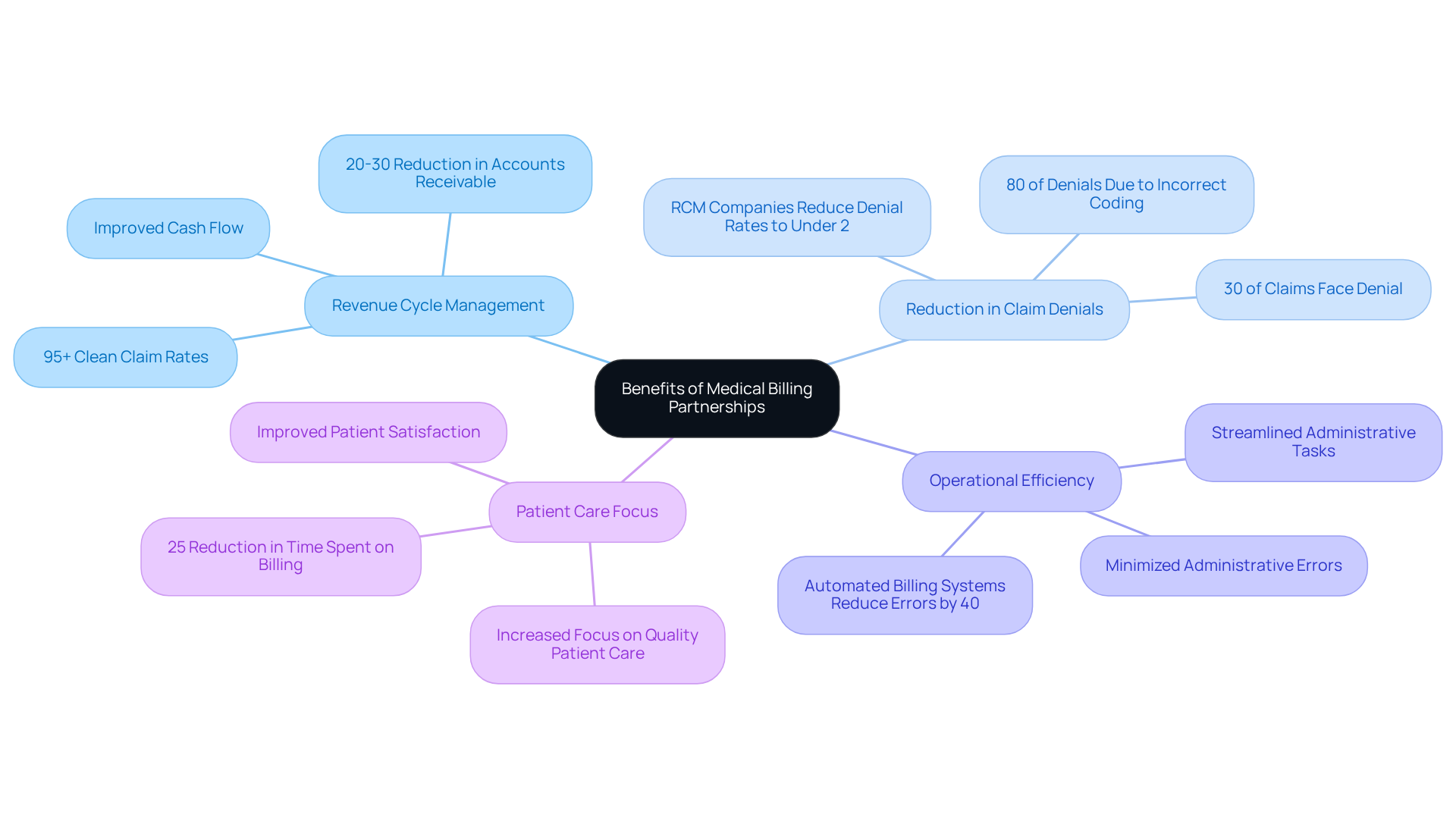
Mental health practices often struggle with high rates of claim denials and administrative inefficiencies, making effective partnerships essential. Partnering with Healthcare Partners Consulting & Billing, LLC (HPC), a veteran-owned organization with 39 years of experience, provides mental health practices with clear advantages by streamlining administrative tasks and enhancing operational efficiency. A key benefit is the improvement in revenue cycle management, as HPC specializes in the complexities of mental health financial processes. This expertise can significantly reduce claim denials – approximately 30% of medical claims face denial, loss, or neglect – leading to quicker reimbursements and better cash flow.
Outsourcing financial tasks to HPC allows clinics to focus resources on quality patient care, thereby improving patient satisfaction and outcomes. For instance, practices that have partnered with specialized financial services report a 20-30% reduction in accounts receivable within the first 90 days, showcasing the immediate financial benefits of such collaborations.
Furthermore, HPC employs advanced technology and analytics to enhance invoicing processes, which not only boosts adherence to healthcare regulations but also minimizes administrative errors. This partnership enhances a healthcare facility’s success and sustainability, allowing providers to focus on delivering exceptional patient care.
Examine Consequences of Neglecting Professional Billing Services
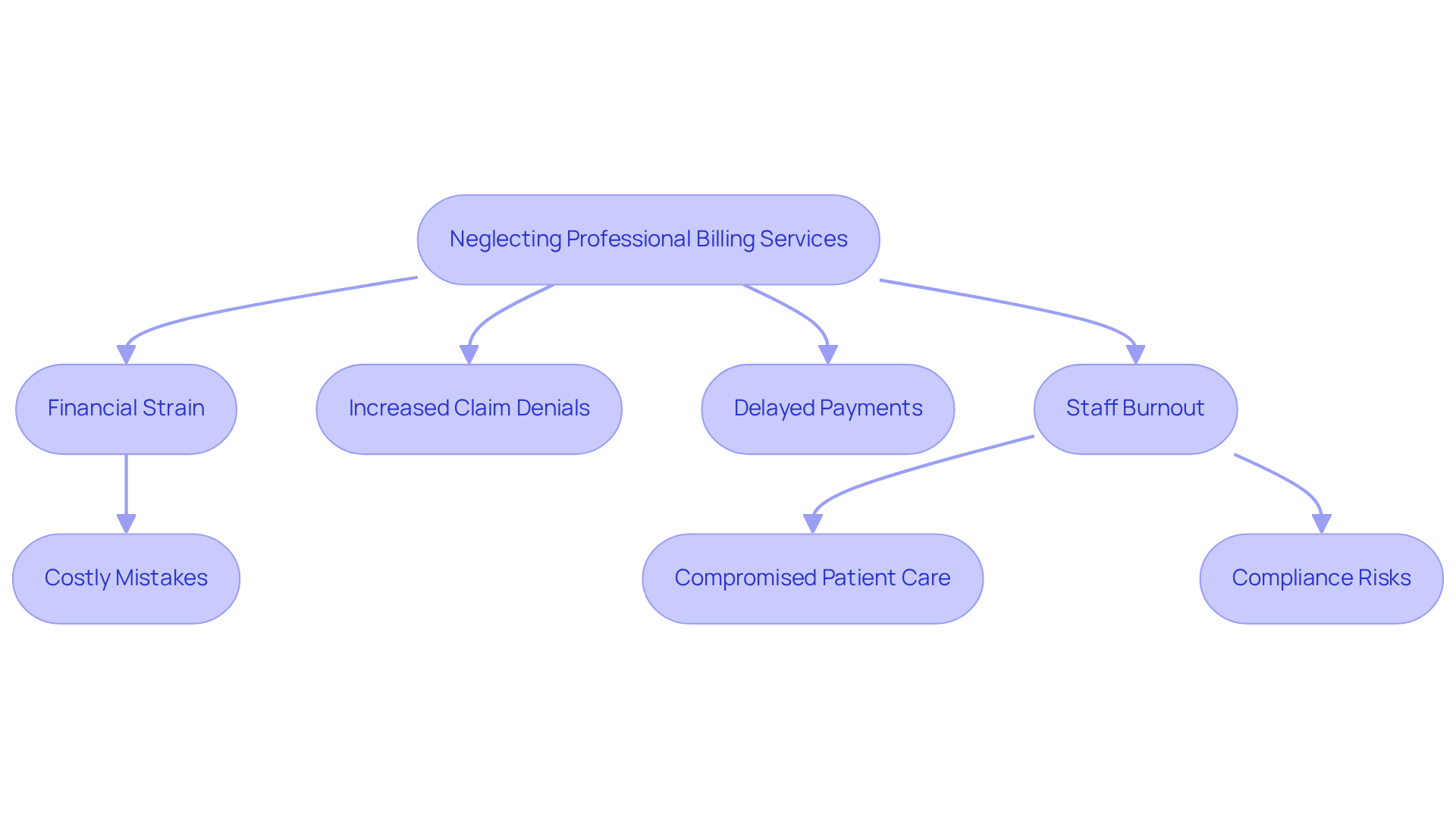
Neglecting professional invoicing services can severely impact the financial health and operational efficiency of mental health practices. The immediate impact of ignoring professional invoicing services is a financial strain due to increased claim denials and delayed payments. Clinics that attempt to manage financial processes internally often lack the specialized expertise needed to navigate the complexities of mental health reimbursement, resulting in costly mistakes. For instance, improper coding or incomplete documentation frequently leads to claims being rejected, compelling clinics to invest additional time and resources in resubmissions.
Moreover, the burden of managing invoicing in-house can wear down staff, leading to burnout and lower morale. When healthcare providers are inundated with paperwork and compliance issues, they struggle to maintain their focus on patient care, which can compromise outcomes. Additionally, healthcare facilities may face compliance risks; failure to adhere to payment regulations can result in audits, fines, and reputational damage.
A case study revealed that a 32-bed residential substance use disorder facility lost substantial revenue due to avoidable invoicing mistakes, emphasizing the financial repercussions of overlooking professional invoicing services. With 39 years of experience and as a veteran-owned organization, Healthcare Partners Consulting & Billing, LLC (HPC) provides tailored consultations to assist healthcare facilities in identifying optimal administrative solutions. By arranging a 30-minute call, healthcare facilities can outline their existing workflow and identify services that will enhance their financial processes and elevate care for individuals. Ultimately, overlooking specialized financial services can threaten the viability of practices and the quality of care delivered to patients.
Highlight Unique Offerings of Healthcare Partners Consulting
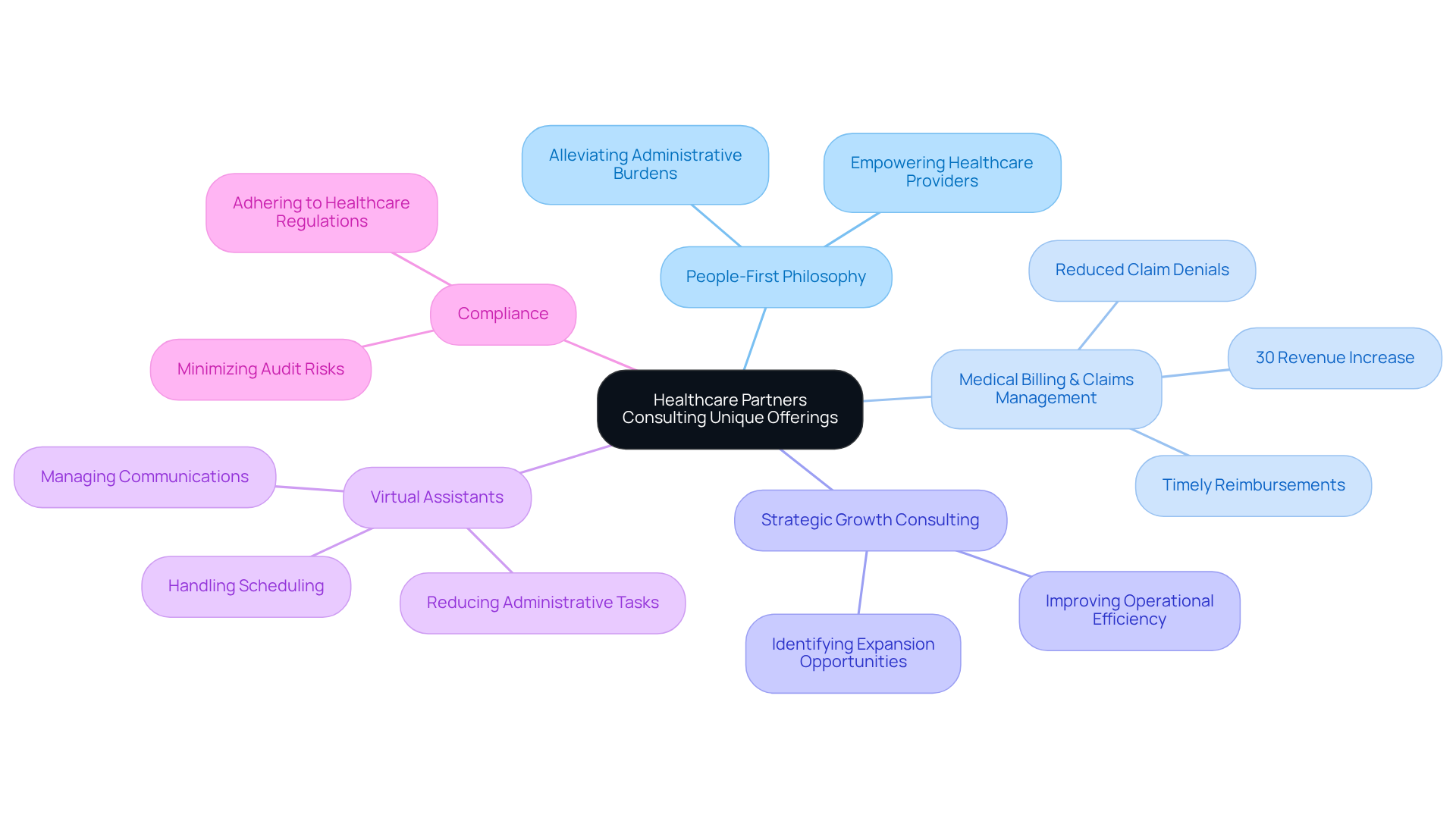
In the competitive landscape of medical reimbursement, Healthcare Partners Consulting (HPC) stands out with its tailored services for mental health practices. Central to HPC’s approach is a commitment to a people-first philosophy, which empowers healthcare providers by alleviating administrative burdens. Managing complex payment processes often distracts healthcare providers from delivering quality patient care, allowing healthcare facilities to prioritize outstanding patient care.
HPC is recognized for its expertise as a medical billing company, specializing in medical billing and claims management, which helps ensure timely reimbursements and reduces claim denials. Their strategic growth consulting services assist healthcare facilities in identifying opportunities for expansion and improving operational efficiency. Furthermore, HPC offers dedicated virtual assistants who handle scheduling, communications, and various administrative duties, further enhancing operational efficiency.
Compliance is another cornerstone of HPC’s offerings, as they ensure that healthcare facilities adhere to the latest healthcare regulations, thereby minimizing the risk of audits and penalties. For instance, Dr. Sarah Mitchell, a Family Medicine Physician, reported a remarkable 30% increase in revenue and a substantial reduction in administrative workload after partnering with HPC. As a result, she could dedicate more time to her patients, enhancing their care experience.
By choosing HPC, mental health clinics not only secure their financial future but also elevate the quality of care they provide. This unique blend of services positions HPC as a trusted ally for mental health practices aiming to streamline operations and enhance patient care.
Conclusion
Mental health clinics often grapple with operational challenges that detract from their primary mission of patient care. The complexities of billing, compliance, and administrative tasks often divert attention away from patient interactions, ultimately affecting the overall success of these practices. Partnering with a specialized medical billing company, such as Healthcare Partners Consulting & Billing, LLC (HPC), significantly alleviates these burdens. This allows healthcare providers to refocus on what truly matters: delivering exceptional patient care.
Throughout the article, the importance of outsourcing billing services has been highlighted, showcasing how HPC’s expertise in mental health billing can lead to improved revenue cycle management and reduced claim denials. By streamlining administrative processes, clinics can enhance their operational efficiency, resulting in quicker reimbursements and better financial health. The case studies and statistics presented illustrate the tangible benefits of such partnerships, emphasizing the positive impact on both clinic operations and patient outcomes.
In conclusion, when clinics focus on compliance and operational efficiency, they not only protect their financial health but also enhance the quality of care for their patients. Embracing a partnership with a veteran-owned firm like HPC, with its 39 years of specialized experience, empowers healthcare providers to navigate the complexities of billing while focusing on their core mission: improving the lives of those they serve. For clinics aiming to thrive in a challenging landscape, partnering with HPC may be the key to unlocking their full potential.
Frequently Asked Questions
What are the main operational challenges faced by mental health clinics?
Mental health clinics face significant operational challenges, including overwhelming administrative burdens, intricate payment processes, stringent compliance requirements, and the need for precise documentation.
How does mental health billing differ from general medical billing?
Mental health billing differs from general medical billing due to unique coding and documentation standards, which often lead to high claim denial rates.
What impact do delayed reimbursements have on healthcare facilities?
Delayed reimbursements can result in financial instability for healthcare facilities, affecting their overall operations and ability to provide care.
Why do many clinics struggle with administrative tasks?
Many clinics lack the necessary resources to manage administrative tasks effectively, leading to staff exhaustion and a shift in focus away from patient care.
How much time do utilization review staff spend preparing for calls?
Utilization review staff frequently spend between 1 to 2.2 hours preparing for calls per individual, which could be better utilized on direct interactions with patients.
What are the consequences of the administrative burden on clinicians?
The administrative burden diminishes clinician morale and restricts access to essential care for patients.
How can specialized medical billing companies help mental health clinics?
Specialized medical billing companies, like Healthcare Partners Consulting & Billing, LLC (HPC), can alleviate administrative burdens and enhance operational efficiency, allowing clinics to focus on patient care.
What services does Healthcare Partners Consulting & Billing, LLC offer?
HPC offers customized administrative support services, including help with scheduling, document management, and insurance claims, to keep mental health practices running smoothly.
How can healthcare facilities assess their financial health?
Healthcare facilities can discover their profitability score by taking a quick quiz that identifies hidden revenue leaks and offers personalized recommendations for improvement.
What happens if mental health clinics fail to address their operational challenges?
Failure to address these challenges will compromise the quality of care that mental health practices can provide.