

Introduction
For mental health clinics, mastering revenue cycle management (RCM) is essential for achieving financial stability and operational efficiency. The 13 steps of RCM not only streamline administrative processes but also empower healthcare providers to focus on what truly matters: delivering quality patient care. Clinics often face obstacles such as:
- High claim denial rates
- The necessity for compliance with evolving regulations
Addressing these challenges is vital for clinics to maintain financial health while prioritizing patient care.
Define Revenue Cycle Management in Mental Health Clinics
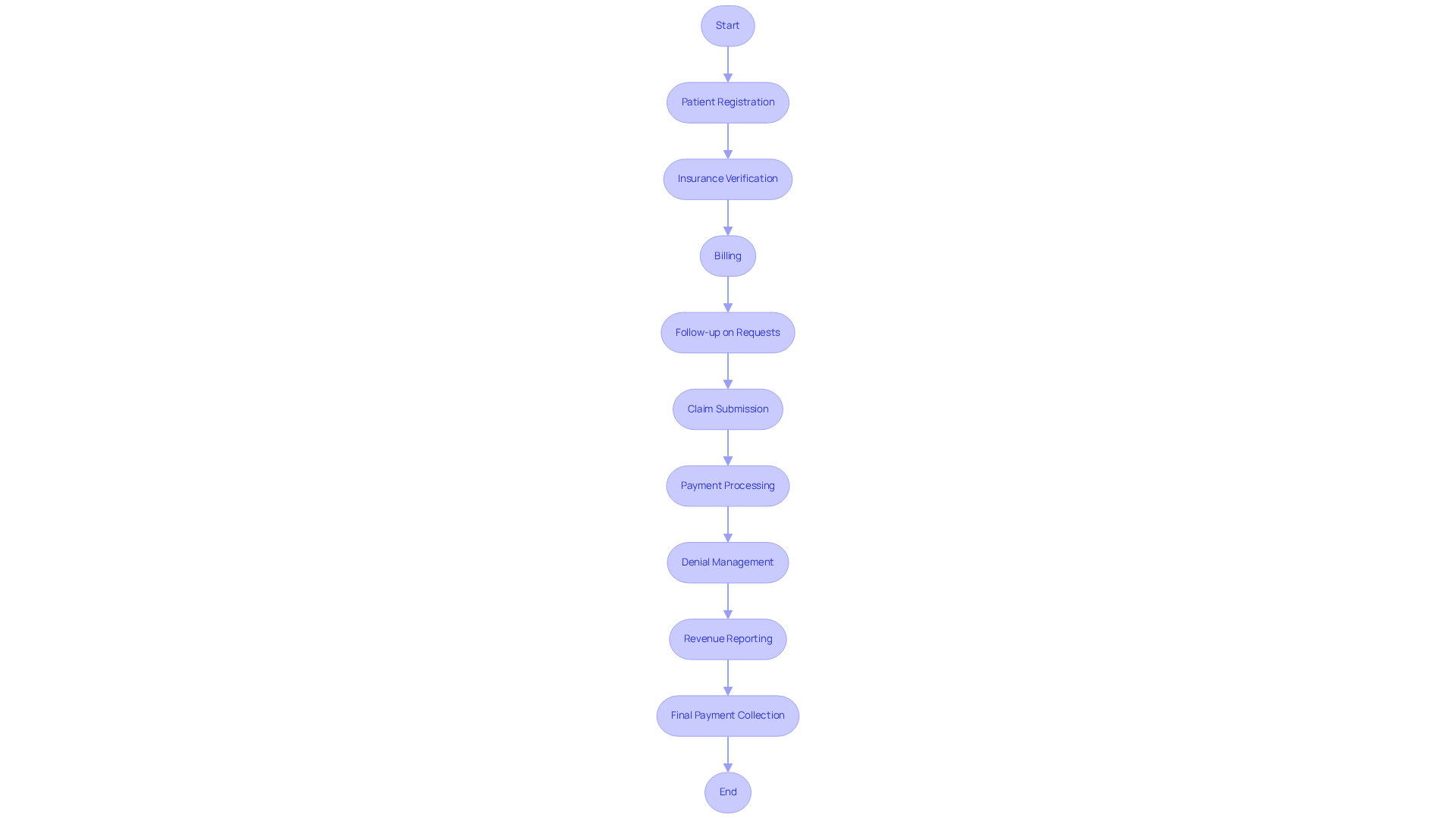
The complexity of Revenue Cycle Management (RCM) in mental wellness clinics poses significant challenges that can impact financial viability. The 13 steps of revenue cycle management encompass all administrative and clinical functions related to capturing, managing, and collecting service revenue, starting with scheduling and extending to final payment collection. It is essential for ensuring that mental wellness practices operate effectively and maintain economic sustainability, allowing providers to focus on delivering quality care.
This process includes several critical stages such as:
- Patient registration
- Insurance verification
- Billing
- Follow-up on requests
It is designed to meet the unique needs of mental health services and aligns with the 13 steps of revenue cycle management. Implementing effective RCM practices can improve reimbursement timelines, with automation tools increasing payment efficiency by 15-25% within 30-90 days, positively affecting financial sustainability.
Furthermore, maintaining high-quality clinical documentation is crucial, as it ensures compliance and reduces the likelihood of costly claim denials, which can significantly hinder revenue, leading to substantial financial losses. Insurance verification is vital to confirm eligibility and benefits, assisting in minimizing these reimbursement denials.
As mental wellness practices expand, the intricacy of managing the revenue cycle grows, necessitating organized processes and reliable workflows that align with the 13 steps of revenue cycle management to ensure economic sustainability.
Healthcare Partners Consulting, a veteran-owned firm with 39 years of expertise, focuses on streamlining administrative and billing services for mental wellness practices, ensuring compliance and enhancing patient statements and claims management. Allister Liberato emphasizes that understanding RCM helps behavioral leaders create reliable operational processes and reduces the administrative burden on clinicians and staff.
Outline the 13 Steps of Revenue Cycle Management
The 13 steps of revenue cycle management (RCM) are essential for optimizing financial performance and ensuring compliance with healthcare regulations in mental wellness clinics. As a veteran-owned company with 39 years of experience specializing in medical and mental health billing, Healthcare Partners Consulting emphasizes a compliance-first approach throughout these steps, which include:
- Pre-Registration: Collecting individual information before the appointment is crucial for reducing errors and improving claim accuracy. Effective pre-registration significantly enhances the experience of individuals and streamlines the billing process.
- Appointment Scheduling: Organizing meetings based on availability and individual needs ensures efficient use of resources and maximizes flow.
- Insurance Verification: Confirming insurance coverage and benefits for individuals helps reduce the risk of reimbursement denials. These denials can represent nearly 30% of revenue loss in behavioral practices. The average denial rate for behavioral health claims in 2026 ranges from 10% to 20%, emphasizing the importance of thorough verification.
- Check-In: Gathering necessary documentation and confirming details upon arrival is vital for accurate billing and compliance.
- Clinical Documentation: Accurately recording encounters and treatment details is essential for billing and regulatory compliance, aligning with standards established by the No Surprises Act.
- Charge Capture: Documenting services provided ensures that all billable activities are captured, maximizing revenue potential.
- Submission of Requests: Sending requests to insurance companies for reimbursement must be done accurately to avoid delays and denials.
- Payment Posting: Documenting payments received from patients and insurers is essential for maintaining accurate records and cash flow.
- Denial Management: Addressing and resolving denied requests is critical for revenue recovery. Implementing robust denial management strategies can significantly lower denial rates and enhance overall economic health.
- Accounts Receivable Management: Monitoring outstanding balances and following up on unpaid claims ensures timely collections and enhances cash flow.
- Patient Billing: Sending statements to patients for any remaining balances promotes transparency and assists patients in understanding their monetary responsibilities.
- Reporting and Analysis: Evaluating performance and identifying areas for improvement is essential for strategic planning and operational efficiency.
- Compliance Checks: Ensuring adherence to healthcare regulations and payer requirements throughout the process protects the practice from potential legal and financial repercussions.
Following these steps allows mental wellness clinics to enhance their 13 steps of revenue cycle management. This improvement leads to better cash flow and ultimately better care for individuals. Case studies have shown that practices investing in end-to-end RCM technology can see a 20-30% improvement in cash flow within the first year, highlighting the importance of effective RCM strategies. Furthermore, establishing strong cybersecurity protocols is essential, as 93% of healthcare organizations faced a cyberattack in the past year, which can interfere with care delivery. Ultimately, neglecting effective RCM strategies can jeopardize both financial stability and the quality of care provided to individuals.

Explain the Importance of Each Step in the Revenue Cycle
Navigating the revenue cycle is critical for mental health clinics, as each phase directly influences financial stability and patient satisfaction. At Healthcare Partners Consulting, we recognize how crucial these steps are:
- Pre-Registration: Collecting accurate data at this stage minimizes errors later, which significantly reduces the chances of claim denials. For instance, implementing automated eligibility verification can enhance clean submission rates to over 95%. A case study on erroneous information regarding individuals highlights that discrepancies can lead to rejection of submissions, emphasizing the need for thorough pre-registration processes.
- Scheduling for Clients: Efficient scheduling optimizes provider time and enhances satisfaction, ensuring that clinics can serve more individuals effectively.
- Insurance Verification: Confirming coverage prevents denial of reimbursements and ensures individuals are aware of their financial responsibilities, which is crucial in a landscape where mental health reimbursement policies frequently change. Incorrect eligibility details often lead to claim denials, creating financial strain for clinics and unexpected bills for patients.
- Patient Check-In: Streamlined check-in processes improve patient flow and reduce wait times, contributing to a better overall experience.
- Clinical Documentation: Thorough documentation supports accurate billing and compliance with regulations, which is essential for avoiding costly denials that can range from 10% to 20% for behavioral health claims. This statistic highlights the economic implications of inaccuracies in documentation.
- Charge Capture: This step ensures that all services rendered are billed, maximizing revenue and preventing revenue leaks.
- Claims Submission: Timely submission is crucial for prompt payment from insurers, as delays can lead to cash flow issues. Investing in end-to-end RCM technology can significantly enhance this process, leading to improved economic outcomes.
- Payment Posting: Accurate posting of payments helps maintain clear financial records, which is essential for effective accounts receivable management.
- Denial Management: Proactive management of denials is essential for recovering lost revenue, with practices that implement regular audits seeing denial reductions of 20-30%. Each rejected submission incurs a cost of $25 to $45 to resubmit, which can strain practice finances and limit resources available for care.
- Accounts Receivable Management: Effective follow-up on unpaid claims enhances cash flow, enabling clinics to concentrate more on care rather than administrative tasks.
- Patient Billing: Clear communication with patients regarding their bills fosters trust and transparency, which is vital for patient retention.
- Reporting and Analysis: Regular examination of data helps identify trends and areas for improvement, enabling clinics to adapt to changing market conditions.
- Compliance Checks: Ensuring compliance protects the clinic from legal issues and monetary penalties, safeguarding its operational integrity.
By mastering the 13 steps of revenue cycle management, clinics can improve their financial health and enhance the quality of care they provide to their patients. Healthcare Partners Consulting is dedicated to empowering healthcare providers by alleviating administrative burdens, enabling them to concentrate on what matters most: care for their patients.

Identify Challenges in Revenue Cycle Management for Mental Health Clinics
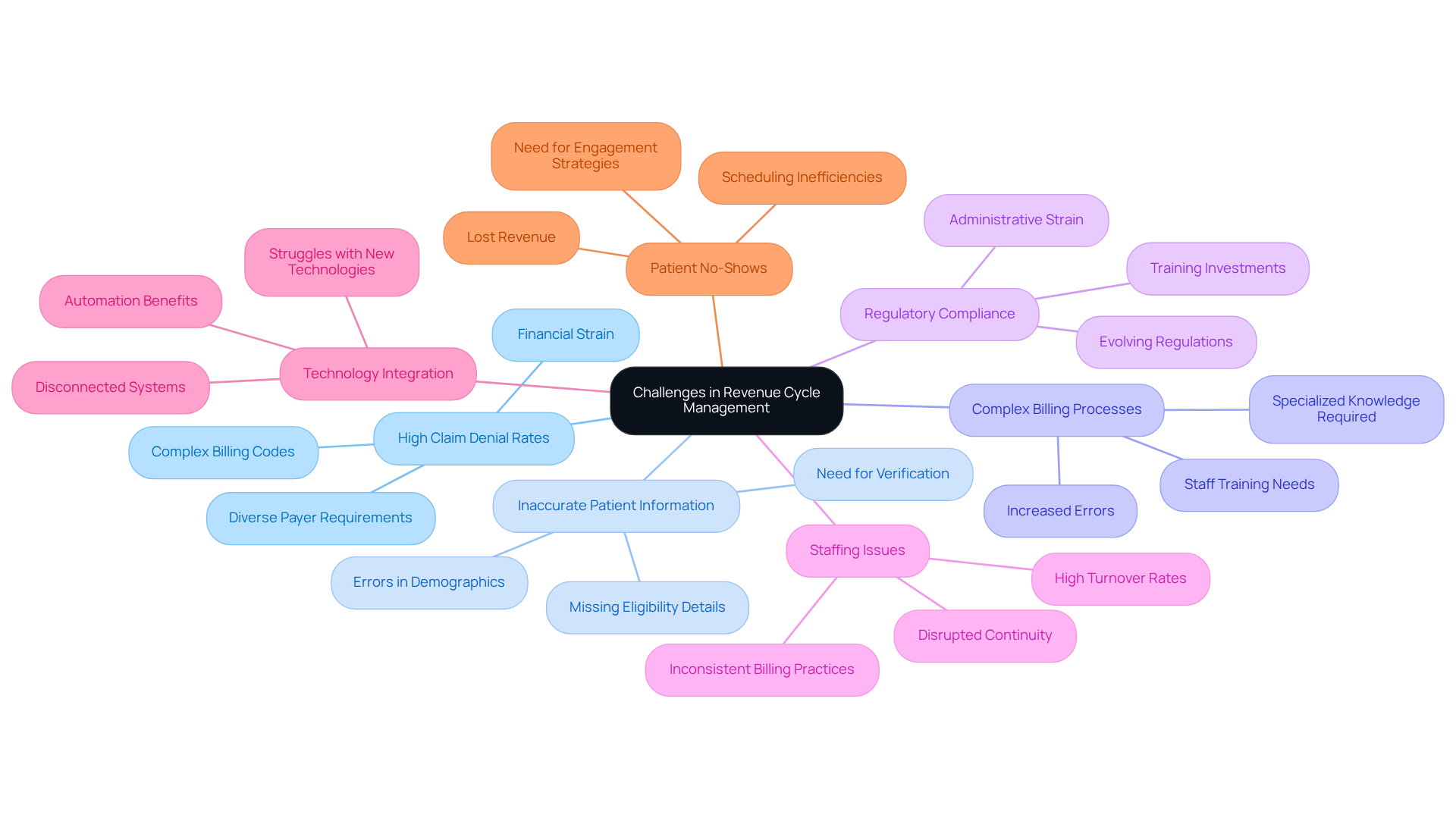
Mental health clinics face numerous challenges in revenue cycle management that can significantly impact their financial stability and operational efficiency:
- High Claim Denial Rates: Mental health services often involve complex billing codes and diverse payer requirements, leading to claim denial rates that can reach as high as 10% to 15%. These high denial rates create significant financial strain on clinics. This delays revenue and increases the administrative burden from necessary rework. To mitigate these issues, effective management strategies are essential within the 13 steps of revenue cycle management.
- Inaccurate Patient Information: Errors in patient data, such as incorrect demographics or missing eligibility details, frequently lead to rejections of submissions. These inaccuracies can stem from inadequate front-end processes, emphasizing the need for thorough verification before claims submission.
- Complex Billing Processes: The unique nature of mental wellness services necessitates specialized knowledge for accurate billing. This complexity can lead to increased errors and inefficiencies, particularly if staff are not adequately trained in the nuances of mental health billing.
- Regulatory Compliance: Keeping pace with evolving regulations, such as those introduced by the No Surprises Act, can be overwhelming. Clinics must invest in ongoing training and resources to ensure compliance, which can strain administrative capacities.
- Staffing Issues: High turnover rates in administrative roles disrupt the continuity of revenue cycle processes. This instability can lead to inconsistent billing practices and increased denial of claims, further complicating financial management.
- Technology Integration: Many clinics struggle to integrate new technologies into existing workflows. Disconnected systems can worsen inefficiencies, making it challenging to track requests and manage information effectively. Automation of eligibility checks, claim status updates, and statements is assisting revenue cycle teams in concentrating on high-value work.
- Patient No-Shows: High rates of missed appointments not only lead to lost revenue but also create scheduling inefficiencies. This issue becomes more pressing as patients take on greater financial responsibility for their care, necessitating improved engagement strategies.
Addressing these challenges requires a proactive approach, including investing in staff training, adopting integrated technology solutions, and streamlining processes to enhance the 13 steps of revenue cycle management and improve overall efficiency and financial performance. Healthcare Partners Consulting offers a quick quiz to evaluate your mental wellness practice’s profitability, helping to identify hidden revenue leaks and providing tailored recommendations for enhanced efficiency and billing accuracy. With 39 years of experience and a veteran-owned status, HPC specializes in customized administrative support services tailored to the unique needs of mental health practices, ensuring compliance and operational excellence. U.S. healthcare organizations spend an estimated $440 billion each year on administrative tasks, highlighting the importance of addressing these challenges effectively. Addressing these challenges is not just beneficial; it is essential for the sustainability of mental health practices in an increasingly complex healthcare landscape.
Conclusion
Navigating the complexities of revenue cycle management is essential for mental health clinics facing financial pressures and operational challenges. By focusing on these 13 steps, clinics can streamline their processes, reduce administrative burdens, and ultimately provide better care for their patients. Focusing on compliance and understanding payer behavior is vital for practices to thrive in today’s complex healthcare environment.
Throughout the article, key insights were shared regarding the importance of each step in the revenue cycle, from pre-registration to compliance checks. Effective management of these steps can significantly reduce claim denials, improve cash flow, and enhance patient satisfaction. The challenges faced by mental health clinics, such as high denial rates and complex billing processes, highlight the need for specialized knowledge and robust systems to navigate the intricacies of revenue cycle management.
In conclusion, empowering healthcare providers by alleviating administrative burdens is essential for allowing them to focus on what truly matters: patient care. Investing in tailored revenue cycle management practices helps clinics maintain financial stability while enhancing the quality of care they provide. Without expert guidance, clinics risk falling behind in a competitive landscape, jeopardizing both their financial health and the quality of care they provide.
Frequently Asked Questions
What is Revenue Cycle Management (RCM) in mental health clinics?
Revenue Cycle Management (RCM) in mental health clinics refers to the complex process that encompasses all administrative and clinical functions related to capturing, managing, and collecting service revenue, starting from scheduling to final payment collection.
What are the key stages involved in the RCM process?
The key stages involved in the RCM process include patient registration, insurance verification, billing, and follow-up on requests.
Why is RCM important for mental wellness practices?
RCM is essential for ensuring that mental wellness practices operate effectively and maintain economic sustainability, allowing providers to focus on delivering quality care.
How can effective RCM practices impact reimbursement timelines?
Implementing effective RCM practices can improve reimbursement timelines, with automation tools increasing payment efficiency by 15-25% within 30-90 days, positively affecting financial sustainability.
What role does clinical documentation play in RCM?
High-quality clinical documentation is crucial as it ensures compliance and reduces the likelihood of costly claim denials, which can significantly hinder revenue and lead to substantial financial losses.
Why is insurance verification important in the RCM process?
Insurance verification is vital to confirm eligibility and benefits, assisting in minimizing reimbursement denials.
How does the complexity of RCM change as mental wellness practices expand?
As mental wellness practices expand, the intricacy of managing the revenue cycle grows, necessitating organized processes and reliable workflows that align with the 13 steps of revenue cycle management to ensure economic sustainability.
What expertise does Healthcare Partners Consulting offer in relation to RCM?
Healthcare Partners Consulting, a veteran-owned firm with 39 years of expertise, focuses on streamlining administrative and billing services for mental wellness practices, ensuring compliance and enhancing patient statements and claims management.