
Introduction
Navigating the financial complexities of mental health clinics presents significant challenges, particularly with varying insurance policies and patient payment plans. Revenue cycle management software emerges as a vital tool, designed to streamline these processes, enhance cash flow, and ensure compliance with healthcare regulations.
Many healthcare professionals face significant challenges due to high rates of claim denials. This raises a critical inquiry: how can mental health providers leverage this technology to stabilize their revenue and enhance patient care? Tackling these challenges is crucial for improving financial stability and the quality of patient care.
Define Revenue Cycle Management Software
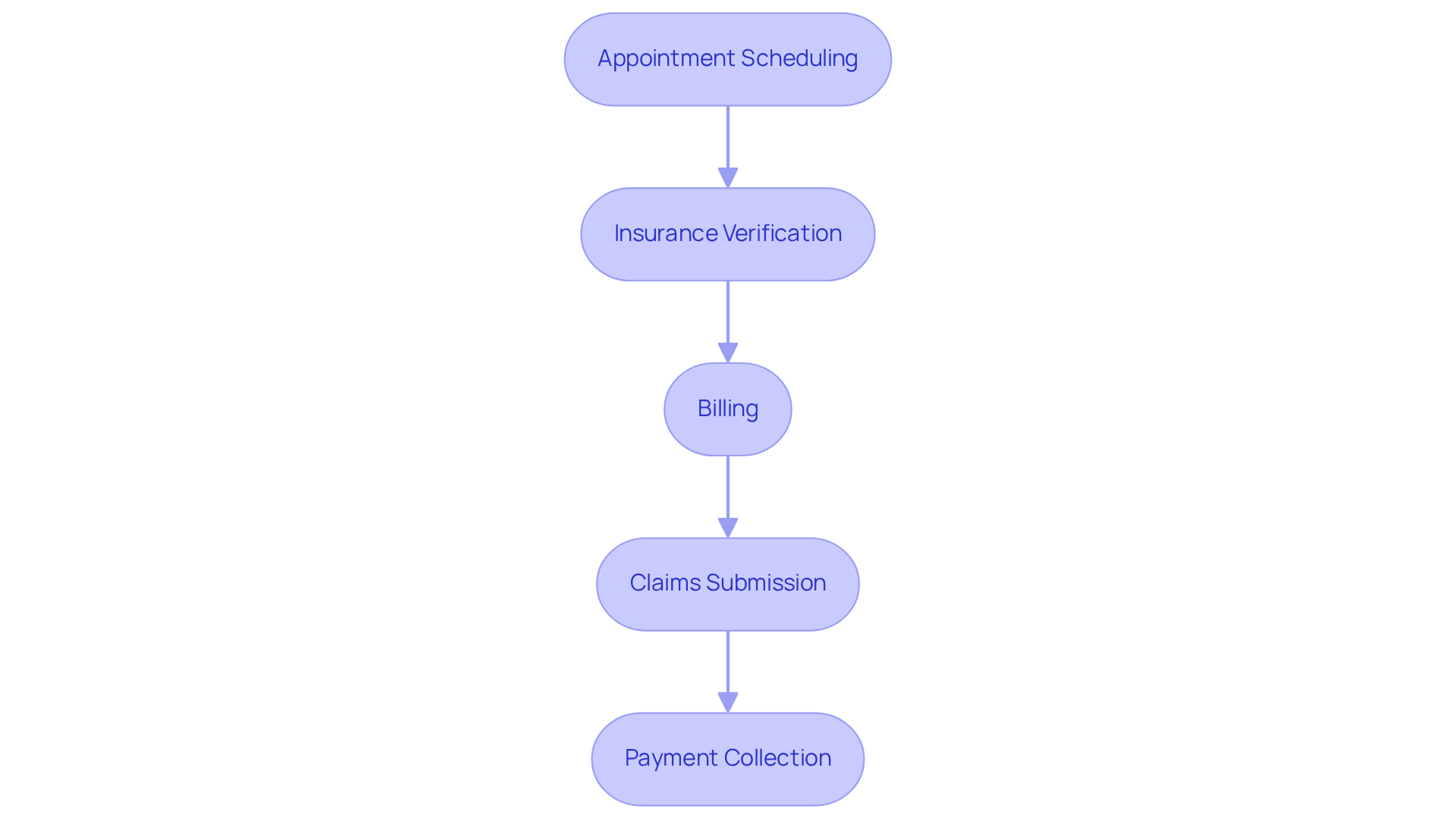
Managing the financial processes in mental wellness clinics presents unique challenges that require specialized solutions. Revenue cycle management software is a specialized solution designed to manage the financial processes related to care in mental wellness clinics. This software manages the entire financial journey of an individual. It starts with appointment scheduling and insurance verification, then moves to billing, claims submission, and payment collection. By automating various tasks, revenue cycle management software significantly alleviates administrative burdens and ensures adherence to healthcare regulations, a critical component in the dynamic field of mental wellness services. This streamlining enables clinics to focus more on delivering quality care, ultimately leading to improved outcomes and satisfaction.
Healthcare Partners Consulting & Billing, LLC (HPC), a veteran-owned firm with 39 years of expertise specializing in medical and mental wellness billing, emphasizes a compliance-first approach in navigating the complexities of mental wellness billing. Research indicates that effective revenue cycle management software practices enhance cash flow, minimize errors, and boost satisfaction among individuals, making it an essential tool for mental wellness providers. For instance, optimizing RCM processes has been shown to decrease the time between claim submission and payment, thereby fostering a more predictable revenue stream. Case studies indicate that facilities utilizing robust revenue cycle management software have effectively reduced revenue leakage and enhanced operational efficiency, underscoring the significance of revenue cycle management software in ensuring financial stability and improving the overall experience for individuals receiving care.
For more information or to schedule a meeting, please contact us at info@hpcbilling.com or call 888-517-4992. We are available nationwide, Monday-Friday. By leveraging effective RCM practices, clinics can not only stabilize their revenue but also enhance the quality of care they provide.
Explain the Importance for Mental Health Clinics
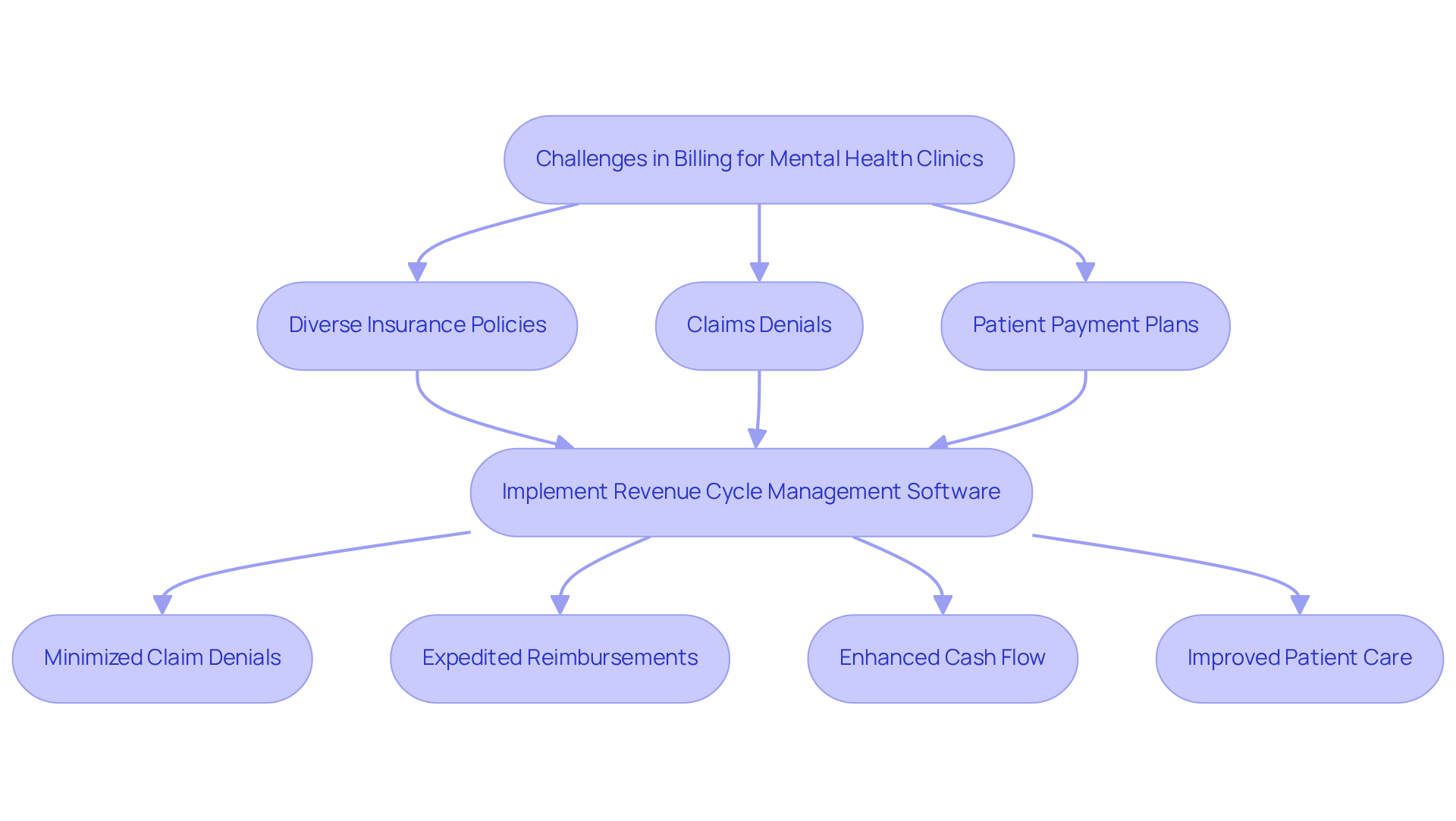
Navigating the complexities of billing is a significant challenge for mental wellness facilities. These facilities often deal with diverse insurance policies and patient payment plans. Revenue cycle management software offers a structured solution to these challenges. It enhances cash flow by minimizing claim denials and expediting reimbursements, which is vital for the financial sustainability of mental health practices.
Statistics indicate that over 75% of healthcare professionals struggle with the burden of claims denials, which can disrupt financial stability. Each denied claim costs practices between $25 and $45 to resubmit. By implementing revenue cycle management software, clinics can streamline their operations, ensure compliance with healthcare regulations, and reduce the risk of audits and penalties. This software boosts operational efficiency and allows providers to focus on patient care instead of getting bogged down by administrative tasks.
Case studies reveal that smaller behavioral agencies, often lacking dedicated billing teams, face financial instability due to under-coding and insufficient follow-up on denied claims. By leveraging revenue cycle management software, these practices can enhance their revenue cycle management, ultimately leading to improved outcomes for individuals and access to care. Ultimately, the right revenue cycle management software can redefine financial stability while enhancing patient care.
Outline Key Features and Functionalities
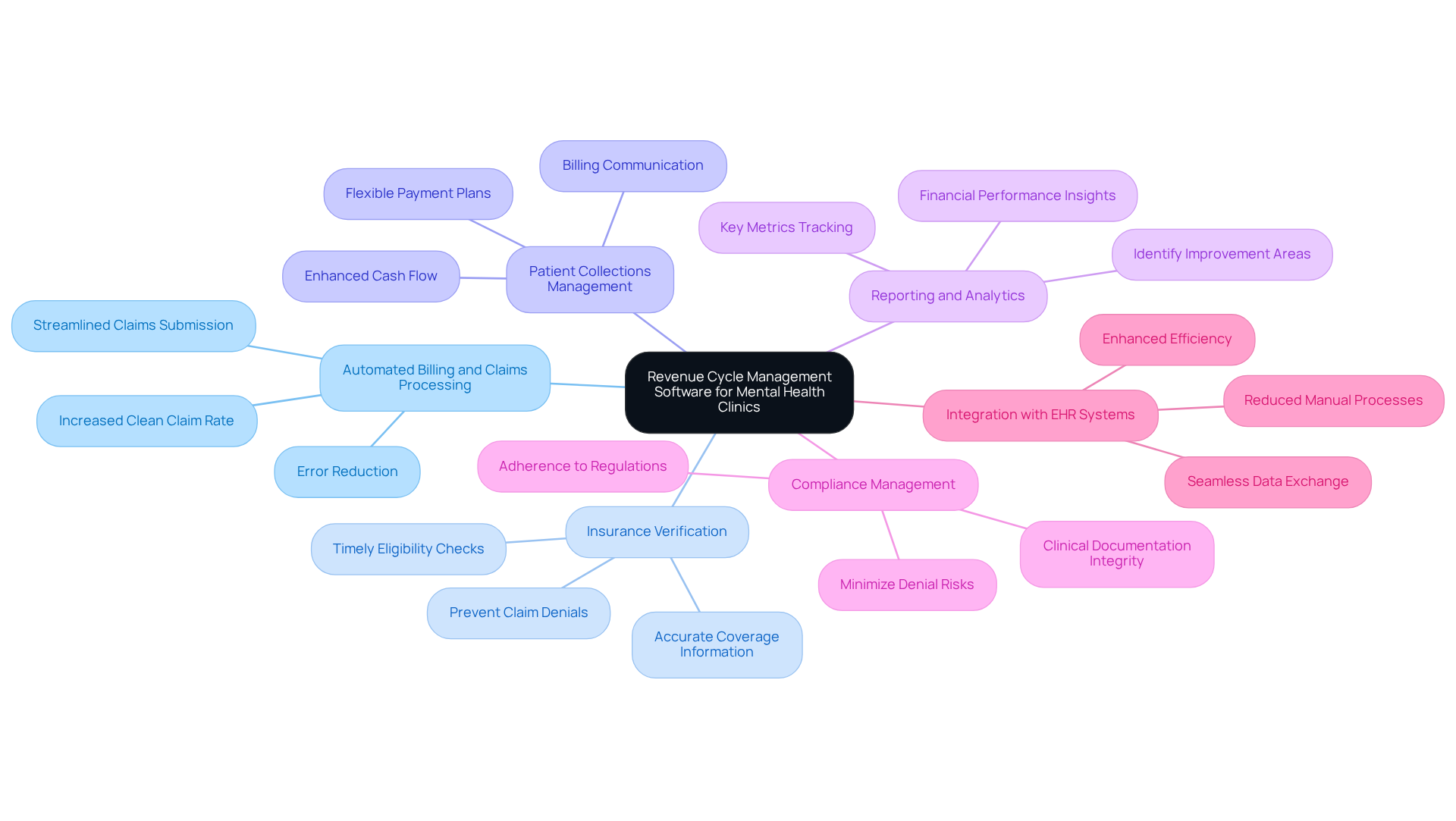
Mental health clinics face unique challenges in managing their revenue cycles, necessitating specialized software solutions. Key features and functionalities of revenue cycle management software for mental health clinics include:
- Automated Billing and Claims Processing: This feature streamlines the billing process by automating claims submission and tracking, significantly reducing the likelihood of errors and denials. Automated tools can flag issues before claims submission, increasing the clean claim rate and ensuring timely reimbursements. Training intake staff to collect complete demographic and payer information is crucial for preventing claim denials.
- Insurance Verification: Accurate and current insurance information for individuals is crucial for facilitating smoother claims processing. Effective eligibility checks help prevent claim denials due to incorrect coverage, which can take 30-60 days to surface.
- Patient Collections Management: RCM software provides tools for managing patient payments, including flexible payment plans and reminders, which enhance cash flow. Clinics that communicate billing clearly and provide cost estimates can enhance collections and lower outstanding balances. Optimized behavioral revenue cycle management can yield 10-20% more income than general medical billing methods.
- Reporting and Analytics: Comprehensive reporting features provide insights into financial performance, enabling healthcare facilities to track key metrics such as days in accounts receivable and claim denial rates. Practices that monitor these indicators can identify areas for improvement and optimize their revenue cycle. A strong Net Collection Rate for therapy practices is 92% or above, serving as a benchmark for performance.
- Compliance Management: Upholding adherence to healthcare regulations is crucial for mental wellness clinics. Revenue cycle management software helps ensure that billing practices meet legal standards and that clinical documentation aligns with payer requirements, thereby minimizing denial risks. Clinical documentation integrity and adherence to mental parity laws are essential in behavioral RCM.
- Integration with EHR Systems: Seamless data exchange between electronic medical records and billing systems is facilitated by RCM software, enhancing overall efficiency and accuracy. This integration helps reduce manual processes, which can lead to errors and inefficiencies.
Have you considered that clinics verifying eligibility before each session and addressing denials within 72 hours can collect 94 to 97 percent of earned revenue? These features together enable mental wellness clinics to optimize their revenue cycle, improve operational efficiency, and concentrate on providing quality patient care. Without these features, mental wellness clinics may struggle to optimize their revenue cycle, leading to financial instability. As a veteran-owned business with 39 years of experience, Healthcare Partners Consulting is committed to delivering specialized revenue cycle management solutions customized to the distinct requirements of mental wellness practices, ensuring compliance and maximizing revenue.
Identify Challenges and Solutions in Revenue Cycle Management
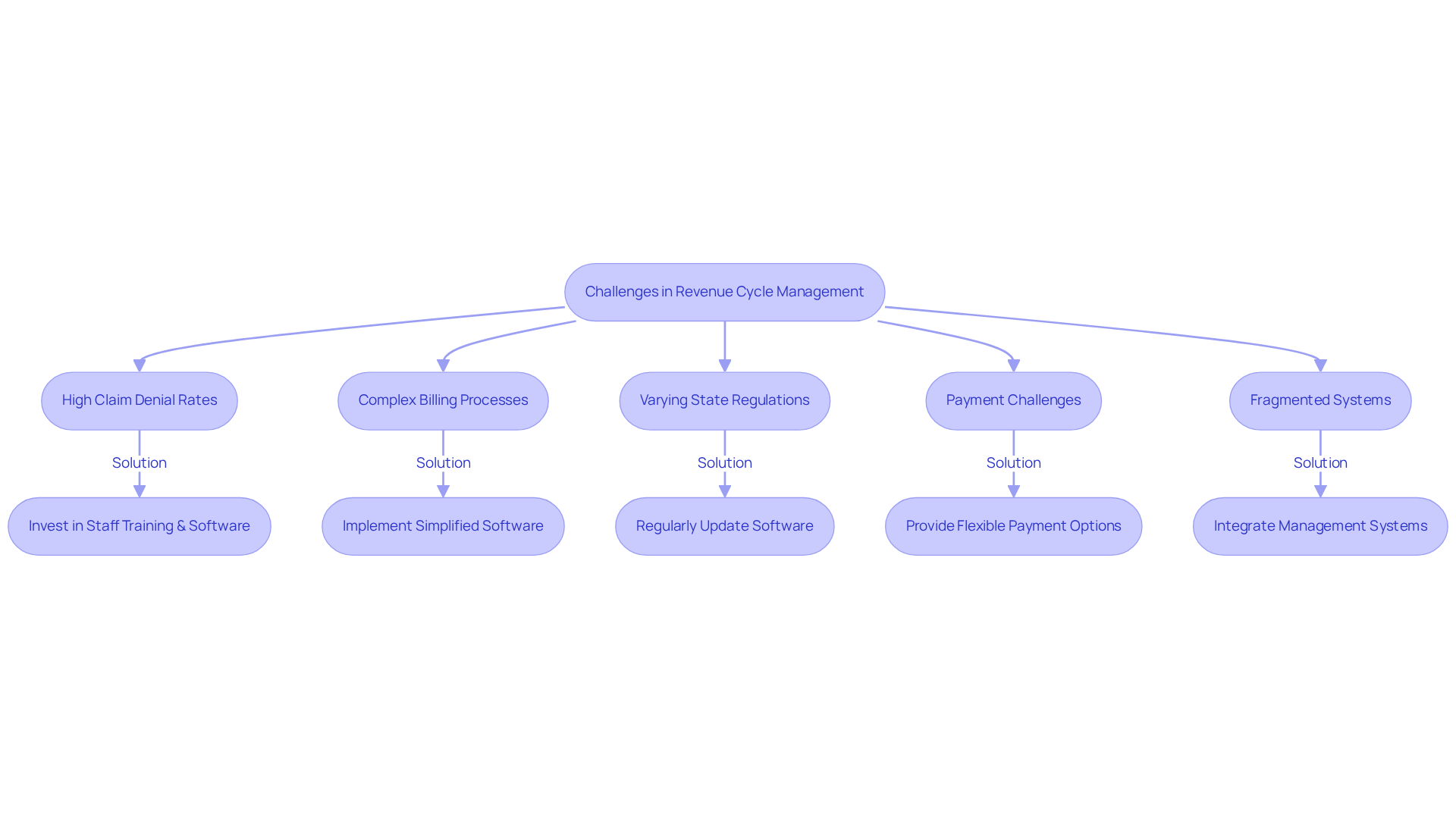
Mental wellness facilities face significant challenges in revenue cycle management that threaten their financial health. Key issues include:
- High Claim Denial Rates: Approximately 15% of claims are initially denied, often due to incorrect coding or incomplete documentation. Healthcare facilities can reduce this issue by investing in staff training for proper coding and utilizing revenue cycle management software with automated claim scrubbing. This proactive approach can significantly reduce the costs associated with appeals, which amounted to nearly $19.7 billion for hospitals in 2022.
- Complex Billing Processes: The intricacies of mental health billing can lead to confusion and errors, complicating the revenue cycle. Implementing revenue cycle management software that simplifies these processes can streamline operations and enhance accuracy, enabling healthcare facilities to focus more on patient care.
- Varying State Regulations: Adhering to diverse state regulations poses a significant challenge for healthcare facilities. Staying informed about regulatory changes is essential, and ensuring that revenue cycle management software is regularly updated can help healthcare facilities navigate these complexities effectively.
- Payment Challenges: Many individuals struggle with high deductibles or co-pays, which can impede timely collections. Providing flexible payment options and ensuring clear communication regarding costs can enhance collection rates and alleviate financial pressure on both individuals and clinics.
- Fragmented Systems: Utilizing multiple systems for billing and management can lead to inefficiencies and increased administrative burdens. Integrating revenue cycle management software with existing electronic record systems can create a more cohesive workflow, thereby enhancing overall operational efficiency.
Tackling these challenges head-on with targeted solutions can significantly improve financial outcomes for mental health clinics, ensuring financial stability and allowing them to prioritize patient care. Addressing these challenges is not just beneficial; it is essential for the sustainability of mental health practices.
Conclusion
Revenue cycle management software is crucial for mental health clinics, as it directly impacts their financial health and operational efficiency. This software automates tasks like billing, claims submission, and payment collection. As a result, it alleviates administrative burdens, enabling healthcare providers to concentrate on delivering quality patient care. The emphasis on compliance ensures that clinics navigate the complexities of mental health billing effectively, ultimately leading to improved financial stability and patient satisfaction.
Throughout the article, key insights highlight the importance of revenue cycle management software in addressing the unique challenges faced by mental health practices. From reducing claim denials and expediting reimbursements to enhancing cash flow and ensuring compliance with healthcare regulations, these advantages significantly enhance operational efficiency and financial performance. The software’s features, including automated billing, insurance verification, and comprehensive reporting, empower clinics to optimize their revenue cycles and improve overall operational efficiency.
In conclusion, the implementation of effective revenue cycle management practices is not merely advantageous; it is essential for the sustainability of mental health clinics. By investing in specialized software solutions, clinics can overcome financial challenges, enhance patient care, and secure their future in an increasingly complex healthcare landscape. Using these tools not only empowers providers but also enhances the care experience for patients. For further assistance or to explore tailored solutions, reach out to Healthcare Partners Consulting & Billing, LLC at info@hpcbilling.com or call 888-517-4992.
Frequently Asked Questions
What is revenue cycle management software?
Revenue cycle management software is a specialized solution designed to manage the financial processes related to care in mental wellness clinics. It oversees the entire financial journey of an individual, from appointment scheduling and insurance verification to billing, claims submission, and payment collection.
How does revenue cycle management software benefit mental wellness clinics?
It alleviates administrative burdens by automating various tasks, ensures adherence to healthcare regulations, and allows clinics to focus more on delivering quality care, ultimately leading to improved outcomes and satisfaction.
What are the key functions of revenue cycle management software?
The key functions include appointment scheduling, insurance verification, billing, claims submission, and payment collection.
Why is a compliance-first approach important in revenue cycle management?
A compliance-first approach is crucial in navigating the complexities of mental wellness billing, ensuring that clinics adhere to healthcare regulations and minimize errors in the billing process.
What impact does effective revenue cycle management have on cash flow?
Effective revenue cycle management practices enhance cash flow, minimize errors, and boost satisfaction among individuals, leading to a more predictable revenue stream.
How can revenue cycle management software reduce revenue leakage?
Facilities utilizing robust revenue cycle management software can effectively reduce revenue leakage and enhance operational efficiency, ensuring financial stability for the clinic.
How can clinics get more information about revenue cycle management services?
Clinics can contact Healthcare Partners Consulting & Billing, LLC at info@hpcbilling.com or call 888-517-4992 for more information or to schedule a meeting. They are available nationwide, Monday-Friday.