

Introduction
Effective revenue cycle management (RCM) is essential for the financial stability of healthcare clinics, directly impacting their operational efficiency and patient care. Covering all aspects from patient registration to payment collection, RCM is critical as the healthcare landscape changes. Providers must optimize billing processes while ensuring compliance and improving patient care.
This article examines the vital role of RCM companies in reducing administrative burdens, enabling healthcare providers to concentrate on patient care. Clinics must navigate the complexities of RCM to achieve financial stability and operational efficiency in a dynamic environment.
Define Revenue Cycle Management in Healthcare
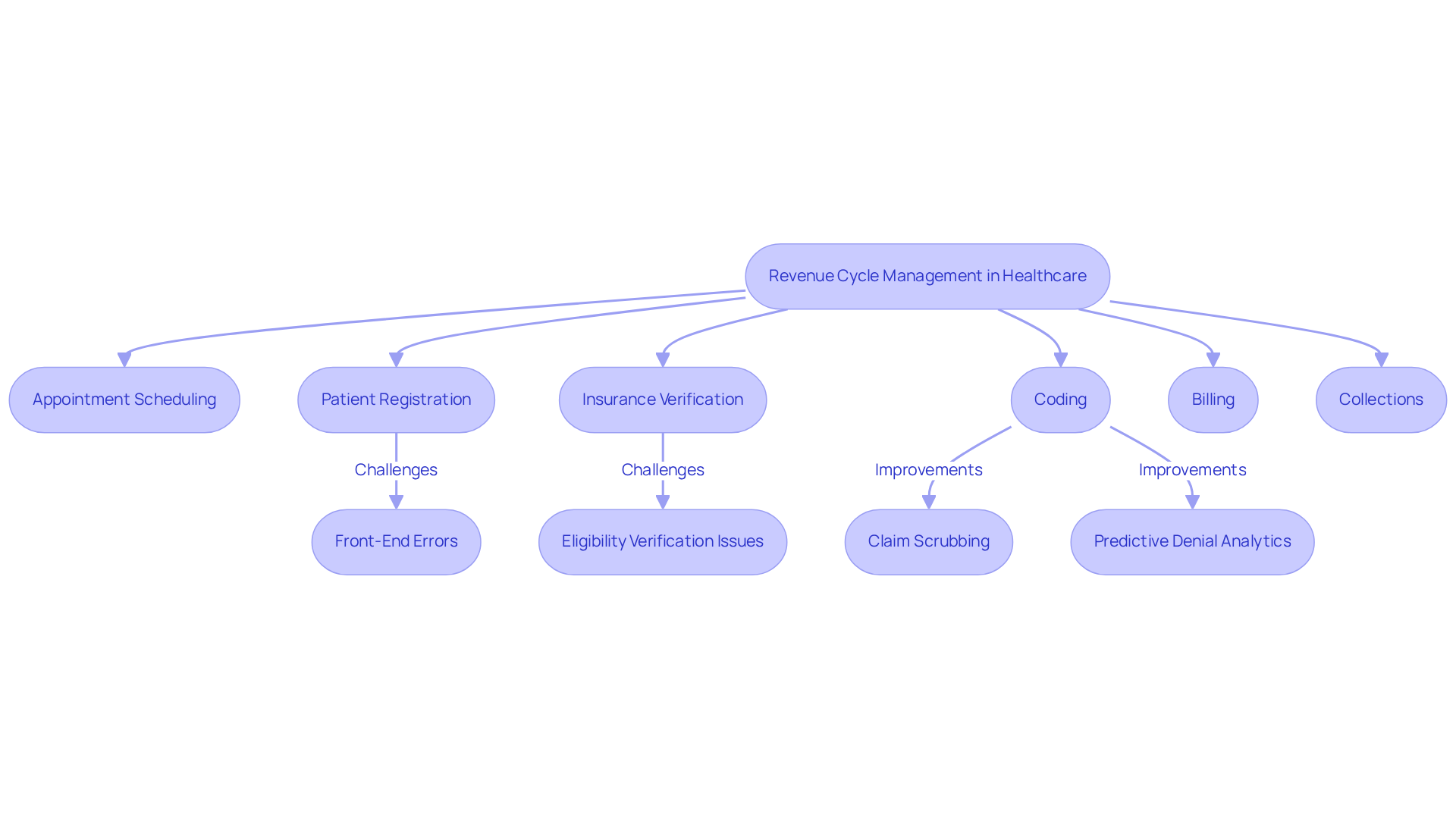
Effective revenue cycle management healthcare companies is crucial for financial health in the medical field, covering every step from appointment scheduling to payment collection. This process encompasses essential functions like patient registration, insurance verification, coding, billing, and collections. The primary objective of RCM is to ensure that providers receive timely and accurate reimbursement for their services, which is essential for maintaining financial stability and operational efficiency.
In 2026, the landscape of RCM is significantly influenced by rising patient financial expectations and the demand for transparency in billing practices. Patients are increasingly cost-conscious, expecting clear and itemized cost estimates similar to those provided by financial institutions. This shift necessitates that revenue cycle management healthcare companies optimize their processes to minimize revenue leakage and enhance patient satisfaction.
Statistics reveal significant challenges for providers today:
- Over 60% of denial issues stem from front-end errors.
- 43% of providers identify eligibility verification as a critical area needing improvement due to new regulations.
- Moreover, revenue cycle management healthcare companies that fully operationalize AI in their processes report 13 to 37% fewer denials, demonstrating how technology can enhance operational efficiency and financial results.
Case studies illustrate the effectiveness of RCM strategies. For instance, high-performing revenue cycle teams are focusing on claim scrubbing and predictive denial analytics to enhance first-pass acceptance rates, which are now the key metric for success in RCM. As operations adapt to these evolving trends, they can anticipate enhancements in cash flow predictability and overall operational efficiency, ultimately enabling them to focus more on patient care. By adapting to these trends, healthcare organizations can not only enhance their financial outcomes but also prioritize patient care more effectively.
Explain the Importance of RCM Companies for Healthcare Practices
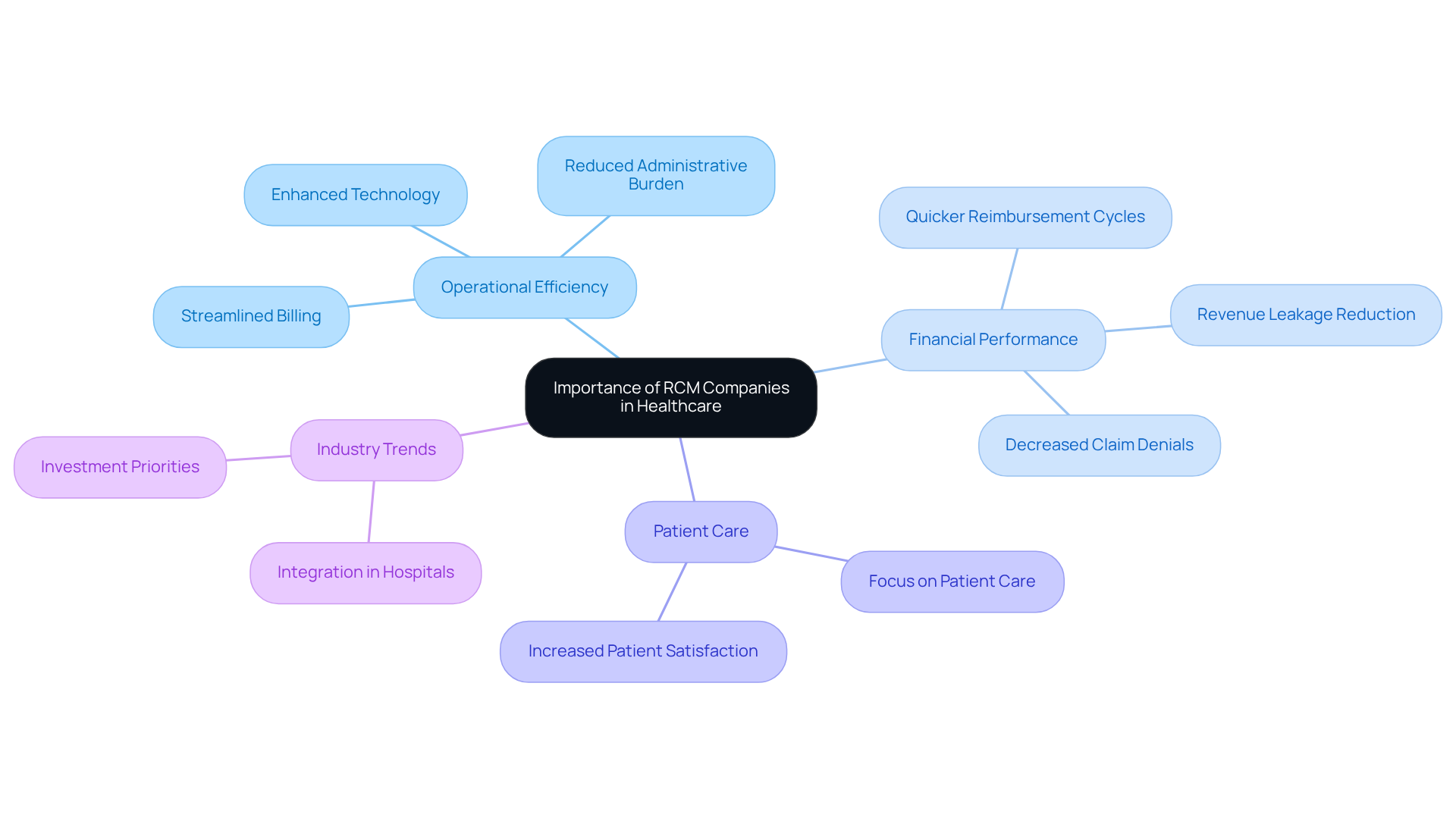
Revenue cycle management healthcare companies are essential in transforming the operational landscape of medical practices. They streamline billing processes, alleviate administrative burdens, and improve efficiency in revenue cycle management for healthcare companies. Outsourcing functions related to revenue cycle management healthcare companies allows healthcare providers to focus more on patient care instead of the complexities of billing and collections. These revenue cycle management healthcare companies utilize specialized expertise and cutting-edge technology to enhance their revenue cycles, ensuring precise and timely submissions that reduce payment delays.
The importance of revenue cycle management healthcare companies is highlighted by the fact that entities utilizing these services often experience a significant decrease in claim denials and quicker reimbursement cycles, both of which are vital for sustaining a healthy cash flow. For instance, organizations that implement effective denial management strategies can significantly reduce revenue leakage and enhance reimbursement rates. Additionally, revenue cycle management healthcare companies help healthcare providers navigate the intricacies of insurance policies and regulatory compliance, ultimately leading to enhanced financial performance and increased patient satisfaction.
Interestingly, more than 78% of U.S. hospitals have now integrated services from revenue cycle management healthcare companies into their operations, reflecting a growing recognition of the benefits these companies provide. Furthermore, medical leaders are increasingly prioritizing investments in revenue cycle management healthcare companies initiatives to enhance operational efficiency and reduce costs amid rising administrative complexities. Consequently, revenue cycle management healthcare companies are not merely service providers; they are vital allies in helping medical organizations to flourish in a challenging financial environment.
Outline Key Components of Revenue Cycle Management
Effective revenue cycle management for healthcare companies is crucial for the financial health of behavioral and mental health practices. Key components include:
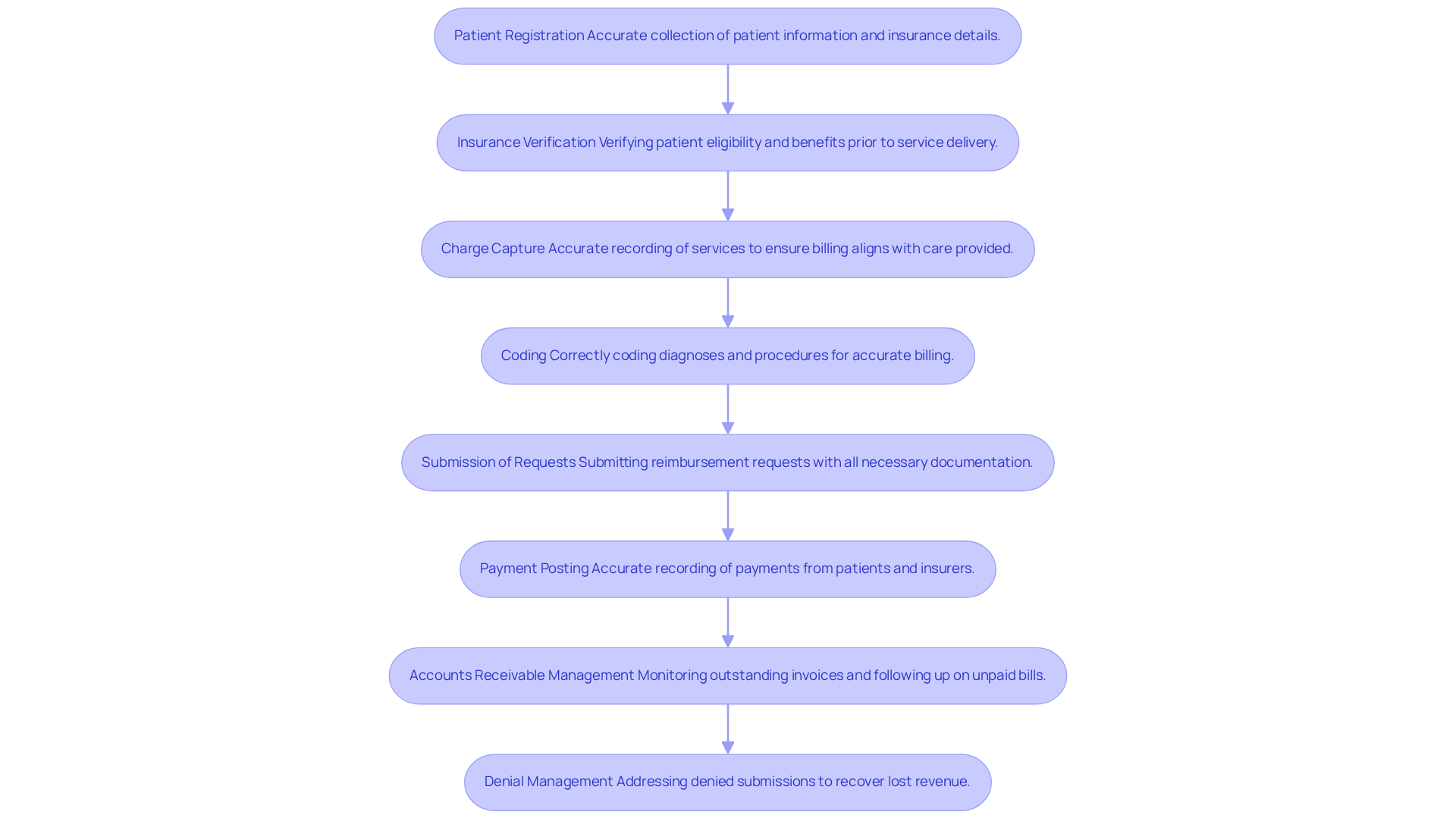
- Patient Registration: Accurate collection of patient information and insurance details at the outset is crucial for smooth processing. Mistakes in patient registration can lead to significant financial setbacks for practices, as research indicates that 50% to 65% of denied submissions are never resubmitted. Healthcare Partners Consulting, a veteran-owned company with 39 years of experience, highlights the importance of this step to enhance operational efficiency.
- Insurance Verification: Verifying patient eligibility and benefits prior to service delivery is crucial to avoid reimbursement denials. Implementing real-time eligibility verification at multiple touchpoints can reduce denial rates by an estimated 20-30%, aligning with Healthcare Partners Consulting’s commitment to compliance and accuracy.
- Charge Capture: Accurate recording of services ensures billing aligns with the care provided. This step is essential for maximizing revenue and maintaining compliance, which is a core focus of Healthcare Partners Consulting’s services.
- Coding: Correctly coding diagnoses and procedures is essential for accurate billing and regulatory compliance. Regular coding audits can help maintain high accuracy and avoid costly denials, reinforcing the expertise that Healthcare Partners Consulting brings to its clients.
- Submission of Requests: Submitting reimbursement requests to insurers requires all necessary documentation for timely payments. A clean submission rate above 95% is a realistic target for well-managed practices, and Healthcare Partners Consulting strives to achieve this standard for its clients.
- Payment Posting: Accurate recording of payments from patients and insurers is crucial for maintaining financial records. Efficient posting processes can enhance cash flow and operational efficiency, which Healthcare Partners Consulting prioritizes in its billing services.
- Accounts Receivable Management: Monitoring outstanding invoices and following up on unpaid bills is essential for timely collections. Practices should aim for days in accounts receivable to be under 35 days to maintain financial health, a goal supported by Healthcare Partners Consulting’s expertise.
- Denial Management: Addressing denied submissions is vital for recovering lost revenue and improving future claims. Implementing a proactive denial management program can significantly enhance overall claim acceptance rates, reflecting Healthcare Partners Consulting’s dedication to empowering medical providers.
Each of these components plays a crucial role in ensuring that providers, particularly in mental health, are compensated efficiently and effectively by revenue cycle management healthcare companies, ultimately allowing them to concentrate more on patient care.
Identify Challenges in Revenue Cycle Management and Solutions Offered by RCM Companies
In 2026, revenue cycle management healthcare companies will face significant challenges that threaten the financial stability of healthcare practices.
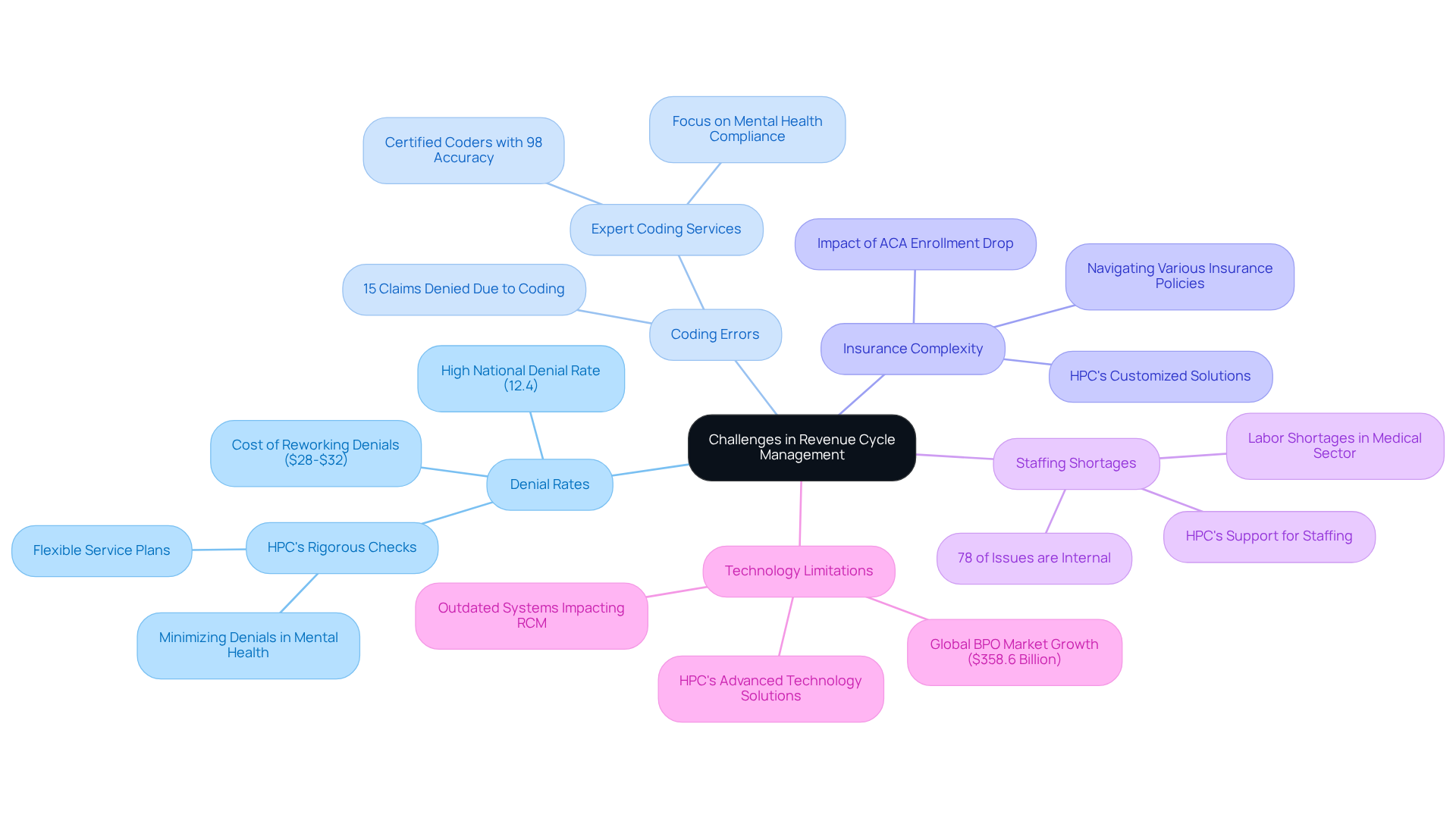
- Denial Rates: The national denial rate for submissions reached a decade-high of 12.4% in 2025, with each rejected submission costing between $28 and $32 to rework. High denial rates create significant financial strain on healthcare practices, necessitating effective strategies from revenue cycle management healthcare companies. Revenue cycle management healthcare companies, including Healthcare Partners Consulting & Billing, LLC (HPC), implement rigorous checks and balances to ensure submissions are accurate the first time. HPC’s specialty-focused, relationship-driven service is designed to minimize denials, particularly in mental and behavioral health, and offers flexible service plans tailored to the unique needs of healthcare settings.
- Coding Errors: Approximately 15% of claims are initially denied due to coding inaccuracies, leading to payment delays and compliance issues. Revenue cycle management healthcare companies provide expert coding services, employing certified coders with accuracy rates exceeding 98% to minimize errors and ensure adherence to regulations. With 39 years of experience, the certified experts at Healthcare Partners Consulting are dedicated to improving coding accuracy and compliance, particularly for organizations focused on mental health.
- Insurance Complexity: Navigating the intricacies of various insurance policies can be daunting for healthcare providers, especially with the recent drop in ACA marketplace enrollment, which has increased the number of patients with high-deductible plans. Revenue cycle management healthcare companies offer expertise in navigating these complexities, ensuring that operations remain compliant and maximize reimbursements. HPC’s customized solutions assist organizations in navigating these challenges effectively, concentrating on the distinct needs of mental and behavioral health providers.
- Staffing Shortages: Numerous medical facilities encounter staffing difficulties, which can result in inefficiencies in the revenue cycle. With labor shortages prevalent in the medical sector, revenue cycle management healthcare companies can enhance operational efficiency by supplementing staff with trained professionals who specialize in revenue cycle processes. Significantly, 78% of revenue cycle issues are internal to the organization, highlighting the necessity for entities to tackle internal staffing challenges as part of their RCM strategy. Healthcare Partners Consulting’s veteran-owned status and extensive experience allow them to provide the necessary support to overcome these staffing hurdles.
- Technology Limitations: Outdated systems can hinder effective RCM, especially as the complexity of healthcare administration increases. The global BPO market is projected to reach $358.6 billion by 2026, highlighting the importance of technology in RCM. RCM companies frequently offer advanced technology solutions that streamline processes and enhance data analytics capabilities, enabling revenue cycle management healthcare companies to improve their operations. Healthcare Partners Consulting utilizes cutting-edge technology to empower healthcare providers, ensuring they can focus on patient care while optimizing their financial health.
By addressing these challenges, healthcare providers can not only enhance their operational efficiency but also ensure their financial sustainability in an increasingly complex environment.
Conclusion
In the complex landscape of healthcare, effective revenue cycle management is crucial for clinics, particularly in behavioral and mental health. By optimizing processes from patient registration to payment collection, RCM companies empower providers to concentrate on delivering quality patient care. This focus not only enhances operational efficiency but also ensures timely and accurate reimbursements, which are essential for financial stability.
Key components of RCM, such as insurance verification, coding, and denial management, play a crucial role in minimizing revenue leakage and improving cash flow. The challenges faced by healthcare practices, including high denial rates and coding errors, hinder revenue flow for healthcare practices. These challenges can be effectively addressed through the expertise and technology offered by specialized RCM companies like Healthcare Partners Consulting & Billing, LLC (HPC). With 39 years of experience and a veteran-owned status, HPC exemplifies a commitment to compliance and operational excellence.
In summary, partnering with a reliable revenue cycle management company is essential for healthcare practices navigating a complex landscape. Leveraging the expertise of RCM specialists not only alleviates administrative burdens but also allows providers to focus more on patient care. Embracing a compliance-first approach fosters financial stability and reinforces the core values of integrity and transparency in the healthcare industry. Engaging with RCM experts like HPC is a critical move toward achieving operational success.
Frequently Asked Questions
What is Revenue Cycle Management (RCM) in healthcare?
Revenue Cycle Management in healthcare refers to the process that covers every step from appointment scheduling to payment collection, including patient registration, insurance verification, coding, billing, and collections. Its primary objective is to ensure timely and accurate reimbursement for services provided.
Why is RCM important for healthcare providers?
RCM is crucial for maintaining financial stability and operational efficiency in healthcare organizations, as it ensures that providers receive the payments they are owed for their services.
What are the current trends affecting RCM in 2026?
In 2026, RCM is significantly influenced by rising patient financial expectations and the demand for transparency in billing practices. Patients are increasingly cost-conscious and expect clear, itemized cost estimates.
What challenges do providers face in RCM today?
Providers face several challenges, including over 60% of denial issues stemming from front-end errors and 43% identifying eligibility verification as a critical area needing improvement due to new regulations.
How can technology improve RCM processes?
Revenue cycle management healthcare companies that fully operationalize AI in their processes report 13 to 37% fewer denials, indicating that technology can enhance operational efficiency and financial results.
What strategies are high-performing revenue cycle teams focusing on?
High-performing revenue cycle teams are focusing on claim scrubbing and predictive denial analytics to enhance first-pass acceptance rates, which are now considered a key metric for success in RCM.
How does adapting to RCM trends benefit healthcare organizations?
By adapting to evolving RCM trends, healthcare organizations can enhance cash flow predictability, improve operational efficiency, and ultimately focus more on patient care while achieving better financial outcomes.