

Introduction
Mental health clinics face significant challenges due to overwhelming administrative demands that detract from their primary mission of providing quality patient care. As these practices navigate complex billing processes, compliance requirements, and the threat of financial instability, the need for specialized medical billing services becomes evident. Addressing these challenges is crucial for mental health providers to maintain their focus on patient care.
This article examines the critical importance of outsourcing billing operations to experts such as Healthcare Partners Consulting & Billing, LLC (HPC). It highlights the benefits of streamlined administrative processes and improved compliance in mental health care.
Understand the Administrative Burden on Mental Health Practices
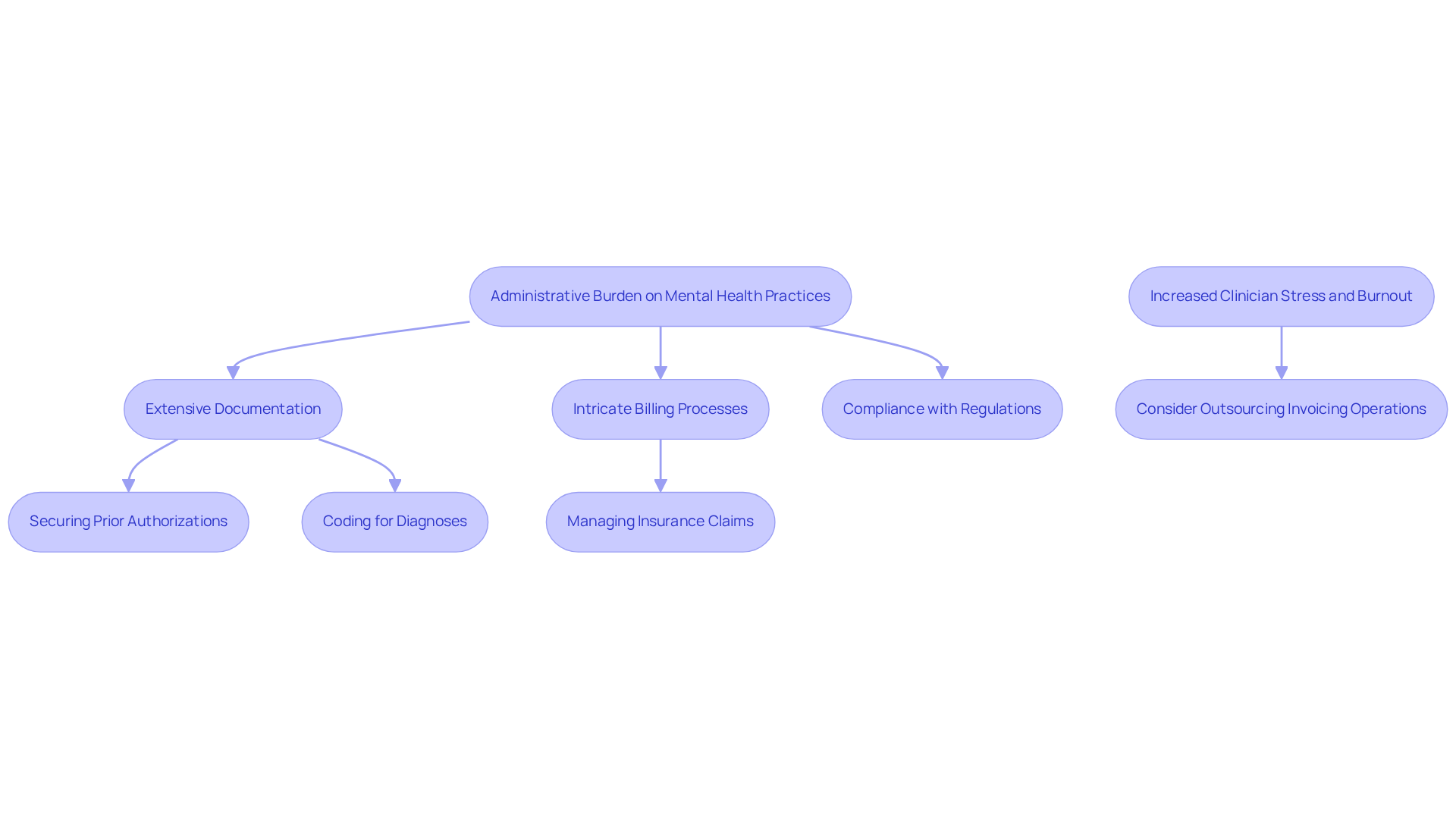
Mental wellness practices encounter significant administrative challenges that hinder their capacity to deliver optimal patient care. These challenges create significant barriers to efficient patient care, often encompassing extensive documentation requirements, intricate billing processes, and compliance with a myriad of regulations.
For instance, behavioral providers frequently engage in labor-intensive activities such as:
- Securing prior authorizations
- Coding for specific diagnoses
- Managing insurance claims
Recent studies indicate that psychological professionals spend, on average, three additional hours weekly on administrative tasks compared to their counterparts in other medical fields. This added workload increases clinician stress and burnout, diverting their focus from patient interactions and compromising care quality.
Recognizing these obstacles underscores the necessity for wellness facilities to consider outsourcing their invoicing operations to specialized services, which can effectively alleviate these pressures and enable providers to redirect their attention to patient care.
Recognize the Financial Risks of Poor Billing Practices
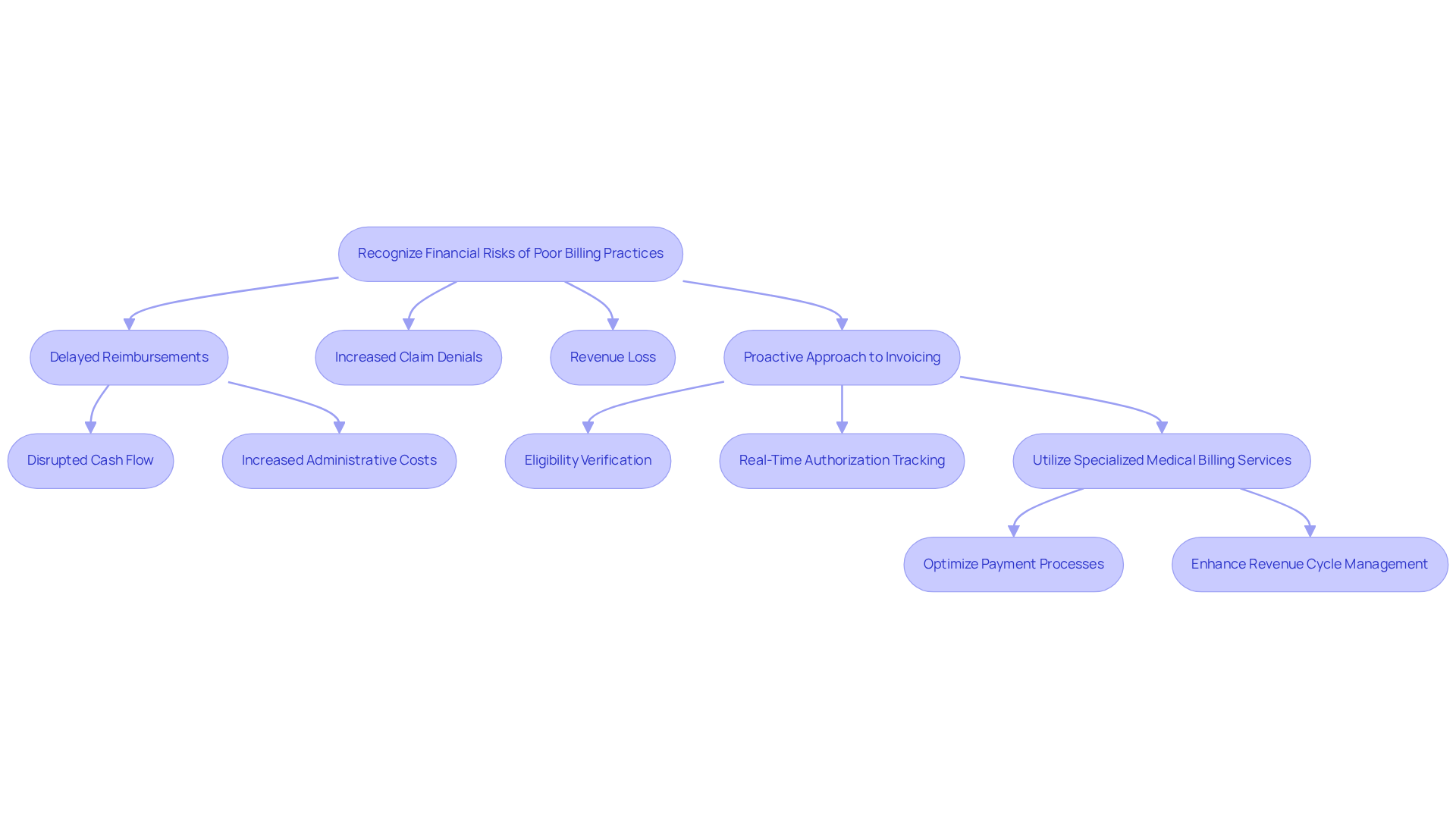
Inadequate billing practices can jeopardize the financial stability of mental health facilities. Poor billing practices pose significant financial risks, leading to delayed reimbursements, increased claim denials, and ultimately, revenue loss. For instance, facilities that do not comply with appropriate coding and documentation standards may encounter denial rates as high as 30%. This disrupts cash flow and increases administrative costs, requiring staff to spend additional time resolving denied claims. The financial strain can further hinder a healthcare facility’s ability to invest in essential resources, such as hiring additional staff or upgrading technology.
A proactive approach to invoicing, including thorough eligibility verification and real-time authorization tracking, is essential for mitigating these risks. Recognizing the financial consequences of inadequate invoicing practices allows mental wellness facilities to appreciate the importance of utilizing a specialized medical billing service like Healthcare Partners Consulting & Billing, LLC (HPC). Such medical billing services optimize payment processes, minimize denials, and improve overall revenue cycle management, ultimately supporting the practice’s financial health and operational efficiency.
Moreover, by evaluating their profitability through tailored administrative support services, healthcare facilities can implement personalized recommendations that ensure they remain focused on patient care while enhancing their revenue practices. With the forthcoming implementation of ICD-10 ‘Excludes 1’ regulations by UnitedHealthcare starting March 1, 2026, adjusting invoicing practices is crucial to avoid complications and ensure sustainable operations.
Address Compliance Challenges with Expert Billing Services
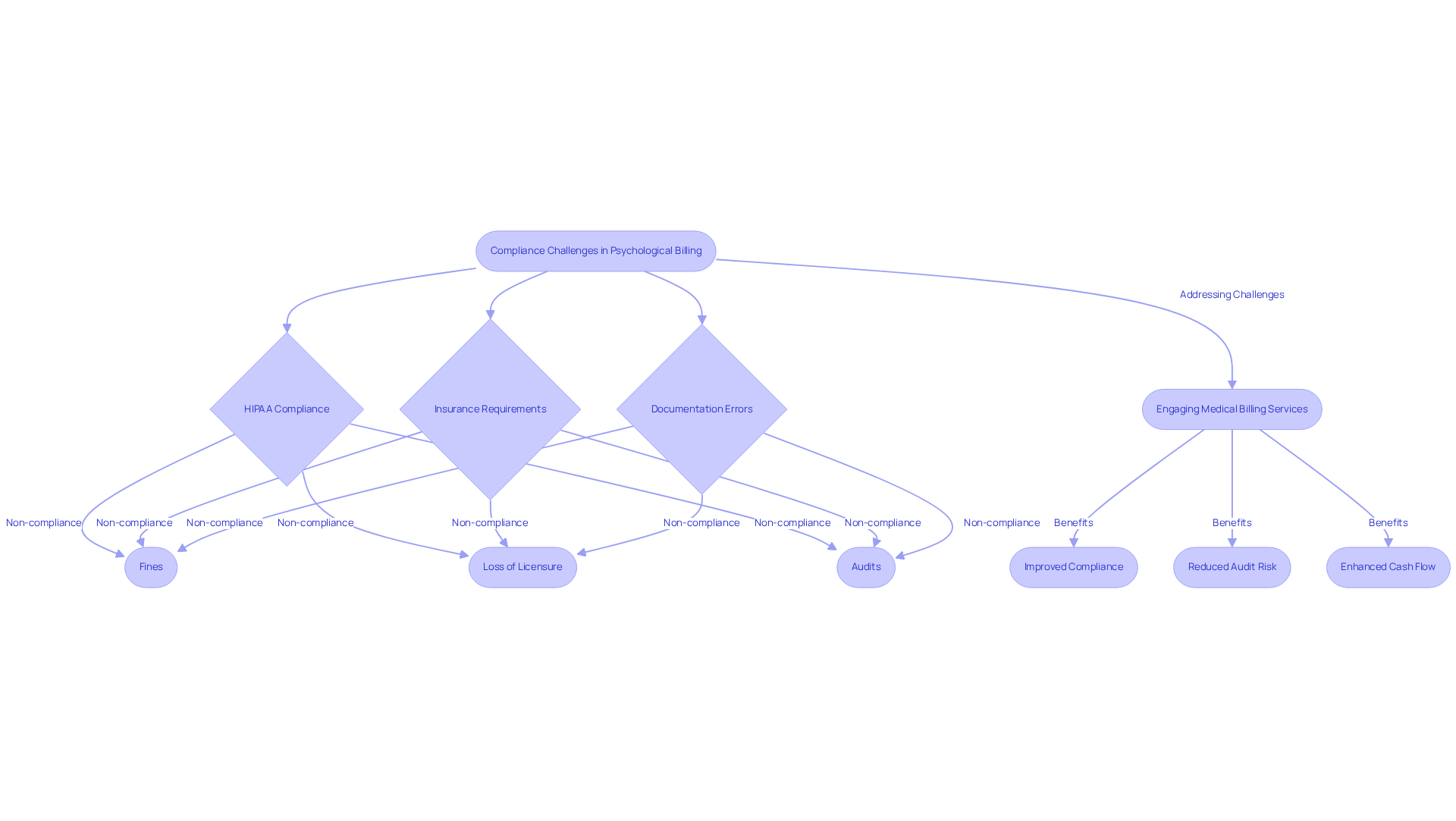
Navigating the complexities of healthcare regulations is essential for clinics dedicated to psychological well-being, especially in invoicing practices. Psychological service invoicing involves complex challenges, particularly in adhering to HIPAA and insurance requirements. Non-compliance can lead to severe consequences, including hefty fines and potential loss of licensure. Improper documentation or coding can trigger audits, resulting in substantial financial penalties and damaging reputational harm. In 2026, psychological service invoicing solutions are facing unprecedented demands due to evolving regulatory environments, with denial rates for behavioral claims ranging from 15% to 25% nationally, primarily due to authorization mistakes and eligibility verification issues.
Engaging a medical billing service enables mental health practices to maintain compliance with current regulations, thereby minimizing the risk of audits and penalties. These practices can rely on a medical billing service that employs trained professionals who stay updated on regulatory changes, allowing them to focus on patient care without the constant burden of compliance issues. Case studies, such as that of the Hispanic Counseling Center, demonstrate how specialized partners can enhance efficiency and financial performance, enabling organizations to concentrate more on delivering quality care. Outsourcing financial processes not only improves clean claim rates but also significantly reduces days in accounts receivable, fostering a more robust cash flow and sustainable operational model.
Enhance Patient Care by Streamlining Administrative Tasks
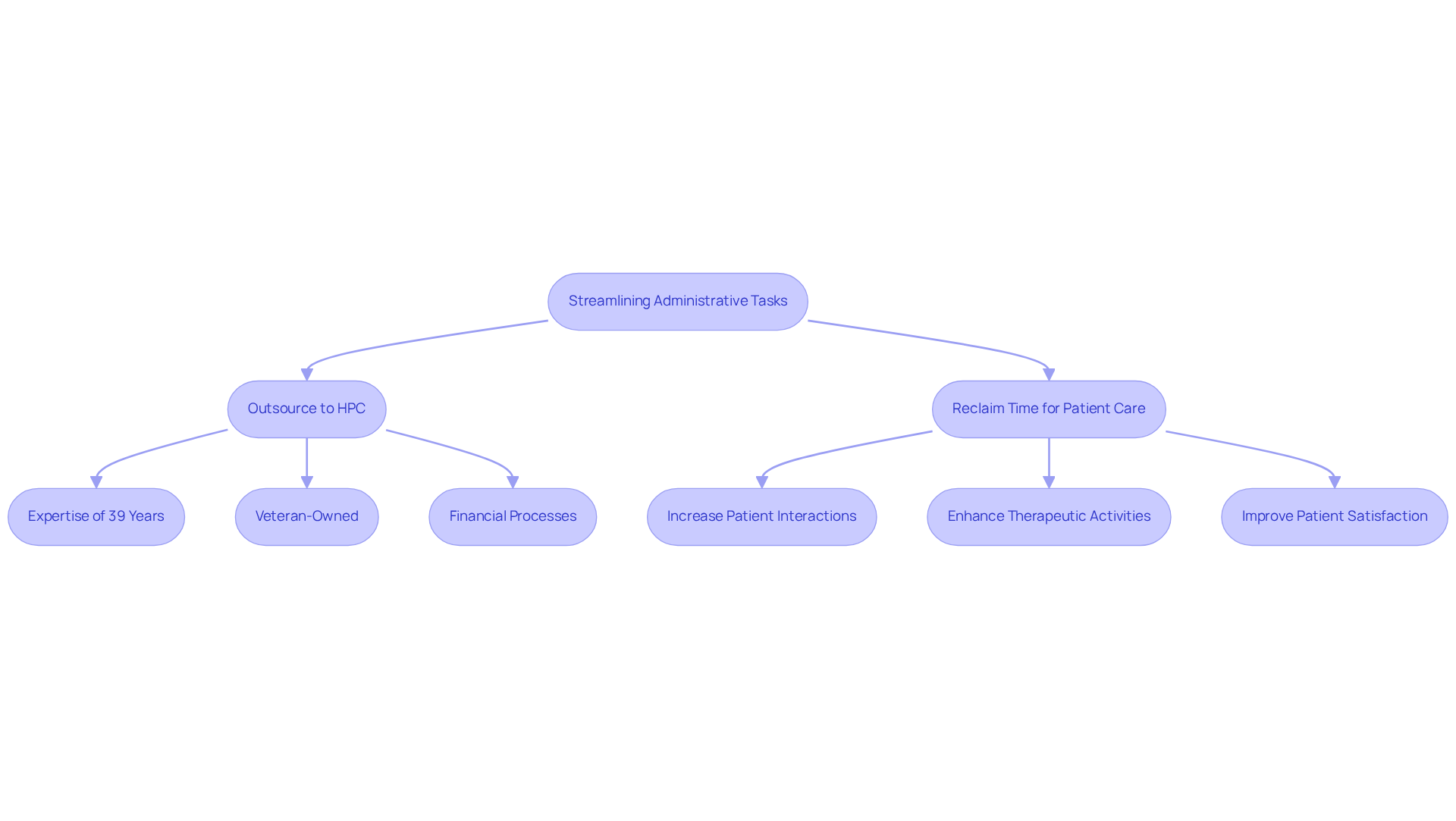
Streamlining administrative tasks through a medical billing service is essential for enhancing patient care in mental health clinics. By outsourcing financial processes to Healthcare Partners Consulting & Billing, LLC (HPC), a veteran-owned organization with 39 years of expertise, providers can reclaim valuable time that can be redirected towards patient interactions and therapeutic activities. Clinics that engage a medical billing service from HPC report a reduction in administrative workload by up to 30%, allowing providers to reclaim time previously spent on non-patient-facing activities. This transition enhances patient satisfaction and strengthens therapeutic relationships, both vital components of effective mental health treatment.
Moreover, by ensuring prompt and precise invoicing, healthcare facilities can sustain a consistent cash flow, allowing them to invest in improved resources and technologies that further enhance patient care. For instance, practices that transitioned to outsourced financial management with HPC have experienced faster reimbursement times, reducing days in accounts receivable from an average of 45-60 days to just 25-35 days, as noted in industry reports. This improvement can free up approximately $24,000 in immediate working capital for a practice, allowing clinics to focus on their primary mission: delivering high-quality, compassionate care to their patients.
This strategic integration not only optimizes operational efficiency but also elevates the standard of care delivered to patients.
Conclusion
Mental health clinics are increasingly burdened by administrative tasks that hinder their ability to provide quality care. By outsourcing these functions to experts like Healthcare Partners Consulting & Billing, LLC (HPC), practices can focus on what truly matters: delivering quality mental health services. This shift enhances operational efficiency and allows healthcare providers to focus on their patients’ well-being.
The article highlights several critical points, including:
- The financial risks associated with poor billing practices
- The compliance challenges that mental health clinics encounter
- The significant benefits of streamlining administrative tasks
Recognizing the value of expert billing services helps clinics reduce financial strain from delayed reimbursements and claim denials while ensuring adherence to complex regulations. The case studies presented illustrate how engaging with HPC can lead to improved cash flow and operational sustainability, ultimately benefiting both providers and patients.
In conclusion, integrating a dedicated medical billing service is a strategic choice for enhancing care quality in mental health practices. By reducing administrative burdens, clinics can foster stronger therapeutic relationships and improve patient outcomes. Engaging with HPC could redefine how clinics approach patient care, leading to a more effective and compassionate practice.
Frequently Asked Questions
What administrative challenges do mental health practices face?
Mental health practices encounter significant administrative challenges, including extensive documentation requirements, intricate billing processes, and compliance with various regulations.
What specific labor-intensive activities do behavioral providers engage in?
Behavioral providers frequently engage in activities such as securing prior authorizations, coding for specific diagnoses, and managing insurance claims.
How much additional time do psychological professionals spend on administrative tasks compared to other medical fields?
Psychological professionals spend, on average, three additional hours weekly on administrative tasks compared to their counterparts in other medical fields.
What impact do administrative burdens have on mental health clinicians?
The added workload from administrative tasks increases clinician stress and burnout, diverting their focus from patient interactions and compromising the quality of care.
What solution is suggested for alleviating the administrative pressures on wellness facilities?
It is suggested that wellness facilities consider outsourcing their invoicing operations to specialized services to alleviate administrative pressures and enable providers to focus more on patient care.