
Introduction
The transition of wound care CPT codes from 2025 to 2026 introduces critical updates that require immediate attention from healthcare providers. These updates not only enhance specificity and compliance but also present an opportunity for practices to streamline their coding processes and reduce claim denials.
What strategies can providers employ to navigate these complexities while upholding high standards of patient care? By embracing these updates, providers can enhance their operational efficiency and reduce errors, which is essential for maintaining both compliance and financial health in a competitive healthcare environment.
Overview of CPT Code Changes for Wound Care: 2025 vs. 2026
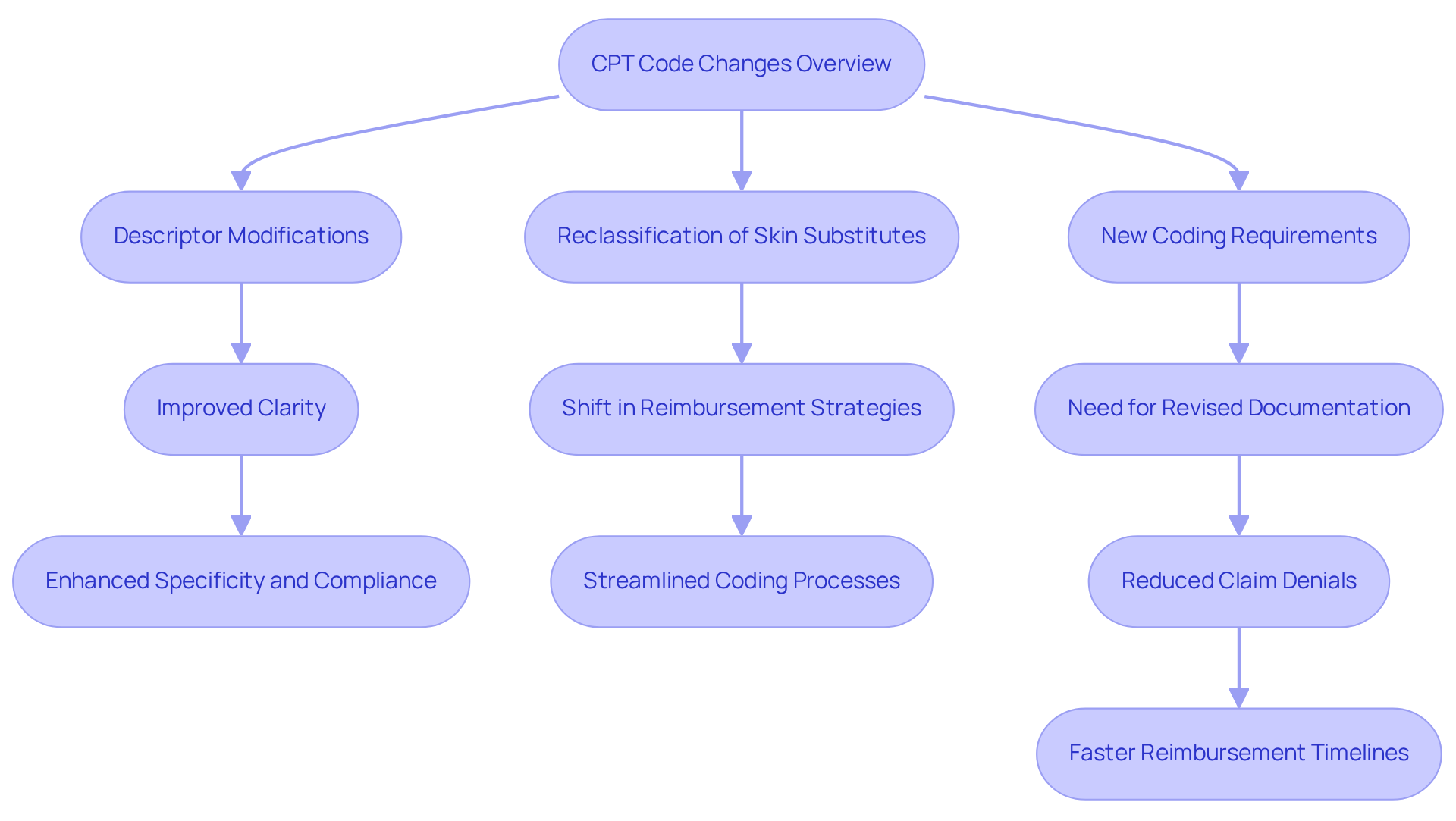
The transition from 2025 to 2026 in wound care CPT codes requires a thorough understanding of significant revisions related to wound care CPT code 2026, aimed at enhancing specificity and compliance. The surgical debridement series (CPT codes 11042-11047) has undergone descriptor modifications to improve clarity in financial procedures. Additionally, the reclassification of skin substitutes from biologicals to incident-to supplies marks a pivotal shift in reimbursement strategies. These changes aim to streamline coding processes. They also seek to reduce claim denials, with practices that adapt to the new guidelines potentially seeing a reduction in denials by 20-30% and faster reimbursement timelines of 15-25% within 30-90 days post-implementation.
Moreover, the 2026 updates require a clear comprehension of the clinical differences in wound management invoicing, particularly in relation to the wound care CPT code 2026, especially between nursing activities and chargeable services. This is crucial as generic billing teams may find it challenging to adapt to these changes, risking delayed revenue and compliance issues. The introduction of new codes facilitates coordinated treatment pathways for wound patients, particularly those with arterial ulcers, without unnecessary inpatient requirements.
In light of these updates, wound management approaches are advised to revise clinical documentation templates and establish consistent protocols for Modifier -25 application to mitigate risks associated with the wound care CPT code 2026. By proactively addressing documentation gaps and standardizing practices, providers can enhance their operational rigor and ensure adherence to regulations, ultimately leading to improved revenue cycle performance. At Healthcare Partners Consulting & Billing, LLC (HPC), we help healthcare providers by taking on administrative burdens, enabling them to concentrate on patient support while we manage the intricacies of invoicing and regulatory adherence. Our flexible service plans, tailored to the unique needs of mental health clinics, and our expertise in integrating with platforms like TherapyNotes and SimplePractice ensure a seamless transition to the new coding standards. By embracing these changes, providers can not only ensure compliance but also enhance their operational efficiency and revenue cycle performance.
Key Updates in Wound Care CPT Codes for 2026
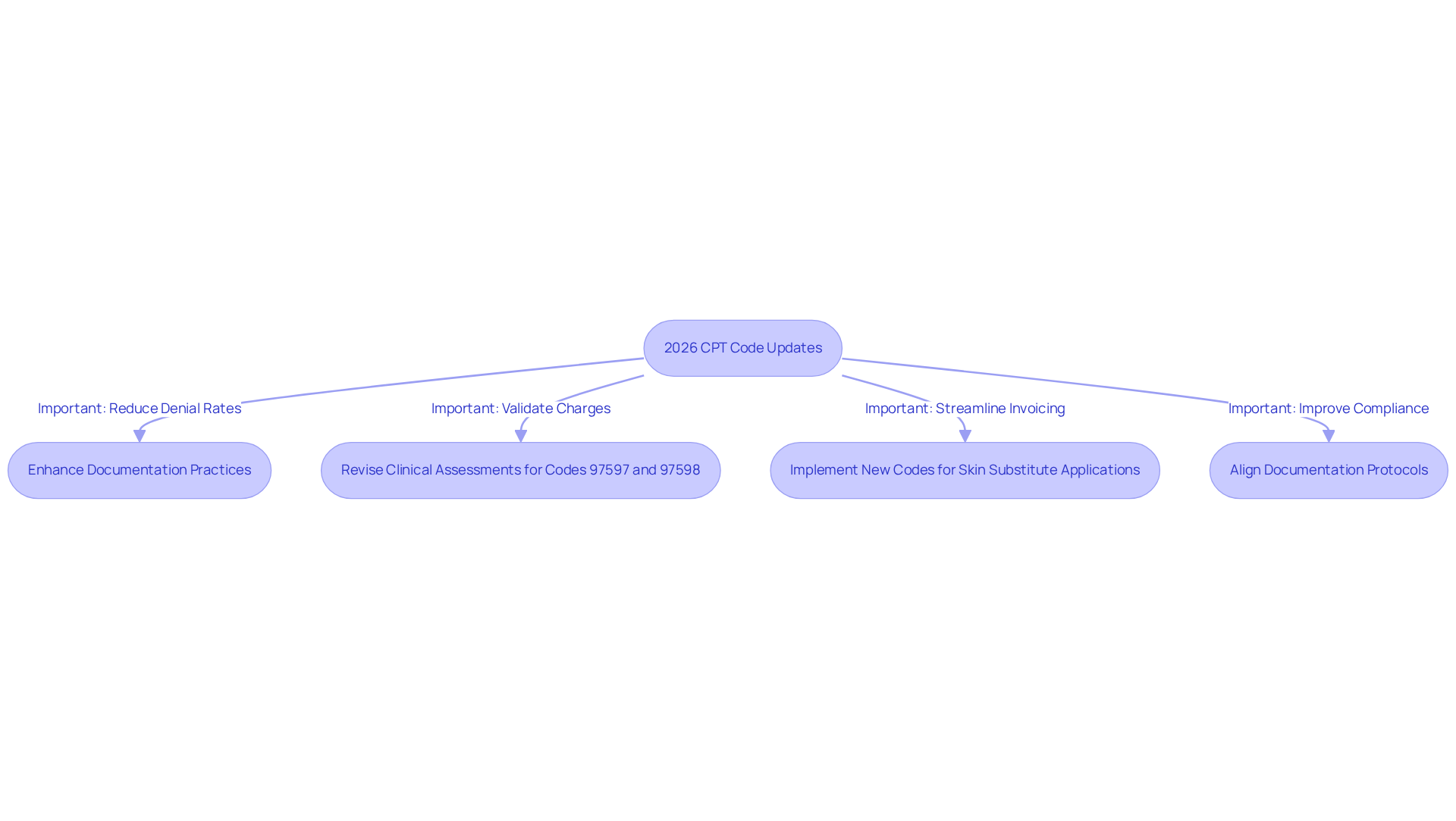
In 2026, the implementation of the wound care CPT code 2026 will require enhanced documentation practices. Notably, the revisions for codes 97597 and 97598 will require more detailed clinical assessments to validate charges, thereby enhancing compliance and reducing audit risks.
Furthermore, the introduction of new codes for skin substitute applications (CPT codes 15271-15278) indicates a shift towards more accurate invoicing methods. These updates aim to streamline invoicing, allowing providers to manage the complexities of wound care more effectively.
Healthcare Partners Consulting, a veteran-owned firm with 39 years of experience in medical billing and management, is well-equipped to assist organizations in adapting to these updates. For instance, aligning documentation protocols with these updates may lead to a 20-30% reduction in denial rates and a 15-25% increase in reimbursement speed within 30-90 days.
Moreover, case studies indicate that failure to adapt to the new coding requirements can lead to significant financial losses, emphasizing the necessity for organizations to proactively adjust their coding workflows to safeguard their revenue streams. The 2026 updates demonstrate a commitment to operational rigor, ensuring that providers can uphold standards while delivering high-quality care.
These updates not only reflect a commitment to operational excellence but also underscore the necessity for providers to adapt swiftly to maintain financial viability.
Implications of CPT Code Changes for Healthcare Providers
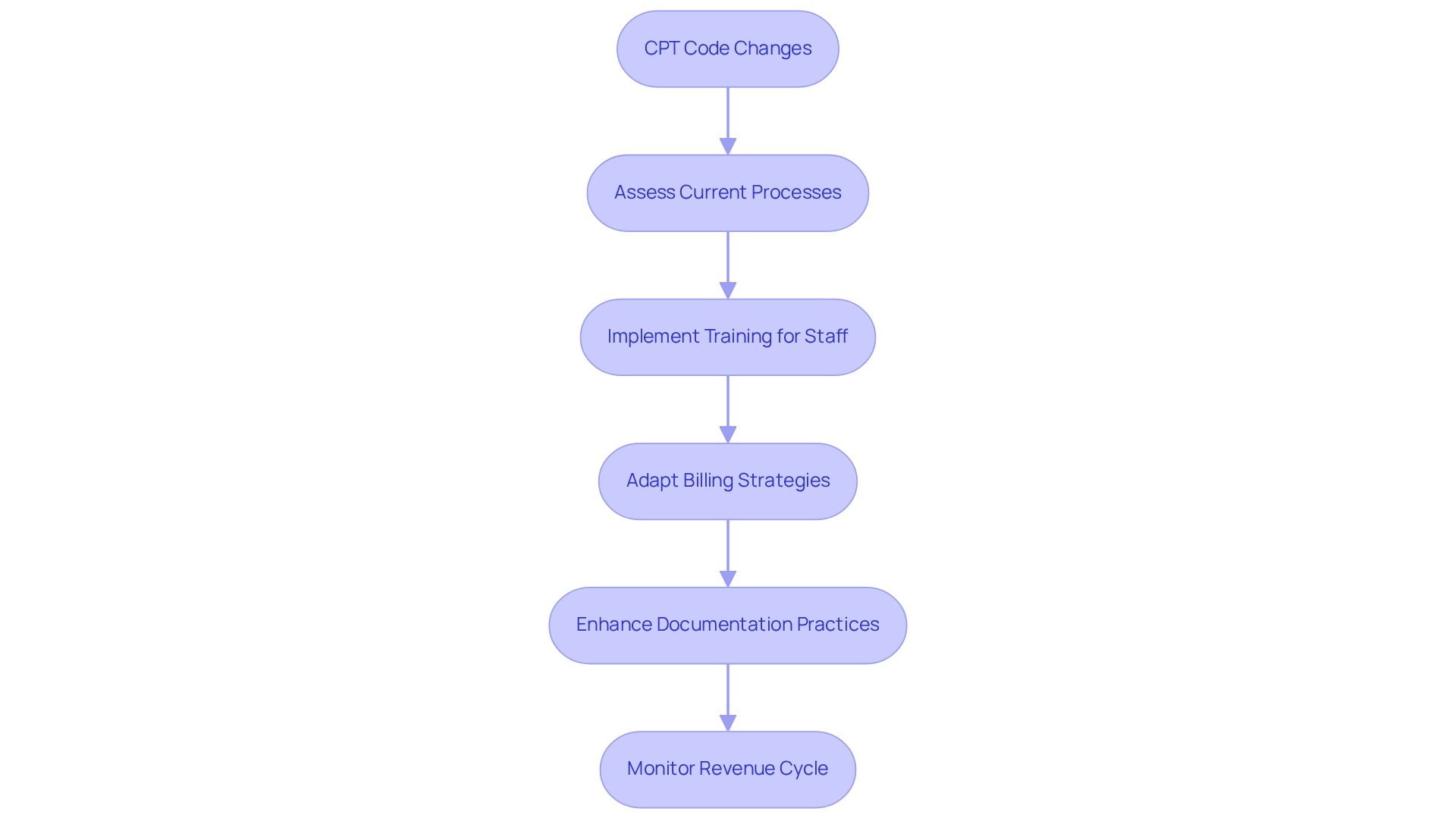
The changes in wound care CPT code 2026 present significant challenges and opportunities for healthcare providers. Revised documentation requirements necessitate thorough clinical assessments and meticulous record-keeping to avoid claim denials. Additionally, the reclassification of skin substitutes complicates billing strategies, compelling providers to adapt to new reimbursement models. These modifications influence revenue cycles and highlight the need for enhanced training for administrative personnel to comply with updated coding standards.
Organizations that prepare for these changes can expect to reduce denial rates by 20-30% and speed up reimbursement, improving cash flow by 15-25% in just 30-90 days. Case studies indicate that organizations auditing their current processes and investing in staff training can significantly enhance operational efficiency and capitalize on new opportunities presented by the updated coding landscape.
Furthermore, Healthcare Partners Consulting & Billing, LLC (HPC) offers a quick quiz to evaluate your mental health organization’s profitability, helping to identify hidden revenue leaks and providing personalized recommendations for enhanced efficiency and accuracy in financial processes. With HPC’s tailored administrative support services, practices can optimize operations, enabling them to focus more on patient support while managing the complexities of financial processes and regulatory requirements.
Comparative Analysis: Pros and Cons of 2026 vs. 2025 Wound Care Coding Guidelines
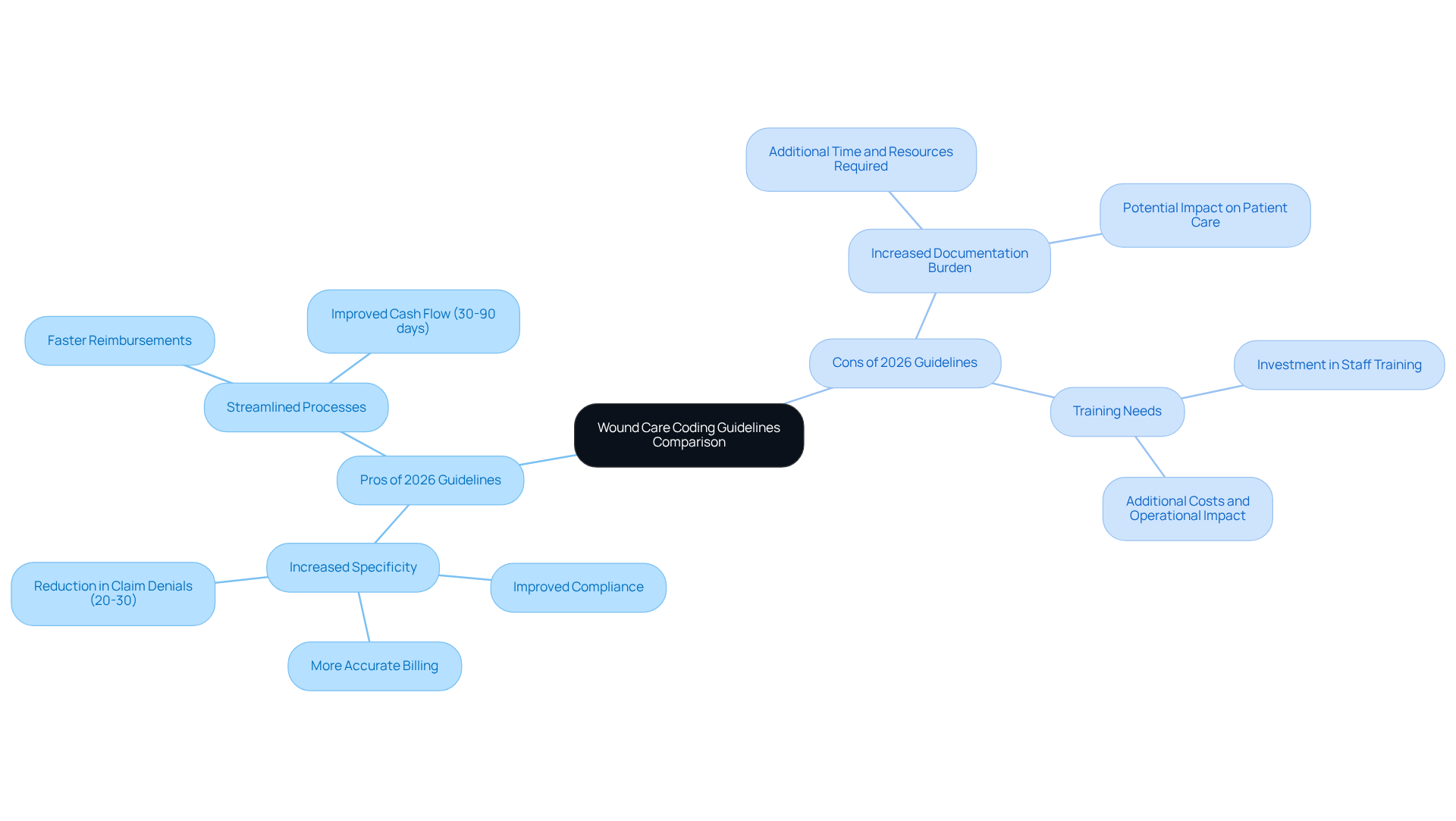
A detailed examination of the coding guidelines for wound care CPT code 2026 and 2025 highlights significant advantages and challenges for healthcare providers.
Pros of 2026 Guidelines:
- Increased Specificity: The revised codes enhance specificity, leading to more accurate billing and improved compliance with payer requirements. This specificity is crucial as it helps reduce claim denials by 20-30%, thereby enhancing revenue cycle performance.
- Streamlined Processes: The changes aim to clarify coding requirements, which can lead to faster reimbursements. Organizations expect improved cash flow within 30-90 days as they adapt to the updated guidelines related to wound care CPT code 2026.
Cons of 2026 Guidelines:
- Increased Documentation Burden: The new documentation thresholds may require additional time and resources from healthcare providers to ensure compliance, potentially detracting from patient care.
- Training Needs: Providers will need to invest in training for administrative staff to adapt to the new coding requirements, which may incur additional costs and impact operational efficiency.
Navigating these complexities will be essential for providers aiming to maintain high standards of patient care while ensuring compliance and financial stability. Healthcare Partners Consulting is here to assist providers in streamlining their administrative and billing services, allowing them to focus on patient care.
Conclusion
The transition to the 2026 wound care CPT codes presents both challenges and opportunities for healthcare providers. These updates refine coding specificity while also streamlining billing processes, allowing providers to focus on patient care. By understanding and adapting to these changes, practices can significantly improve their revenue cycle performance and reduce claim denials.
It’s crucial to recognize that thorough documentation is essential for adapting to these changes, particularly with the reclassification of skin substitutes, which necessitates a shift in billing strategies. The potential for a 20-30% reduction in denial rates and a 15-25% increase in reimbursement speed underscores the critical nature of these updates. Furthermore, the need for training and adaptation to the new guidelines cannot be overstated; practices that do not adapt risk losing revenue and operational efficiency.
Ultimately, adapting to these changes is not just about compliance; it is a strategic move that can safeguard a practice’s financial future. Embracing these updates with the support of experts like Healthcare Partners Consulting & Billing, LLC (HPC) can empower practices to navigate the complexities of billing and coding effectively. By prioritizing compliance and operational excellence, providers can ensure they remain focused on delivering high-quality patient care while optimizing their financial outcomes. For further assistance, practices can reach out to HPC at info@hpcbilling.com or call 888-517-4992 to explore tailored solutions that meet their unique needs.
Frequently Asked Questions
What are the main changes in CPT codes for wound care from 2025 to 2026?
The main changes include descriptor modifications in the surgical debridement series (CPT codes 11042-11047) for improved clarity, and the reclassification of skin substitutes from biologicals to incident-to supplies, which impacts reimbursement strategies.
How do the 2026 updates aim to improve the coding process?
The updates aim to streamline coding processes, reduce claim denials by 20-30%, and expedite reimbursement timelines by 15-25% within 30-90 days post-implementation.
Why is it important to understand the clinical differences in wound management invoicing?
Understanding these differences is crucial to distinguish between nursing activities and chargeable services, as generic billing teams may struggle with the changes, leading to delayed revenue and compliance issues.
What is the significance of the introduction of new codes in wound care?
The introduction of new codes facilitates coordinated treatment pathways for wound patients, particularly those with arterial ulcers, and helps avoid unnecessary inpatient requirements.
What steps should wound management approaches take in light of the 2026 updates?
Wound management approaches should revise clinical documentation templates and establish consistent protocols for Modifier -25 application to mitigate risks associated with the wound care CPT code 2026.
How can providers enhance their operational rigor and revenue cycle performance?
By proactively addressing documentation gaps and standardizing practices, providers can improve compliance and operational efficiency, leading to better revenue cycle performance.
How does Healthcare Partners Consulting & Billing, LLC (HPC) assist healthcare providers?
HPC helps healthcare providers by managing administrative burdens, allowing them to focus on patient support while ensuring compliance with invoicing and regulatory requirements.