
Introduction
Accurate billing is essential for the sustainability of mental health clinics, yet many encounter substantial obstacles in securing clean claims for timely reimbursements. By effectively managing clean claims submission, clinics can enhance their revenue cycle management and reduce administrative burdens, enabling healthcare providers to concentrate on patient care. However, with the complexities of coding, documentation, and payer requirements, how can clinics effectively navigate this landscape to secure their financial health and elevate patient outcomes?
Define Clean Claims and Their Importance in Healthcare Billing
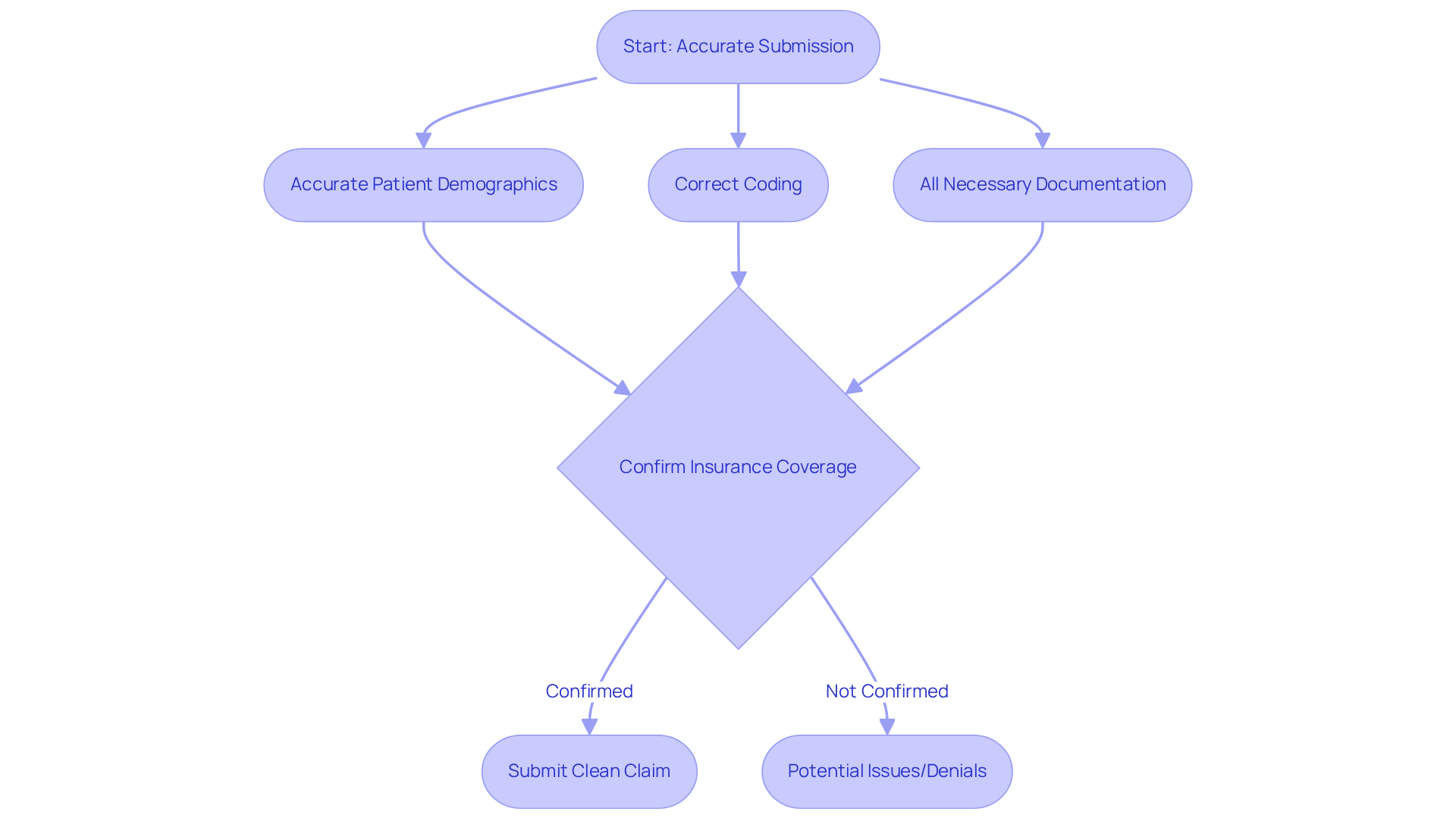
Accurate submissions are the cornerstone of effective revenue cycle management in mental health clinics. An accurate submission is referred to as a clean claim when it is sent to an insurance payer without errors or discrepancies, facilitating prompt processing and payment. These submissions are essential, as they help create a clean claim and significantly reduce the chances of denials and delays in reimbursement.
Industry standards dictate that a clean claim must include:
- Accurate patient demographics
- Correct coding
- All necessary documentation
It is also crucial to confirm insurance coverage details prior to the first session to ensure precise billing information and prevent denial of reimbursement. The significance of accurate submissions, known as clean claims, is paramount; they establish the basis for efficient revenue cycle management, guaranteeing prompt payments and sustaining a robust cash flow for clinics. By focusing on accurate submissions and utilizing the specialized support from Healthcare Partners Consulting (HPC), mental health providers can reduce administrative challenges, enabling them to concentrate more on providing quality patient care.
Statistics indicate that practices can achieve a 20-30% decrease in denial rates and accelerate reimbursement by 15-25% within 30-90 days when accurate submissions are consistently made. For instance, a case study involving a solo therapist highlighted that practices with denial rates exceeding 10% faced significant revenue leaks. By employing specialized invoicing services aimed at accurate submissions, these practices enhanced their revenue cycle performance, showcasing the concrete advantages of diligent invoicing methods that lead to a clean claim.
Furthermore, it is crucial to recognize that a valid submission not compensated within 45 days will accumulate simple interest at a rate of 12% per annum, highlighting the financial consequences of prompt processing. As we near 2026, the emphasis on accurate submissions will grow. It is vital for mental wellness clinics to adopt robust invoicing strategies that ensure adherence and precision.
Implement Key Strategies for Successful Clean Claims Submission
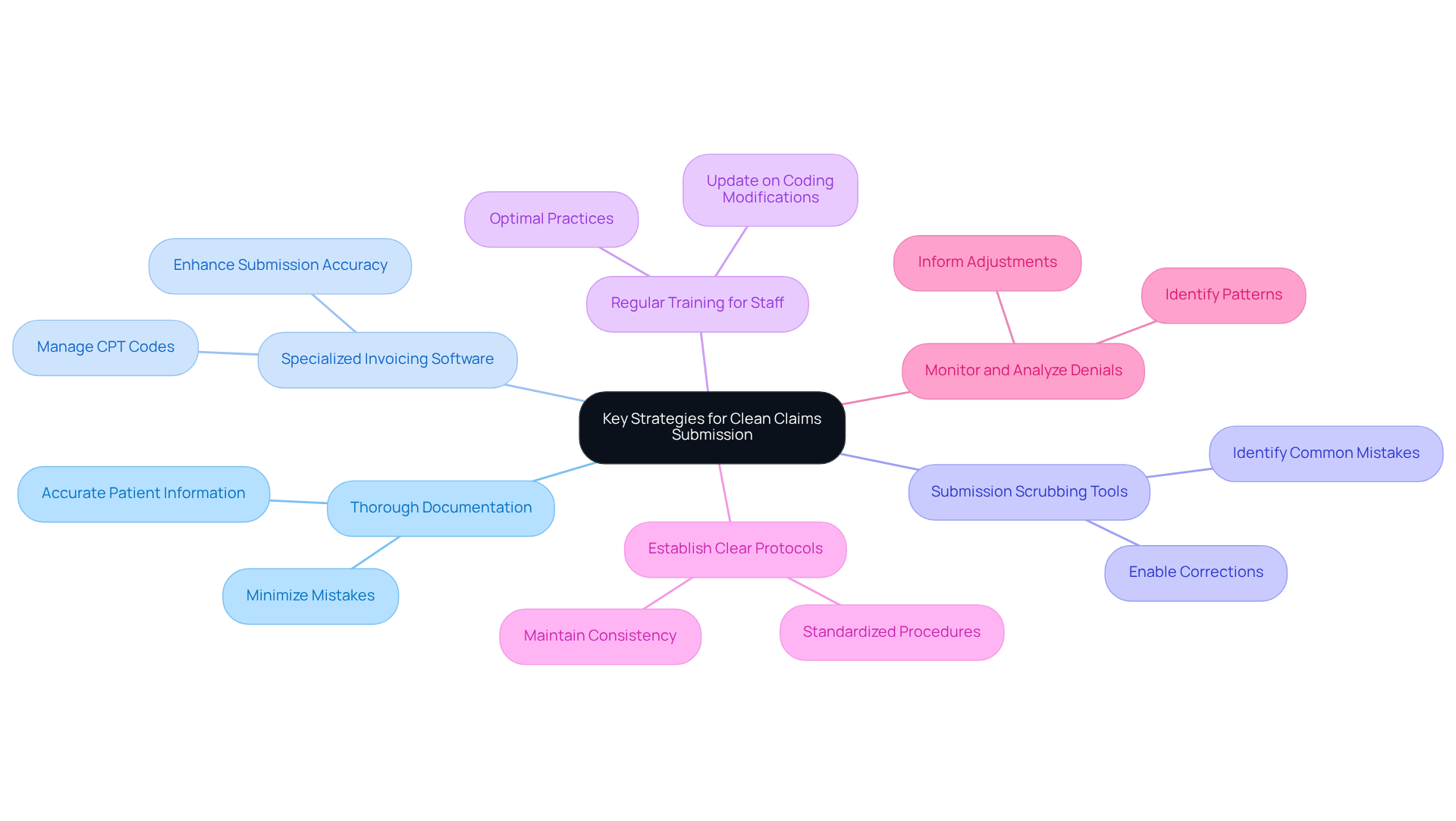
To navigate the complexities of clean claims submission, mental health clinics must adopt strategic approaches that ensure accuracy and efficiency:
- Thorough Documentation: Accurate documentation of all patient information, including demographics and insurance details, is crucial. This practice minimizes mistakes that lead to denials. Incomplete or incorrect information is a common source of payment issues.
- Employ Specialized Invoicing Software: Implementing specialized invoicing software tailored for mental wellness practices is essential. This software can manage the complexities of mental health CPT codes and time-based billing, minimizing human errors and enhancing submission accuracy.
- Utilize Submission Scrubbing Tools: Implementing automated submission scrubbing tools can significantly enhance the accuracy of submissions. These tools identify common mistakes, such as missing information or incorrect coding, enabling necessary corrections before submissions are sent to payers.
- Regular Training for Staff: Continuous training sessions for personnel involved in financial processes are crucial to ensure they are updated on coding modifications, payer stipulations, and optimal practices for accurate submission. Navigating the complexities of mental health reimbursement can be challenging without proper training.
- Establish Clear Protocols: Developing standardized procedures for submission of requests, including specific timelines for documentation and submission, helps maintain consistency and accountability. Clear protocols ensure that all team members understand their roles in the billing process, reducing the likelihood of errors.
- Monitor and Analyze Denials: Regularly reviewing denied submissions is vital for identifying patterns and root causes. This analysis can inform adjustments to processes and training, ultimately leading to improved clean claim rates. By adopting these strategies, clinics can significantly enhance their financial performance.
By implementing these strategies, mental wellness clinics can improve their invoicing practices, lessen administrative burdens, and concentrate more on providing quality patient care. Ultimately, these strategies not only streamline administrative processes but also enhance the quality of care provided to patients.
Leverage Technology to Enhance Clean Claims Efficiency
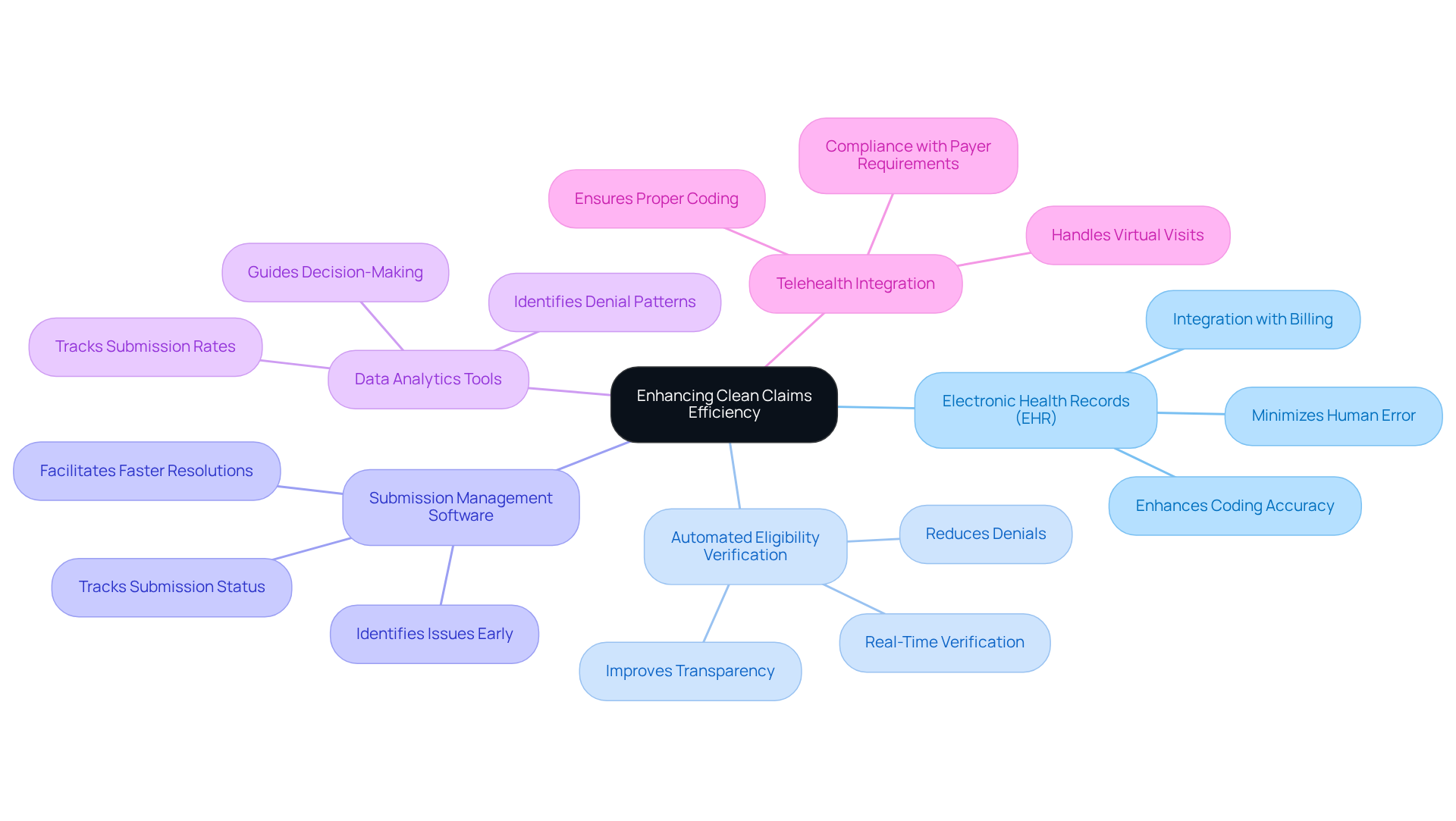
Clinics frequently encounter challenges in achieving efficient clean claim submissions, which can hinder their operational success. Technology plays a crucial role in improving the efficiency of clean claims for mental health clinics. Here are several effective strategies to leverage technology, supported by the veteran-owned expertise and 39 years of experience of Healthcare Partners Consulting & Billing, LLC (HPC):
- Electronic Health Records (EHR): Implement EHR systems that integrate billing functionalities. These systems can automatically fill out forms with precise patient data, greatly minimizing the risk of human error and enhancing coding accuracy.
- Automated Eligibility Verification: Utilize automated systems for real-time verification of patient insurance eligibility. HPC ensures clinics possess the accurate information prior to services being provided, reducing the likelihood of denials and improving transparency with patients.
- Submission Management Software: Invest in comprehensive submission management software that tracks submissions from initiation to payment. HPC provides insights into status and helps identify issues early in the process, facilitating faster resolutions and reducing administrative burdens.
- Data Analytics Tools: Utilize data analytics to track accurate submission rates and identify patterns in denials. HPC’s data-driven guidance can guide decision-making and process improvements, enabling clinics to proactively address issues that may lead to revenue loss.
- Telehealth Integration: For clinics offering telehealth services, ensure that billing systems are equipped to handle virtual visits. Proper coding for telehealth services is essential to avoid denials related to service type, ensuring compliance with payer requirements.
By implementing these strategies, clinics can expect a marked improvement in their submission processes and financial outcomes, potentially decreasing denials by 20-30% and speeding up reimbursement timelines by 15-25% within 30 to 90 days. Implementing these strategies not only enhances operational efficiency but also positions clinics for sustainable financial health in a competitive landscape.
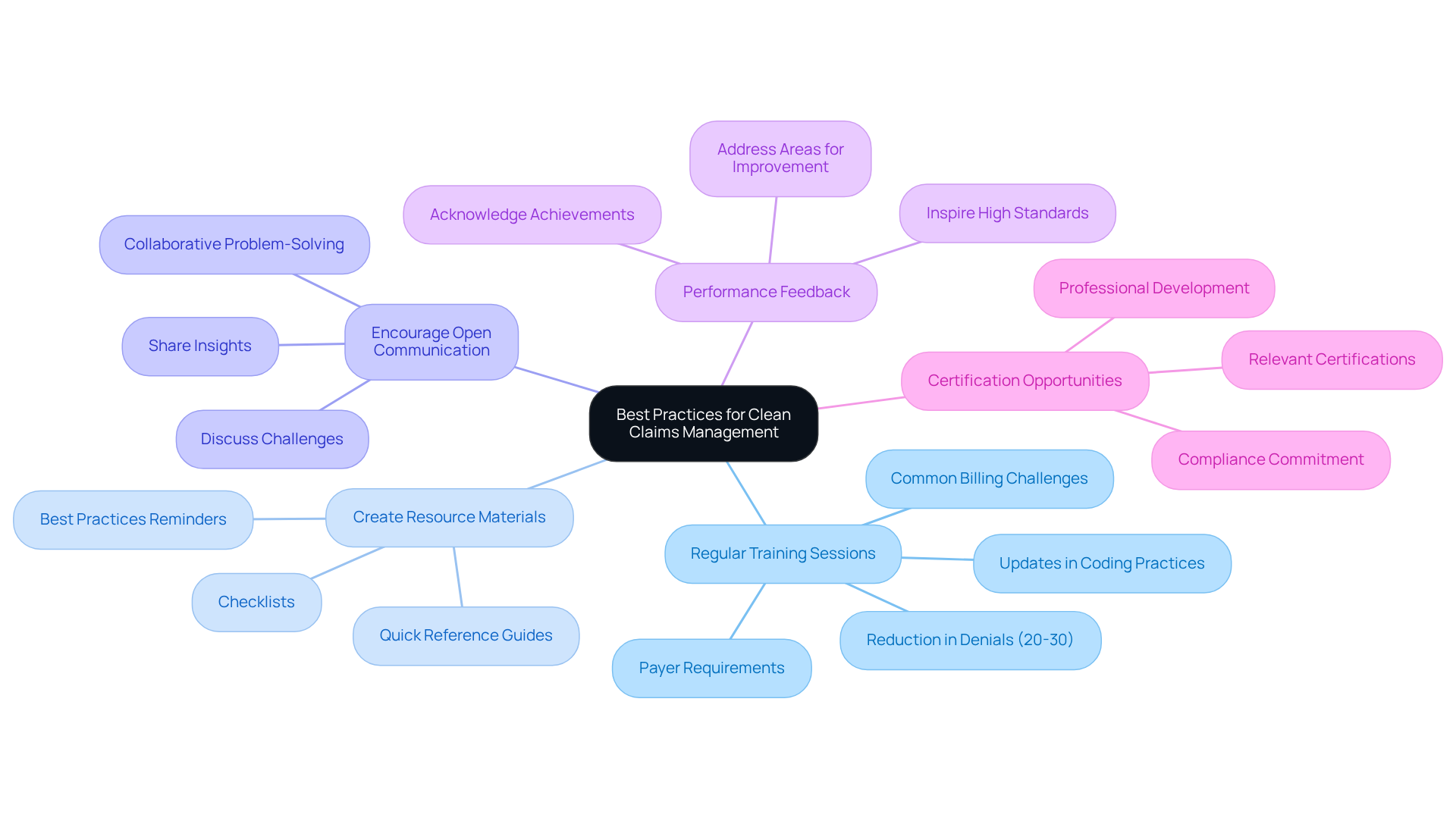
Educate Staff on Best Practices for Clean Claims Management
To achieve excellence in clean claims management, mental health clinics must prioritize staff education through targeted initiatives:
- Regular Training Sessions: Schedule consistent training sessions that cover updates in coding practices, payer requirements, and common billing challenges. Keeping staff informed ensures they are well-prepared to handle requests accurately. This proactive approach can lead to a reduction in denials by 20-30%.
- Create Resource Materials: Develop easily accessible resource materials, such as quick reference guides and checklists, for staff to utilize during the submission process. These tools serve as reminders of best practices and can improve the overall accuracy of submissions.
- Encourage Open Communication: Foster an environment where staff can discuss challenges and share insights related to claims management. Open communication encourages collaborative problem-solving and continuous improvement, essential for maintaining high processing standards.
- Performance Feedback: Implement a feedback system for submission processes. Acknowledging achievements and addressing areas for improvement can inspire staff to uphold high standards in their work, ultimately resulting in improved rates of clean claim submissions.
- Certification Opportunities: Encourage staff to pursue relevant certifications in medical billing and coding. This not only enhances their skills but also demonstrates the clinic’s commitment to professional development and compliance, crucial for sustaining operational efficiency.
Investing in these educational initiatives allows mental health clinics to enhance their claims management processes significantly. This leads to faster reimbursements and improved financial health. Ultimately, these educational investments can transform claims management, ensuring clinics thrive financially.
Conclusion
The financial health of mental health clinics hinges on achieving clean claims, which directly influences their operational efficiency. By focusing on accurate submissions, clinics can significantly reduce administrative burdens. This allows healthcare providers to concentrate on what truly matters: their patients. These strategies can help clinics improve their billing processes, ensuring compliance and efficiency in every claim submitted.
Key strategies for successful clean claims submission include:
- Thorough documentation
- The use of specialized invoicing software
- Regular staff training
By implementing these practices, clinics can expect to see a marked decrease in denial rates and an acceleration in reimbursement timelines. Additionally, leveraging technology such as electronic health records and automated eligibility verification can streamline operations, further supporting the goal of clean claims.
Ultimately, the emphasis on clean claims is not just about financial gain; it is about fostering an environment where mental health providers can thrive. By prioritizing compliance and investing in staff education, clinics can enhance their operational efficiency and ensure sustainable financial health. By adopting these strategies, clinics not only secure their financial future but also enhance the quality of care they deliver to their patients.
Frequently Asked Questions
What is a clean claim in healthcare billing?
A clean claim is an accurate submission sent to an insurance payer without errors or discrepancies, facilitating prompt processing and payment.
Why are clean claims important for mental health clinics?
Clean claims are essential for effective revenue cycle management as they significantly reduce the chances of denials and delays in reimbursement, ensuring prompt payments and sustaining a robust cash flow for clinics.
What are the industry standards for a clean claim?
A clean claim must include accurate patient demographics, correct coding, and all necessary documentation.
How can clinics ensure accurate billing information?
Clinics should confirm insurance coverage details prior to the first session to ensure precise billing information and prevent denial of reimbursement.
What impact do accurate submissions have on denial rates and reimbursement times?
Accurate submissions can lead to a 20-30% decrease in denial rates and accelerate reimbursement by 15-25% within 30-90 days.
Can you provide an example of the benefits of clean claims?
A case study involving a solo therapist showed that practices with denial rates exceeding 10% faced significant revenue leaks. By employing specialized invoicing services aimed at accurate submissions, these practices improved their revenue cycle performance.
What are the financial consequences of delayed compensation for valid submissions?
A valid submission not compensated within 45 days will accumulate simple interest at a rate of 12% per annum.
What should mental wellness clinics focus on as we approach 2026?
Mental wellness clinics should adopt robust invoicing strategies that ensure adherence and precision in their billing processes.