
Introduction
Navigating the complex regulatory landscape of medical billing is essential for healthcare providers seeking compliance and operational integrity. Agencies such as the Centers for Medicare & Medicaid Services (CMS) and the Office of Inspector General (OIG) enforce complex regulations, making compliance critical. Non-compliance can lead to significant financial penalties and operational inefficiencies.
As the healthcare landscape changes, how can providers navigate these regulations while keeping patient care at the forefront? This article explores the agencies regulating medical billing practices, the significance of compliance, and the challenges providers encounter in maintaining adherence, ultimately emphasizing the crucial role of expert guidance from firms like Healthcare Partners Consulting & Billing, LLC (HPC).
Define the Regulatory Landscape for Medical Billing Practices
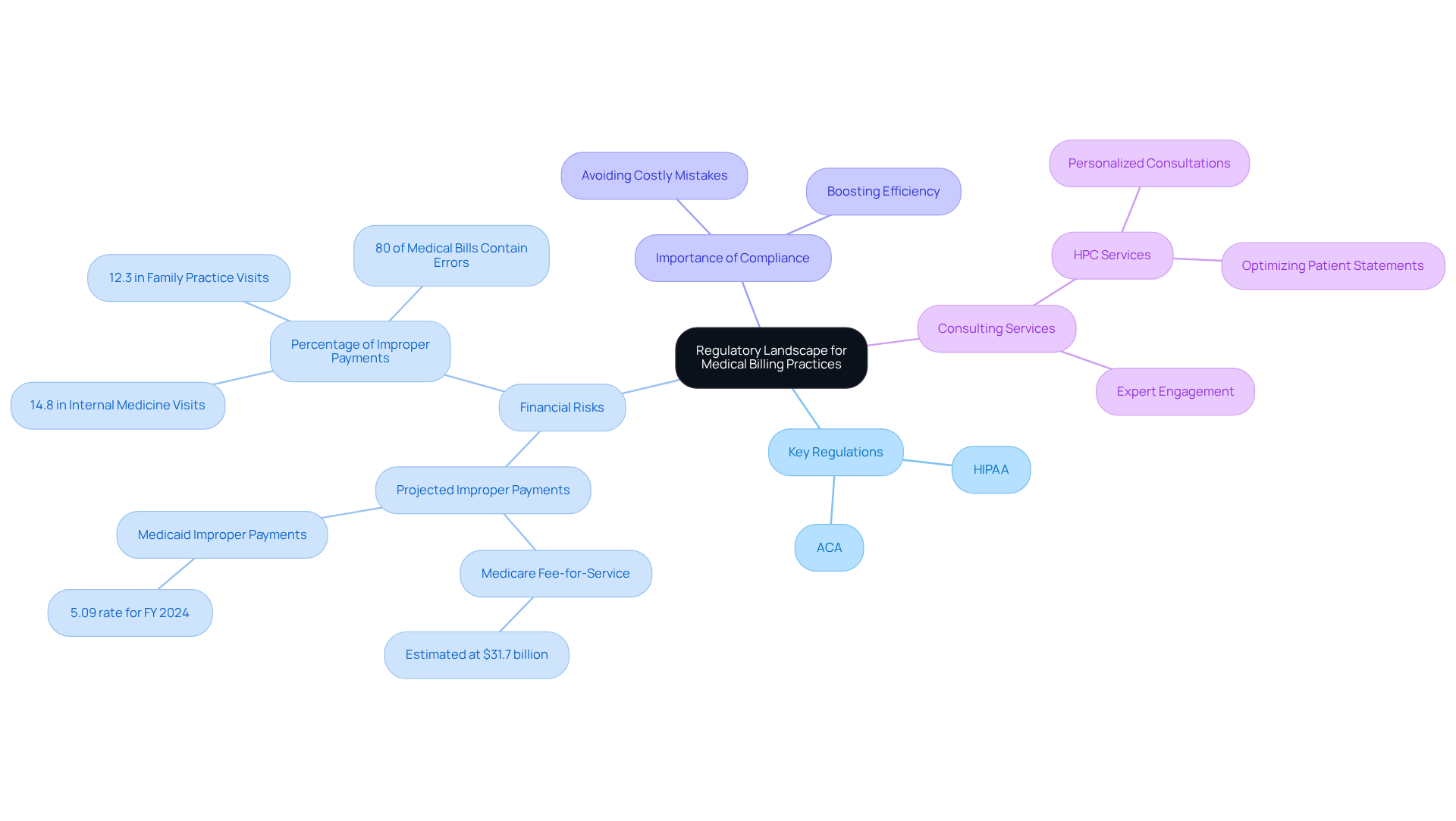
Navigating the regulatory environment for medical financial procedures requires a thorough understanding of what agency regulates medical billing practices, along with complex federal and state laws. Key regulations encompass the Health Insurance Portability and Accountability Act (HIPAA), which protects individual privacy, and the Affordable Care Act (ACA), which introduced significant reforms impacting payment methods.
As 2026 approaches, evolving regulations demand precise documentation and coding to mitigate penalties. For instance, improper payments in Medicare Fee-for-Service are projected to reach $31.7 billion, underscoring the severe financial risks of non-compliance. Additionally, a study revealed that 14.8% of internal medicine visits had improper payments, emphasizing the necessity for enhanced coding accuracy.
Understanding what agency regulates medical billing practices is essential for healthcare providers to navigate billing complexities, safeguard their operations from legal consequences, and build trust with clients. Adhering to these standards helps avoid costly mistakes and boosts efficiency and satisfaction for patients.
Furthermore, Healthcare Partners Consulting & Billing, LLC (HPC), a veteran-owned company with 39 years of experience, offers personalized consultations to help practices identify the most effective administrative solutions tailored to their specific needs. This includes optimizing patient statements and managing claims effectively, addressing issues such as underpayments, unprocessed claims, and aging claims.
As Stacey LaCotti observes, ‘Medical invoicing remains one of the most error-prone and costly areas in the U.S. healthcare sector,’ highlighting the significance of adherence and precision. Engaging with experts like HPC can be the difference between operational success and costly errors.
Identify Key Agencies Regulating Medical Billing Compliance
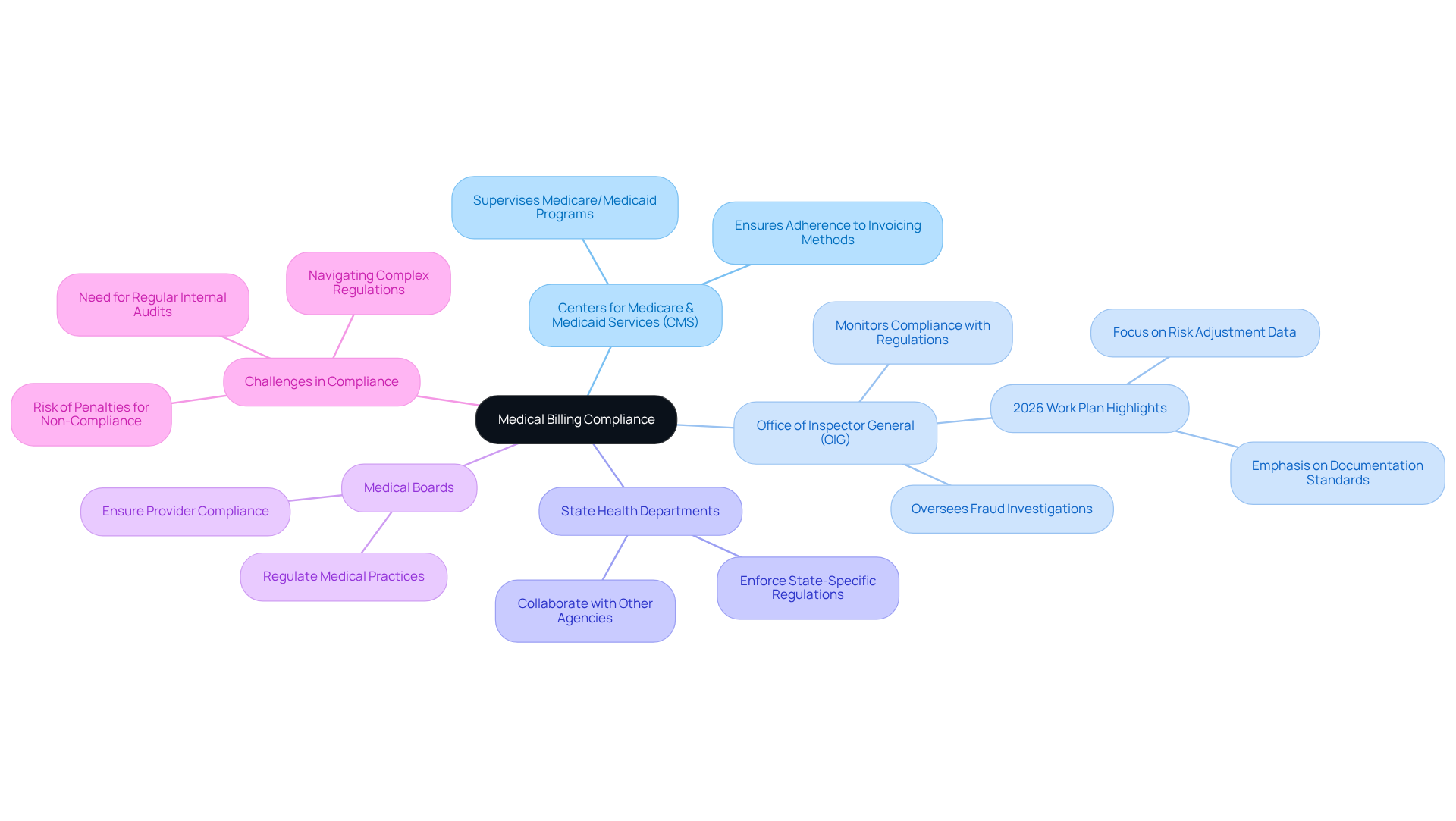
In the intricate landscape of healthcare, numerous agencies are involved in ensuring compliance with regulations, including what agency regulates medical billing practices. The Centers for Medicare & Medicaid Services (CMS) supervises the management of Medicare and Medicaid programs, ensuring adherence to invoicing methods that conform to federal regulations. The Office of Inspector General (OIG) is responsible for overseeing adherence to healthcare regulations, investigating cases of fraud and misuse in invoicing methods, and ensuring that healthcare providers uphold the integrity of their invoicing processes.
State health departments and medical boards also play a crucial role by enforcing state-specific regulations that govern medical charges. These agencies work collaboratively to ensure that healthcare providers are equipped to navigate the complex regulatory landscape effectively. Navigating the intricate web of regulations can pose significant challenges for healthcare providers.
The OIG’s 2026 Work Plan underscores the importance of accurate risk adjustment data and strict documentation standards, reflecting heightened scrutiny of billing practices. Furthermore, case studies emphasize the necessity for organizations to conduct regular internal audits to identify gaps in compliance and mitigate risks associated with erroneous coding. Failure to comply can lead to severe penalties and operational inefficiencies.
Understanding what agency regulates medical billing practices is essential for healthcare providers, as it allows them to uphold standards in financial procedures and steer clear of possible penalties. Staying updated on regulatory changes enables organizations to improve operational efficiency and protect their financial health.
Healthcare Partners Consulting & Billing, LLC (HPC), a veteran-owned firm with 39 years of experience, prioritizes compliance in revenue cycle management, ensuring that our clients, particularly in the behavioral and mental health sectors, are well-equipped to handle the complexities of billing compliance. Our expertise in denial management strategies, credentialing, and re-credentialing, along with optimizing statements, enables organizations to tackle underpayments, unprocessed claims, and aging claims effectively. This ultimately improves efficiency in operations and allows providers to concentrate more on patient care, particularly in the Atlanta, Georgia region. Understanding these regulatory dynamics is not just beneficial; it is essential for maintaining operational integrity and avoiding costly repercussions.
Explain the Importance of Compliance in Medical Billing
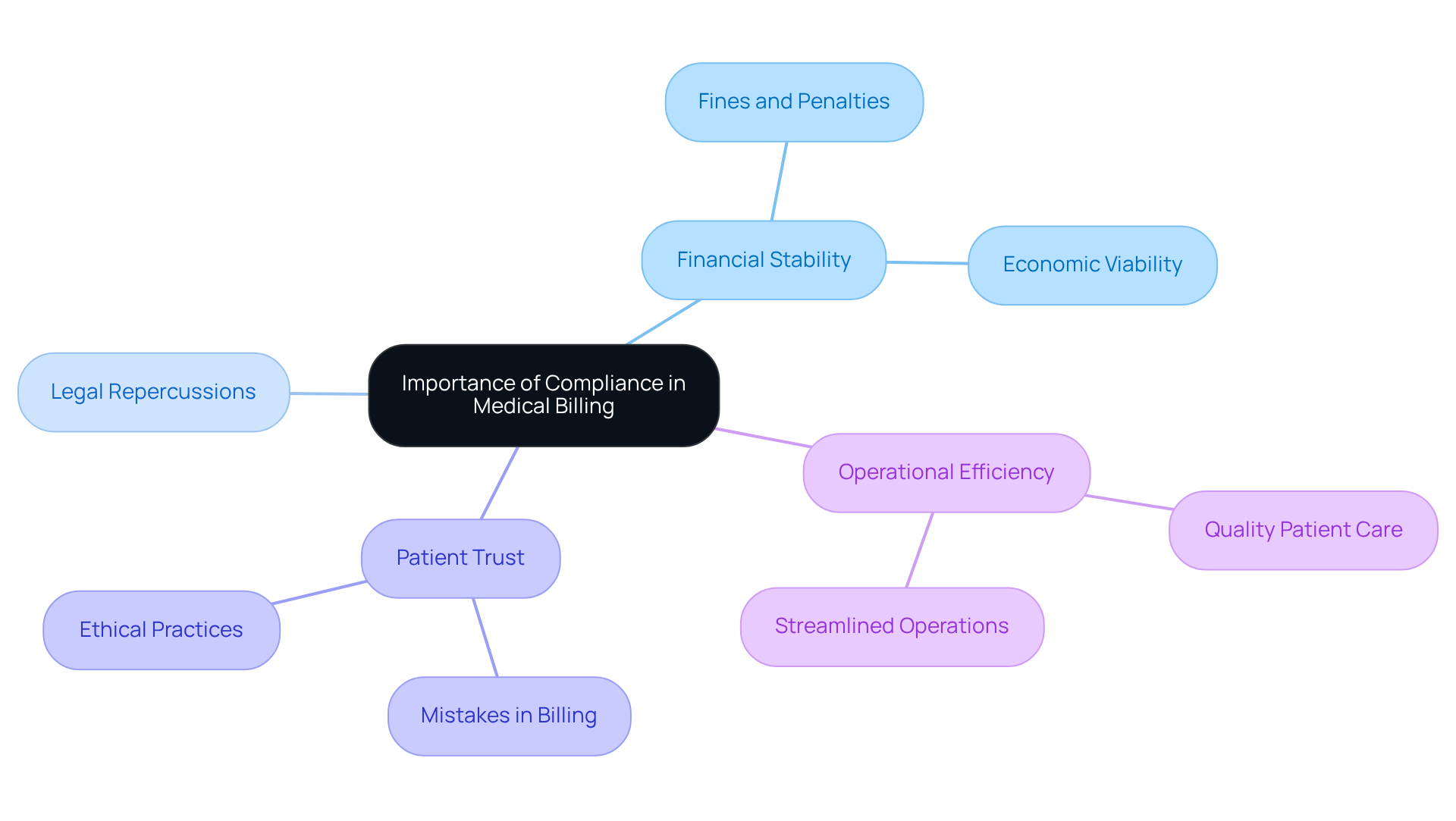
The importance of adherence in medical invoicing cannot be overstated, as it directly impacts both financial stability and patient trust. Adherence safeguards healthcare providers from legal repercussions, including substantial fines and penalties that can arise from non-compliance.
Understanding what agency regulates medical billing practices is vital for complying with financial regulations and obtaining precise reimbursement for services provided, which is essential for the economic viability of medical entities. Non-compliance can lead to financial losses that threaten the sustainability of healthcare practices, with estimates suggesting that inadequate billing methods cost providers around $125 billion annually.
Moreover, adherence cultivates trust between healthcare professionals and individuals, showcasing a dedication to ethical practices and the rights of those receiving care. For instance, roughly 80% of medical bills include mistakes, resulting in unforeseen financial pressures for individuals and diminishing trust in healthcare systems.
Focusing on regulations allows healthcare providers to streamline operations, reduce administrative burdens, and ultimately concentrate more on delivering quality patient care. Case studies indicate that small practices, when lacking structured oversight, encounter significant risks, including claim denials and financial penalties, which raises the question of what agency regulates medical billing practices to ensure rigorous adherence measures.
As the landscape of medical invoicing transforms, especially in 2026, the focus on trust and accountability will only increase, making adherence not merely a regulatory necessity but a cornerstone of sustainable healthcare practices.
Discuss Challenges in Maintaining Medical Billing Compliance
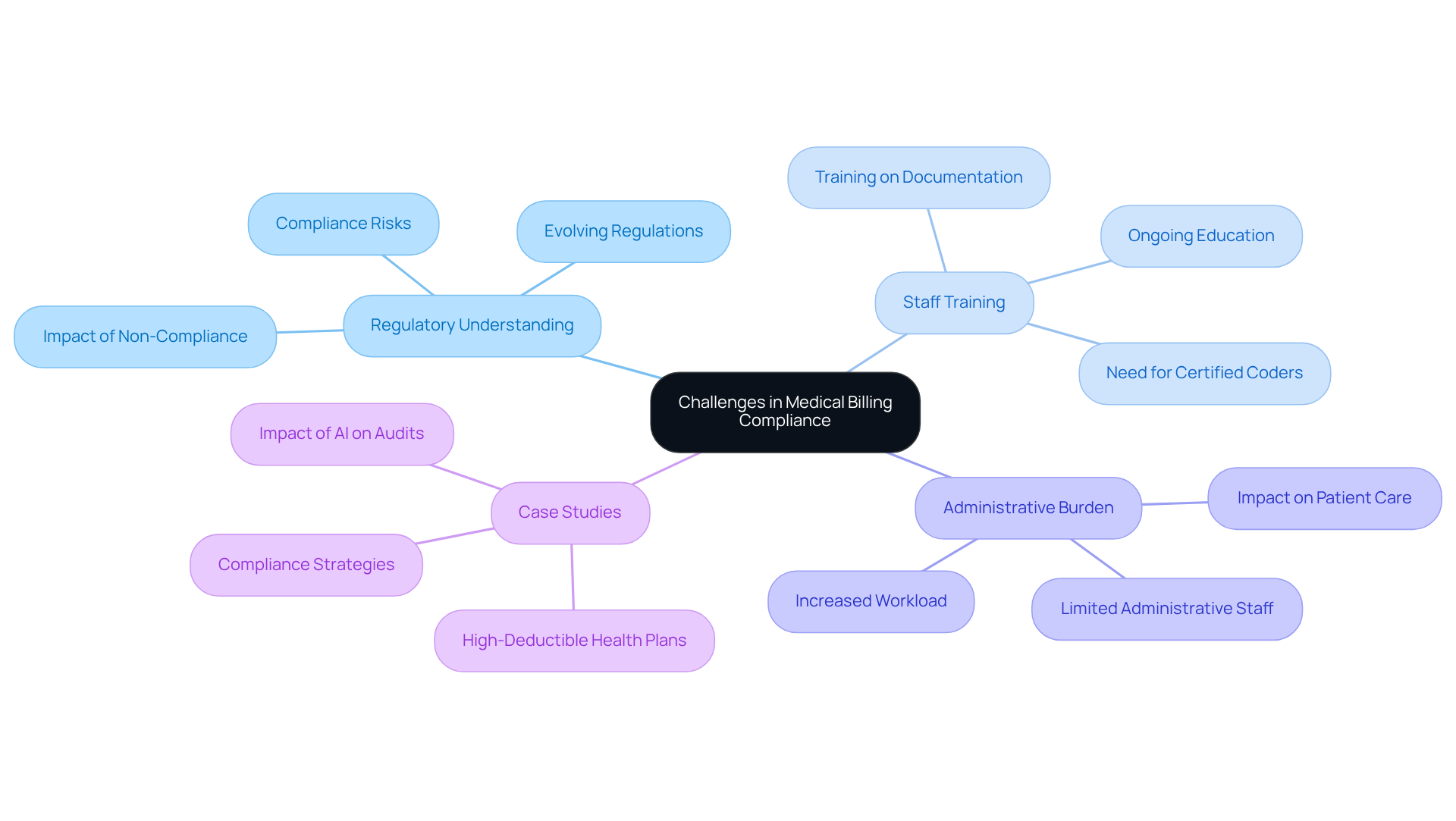
Healthcare providers face significant challenges in maintaining compliance with the regulations set by what agency regulates medical billing practices. One of the foremost issues is understanding what agency regulates medical billing practices, as the regulatory landscape is constantly evolving and necessitates that providers stay informed about new laws and guidelines. This complexity is compounded by the intricate nature of medical coding and billing processes, where even minor errors can lead to claim denials and substantial financial losses. Claims denials can represent as much as 5 percent of a provider’s net revenue, highlighting the financial risks associated with regulatory noncompliance.
Staff training is another vital area; insufficient knowledge of regulatory requirements can lead to unintentional violations. The demand for certified medical coders is projected to grow faster than average through 2030, underscoring the need for ongoing education and training in this field. Moreover, the administrative load linked to regulations can hinder patient care. This necessitates that organizations implement robust systems and processes. For example, small organizations often encounter compliance risks due to limited administrative personnel, which can result in overlooked gaps in adherence.
Case studies illustrate these challenges effectively. For instance, approaches that do not tackle the complexities of high-deductible health plans may encounter delayed payments and financial strain. Additionally, incomplete or incorrect prior authorizations frequently lead to denied claims, emphasizing the importance of aligning authorization, documentation, and billing workflows to mitigate preventable reimbursement issues.
To tackle these challenges, we at Healthcare Partners Consulting & Billing, LLC (HPC) provide tailored consultations to help identify optimal administrative solutions tailored to your practice’s needs. By recognizing and addressing these compliance challenges, healthcare providers can enhance their compliance efforts and improve overall operational efficiency. Prioritizing compliance not only protects revenue but also elevates the standard of care provided to patients.
Conclusion
Navigating the regulatory landscape of medical billing is essential for healthcare providers to ensure compliance and operational integrity. Knowing which agency regulates medical billing empowers providers to navigate complex regulations effectively. Prioritizing compliance allows healthcare professionals to deliver quality patient care while protecting their practices from legal and financial risks.
Key insights discussed include the roles of various regulatory agencies, such as the Centers for Medicare & Medicaid Services (CMS) and the Office of Inspector General (OIG), in overseeing billing practices. The article emphasizes the financial risks associated with non-compliance, including the staggering costs of improper payments and the potential for claim denials. Furthermore, it underscores the necessity for ongoing education and robust administrative systems to tackle the challenges of maintaining compliance in an ever-evolving regulatory environment.
Compliance in medical billing fosters trust between healthcare providers and patients, ensuring ethical practices and financial stability. Engaging with experts like Healthcare Partners Consulting & Billing, LLC (HPC) provides essential support in navigating these complexities. Prioritizing compliance and operational efficiency protects revenue and enhances care quality, reinforcing the connection between regulatory adherence and patient trust. For tailored solutions, reach out to HPC at info@hpcbilling.com or call 888-517-4992.
Frequently Asked Questions
What is the regulatory landscape for medical billing practices?
The regulatory landscape for medical billing practices involves understanding various federal and state laws, including the Health Insurance Portability and Accountability Act (HIPAA) and the Affordable Care Act (ACA), which significantly impact payment methods and individual privacy.
Why is it important to understand the agency that regulates medical billing practices?
Understanding the regulating agency is essential for healthcare providers to navigate billing complexities, avoid legal consequences, and build trust with clients, ultimately enhancing operational efficiency and patient satisfaction.
What are the financial risks associated with non-compliance in medical billing?
Non-compliance can lead to significant financial risks, with improper payments in Medicare Fee-for-Service projected to reach $31.7 billion. A study also indicated that 14.8% of internal medicine visits had improper payments, highlighting the need for accurate coding.
How can healthcare providers mitigate penalties related to medical billing?
Healthcare providers can mitigate penalties by ensuring precise documentation and coding, which helps avoid costly mistakes and enhances billing accuracy.
What services does Healthcare Partners Consulting & Billing, LLC (HPC) offer?
HPC offers personalized consultations to help practices identify effective administrative solutions, optimize patient statements, and manage claims, addressing issues such as underpayments, unprocessed claims, and aging claims.
What is the significance of accuracy in medical invoicing?
Accuracy in medical invoicing is crucial as it is one of the most error-prone and costly areas in the U.S. healthcare sector. Adherence to regulations and precision can prevent operational failures and costly errors.