

Introduction
Navigating the financial intricacies of healthcare is crucial for providers seeking to optimize operational efficiency and enhance patient care. The distinction between accounts receivable (AR) and accounts payable (AP) plays a pivotal role in maintaining a practice’s financial health, impacting cash flow and overall sustainability. This struggle often results in financial inefficiencies that jeopardize both cash flow and patient care. Without a clear grasp of these financial elements, practices risk compromising their operational sustainability and quality of care. Providers must prioritize mastering these financial concepts to safeguard their practice’s sustainability and ensure high-quality patient outcomes.
Define Accounts Receivable and Accounts Payable
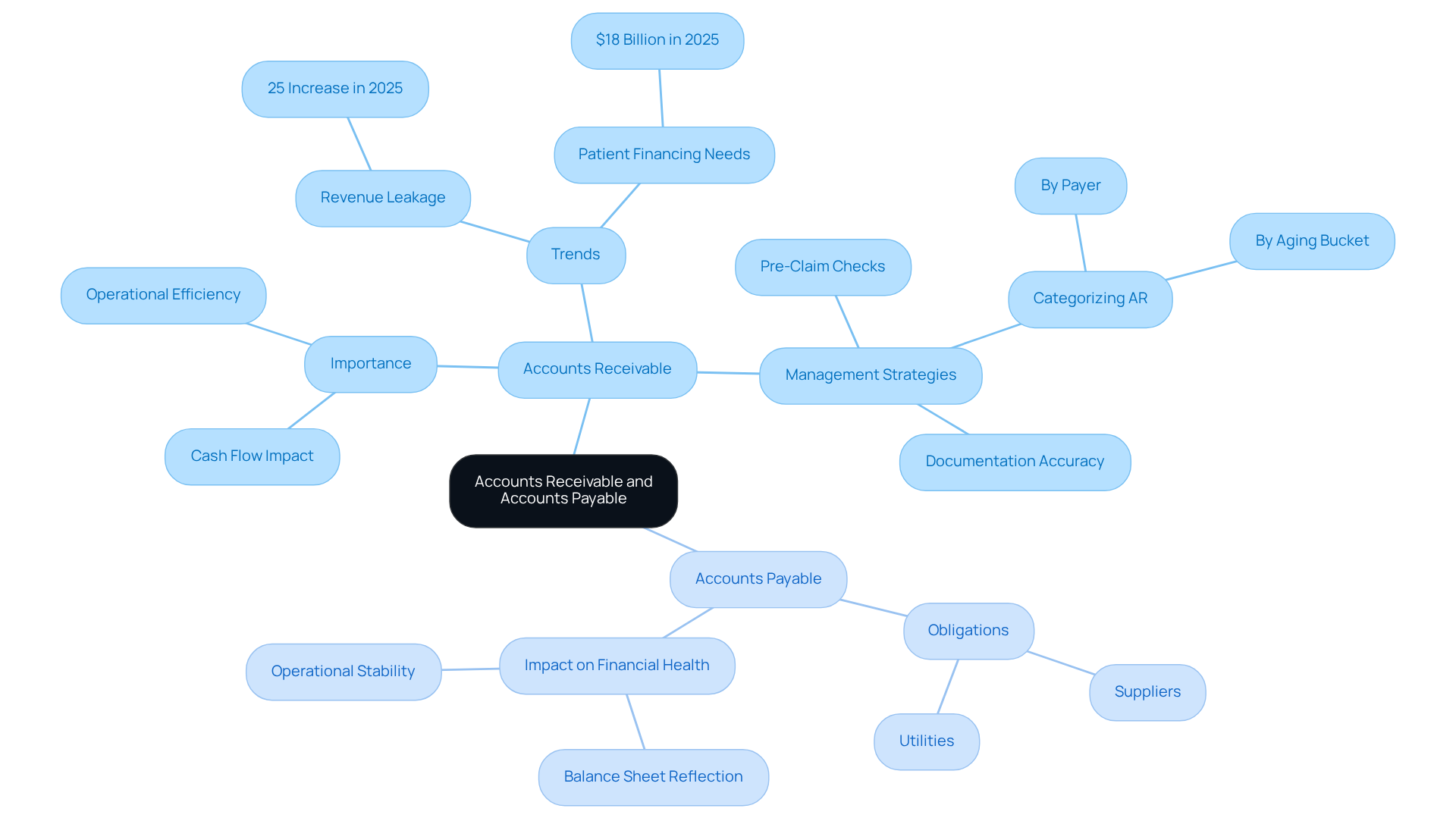
In the medical field, the management of Accounts Receivable (AR) is critical for financial health, as it encompasses funds owed for services rendered but not yet compensated. This metric is vital because it directly affects a practice’s cash flow and operational efficiency. Conversely, Accounts Payable (AP) represents the obligations providers have to pay their suppliers for goods and services received, such as medical supplies and utilities. Both AR and AP are vital elements of an organization’s balance sheet, reflecting its financial well-being.
Recent trends show that effective AR management is becoming crucial, especially with hospitals facing a 25% increase in revenue leakage due to denied claims in 2025. This underscores the necessity of proactive AR management strategies, such as:
- Implementing pre-claim checks
- Enhancing documentation accuracy to reduce denial rates
For instance, medical service providers that focus on high-dollar claims and categorize AR by payer and aging bucket have experienced improved cash recovery efficiency.
In 2026, the average deductible for ACA plans reached a record high of $3,786, contributing to a growing concern among patients regarding the affordability of medical services. Patients are increasingly struggling to afford medical services, leading to a rise in financing needs, which exceeded $18 billion in 2025, growing at a 4.1% annual rate. Consequently, medical organizations are emphasizing clear communication regarding payment alternatives and adaptable financing plans to improve the patient experience with costs.
Expert opinions emphasize that integrating AR management with billing and collections processes is essential for maximizing profitability. By adopting advanced technologies and data-driven strategies, providers can streamline their revenue cycle, ensuring timely payments and reducing the administrative burden associated with accounts receivable management. Understanding the dynamics of AR and AP, including the difference between accounts receivable and accounts payable, is not just beneficial; it is imperative for providers striving to enhance their financial health and patient care.
Differentiate Between Accounts Receivable and Accounts Payable
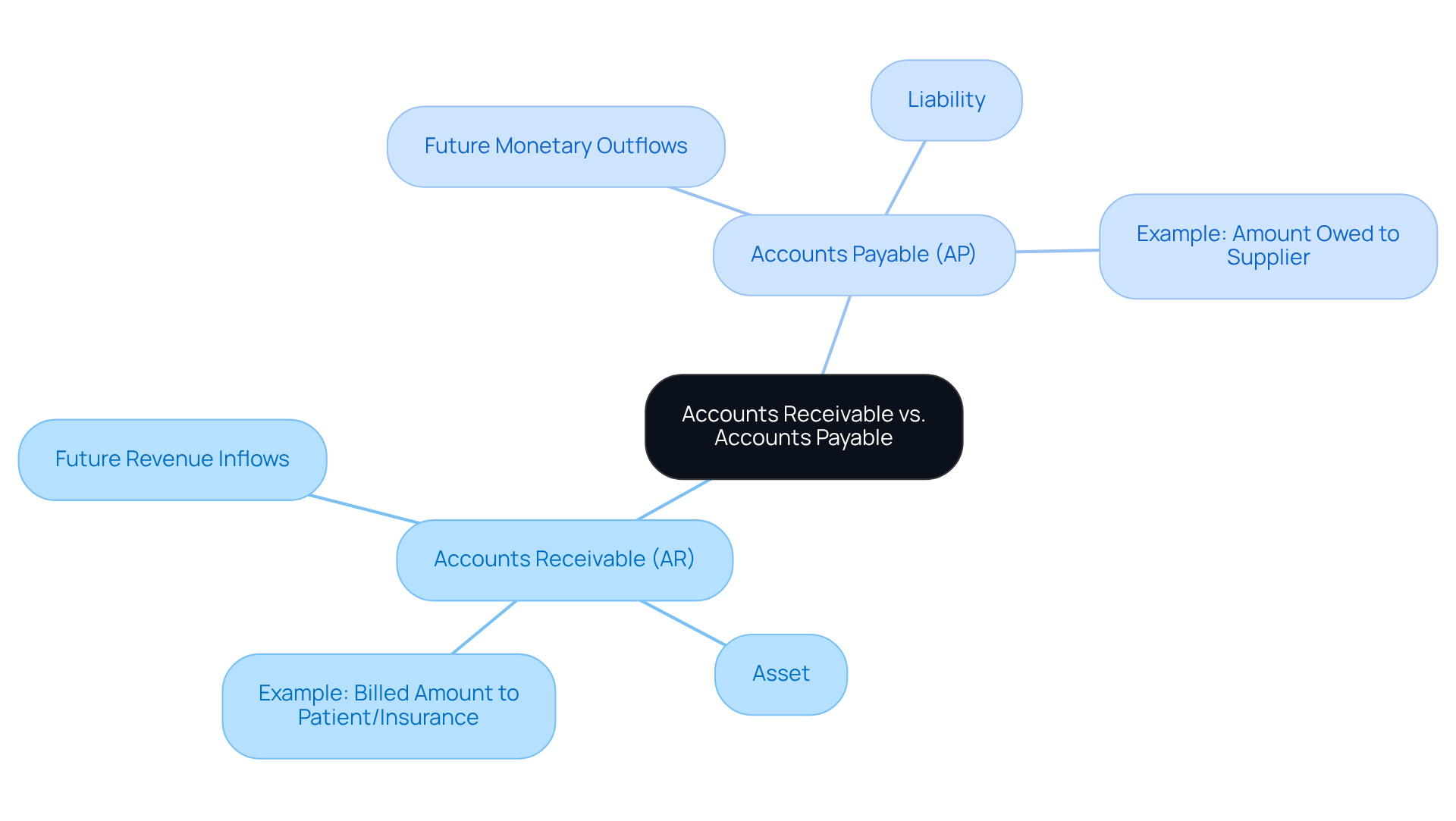
Understanding the difference between accounts receivable and accounts payable is critical for financial management in healthcare services. AR signifies future revenue inflows, serving as an asset for the practice. For example, when a healthcare provider delivers services, the billed amount to the patient or insurance company is recorded as AR. Conversely, AP represents future monetary outflows and is categorized as a liability. When a provider orders medical supplies on credit, the amount owed to the supplier is documented as AP.
Without a clear grasp of the difference between accounts receivable and accounts payable, healthcare providers find financial management challenging. Monitoring AR is essential to ensure timely collection of payments, as increasing AR over several months can signal collection issues. Statistics indicate that 86% of claim denials are preventable, often resulting from coding errors or insufficient billing practices, which can negatively impact cash flow.
A research analysis from a mental health clinic indicated that organizations with high AR frequently encountered economic challenges. This can lead to financial instability if not addressed promptly, underscoring the necessity of tackling billing inefficiencies to ensure operational stability.
To help mental health providers enhance their profitability, Healthcare Partners Consulting & Billing, LLC (HPC) offers a quick quiz that allows providers to evaluate their profitability score. This tool helps identify hidden revenue leaks and provides personalized recommendations to improve efficiency and billing accuracy. By utilizing such resources, providers in the medical field can improve their management strategies.
Moreover, maintaining a manageable level of debt is crucial; understanding the difference between accounts receivable and accounts payable is important, as too much accounts payable may indicate management problems, risking the organization’s ability to meet its obligations. As highlighted by industry specialists, effective management requires understanding the difference between accounts receivable and accounts payable, which is crucial for the sustainability of medical services, particularly in the current economic environment.
Ultimately, mastering AR and AP management is vital for healthcare providers to thrive in a competitive landscape.
Examine the Impact on Cash Flow
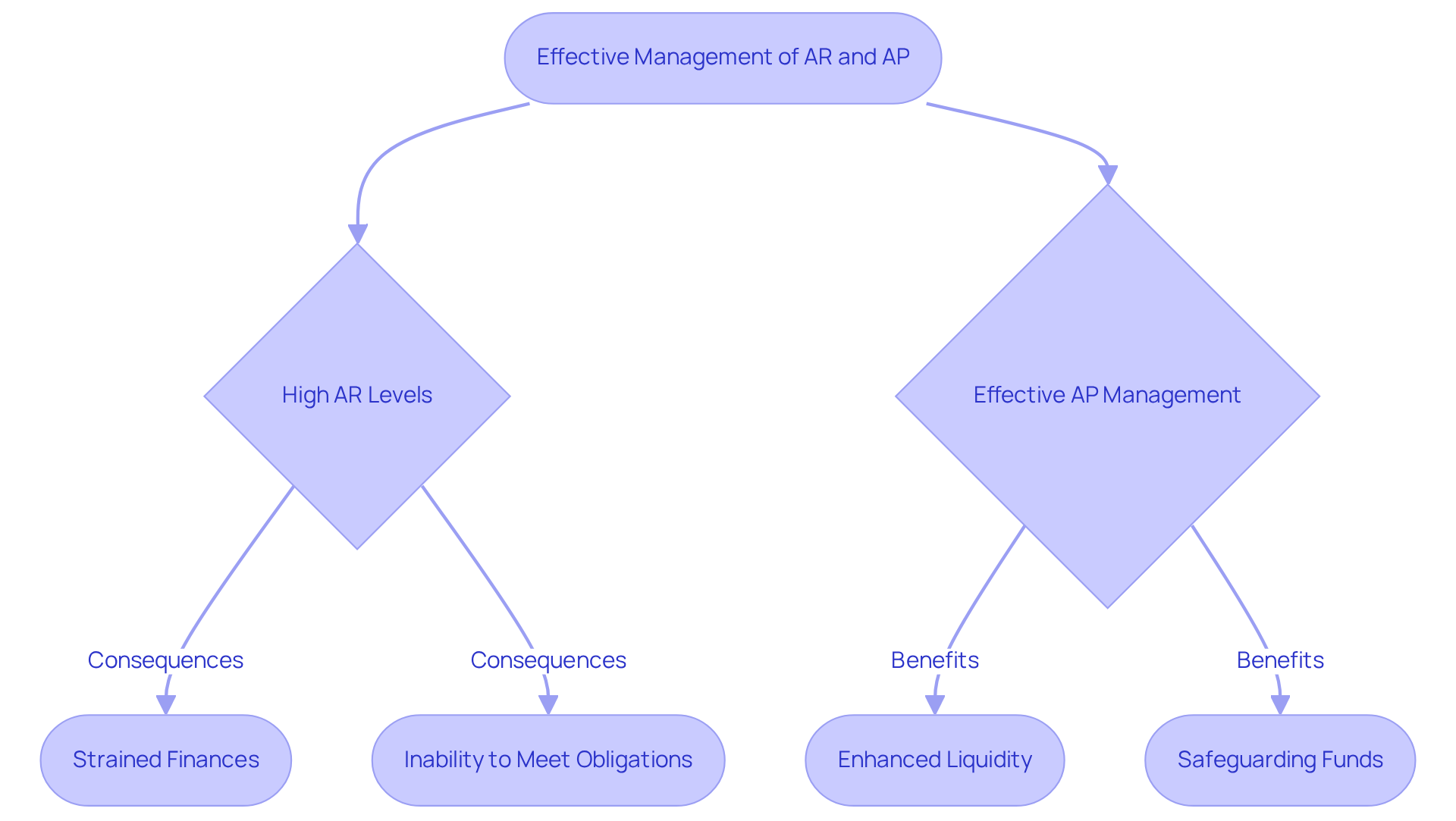
Effective management of the difference between accounts receivable and accounts payable is crucial for maintaining the financial health of healthcare organizations. High levels of AR typically signal that an organization is waiting for payments, which can strain finances and hinder the ability to meet obligations like bills and salaries. Conversely, effective management of accounts payable allows organizations to strategically time their payments, enhancing liquidity without incurring penalties, thus safeguarding funds for essential operational needs.
For instance, a case study shows that organizations that adopted upfront payment collection strategies faced fewer challenges in collecting payments post-visit, leading to better financial stability. Delays in AR collection can create significant financial strain, jeopardizing the ability to meet essential operational costs. This mismanagement can ultimately threaten the financial stability of healthcare organizations.
As a veteran-owned enterprise with 39 years of experience, Healthcare Partners Consulting & Billing, LLC (HPC) understands the evolving landscape of billing services. Practices are increasingly adopting technology-driven solutions to streamline AR processes, enhancing financial flow management and mitigating risks associated with delayed payments. Expert insights highlight that a strategic, data-driven approach to AR management is crucial for optimizing revenue collection and ensuring the financial well-being of medical organizations. By prioritizing prompt collections and reducing AR days, organizations can protect their revenue flow and sustain operational viability in a competitive landscape. Failing to implement a strong AR management strategy can jeopardize the operational efficiency and financial stability of healthcare organizations.
Implement Best Practices for Effective Management
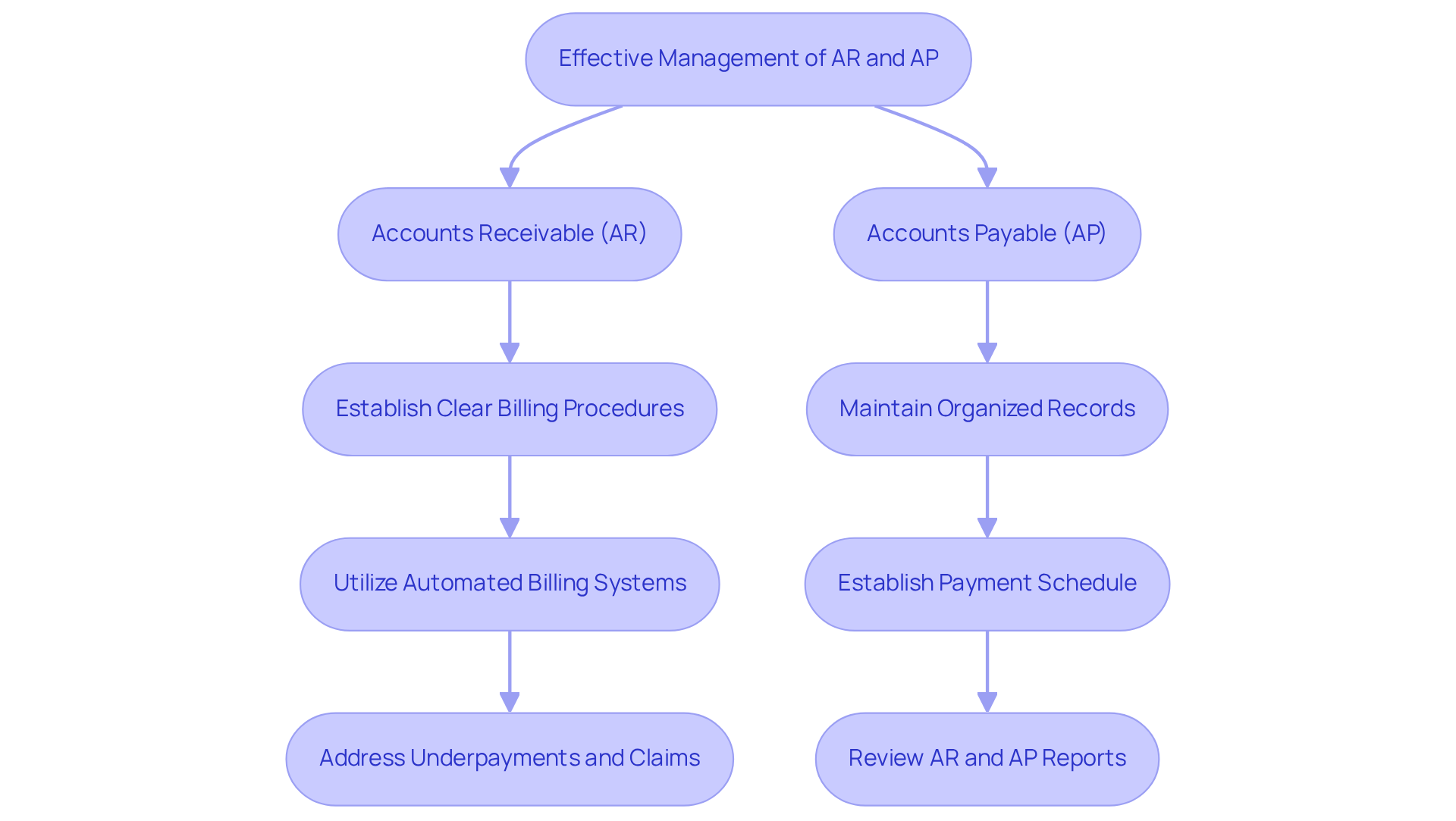
Healthcare organizations face significant challenges in effectively managing the difference between accounts receivable and accounts payable. To address these challenges, several optimal strategies should be implemented. For AR, establishing clear billing procedures is essential. This approach can lead to improved cash flow management, including sending timely invoices and diligently following up on overdue payments.
Utilizing automated billing systems can streamline these processes, reducing human error and accelerating billing cycles. Automated systems have shown a reduction in claim denials and improved financial clearance rates, with many facilities achieving over 95% clearance. Addressing underpayments, unprocessed claims, and aging claims is crucial for optimizing patient statements and ensuring that healthcare providers recover the revenue they have earned. Healthcare Partners Consulting & Billing, LLC (HPC), a veteran-owned organization, prioritizes a compliance-first approach to help entities navigate these challenges effectively.
In managing AP, maintaining organized records of all invoices is crucial. Establishing a payment schedule helps avoid late fees and ensures that obligations are met promptly. Consistently reviewing both AR and AP reports allows organizations to understand the difference between accounts receivable and accounts payable, enabling them to recognize trends and areas for enhancement, which facilitates proactive modifications to monetary strategies.
By adopting these strategies, healthcare providers can enhance cash flow management, reduce administrative burdens, and focus more on delivering quality patient care. This approach fosters financial sustainability and creates a more efficient operational environment, allowing organizations to thrive in a competitive landscape. Additionally, implementing effective denial management strategies is crucial for revenue recovery, enabling practices to appeal denials promptly and effectively.
Conclusion
Healthcare providers face significant challenges in managing their financial operations, particularly in distinguishing between accounts receivable and accounts payable. Understanding this distinction is essential for maintaining financial health and operational efficiency. Accounts receivable represents future income, while accounts payable signifies future expenses. By recognizing these differences, healthcare organizations can navigate their financial landscapes more effectively, ensuring they meet obligations while optimizing cash flow.
The article highlights the critical role of effective management strategies for both accounts receivable and accounts payable. Key insights include:
- The importance of timely invoicing
- Proactive follow-ups on overdue payments
- The integration of automated billing systems to reduce errors and enhance cash recovery
Additionally, maintaining organized records and establishing payment schedules for accounts payable can prevent late fees and ensure financial stability.
Mastering accounts receivable and payable management is essential for healthcare providers to prioritize quality patient care. By implementing best practices with the help of experts like Healthcare Partners Consulting & Billing, LLC (HPC), providers can reduce administrative burdens and support financial sustainability. Effective financial management is not merely a back-office function; it is a cornerstone of delivering exceptional patient care.
Frequently Asked Questions
What is Accounts Receivable (AR) in the medical field?
Accounts Receivable (AR) refers to the funds owed to medical providers for services rendered but not yet compensated. It is critical for a practice’s financial health as it directly impacts cash flow and operational efficiency.
What does Accounts Payable (AP) represent?
Accounts Payable (AP) represents the obligations that medical providers have to pay their suppliers for goods and services received, such as medical supplies and utilities.
Why is effective AR management important?
Effective AR management is crucial because hospitals are facing significant revenue leakage due to denied claims, with a reported 25% increase in 2025. Proactive AR management strategies can help mitigate these losses.
What are some strategies for improving AR management?
Strategies for improving AR management include implementing pre-claim checks and enhancing documentation accuracy to reduce denial rates. Additionally, focusing on high-dollar claims and categorizing AR by payer and aging bucket can improve cash recovery efficiency.
How are rising deductibles affecting patients and medical organizations?
In 2026, the average deductible for ACA plans reached a record high of $3,786, leading to increased patient concerns about the affordability of medical services. This has resulted in a rise in financing needs, exceeding $18 billion in 2025, which is growing at a 4.1% annual rate.
What steps are medical organizations taking to address patient financing needs?
Medical organizations are emphasizing clear communication regarding payment alternatives and adaptable financing plans to enhance the patient experience with costs.
How can integrating AR management with billing and collections processes benefit providers?
Integrating AR management with billing and collections processes is essential for maximizing profitability. By adopting advanced technologies and data-driven strategies, providers can streamline their revenue cycle, ensuring timely payments and reducing administrative burdens.
Why is understanding AR and AP dynamics important for medical providers?
Understanding the dynamics of AR and AP is imperative for providers aiming to enhance their financial health and improve patient care. It helps in managing cash flow effectively and ensuring operational efficiency.