
Introduction
Operational efficiency is critical for the success of physical therapy practices, yet many encounter significant challenges in achieving it. Implementing best practices in:
- Scheduling
- Patient experience
- Billing
can enhance operational performance and allow healthcare providers to concentrate on delivering quality patient care. Many practices face significant challenges in achieving operational efficiency, leading to suboptimal patient care. Without effective management, the quality of patient care may decline, impacting overall satisfaction and outcomes. Practitioners must discern which strategies will most effectively streamline operations and enhance patient satisfaction.
Establish Core Elements of Practice Management
To thrive in the competitive landscape of physical therapy, effective physical therapy practice management and the establishment of core management elements is not just beneficial; it is essential. These include:
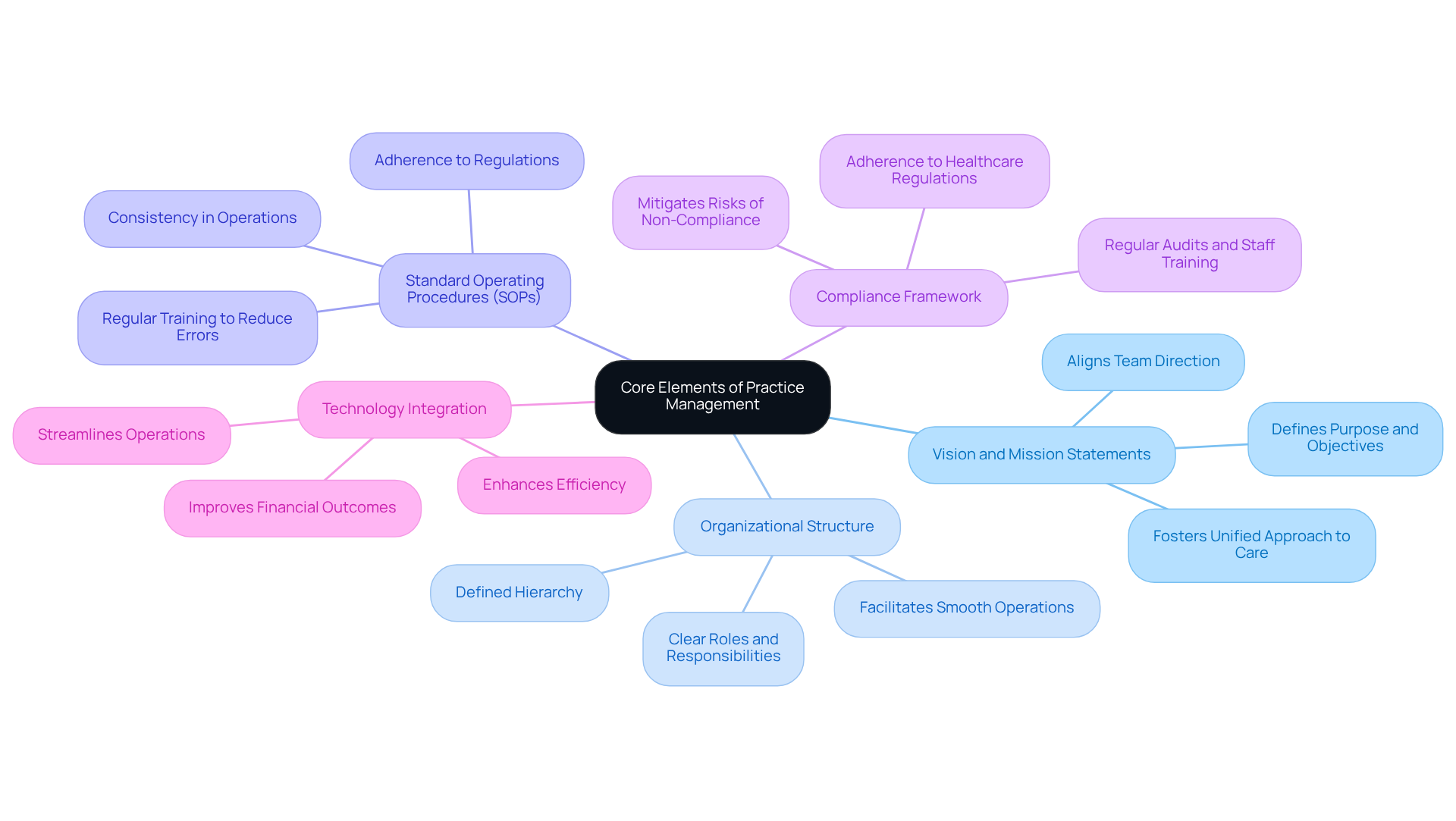
- Vision and Mission Statements: Clearly defining the purpose and objectives of your organization aligns your team and provides direction, fostering a unified approach to care.
- Organizational Structure: Establishing clear roles and responsibilities within your team ensures accountability and efficiency. This includes defining the hierarchy and communication channels to facilitate smooth operations.
- Standard Operating Procedures (SOPs): Creating SOPs for all essential functions, including intake processes, treatment protocols, and financial procedures, guarantees consistency and adherence to regulations. Regular training on these procedures can significantly reduce errors and enhance operational performance.
- Compliance Framework: Implementing a compliance-first approach is crucial for adhering to healthcare regulations and standards. Regular audits and staff training can help maintain compliance and mitigate risks, which is essential given the potential for civil monetary penalties for non-compliance. Furthermore, continuous staff training on documentation optimal methods is essential to guarantee accuracy and compliance.
- Technology Integration: Management software like TherapyNotes, SimplePractice, Valant, AdvancedMD, and IntakeQ streamlines operations. From scheduling to billing, these tools enhance efficiency and improve outcomes. Practices that adopt integrated systems report denial rate reductions of 20-30% and faster reimbursement of 15-25% within 30-90 days, demonstrating the financial benefits of effective technology use. Moreover, implementing robust cybersecurity measures is becoming increasingly vital to safeguard individual information and adhere to updated HIPAA Security Rule requirements.
Without a clear vision and structured physical therapy practice management, many physical therapy practices face operational challenges that hinder growth. Establishing these core elements empowers physical therapy organizations to build a robust foundation for physical therapy practice management, sustainable growth, and operational excellence. Neglecting these foundational aspects can jeopardize not only operational efficiency but also the long-term viability of the practice.
Optimize Scheduling and Patient Flow
Optimizing scheduling and patient flow is crucial for enhancing operational efficiency in physical therapy practice management. Consider the following best practices:
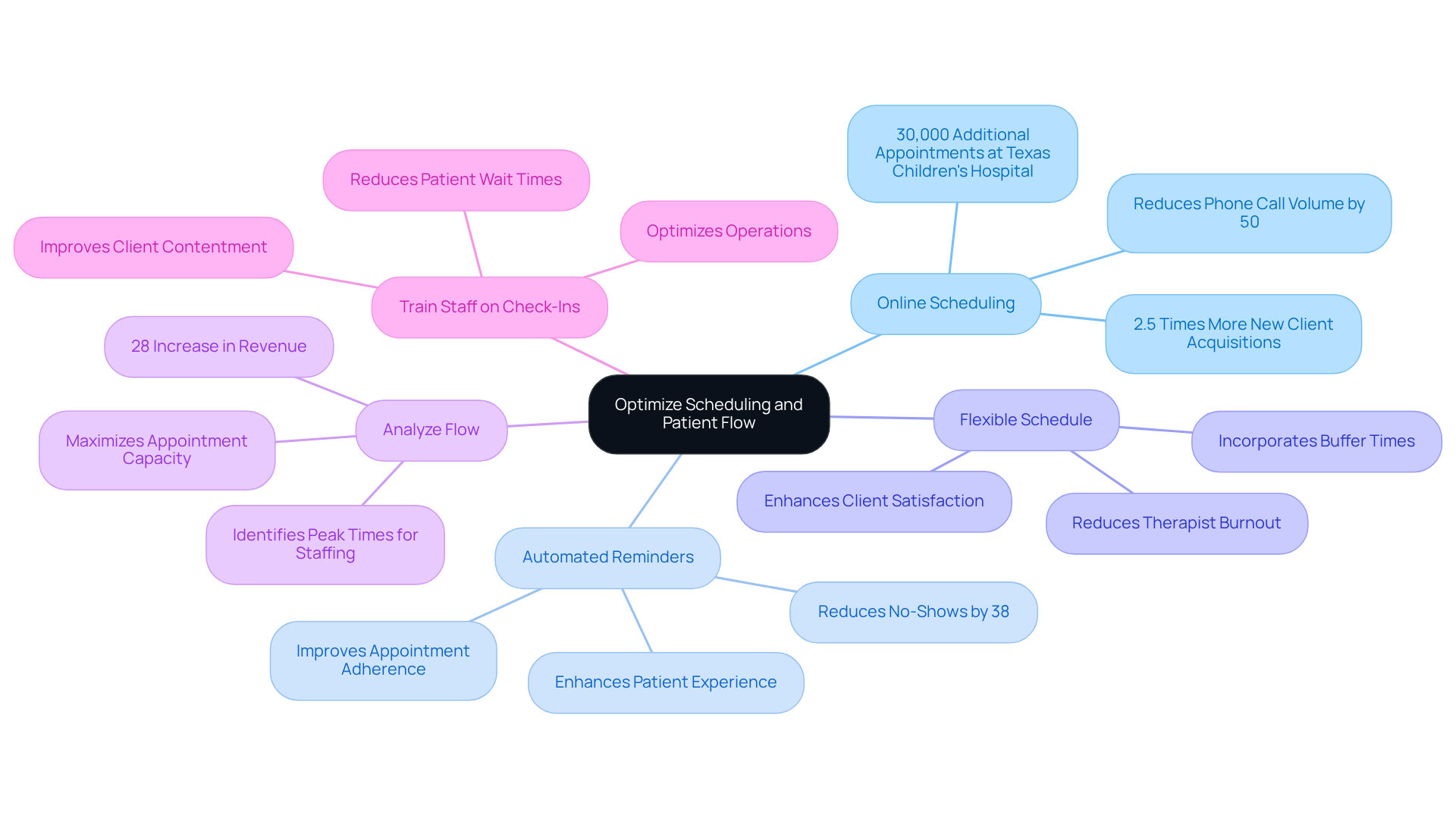
- Implement Online Scheduling: Facilitating online appointment bookings reduces phone call volume significantly while enhancing user convenience. Studies indicate that practices with online scheduling experience 2.5 times more new client acquisitions.
- Utilize Automated Reminders: Sending automated appointment reminders via text or email can significantly reduce no-shows by 38%, ensuring that individuals arrive on time and enhancing overall appointment adherence.
- Create a Flexible Schedule: Incorporate buffer times between appointments to accommodate delays and ensure a smooth flow of individuals. This practice enhances client satisfaction and helps manage therapist burnout by accommodating unexpected needs.
- Analyze Flow: Regularly assess flow patterns to identify peak times and adjust staffing accordingly. Efficient flow management can lead to a 28% increase in revenue by maximizing appointment capacity and minimizing wasted time.
- Train Staff on Efficient Check-In Processes: Train front desk staff to manage check-ins efficiently, reducing wait times for patients. Efficient check-in procedures can improve client contentment and optimize operations.
Ultimately, effective scheduling strategies in physical therapy practice management can significantly impact both operational success and patient satisfaction. For example, Texas Children’s Hospital secured over 53,000 extra appointments each year and prevented 12,000 no-shows through strategic scheduling enhancements, showcasing the financial and operational advantages of effective scheduling methods. Furthermore, assessing key metrics such as wait time and appointment cycle duration is essential for understanding and enhancing scheduling efficiency.
Enhance Patient Experience and Retention
Enhancing patient experience and retention in physical therapy requires a strategic approach that addresses individual needs and fosters engagement. To achieve this, consider implementing the following best practices:
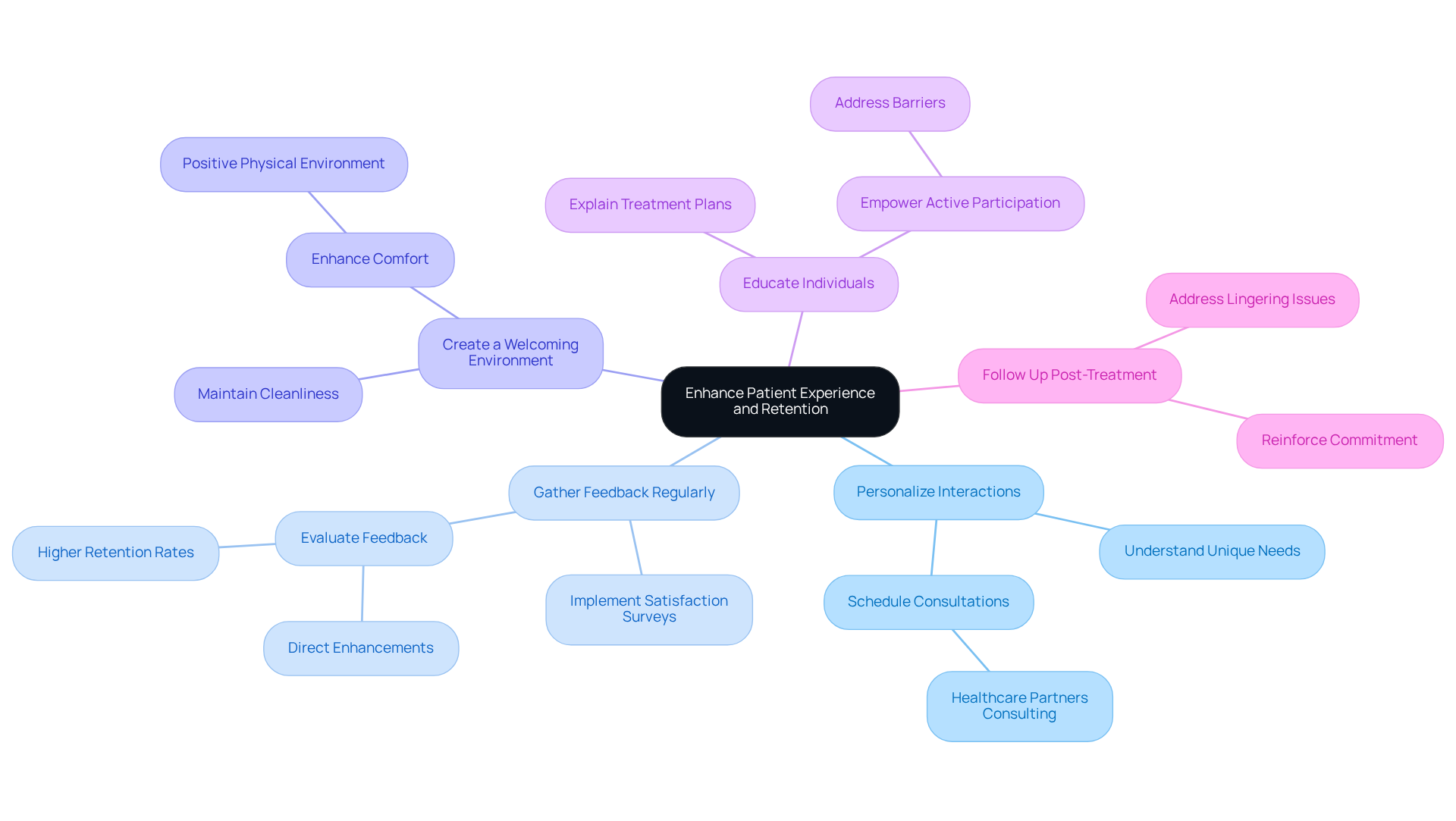
- Personalize Interactions: Understanding each individual’s unique needs and preferences can significantly boost satisfaction. Tailored interactions foster a sense of value and connection, encouraging individuals to remain engaged in their care. Consider scheduling a 30-minute consultation with Healthcare Partners Consulting & Billing, LLC (HPC) to map your current workflow and identify the services that will move the needle fastest for your practice, including comprehensive revenue cycle management tailored to behavioral and mental health practices.
- Gather Feedback Regularly: By implementing satisfaction surveys, you can gain valuable insights into patient experiences. Evaluating this feedback can direct essential enhancements, ensuring that your services align with client expectations. Statistics show that healthcare approaches emphasizing feedback from individuals often experience higher retention rates, as satisfied individuals are more inclined to return and recommend services.
- Create a Welcoming Environment: A clean, comfortable, and inviting practice can greatly enhance the overall experience of individuals receiving care. Positive physical environments enhance comfort and contentment, increasing the likelihood of their return. For example, a UK hospital enhanced satisfaction by revamping its appointment scheduling process using feedback from individuals, showcasing the effectiveness of fostering a welcoming atmosphere.
- Educate Individuals: Providing clear explanations of treatment plans and expected outcomes empowers individuals to take an active role in their care. Informed individuals are more likely to adhere to treatment protocols, leading to improved health outcomes. This statistic highlights a significant barrier to effective treatment outcomes: 70% of individuals do not complete all authorized visits in physical therapy, emphasizing the necessity for effective education and engagement strategies.
- Follow Up Post-Treatment: Following up allows you to address any lingering issues and reinforces their commitment to ongoing care, ultimately improving retention rates. Higher client retention contributes to improved operational efficiency and staff productivity in the context of physical therapy practice management.
By concentrating on these strategies, organizations can cultivate a positive experience for individuals that nurtures loyalty and promotes referrals. Furthermore, tackling common challenges linked to engagement strategies, such as vague expectations or insufficient follow-up, can assist in preventing the incorrect application of these methods. By implementing these strategies, physical therapy practice management can not only improve patient satisfaction but also ensure sustainable growth and success in a competitive landscape. Additionally, consider the seamless integration with platforms like TherapyNotes, SimplePractice, Valant, AdvancedMD, and IntakeQ to enhance your management solutions.
Implement Effective Billing and Administrative Processes
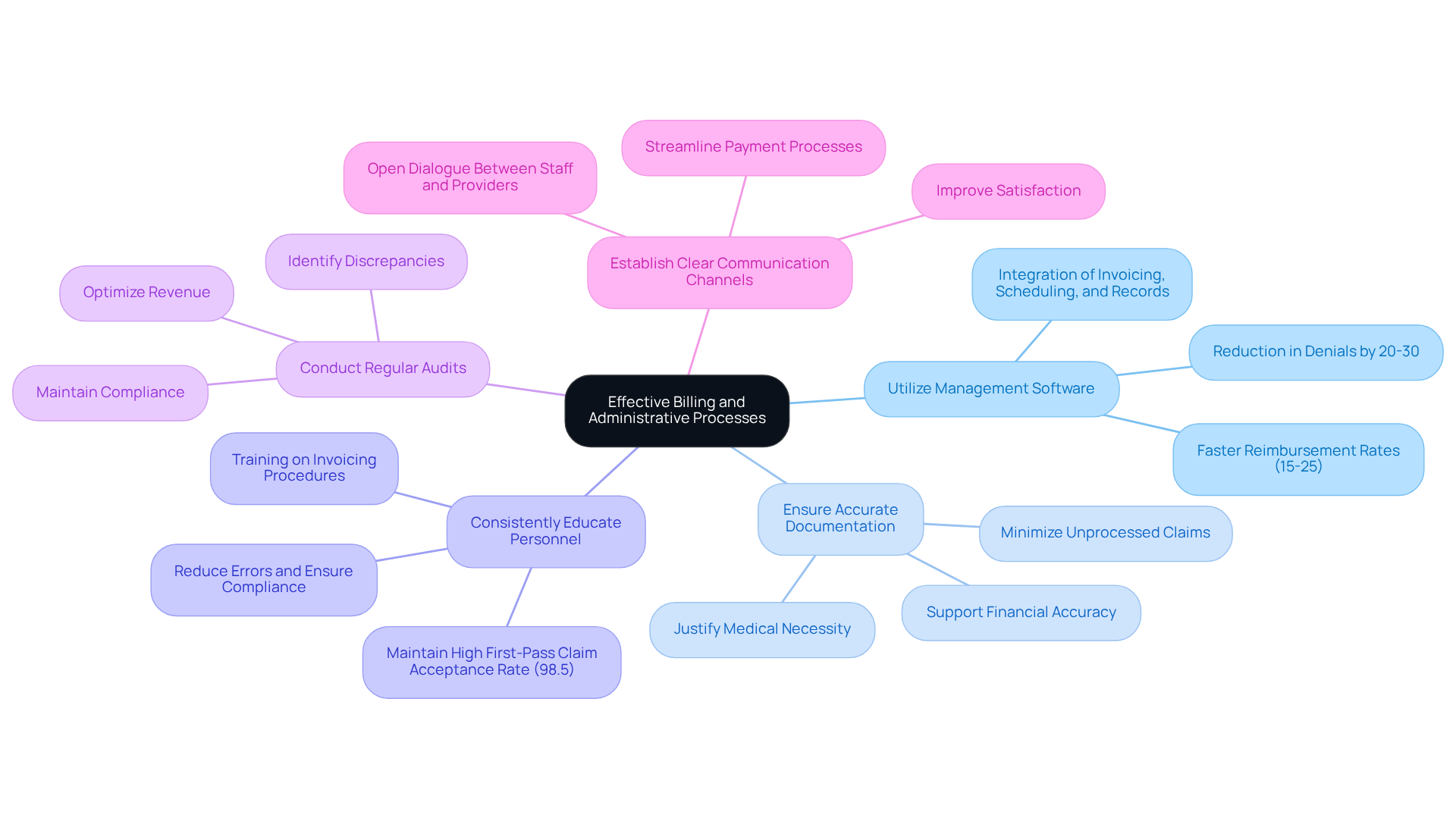
To optimize billing and administrative processes in physical therapy practices, it is essential to adopt structured best practices that enhance operational efficiency:
- Utilize Management Software: Invest in comprehensive management software that integrates invoicing, scheduling, and patient records to streamline operations. This integration can reduce denials by 20-30%. Additionally, it can accelerate reimbursement rates by 15-25% within 30-90 days, particularly when paired with platforms like TherapyNotes and SimplePractice.
- Ensure Accurate Documentation: Maintain meticulous records of services provided to support financial accuracy and compliance with payer requirements. Accurate documentation is essential for justifying medical necessity and optimizing revenue, helping to minimize unprocessed claims and ensuring timely reimbursements.
- Consistently Educate Personnel: Offer continuous training for staff on invoicing procedures, coding updates, and compliance regulations to reduce errors and ensure adherence to optimal methods. Regular training helps maintain a high first-pass claim acceptance rate, ideally around 98.5%, which is crucial for effective denial management and revenue recovery.
- Conduct Regular Audits: Implement regular evaluations of financial processes to identify discrepancies and areas for improvement. This proactive approach can help maintain compliance and optimize revenue, ensuring that practices can quickly address any issues related to underpayments and unprocessed claims.
- Establish Clear Communication Channels: Foster open dialogue between administrative staff and healthcare providers to ensure that financial information is accurate and up-to-date. Effective communication can improve satisfaction and streamline the payment process, ultimately decreasing administrative burdens.
By adopting these strategies, physical therapy practice management can significantly enhance invoicing processes, leading to improved financial performance and reduced administrative burdens. Partnering with Healthcare Partners Consulting & Billing, LLC (HPC) can provide tailored revenue cycle management solutions that empower healthcare providers to focus more on patient care, leveraging our expertise in behavioral and mental health billing.
Conclusion
Operational success in physical therapy hinges on effective practice management, which directly influences patient care quality. By focusing on core elements like clear vision statements and structured frameworks, practices establish a solid foundation for sustainable growth. Integrating technology and streamlining processes enhances efficiency, allowing providers to focus on delivering exceptional patient care.
Key strategies discussed include:
- Optimizing scheduling and patient flow
- Enhancing patient experience and retention
- Implementing effective billing and administrative processes
Each of these components plays a vital role in improving operational efficiency and patient satisfaction. For instance, adopting online scheduling and automated reminders can significantly reduce no-shows, while personalized interactions and regular feedback can foster loyalty and engagement among patients. Furthermore, leveraging comprehensive management software ensures accurate documentation and timely reimbursements, ultimately leading to improved financial performance.
In conclusion, the importance of effective practice management in physical therapy cannot be overstated. By embracing these best practices, healthcare providers can alleviate administrative burdens, allowing them to focus on patient care. Organizations are encouraged to consider partnering with Healthcare Partners Consulting & Billing, LLC (HPC) to access tailored revenue cycle management solutions that align with their unique needs. Ultimately, embracing effective management practices positions organizations to thrive in a competitive healthcare environment, ensuring they meet both operational and patient care standards.
Frequently Asked Questions
What are the core elements of effective physical therapy practice management?
The core elements include vision and mission statements, organizational structure, standard operating procedures (SOPs), a compliance framework, and technology integration.
Why are vision and mission statements important in practice management?
Vision and mission statements clearly define the purpose and objectives of the organization, aligning the team and providing direction for a unified approach to care.
How does an organizational structure contribute to practice management?
An organizational structure establishes clear roles and responsibilities, ensuring accountability and efficiency, and facilitates smooth operations through defined hierarchy and communication channels.
What are standard operating procedures (SOPs) and why are they necessary?
SOPs are documented processes for essential functions such as intake, treatment, and financial procedures. They ensure consistency, adherence to regulations, and reduce errors through regular training.
What is the significance of a compliance framework in physical therapy practices?
A compliance framework is crucial for adhering to healthcare regulations and standards, helping to mitigate risks and avoid civil monetary penalties through regular audits and staff training.
How does technology integration benefit physical therapy practices?
Technology integration through management software streamlines operations, enhances efficiency, and improves outcomes, leading to reduced denial rates and faster reimbursements.
What financial benefits can practices expect from effective technology use?
Practices that adopt integrated systems report denial rate reductions of 20-30% and faster reimbursement of 15-25% within 30-90 days.
Why is cybersecurity important in practice management?
Implementing robust cybersecurity measures is vital to safeguard individual information and comply with updated HIPAA Security Rule requirements.
What are the consequences of neglecting core elements of practice management?
Neglecting these foundational aspects can lead to operational challenges, hinder growth, and jeopardize the long-term viability of the practice.