
Introduction
In mental health clinics, optimizing administrative back office operations is crucial for delivering effective patient care. Implementing best practices enables healthcare providers to minimize administrative burdens effectively, allowing them to concentrate on their primary focus: patient care. Clinics often struggle to balance efficiency with compliance and security. This article delineates four critical strategies that enable mental health practices to enhance operational efficiency and improve patient outcomes.
Define Core Functions of Back Office Operations in Healthcare
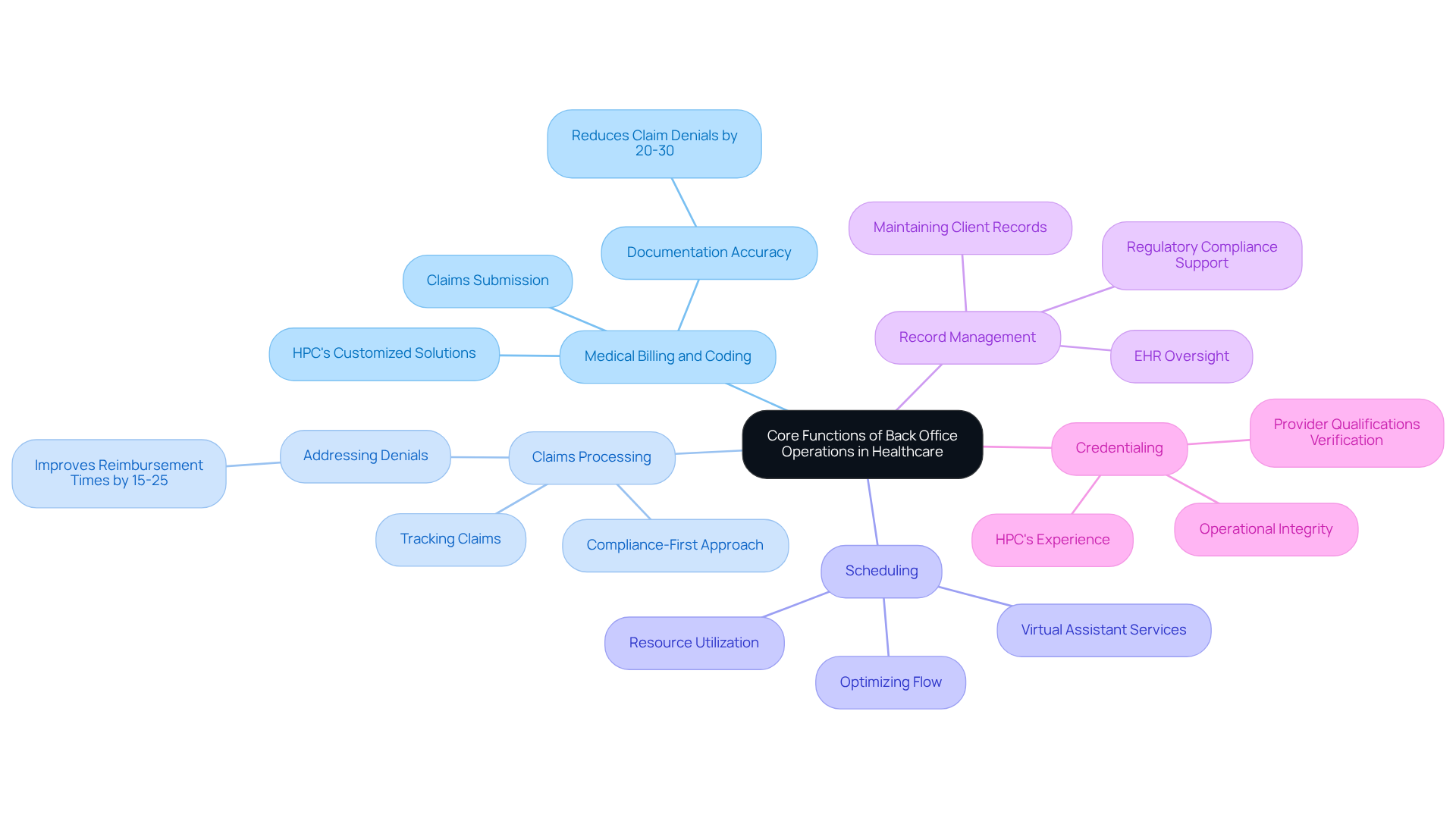
In mental health clinics, admin back office adalah critical for ensuring effective practice management and delivering high-quality care. The core functions include:
- Medical Billing and Coding: This process includes submitting claims to insurance companies and ensuring proper documentation and coding of all services rendered. This accuracy can reduce claim denials by 20-30%. Healthcare Partners Consulting & Billing, LLC (HPC) specializes in this area, offering customized solutions that empower healthcare providers by alleviating administrative burdens, enabling them to concentrate on care.
- Claims Processing: Efficient claims processing minimizes delays in revenue collection. This includes tracking claims from submission to payment and promptly addressing any denials, which can improve reimbursement times by 15-25% within 30-90 days. HPC’s expertise in deep payer-behavior understanding ensures that claims are handled with a compliance-first approach.
- Scheduling: Effective scheduling is vital for optimizing flow and resource utilization, ensuring that clinicians can see individuals without unnecessary delays. HPC offers dedicated virtual assistant services tailored to behavioral and mental wellness practices, enhancing scheduling efficiency.
- Record Management: Maintaining precise client records and information is essential for compliance and quality care. This involves overseeing electronic health records (EHR) and ensuring information integrity, which supports regulatory compliance and improves patient outcomes. HPC works smoothly with platforms such as TherapyNotes, SimplePractice, and Valant, making data management easier.
- Credentialing: Proper credentialing of healthcare providers is essential for compliance and operational integrity. This process confirms that providers fulfill the essential qualifications and standards, thereby protecting the organization’s reputation and operational effectiveness. HPC’s veteran-owned status and 39 years of experience in medical and mental wellness billing and practice management services nationwide further enhance its credibility in this area.
Grasping these essential functions allows mental wellness facilities to optimize their operations, ultimately enabling them to concentrate on delivering outstanding patient care while ensuring that admin back office adalah effectively managed for financial and regulatory integrity.
Implement Strategies to Streamline Back Office Processes
Enhancing back office operations in mental health clinics is essential for improving overall service delivery. To achieve this, consider the following strategies:
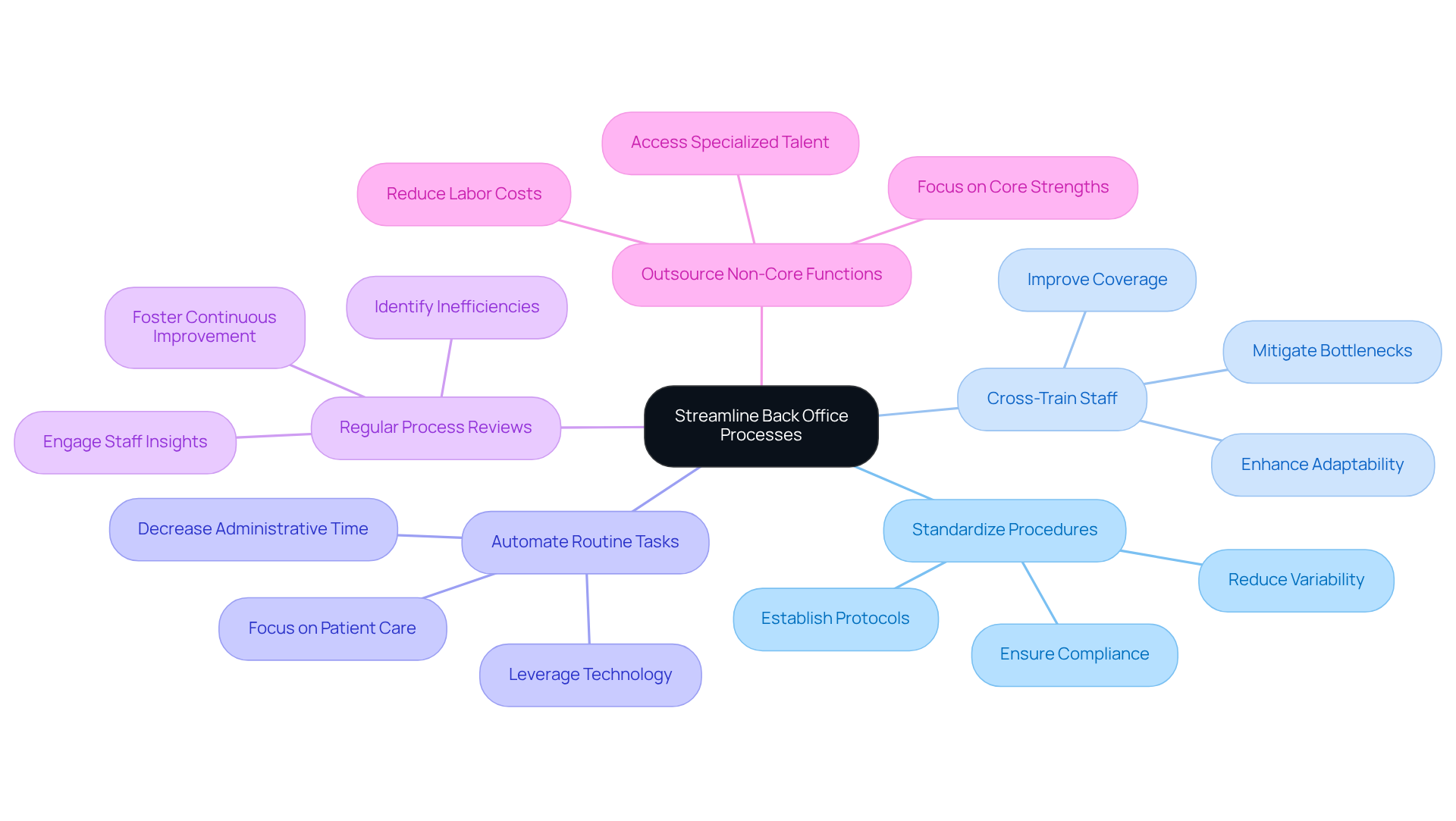
- Standardize Procedures: Establish standardized protocols for essential tasks such as billing, scheduling, and data entry. This standardization reduces variability and ensures consistent operations, which is vital for quality and compliance.
- Cross-Train Staff: Cross-training staff members enhances workforce adaptability. This flexibility allows for better coverage during peak times and mitigates bottlenecks when personnel are unavailable, ultimately leading to enhanced service delivery and patient satisfaction.
- Automate Routine Tasks: Leverage technology to automate repetitive tasks like appointment reminders, billing notifications, and data entry. Automation can significantly decrease the time allocated to administrative tasks, enabling staff to concentrate more on care for individuals.
- Regular Process Reviews: Conduct frequent evaluations of back office processes to identify inefficiencies and areas for improvement. Engaging staff in these discussions can provide valuable insights from those directly involved in operations, fostering a culture of continuous improvement.
- Outsource Non-Core Functions: Outsourcing enables healthcare facilities to concentrate on core strengths while specialists manage administrative tasks. For instance, firms like Healthcare Partners Consulting & Billing, LLC (HPC) can handle billing and credentialing. HPC’s comprehensive revenue cycle management, including seamless integrations with EHR platforms like TherapyNotes and SimplePractice, can lead to a 20-30% reduction in denial rates and a 15-25% increase in faster reimbursements within 30-90 days, enhancing overall practice efficiency.
Ultimately, these strategies empower mental wellness providers to prioritize patient care while optimizing operational efficiency.
Ensure Compliance and Security in Back Office Administration
In the admin back office adalah of mental health clinics, compliance and security are paramount to safeguarding sensitive patient data. Here are essential practices to ensure adherence to regulations and protect this information:
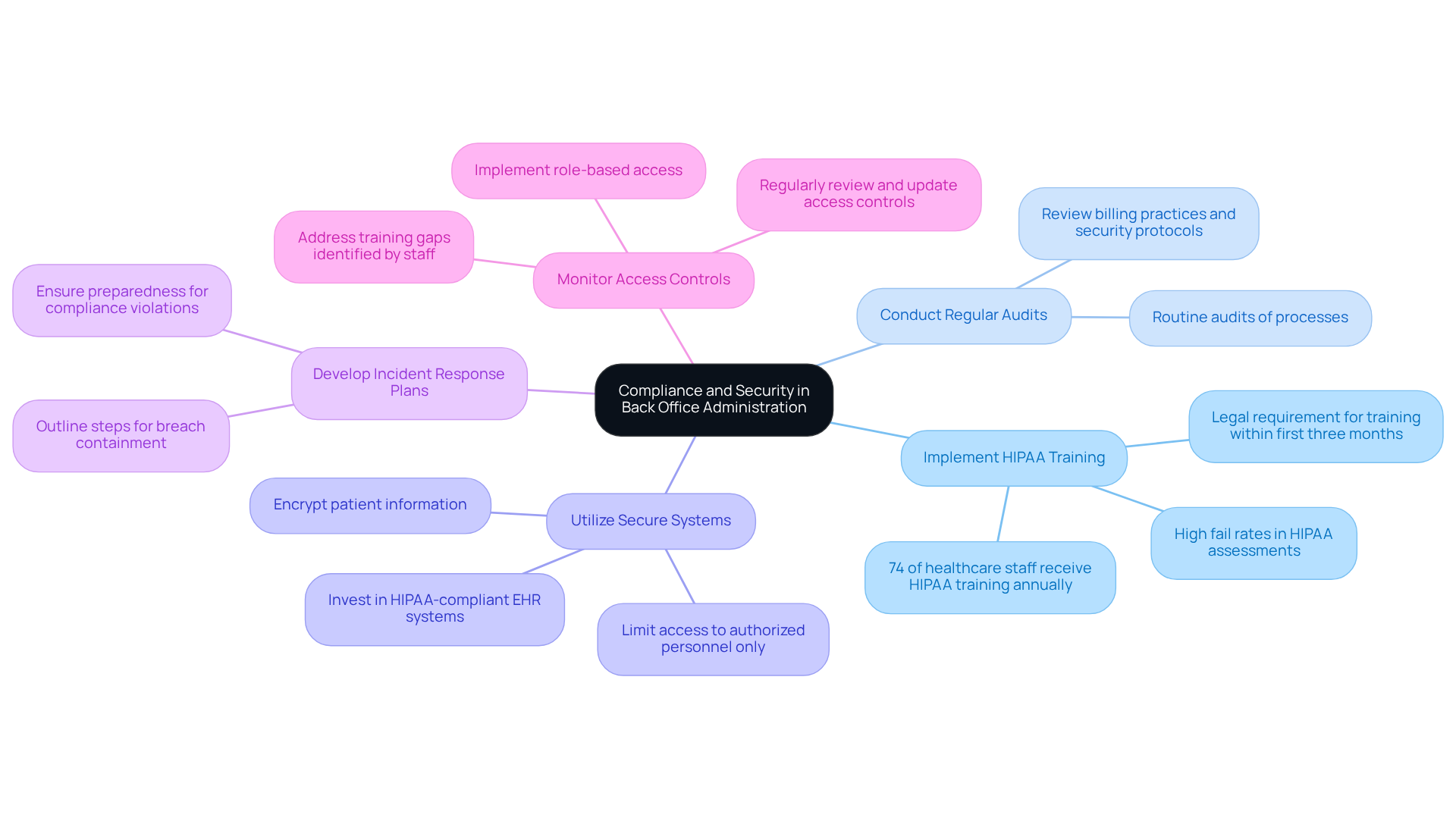
- Implement HIPAA Training: Regular training on HIPAA regulations is vital for all staff. Employees must comprehend their duties concerning patient confidentiality and information protection. While 74% of healthcare staff receive HIPAA training annually, a concerning number report not receiving it within the first three months of employment, a legal requirement.
- Conduct Regular Audits: Routine audits of processes in the admin back office adalah necessary to ensure compliance with regulatory standards. This encompasses reviewing billing practices, information management, and security protocols. Organizations should assess their staff’s understanding of HIPAA to tailor training frequency and content effectively.
- Utilize Secure Systems: Investing in secure electronic health record (EHR) systems that comply with HIPAA standards is crucial. All patient information should be encrypted, and access must be limited to authorized personnel only. This highlights a significant concern regarding unauthorized access, as reported by 49% of staff.
- Develop Incident Response Plans: Creating and upholding an incident response plan is crucial for addressing potential breaches or compliance violations. This plan should outline steps for containment, investigation, and notification, ensuring that the facility is prepared for any eventuality.
- Monitor Access Controls: Regularly reviewing and updating access controls ensures that only necessary personnel have access to sensitive information. Implementing role-based access can significantly limit exposure to healthcare data, addressing concerns raised by 36% of staff who cited lack of employee training as a reason for HIPAA violations.
By implementing these measures, mental wellness facilities demonstrate that admin back office adalah essential for protecting their clients and fortifying their operational integrity.
Leverage Technology for Optimized Back Office Operations
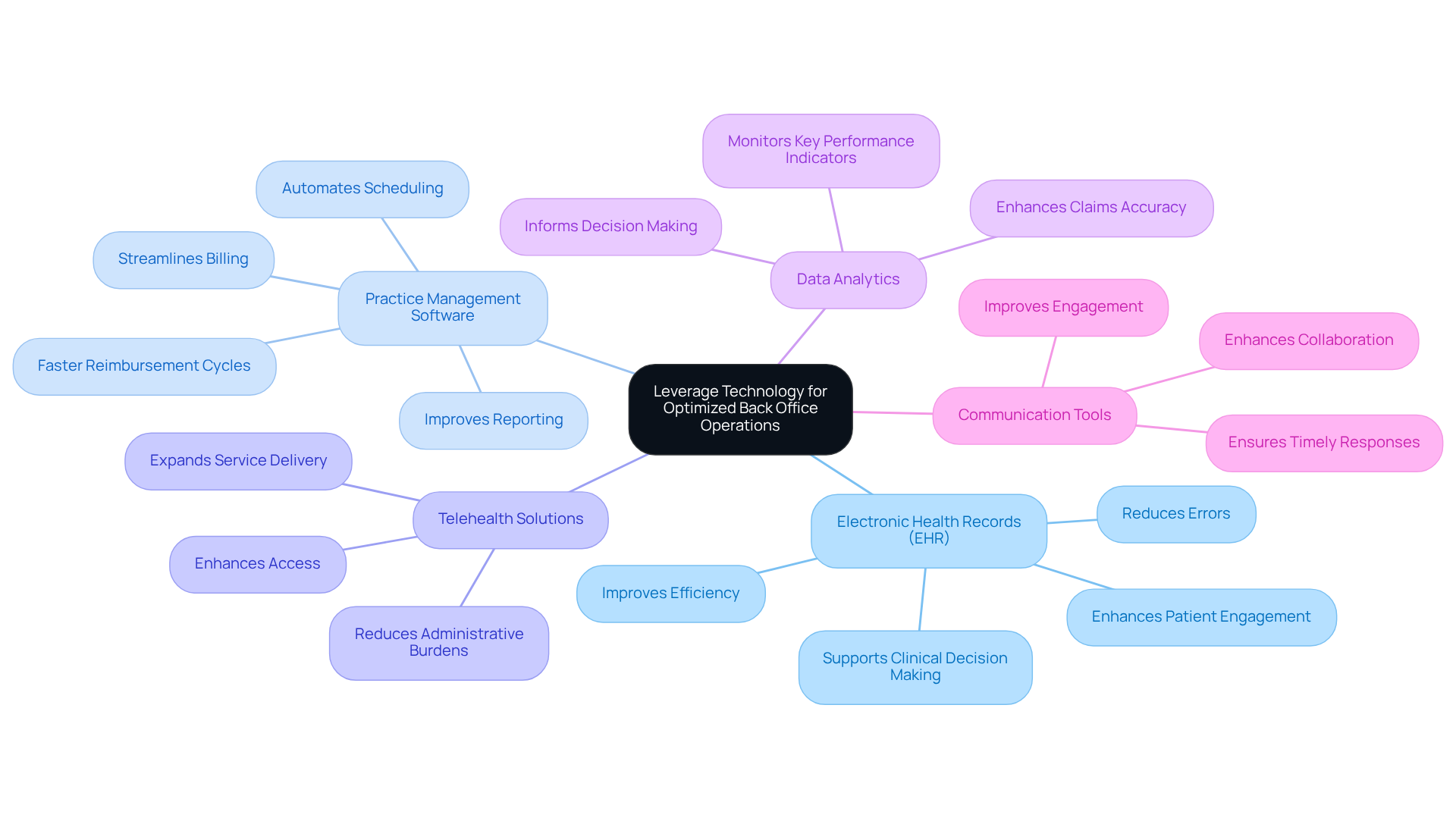
Integrating technology into back office operations is essential for mental health clinics aiming to enhance efficiency and effectiveness. Here are several strategies to leverage technology effectively:
- Adopt Electronic Health Records (EHR): Implementing a robust EHR system that integrates billing, scheduling, and patient management centralizes information. This significantly reduces the risk of errors associated with manual data entry. EHRs have been shown to enhance safety for individuals, with a decrease in medical errors by up to 48.8%. Additionally, they improve efficiency, enabling healthcare providers to access records 86% faster.
- Utilize Practice Management Software: Investing in practice management software automates scheduling, billing, and reporting. This streamlines workflows and provides valuable insights into practice performance. As a result, clinics can experience faster reimbursement cycles, with improvements of 15-25% in collections within 30-90 days.
- Implement Telehealth Solutions: Utilizing telehealth platforms expands service delivery options, enhancing access for individuals while reducing administrative burdens associated with in-person visits. This approach boosts engagement and helps clinics manage their resources more effectively.
- Employ Data Analytics: Leveraging data analytics tools to monitor key performance indicators (KPIs) helps identify trends in practice operations. This data-driven approach informs decision-making and strategic planning, leading to scorecard-driven adjustments that enhance claims accuracy and reduce denial rates by 20-30%.
- Integrate Communication Tools: Utilizing secure communication platforms for internal and external communications enhances collaboration among staff and improves engagement with individuals. Effective communication is essential for sustaining a cohesive operational environment and ensuring that needs are met promptly.
By effectively leveraging these technologies, mental health clinics can optimize their back office operations, leading to improved patient care and operational efficiency. The strategic implementation of these technologies not only streamlines operations but also elevates the standard of patient care delivered by clinics.
Conclusion
In mental health clinics, the efficiency of back office operations directly impacts the quality of patient care. Focusing on core functions – medical billing, claims processing, scheduling, record management, and credentialing – enables healthcare providers to streamline administrative processes. This enhancement allows practitioners to devote more time to patient care, ultimately improving service quality.
Key strategies for optimizing back office operations include:
- Standardizing procedures
- Cross-training staff
- Automating routine tasks
- Conducting regular process reviews
- Outsourcing non-core functions
Each of these approaches contributes to a more efficient workflow, allowing mental health clinics to navigate the complexities of administrative tasks while maintaining compliance and security. The integration of technology, such as electronic health records and practice management software, further supports these efforts by reducing errors and enhancing data accessibility.
Recognizing the role of organizations like Healthcare Partners Consulting & Billing, LLC (HPC) is crucial for mental health clinics aiming to enhance administrative efficiency. With 39 years of experience and a veteran-owned status, HPC specializes in comprehensive revenue cycle management tailored to the unique needs of behavioral and mental health practices. By partnering with HPC, clinics can alleviate administrative burdens and focus on what truly matters: delivering exceptional patient care. Prioritizing administrative efficiency is vital for creating a healthcare environment that truly champions patient well-being.
Frequently Asked Questions
What are the core functions of back office operations in healthcare?
The core functions include medical billing and coding, claims processing, scheduling, record management, and credentialing.
How does medical billing and coding impact claim denials?
Accurate medical billing and coding can reduce claim denials by 20-30% by ensuring proper documentation and coding of all services rendered.
What is the importance of claims processing in healthcare?
Efficient claims processing minimizes delays in revenue collection and can improve reimbursement times by 15-25% within 30-90 days by tracking claims from submission to payment and addressing any denials promptly.
Why is effective scheduling important in mental health clinics?
Effective scheduling optimizes flow and resource utilization, allowing clinicians to see individuals without unnecessary delays.
How does record management contribute to compliance and quality care?
Maintaining precise client records and overseeing electronic health records (EHR) ensures information integrity, supports regulatory compliance, and improves patient outcomes.
What is the role of credentialing in healthcare operations?
Credentialing confirms that healthcare providers meet essential qualifications and standards, protecting the organization’s reputation and operational integrity.
How does Healthcare Partners Consulting & Billing, LLC (HPC) support back office operations?
HPC specializes in medical billing and coding, claims processing, scheduling, record management, and credentialing, providing customized solutions that alleviate administrative burdens for healthcare providers.