

Introduction
Billing for pain management services is fraught with complexities that can jeopardize a practice’s financial stability. These complexities create significant hurdles for providers, complicating their billing processes and detracting from their focus on patient care. This article outlines four best practices that enable pain management practices to streamline billing, enhance compliance, and improve revenue. Addressing these billing complexities is essential for providers to sustain their commitment to quality patient care.
Understand the Unique Challenges of Pain Management Billing
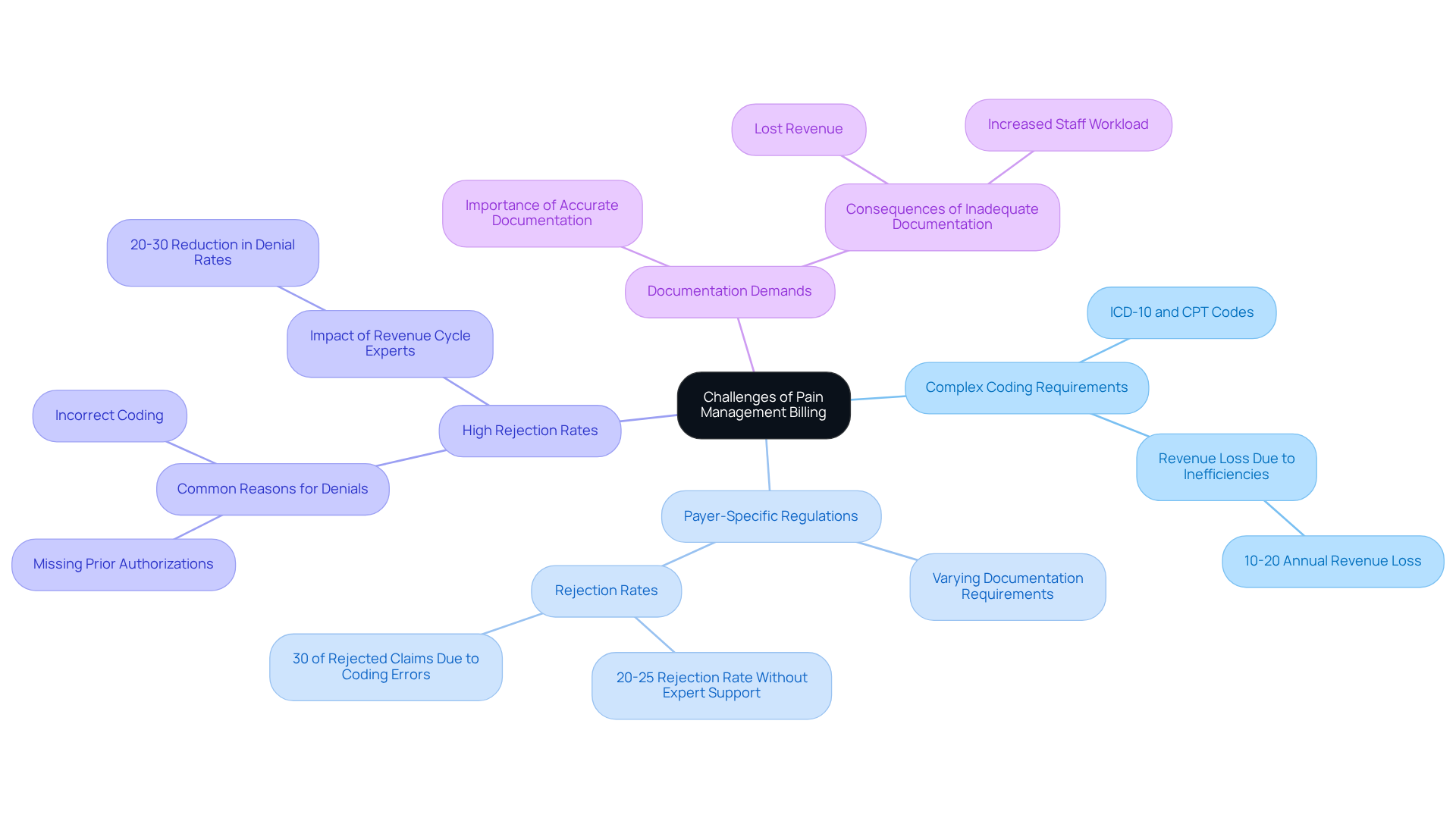
Practices face significant financial losses if they do not address the complexities of pain compensation invoicing. Several key issues contribute to these challenges:
- Complex Coding Requirements: Pain management often involves intricate procedures that require precise coding. Understanding the latest ICD-10 and CPT codes is crucial to prevent reimbursement issues. Practices can forfeit 10-20% of potential revenue annually due to inefficiencies in financial processes, often arising from incorrect coding and documentation mistakes.
- Payer-Specific Regulations: Different payers impose varying requirements for documentation and coding, making it essential to stay updated on these policies to ensure compliance. Practices that do not adapt may encounter rejection rates of 20-25% when invoicing is conducted in-house without expert support, with nearly 30% of rejected claims linked to coding and documentation mistakes.
- High Rejection Rates: The intricacy of pain treatment services often results in elevated rejection rates. Understanding common reasons for denials-such as missing prior authorizations and incorrect coding-can help practices develop effective prevention strategies. Partnering with revenue cycle experts like Healthcare Partners Consulting & Billing, LLC (HPC) can reduce denial rates by 20-30%, significantly enhancing revenue cycle performance through effective management practices.
- Documentation Demands: It’s crucial to document everything accurately and on time for invoicing to be successful. Providers must ensure that all patient encounters and procedures are thoroughly documented to support claims. Inadequate documentation can lead to lost revenue and increased staff workload, emphasizing the need for meticulous record-keeping.
By proactively addressing these invoicing challenges, practices can enhance their financial health and focus on delivering exceptional patient care. Furthermore, as the landscape of pain treatment invoicing evolves in 2026, staying updated on changes in CPT codes and payer requirements will be crucial for ensuring compliance and maximizing revenue. To further assist practices, Healthcare Partners Consulting & Billing, LLC (HPC) offers personalized consultations to map current workflows and identify the services that will move the needle fastest. Schedule a meeting today by emailing info@hpcbilling.com or calling 888-517-4992, ensuring that healthcare providers can focus on what they do best-caring for their patients.
Implement Customized Billing Workflows for Efficiency
Pain management practices often face significant challenges in billing for pain management services, which can hinder their overall operational success. To enhance billing efficiency in these practices, consider implementing the following customized workflows with the expertise of Healthcare Partners Consulting & Billing, LLC (HPC), a veteran-owned company with 39 years of experience in medical billing:
- Standardized Processes: Establish standardized procedures for each step of the billing process, from patient registration to claim submission. This approach minimizes errors and ensures consistency across operations, particularly in specialty-focused areas like mental and behavioral health.
- Automation Tools: Utilize HPC’s software that streamlines repetitive tasks such as generating requests and posting payments. Automation can significantly reduce the time spent on administrative duties, allowing staff to focus on patient care while ensuring compliance with payer rules.
- Regular Training: Provide ongoing training for staff involved in revenue cycle processes to keep them informed about coding changes and payer requirements. Well-trained personnel are less likely to make errors that could lead to claim denials, ultimately improving revenue cycle performance. HPC’s certified experts provide essential training, leveraging 39 years of industry experience.
- Feedback Loops: Create feedback mechanisms to continuously refine workflows. Regularly reviewing billing processes and outcomes helps identify areas for improvement, fostering a culture of operational excellence.
Implementing these customized workflows with HPC enables pain management practices to enhance operational efficiency, reduce administrative burdens, and improve the billing for pain management services and patient care quality. These strategies can lead to a reduction in denials by 20-30% and faster reimbursement rates of 15-25% within 30-90 days, significantly enhancing overall financial performance. As Muhammad Numan, a PharmD, states, “AI-powered medical coding software enhances medical coding and invoicing processes by analyzing clinical documentation, recommending accurate CPT and ICD-10 codes, and reducing coding errors before submissions are made.” This emphasizes the significance of incorporating technology into financial workflows to achieve optimal outcomes. Additionally, HPC offers flexible service plans tailored to the size of your practice and specific needs, ensuring that every client receives personalized support. Without these strategic enhancements, practices risk continued inefficiencies that could compromise both financial stability and patient care quality.

Develop Effective Denial Management Strategies
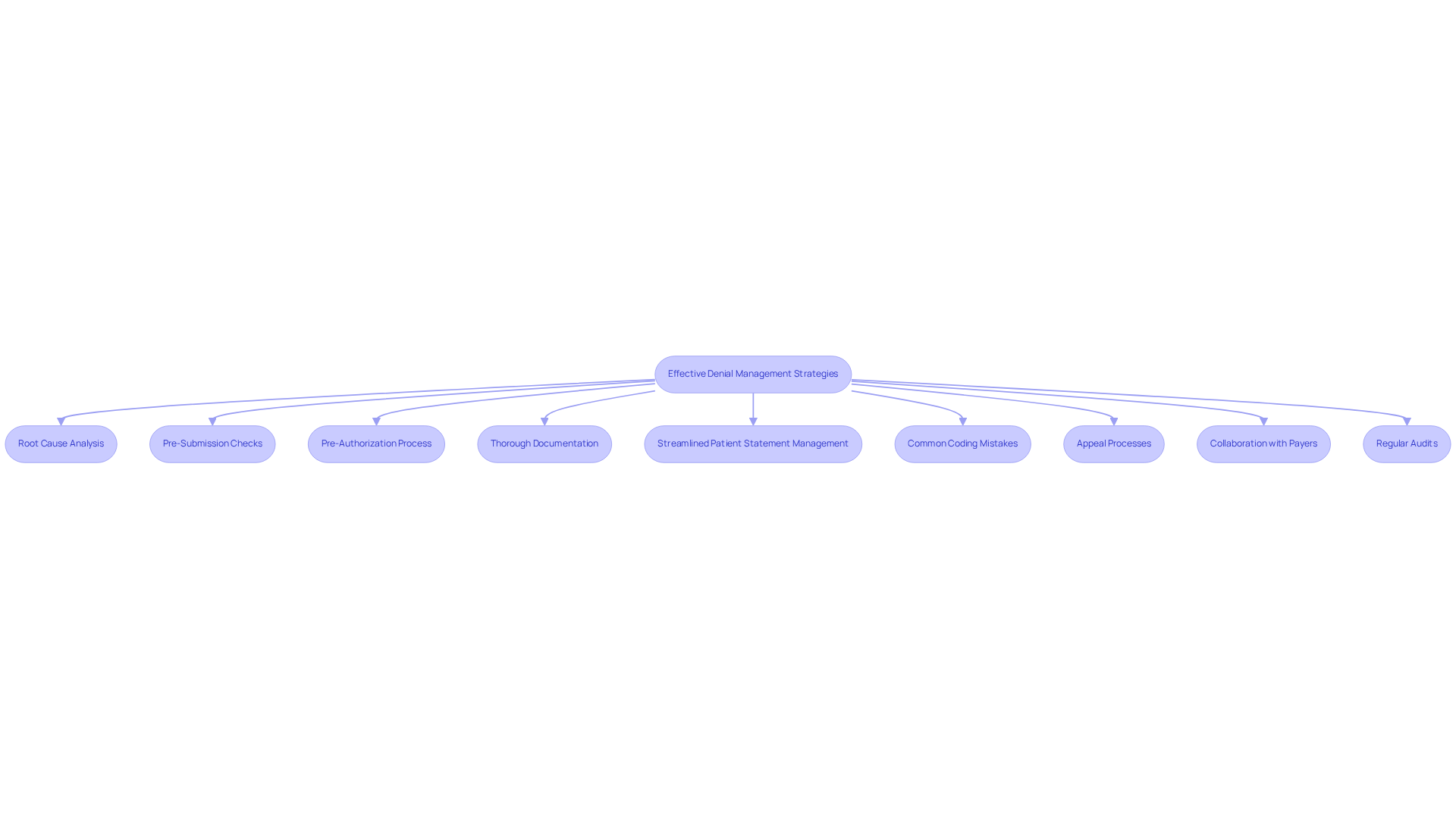
Effectively managing denials in billing for pain management services is crucial for maintaining operational efficiency and ensuring financial health. To achieve this, consider implementing the following strategies:
- Root Cause Analysis: Regularly analyze denied claims to identify common patterns and root causes. Understanding the factors behind reimbursement rejections is essential for avoiding future incidents. Organizations that implement structured rejection taxonomies can achieve a 20-30% decrease in rejections.
- Pre-Submission Checks: Implement thorough pre-submission checks to ensure that all submissions are complete and accurate before they are sent to payers. Taking these proactive steps can greatly lower the chances of denials, resulting in quicker reimbursement timelines of 15-25% within 30-90 days.
- Pre-Authorization Process: Establish a pre-authorization procedure for certain interventions, such as spinal cord stimulators and specific injections, to prevent denied submissions. Ensuring insurance approval is obtained before patient appointments is essential.
- Thorough Documentation: Ensure that documentation includes detailed patient history, examination results, diagnosis, and justification for selected procedures. Comprehensive documentation increases the chances of approval and supports the medical necessity of the procedures performed.
- Streamlined Patient Statement Management: Focus on optimizing patient statements to address underpayments, unprocessed submissions, and aging submissions. By enhancing the clarity and accuracy of patient statements, practices can improve communication with patients and reduce confusion, ultimately leading to better collection rates.
- Common Coding Mistakes: Be aware of frequent coding errors, such as mismatched diagnosis and procedure codes, unbundling, or improper use of modifiers, which are leading causes of rejections in pain treatment medical submissions.
- Appeal Processes: Establish a clear and efficient procedure for contesting denied requests. Ensure that all necessary documentation is included to support the appeal, as effective denial management programs focus on preventing future denials rather than merely re-approving denied requests.
- Collaboration with Payers: Foster relationships with payer representatives to gain insights into their requirements and expectations. This collaboration can help align your invoicing practices with payer policies, ultimately enhancing the revenue cycle.
- Regular Audits: Conduct regular audits of billing systems to identify and correct data entry mistakes, ensuring precise submission of requests. This continuous oversight is crucial for effective claims handling.
By adopting these strategies, pain management practices can streamline their processes and improve their financial outcomes through efficient billing for pain management services. Engaging with experts can provide tailored solutions that address the unique challenges faced by your practice.
Leverage Technology and Analytics for Revenue Optimization
Many pain management practices face challenges in optimizing revenue, often due to inefficient processes and outdated systems. To address these issues, consider implementing the following technological and analytical strategies:
- Data Analytics: Utilize analytics tools to monitor key performance indicators (KPIs) such as claim acceptance rates, denial rates, and revenue cycle timelines. Analyzing this data can uncover trends and highlight areas for improvement, ultimately leading to enhanced operational efficiency.
- Integrated Payment Software: Invest in software that seamlessly integrates with electronic health records (EHR) systems. This integration enhances workflows and reduces errors by ensuring that financial information is precise and up-to-date, which is essential for upholding compliance and maximizing revenue.
- Automated Reporting: Implement automated reporting tools to generate insights into financial performance. Regular reports can help identify issues early, allowing for timely interventions and informed strategic decisions that can lead to improved financial outcomes.
- Telehealth Solutions: Incorporate telehealth services into your practice to expand your patient base and enhance revenue streams. This approach not only provides convenient care options but also aligns with the growing demand for accessible healthcare services.
Without these advancements, practices risk falling behind in a competitive healthcare landscape, ultimately affecting patient care and financial stability.

Conclusion
Navigating the complexities of billing for pain management services is crucial for healthcare providers seeking operational efficiency and financial stability. By implementing tailored best practices, healthcare providers can reduce administrative burdens and focus more on delivering quality patient care. The insights shared highlight the importance of customized workflows, effective denial management strategies, and leveraging technology to optimize revenue.
Key strategies discussed include:
- Understanding the intricate coding requirements
- Establishing standardized billing processes
- Utilizing data analytics to monitor performance
Additionally, fostering relationships with payers and ensuring thorough documentation can mitigate denial rates and enhance reimbursement timelines. Working with experts such as Healthcare Partners Consulting & Billing, LLC (HPC) can help navigate these challenges, ensuring compliance and maximizing revenue.
Ultimately, refining billing practices directly enhances financial outcomes and allows healthcare providers to prioritize patient care. By embracing these best practices, pain management practices can thrive in a competitive landscape, ensuring that they remain focused on their core mission-providing exceptional care to their patients. For personalized support and to explore how HPC can assist in optimizing billing processes, reach out via email at info@hpcbilling.com or call 888-517-4992.
Frequently Asked Questions
What are the main challenges in pain management billing?
The main challenges include complex coding requirements, payer-specific regulations, high rejection rates, and documentation demands.
Why is precise coding important in pain management billing?
Precise coding is crucial because pain management involves intricate procedures, and incorrect coding can lead to reimbursement issues, potentially resulting in a 10-20% loss of revenue annually.
How do payer-specific regulations affect pain management practices?
Different payers have varying requirements for documentation and coding, and practices that do not stay updated may face rejection rates of 20-25% for in-house invoicing, with many rejections linked to coding and documentation mistakes.
What are common reasons for claim denials in pain management billing?
Common reasons for denials include missing prior authorizations and incorrect coding.
How can partnering with revenue cycle experts help pain management practices?
Partnering with revenue cycle experts can reduce denial rates by 20-30%, significantly improving revenue cycle performance through effective management practices.
Why is accurate documentation important for invoicing in pain management?
Accurate and timely documentation is essential to support claims; inadequate documentation can lead to lost revenue and increased staff workload.
What should practices do to enhance their financial health in pain management billing?
Practices should proactively address invoicing challenges, stay updated on changes in CPT codes and payer requirements, and consider consulting with experts for personalized workflow mapping.
How can Healthcare Partners Consulting & Billing, LLC assist pain management practices?
HPC offers personalized consultations to help practices map current workflows and identify services that can quickly improve financial performance.