
Introduction
Navigating the complexities of medical billing management systems is crucial for healthcare providers seeking to optimize operational efficiency and enhance patient care. By selecting the right system, practices can alleviate administrative burdens, allowing them to focus on what truly matters: their patients.
However, with a vast array of options available, what criteria should healthcare providers consider to select a solution that meets compliance standards and aligns with their operational needs?
This article outlines essential best practices for selecting an effective medical billing management system, empowering providers to make informed decisions that drive financial success and improve patient outcomes.
Understand Different Types of Medical Billing Systems
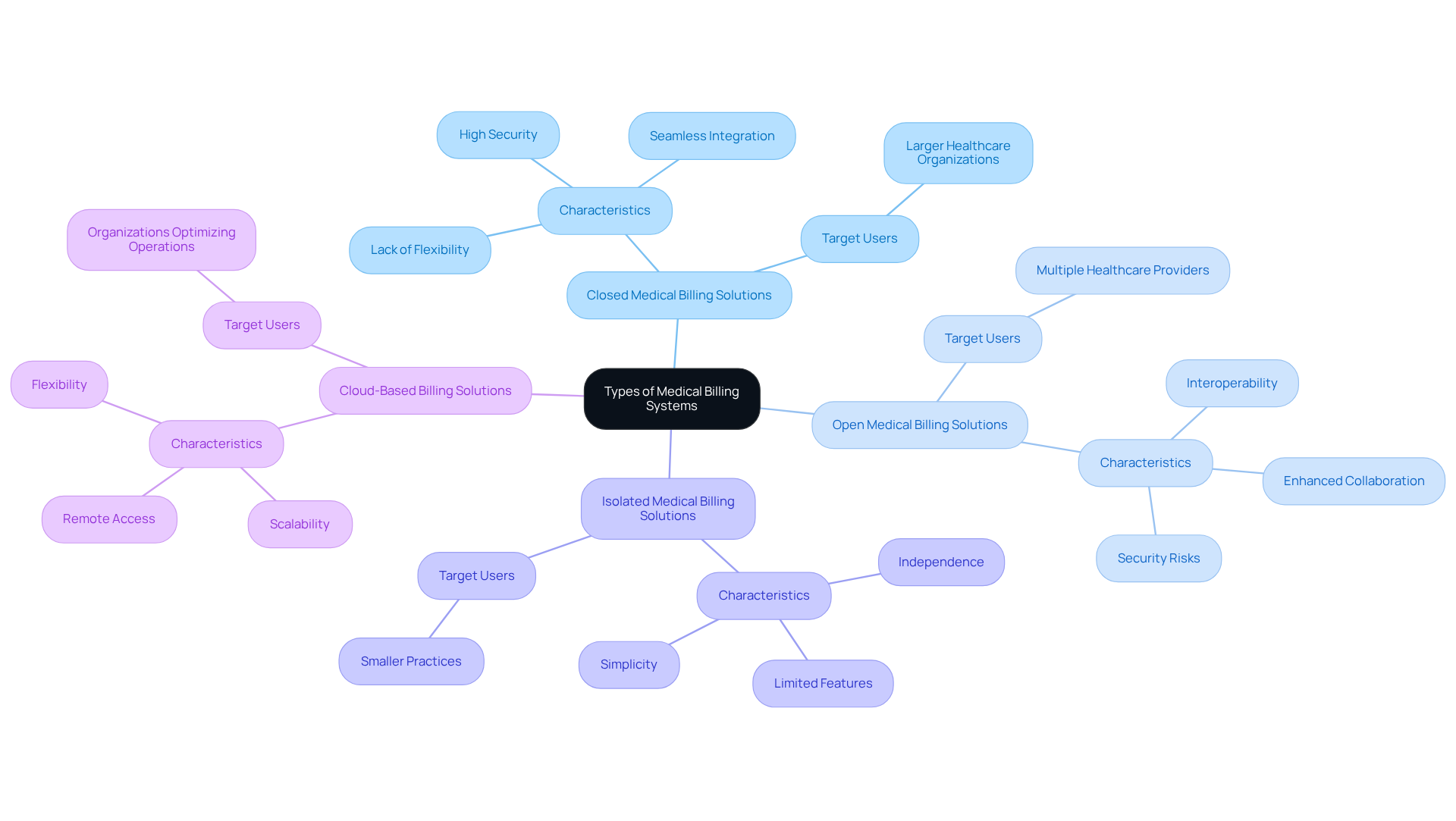
Understanding the various types of medical billing management system is crucial for healthcare organizations that aim to enhance operational efficiency and financial performance. The primary types include:
- Closed Medical Billing Solutions: Larger healthcare organizations often use these proprietary tools. They offer high security and seamless integration with existing frameworks. However, their lack of flexibility can hinder adaptability to evolving needs.
- Open Medical Billing Solutions: Designed for interoperability, these tools facilitate data sharing across different healthcare providers, enhancing collaboration. Nonetheless, this openness can sometimes compromise security, necessitating careful management of sensitive information.
- Isolated Medical Billing Solutions: Frequently utilized by smaller practices, these tools function independently and are simpler to manage. While they provide simplicity, they may not encompass comprehensive features necessary for more complex invoicing needs.
- Cloud-Based Billing Solutions: Gaining popularity, these offerings provide flexibility, scalability, and remote access. They are ideal for initiatives aimed at optimizing operations without incurring significant upfront costs, enabling effective management of payment processes.
Organizations must understand these categories to assess their unique requirements and select a medical billing management system that enhances both efficiency and compliance. As the landscape changes, entities that implement advanced invoicing approaches can anticipate enhanced revenue cycle outcomes, including a possible 20-30% decrease in denial rates and 15-25% quicker reimbursements within 30-90 days. Organizations that strategically select their medical billing management system can significantly improve their revenue cycle management and overall financial health.
Choose the Right System for Your Clinic’s Needs
Choosing the right medical billing system is crucial for optimizing operational efficiency and financial performance in healthcare practices. Selecting the appropriate medical billing system involves several key considerations:
- Evaluate Your Size and Type: Smaller entities may benefit from simpler, cost-effective solutions, while larger organizations might require more robust frameworks with advanced features. Comprehending the size of your practice is essential for choosing a solution that aligns with your operational requirements.
- Evaluate Features and Functionality: Look for essential features such as automated claim submissions, real-time eligibility verification, and comprehensive reporting capabilities. Ensure the medical billing management system can accommodate your specific financial requirements, including mental health invoicing, to enhance revenue cycle performance. By streamlining invoicing processes, practices can reduce claim denials by 20-30%. The implementation of a medical billing management system can streamline the billing process to 0-90 days. Additionally, they can accelerate reimbursement timelines by 15-25% within 3 months. Furthermore, focus on optimizing patient statements and claims management by addressing underpayments, unprocessed claims, and aging claims, which are critical for enhancing billing efficiency.
- Consider Compliance and Security: Ensure that the platform adheres to healthcare regulations such as HIPAA. Security features should protect sensitive patient data from breaches, as compliance plays a vital role in safeguarding your operations from legal issues while also enhancing patient trust.
- Integration Capabilities: The selected system should seamlessly connect with existing management software and electronic health records (EHR) to streamline workflows and reduce administrative burdens. Integration significantly improves claims accuracy and revenue cycle visibility. For instance, the Hispanic Counseling Center reported reduced denial rates and enhanced financial performance through specialized billing solutions. Personalized consultations can help identify the optimal administrative solutions tailored to your practice’s needs.
- Cost and Support: Evaluate the total cost of ownership, including setup, maintenance, and support. Choose vendors that provide dependable customer support and training materials, ensuring that your staff can effectively utilize the tools. Furthermore, consider the possible national savings of $16.3 billion from workflow automation, which highlights the financial advantages of choosing the appropriate invoicing solution.
By thoughtfully evaluating these factors, clinics can choose a financial management solution that not only fulfills their operational requirements but also improves patient care and financial outcomes. Ultimately, the right financial management solution can significantly enhance both operational efficiency and patient satisfaction, leading to better overall outcomes.

Integrate Billing Systems with Practice Management Workflows
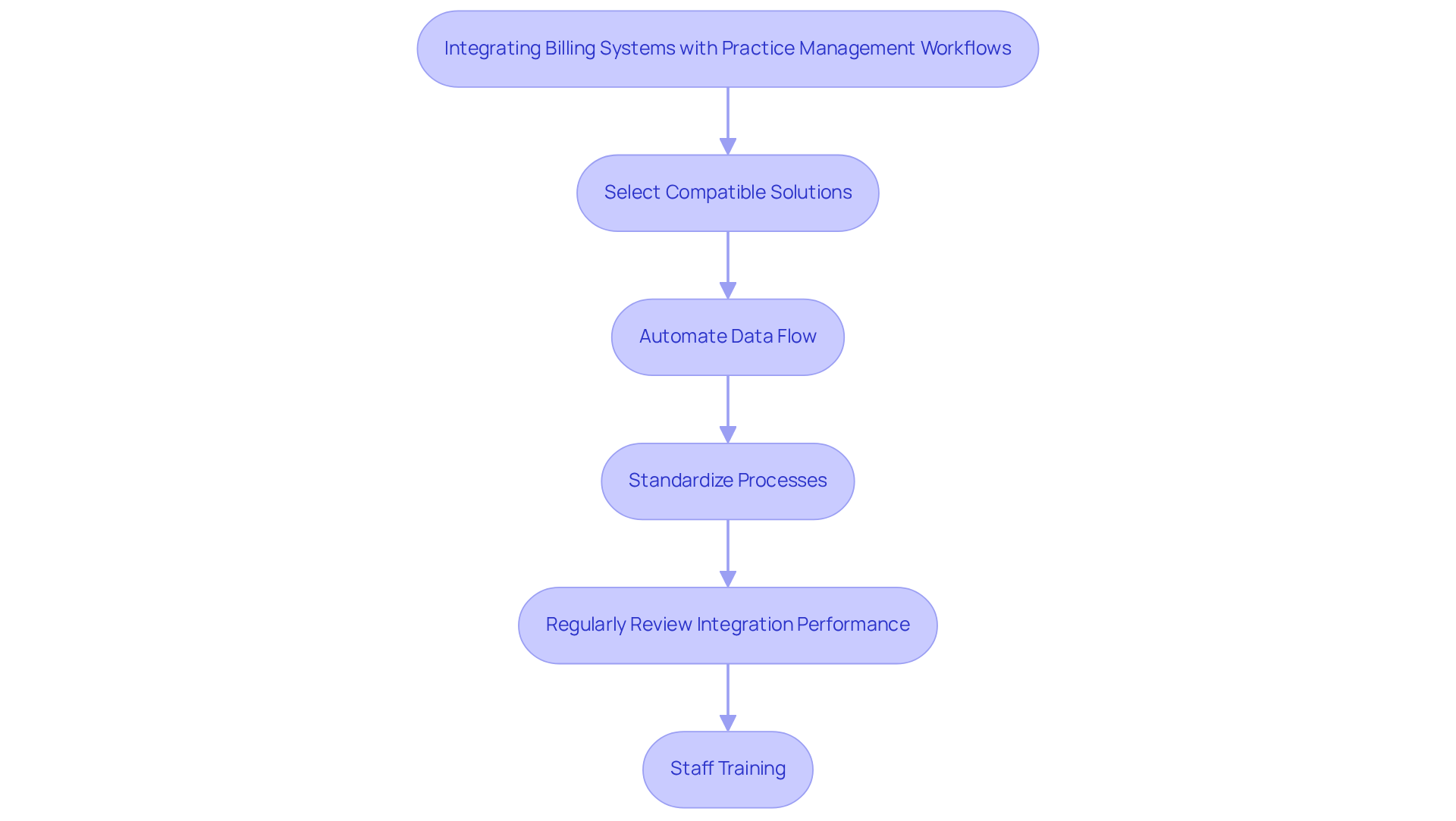
Integrating invoicing platforms with management workflows is essential for enhancing operational efficiency in mental health organizations. Here are best practices for achieving effective integration:
- Select Compatible Solutions: Ensure that the invoicing platform aligns with your current management software and EHR, such as TherapyNotes or SimplePractice. This compatibility facilitates data sharing and reduces the need for manual data entry, minimizing errors.
- Automate Data Flow: Implement systems that enable automated data transfer between financial management and operational oversight. This minimizes errors linked to manual entry and speeds up the invoicing process, resulting in quicker reimbursement timelines of 15-25% within 30-90 days.
- Standardize Processes: Develop standardized workflows that incorporate both invoicing and practice management tasks. This ensures that all staff members follow the same procedures, reducing confusion and errors, which can lead to a reduction in claim denial rates by 20-30%.
- Regularly Review Integration Performance: Monitor the integration’s effectiveness by tracking key performance indicators (KPIs) such as claim denial rates and payment cycle times. Regular reviews can help identify areas for improvement and ensure operational rigor through scorecard-driven adjustments tied to claims accuracy and days in accounts receivable.
- Ensure that all staff members receive training on the integrated platform. This training should address how to navigate both the financial and management components effectively, empowering them to utilize the system to its full potential.
By focusing on integration, practices can streamline their operations, reduce administrative burdens, and ultimately enhance patient care. Ultimately, effective integration can transform operational workflows, leading to improved patient outcomes and satisfaction. With Healthcare Partners Consulting & Billing, LLC (HPC)’s veteran-owned status and 39 years of experience, HPC offers tailored solutions designed to optimize the medical billing management system workflows based on extensive industry experience.
Train Staff for Effective System Utilization
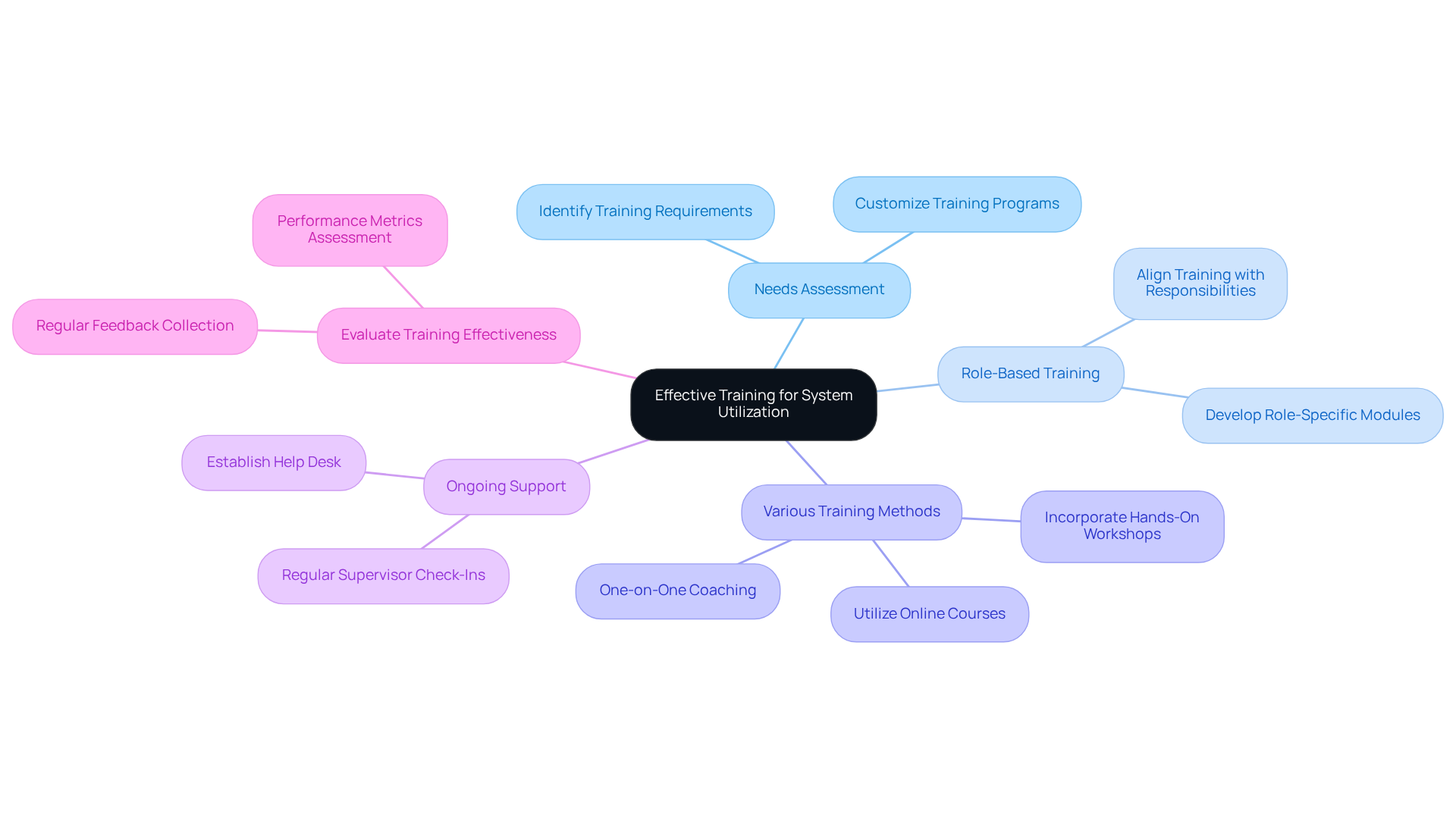
Maximizing the potential of your medical revenue management hinges on effective training. The following best practices are essential for effective training:
- Conduct a Needs Assessment: Identify the specific training requirements of your staff based on their roles and the functionalities of the medical billing management system. Customize training programs to meet these requirements, ensuring relevance and effectiveness, akin to how personalized consultations can assist in identifying optimal administrative solutions for your organization.
- Implement Role-Based Training: Develop training modules that cater to different roles within the practice. This ensures that each staff member receives pertinent information that aligns with their responsibilities, enhancing their ability to perform effectively.
- Utilize Various Training Methods: Incorporate a mix of training methods, including hands-on workshops, online courses, and one-on-one coaching. This variety accommodates different learning styles and enhances retention, leading to better utilization of the medical billing management system.
- Provide Ongoing Support: Establish a support system for staff to seek assistance as they navigate the new system. This could include a dedicated help desk or regular check-ins with a supervisor, fostering a culture of continuous learning and improvement. Schedule a meeting with Healthcare Partners Consulting & Billing, LLC (HPC) for personalized support options tailored to your practice.
- Evaluate Training Effectiveness: Regularly assess the effectiveness of training programs through feedback and performance metrics. Use this information to refine training approaches, ensuring continuous improvement and alignment with operational goals.
Comprehensive training empowers staff to minimize errors and enhance compliance. This, in turn, improves overall billing efficiency. By prioritizing these training strategies, practices can transform their billing processes with a medical billing management system and achieve substantial financial gains.
Conclusion
Selecting an appropriate medical billing management system is critical for healthcare providers striving to enhance operational efficiency while prioritizing patient care. Understanding the different types of systems and their unique features enables practices to make informed choices tailored to their specific needs. This strategic selection process streamlines billing operations and significantly impacts revenue cycle management, ultimately leading to improved financial health and patient satisfaction.
Key considerations in selecting a medical billing system include:
- Evaluating the size and type of practice
- Ensuring compliance with healthcare regulations
- Assessing integration capabilities with existing management workflows
The importance of effective staff training cannot be overstated, as it empowers them to utilize the system to its fullest potential, reducing administrative burdens and enhancing overall efficiency. By implementing these best practices, healthcare providers can expect to see a reduction in claim denials and faster reimbursement timelines, which are essential for sustaining a successful practice.
Given that administrative burdens often hinder the quality of patient care, prioritizing the right medical billing management system is essential. Healthcare Partners Consulting & Billing, LLC (HPC) stands out with its veteran-owned status and 39 years of specialized experience in medical and mental health billing. Choosing HPC not only ensures compliance but also allows providers to dedicate their efforts to delivering outstanding patient care, a fundamental aspect of healthcare excellence. For further assistance, reach out to HPC at info@hpcbilling.com or call 888-517-4992 to explore how to optimize your billing processes today.
Frequently Asked Questions
What are the main types of medical billing systems?
The main types of medical billing systems include Closed Medical Billing Solutions, Open Medical Billing Solutions, Isolated Medical Billing Solutions, and Cloud-Based Billing Solutions.
What are Closed Medical Billing Solutions?
Closed Medical Billing Solutions are proprietary tools used by larger healthcare organizations that offer high security and seamless integration with existing frameworks, but they lack flexibility, which can hinder adaptability to evolving needs.
How do Open Medical Billing Solutions work?
Open Medical Billing Solutions are designed for interoperability, allowing data sharing across different healthcare providers to enhance collaboration. However, this openness can sometimes compromise security, requiring careful management of sensitive information.
What are Isolated Medical Billing Solutions?
Isolated Medical Billing Solutions are often used by smaller practices and function independently, making them simpler to manage. However, they may lack comprehensive features necessary for more complex invoicing needs.
What are the benefits of Cloud-Based Billing Solutions?
Cloud-Based Billing Solutions are gaining popularity due to their flexibility, scalability, and remote access. They are ideal for optimizing operations without significant upfront costs and enable effective management of payment processes.
Why is it important for organizations to understand different medical billing systems?
Understanding different medical billing systems is crucial for healthcare organizations to assess their unique requirements and select a system that enhances both efficiency and compliance, ultimately improving their revenue cycle management and financial health.
What potential improvements can organizations expect from implementing advanced invoicing approaches?
Organizations that implement advanced invoicing approaches can anticipate enhanced revenue cycle outcomes, including a possible 20-30% decrease in denial rates and 15-25% quicker reimbursements within 30-90 days.