

Introduction
Mental health providers frequently encounter significant challenges in psychology billing, which can detract from their primary focus on patient care. However, mastering these complexities extends beyond financial survival; it presents an opportunity to enhance operational efficiency and prioritize patient care.
What strategies can practitioners adopt to simplify their billing processes and lessen administrative burdens, thereby improving financial outcomes? This article outlines four best practices that enable healthcare providers to optimize their psychology billing services, ensuring compliance and promoting a patient-centered approach.
Understand the Complexities of Psychology Billing
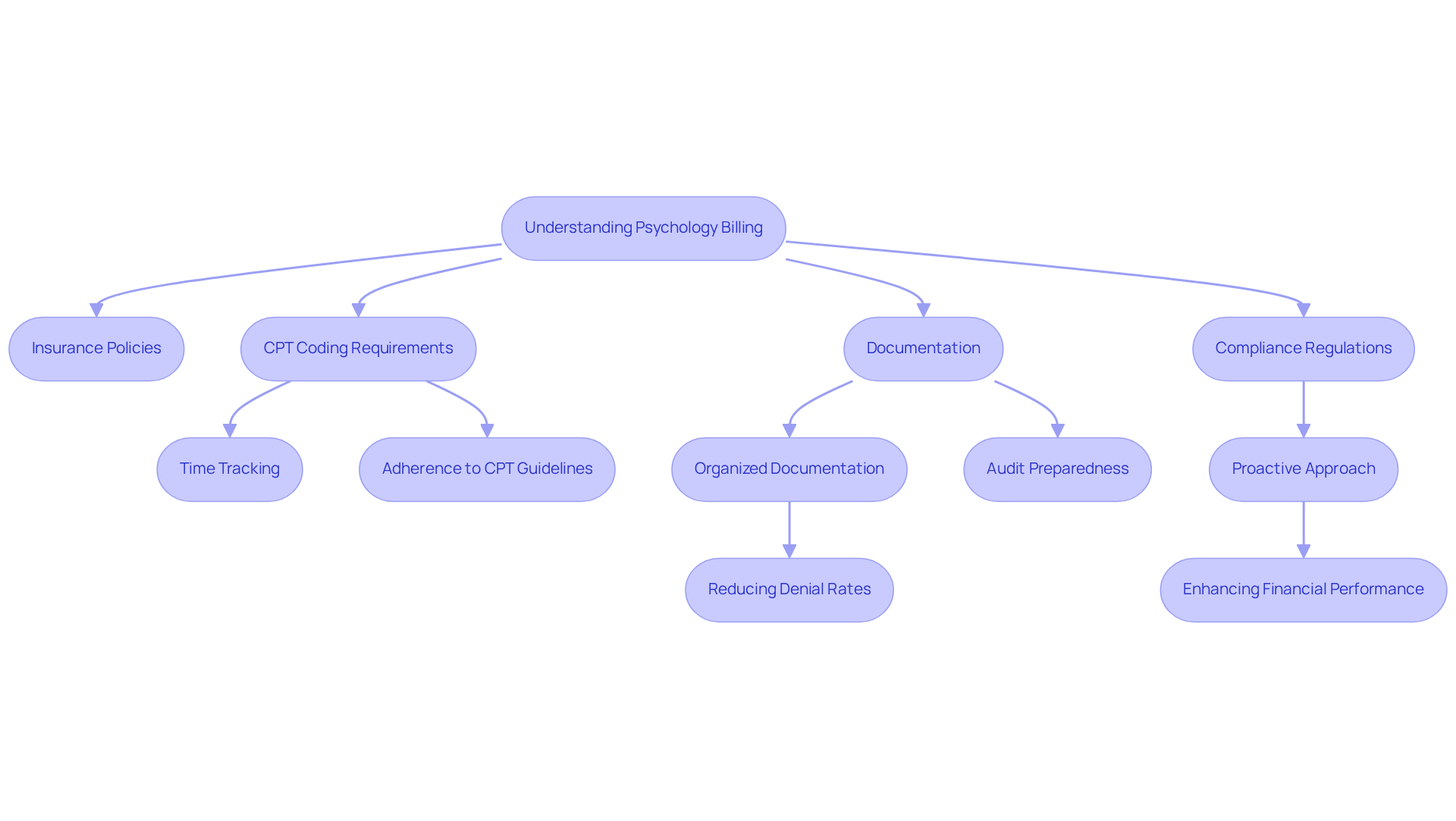
Navigating the complexities of psychology billing services is essential for financial success in mental health practices. This field presents unique challenges, including diverse insurance policies, specific coding requirements, and the critical need for meticulous documentation. Unlike general medical invoicing, psychology invoicing necessitates a profound comprehension of time-based CPT codes, which relate to the length and type of therapy sessions. Mental health providers must also comply with regulations such as HIPAA and mental health parity laws, ensuring that mental health services receive equal treatment in insurance coverage. Addressing these challenges with effective strategies is essential for reducing reimbursement rejections and ensuring timely payments.
Practices that maintain a thorough understanding of psychology billing services are better positioned to enhance their financial stability. Precise documentation of time spent in psychotherapy can result in a decrease in denial rates by 20-30% and quicker reimbursements of 15-25% within 30 to 90 days. Additionally, maintaining organized records and adhering to updated CPT guidelines can prevent compliance issues and improve overall revenue cycle performance.
To enhance patient statements and efficiently handle reimbursements, it is crucial to proactively tackle underpayments, unprocessed submissions, and aging requests. Implementing organized documentation methods not only enhances audit preparedness but also minimizes the risk of rejected submissions. This oversight can lead to increased denial rates and delayed reimbursements. By acknowledging these challenges and implementing effective strategies, practitioners can optimize their financial processes with psychology billing services, enabling them to concentrate more on providing high-quality patient care.
Healthcare Partners Consulting & Billing, LLC (HPC) emphasizes a compliance-first approach, ensuring that all claims are submitted with adherence to payer rules, thereby reducing administrative burdens and enhancing operational efficiency. Ultimately, a proactive approach to billing can transform financial outcomes, allowing practitioners to focus on patient care.
Implement Compliance Strategies for Billing Practices
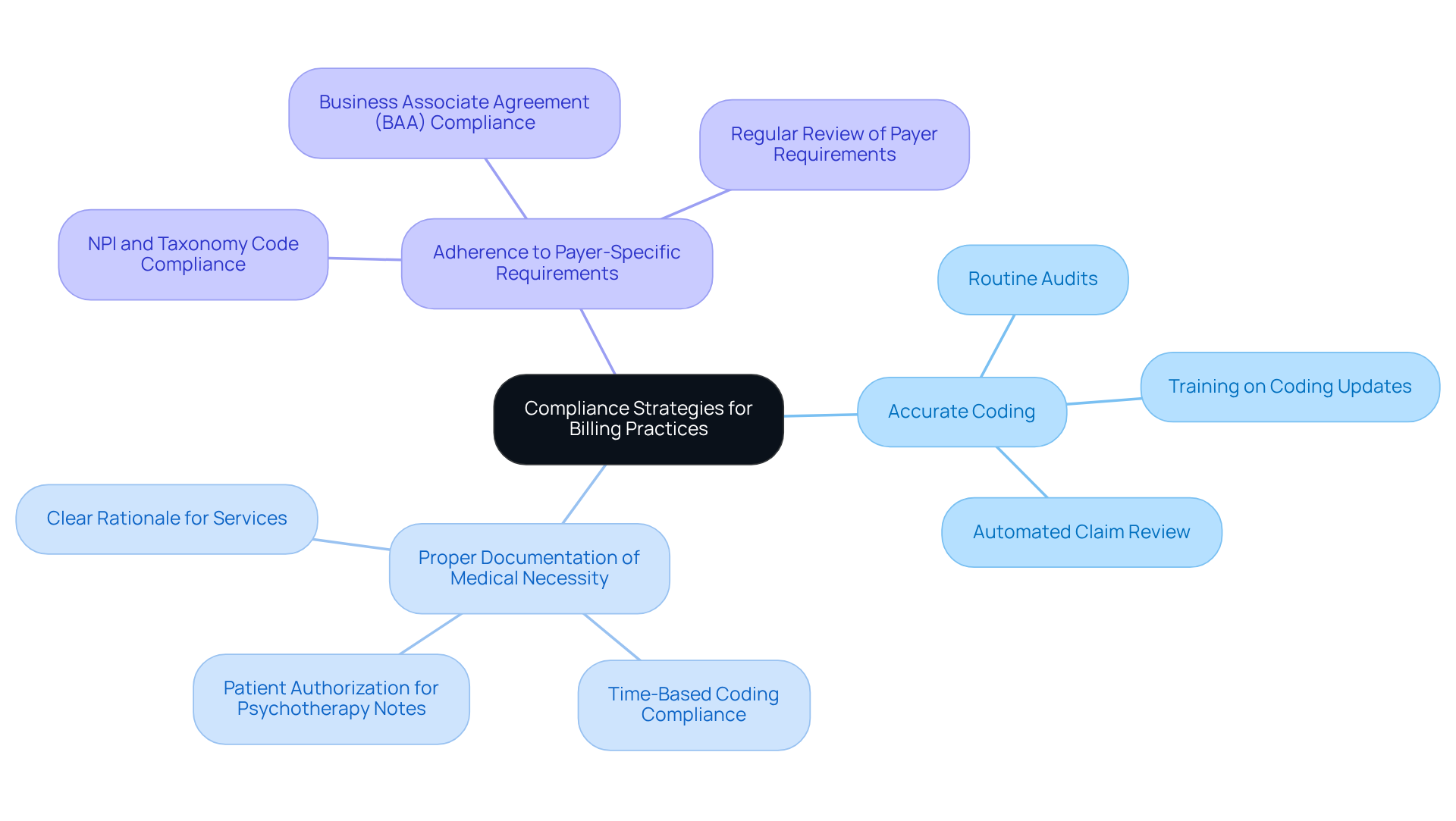
To maintain compliance in psychology billing services, practitioners must implement a comprehensive program that addresses key operational areas. This program should emphasize three critical areas:
- Accurate coding
- Proper documentation of medical necessity
- Adherence to payer-specific requirements for psychology billing services
For instance, a routine audit process can help identify inconsistencies in invoicing methods. This proactive approach allows for corrections before significant financial losses occur. Training staff on the latest payment regulations and coding updates is essential for maintaining compliance in psychology billing services and reducing the risk of audits.
Research indicates that compliance-focused strategies can reduce claim rejections by 20-30% and improve reimbursement timelines by 15-25% within 30-90 days. By nurturing a culture of compliance, mental health providers can prioritize patient care without the burden of billing errors.
Collaborating with Healthcare Partners Consulting & Billing, LLC (HPC) offers tailored strategies to address rejection issues promptly, helping to recover earned revenue effectively. Personalized consultations with HPC can help identify the most effective administrative solutions for your organization, streamlining operations and enhancing patient care.
Adopt Effective Denial Management Techniques
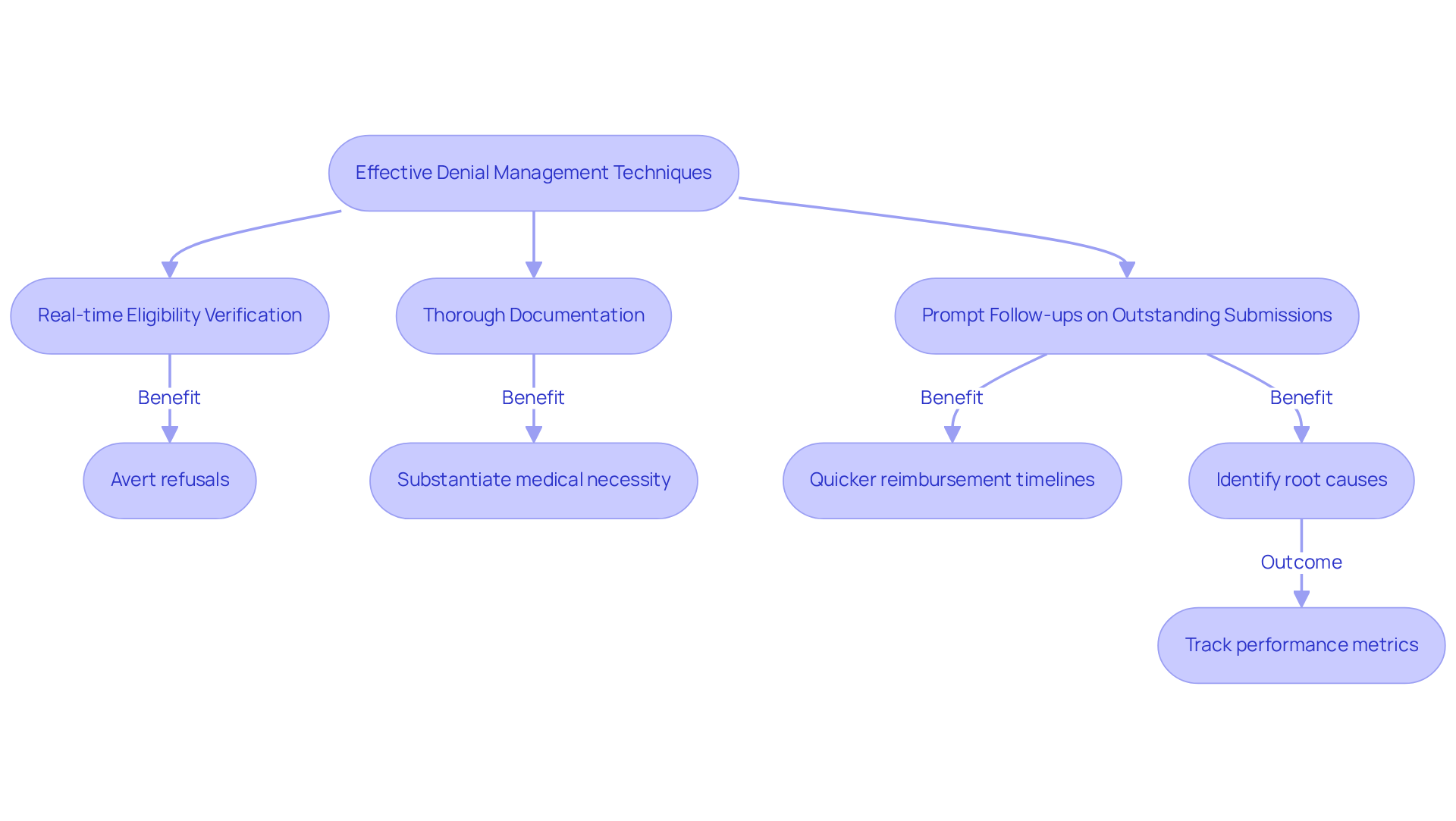
Effective claim management is not just beneficial; it is critical for the financial health of psychology practices that utilize psychology billing services. Practices can reduce rejections by implementing proactive strategies. These include:
- Real-time eligibility verification
- Thorough documentation
- Prompt follow-ups on outstanding submissions
For instance, confirming patient insurance coverage prior to each session can avert refusals related to eligibility issues. Additionally, maintaining detailed and accurate clinical notes that substantiate the medical necessity of services provided is crucial for successful claims processing.
Consider this: practices that organize their management processes for claims see significantly lower rejection rates, often achieving a reduction of 20-30%. Creating a dedicated team to analyze rejection patterns can assist in identifying root causes and implementing corrective measures, resulting in quicker reimbursement timelines of 15-25% within 30-90 days. Addressing these issues allows practices to transform their psychology billing services and significantly enhance their financial health.
Case studies demonstrate that clinics implementing scorecard-driven adjustments tied to claims accuracy, denial rates, and days in accounts receivable can significantly improve operational efficiency. These modifications enable organizations to track essential performance metrics and enhance their invoicing methods, ultimately resulting in improved financial results.
To further support practices, Healthcare Partners Consulting & Billing, LLC (HPC) offers a quick assessment tool that helps practices discover their profitability score and receive tailored recommendations. This enables providers to concentrate more on patient care while HPC handles the complexities of financial processes, including optimizing patient statements and resolving issues like underpayments and aging claims. Ultimately, embracing these strategies can redefine how mental health providers approach their financial operations, especially with the use of psychology billing services, leading to sustainable growth.
Leverage Technology for Streamlined Billing Processes
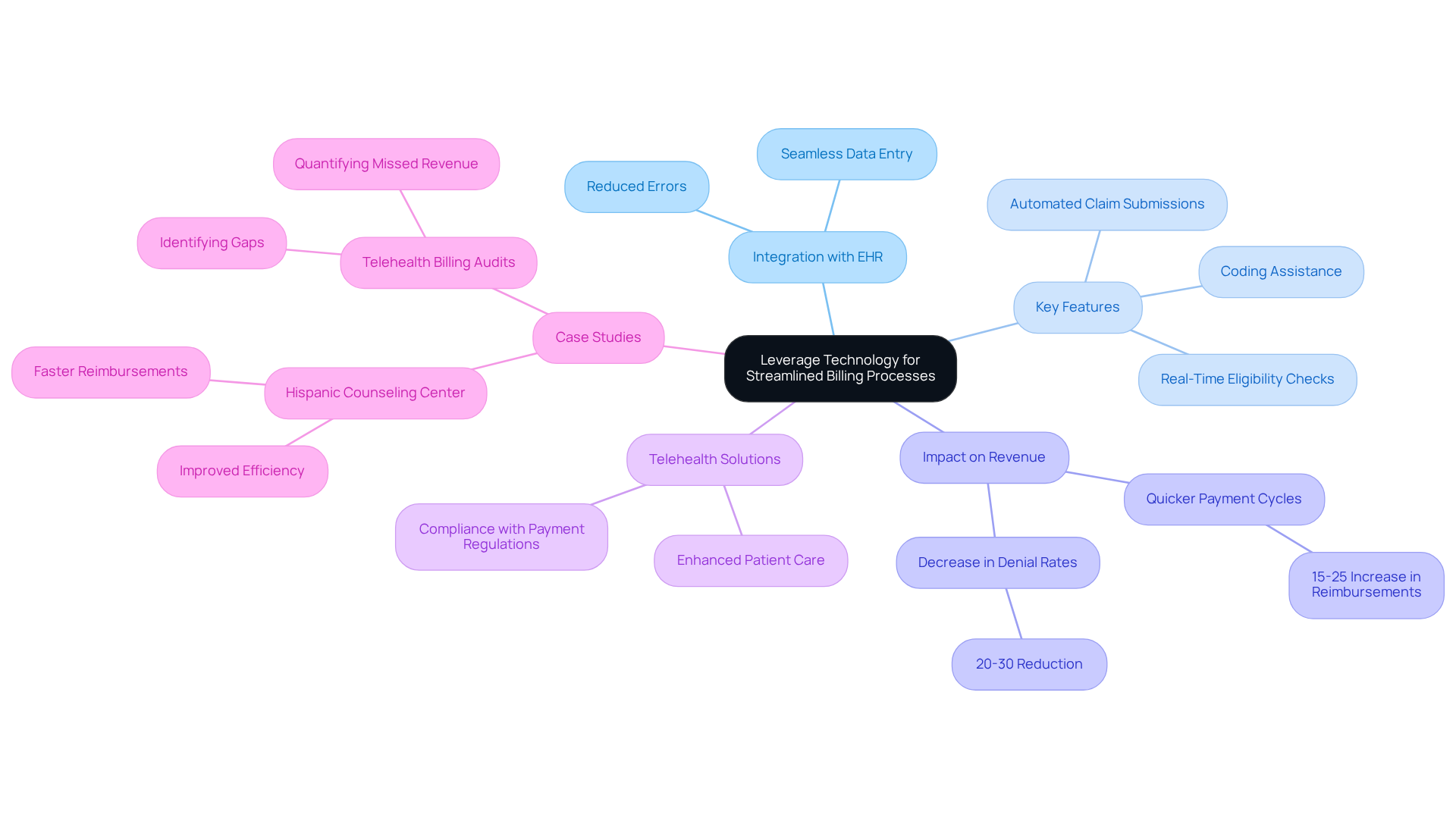
In the evolving landscape of digital healthcare, optimizing payment processes through technology is imperative. Healthcare Partners Consulting, a veteran-owned firm with 39 years of experience, highlights the significance of adopting comprehensive financial software that seamlessly integrates with electronic health records (EHR) systems like TherapyNotes and SimplePractice. This integration reduces data entry errors and improves efficiency. Key features such as:
- Automated claim submissions
- Real-time eligibility checks
- Coding assistance
can significantly enhance revenue cycle operations. Notably, methods employing advanced payment technology have reported quicker payment cycles, with reimbursements enhancing by 15-25% within 30-90 days, along with a significant decrease in denial rates by 20-30%.
Furthermore, implementing telehealth payment solutions is crucial for facilitating remote services while ensuring adherence to evolving payment regulations. As telehealth becomes a permanent element of mental health care, practices must adjust their payment systems to align with new requirements. Adopting these technological innovations allows mental health providers to simplify financial processes and enhance patient care. Case studies demonstrate that organizations leveraging structured tele-mental health billing models are experiencing measurable uplifts in revenue and encounter volume, underscoring the transformative impact of technology in the field.
Healthcare Partners Consulting’s comprehensive psychology billing services are specifically tailored for behavioral and mental health practices, empowering providers by removing administrative burdens and allowing them to concentrate on patient care. Ultimately, embracing these advancements not only enhances operational efficiency but also positions practices for sustainable growth in a competitive market.
Conclusion
Navigating the complexities of psychology billing can be a daunting task for mental health practices seeking financial success. Implementing best practices that prioritize compliance and operational efficiency significantly reduces administrative burdens. This allows providers to focus on delivering high-quality patient care. The emphasis on a compliance-first approach, as advocated by Healthcare Partners Consulting & Billing, LLC (HPC), ensures that claims are submitted accurately and in accordance with payer rules, ultimately enhancing the financial health of practices.
Key strategies discussed include:
- Understanding the complexities of psychology billing
- Implementing robust compliance measures
- Adopting effective denial management techniques
- Leveraging technology to streamline billing processes
Each of these elements plays a vital role in improving reimbursement timelines and reducing claim rejections. For instance, maintaining accurate documentation and utilizing advanced billing software can lead to quicker payments and a more efficient revenue cycle, empowering providers to concentrate on their core mission of patient care.
In conclusion, integrating these best practices enhances operational efficiency and positions mental health providers for sustainable growth. This proactive approach not only alleviates administrative burdens but also enhances patient care quality. By collaborating with experts like Healthcare Partners Consulting & Billing, LLC (HPC), practices can navigate the complexities of the billing process with confidence. Ultimately, a commitment to excellence in billing services can redefine the financial landscape for mental health practices. For further assistance, reaching out to HPC at info@hpcbilling.com or calling 888-517-4992 can provide tailored solutions to optimize financial operations.
Frequently Asked Questions
Why is understanding psychology billing services important for mental health practices?
Understanding psychology billing services is essential for financial success in mental health practices due to the unique challenges posed by diverse insurance policies, specific coding requirements, and the need for meticulous documentation.
What are some specific challenges associated with psychology billing?
Challenges include the complexity of time-based CPT codes related to therapy sessions, compliance with regulations such as HIPAA and mental health parity laws, and the need for precise documentation to reduce reimbursement rejections.
How can accurate documentation impact reimbursement rates?
Precise documentation of time spent in psychotherapy can decrease denial rates by 20-30% and lead to quicker reimbursements of 15-25% within 30 to 90 days.
What strategies can help improve the financial stability of mental health practices?
Strategies include maintaining organized records, adhering to updated CPT guidelines, proactively addressing underpayments and unprocessed submissions, and implementing effective documentation methods.
How does organized documentation benefit mental health practices?
Organized documentation enhances audit preparedness, minimizes the risk of rejected submissions, and improves overall revenue cycle performance.
What approach does Healthcare Partners Consulting & Billing, LLC (HPC) take towards billing?
HPC emphasizes a compliance-first approach, ensuring that all claims are submitted in adherence to payer rules, which reduces administrative burdens and enhances operational efficiency.
What is the ultimate goal of implementing effective psychology billing strategies?
The ultimate goal is to optimize financial processes, allowing practitioners to focus more on providing high-quality patient care.