

Introduction
The evolving healthcare landscape necessitates a deep understanding of Relative Value Units (RVUs) for primary care providers aiming to enhance financial stability and operational efficiency.
With changes in the Medicare Physician Fee Schedule, effectively calculating and maximizing RVUs is essential for revenue growth.
Despite the potential benefits of RVUs, many providers struggle with the complexities of their implementation.
By addressing these challenges, practices can not only survive but thrive in the evolving healthcare environment.
Addressing these challenges is essential for practices to not only adapt but also to thrive in an increasingly competitive healthcare environment.
Define RVUs and Their Importance in Primary Care
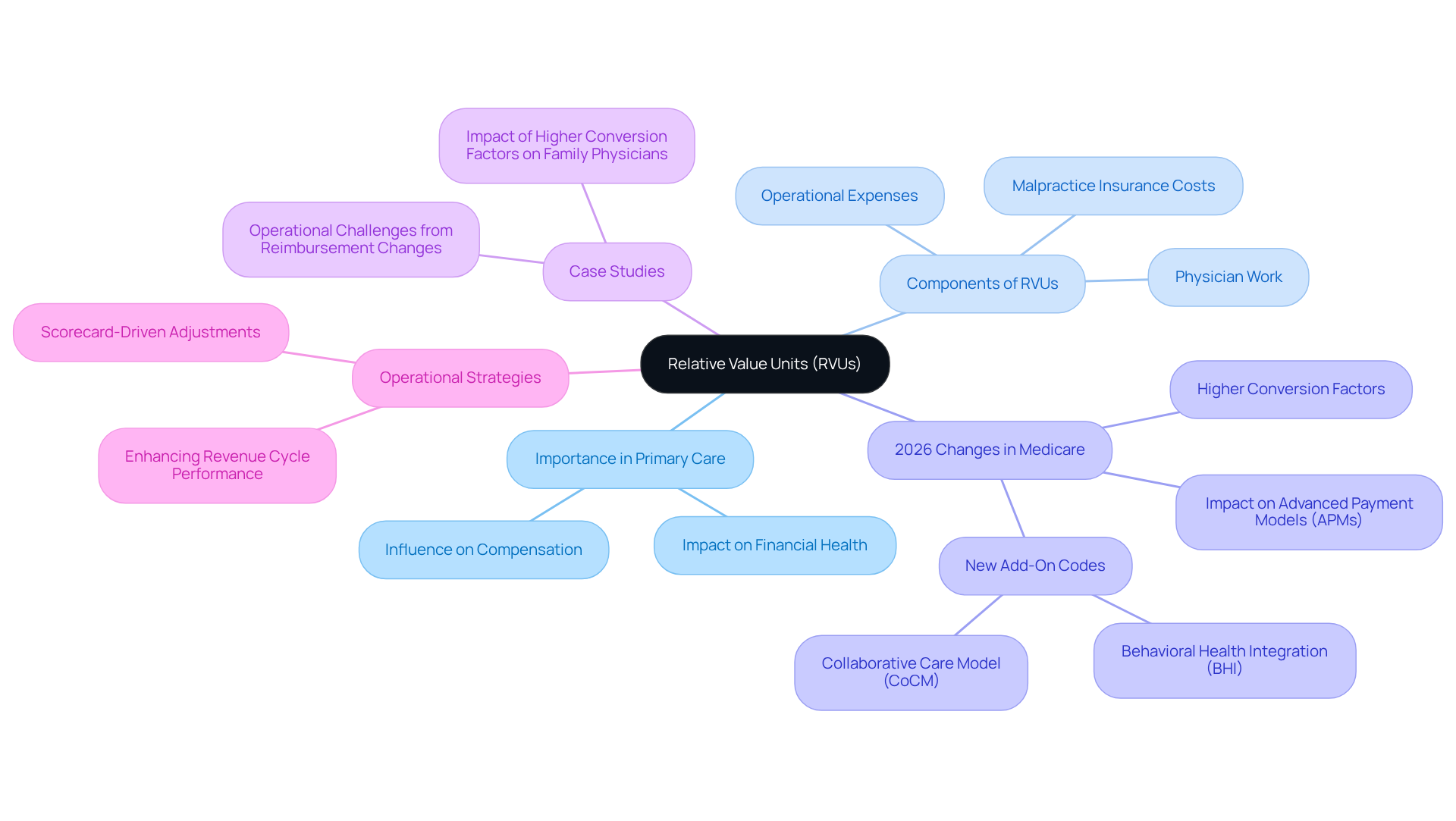
Understanding Relative Value Units (RVUs) is essential for healthcare professionals navigating the complexities of physician reimbursement. RVUs serve as a standardized measure for evaluating the worth of medical services provided by healthcare professionals. They play a crucial role in determining physician reimbursement across various payment models, including Medicare and private insurance. Derived from three essential elements – physician work, operational expenses, and malpractice insurance costs – RVUs are particularly important for primary care providers, as they directly influence compensation and the overall financial health of the organization.
In 2026, the Centers for Medicare & Medicaid Services (CMS) will implement significant changes to the Medicare Physician Fee Schedule (PFS) that will impact RVU calculations. Notably, the introduction of new add-on codes for Behavioral Health Integration (BHI) and Collaborative Care Model (CoCM) initiatives aims to simplify reimbursement processes by eliminating time-based documentation requirements. This change is expected to enhance revenue opportunities for organizations that integrate behavioral health services into their primary care offerings.
Case studies illustrate the impact of RVUs on physician reimbursement. The 2026 MPFS final rule introduces higher conversion factors designed to better compensate family physicians, addressing the real costs associated with primary care. This adjustment is anticipated to rebalance Medicare compensation, thereby improving financial viability for healthcare operations. Additionally, entities engaged in Advanced Payment Models (APMs) will experience a universal conversion factor increase, further promoting value-based care.
RVUs are vital for strategic planning and operational growth. Primary care providers can significantly enhance their revenue cycle performance by learning how to increase RVU primary care through efficient service delivery and comprehensive care models. Implementing scorecard-driven adjustments tied to claims accuracy, denial rates, and days in accounts receivable can further enhance operational rigor, leading to denial reductions of 20-30% and faster reimbursements of 15-25% within 30-90 days.
To evaluate the profitability of your mental health services, consider taking our quick quiz, which offers personalized recommendations to improve efficiency and billing accuracy. Comprehending and utilizing relative value units effectively positions organizations for sustainable growth and enhanced patient care. Furthermore, Healthcare Partners Consulting & Billing, LLC (HPC) offers personalized administrative support services that help practices streamline their billing processes, address underpayments, and manage aging claims effectively. Organizations that fail to adapt to the evolving landscape of RVUs risk compromising their financial stability and patient care quality.
Calculate Your Current RVUs: A Step-by-Step Method
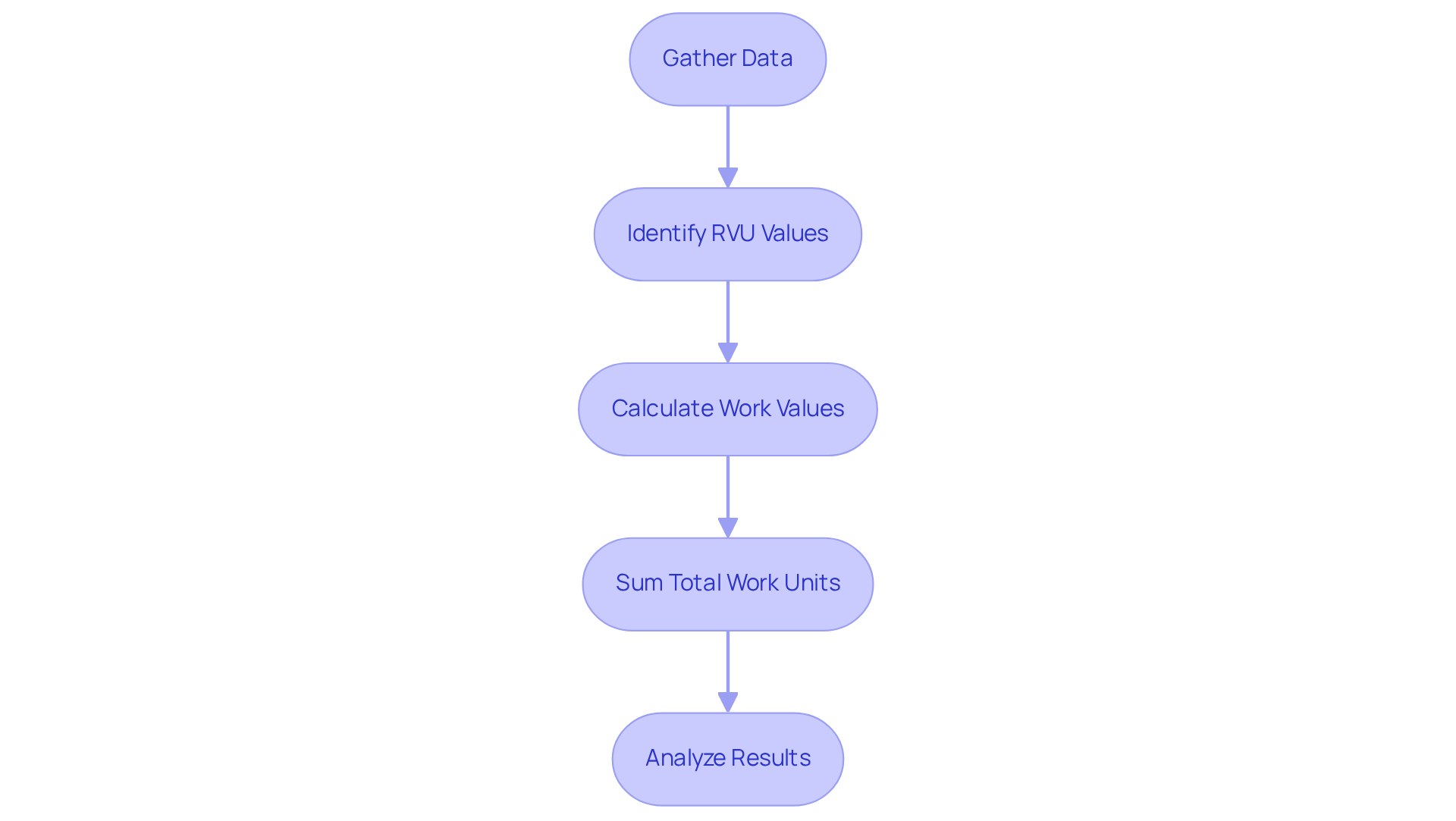
Accurate calculation of your current RVUs is essential for effective revenue cycle management. To calculate your current RVUs, follow these steps:
- Gather Data: Collect data on the number of patient visits and the corresponding CPT codes billed during a specific period (e.g., a month).
- Identify RVU Values: Use the RVU values associated with each CPT code. These values can be found in the CMS Physician Fee Schedule or through RVU calculators available online.
- Calculate Work Values: For each CPT code, multiply the number of times the code was billed by its corresponding value. For instance, if you charged a code with a relative value unit of 1.5 for 20 patients, that would result in 30 work units (1.5 x 20).
- Sum Total Work Units: Combine all the work units calculated for each code to obtain your total units for the period.
- Analyze Results: Review your total units of service in relation to your clinical objectives and identify areas for enhancement.
It is also essential to address underpayments, unprocessed claims, and aging claims in your revenue cycle management. Ensuring accurate patient statements and efficient claims processing is vital for understanding how to increase RVU primary care and enhance your overall RVU generation. This proactive approach not only improves your financial results but also supports the sustainability of your operations. Furthermore, consider the recent changes proposed by CMS, including a 2.5% efficiency adjustment that will affect work RVUs for non-time-based services starting January 1, 2026. This adjustment may impact your calculations and overall revenue cycle performance. Integrating scorecard-driven adjustments related to claims accuracy, denial rates, and days in accounts receivable can enhance operational rigor, ensuring your organization remains financially sustainable. We are committed to helping you optimize your practice’s revenue cycle management.
Implement Strategies to Increase Your RVUs
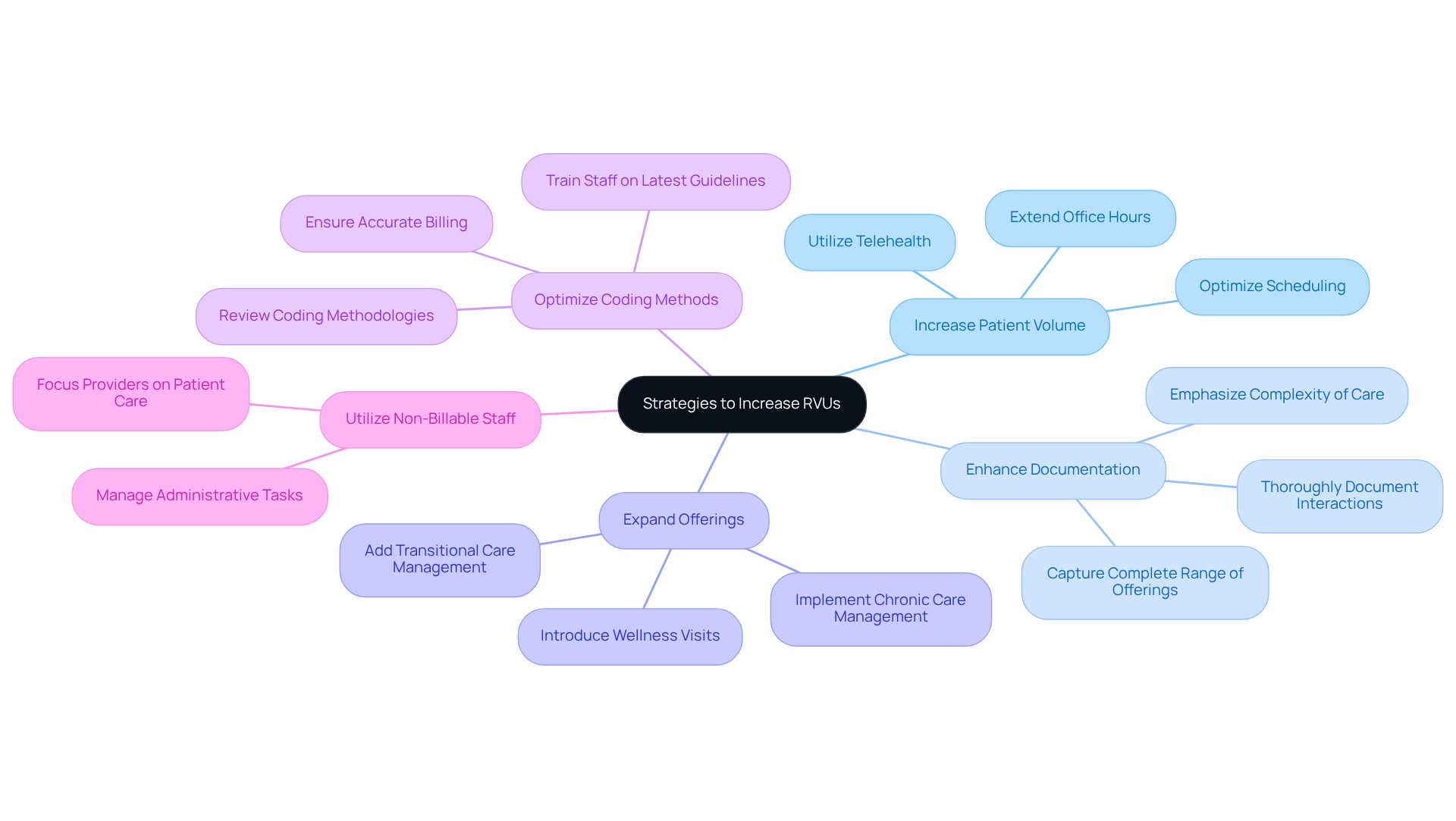
Many healthcare providers struggle to maximize their RVUs due to inefficient processes and lack of strategic planning. To effectively increase your RVUs, consider implementing the following strategies:
- Increase Patient Volume: Optimize your scheduling processes to accommodate more patients. Extending office hours or utilizing telehealth options can significantly enhance patient access and volume.
- Enhance Documentation: Thoroughly document all patient interactions, emphasizing the complexity of care and time spent. Precise documentation captures the complete range of offerings provided, resulting in higher RVU calculations.
- Expand Offerings: Introduce additional options that can generate higher RVUs, such as wellness visits, chronic care management, and transitional care management. These offerings not only enhance patient care but also contribute to revenue growth.
- Optimize Coding Methods: Regularly review and update your coding methodologies to ensure accurate billing for all services rendered. Training staff on the latest coding guidelines can help avoid missed opportunities and improve claims accuracy.
- Utilize Non-Billable Staff: Employ non-billable staff to manage administrative tasks, allowing providers to focus on patient care. This method can increase the number of patients attended to and enhance overall efficiency in the operation.
Without these strategic implementations, healthcare providers risk stagnation in revenue growth and operational inefficiencies, which highlights the importance of understanding how to increase RVU in primary care. Additionally, focusing on operational rigor through scorecard-driven adjustments tied to claims accuracy, denial rates, and days in accounts receivable can further demonstrate the effectiveness of these strategies, potentially reducing denials by 20-30% and accelerating reimbursement by 15-25% within 30-90 days.
Benchmark Your RVUs Against Industry Standards
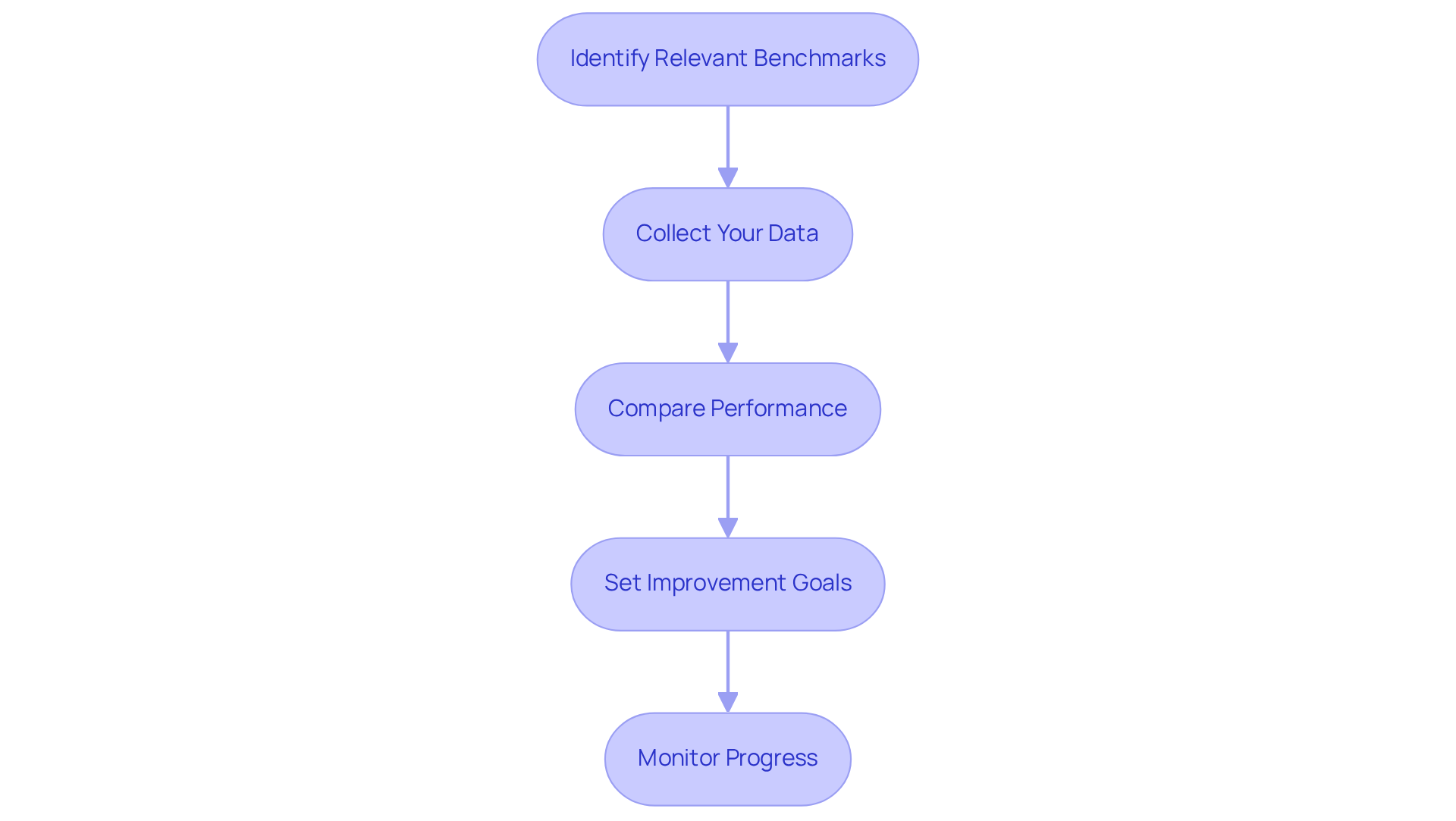
To benchmark your RVUs effectively against industry standards, a structured approach is essential:
- Identify Relevant Benchmarks: Research industry standards for units of value specific to your specialty and size of operation. Resources such as the American Academy of Family Physicians (AAFP) and the Medical Group Management Association (MGMA) provide valuable data on how to increase RVU primary care and improve mental health practices.
- Collect Your Data: Gather your total production units along with other relevant metrics, including patient volume and types of services provided. Collecting comprehensive data is key to analyzing your performance accurately.
- Compare Performance: Analyze how your RVUs compare to the benchmarks. Recognizing how to increase RVU primary care can be challenging but is essential for improvement. For example, methods that lower their no-show rates from 10% to 5% can recover 200-400 wRVUs annually, highlighting the impact of operational efficiencies.
- Set Improvement Goals: By setting clear goals, you can transform your performance metrics into actionable strategies. This could entail exploring how to increase RVU primary care by increasing patient visits, enhancing documentation methods, or broadening offerings. With Healthcare Partners Consulting’s adaptable support plans, you can receive specialized assistance tailored to your needs, ensuring you have the right resources to achieve these goals.
- Monitor Progress: Regularly review your RVU performance against the benchmarks to track progress and adjust strategies as necessary. Implementing scorecard-driven adjustments tied to claims accuracy, denial rates, and days in accounts receivable can demonstrate operational rigor and enhance revenue cycle performance. Additionally, Healthcare Partners Consulting offers transparent pricing models, ensuring you understand the costs associated with your billing services.
This ongoing evaluation not only enhances your operational efficiency but also significantly improves patient care outcomes.
Utilize Tools and Resources for RVU Enhancement
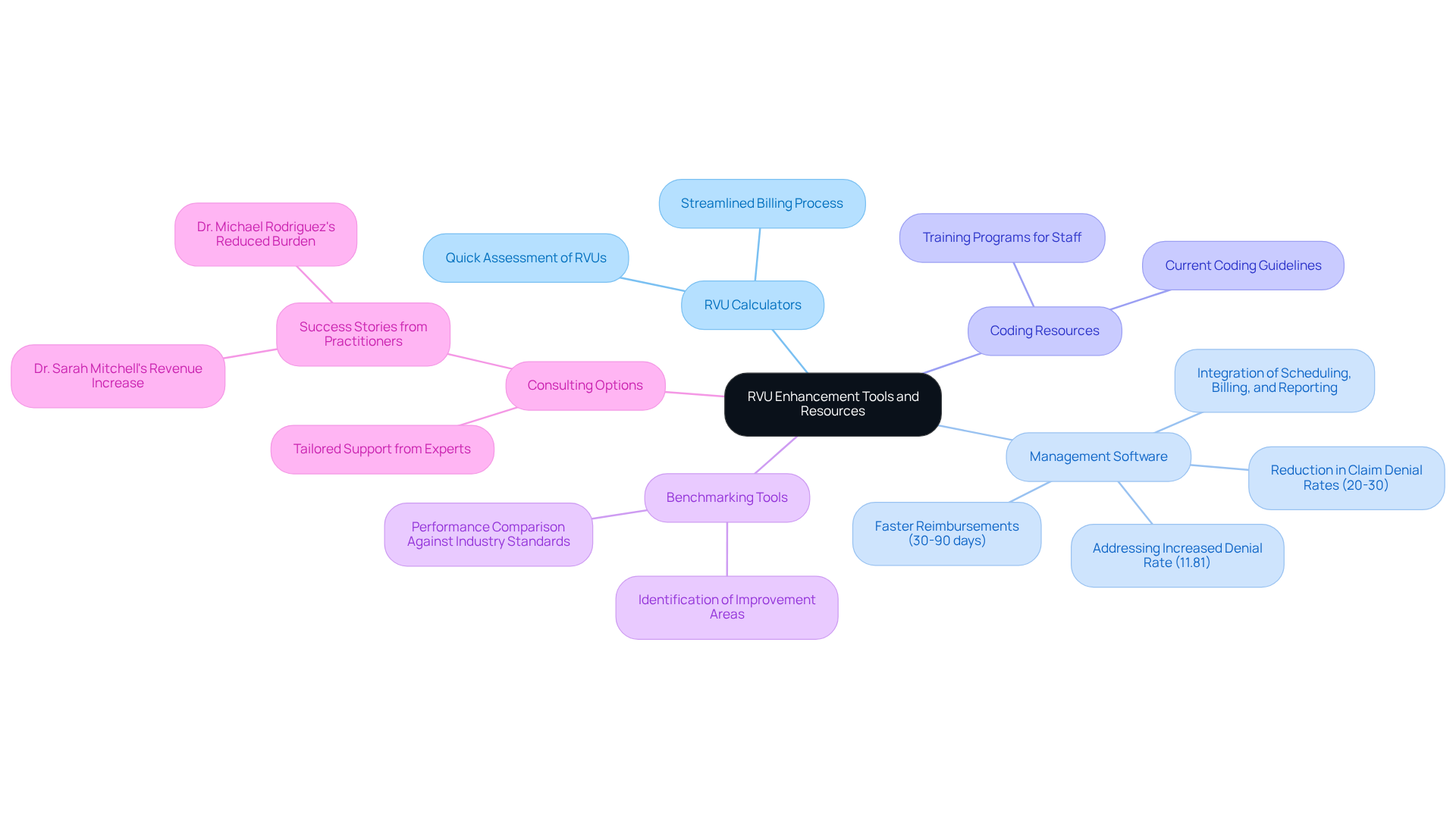
To optimize RVU generation, healthcare providers must strategically utilize various tools and resources:
- RVU Calculators: Leverage online RVU calculators to quickly assess the RVUs associated with specific CPT codes. This tool streamlines the billing process and ensures accurate reimbursement, which is crucial for maintaining financial health.
- Invest in comprehensive management software that integrates scheduling, billing, and reporting functionalities. This software automates processes, reducing administrative burdens and enabling staff to concentrate on patient care. For example, entities that utilize advanced management systems often observe a decrease in claim denial rates by 20-30% and experience quicker reimbursements within 30-90 days. In 2024, the initial denial rate on claims increased by 2.4% to 11.81%. This increase in denial rates underscores the need for robust management systems.
- Coding Resources: Access current coding resources and training programs to ensure your staff is well-versed in the latest coding methods and guidelines. This knowledge maximizes RVU capture and minimizes errors in billing.
- Benchmarking Tools: Utilize benchmarking tools to compare your organization’s performance against industry standards. These insights can highlight areas for improvement and help set realistic goals for RVU enhancement.
- Consulting Options: Engage with consulting options like Healthcare Partners Consulting & Billing, LLC (HPC), a veteran-owned entity with 39 years of experience, for tailored support in optimizing your practice’s operations and RVU generation. HPC specializes in comprehensive end-to-end medical billing solutions, streamlining operations and enhancing patient care. Their expertise can guide you in implementing effective strategies that align with your specific needs, ensuring clean claims, fast follow-up, and clear reporting. Practitioners such as Dr. Sarah Mitchell and Dr. Michael Rodriguez have reported significant revenue increases and reduced administrative burdens thanks to HPC’s services.
By leveraging these tools and resources, healthcare providers can discover how to increase RVU in primary care, leading to improved revenue and operational efficiency. Ultimately, the right tools and expert guidance can transform RVU management into a significant revenue driver.
Conclusion
Effectively managing Relative Value Units (RVUs) is essential for primary care providers to thrive financially and operationally. Recognizing the significance of RVUs in reimbursement and implementing strategies to increase them enables healthcare practices to enhance revenue while maintaining high-quality patient care.
Key strategies for increasing RVUs include:
- Optimizing patient volume through improved scheduling
- Enhancing documentation practices
- Expanding service offerings
- Utilizing non-billable staff for administrative tasks
Additionally, leveraging tools such as RVU calculators, comprehensive management software, and benchmarking resources can provide insights into performance and identify areas for improvement. Organizations that do not adapt to the evolving RVU landscape face significant financial losses and a decline in patient care quality.
Ultimately, the proactive management of RVUs not only supports the financial health of primary care practices but also empowers healthcare providers to focus on what truly matters – delivering exceptional patient care. Adopting these strategies and leveraging available resources positions practices for sustainable growth in a competitive healthcare landscape. For tailored support in optimizing revenue cycle management, reaching out to Healthcare Partners Consulting & Billing, LLC (HPC) can provide the expertise needed to navigate these challenges effectively.
Frequently Asked Questions
What are Relative Value Units (RVUs) and why are they important in primary care?
RVUs are a standardized measure used to evaluate the worth of medical services provided by healthcare professionals. They are crucial for determining physician reimbursement across various payment models, including Medicare and private insurance, impacting compensation and the financial health of primary care providers.
How are RVUs calculated?
RVUs are derived from three essential elements: physician work, operational expenses, and malpractice insurance costs.
What changes will occur in 2026 regarding RVUs and the Medicare Physician Fee Schedule (PFS)?
In 2026, the Centers for Medicare & Medicaid Services (CMS) will implement changes that include new add-on codes for Behavioral Health Integration and Collaborative Care Model initiatives, aimed at simplifying reimbursement processes and enhancing revenue opportunities for organizations integrating behavioral health services.
How do RVUs affect physician reimbursement?
RVUs influence physician reimbursement by determining compensation rates. The 2026 MPFS final rule introduces higher conversion factors to better compensate family physicians, addressing the real costs associated with primary care and improving financial viability for healthcare operations.
What is the significance of Advanced Payment Models (APMs) in relation to RVUs?
Entities engaged in APMs will experience a universal conversion factor increase, promoting value-based care and improving compensation models for primary care providers.
How can primary care providers enhance their revenue cycle performance through RVUs?
Providers can enhance revenue cycle performance by efficiently delivering services, implementing comprehensive care models, and using scorecard-driven adjustments tied to claims accuracy, denial rates, and days in accounts receivable.
What steps should be taken to calculate current RVUs?
To calculate current RVUs, gather data on patient visits and CPT codes billed, identify RVU values for those codes, calculate work values for each code, sum total work units, and analyze the results in relation to clinical objectives.
What are some challenges in revenue cycle management related to RVUs?
Challenges include addressing underpayments, unprocessed claims, and aging claims, all of which are vital for understanding how to increase RVU generation and enhance financial results.
What recent adjustments proposed by CMS may impact RVU calculations?
A proposed 2.5% efficiency adjustment affecting work RVUs for non-time-based services starting January 1, 2026, may impact RVU calculations and overall revenue cycle performance.
How can organizations ensure they remain financially sustainable regarding RVUs?
Organizations can enhance operational rigor by integrating scorecard-driven adjustments related to claims accuracy and denial rates, ensuring effective revenue cycle management and financial sustainability.