

Introduction
In the evolving landscape of mental health care, effective billing practices are crucial for the financial sustainability of clinics. With the rising demand for mental health services, precise revenue cycle management is increasingly necessary to address the field’s unique challenges. This article outlines four best practices that enable healthcare providers to alleviate administrative burdens, thereby allowing them to concentrate on delivering quality patient care. Navigating the complexities of billing is vital for clinics to ensure sustainability and enhance operational efficiency.
Implement Accurate Coding and Billing Practices
Inaccurate coding and invoicing can severely undermine the financial stability of mental health facilities. Precise coding and invoicing practices are crucial for efficient revenue cycle management when implementing physicians billing services in these settings. Implementing the following strategies can significantly enhance billing accuracy and financial performance:
- Utilize Specific CPT and ICD-10 Codes: Ensure your clinic employs the most precise Current Procedural Terminology (CPT) and International Classification of Diseases (ICD-10) codes. Being specific helps with compliance and boosts the chances of getting reimbursed successfully, since accurate coding is key to financial health.
- Regular Training for Staff: Conduct ongoing training sessions for the team to keep them informed about the latest coding changes and compliance requirements. Regular education can drastically reduce errors, leading to a decrease in claim denials, which can range from 20% to 30% when compliance is mastered.
- Implement a Coding Checklist: Develop a comprehensive checklist that outlines all necessary documentation and coding requirements for each service provided. This tool can guide billers to ensure that every aspect of the billing process is addressed before submission, minimizing the risk of errors and enhancing operational rigor.
- Monitor Coding Trends: Regularly analyze coding trends within your practice to identify areas needing improvement. By reviewing data, healthcare facilities can identify common errors and customize training to address these issues, ultimately leading to quicker reimbursements-typically within 30 to 90 days-and enhanced cash flow.
- Optimize Patient Statements and Claims Management: Focus on generating accurate patient statements and follow up on balances effectively. Address underpayments, unprocessed claims, and aging claims proactively to ensure that your practice maintains a healthy revenue cycle. By adopting these practices, mental wellness facilities can enhance the precision of their physicians billing services. This improvement leads to better cash flow and reduces administrative challenges. Incorporating real-world examples, such as the improved revenue cycle at ClearSkin Clinic, can further illustrate the effectiveness of these strategies. Ultimately, the adoption of these strategies can transform the financial landscape of mental health practices, ensuring sustainability and growth.

Outsource Billing Services to Enhance Operational Efficiency
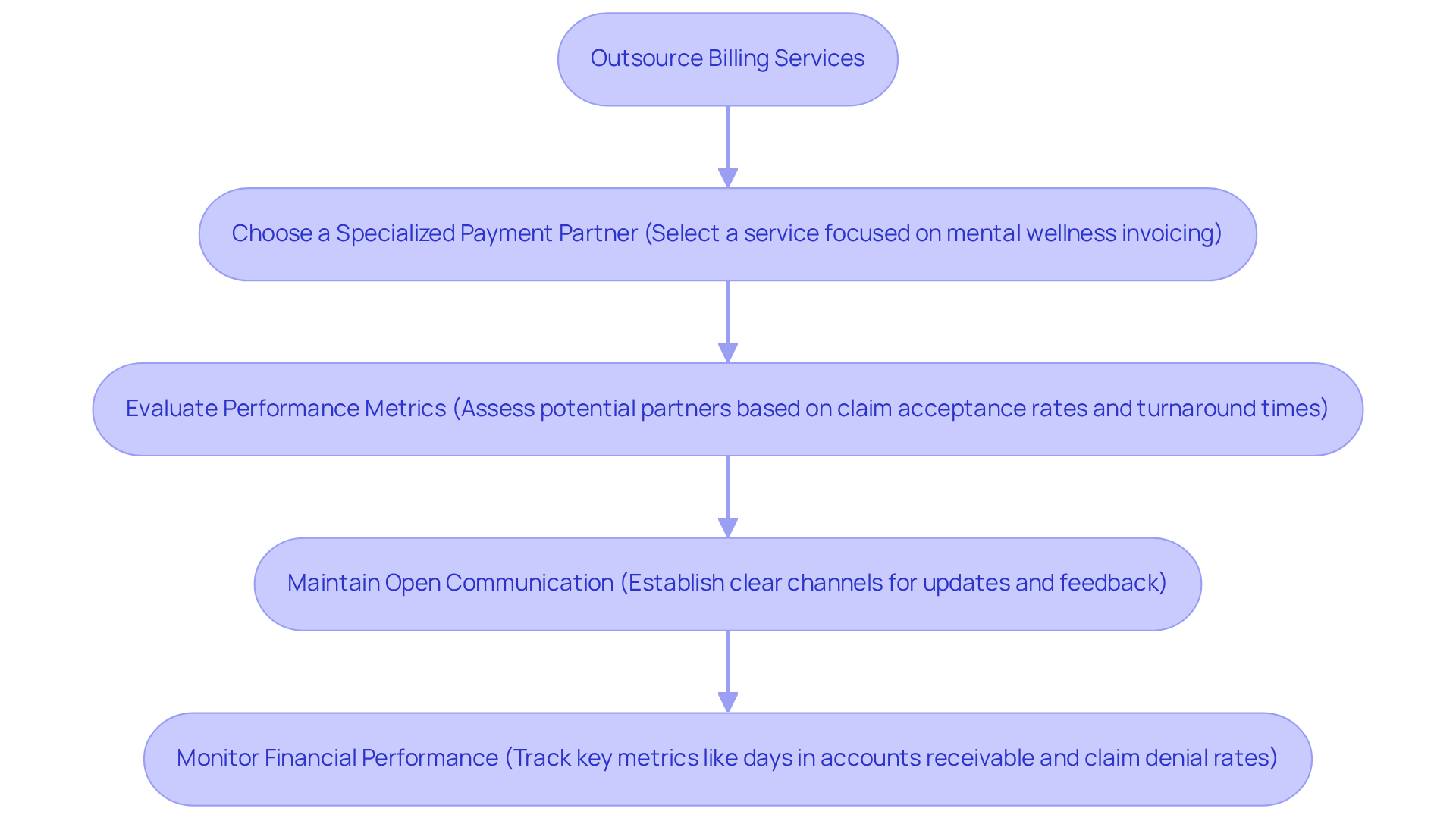
Outsourcing invoicing services can significantly enhance the operational efficiency of mental wellness clinics, addressing common challenges in billing processes. Here are some best practices to consider:
- Choose a Specialized Payment Partner: Select a service that focuses on mental wellness invoicing, like Healthcare Partners Consulting & Billing, LLC (HPC). Their expertise ensures compliance with the unique challenges and requirements of the field, leading to improved accuracy and reduced denial rates. With 39 years of experience and being a veteran-owned company, HPC stands out in delivering tailored solutions for mental health practices.
- Evaluate Performance Metrics: Before finalizing a partnership, assess potential invoicing companies based on their performance metrics, such as claim acceptance rates and turnaround times. This evaluation can help ensure that you select a partner that aligns with your organization’s goals and can achieve quicker reimbursements, typically within 15-25% faster in 30-90 days.
- Maintain Open Communication: Establish clear communication channels with your billing partner. Regular updates and feedback sessions can help address any issues promptly and ensure that both parties are aligned on expectations, fostering a collaborative environment.
- Monitor Financial Performance: After outsourcing, continuously track your practice’s financial performance. Monitor key metrics such as days in accounts receivable and claim denial rates to assess the effectiveness of the outsourcing arrangement. Many practices struggle with high denial rates and slow reimbursements, which can hinder financial stability. However, practices often experience a 20-30% reduction in denials, leading to enhanced cash flow and operational stability. This reduction in denials can significantly enhance financial health and operational efficiency.
By outsourcing physicians billing services to a specialized partner like HPC, mental wellness facilities can alleviate administrative challenges, enhance cash flow, and ultimately improve patient care. HPC also offers personalized administrative support services, providing consistent support and structured guidance throughout the process. Practitioners such as Dr. Sarah Mitchell and Dr. Michael Rodriguez have shared testimonials reflecting significant revenue increases and enhanced practice efficiency, underscoring the value of HPC’s services. Ultimately, the right partnership can transform billing processes, leading to sustainable growth and improved patient outcomes.
Employ Effective Denial Management Strategies
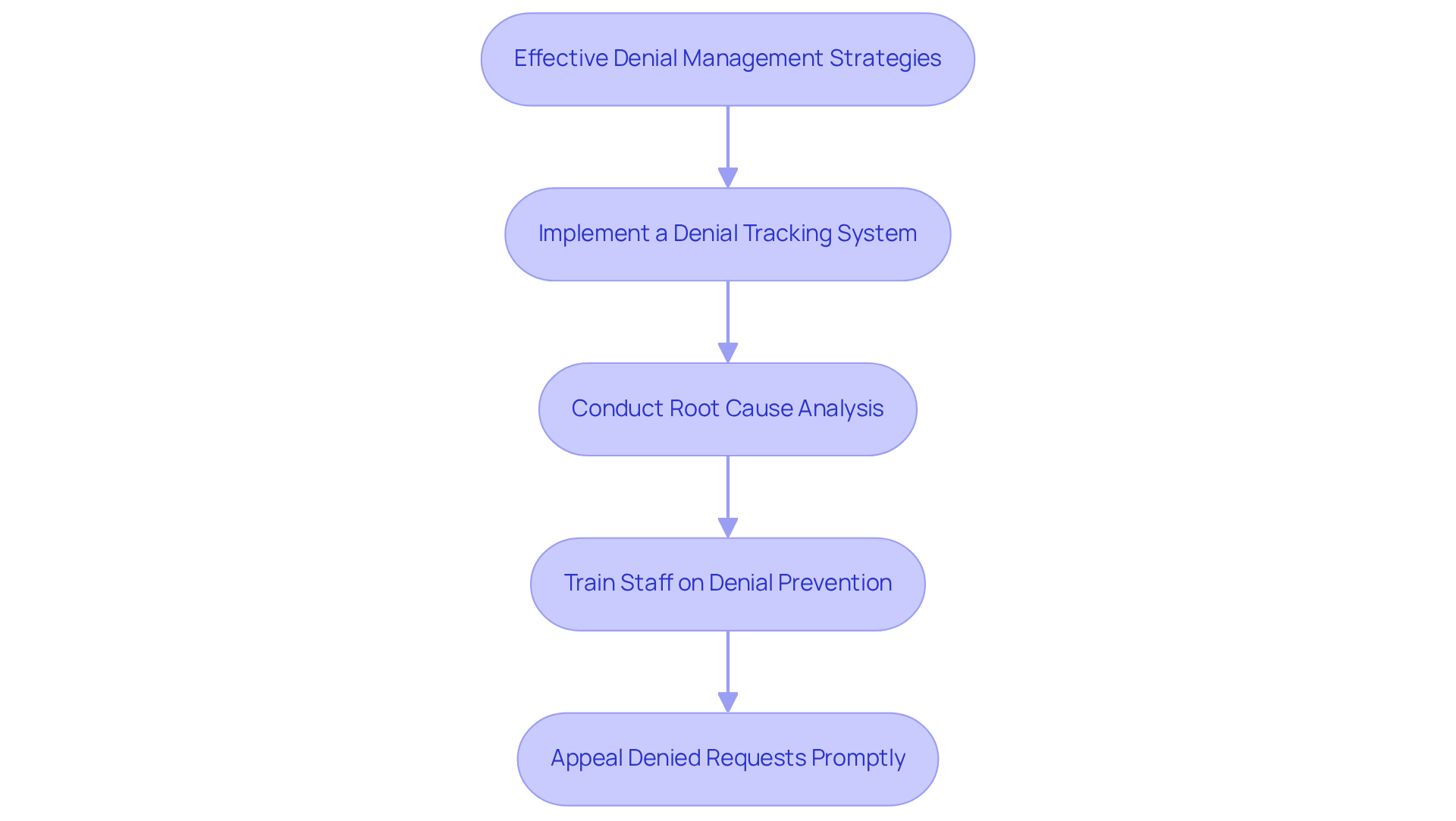
Effective denial management is critical for the financial sustainability of mental health clinics. Here are effective strategies to manage denials:
- Implement a Denial Tracking System: Establish a comprehensive system to monitor denied requests, detailing reasons for denial and actions taken for resolution. This data can reveal patterns and guide future staff training, ultimately enhancing compliance and reducing errors.
- Conduct Root Cause Analysis: For recurring denials, perform a root cause analysis to uncover underlying issues. This analysis assists in creating targeted strategies to prevent similar denials in the future, as studies indicate that up to 90% of denials are avoidable.
- Train Staff on Denial Prevention: Regular training for personnel on common denial reasons and avoidance strategies is crucial. This proactive strategy can result in a decrease in denied submissions by 20-30%, enabling staff to effectively navigate the complexities of behavioral health billing.
- Appeal Denied Requests Promptly: Create a streamlined process for appealing denied requests. Timely appeals not only recover lost revenue but also demonstrate to payers that your practice is diligent in managing claims, potentially achieving faster reimbursement within 15-25% in 30-90 days.
By employing these denial management strategies, mental health clinics can minimize revenue loss and enhance financial performance. Healthcare Partners Consulting & Billing, LLC (HPC) provides tailored administrative support services that improve billing efficiency. By addressing underpayments, unprocessed requests, and aging submissions, HPC ensures that your practice remains financially healthy. With expertise in revenue cycle management tailored for behavioral and mental wellness practices, HPC helps providers focus on patient care while alleviating administrative burdens. Incorporating expert insights and case studies from clients like Dr. Sarah Mitchell and Dr. Michael Rodriguez can further illustrate the success of these strategies in real-world applications, highlighting revenue increases and improved practice efficiency. In 2022, U.S. hospitals and medical systems incurred approximately $19.7 billion in administrative costs related to appealing denied claims, underscoring the importance of effective denial management. Without effective denial management, clinics risk significant financial instability and operational inefficiencies.
Leverage Technology for Streamlined Billing Operations
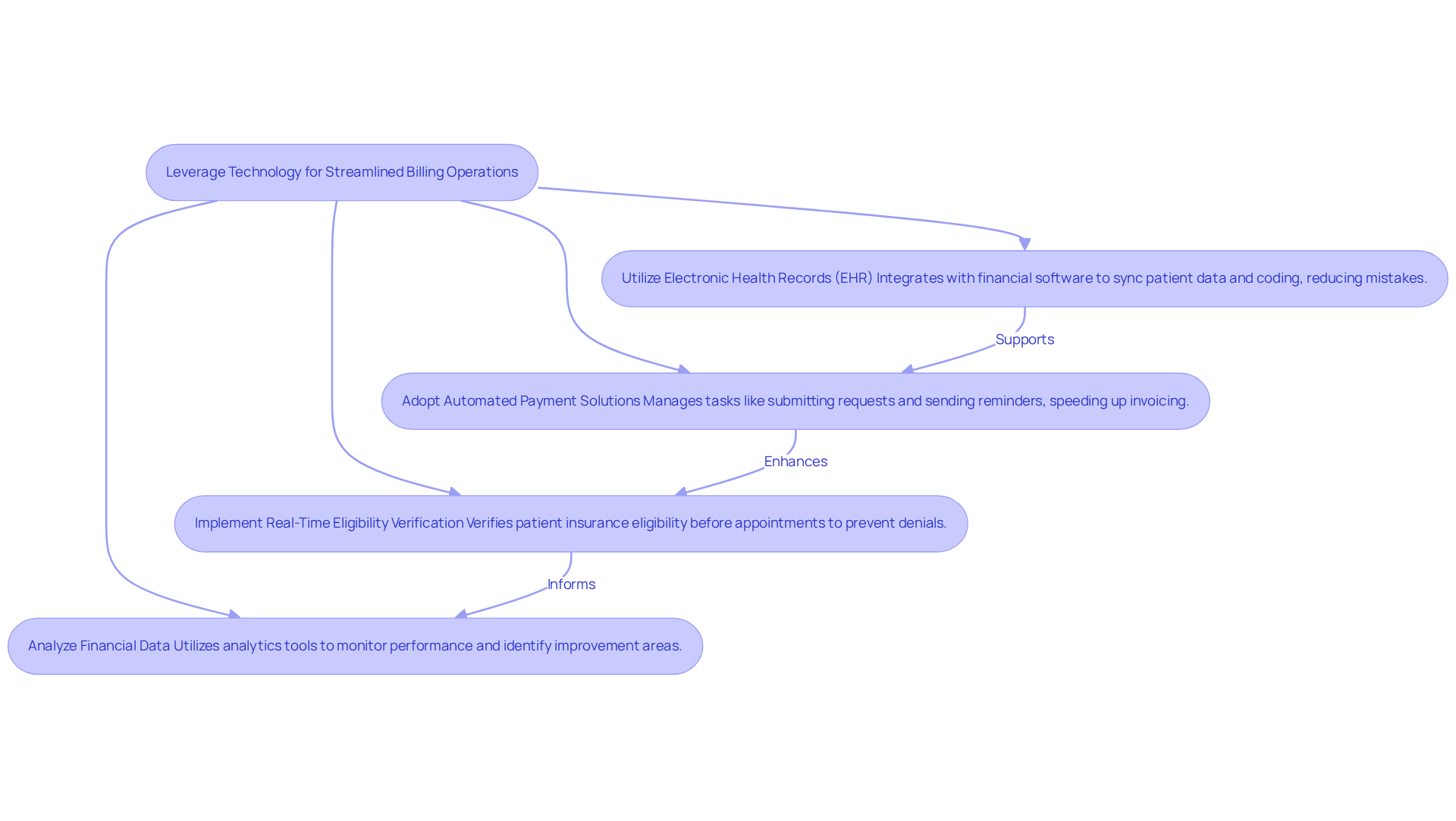
Integrating technology into financial operations presents a critical opportunity for mental health clinics to enhance efficiency and accuracy. Here are best practices for leveraging technology:
- Utilize Electronic Health Records (EHR): Implement an EHR system that integrates seamlessly with your financial software. This integration simplifies invoicing by syncing patient data and coding information automatically. This reduces mistakes and enhances submission accuracy.
- Adopt Automated Payment Solutions: Think about using automated payment solutions that manage tasks like submitting requests, sending payment reminders, and following up. Automation reduces human error and speeds up the invoicing cycle, leading to quicker reimbursement rates, which can enhance by 15% to 25% within 30 to 90 days.
- Implement Real-Time Eligibility Verification: Leverage technology to verify patient insurance eligibility in real-time before appointments. This proactive measure can prevent denial of requests, which can be reduced by 20% to 30%, and enhance patient satisfaction by ensuring clarity regarding coverage.
- Analyze Financial Data: Utilize analytics tools to monitor performance and identify areas for improvement. Data-driven insights can assist healthcare facilities in making informed choices regarding their financial practices, ultimately enhancing operational rigor through scorecard-driven adjustments linked to claims accuracy and denial rates.
By leveraging technology, mental health clinics can streamline their physicians billing services, reduce administrative burdens, and focus more on delivering quality patient care. Ultimately, embracing these technological advancements can transform financial operations and elevate the standard of patient care.
Conclusion
Many mental health clinics struggle with financial instability and inefficient operations, which can hinder their ability to provide quality care. Implementing best practices in billing services can address these challenges. Focusing on accurate coding, effective denial management, and technology integration enables healthcare providers to enhance their revenue cycle management significantly.
Key strategies include:
- The importance of precise coding and regular staff training to minimize errors
- The necessity of a robust denial management system to recover lost revenue
- The integration of technology to streamline billing operations
These practices improve cash flow and promote compliance and transparency, essential elements in the healthcare landscape.
Failure to adopt these best practices may lead to continued financial strain and operational challenges, ultimately impacting patient care. By prioritizing these strategies, healthcare providers can enhance their operational efficiency, reduce administrative challenges, and ultimately deliver better patient care. Partnering with a dedicated billing service like HPC can significantly enhance operational efficiency, allowing clinics to focus on delivering quality patient care.
Frequently Asked Questions
Why is accurate coding and billing important for mental health facilities?
Accurate coding and billing are crucial for the financial stability of mental health facilities, as they directly impact revenue cycle management and the likelihood of successful reimbursements.
What coding systems should mental health clinics use?
Mental health clinics should utilize the most precise Current Procedural Terminology (CPT) and International Classification of Diseases (ICD-10) codes to ensure compliance and improve reimbursement chances.
How can ongoing training benefit billing staff?
Ongoing training for billing staff keeps them informed about the latest coding changes and compliance requirements, which can significantly reduce errors and decrease claim denials.
What is a coding checklist and how does it help?
A coding checklist is a comprehensive tool that outlines all necessary documentation and coding requirements for each service. It helps billers ensure that every aspect of the billing process is addressed before submission, minimizing errors.
Why is it important to monitor coding trends?
Monitoring coding trends allows healthcare facilities to identify common errors and areas needing improvement, which can lead to quicker reimbursements and enhanced cash flow.
What practices can optimize patient statements and claims management?
Generating accurate patient statements, effectively following up on balances, and proactively addressing underpayments and aging claims can optimize patient statements and claims management, ensuring a healthy revenue cycle.
How can implementing these strategies impact the financial performance of mental health practices?
Implementing accurate coding and billing practices can enhance cash flow, reduce administrative challenges, and ultimately transform the financial landscape of mental health practices, ensuring sustainability and growth.