
Introduction
Back office inefficiencies pose significant challenges for mental health clinics, directly impacting the quality of patient care. Implementing tailored best practices to streamline these functions can help clinics focus on quality care. Clinics can adopt specific strategies to overcome common challenges and enhance their operational efficiency. Addressing these operational challenges is essential for clinics aiming to improve patient outcomes in an increasingly complex healthcare environment.
Define Back Office Functions in Healthcare
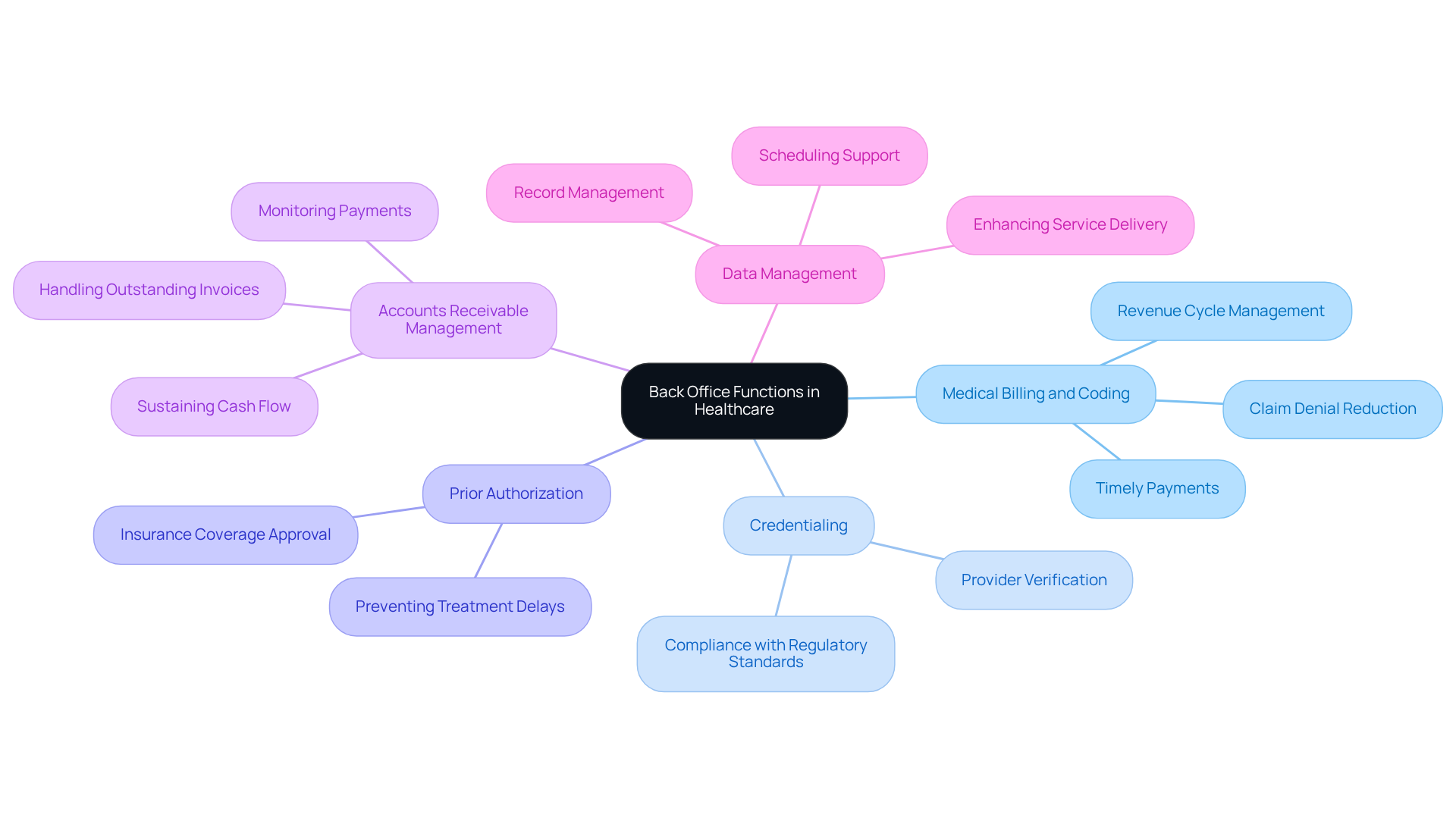
Inefficiencies in back office duties can significantly hinder the operational effectiveness of healthcare facilities. The following key components are critical to effective back office operations:
- Medical Billing and Coding: Accurate billing for services rendered is vital for effective revenue cycle management, ensuring that clinics receive timely payments for their services.
- Credentialing: This process involves verifying the qualifications and backgrounds of healthcare providers, which is essential for compliance with regulatory standards and maintaining the integrity of the practice.
- Prior Authorization: Overseeing the approval process for specific treatments or medications is essential to guarantee coverage by insurance, preventing delays in healthcare.
- Accounts Receivable Management: Monitoring payments and handling outstanding invoices is essential for sustaining cash flow, enabling healthcare facilities to function efficiently.
- Data Management: Managing records, scheduling, and other vital information supports clinical operations and enhances service delivery.
Clearly defining these back office duties enables mental health organizations to evaluate their processes and identify areas for improvement. Implementing best practices in these areas can lead to significant improvements, such as a 20-30% reduction in claim denials and a 15-25% increase in faster reimbursements within 30-90 days. Additionally, utilizing scorecard-driven adjustments tied to claims accuracy, denial rates, and days in accounts receivable can demonstrate operational rigor and enhance overall efficiency. By optimizing these functions, healthcare organizations can not only enhance operational efficiency but also improve their financial health and service delivery outcomes.
Identify Common Challenges in Healthcare Back Office Operations
Mental health clinics face significant obstacles in their back office duties that hinder efficiency and service delivery. Key issues include:
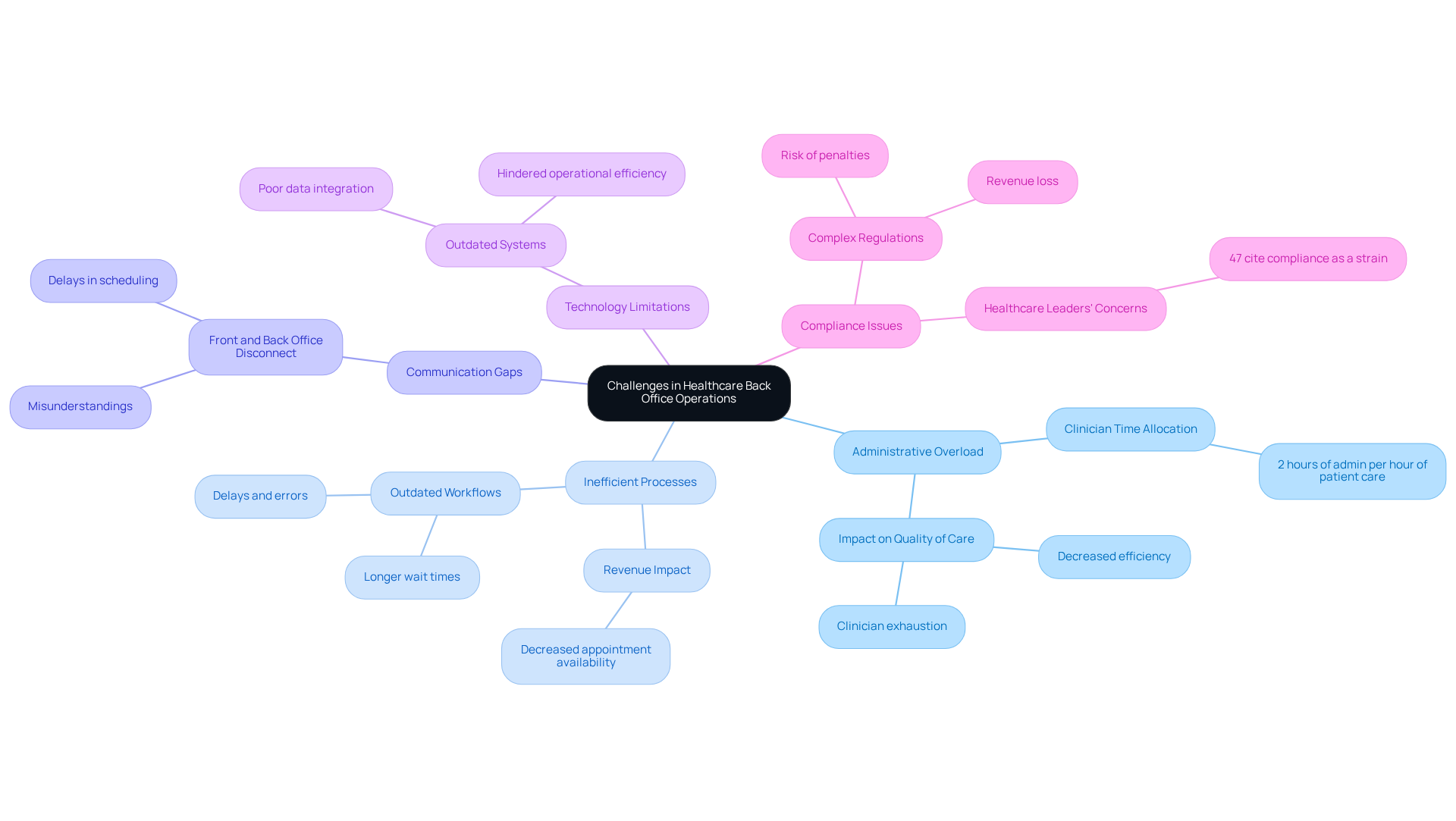
- Administrative Overload: Clinicians often face overwhelming paperwork and compliance demands, with studies indicating that they may spend nearly two hours on administrative tasks for every hour of patient interaction. This burden can lead to clinician exhaustion and decreased efficiency, which negatively affects the quality of care provided.
- Inefficient Processes: Outdated workflows contribute to delays and errors, which can compromise both patient care and revenue. Research indicates that administrative inefficiencies can result in longer wait times and decreased appointment availability, worsening the challenges faced by healthcare facilities.
- Communication Gaps: Ineffective communication between front and back office staff can result in misunderstandings and operational inefficiencies. This disconnect frequently results in delays in scheduling and follow-ups, further straining resources at the facility.
- Technology Limitations: Numerous healthcare facilities face challenges due to outdated systems that do not integrate well, hindering data sharing and operational efficiency. The inability to utilize modern technology can prevent healthcare facilities from optimizing their workflows and enhancing patient outcomes.
- Compliance Issues: Navigating complex healthcare regulations can be daunting for medical practices. Non-compliance not only risks penalties but can also lead to significant revenue loss. A staggering 47% of healthcare leaders cite compliance and regulatory challenges as major sources of strain on their operations.
Recognizing these operational challenges allows mental health clinics to focus on targeted improvements and develop strategies to enhance their back office duties. One effective approach is to take advantage of tools like the quick quiz offered by Healthcare Partners Consulting & Billing, LLC (HPC) to assess your practice’s profitability score. This assessment can help spot hidden revenue leaks and provide personalized recommendations for improving efficiency and billing accuracy. HPC provides tailored administrative support services, such as scheduling, document management, and insurance claims assistance, to empower healthcare providers by alleviating administrative burdens and enabling them to concentrate on their responsibilities. Implementing solutions such as automation and streamlined workflows can lead to a 20-30% reduction in claim denials and a 15-25% increase in faster reimbursements within 30-90 days, ultimately supporting better financial health and patient care. Ultimately, addressing these operational challenges is essential for improving both financial health and patient care.
Implement Strategies for Optimizing Back Office Efficiency
To enhance back office duties, mental health clinics must adopt strategic approaches that address both operational challenges and staff performance.
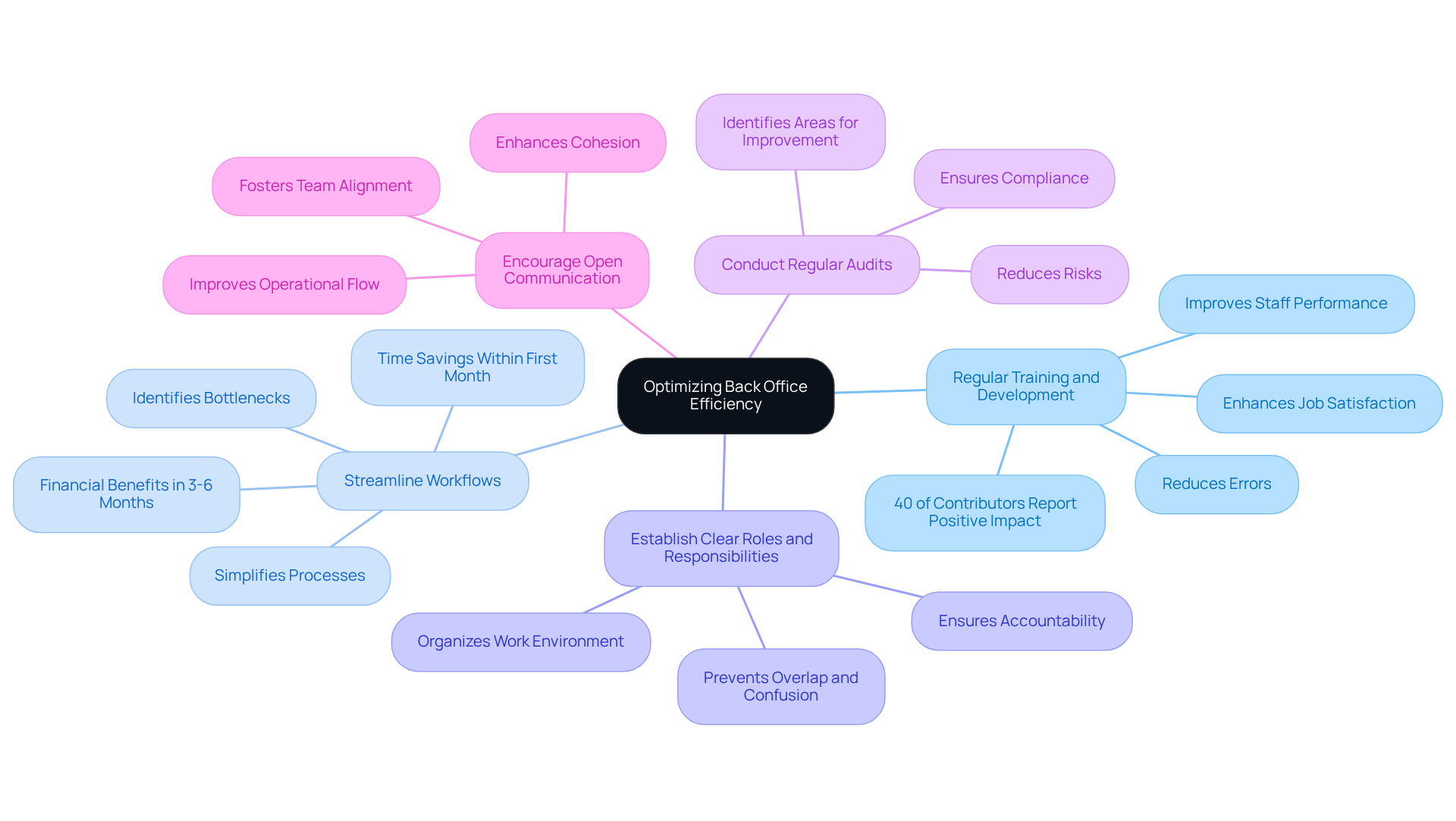
- Regular Training and Development: Investing in ongoing training for staff is crucial to keep them updated on best practices and compliance requirements. This approach reduces errors and enhances job satisfaction. As a result, staff performance improves. Research shows that 40% of individual contributors believe training and development positively impacts their performance.
- Streamline Workflows: Analyzing current processes to identify bottlenecks and redundancies is essential. Simplifying workflows can significantly enhance efficiency, reducing the time spent on administrative tasks. For instance, practices that implement standardized documentation templates often notice time savings within the first month, with full financial benefits realized within three to six months.
- Establish Clear Roles and Responsibilities: Clearly defining roles within the office ensures accountability and streamlines operations. This clarity prevents overlap and confusion among staff, leading to a more organized work environment.
- Conduct Regular Audits: Without regular audits, clinics risk falling behind on compliance and operational efficiency. Regularly reviewing internal processes allows clinics to identify areas for improvement and ensure compliance with regulations. This proactive strategy reduces risks and improves operational efficiency, leading to enhanced support for individuals.
- Encourage Open Communication: Fostering a culture of communication between front and rear office staff ensures alignment and keeps everyone informed about processes and changes. Effective communication can lead to smoother operations and a more cohesive team environment.
Implementing these strategies not only enhances operational efficiency but also enables clinics to manage back office duties effectively while focusing on delivering high-quality care. Ultimately, these improvements not only streamline operations but also contribute to the overall financial health of the practice.
Leverage Technology to Enhance Back Office Operations
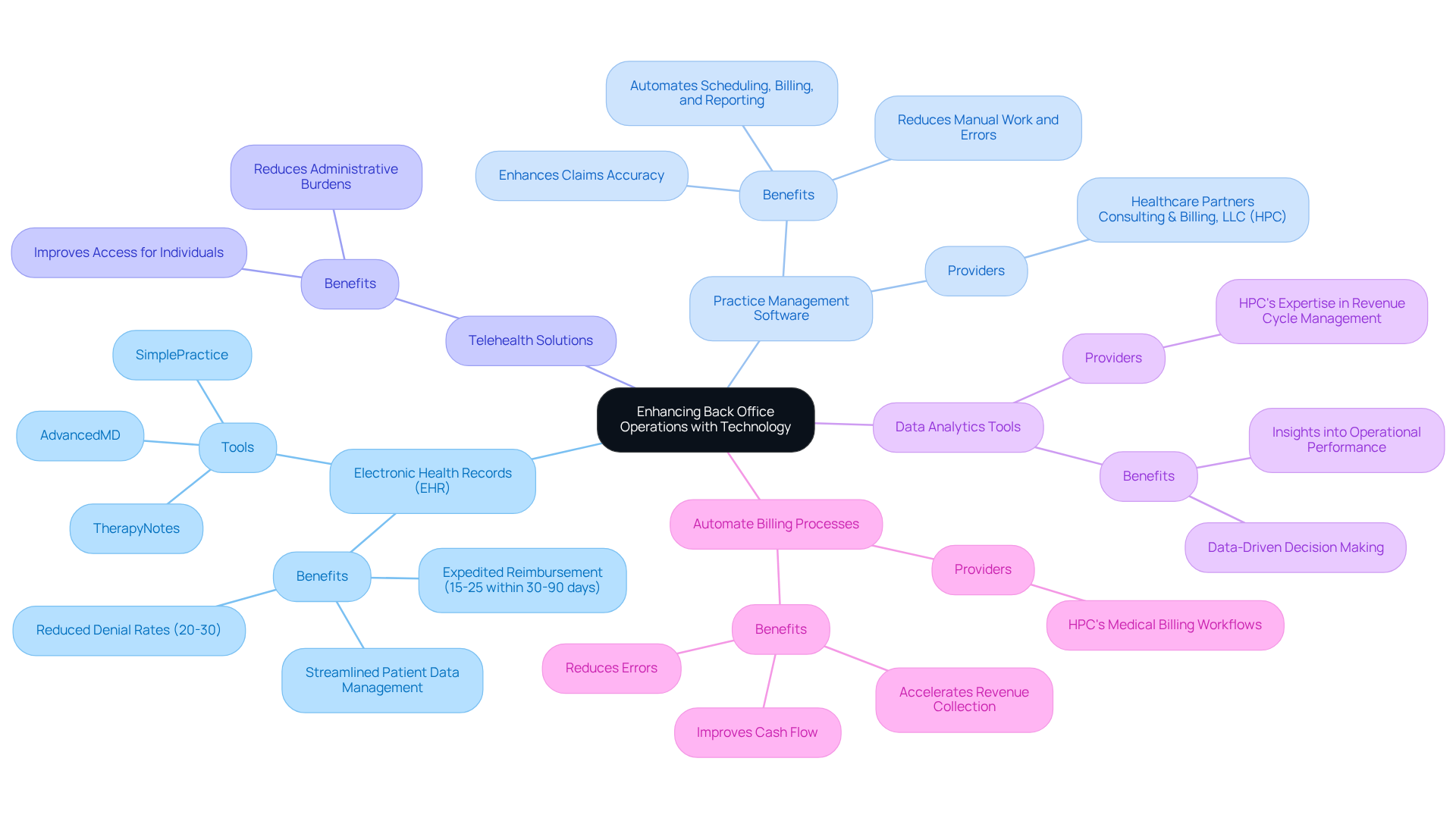
To enhance operational efficiency, mental health clinics must leverage technology strategically. Here are several ways to achieve this:
- Implement Electronic Health Records (EHR): EHR systems streamline patient data management, facilitating easier access and sharing of information across departments. Integrating platforms such as TherapyNotes, SimplePractice, and AdvancedMD can reduce denial rates by 20-30%. Additionally, it can expedite reimbursement by 15-25% within 30-90 days, significantly enhancing revenue cycle performance.
- Utilize Practice Management Software: This software automates scheduling, billing, and reporting, reducing manual work and minimizing errors. By implementing such systems, healthcare facilities can achieve operational rigor through scorecard-driven adjustments related to claims accuracy and accounts receivable. Healthcare Partners Consulting & Billing, LLC (HPC) offers tailored solutions that ensure billing accuracy and efficiency, backed by 39 years of experience in the field.
- Adopt Telehealth Solutions: Integrating telehealth can improve access for individuals and reduce administrative burdens linked to in-person visits, enabling facilities to serve more individuals efficiently.
- Utilize Data Analytics Tools: These instruments offer insights into operational performance, allowing facilities to make data-driven choices that improve efficiency and enhance service. HPC’s expertise in revenue cycle management can assist healthcare facilities in identifying areas for improvement.
- Automate Billing Processes: Automating billing and claims management can reduce errors and accelerate revenue collection, improving cash flow and overall financial health. HPC specializes in transforming medical billing workflows, ensuring compliance and maximizing profitability.
By adopting these technological solutions and utilizing HPC’s personalized administrative support, including dedicated virtual assistant services for behavioral and mental health practices, clinics can enhance their back office duties. This shift allows them to concentrate on what truly matters: delivering exceptional patient care. Ultimately, embracing these advancements can redefine how clinics deliver care, ensuring they meet the evolving needs of their patients.
Conclusion
Optimizing back office duties is crucial for mental health clinics aiming to enhance both operational efficiency and patient care. Focusing on critical functions – medical billing, credentialing, prior authorization, accounts receivable management, and data management – enables clinics to streamline processes and alleviate administrative burdens. This allows healthcare providers to concentrate on delivering high-quality care, ultimately benefiting both the practice and the patients they serve.
Throughout the article, key challenges such as administrative overload, inefficient processes, communication gaps, technology limitations, and compliance issues have been identified as significant barriers to effective back office operations. By implementing best practices such as regular training, streamlined workflows, clear role definitions, and leveraging technology, mental health clinics can overcome these obstacles. The insights provided demonstrate that adopting a compliance-first approach and utilizing tailored solutions from Healthcare Partners Consulting & Billing, LLC (HPC) can lead to substantial improvements in efficiency and financial health.
In conclusion, the optimization of back office operations is essential for achieving operational excellence. By addressing these challenges and embracing innovative strategies, mental health clinics can not only enhance their operational effectiveness but also empower healthcare providers to focus on what truly matters: patient care. Partnering with expert services such as those provided by HPC will bolster these initiatives, ensuring that clinics are well-equipped to navigate the complexities of healthcare administration while maintaining a commitment to integrity, transparency, and innovation. For more information on how to improve back office efficiency, contact HPC at info@hpcbilling.com or call 888-517-4992.
Frequently Asked Questions
What are back office functions in healthcare?
Back office functions in healthcare refer to essential administrative tasks that support the operational effectiveness of healthcare facilities, including medical billing and coding, credentialing, prior authorization, accounts receivable management, and data management.
Why is medical billing and coding important?
Medical billing and coding are vital for effective revenue cycle management, ensuring that clinics receive timely payments for the services rendered.
What is the role of credentialing in healthcare?
Credentialing involves verifying the qualifications and backgrounds of healthcare providers, which is essential for compliance with regulatory standards and maintaining the integrity of the practice.
What does prior authorization entail?
Prior authorization oversees the approval process for specific treatments or medications to guarantee coverage by insurance, preventing delays in healthcare delivery.
How does accounts receivable management contribute to healthcare operations?
Accounts receivable management involves monitoring payments and handling outstanding invoices, which is essential for sustaining cash flow and enabling healthcare facilities to function efficiently.
What is the significance of data management in healthcare?
Data management supports clinical operations by managing records, scheduling, and other vital information, which enhances service delivery.
How can healthcare organizations improve their back office operations?
By clearly defining back office duties, healthcare organizations can evaluate their processes, identify areas for improvement, and implement best practices that can lead to reduced claim denials and faster reimbursements.
What are the potential benefits of optimizing back office functions?
Optimizing back office functions can lead to a 20-30% reduction in claim denials and a 15-25% increase in faster reimbursements within 30-90 days, enhancing operational efficiency and financial health.