
Introduction
Clinics often struggle with the intricacies of claims management, leading to operational inefficiencies. Healthcare providers face complex claims that require stringent documentation, making it essential to understand the nuances involved. This article explores essential strategies that empower mental health clinics to streamline their claims processes, reduce administrative burdens, and ultimately enhance patient care. Effective strategies are necessary for clinics to navigate claims management while ensuring compliance and financial stability.
Define Complex Claims in Healthcare
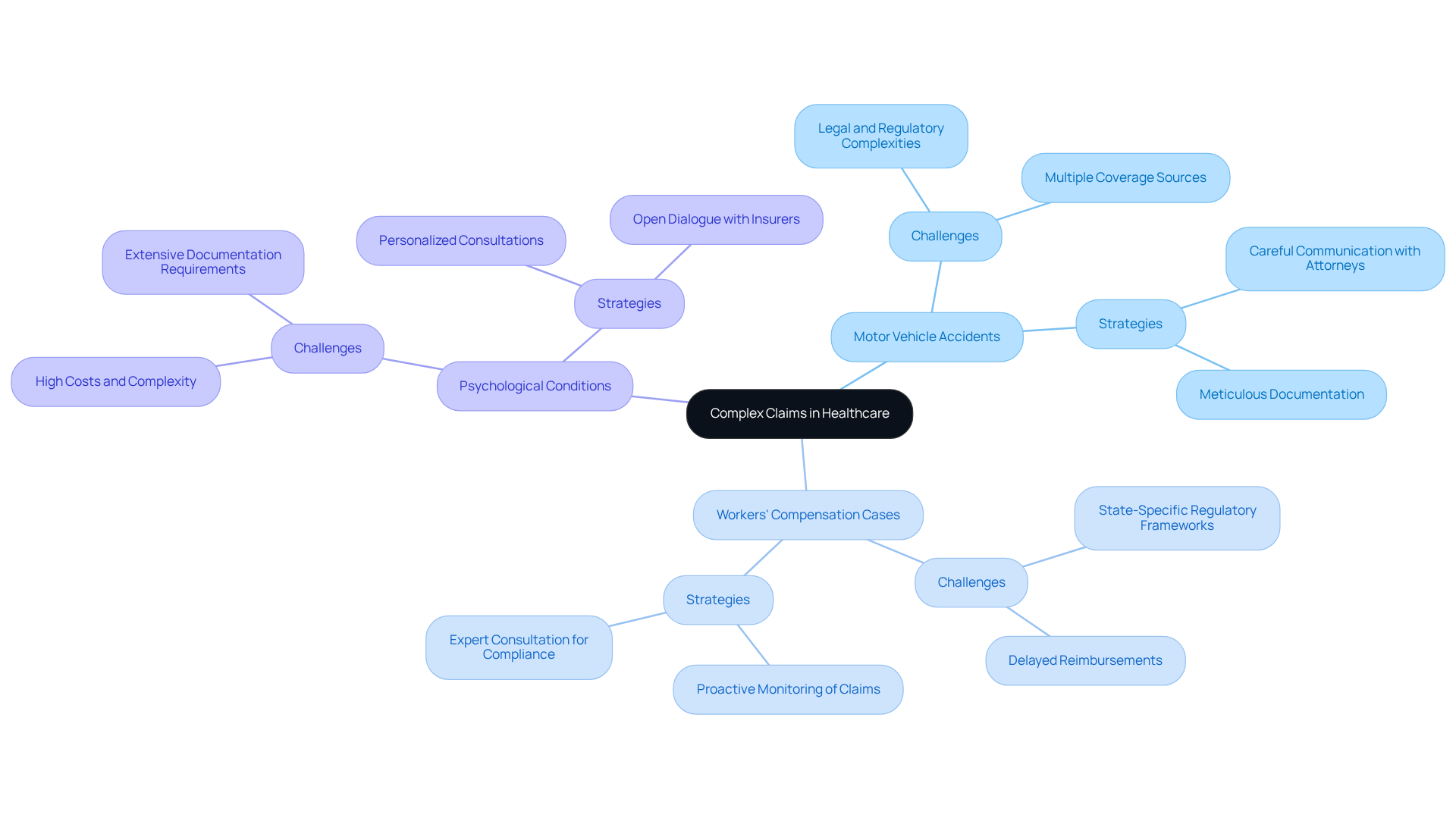
Navigating the complexities of healthcare can pose significant challenges, particularly when multiple policy issues and ambiguous language are involved. Complex situations in healthcare are characterized by their intricate nature, often involving high-value stakes or unusual medical circumstances. Such assertions typically arise from scenarios like:
- Motor vehicle accidents
- Workers’ compensation cases
- Psychological conditions
Cases involving psychological components can be especially difficult, as they are frequently more expensive and intricate due to the requirement for thorough documentation and adherence to various regulations. Intricate requests represent just 8% of total revenue, yet they consume about 30% of resources, leading to significant financial implications for healthcare providers. Grasping these complexities is essential for mental clinics, as they encounter distinct challenges that can lead to delayed reimbursements, heightened administrative burdens, and compliance issues that may result in penalties for non-compliance.
Clearly defining what makes a situation complex can help healthcare providers better equip their teams to manage these scenarios effectively. Implementing proactive strategies, such as maintaining open dialogue with insurers and conducting deep dive analyses, can further enhance operational efficiency and financial stability. Furthermore, personalized consultations can assist in identifying optimal administrative solutions customized to the specific requirements of psychological practices, ensuring that underpayments and aging claims are effectively managed.
Moreover, addressing patient statements is crucial in this process, as it enables healthcare facilities to optimize their billing practices and enhance cash flow. Ultimately, addressing these complexities is not just beneficial; it is essential for the financial health and operational success of healthcare providers.
Identify Causes of Claim Complexity
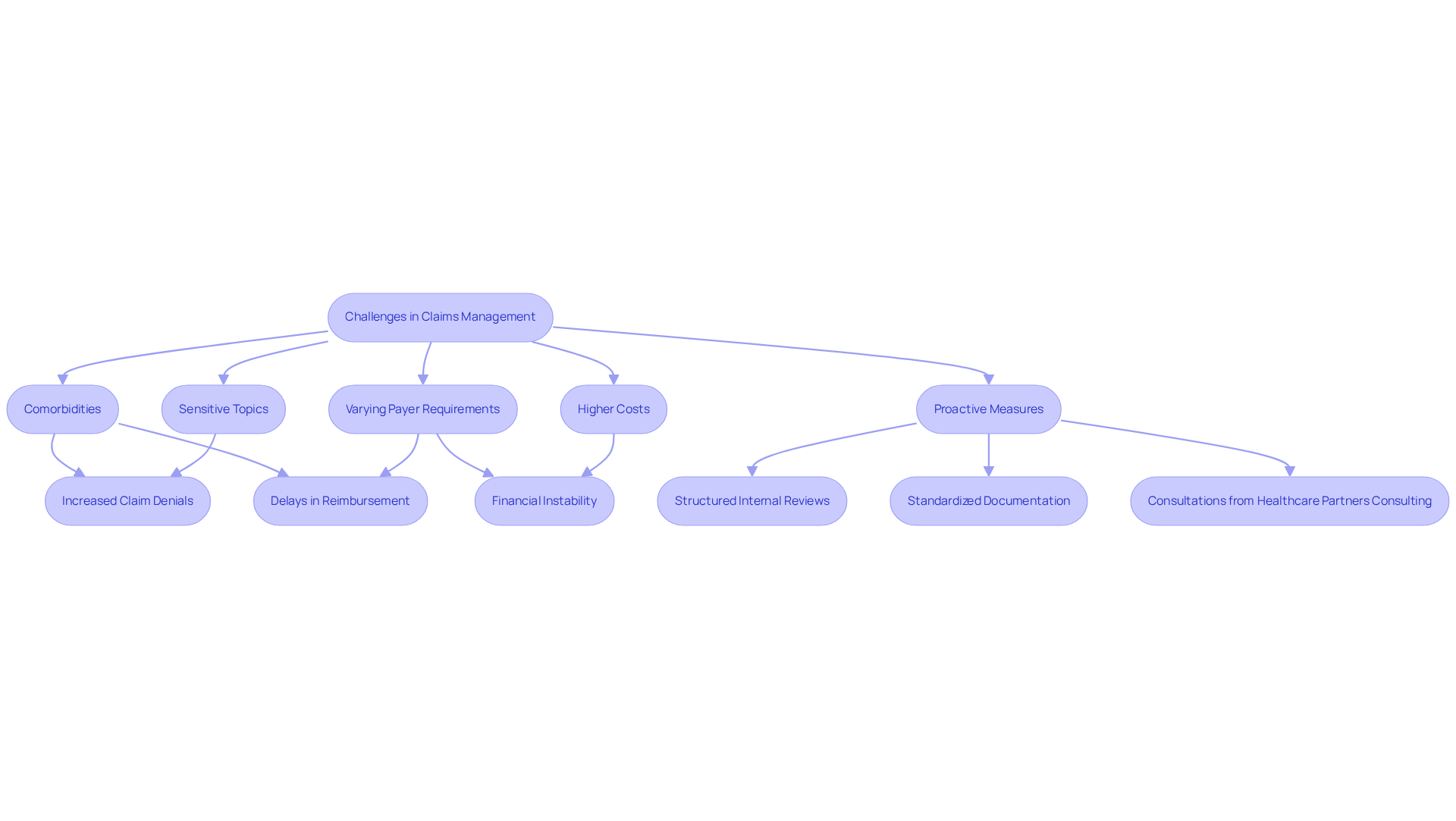
Navigating claims in psychological treatment facilities presents significant challenges due to various complicating factors. The presence of comorbidities not only complicates treatment but also increases the risk of claim denials due to inadequate documentation. Claims with a psychological component typically incur costs that are approximately 2.5 times higher than those without, underscoring the financial implications of this complexity.
Additionally, varying payer requirements can create inconsistencies, with different insurance companies imposing distinct documentation standards and approval processes. This variability can lead to delays in reimbursement, impacting the financial stability of healthcare facilities. Moreover, mental health issues often involve sensitive topics that require a nuanced approach, adding another layer of complexity to the process.
Recognizing these challenges allows healthcare facilities to refine their administrative processes, ultimately resulting in more efficient management of reimbursements and greater operational effectiveness. For instance, practices that implement structured internal reviews of denial trends and standardize documentation processes have reported a reduction in claim denials by 20-30%, alongside faster reimbursement timelines of 15-25% within 30-90 days.
Implementing these proactive measures not only boosts revenue cycle performance but also improves patient care, especially in light of the stricter enforcement of the Mental Health Parity and Addiction Equity Act. To further assist healthcare facilities in navigating these complexities, Healthcare Partners Consulting offers personalized consultations to identify optimal administrative solutions tailored to their specific needs.
As a veteran-owned business with 39 years of expertise in medical billing, we are dedicated to empowering healthcare providers by simplifying administrative tasks, enabling them to concentrate on patient care. Ultimately, addressing these complexities is essential for sustaining the financial health of healthcare providers.
Implement Early Identification and Triage Strategies
To navigate the complexities of claims management effectively, mental health clinics must adopt complex claims management solutions that include early identification and triage strategies. Here are key steps to enhance claims management:
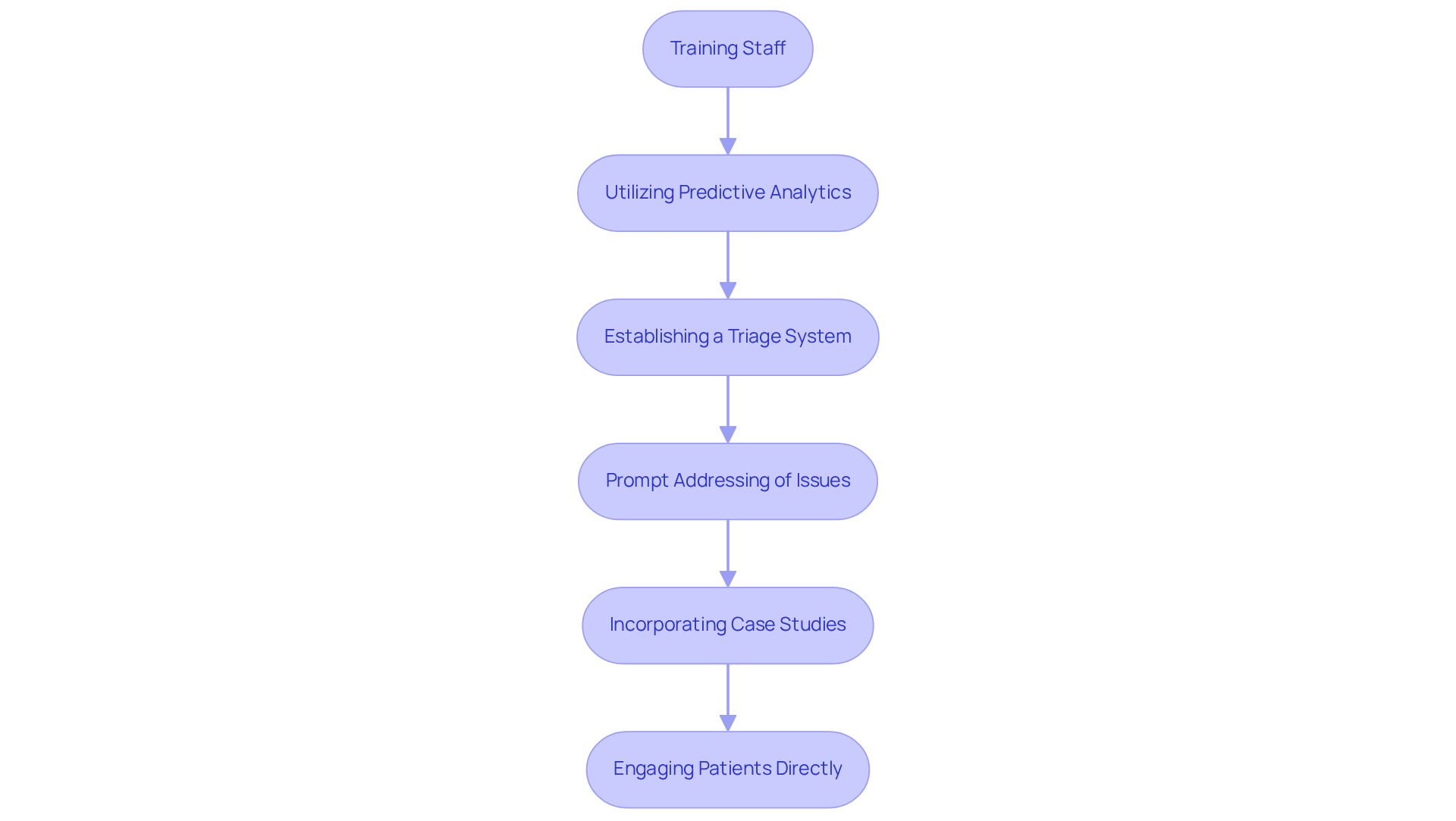
- Training Staff: Equip your team to recognize indicators of complexity during the initial intake process. This foundational step is crucial for proactive management.
- Utilizing Predictive Analytics: Implement tools that analyze historical data to identify cases likely to become complex. This foresight allows clinics to address potential issues before they escalate.
- Establishing a Triage System: Develop a system to prioritize requests based on their complexity and potential revenue impact. Without a structured approach, clinics may struggle to prioritize effectively, resulting in delays in implementing complex claims management solutions to address critical issues.
- Prompt Addressing of Issues: By tackling complex matters swiftly, facilities can streamline their processes, enhance overall management efficiency, and potentially reduce denial rates by 20-30%. This proactive approach can facilitate complex claims management solutions that enable reimbursements within a timeframe of 30 to 90 days.
- Incorporating Case Studies: Data indicates that facilities employing early intervention strategies experienced a 63% reduction in litigated disputes, underscoring the effectiveness of these practices.
- Engaging Patients Directly: Incorporating strategies for direct patient involvement can further enhance the effectiveness of managing requests, ensuring that healthcare facilities not only address these matters efficiently but also support their patients’ overall wellbeing.
Healthcare Partners Consulting (HPC) offers customized administrative support services, such as scheduling, document management, and insurance processing, to help clinics streamline their operations. This empowers healthcare facilities to optimize their billing processes and maximize profitability, allowing them to focus more on patient care. Ultimately, these strategies not only improve operational efficiency but also significantly enhance patient care outcomes.
Leverage Technology for Efficient Claims Management
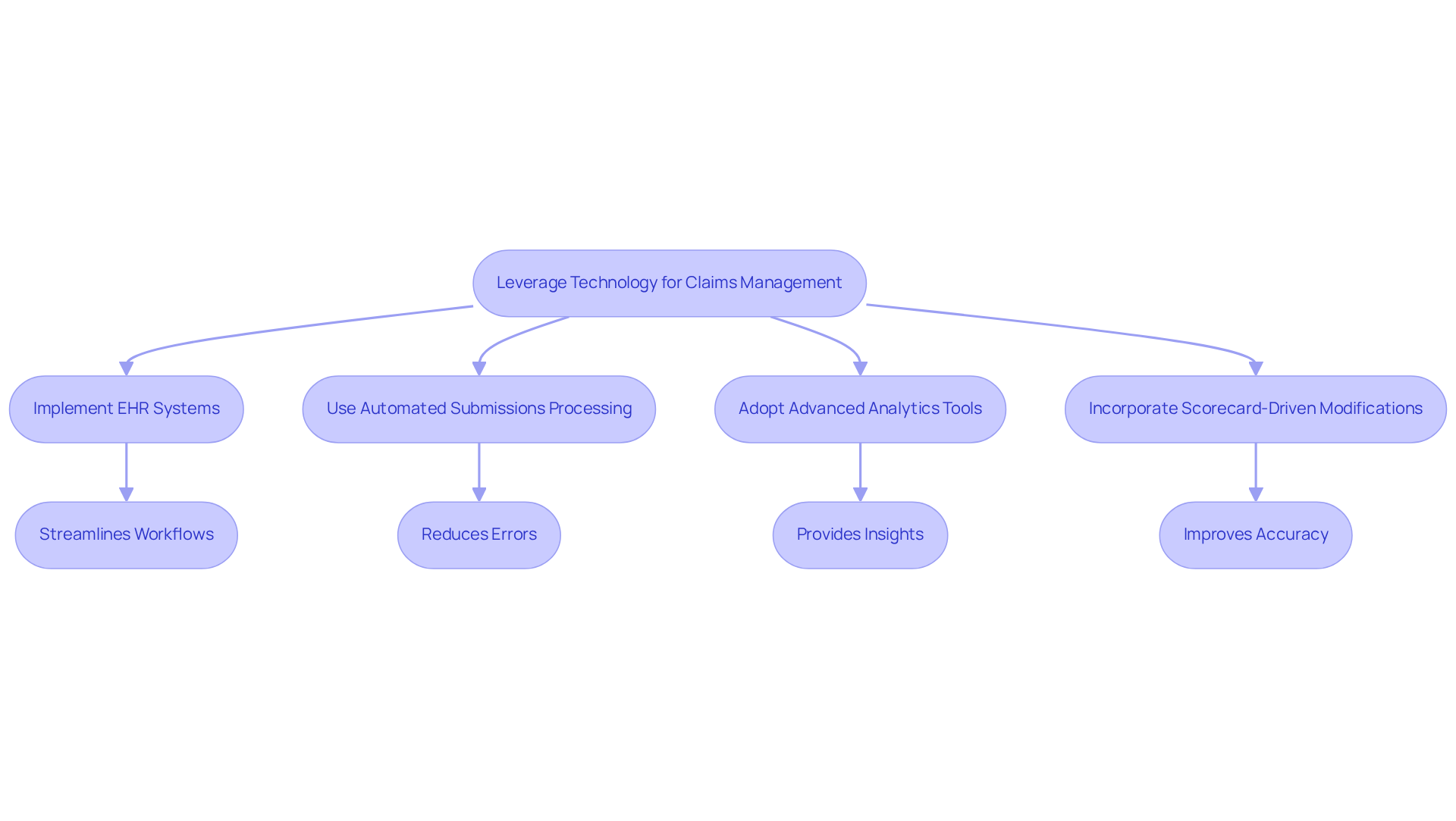
Many mental wellness clinics struggle with inefficient management processes that hinder their operational effectiveness. Utilizing technology can significantly enhance these processes. Implementing electronic health record (EHR) systems that seamlessly integrate billing and reimbursement management streamlines workflows and significantly reduces errors. Automated submissions processing software is essential for managing entries, tracking status, and generating reports efficiently. Advanced analytics tools provide critical insights into claims trends, enabling healthcare facilities to pinpoint areas for improvement.
By adopting these technological solutions, mental health facilities can enhance operational efficiency, lessen administrative burdens, and achieve quicker reimbursement timelines. Studies indicate a potential reduction in denial rates by 20-30% and an improvement in revenue cycle performance within a timeframe of 30-90 days. Moreover, the incorporation of scorecard-driven modifications can improve accuracy in billing and decrease days in accounts receivable, ensuring that healthcare facilities remain competitive in an increasingly intricate billing environment.
Additionally, Healthcare Partners Consulting offers customized administrative support services designed for wellness practices, helping to keep operations running smoothly. Their rapid assessment tool enables healthcare facilities to evaluate their profitability concerning their revenue management processes and obtain tailored suggestions, further improving efficiency and billing precision. Ultimately, leveraging technology not only enhances operational efficiency but also positions clinics for sustained success in a competitive landscape.
Foster Team Specialization and Expertise
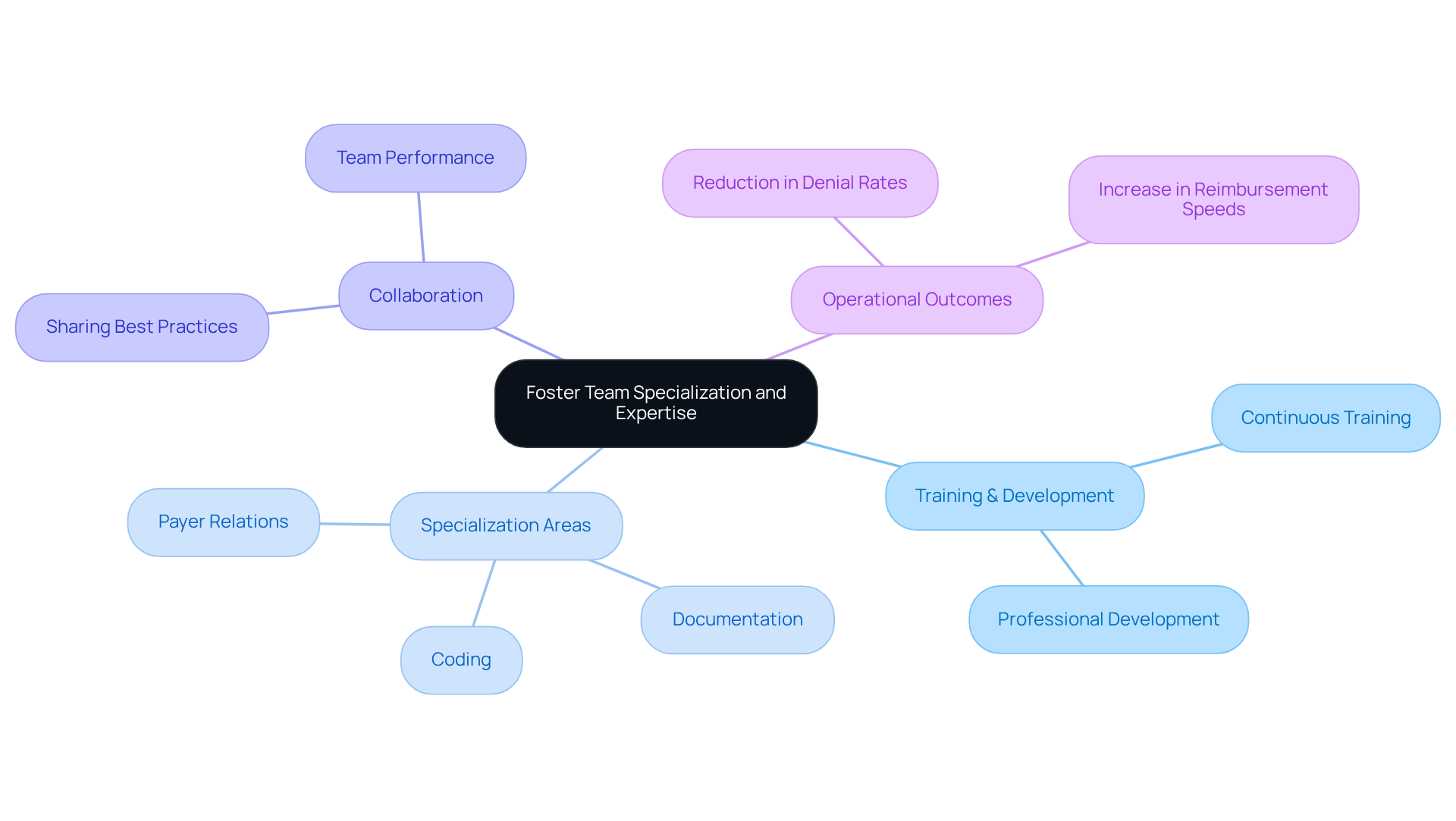
To navigate the complexities of intricate cases, mental health facilities must emphasize team specialization and expertise. Continuous training and professional development opportunities for staff managing requests are essential. Encouraging team members to focus on specific areas like coding, documentation, or payer relations enhances their expertise and leads to more efficient submission handling. For instance, specialized training can result in a 20-30% reduction in denial rates and a 15-25% increase in reimbursement speeds within 30-90 days, significantly improving revenue cycle performance.
Fostering collaboration among team members facilitates the sharing of best practices and insights. This collaborative approach not only enhances individual performance but also improves the overall efficiency of the practice’s management of submissions. Case studies have demonstrated that healthcare facilities implementing specialized roles and promoting teamwork experience enhanced operational outcomes, ultimately resulting in improved patient care and financial sustainability.
As a veteran-owned enterprise with 39 years of experience, Healthcare Partners Consulting & Billing, LLC (HPC) provides adaptable service plans customized to the size of your practice and claim volume, ensuring that healthcare facilities can enhance their billing processes efficiently. Additionally, HPC emphasizes strict adherence to HIPAA compliance and data security measures, providing peace of mind for practices handling sensitive patient information. Ultimately, the strategic implementation of specialized roles and teamwork can transform revenue cycle management by utilizing complex claims management solutions, yielding significant benefits for both practices and patients.
Conclusion
Without effective claims management, mental health clinics risk financial instability and operational inefficiency. Implementing effective strategies and leveraging technology significantly reduces administrative burdens, enabling healthcare providers to focus on patient care. A compliance-first approach safeguards against penalties and enhances the quality of care for patients.
Key insights from the article highlight the importance of:
- Early identification and triage strategies
- The role of technology in streamlining processes
- The necessity of fostering team specialization
These elements work together to create a robust framework for managing complex claims, ultimately leading to improved reimbursement timelines and reduced denial rates. The proactive measures discussed, such as training staff and utilizing predictive analytics, empower healthcare providers to tackle challenges head-on and optimize their revenue cycle management.
In conclusion, the significance of adopting comprehensive claims management solutions cannot be overstated. Prioritizing these best practices enhances operational effectiveness and ensures competitiveness in a complex healthcare landscape. Engaging with experts can be the key to thriving amidst these challenges, ensuring both financial health and quality patient care.
Frequently Asked Questions
What are complex claims in healthcare?
Complex claims in healthcare refer to intricate situations that often involve high-value stakes or unusual medical circumstances, such as motor vehicle accidents, workers’ compensation cases, and psychological conditions.
Why are claims involving psychological conditions particularly challenging?
Claims involving psychological conditions are challenging due to their higher costs and complexity, which require thorough documentation and adherence to various regulations.
What percentage of total revenue do intricate requests represent, and how much of the resources do they consume?
Intricate requests represent about 8% of total revenue but consume approximately 30% of resources.
What are the implications of complex claims for healthcare providers?
Complex claims can lead to delayed reimbursements, increased administrative burdens, and compliance issues that may result in penalties for non-compliance.
How can healthcare providers manage complex claims more effectively?
Healthcare providers can manage complex claims by maintaining open dialogue with insurers, conducting deep dive analyses, and implementing proactive strategies tailored to their specific needs.
What role do patient statements play in managing complex claims?
Addressing patient statements is crucial as it helps healthcare facilities optimize their billing practices and enhance cash flow.
What are some causes of claim complexity in psychological treatment facilities?
Causes of claim complexity include the presence of comorbidities, varying payer requirements, and the sensitive nature of mental health issues, which can lead to inadequate documentation and increased claim denials.
How much higher are the costs of claims with a psychological component compared to those without?
Claims with a psychological component typically incur costs that are approximately 2.5 times higher than those without.
What proactive measures can healthcare facilities take to reduce claim denials?
Healthcare facilities can implement structured internal reviews of denial trends and standardize documentation processes, which have been shown to reduce claim denials by 20-30% and improve reimbursement timelines by 15-25%.
How does the Mental Health Parity and Addiction Equity Act impact claim management?
The stricter enforcement of the Mental Health Parity and Addiction Equity Act necessitates more efficient management of reimbursements and compliance with documentation standards in mental health claims.