

Introduction
Navigating the complexities of medical billing can be daunting for providers, yet it is essential for their financial health. Effective medical billing serves as a cornerstone for healthcare providers, particularly in the specialized fields of behavioral and mental health. By implementing best practices in billing, practitioners can enhance their revenue cycle management and alleviate administrative burdens, allowing them to focus more on patient care. Given the complexities of coding, documentation, and denial management, providers must find ways to maximize their billing efficiency while ensuring compliance. This article outlines four essential practices that enable healthcare providers to effectively navigate medical specialist billing, leading to improved financial outcomes and enhanced patient care.
Understand the Fundamentals of Medical Specialist Billing
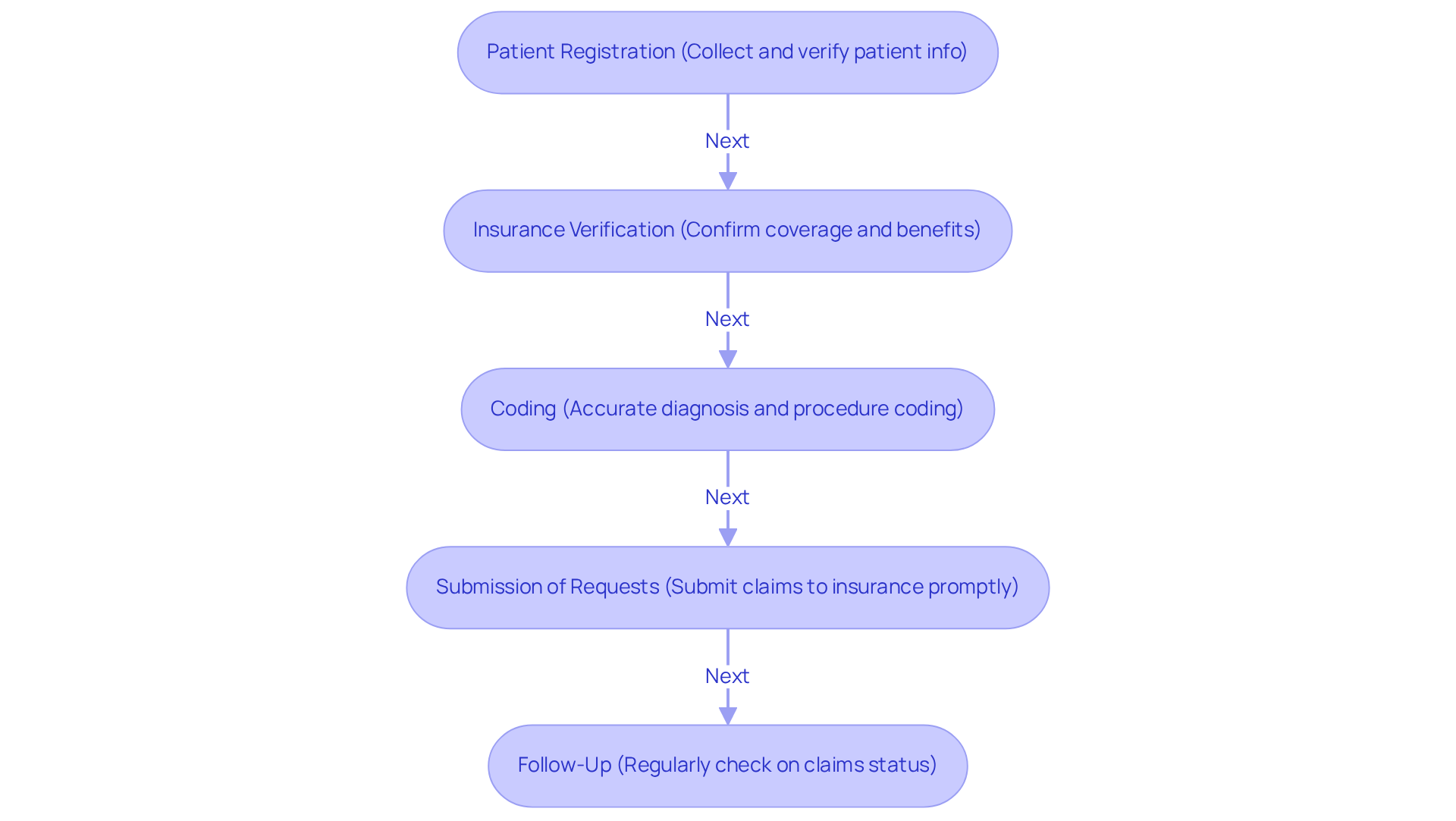
Effective medical specialist billing is essential for ensuring that healthcare providers receive the compensation they deserve for their services. The key components include:
- Patient Registration: Accurate collection of patient information is foundational. This entails confirming insurance information and comprehending patient demographics, which is essential for reducing rejections. Studies indicate that focusing on accurate patient registration can lead to a reduction in claim denials by 20-30%.
- Insurance Verification: Confirming the patient’s insurance coverage and benefits is essential to avoid complications later in the billing process. Effective verification can lead to faster reimbursement times, often within 15-25% quicker than average, thereby enhancing the overall efficiency of the billing cycle.
- Coding: Accurate coding of diagnoses and procedures using the appropriate Current Procedural Terminology (CPT) and International Classification of Diseases (ICD) codes is vital for ensuring proper reimbursement. The introduction of new AI-specific CPT codes in 2026 is expected to streamline this process further, allowing practices to leverage technology for improved accuracy and efficiency.
- Submission of Requests: Submitting requests to insurance companies promptly is essential for timely payments. Understanding the specific requirements of each payer can significantly enhance the likelihood of first-pass reimbursement acceptance, which is crucial for maintaining cash flow.
- Follow-Up: Regular follow-up on submitted claims is necessary to identify and resolve any issues early, facilitating quicker resolutions and payments. By implementing systematic follow-up processes, practices not only improve operational efficiency but also significantly reduce days in accounts receivable by 20-35%, enhancing their financial health.
By mastering these fundamentals, healthcare providers can streamline their financial processes, reduce administrative burdens, and ultimately focus more on delivering quality patient care with the help of medical specialist billing. Ultimately, a robust billing process not only enhances financial stability but also allows healthcare providers to prioritize patient care more effectively.
Implement Accurate Coding and Documentation Practices
Inaccurate coding and documentation can jeopardize the financial health of medical practices. Accurate coding and documentation are the backbone of effective medical specialist billing. Here are best practices to ensure precision:
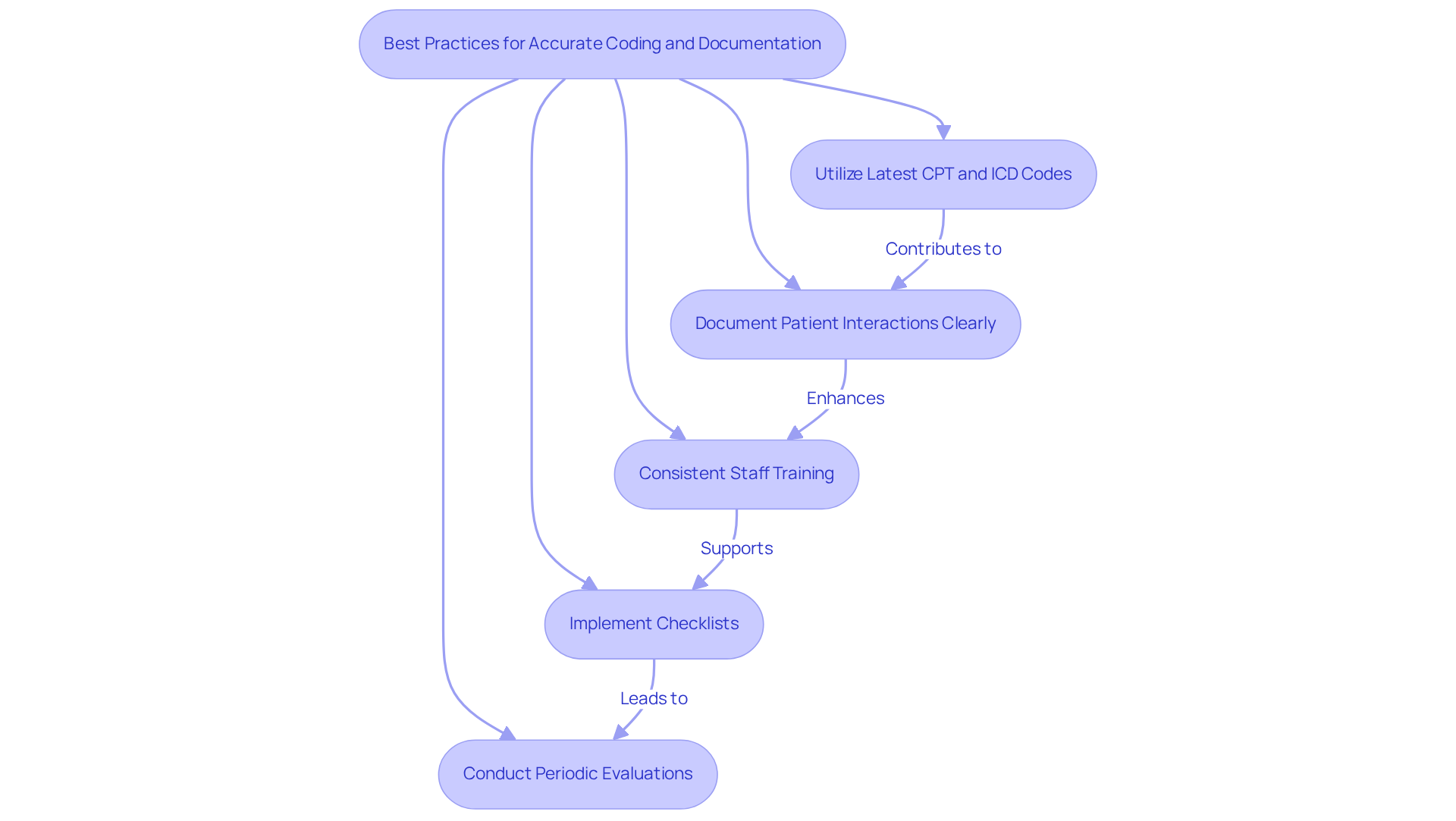
- It is imperative to utilize the latest CPT and ICD codes: Regularly refresh your coding resources to reflect any changes in coding guidelines, as failure to update coding resources can jeopardize revenue streams.
- It is crucial to document all patient interactions, diagnoses, and treatments with clarity and comprehensiveness: This documentation must support the billing codes used, as insufficient detail can trigger audits and refusals.
- Consistent training for staff on coding updates and documentation standards is essential: This aids in sustaining precision and adherence throughout, minimizing the likelihood of mistakes that can result in denial of requests by 20-30%.
- Implementing checklists for coding and documentation is vital to ensure that no steps are overlooked: This can significantly reduce errors and improve claim acceptance rates, leading to faster reimbursements of 15-25% within 30-90 days.
- Conducting periodic evaluations of coding methods is necessary to identify and rectify recurring errors: This proactive approach can prevent future issues and enhance overall billing accuracy, ensuring that operations remain compliant and financially stable.
By following these practices, healthcare providers can reduce the risk of reimbursement issues associated with medical specialist billing and ensure timely payments. This focus on accuracy not only secures revenue but also enhances the quality of patient care.
Adopt Effective Denial Management Strategies
For healthcare providers, effective claim management is essential to ensure timely and accurate payments, particularly regarding patient statements and balance follow-up. Consider these strategies to improve your denial management processes:
- Analyze Denial Trends: Regularly review denied claims to identify patterns and root causes. Comprehending the reasons behind refusals facilitates the creation of targeted strategies to avert future occurrences. For example, more than half of all rejections arise from problems during patient registration and scheduling, emphasizing the necessity for comprehensive documentation.
- Implement a Denial Tracking System: Utilize a robust tracking system to categorize rejections by type, payer, and reason. This data-driven approach informs your claim management strategies and helps prioritize follow-ups, ensuring that the most impactful issues are addressed first, particularly those related to aging claims.
- Train Staff on Claim Prevention: Educate your billing team on common reasons for claim issues and how to avoid them. This training should cover payer-specific requirements and documentation standards, as 35% of rejections are linked to incomplete or flawed medical documentation. A well-informed team can significantly reduce the likelihood of errors that lead to denials.
- Appeal Denied Requests Promptly: Establish a streamlined process for appealing denied requests. Timely appeals can enhance the likelihood of successful reimbursement, as two-thirds of denied requests can be effectively overturned if managed properly. Delays in the appeals process can lead to significant cash flow disruptions and financial instability for practices.
- Communicate with Payers: Foster open lines of communication with insurance payers. Building strong relationships can facilitate quicker resolutions to denied claims and improve overall claim acceptance rates. Effective communication is crucial, as poor coordination between departments often heightens the risk of refusals.
Implementing these strategies allows healthcare providers to streamline their claims management, which can lead to better cash flow and less administrative hassle. Ultimately, a robust denial management strategy can transform financial outcomes for healthcare practices. As a veteran-owned enterprise with 39 years of experience specializing in medical and mental health financial processes, Healthcare Partners Consulting & Billing, LLC (HPC) is dedicated to empowering providers by alleviating administrative burdens, enabling them to concentrate more on patient care.

Leverage Technology for Enhanced Billing Efficiency
Integrating technology into medical specialist billing processes presents a critical opportunity for enhancing both efficiency and accuracy. Here are some best practices:
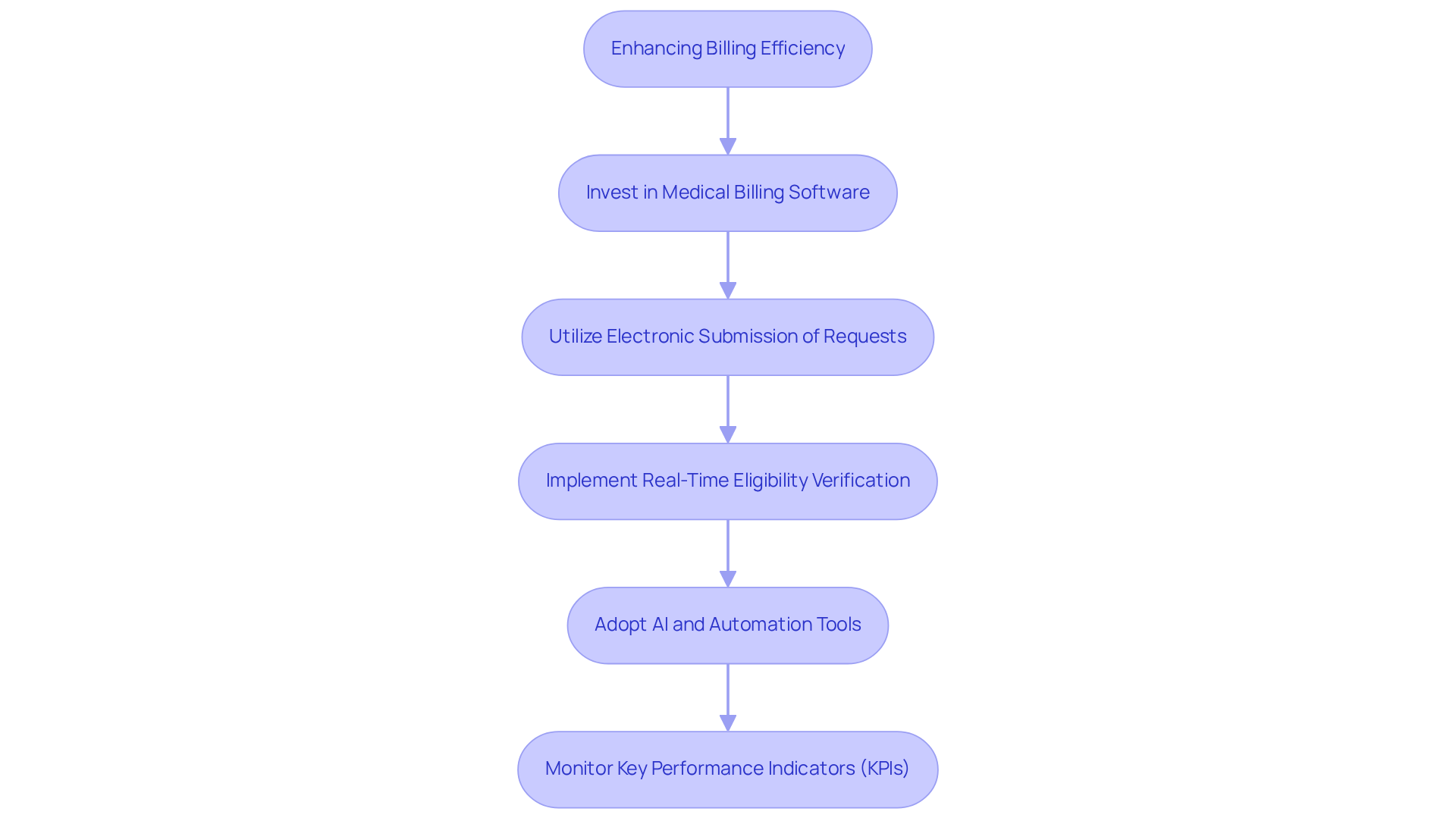
- Invest in Medical Billing Software: Utilize comprehensive billing software that automates key processes such as claim submission, payment tracking, and reporting. Look for solutions that integrate with electronic health records (EHR) for seamless data flow, including compatibility with platforms like TherapyNotes, SimplePractice, and Valant.
- Utilize Electronic Submission of Requests: Transition to electronic submission of requests to reduce processing times and minimize errors associated with manual submissions. Manual submissions often result in errors and delays, hindering the billing process. This shift can enhance the overall efficiency of medical specialist billing processes.
- Implement Real-Time Eligibility Verification: Utilize technology to confirm patient insurance eligibility in real-time, ensuring that submissions are made with precise information. This practice can significantly reduce denial rates and enhance cash flow.
- Adopt AI and Automation Tools: Utilize artificial intelligence and automation tools to streamline repetitive tasks, such as data entry and follow-ups on outstanding invoices. This can free up staff to concentrate on more intricate financial matters, ultimately enhancing productivity. Automation in medical specialist billing has been shown to enhance speed and consistency, with automated submission of requests and real-time validation reducing mistakes and resulting in fewer rejections of medical services.
- Monitor Key Performance Indicators (KPIs): Utilize technology to track KPIs related to revenue cycle efficiency, such as acceptance rates and days in accounts receivable. Analyzing this data can help identify areas for improvement and drive operational excellence. For example, methods that effectively utilize these technologies can achieve a 20-30% decrease in claim denials and a 15-25% quicker reimbursement rate within 30-90 days.
This technological integration not only streamlines processes but also enhances overall financial performance. Ultimately, embracing these technological advancements can transform financial operations and elevate patient care standards. Additionally, for mental health clinic owners unsure of which services fit best, Healthcare Partners Consulting offers personalized consultations. By scheduling a 30-minute call, you can discuss your organization’s unique needs, allowing HPC to map your current workflow and recommend tailored solutions, including dedicated virtual assistant services and direct access to a named billing team, that will move the needle fastest. As a veteran-owned company with 39 years of experience, HPC is committed to empowering practices through integrity, transparency, and innovation.
Conclusion
In the realm of healthcare, effective billing practices are essential for prioritizing patient care. By implementing best practices in billing processes, providers can alleviate administrative burdens, streamline operations, and enhance their financial health. This shift not only enhances financial health but also elevates the standard of patient care.
The article highlights several key strategies for optimizing medical billing, including:
- Mastering the fundamentals of patient registration
- Insurance verification
- Accurate coding
- Timely follow-up on claims
Additionally, it emphasizes the importance of effective denial management and leveraging technology to enhance billing efficiency. By adopting these practices, healthcare providers can significantly reduce claim denials, improve cash flow, and ensure compliance with payer regulations, all while maintaining a focus on patient care.
In a landscape where administrative efficiency directly impacts patient outcomes, it is essential for healthcare providers to embrace these best practices. By focusing on compliance and accuracy in billing, practices can secure their financial stability while ensuring that patient care remains the top priority. For those seeking to enhance their billing processes, reaching out to a dedicated team like Healthcare Partners Consulting & Billing, LLC (HPC) can provide the necessary support and expertise to navigate these challenges effectively. Ultimately, embracing streamlined billing processes can redefine the healthcare experience for both providers and patients alike.
Frequently Asked Questions
Why is effective medical specialist billing important?
Effective medical specialist billing is essential for ensuring that healthcare providers receive the compensation they deserve for their services.
What is the first step in the medical billing process?
The first step is patient registration, which involves the accurate collection of patient information, confirming insurance details, and understanding patient demographics to reduce claim rejections.
How does accurate patient registration impact claim denials?
Focusing on accurate patient registration can lead to a reduction in claim denials by 20-30%.
What is the role of insurance verification in medical billing?
Insurance verification involves confirming the patient’s insurance coverage and benefits to avoid complications later in the billing process, leading to faster reimbursement times.
How much can effective insurance verification improve reimbursement times?
Effective verification can lead to reimbursement times that are often 15-25% quicker than average.
Why is accurate coding important in medical billing?
Accurate coding of diagnoses and procedures using the appropriate CPT and ICD codes is vital for ensuring proper reimbursement.
What upcoming change is expected to improve the coding process?
The introduction of new AI-specific CPT codes in 2026 is expected to streamline the coding process, allowing practices to leverage technology for improved accuracy and efficiency.
What is the significance of timely submission of requests to insurance companies?
Submitting requests promptly is essential for timely payments and enhances the likelihood of first-pass reimbursement acceptance, which is crucial for maintaining cash flow.
How can regular follow-up on submitted claims benefit healthcare practices?
Regular follow-up helps identify and resolve issues early, facilitating quicker resolutions and payments, and can reduce days in accounts receivable by 20-35%.
What overall benefits can healthcare providers achieve by mastering medical specialist billing fundamentals?
By mastering these fundamentals, healthcare providers can streamline financial processes, reduce administrative burdens, and focus more on delivering quality patient care, ultimately enhancing financial stability.