

Introduction
Healthcare providers face significant challenges in navigating the complexities of the prior authorization process, particularly within behavioral and mental health. This mechanism safeguards patient care by ensuring the medical necessity of treatments and significantly impacts the efficiency of practice operations. As providers strive to enhance patient outcomes while managing administrative burdens, mastering the prior authorization process is essential for streamlining workflows and improving care delivery. This guide outlines five actionable steps that empower healthcare practitioners to address the challenges of prior authorization, enabling them to focus on patient care.
Define Prior Authorization and Its Importance in Healthcare
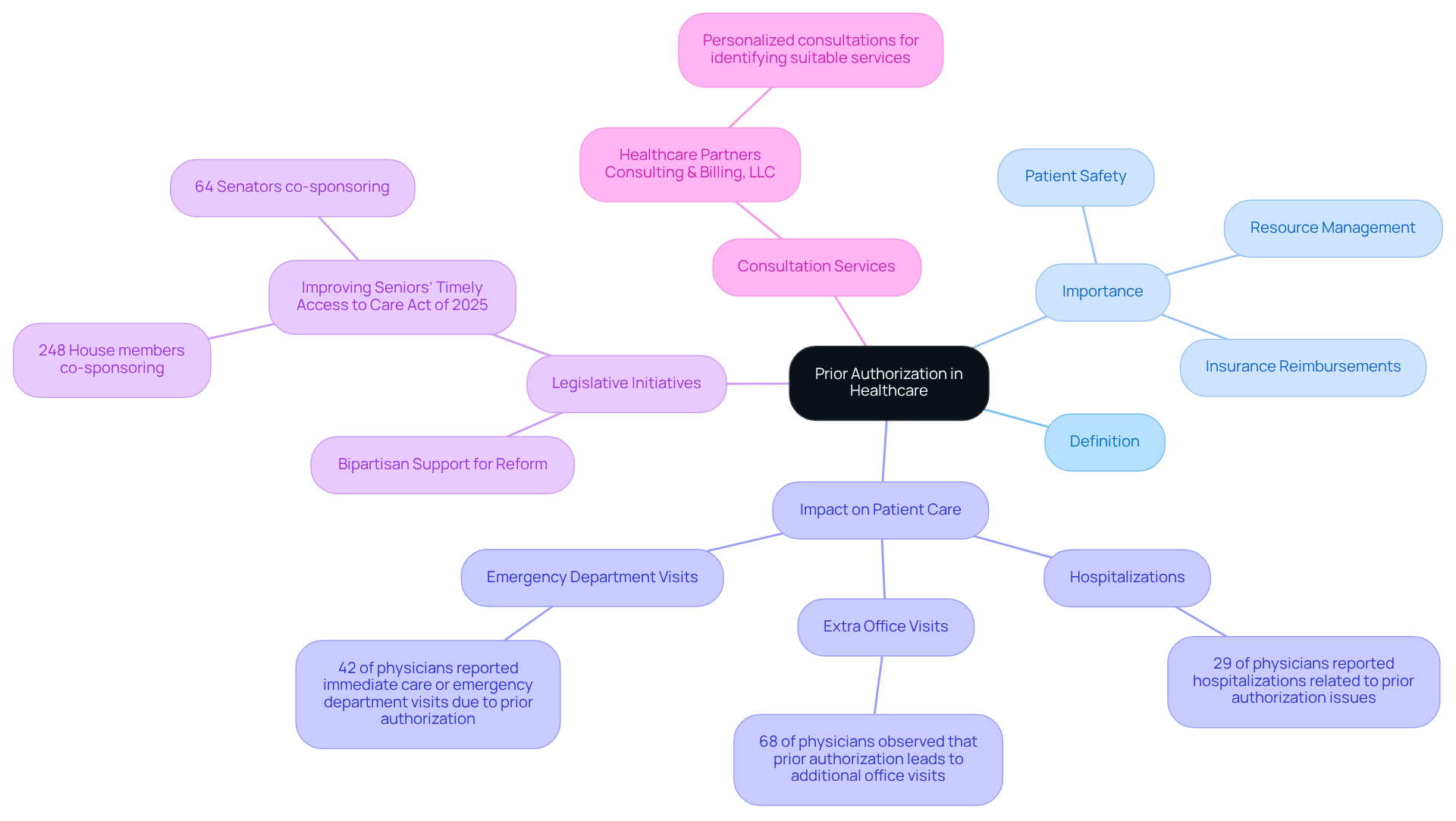
Prior approval (PA) serves as a critical checkpoint for health insurance companies, assessing the medical necessity of treatments before they reach patients. This mechanism is crucial for managing healthcare costs. It ensures that patients receive care tailored to their specific needs.
Understanding the significance of the prior authorization process for providers is essential for healthcare providers. It not only facilitates insurance reimbursements but also significantly enhances patient safety and care quality. By verifying that treatments are essential and comply with clinical guidelines, advance approval helps prevent unnecessary procedures and encourages effective resource use.
In mental health practices, where treatment plans can be complex and varied, initial approval plays a crucial role in ensuring that patients receive timely and suitable interventions. This process ultimately leads to improved patient outcomes and satisfaction. For example, a recent survey revealed that 29% of physicians reported hospitalizations related to previous approval issues, indicating that delays in prior approval can lead to significant patient risks. Moreover, 68% of physicians observed that previous approvals frequently lead to extra office visits, which can burden both patients and providers.
The ongoing legislative initiatives, such as the Improving Seniors’ Timely Access to Care Act of 2025, aim to simplify the prior authorization process for providers, reflecting a growing acknowledgment of its significance in enhancing patient care. These initiatives signal a critical move towards improving patient care and reducing administrative burdens. As healthcare continues to progress, the prior authorization process for providers remains crucial in ensuring that patients receive the appropriate care at the right moment, ultimately promoting a more effective healthcare system. Furthermore, the administrative expenses linked to prior authorization totaled $1.3 billion in the previous year, highlighting the necessity for reform to enhance financial sustainability in mental health services.
For those uncertain about which services best suit their needs, Healthcare Partners Consulting & Billing, LLC (HPC) provides personalized consultations. As a veteran-owned company with 39 years of experience in medical and mental health billing, we specialize in streamlining administrative and billing services. In a brief 30-minute call, we can help identify the services that will make the biggest difference for your organization, ensuring that you can concentrate on providing quality patient care. To get in touch, email info@hpcbilling.com or call 888-517-4992. We are available nationwide, Monday-Friday.
Prepare Your Practice for Prior Authorization Requests
Without a structured approach to the prior authorization process for providers, practices risk significant delays and revenue loss. To effectively prepare your practice for prior authorization requests and optimize denial management, follow these steps:
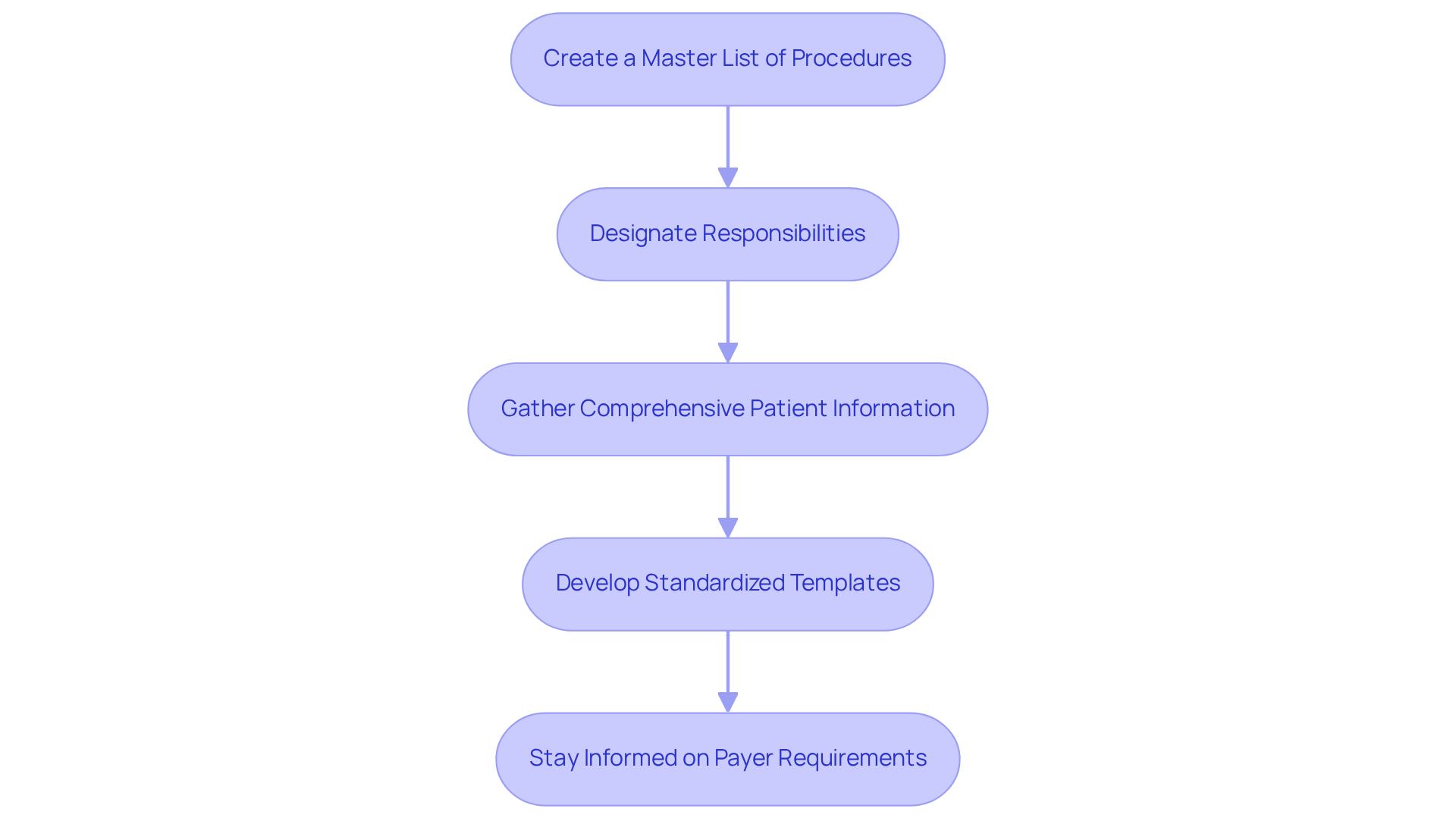
- Create a Master List of Procedures: Identify all procedures, medications, and services that require advance approval. Regularly update this list to reflect changes in payer policies, ensuring you can appeal the right denials quickly and recover the revenue you’ve earned.
- Designate Responsibilities: Assign specific team members to handle requests for prior approvals. This promotes accountability and improves communication within the practice, allowing for timely appeal processing and remittance reconciliation.
- Gather Comprehensive Patient Information: Ensure that all necessary patient information, including demographics, medical history, and treatment plans, is readily available. This information is crucial for accurately completing the prior authorization process for providers.
- Develop Standardized Templates: Create templates for request submissions that include all necessary information. Standardization reduces errors and accelerates the submission process, enhancing your organization’s efficiency.
- Stay Informed on Payer Requirements: Regularly review and update your knowledge of payer-specific pre-approval requirements. Subscribe to payer newsletters and attend relevant training sessions to stay current, which is essential for effective denial management strategies.
Implementing these strategies equips your organization to manage the prior authorization process for providers efficiently, preventing delays and ensuring optimal patient care while maximizing revenue recovery. As a veteran-owned company with 39 years of experience, Healthcare Partners Consulting offers tailored solutions, including integrations with TherapyNotes, SimplePractice, Valant, AdvancedMD, and IntakeQ, to support your practice’s needs.
Leverage Technology to Optimize Prior Authorization Workflows
To enhance the efficiency of the prior authorization process for providers, organizations must strategically leverage technology.
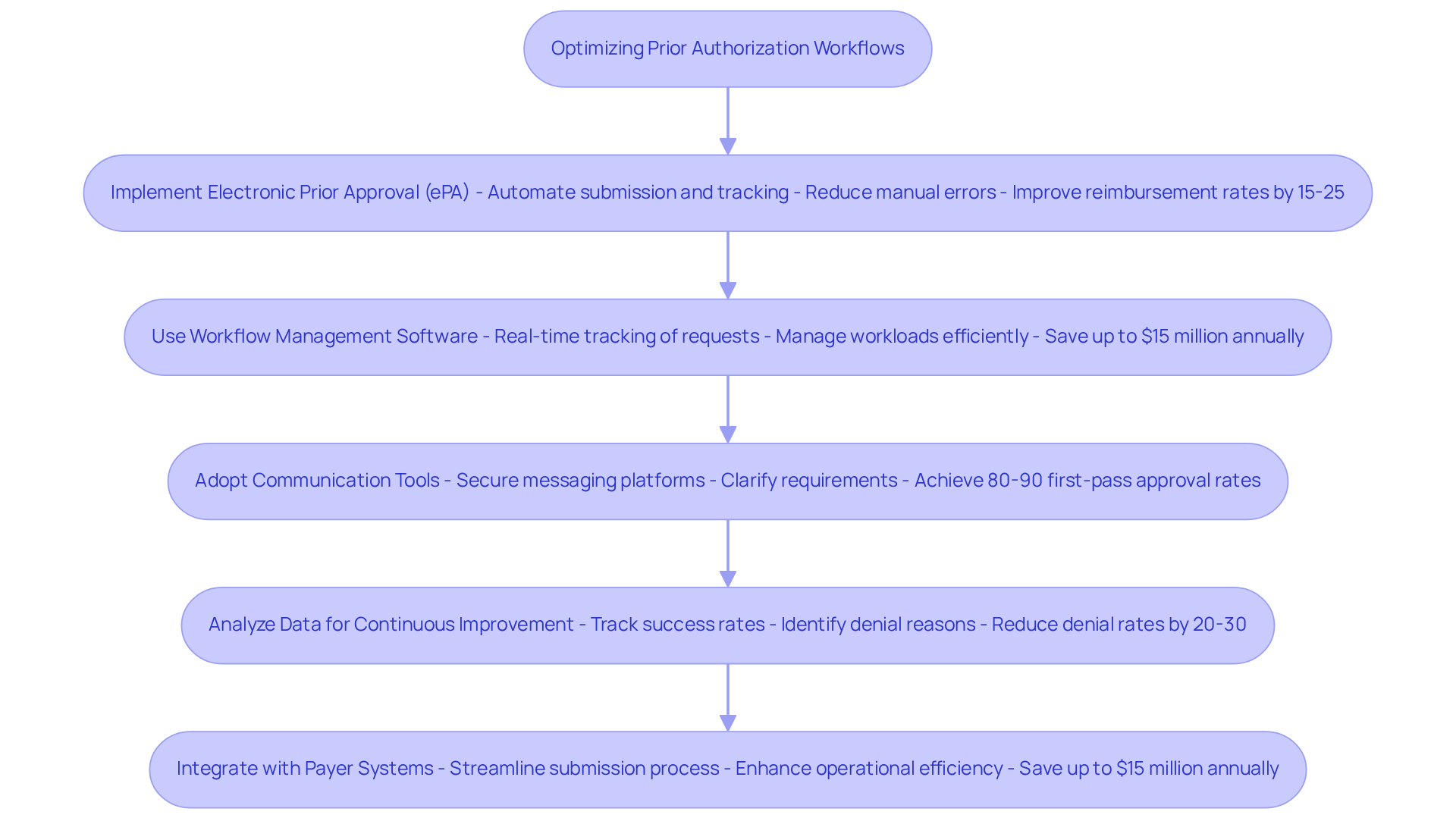
- Implement Electronic Prior Approval (ePA): Utilize ePA systems that seamlessly integrate with your electronic health record (EHR) to automate the submission and tracking of request approvals. This integration reduces manual entry errors and speeds up the prior authorization process for providers, which can lead to reimbursement rates improving by 15-25% within 30-90 days. With the new CMS rule effective January 2026 mandating electronic pre-approvals, adopting these systems is not just advantageous but essential.
- Use Workflow Management Software: Invest in software that provides real-time tracking of each prior authorization request. This visibility enables your team to manage workloads efficiently and follow up on outstanding requests, ultimately decreasing the administrative burden related to the prior authorization process for providers that can consume up to 13 hours weekly for healthcare operations. By optimizing these systems, organizations can realize substantial operational cost savings, potentially reaching $15 million annually by eliminating unnecessary operational expenditures.
- Adopt Communication Tools: Implement secure messaging platforms to enhance communication between your practice and payers. This aids in clarifying requirements and accelerates the approval timeline, resulting in enhanced first-pass approval rates of 80-90% for earlier submission requests. As Dr. John Kontor from Optum Insight mentions, ‘We’re transforming the previous approval system to address the friction it causes.’
- Analyze Data for Continuous Improvement: Utilize analytics tools to track the success rates of requests and identify common reasons for denials. This data-driven approach can inform targeted training and improvements, helping to reduce denial rates by 20-30% through enhanced compliance and accurate information. The proactive recognition of previous approval needs can prevent delays in patient care.
- Integrate with Payer Systems: Where feasible, connect your management software with payer systems to streamline the submission process and reduce the need for manual follow-ups. This integration can significantly enhance operational efficiency and contribute to cost savings, potentially reaching $15 million annually by eliminating unnecessary operational costs. As Dr. Jeremy Friese, CEO of Humata Health, highlights, the goal is to streamline the prior authorization process for providers, minimizing their visibility to both providers and patients.
These technological advancements not only streamline processes but also significantly impact the broader healthcare landscape.
Identify and Overcome Challenges in the Prior Authorization Process
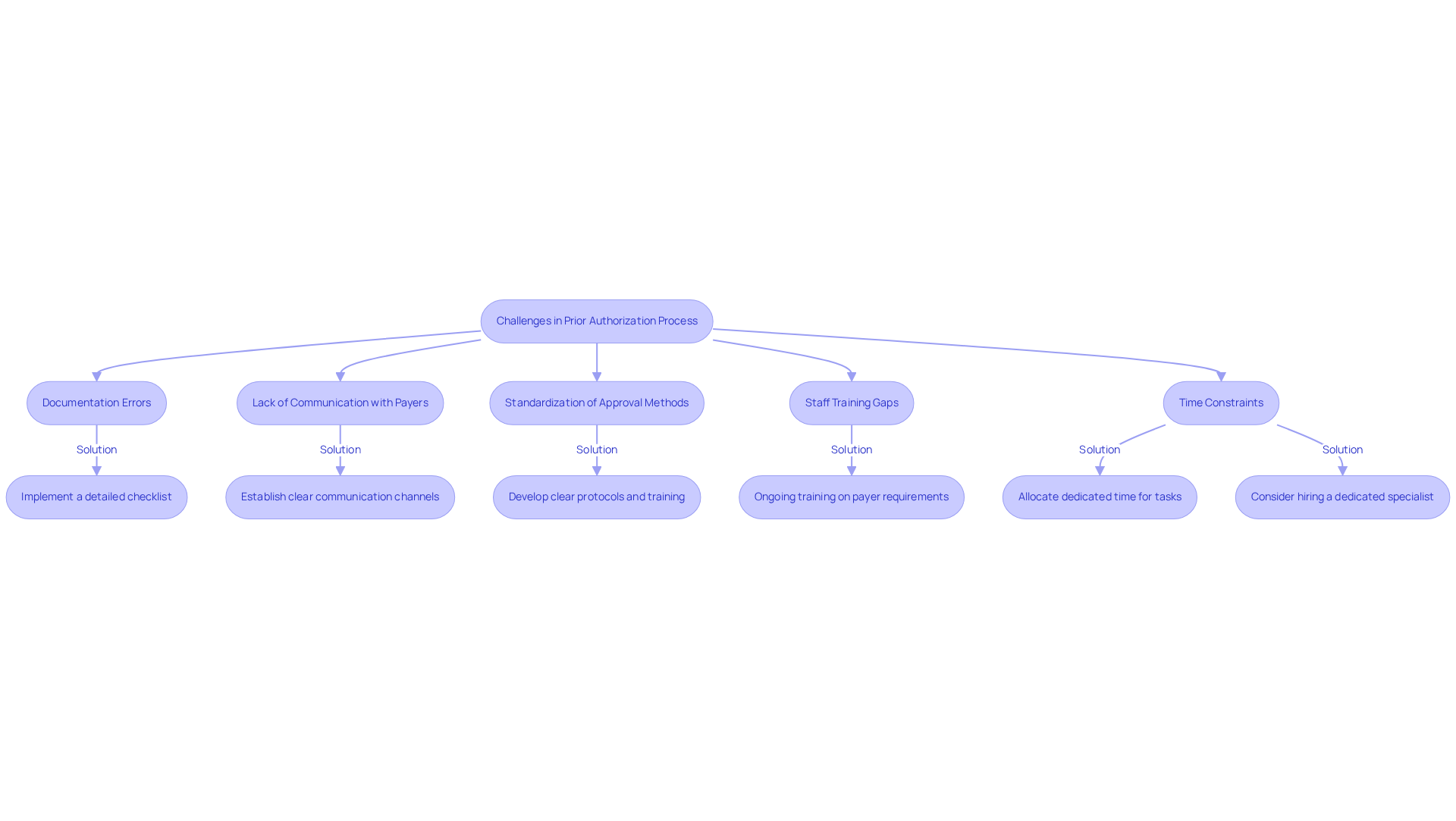
Identifying and addressing challenges in the prior authorization process is essential for improving operational efficiency. To effectively identify and overcome challenges, consider the following common issues and their solutions:
- Documentation Errors: Incomplete documentation often leads to significant delays in the prior authorization process. Implementing a detailed checklist can ensure that all required information is included before submission, significantly reducing the likelihood of denials.
- Lack of Communication with Payers: Establishing clear communication channels with payers is crucial. Regular engagement with payer representatives can clarify requirements and facilitate smoother interactions, helping to avoid misunderstandings that lead to delays.
- Standardization of Approval Methods: Standardizing previous approval methods across the organization is crucial. Developing clear protocols and training staff ensures consistency in handling requests, which can streamline operations and improve approval rates.
- Staff Training Gaps: Ongoing training on current payer requirements and best practices is essential for staff effectiveness. Ensuring that all staff members are prepared to manage requests effectively can minimize mistakes and improve the overall efficiency of the prior approval process.
- Time Constraints: Allocating dedicated time for staff to concentrate on prior approval tasks can reduce pressure. If the workload is excessive, consider hiring a dedicated specialist to manage these responsibilities efficiently.
To enhance your organization’s efficiency, we recommend scheduling a 30-minute consultation with Healthcare Partners Consulting. During this call, we will outline your current workflow and identify specific services that can enhance your organization’s efficiency and effectiveness. Addressing these challenges head-on can streamline the approval process and enhance patient care. Statistics show that methods effectively managing prior approvals can achieve a denial reduction of 20-30% and quicker reimbursement of 15-25% within 30-90 days, highlighting the significance of these strategies.
Train Your Staff for Effective Prior Authorization Management
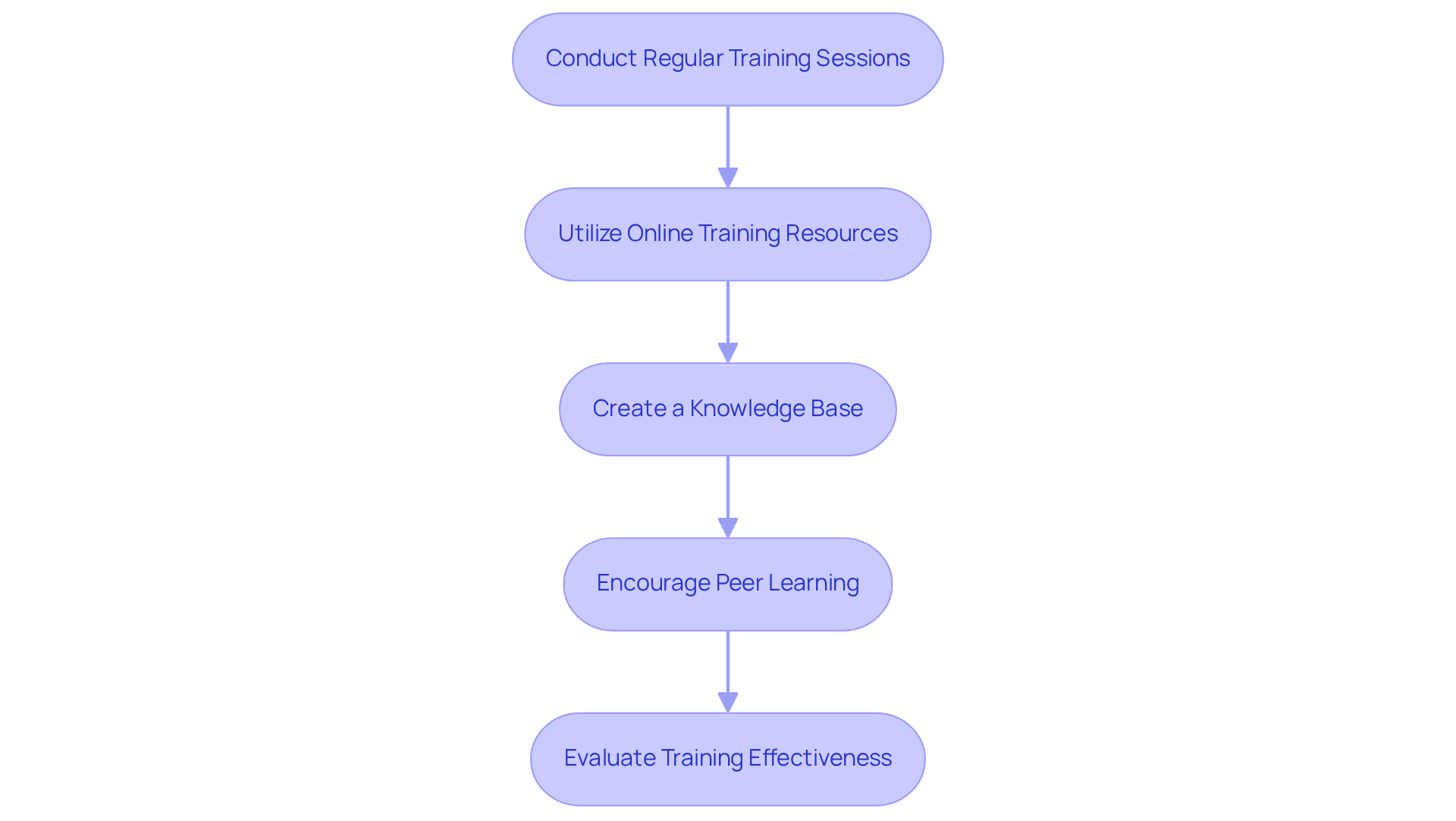
Inadequate training can lead to inefficiencies in the prior authorization process for providers, which affects both staff performance and patient outcomes. To ensure effective prior authorization management, implement a comprehensive training program for your staff:
- Conduct Regular Training Sessions: Arrange consistent training sessions to keep staff informed about updates in payer requirements, documentation standards, and best practices for approvals.
- Utilize Online Training Resources: Leverage online training modules and materials that focus on previous approval methods. Encourage staff to complete these modules to enhance their knowledge and skills.
- Create a Knowledge Base: Develop a centralized knowledge repository that includes FAQs, common challenges, and solutions related to earlier approvals. This resource can serve as a quick reference for staff when handling requests.
- Encourage Peer Learning: Cultivate a culture of peer learning by motivating staff to share their experiences and strategies for overcoming challenges in the approval process. This can enhance team collaboration and problem-solving.
- Evaluate Training Effectiveness: Regularly assess the impact of your training program by monitoring success rates of earlier approvals and gathering feedback from staff. Use this information to make necessary adjustments to the training curriculum.
Ultimately, a well-trained staff is essential for optimizing the prior authorization process for providers and ensuring high-quality patient care.
Conclusion
Navigating the complexities of the prior authorization process is crucial for healthcare providers aiming to enhance patient care. By implementing structured strategies and utilizing technology, providers can minimize administrative burdens, thereby allowing them to concentrate on delivering quality patient care.
The article outlines five critical steps to optimize the prior authorization process:
- Defining its importance
- Preparing practices for requests
- Leveraging technology
- Identifying challenges
- Training staff effectively
Each step highlights the importance of a compliance-first approach, which helps practices meet payer requirements while improving operational efficiency. When providers adopt these best practices, they not only improve their approval rates but also reduce delays, leading to better patient outcomes.
In a landscape where administrative efficiency directly impacts patient care, it is crucial for healthcare providers to prioritize mastering the prior authorization process. Ultimately, prioritizing the mastery of the prior authorization process is essential for ensuring timely and effective patient care. For those seeking tailored support, Healthcare Partners Consulting & Billing, LLC (HPC) stands ready to assist with 39 years of experience in medical and mental health billing, ensuring that providers can focus on what truly matters: their patients.
Frequently Asked Questions
What is prior authorization and why is it important in healthcare?
Prior authorization (PA) is a process used by health insurance companies to assess the medical necessity of treatments before they are provided to patients. It is important because it helps manage healthcare costs, ensures patients receive care tailored to their needs, facilitates insurance reimbursements, and enhances patient safety and care quality.
How does prior authorization impact patient care in mental health practices?
In mental health practices, prior authorization is crucial for ensuring that patients receive timely and appropriate interventions. It helps prevent unnecessary procedures and encourages effective resource use, ultimately leading to improved patient outcomes and satisfaction.
What are some challenges associated with prior authorization?
Challenges include delays in obtaining approvals, which can lead to significant patient risks, such as hospitalizations. Additionally, prior authorization can result in extra office visits, burdening both patients and providers.
What legislative initiatives are being introduced to improve the prior authorization process?
Initiatives like the Improving Seniors’ Timely Access to Care Act of 2025 aim to simplify the prior authorization process for providers, reflecting a growing recognition of its importance in enhancing patient care and reducing administrative burdens.
What are the financial implications of prior authorization in healthcare?
The administrative expenses linked to prior authorization totaled $1.3 billion in the previous year, highlighting the need for reform to improve financial sustainability in mental health services.
How can practices prepare for prior authorization requests?
Practices can prepare by creating a master list of procedures requiring advance approval, designating responsibilities among team members, gathering comprehensive patient information, developing standardized templates for submissions, and staying informed on payer requirements.
What role does Healthcare Partners Consulting & Billing, LLC play in assisting with prior authorization?
Healthcare Partners Consulting & Billing, LLC offers personalized consultations to help identify services that can improve practice efficiency and patient care. They specialize in streamlining administrative and billing services, leveraging their 39 years of experience in medical and mental health billing.