

Introduction
Credentialing services are essential for the operational success of mental health clinics in Cary, where the demand for qualified providers continues to rise. By implementing effective credentialing practices, clinics can enhance compliance and operational efficiency while also improving patient care outcomes. However, clinics frequently encounter challenges in navigating the credentialing process. This can hinder their focus on delivering exceptional care.
Understand Credentialing Services in Mental Health Clinics
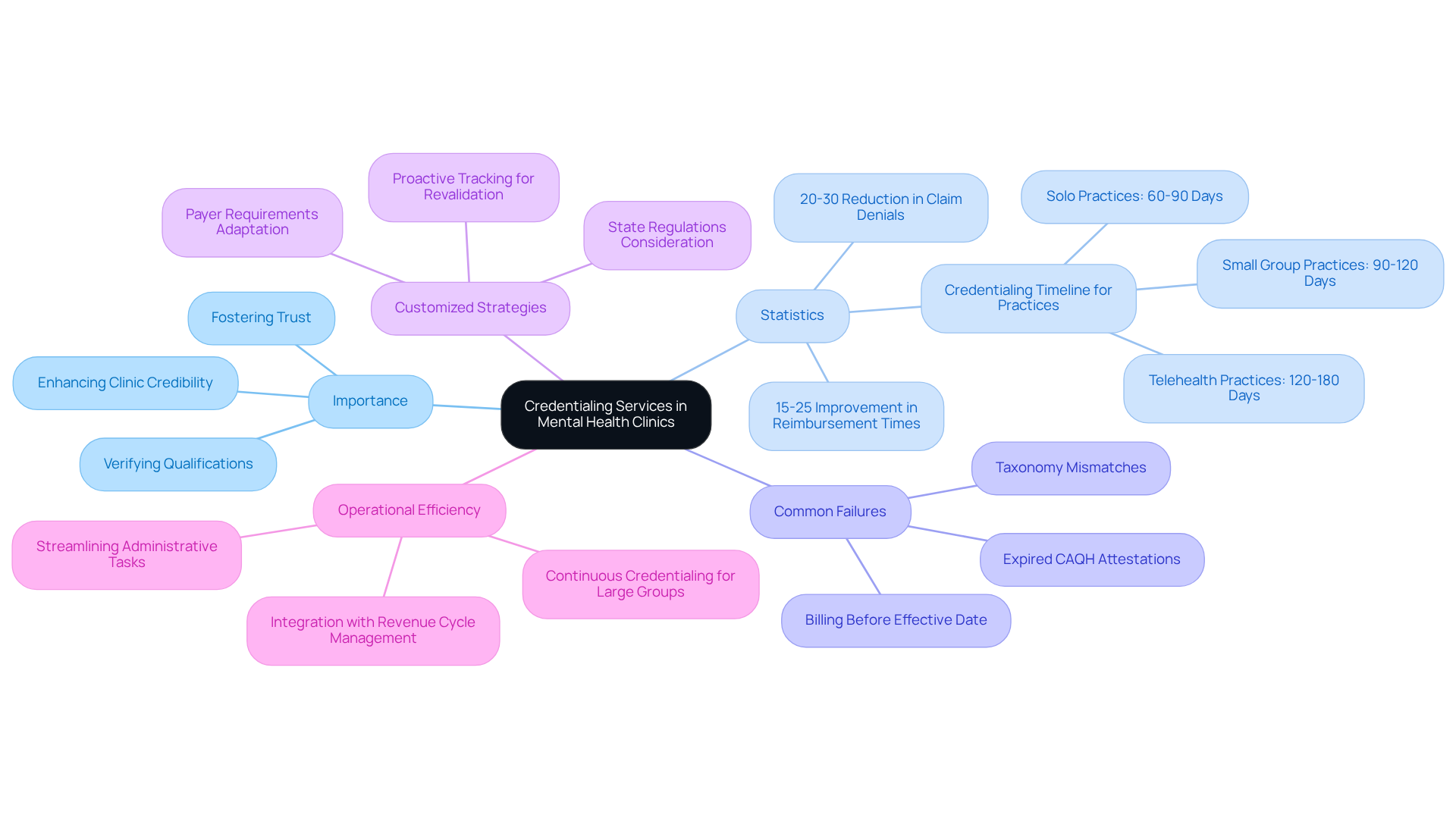
Credentialing services Cary in mental health facilities are essential for verifying the qualifications and backgrounds of healthcare providers. This process ensures that practitioners meet the necessary standards to deliver safe and effective care, enhancing the clinic’s credibility and fostering trust among patients and insurance providers. Credentialing is a critical component that impacts operational efficiency and compliance.
Recent statistics indicate that effective verification can reduce claim denials by 20-30% and improve reimbursement times by 15-25% within 30-90 days. This highlights the significance of a strong verification process in sustaining financial stability and operational integrity.
Case studies reveal that common verification failures, such as:
- Expired CAQH attestations
- Taxonomy mismatches
can lead to lost revenue and denied claims, creating operational challenges for clinics. Proactively addressing these issues helps clinics prevent financial losses and ensures smoother operations.
Furthermore, the intricacies of obtaining credentials, especially for telehealth and multi-state practices, require a customized strategy that considers state regulations and payer requirements. Clinics that prioritize comprehensive credentialing services Cary not only enhance their operational rigor but also improve care and satisfaction, ultimately positioning themselves for success in a competitive landscape. Healthcare Partners Consulting & Billing, LLC (HPC) streamlines administrative tasks, enabling providers to focus on delivering exceptional care and building meaningful patient relationships. Our comprehensive medical and mental billing solutions ensure that your practice remains compliant while enhancing operational efficiency.
Implement Key Steps in the Credentialing Process
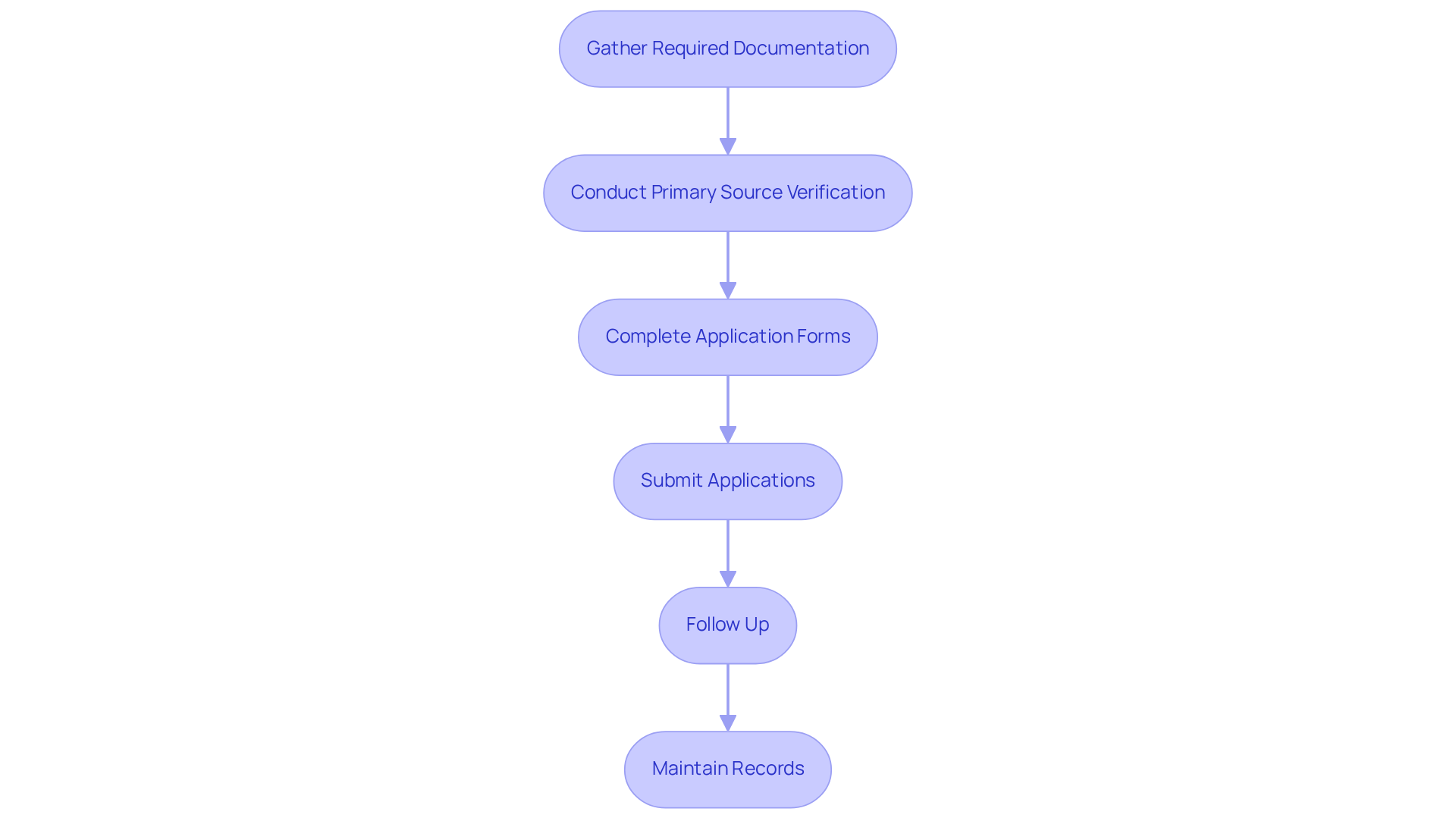
To ensure effective credentialing services, mental health clinics must follow a structured approach that emphasizes accuracy and compliance:
- Gather Required Documentation: Collect essential documents such as licenses, certifications, and proof of education. This preparation ensures that all necessary information is readily available for verification, streamlining the process.
- Conduct Primary Source Verification: Verify the authenticity of the collected documents directly with the issuing bodies. This essential step upholds compliance and ensures the integrity of the verification process. Mistakes in verification can lead to significant delays and financial repercussions.
- Complete Application Forms: Accurately fill out the required application forms for each insurance panel or network the clinic wishes to join. Ensuring that all information is up-to-date and accurate helps prevent unnecessary delays in the verification timeline, which can range from 60 to 180 days.
- Submit Applications: Send the completed applications along with the verified documentation to the respective insurance companies or authorization organizations. Timely submission is crucial for maintaining momentum in the certification process.
- Follow Up: Regularly check the status of the applications and promptly address any issues or additional requests from the insurance companies. Proactive communication can greatly decrease the time required for the verification process, which is frequently hindered by slow replies from external organizations.
- Maintain Records: Keep detailed documentation of all credential verification activities, including submission dates and responses from insurance companies. This practice not only streamlines future credential verification efforts but also aids in compliance audits and ongoing monitoring of provider qualifications.
This structured approach not only streamlines verification but also enhances patient care by utilizing credentialing services Cary. By adhering to these steps, mental wellness facilities can guarantee a seamless verification process, effectively alleviating administrative challenges and improving their capacity to concentrate on providing quality patient care. Ultimately, a meticulous approach to credentialing can significantly enhance operational efficiency and patient care quality.
Leverage Benefits of Tailored Credentialing Services
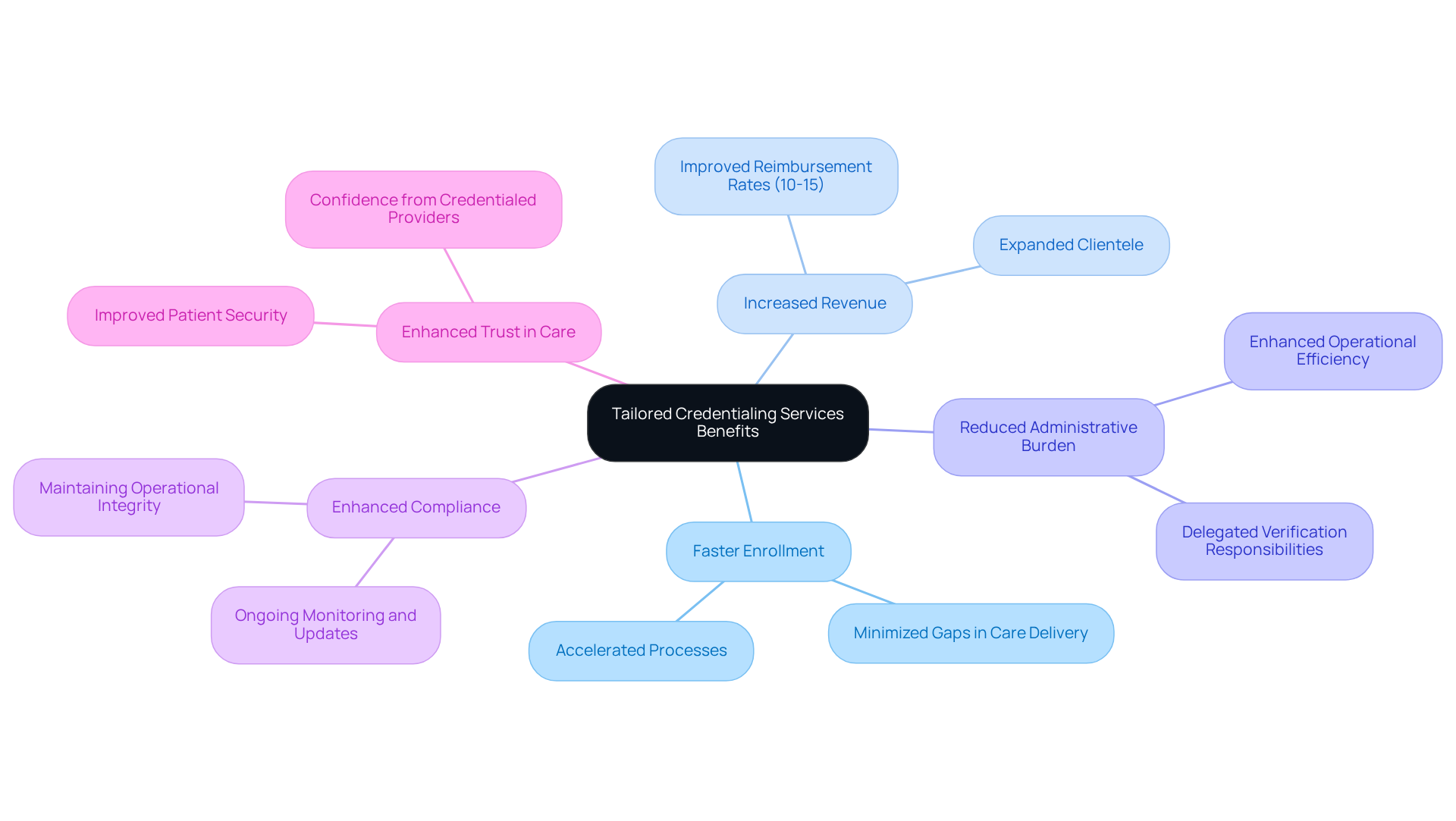
Tailored credentialing services Cary offer a strategic advantage for mental health clinics, addressing the challenges of enrollment and operational efficiency. These services provide several key benefits:
- Faster Enrollment: Tailored processes for qualifications can significantly accelerate enrollment, enabling providers to begin seeing individuals sooner and minimizing gaps in care delivery.
- Increased Revenue: Credentialing providers with multiple insurance panels allows healthcare facilities to expand their clientele and improve reimbursement rates, potentially increasing collections by 10-15%.
- Reduced Administrative Burden: By delegating verification responsibilities to specialized services, staff can concentrate on care rather than administrative tasks, thereby enhancing overall operational efficiency.
- Enhanced Compliance: Tailored credentialing services often include ongoing monitoring and updates, ensuring that healthcare facilities remain compliant with evolving regulations and standards, which is crucial for maintaining operational integrity.
- Enhanced Trust in Care: Being credentialed with reputable insurance networks fosters confidence among individuals, who feel more secure knowing they are receiving care from qualified professionals.
By implementing tailored credentialing services Cary, mental wellness facilities can enhance operational efficiency and improve patient outcomes. Effective verification practices can decrease claim denial rates by 20-30% and speed up reimbursement timelines by 15-25% within 30-90 days, ultimately enhancing the financial and operational health of mental health practices.
Maintain Compliance with Ongoing Credentialing Practices
To avoid the pitfalls of claim denials, mental health clinics must prioritize ongoing compliance with credentialing practices. The following strategies are essential:
- Regularly Update Provider Information: It is crucial to keep all provider credentials, licenses, and certifications current. This involves tracking expiration dates and initiating renewal processes well in advance to prevent lapses that could lead to claim denials.
- Conduct Periodic Audits: Regular audits of provider credentials should be implemented to verify that all information is accurate and compliant with current regulations. This proactive approach helps identify potential issues before they escalate, thereby reducing the risk of non-compliance and enhancing patient trust.
- Stay Informed on Regulatory Changes: Clinics must remain updated on modifications in healthcare regulations and qualification requirements to ensure compliance with all applicable laws. Understanding state-specific regulations is essential, as they can vary significantly and influence the licensing process.
- Implement a Recredentialing Schedule: Establishing a timeline for recredentialing providers, typically every two to three years, is vital to ensure that all practitioners maintain their qualifications and licenses. Regular recredentialing mitigates risks associated with outdated credentials.
- Utilize Management Software: Investing in software that automates tracking and reminders for verification tasks can greatly reduce the chance of oversight and simplify the verification process, allowing healthcare facilities to focus more on patient care.
Ultimately, neglecting these strategies could jeopardize patient care and the clinic’s operational integrity.

Conclusion
The implementation of best practices in credentialing services is essential for mental health clinics striving for operational excellence and patient safety. By prioritizing a structured and compliant credentialing process, clinics can enhance operational efficiency. This reduction in administrative burdens enables a greater focus on patient care. Such empowerment of healthcare providers fosters trust among patients and strengthens relationships with insurance providers, ultimately leading to improved financial stability.
Key insights from the article highlight the importance of:
- Thorough documentation
- Primary source verification
- Ongoing compliance in the credentialing process
By adopting tailored credentialing services, mental health clinics can accelerate enrollment, increase revenue, and maintain compliance with evolving regulations. These practices significantly reduce the risk of claim denials while simultaneously improving the quality of care delivered to patients, ensuring that clinics remain competitive in a challenging landscape.
In conclusion, the significance of effective credentialing services cannot be overstated. Mental health clinics that embrace these best practices will not only improve their operational integrity but also enhance patient outcomes. Ultimately, the commitment to effective credentialing services will define the future success of mental health clinics in delivering high-quality care. For further engagement and support, clinics are encouraged to reach out to HPC at info@hpcbilling.com or call 888-517-4992.
Frequently Asked Questions
What are credentialing services in mental health clinics?
Credentialing services in mental health clinics involve verifying the qualifications and backgrounds of healthcare providers to ensure they meet necessary standards for delivering safe and effective care.
Why are credentialing services important for mental health clinics?
They enhance the clinic’s credibility, foster trust among patients and insurance providers, and impact operational efficiency and compliance.
How can effective credentialing services impact claim denials and reimbursement times?
Effective verification can reduce claim denials by 20-30% and improve reimbursement times by 15-25% within 30-90 days, contributing to financial stability and operational integrity.
What are some common verification failures that can affect clinics?
Common verification failures include expired CAQH attestations and taxonomy mismatches, which can lead to lost revenue and denied claims.
How can clinics prevent financial losses related to credentialing?
By proactively addressing verification issues and implementing a strong credentialing process, clinics can prevent financial losses and ensure smoother operations.
What challenges do telehealth and multi-state practices face regarding credentialing?
They require a customized strategy that considers varying state regulations and payer requirements to obtain credentials effectively.
How can comprehensive credentialing services benefit clinics?
They enhance operational rigor, improve care and patient satisfaction, and position clinics for success in a competitive landscape.
What role does Healthcare Partners Consulting & Billing, LLC (HPC) play in credentialing?
HPC streamlines administrative tasks for providers, allowing them to focus on delivering exceptional care while ensuring compliance and enhancing operational efficiency.