

Introduction
Healthcare providers must navigate the complexities of denial management analytics to improve claim acceptance rates and operational efficiency. Organizations can uncover valuable insights by systematically analyzing the reasons behind claim denials. This analysis leads to improved revenue recovery and streamlined processes. Despite the potential benefits, many healthcare providers struggle to implement denial management analytics effectively. Identifying effective strategies is essential for healthcare providers to leverage denial management analytics successfully.
Understand Denial Management Analytics and Their Importance
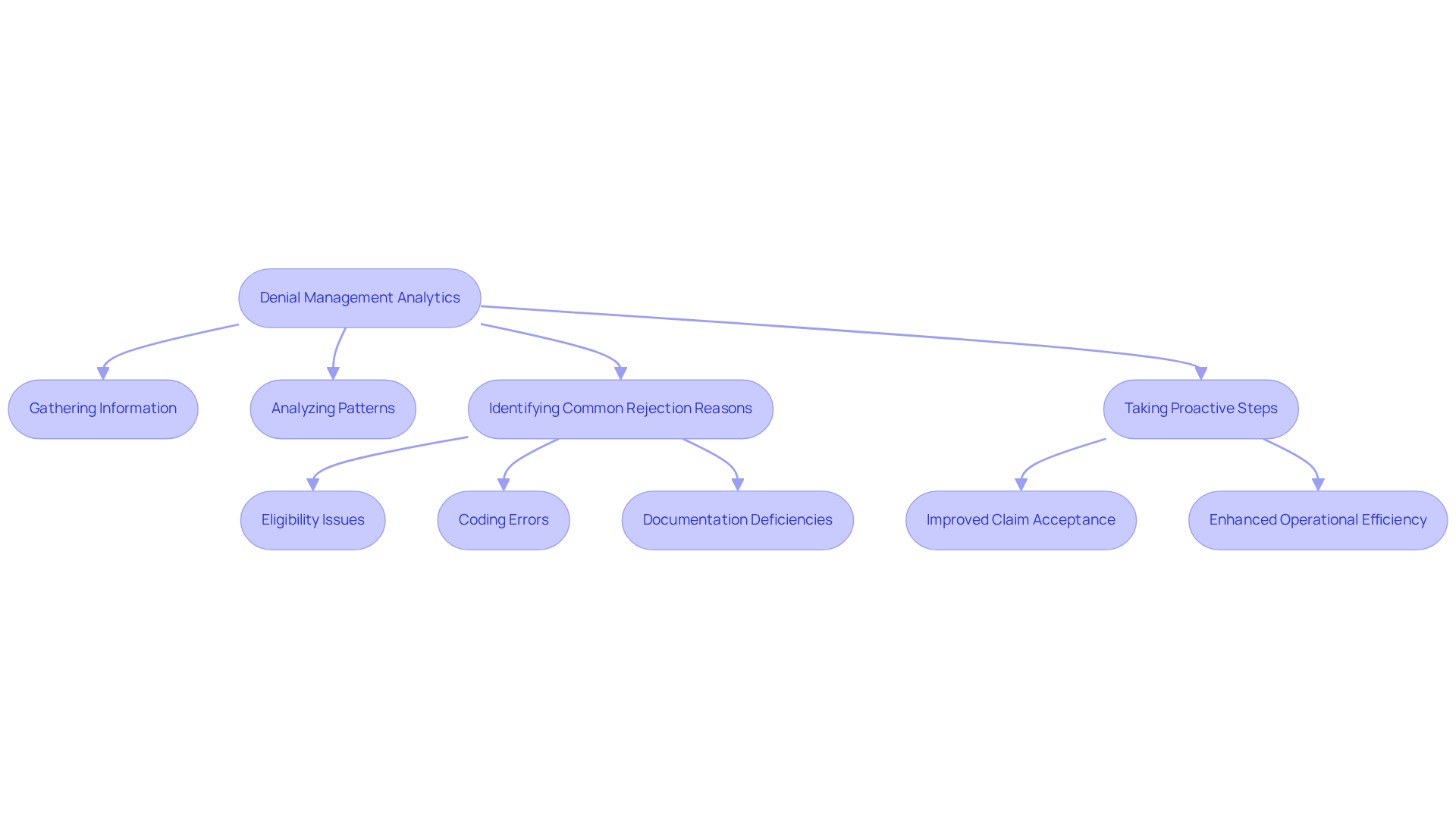
Understanding denial management analytics is essential for healthcare providers aiming to enhance claim acceptance rates and operational efficiency. This process involves systematically gathering and examining information related to denial management analytics for rejected claims. By comprehending this process, healthcare providers can leverage denial management analytics to recognize patterns and underlying reasons for refusals, allowing them to take proactive steps to minimize these occurrences. Effective denial management analytics can significantly improve acceptance rates, minimize revenue loss, and streamline operational efficiency. Utilizing denial management analytics enables practices to identify common rejection reasons, such as eligibility issues, coding errors, and documentation deficiencies. Identifying these common rejection reasons is often a challenge for practices, leading to lost revenue and inefficiencies. This proactive approach not only mitigates losses but also enhances overall operational efficiency.
Recent trends indicate a growing reliance on technology and data-driven methods in denial management analytics for claims management. Healthcare organizations are progressively embracing denial management analytics that integrate data from various sources, providing a clearer view of rejection performance. A significant case study is the Billings Clinic, which, after adopting a comprehensive data analysis platform, achieved a $4.5 million decrease in rejections within a year. This case study underscores how denial management analytics can lead to higher claim acceptance rates and better financial health.
Moreover, the ability to distinguish between initial and total refusals is crucial. Preliminary refusals provide insights into prompt billing effectiveness, while total rejections indicate persistent challenges in the claims process. By concentrating on these metrics, medical providers can prioritize their rejection oversight efforts, ensuring that high-value refusals receive the attention they need. As the revenue cycle management environment continues to evolve, the use of denial management analytics will be vital in enhancing rejection management tactics and boosting financial results for medical practices.
If you’re a mental health clinic owner, consider scheduling a 30-minute consultation with Healthcare Partners Consulting to discuss how these strategies can be customized for your practice. This personalized consultation will help identify the most effective administrative solutions to enhance billing efficiency and improve financial outcomes.
Implement Effective Strategies for Denial Management Analytics
Healthcare providers often grapple with the complexities of claim denials, which can hinder operational efficiency and financial stability. To effectively manage denials, healthcare providers should implement several key strategies:
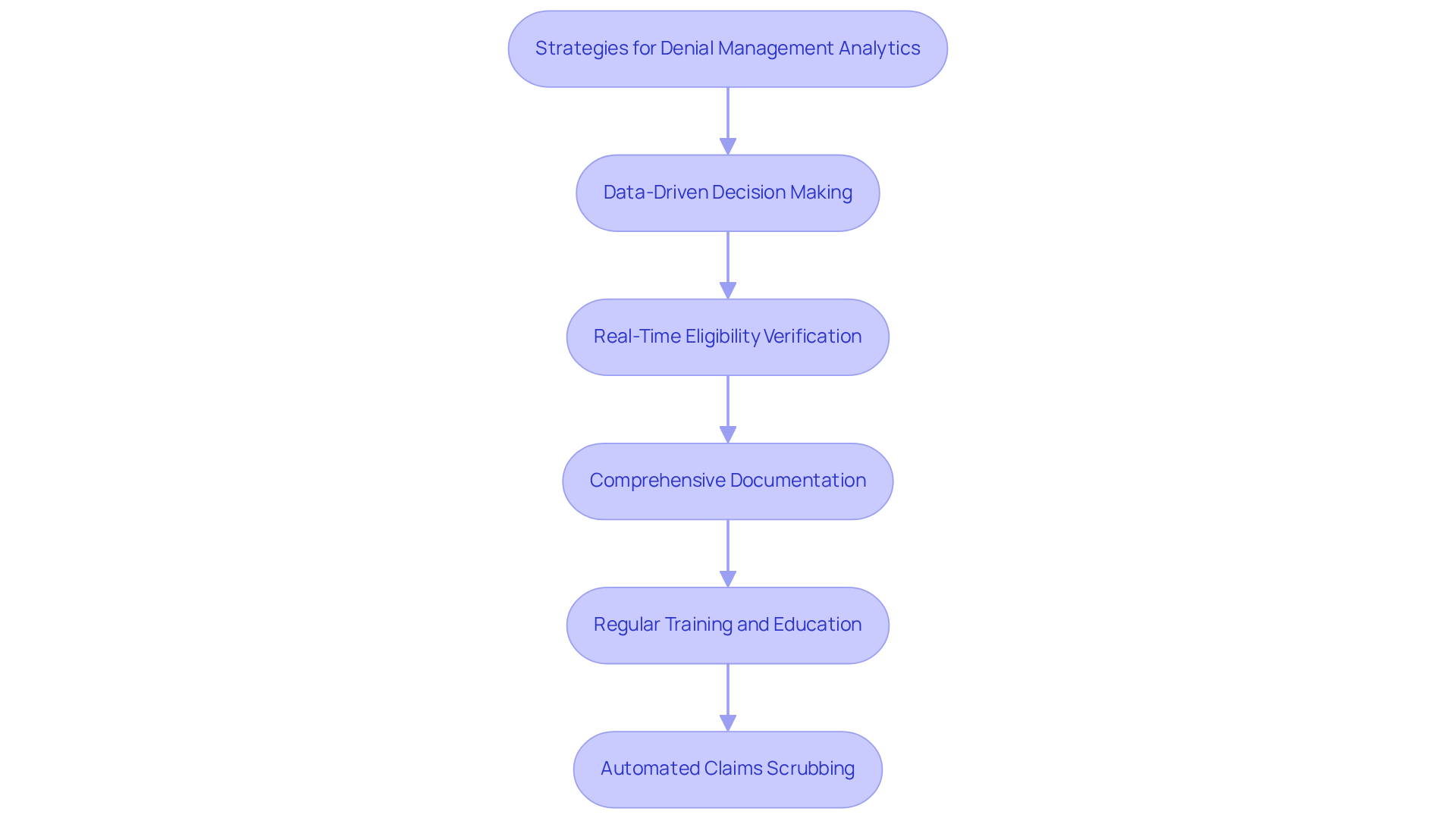
- Data-Driven Decision Making: Utilize analytics tools to monitor rejection trends and identify root causes. This data-driven approach, utilizing denial management analytics, informs decision-making and helps prioritize areas for enhancement, ultimately improving the efficiency of the management process.
- Real-Time Eligibility Verification: Establish systems that verify patient eligibility in real-time. This proactive measure can prevent rejections arising from coverage issues, ensuring that claims are submitted with the necessary approvals in place.
- Comprehensive Documentation: Ensure that all required documentation is complete and accurate prior to claim submission. Thorough documentation reduces the risk of refusals associated with insufficient information, a frequent reason for claim rejections.
- Regular Training and Education: Provide ongoing training for staff on coding, billing practices, and compliance. Continuous education minimizes mistakes that lead to refusals, fostering a culture of precision and responsibility within the organization.
- Automated Claims Scrubbing: Utilize automated tools to scrub claims for errors before submission. This technology increases the likelihood of first-pass acceptance, significantly reducing the administrative burden associated with denied claims.
Ultimately, these strategies not only enhance revenue cycle management but also utilize denial management analytics to contribute to improved patient outcomes and trust in the healthcare system.
Evaluate the Benefits of Denial Management Analytics
The implementation of denial management analytics is essential for healthcare providers, particularly in the mental health sector, to enhance financial performance and operational efficiency:
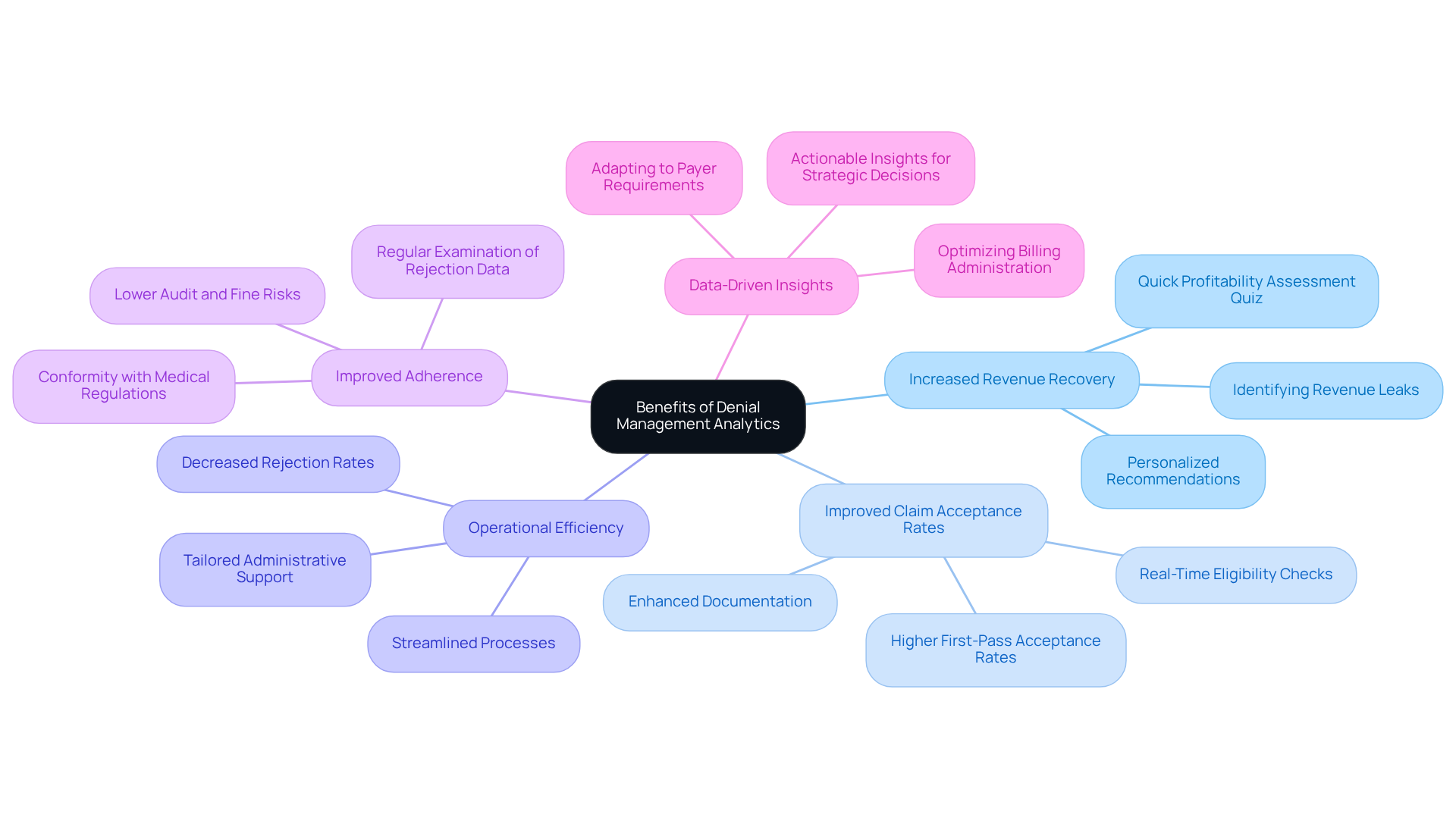
- Increased Revenue Recovery: By identifying and addressing the underlying reasons for rejections, practices can recover lost revenue that would otherwise remain uncollected. Tools such as the quick profitability assessment quiz from Healthcare Partners Consulting help identify hidden revenue leaks. They also offer personalized recommendations for improvement.
- Improved Claim Acceptance Rates: Enhanced documentation and real-time eligibility checks lead to higher first-pass acceptance rates, reducing the administrative burden of resubmitting claims. This is crucial for maximizing your mental health practice’s profitability.
- Operational Efficiency: Streamlined processes and decreased rejection rates free up staff time, allowing medical providers to concentrate more on patient care instead of administrative tasks. Tailored administrative support services from Healthcare Partners Consulting can further improve this efficiency by assisting with scheduling, document organization, and insurance claims.
- Improved Adherence: Regular examination of rejection data aids in ensuring conformity with medical regulations, lowering the chance of audits and fines. Staying vigilant is crucial for keeping your practice’s integrity intact.
- Data-Driven Insights: Analytics provide actionable insights that can inform strategic decisions, helping practices adapt to changing payer requirements and market conditions. Efficient administration of patient statements, including resolving underpayments, unprocessed claims, and aging claims, is crucial for optimizing billing in the medical field.
Ultimately, effective denial management analytics is essential for achieving sustainable growth and operational excellence in mental health practices.
Address Challenges in Integrating Denial Management Analytics
Integrating denial management analytics into existing workflows poses significant challenges for healthcare organizations:
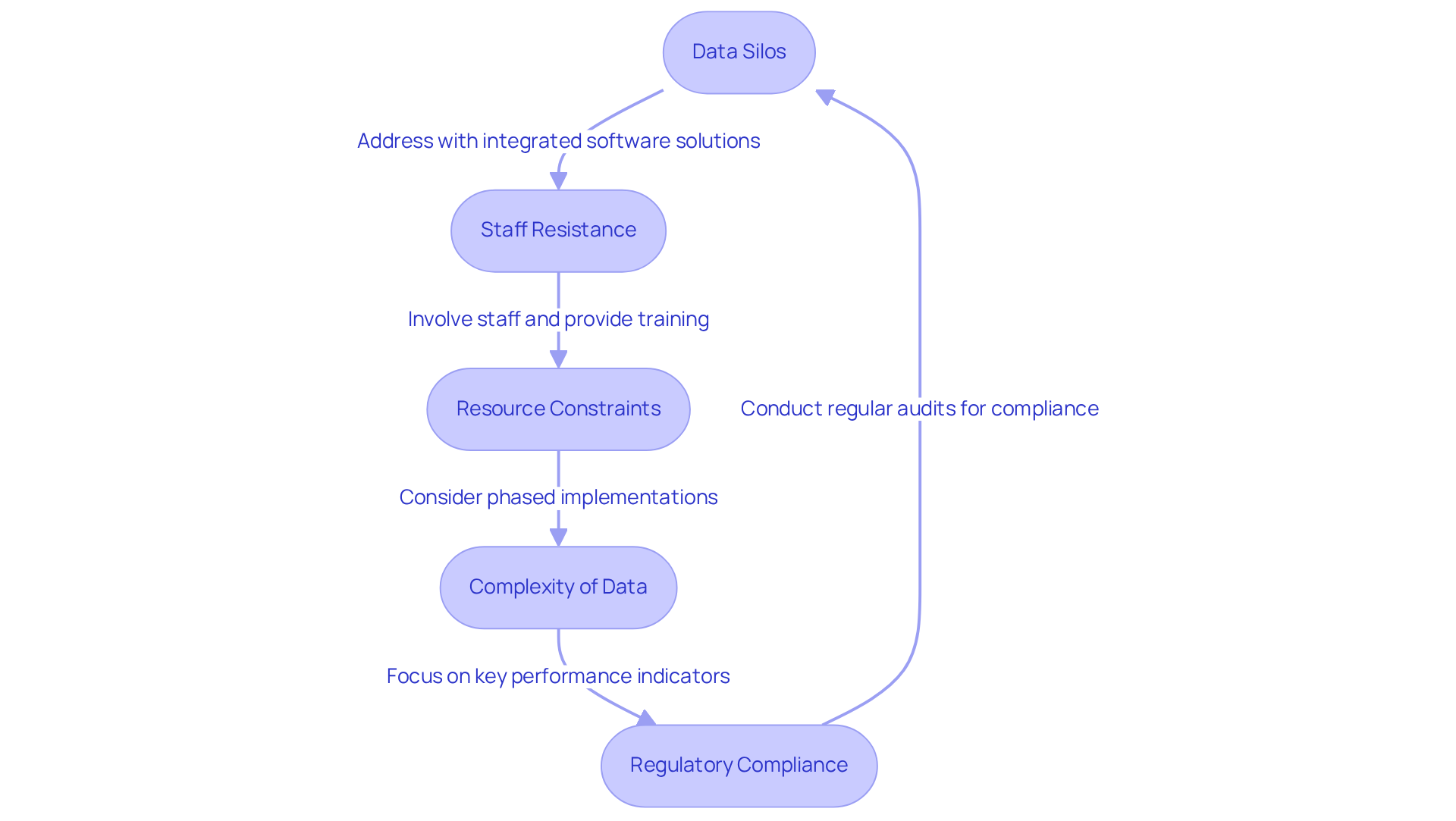
- Data Silos: Numerous healthcare organizations encounter challenges because data is kept in separate systems, obstructing efficient claims management. Investing in integrated software solutions that centralize data access and reporting is essential to overcome this challenge. This approach streamlines data retrieval and enhances collaboration across departments.
- Staff Resistance: Change can be met with resistance from employees. Involving staff in the implementation process and providing comprehensive training that highlights the benefits of new systems can mitigate resistance. Engaging staff early fosters a sense of ownership and encourages a smoother transition.
- Resource Constraints: Limited budgets and staffing can hinder the adoption of advanced data analysis tools. Organizations should consider phased implementations or leverage cloud-based solutions that require less upfront investment. This approach enables gradual integration, preventing the overwhelming of existing resources.
- Complexity of Data: The sheer volume of data can be daunting. Streamlining the evaluation process by concentrating on key performance indicators (KPIs) that directly affect denial rates and revenue can make the task more manageable. Prioritizing these metrics allows organizations to streamline efforts and achieve more significant results.
- Regulatory Compliance: Navigating healthcare regulations can be challenging. Regular audits and updates to data evaluation processes are essential for ensuring compliance and reducing risks. Establishing a routine for compliance checks ensures organizations adhere to regulatory requirements while improving rejection handling strategies.
By proactively addressing these challenges, healthcare providers can effectively incorporate denial management analytics into their operations, resulting in improved financial outcomes and enhanced operational efficiency.
Conclusion
Healthcare providers face significant challenges in managing claim denials, which can severely impact their operational efficiency and revenue recovery. Understanding and implementing effective denial management analytics is crucial for enhancing these aspects. Organizations can use data-driven insights to tackle the root causes of claim denials. This proactive approach leads to better claim acceptance rates and improved financial health. Moreover, this strategy not only helps reduce revenue loss but also makes administrative processes more efficient, enabling providers to concentrate on patient care.
Key strategies discussed include:
- The importance of real-time eligibility verification
- Comprehensive documentation
- Regular staff training
Each of these practices plays a vital role in minimizing claim rejections and fostering a culture of accuracy and accountability within healthcare organizations. Additionally, the integration of advanced analytics tools can help overcome challenges such as data silos and staff resistance, ensuring that denial management analytics becomes an integral part of the operational workflow.
The proactive adoption of denial management analytics is essential for healthcare providers to secure their financial future and enhance patient care. By prioritizing these analytics and addressing potential integration challenges, organizations can significantly enhance their financial performance and ultimately improve patient outcomes. Taking proactive steps today will pave the way for a more efficient, effective, and resilient healthcare system.
Frequently Asked Questions
What is denial management analytics?
Denial management analytics involves systematically gathering and examining information related to rejected claims in healthcare to enhance claim acceptance rates and operational efficiency.
Why is denial management analytics important for healthcare providers?
It helps healthcare providers recognize patterns and underlying reasons for claim refusals, allowing them to take proactive steps to minimize occurrences, improve acceptance rates, and reduce revenue loss.
What are common reasons for claim rejections identified through denial management analytics?
Common rejection reasons include eligibility issues, coding errors, and documentation deficiencies.
How can denial management analytics improve operational efficiency?
By identifying common rejection reasons and addressing them proactively, denial management analytics helps mitigate losses and streamline operational processes.
What recent trends are observed in denial management analytics?
There is a growing reliance on technology and data-driven methods, with healthcare organizations integrating data from various sources to gain a clearer view of rejection performance.
Can you provide an example of a successful implementation of denial management analytics?
The Billings Clinic achieved a $4.5 million decrease in claim rejections within a year after adopting a comprehensive data analysis platform, highlighting the effectiveness of denial management analytics.
What is the difference between initial refusals and total rejections?
Initial refusals provide insights into prompt billing effectiveness, while total rejections indicate persistent challenges in the claims process.
How can medical providers prioritize their rejection oversight efforts?
By concentrating on metrics that distinguish between initial and total refusals, providers can ensure that high-value refusals receive the necessary attention.
What should mental health clinic owners consider regarding denial management analytics?
They may want to schedule a consultation with Healthcare Partners Consulting to discuss customized strategies for enhancing billing efficiency and improving financial outcomes.