Introduction
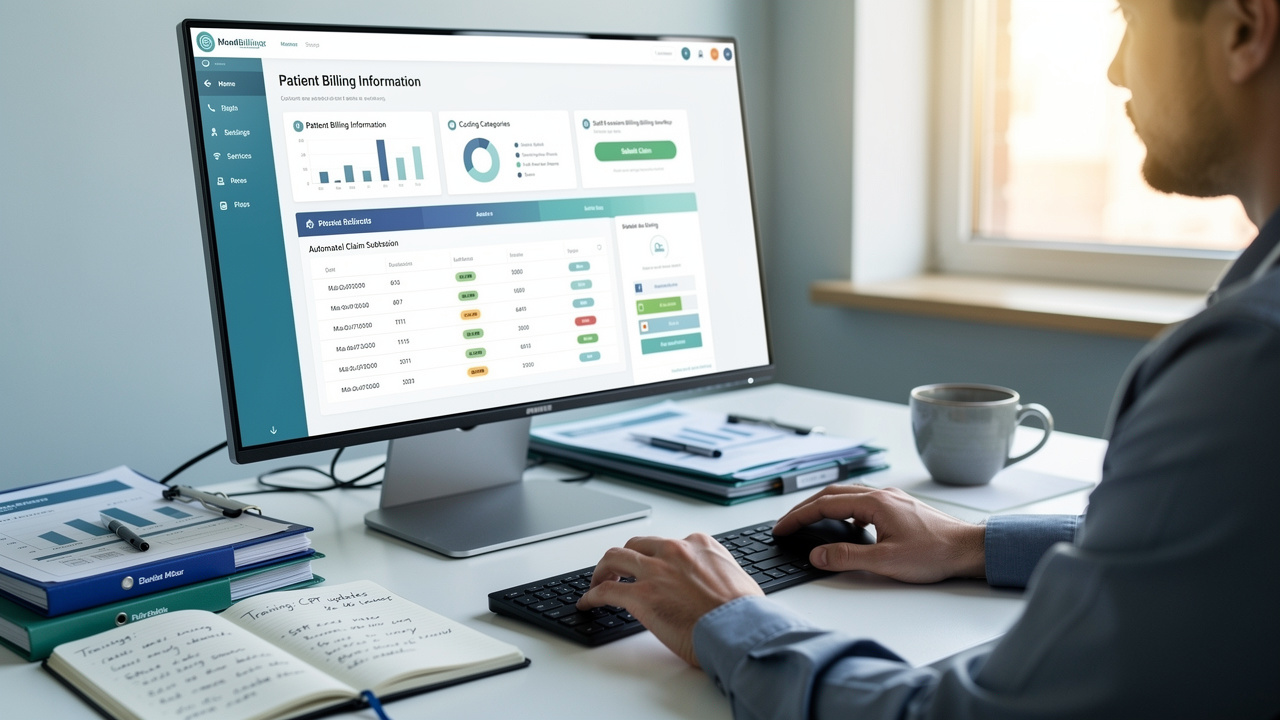
The choice of medical billing software for mental health clinics is pivotal, influencing both operational efficiency and financial stability. With the rising demand for mental health services, clinics are increasingly challenged by billing complexities that necessitate tailored solutions. Identifying essential features that streamline billing while ensuring compliance is crucial for clinics navigating software selection.
Identify Unique Practice Needs for Billing Software
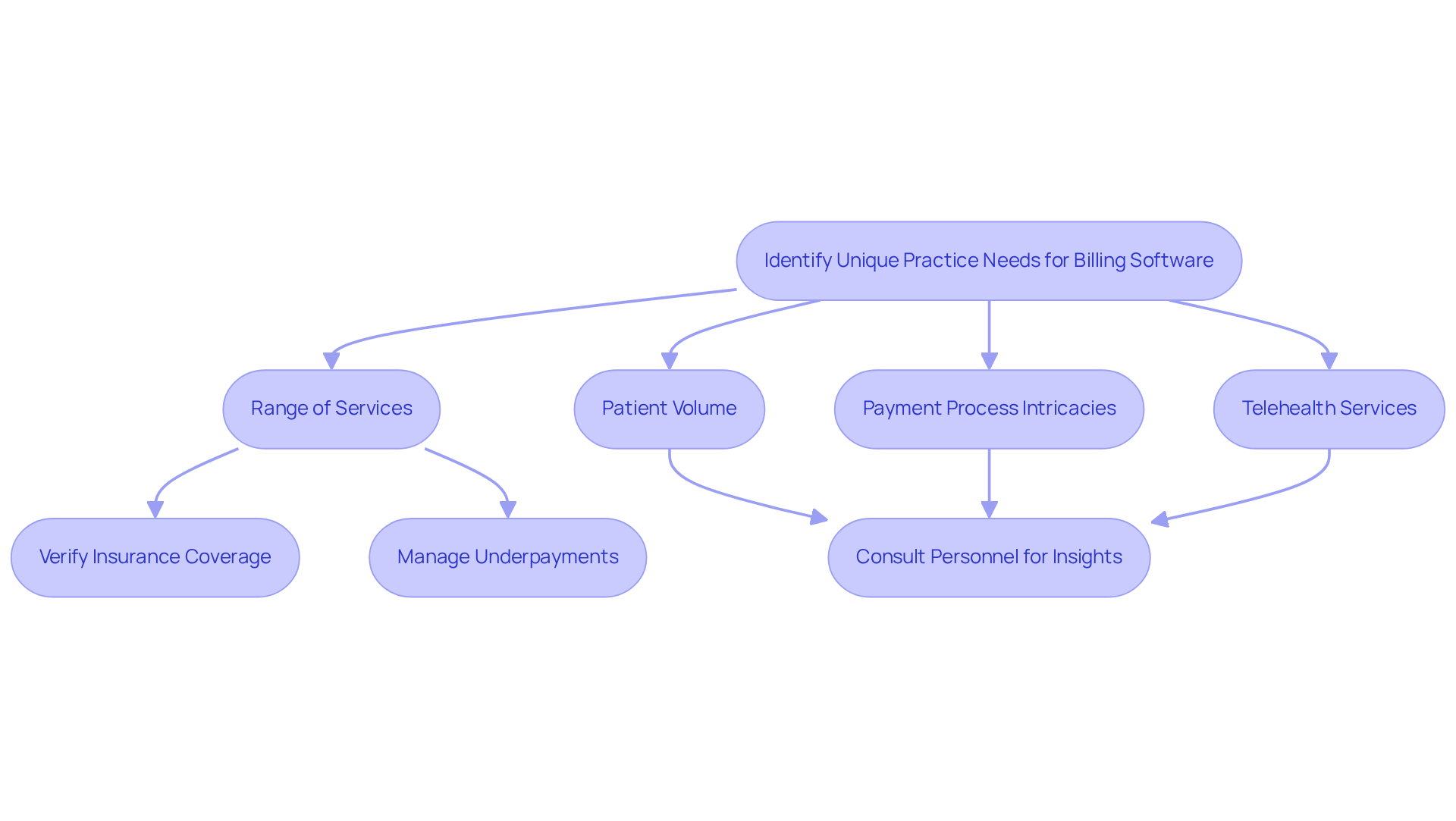
Selecting billing software medical can be challenging due to the diverse operational needs of mental wellness facilities. Clinics must consider the range of services they provide, such as therapy and medication management, alongside patient volume and the intricacies of their payment processes. With approximately 70% of mental wellness facilities expected to offer telehealth services by 2026, prioritizing software that facilitates remote invoicing and documentation is essential.
Furthermore, understanding the specific coding requirements related to mental health services, including time-based billing codes, is critical. Involving personnel in this assessment process yields critical insights into daily operational challenges and desired software features, ensuring that the chosen solution integrates seamlessly with the facility’s workflow.
Additionally, facilities must recognize common pitfalls, such as:
- Failing to verify insurance coverage and authorization requirements before appointments, which can lead to reimbursement denials from inaccurate member information or missing authorizations.
- Improving patient statements and effectively managing underpayments, unprocessed claims, and aging claims are vital components of a successful payment strategy.
Tailored consultations help facilities identify the most suitable administrative solutions for their specific needs. Ultimately, a well-informed choice in billing software medical can significantly enhance operational efficiency and financial stability for mental wellness facilities.
Prioritize Essential Features for Mental Health Billing Software
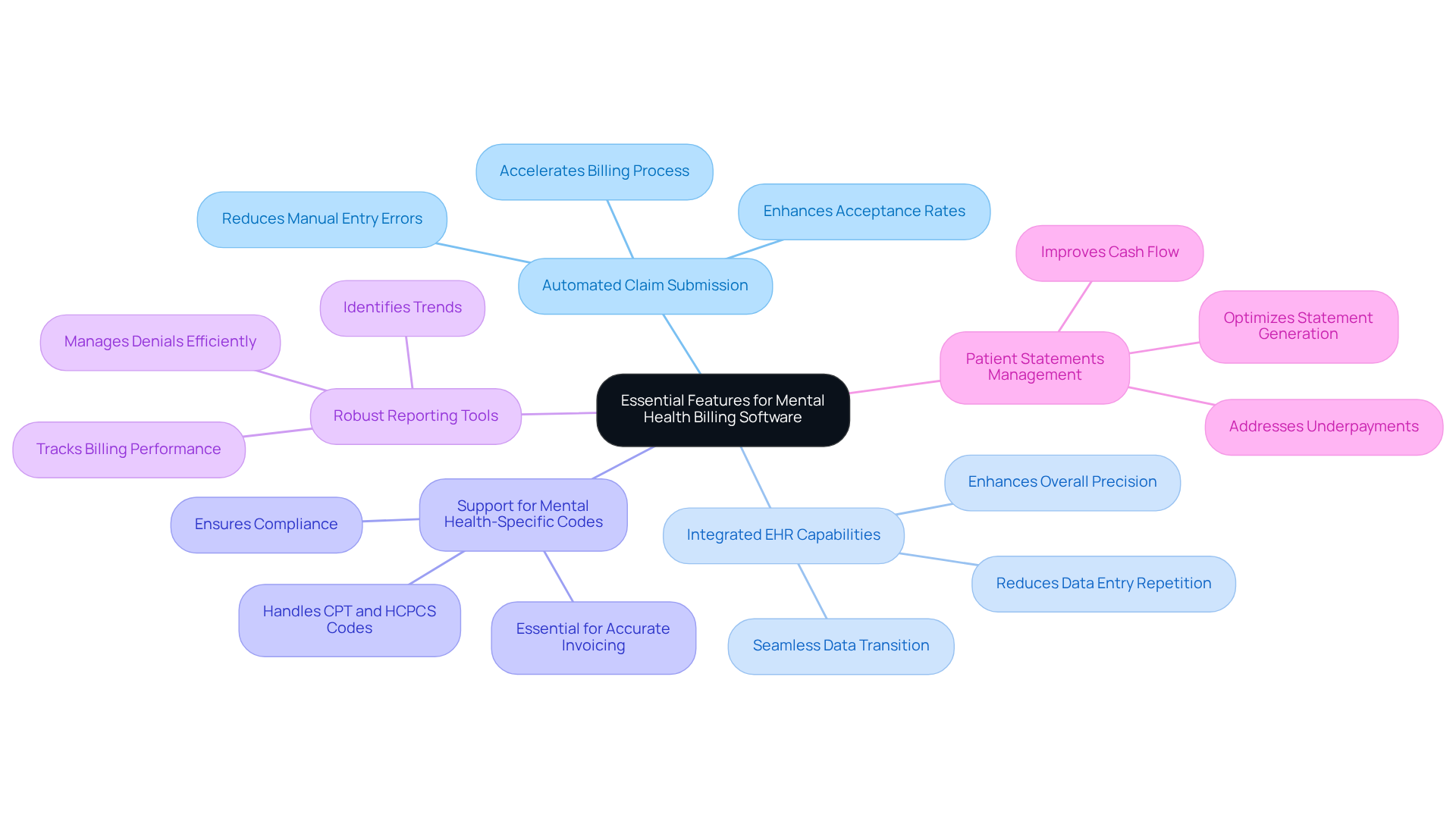
When selecting billing software medical, mental health clinics must focus on features tailored to their specific operational requirements. Key features to consider include:
- Automated Claim Submission: This functionality significantly reduces manual entry errors and accelerates the billing process, leading to faster reimbursements. Automated systems within billing software medical can catch errors before claims are submitted, enhancing acceptance rates and minimizing delays.
- Integrated EHR Capabilities: The smooth incorporation of billing software medical with electronic medical records guarantees that patient information transitions effortlessly between clinical and financial functions, reducing data entry repetition and enhancing overall precision.
- Support for Mental Health-Specific Codes: The billing software medical must be equipped to handle CPT and HCPCS codes relevant to mental health services, including time-based charging codes, which are essential for accurate invoicing and compliance.
- Robust Reporting Tools: Effective reporting tools help track billing performance through billing software medical, identify trends, and manage denials efficiently. These insights allow healthcare facilities to make informed decisions and enhance their revenue cycle management with billing software medical.
- Patient Statements Management: Optimizing the generation and follow-up of patient statements is crucial. Addressing underpayments, unprocessed claims, and aging claims can significantly improve cash flow. By implementing a system that tracks these elements, healthcare facilities can ensure timely follow-ups and reduce the incidence of outstanding balances.
Focusing on these critical attributes allows mental wellness facilities to enhance their invoicing effectiveness with billing software medical and reduce administrative burdens. However, it is crucial to remain vigilant about potential pitfalls, such as relying solely on automation, which can lead to missed errors and compliance issues. Ultimately, a strategic blend of technology and human oversight is essential for optimizing invoicing processes and ensuring compliance.
Ensure Seamless Integration with Existing Systems
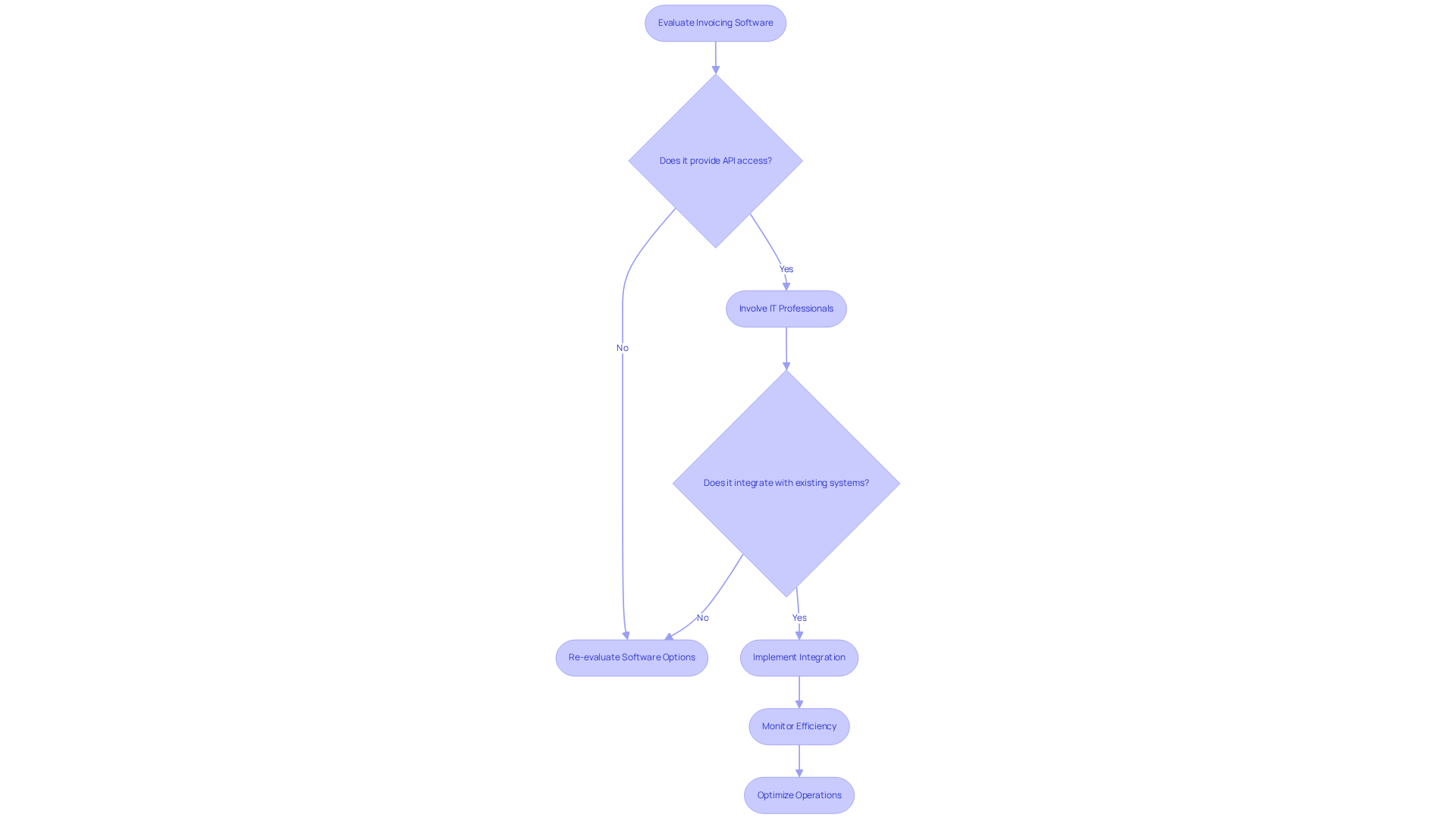
Integrating new invoicing software with existing systems is not just beneficial; it is essential for mental health clinics to avoid operational pitfalls. Clinics must prioritize seamless integration with their electronic health records (EHR) and practice management software. This integration is crucial for optimizing practice management, as it minimizes duplicate data entry and reduces the risk of errors that can impact operational efficiency.
Clinics need to evaluate how well potential invoicing software fits with their current systems, focusing on options that provide API access or built-in integration features. Involving IT professionals in the selection process is vital, as they can identify potential integration challenges early, ensuring a smoother transition and sustained operational efficiency.
Healthcare IT directors emphasize that effective API integration streamlines technology management, improving daily operations and reducing billing issues. Furthermore, utilizing streamlined practice management solutions, such as those offered by Healthcare Partners Consulting, can facilitate clean claims, fast follow-up, and clear reporting, which are vital for optimizing patient statements and claims management.
The failure to integrate effectively can lead to persistent inefficiencies, underscoring the critical need for a strategic approach to software implementation.
Implement Continuous Training and Support for Staff
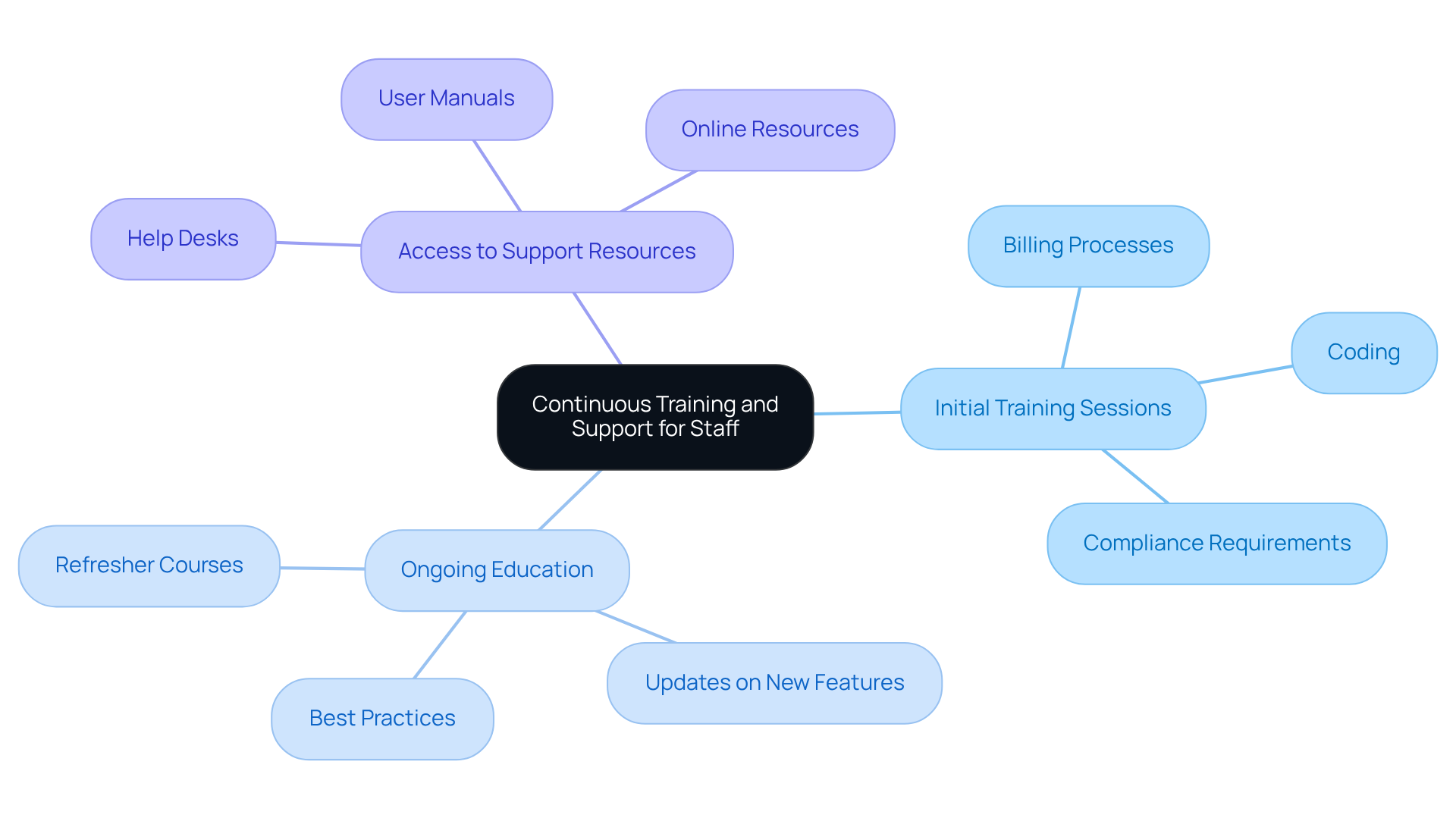
To achieve effective invoicing software implementation, mental health clinics must prioritize comprehensive staff training programs. This program should encompass several key components:
- Initial Training Sessions: Conduct thorough training on the software’s functionalities, emphasizing billing processes, coding, and compliance requirements. This foundational knowledge is crucial for effective software utilization, particularly in managing patient statements and addressing underpayments and aging claims.
- Ongoing Education: Implement regular updates and refresher courses to keep staff informed about new features, changes in invoicing regulations, and best practices. Regular updates and refresher courses foster a culture of continuous learning, essential for maintaining precision in invoicing practices. The healthcare setting requires continuous education to adjust to changing financial procedures, particularly in enhancing reimbursement management.
- Access to Support Resources: Equip staff with access to help desks, user manuals, and online resources, empowering them to resolve issues independently. This assistance not only boosts staff confidence but also enhances invoicing precision and reduces rejections, particularly for unprocessed requests and underpayments.
Investing in ongoing training and support is crucial for mental health facilities, cultivating a skilled workforce adept at navigating the complexities of billing software medical. Organizations investing in extensive training initiatives observe 20-30% enhancements in processing speed and 40-50% decreases in billing-related patient inquiries. Ultimately, prioritizing staff education and support can lead to substantial operational improvements and enhanced patient satisfaction in mental health clinics.
Conclusion
Selecting the right medical billing software is a pivotal decision that directly influences both operational efficiency and financial health in mental health clinics. By understanding the unique needs of their practice, clinics can choose solutions that align with their specific services, patient volume, and billing intricacies. This tailored approach ensures that the software not only meets current demands but is also adaptable to future changes, particularly with the anticipated rise in telehealth services.
Key considerations in this selection process include identifying essential features such as:
- Automated claim submission
- Integrated EHR capabilities
- Robust reporting tools
Each of these elements plays a vital role in streamlining billing processes, enhancing accuracy, and improving cash flow management. Seamless integration with existing systems is crucial, as it helps minimize errors and operational disruptions. Continuous training and support for staff further empower clinics to utilize these tools effectively, leading to better patient outcomes and financial stability.
Ultimately, selecting and implementing medical billing software effectively enhances administrative efficiency and creates a stable foundation for mental health services. By prioritizing the right features and ensuring ongoing education and support, mental health clinics can confidently navigate billing complexities and prioritize quality patient care. Inadequate billing practices can jeopardize not only financial health but also the quality of care provided to patients. Embracing these strategies positions clinics for success in an evolving healthcare landscape, reinforcing the critical role of effective billing practices in the overall health of the organization.
Frequently Asked Questions
What factors should clinics consider when selecting billing software for mental wellness facilities?
Clinics should consider the range of services they provide, such as therapy and medication management, patient volume, and the intricacies of their payment processes.
Why is it important for billing software to facilitate telehealth services?
With approximately 70% of mental wellness facilities expected to offer telehealth services by 2026, prioritizing software that facilitates remote invoicing and documentation is essential for operational efficiency.
What coding requirements are important for mental health services?
Understanding specific coding requirements, including time-based billing codes, is critical for accurate billing in mental health services.
How can involving personnel in the assessment process benefit the selection of billing software?
Involving personnel can provide critical insights into daily operational challenges and desired software features, ensuring the chosen solution integrates seamlessly with the facility’s workflow.
What common pitfalls should facilities be aware of when using billing software?
Common pitfalls include failing to verify insurance coverage and authorization requirements before appointments, which can lead to reimbursement denials due to inaccurate member information or missing authorizations.
What are vital components of a successful payment strategy for mental wellness facilities?
Improving patient statements and effectively managing underpayments, unprocessed claims, and aging claims are vital components of a successful payment strategy.
How can tailored consultations help mental wellness facilities with billing software?
Tailored consultations can help facilities identify the most suitable administrative solutions for their specific needs, enhancing operational efficiency and financial stability.