
Introduction
The selection of medical office software is critical for clinics aiming to optimize patient care and streamline administrative tasks. With a variety of programs available, each offering unique features such as:
- Billing management
- Appointment scheduling
- Telehealth capabilities
Clinics have an unprecedented opportunity to enhance their operational efficiency. However, without careful selection, clinics risk inefficiencies that can compromise patient care.
What key factors should clinics prioritize to ensure they select the right solution for their unique operational demands? Prioritizing the right factors in software selection can significantly impact a clinic’s operational success and patient outcomes.
Understanding Medical Office Software: Key Features and Functions
Medical office software programs play a critical role in enhancing operational efficiency and patient care in healthcare settings. Key features typically include:
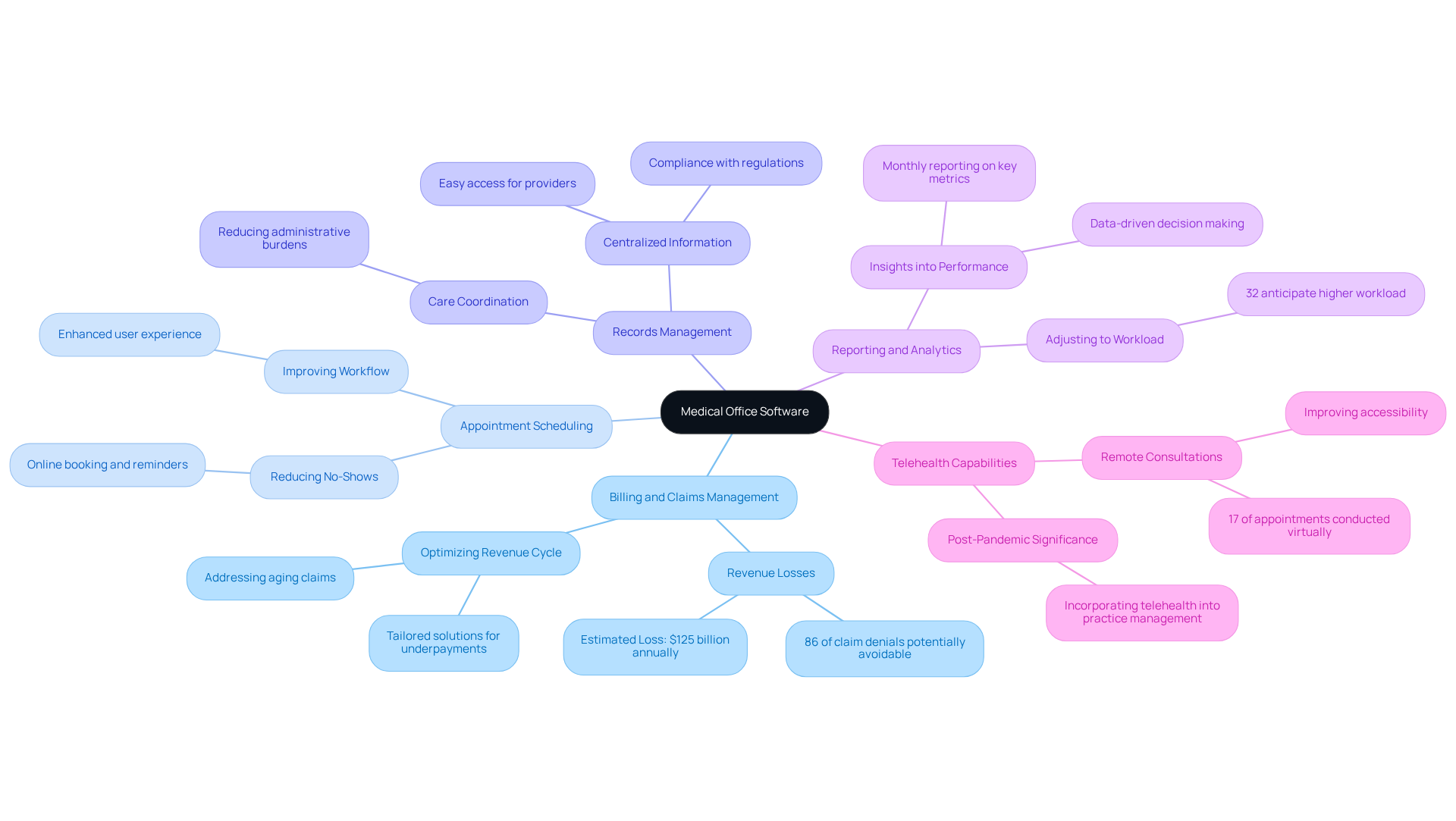
- Billing and Claims Management: This is essential for ensuring accurate and timely reimbursement from insurance providers. Inefficient invoicing methods lead to significant revenue losses for healthcare providers, totaling approximately $125 billion each year. This highlights the necessity for efficient oversight in this domain. In fact, practices that prioritize billing as a strategic function can recover significant revenue losses, as 86% of claim denials are potentially avoidable with disciplined processes. Healthcare Partners Consulting offers tailored solutions that address underpayments, unprocessed claims, and aging claims, helping clinics optimize their revenue cycle.
- Appointment Scheduling: Managing client appointments efficiently is key to reducing no-shows and improving clinic workflow. Successful implementation of appointment scheduling software can significantly enhance user experience by allowing online booking and automatic reminders, which in turn improves operational efficiency.
- Records Management: Centralizing client information ensures easy access for healthcare providers while maintaining compliance with regulations. This feature is vital for improving care coordination and reducing administrative burdens.
- Reporting and Analytics: These tools provide insights into clinic performance, enabling facilities to make data-driven decisions. With 32% of respondents anticipating a higher workload, utilizing analytics can assist facilities in adjusting to operational pressures efficiently. Monthly reporting from Healthcare Partners includes claim volumes, aging reports, denial rates, and custom KPIs to track financial health.
- Telehealth Capabilities: Growing in significance, particularly after the pandemic, telehealth functionalities enable remote consultations and follow-ups, improving accessibility for individuals. Approximately 17% of monthly appointments are now conducted virtually, highlighting the need to incorporate these capabilities into practice management tools.
Incorporating these features into medical office software programs is not just beneficial; it is essential for clinics aiming to thrive in the evolving healthcare landscape of 2026.
Types of Medical Office Software: A Comparative Overview
In the evolving landscape of healthcare, the right software solutions are crucial for operational success. Medical office software encompasses several categories, each tailored to specific operational needs within healthcare settings:
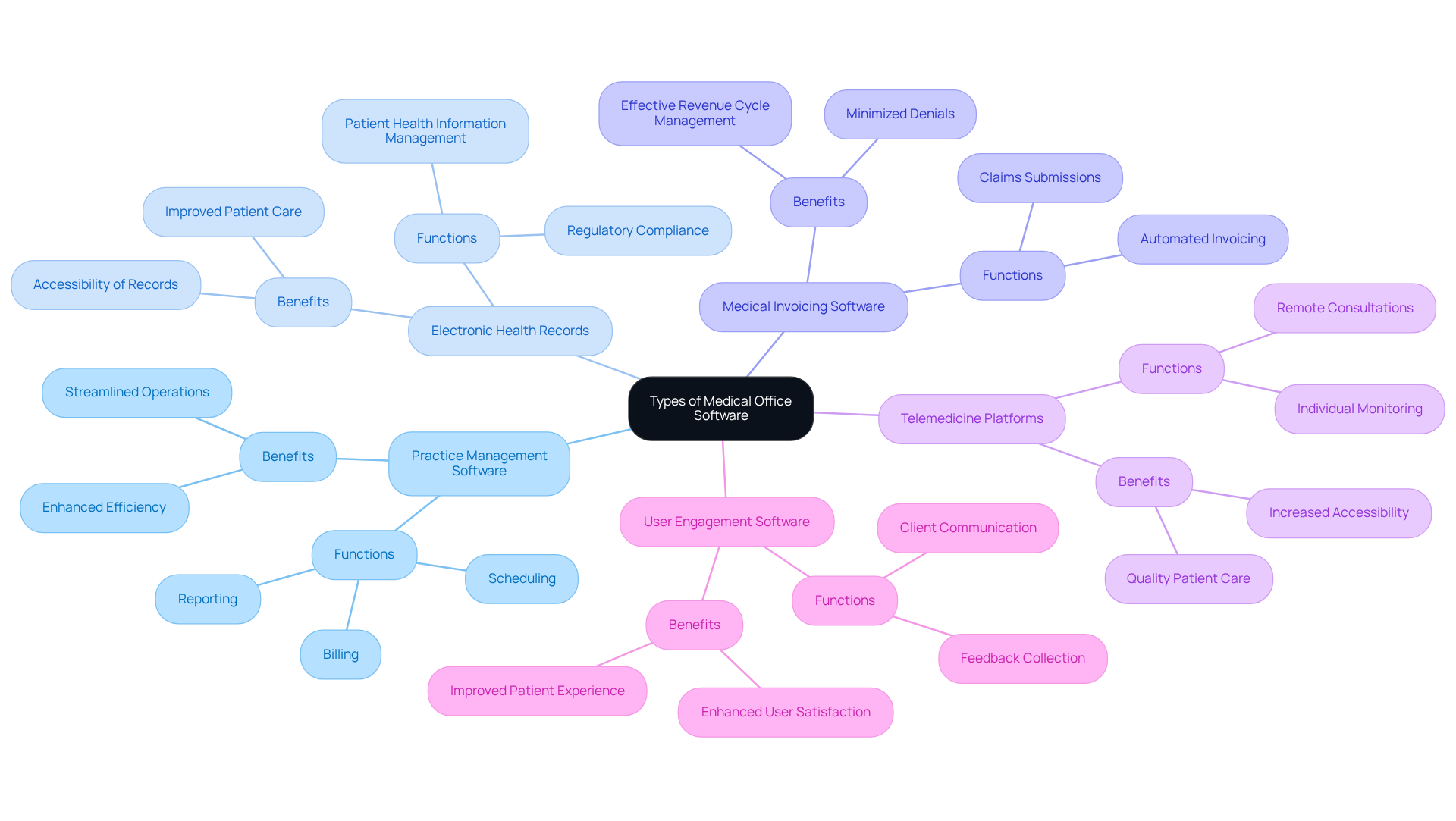
- Practice Management Software (PMS): This comprehensive solution integrates essential administrative functions such as scheduling, billing, and reporting, streamlining clinic operations and enhancing efficiency. Without effective medical office software programs, clinics may encounter challenges in maintaining organized operations and efficient workflows. Healthcare Partners Consulting provides adaptable service plans that can be integrated with medical office software programs to enhance payment workflows, especially for mental health practices.
- Electronic Health Records (EHR): EHR systems manage patient health information, ensuring compliance with healthcare regulations while facilitating improved patient care through easily accessible records. As of 2024, 95% of U.S. office-based physicians have adopted EHR systems, reflecting their critical role in modern healthcare.
- Medical Invoicing Software: Focused on automating the invoicing process, this software simplifies claims submissions and payment tracking, which is vital for effective revenue cycle management. Healthcare Partners Consulting focuses on medical invoicing for mental and behavioral health, ensuring facilities can improve their financial operations and minimize denials. Stand-alone billing systems are particularly beneficial for practices looking to improve their revenue cycle.
- Telemedicine Platforms: These platforms facilitate remote consultations and individual monitoring, a necessity in today’s healthcare landscape. As telehealth becomes increasingly standard, clinics that fail to adopt these platforms may find themselves at a disadvantage in delivering quality patient care. The rise of telehealth has significantly increased the demand for medical office software programs that facilitate virtual care delivery, including secure appointment scheduling and payment processing.
- User Engagement Software: This type of software improves communication with clients through features like reminders, surveys, and educational resources, ultimately enhancing user satisfaction and engagement. Moreover, integrating patient engagement systems with EHRs can really enhance the overall patient experience.
By understanding these categories, clinics can make informed decisions that align with their specific operational objectives and enhance overall efficiency. Ultimately, the choice of software can significantly influence a clinic’s operational success and patient satisfaction.
Evaluating Software Options: Key Considerations for Your Clinic
When selecting medical office software programs, clinics face critical decisions that can significantly impact their operational efficiency and financial health. Clinics should prioritize the following key factors:
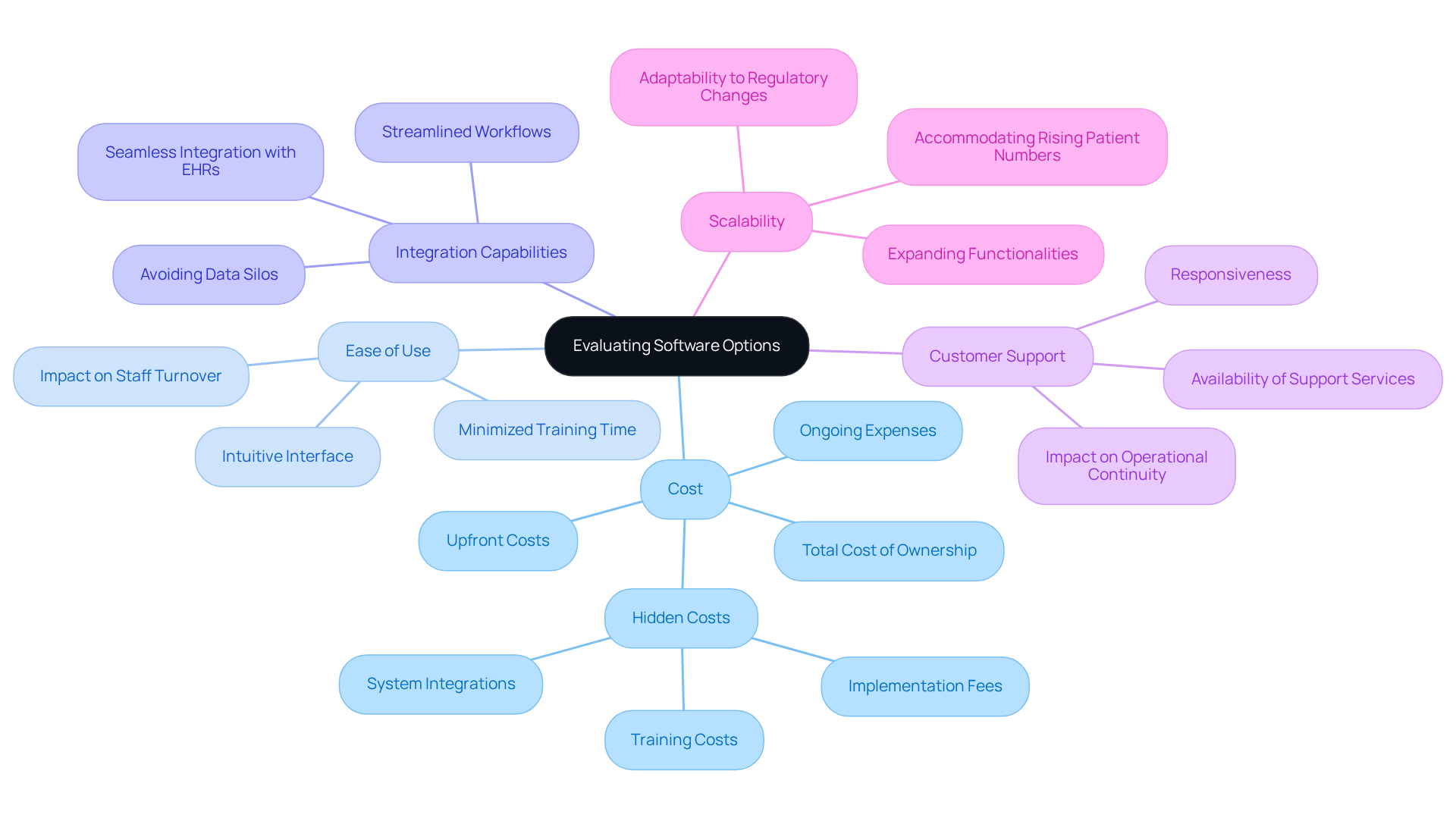
- Cost: It is essential to assess both upfront costs and ongoing expenses, including subscription fees and potential hidden costs related to implementation, training, and system integrations. Hidden costs can lead to unexpected financial strain, complicating budget management. Understanding the total cost of ownership can prevent budget overruns and ensure financial sustainability.
- Ease of Use: The application should feature an intuitive interface that minimizes training time, allowing staff to utilize it effectively from day one. Studies show that when systems prioritize user experience, they not only boost operational efficiency but also help keep staff turnover low.
- Integration Capabilities: Ensure the application can seamlessly integrate with existing systems, such as EHRs and billing platforms. Integrating with existing systems is crucial to avoid data silos and streamline workflows, leading to better revenue cycle management and reduced administrative tasks.
- Customer Support: Reliable customer support is vital for quickly resolving issues and minimizing downtime. Clinics should consider the availability and responsiveness of support services, as effective support can significantly impact overall satisfaction and operational continuity.
- Scalability: Select applications that can expand with your operation, accommodating rising patient numbers and extra functionalities as required. Without scalable solutions, clinics may struggle to adapt to increasing patient demands and regulatory changes. Scalable solutions are particularly important in a rapidly evolving healthcare landscape, where practices must adapt to changing demands and regulatory requirements.
By focusing on these considerations, clinics can select medical office software programs that align with their operational goals and enhance overall efficiency. Choosing the right software is not just a matter of preference; it is a strategic decision that shapes the future of clinic operations.
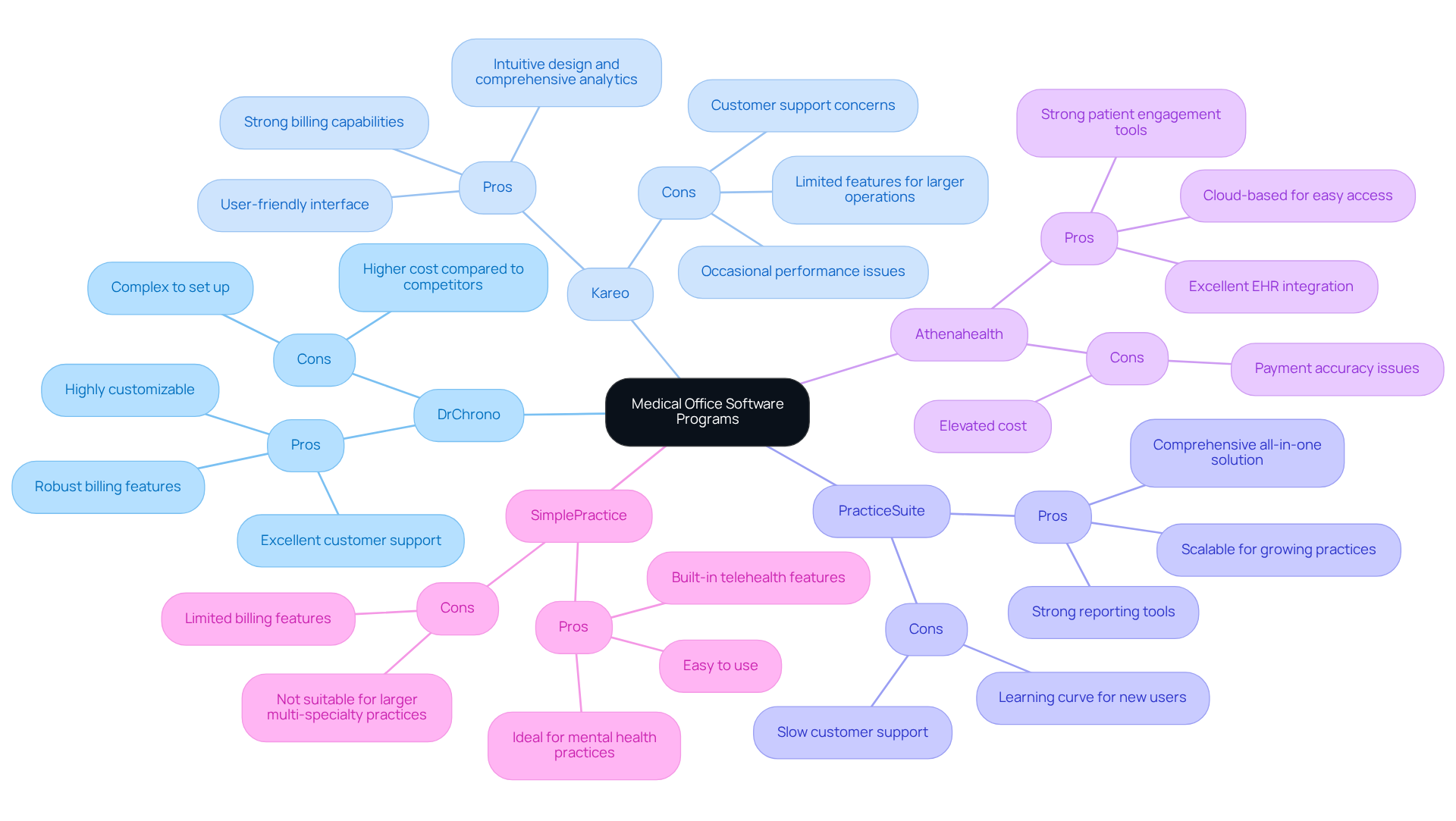
Pros and Cons of Leading Medical Office Software Programs
When evaluating medical office software programs, it is crucial to consider both the advantages and disadvantages of each option to make an informed decision.
DrChrono
- Pros: Highly customizable, robust billing features, excellent customer support.
- Cons: Can be complex to set up, higher cost compared to some competitors.
Kareo
- Pros: User-friendly interface, strong billing capabilities, particularly beneficial for small practices. Its intuitive design and comprehensive analytics effectively reduce billing errors and boost productivity.
- Cons: Limited features for larger operations, with some users reporting occasional performance issues. Customer support has been a significant concern, with many expressing frustration over slow response times and inadequate assistance. For instance, one user noted, “The customer service is terrible. When the website malfunctions, there’s no one to talk to.”
PracticeSuite
- Pros: Comprehensive all-in-one solution, scalable for growing practices, strong reporting tools.
- Cons: Learning curve for new users, customer support can be slow at times.
Athenahealth
- Pros: Excellent EHR integration, strong patient engagement tools, cloud-based for easy access.
- Cons: Elevated cost, some users report problems with payment accuracy.
SimplePractice
- Pros: Ideal for mental health practices, easy to use, built-in telehealth features.
- Cons: Limited billing features compared to larger systems, may not suit larger multi-specialty practices.
Ultimately, understanding these factors will empower clinics to select the medical office software programs that best align with their operational requirements and budget constraints.
Conclusion
Choosing the appropriate medical office software can significantly impact a clinic’s operational efficiency and patient care outcomes. By understanding the different types of software and their key features, clinics can make informed choices tailored to their specific needs.
The article highlights essential features such as:
- Billing and claims management
- Appointment scheduling
- Records management
- Reporting and analytics
- Telehealth capabilities
Each of these elements plays a vital role in streamlining operations, improving patient experiences, and ensuring financial health. Additionally, evaluating software options requires careful consideration of factors like:
- Cost
- Ease of use
- Integration capabilities
- Customer support
- Scalability
to ensure long-term success.
Failing to adopt suitable software solutions may hinder a clinic’s ability to meet patient expectations and adapt to industry changes. Clinics that prioritize these tools will not only enhance their operational effectiveness but also improve patient satisfaction and care delivery. Embracing the right solutions today will position healthcare providers to thrive in the future, ensuring they meet the growing demands of their patients and the industry.
Frequently Asked Questions
What is the role of medical office software in healthcare settings?
Medical office software enhances operational efficiency and patient care by streamlining various administrative functions within healthcare facilities.
What are the key features of medical office software?
Key features include billing and claims management, appointment scheduling, records management, reporting and analytics, and telehealth capabilities.
How does billing and claims management benefit healthcare providers?
It ensures accurate and timely reimbursement from insurance providers, helping to recover significant revenue losses that total approximately $125 billion each year. Efficient billing processes can potentially avoid 86% of claim denials.
Why is appointment scheduling important in a medical office?
Efficient appointment scheduling reduces no-shows and improves clinic workflow. It enhances user experience through online booking and automatic reminders.
What is the significance of records management in medical office software?
Centralizing client information improves access for healthcare providers and ensures compliance with regulations, which enhances care coordination and reduces administrative burdens.
How do reporting and analytics tools assist healthcare facilities?
They provide insights into clinic performance and enable data-driven decisions, helping facilities adjust to operational pressures, especially with increasing workloads.
What role do telehealth capabilities play in medical office software?
Telehealth functionalities allow for remote consultations and follow-ups, improving accessibility for patients. Approximately 17% of monthly appointments are now conducted virtually.
Why is it essential for clinics to incorporate these features into their medical office software?
Incorporating these features is crucial for clinics to thrive in the evolving healthcare landscape, especially as operational demands increase in the coming years.