

Introduction
Clinics often struggle to navigate the complexities of billing services, which can hinder their financial success. Identifying the right billing service is crucial for enhancing operational efficiency and maximizing revenue. Clinics must find a partner that streamlines administrative processes while ensuring compliance, allowing healthcare providers to focus on patient care. Selecting an appropriate billing service is crucial for clinics aiming to enhance both operational efficiency and patient care.
Key Criteria for Evaluating Billing Services
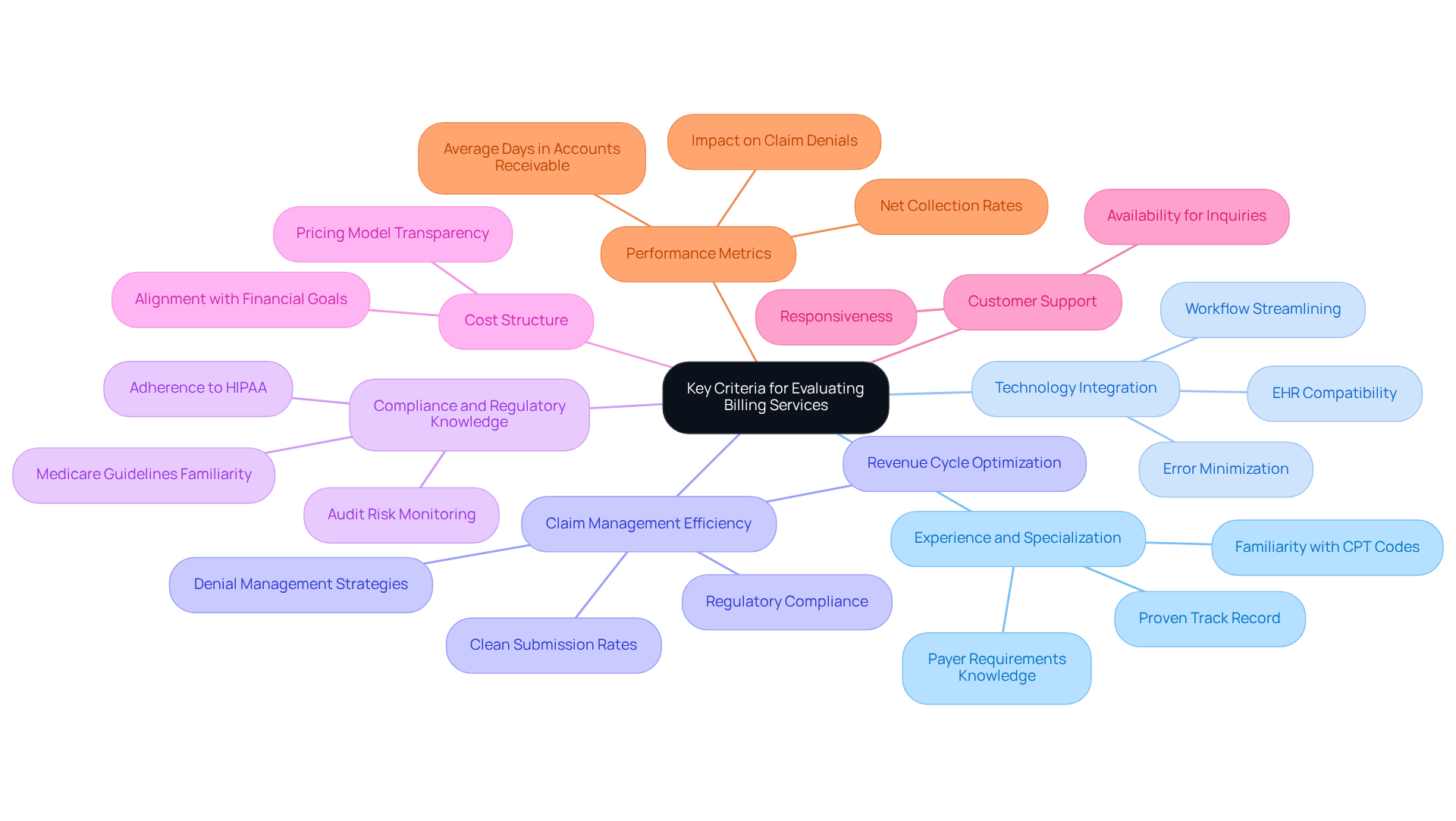
When selecting billing services for physical therapy clinics, it is crucial to evaluate specific criteria that directly impact financial performance:
- Experience and specialization: Seek financial solutions that focus on physical therapy billing services and have a proven track record. Familiarity with specific CPT codes and payer requirements is essential for effective claims processing.
- Technology Integration: Evaluate the capability of the invoicing solution to seamlessly connect with existing Electronic Health Records (EHR) systems, such as TherapyNotes, SimplePractice, Valant, AdvancedMD, and IntakeQ. Effective integration can streamline workflows and minimize errors, enhancing overall efficiency.
- Claim Management Efficiency: Assess the service’s submission process, concentrating on clean submission rates and denial management strategies. A high clean reimbursement rate is essential for physical therapy billing services, indicating efficiency and effectiveness in billing practices, which is crucial for maintaining cash flow. Notably, over 12% of therapy submissions face rejection due to documentation issues, underscoring the need for regulatory compliance. Addressing underpayments, unprocessed claims, and aging claims, along with the management of patient statements and balance follow-up, is vital for optimizing revenue cycle management with physical therapy billing services.
- Compliance and regulatory knowledge is crucial to ensure that the billing entity is well-versed in adherence to healthcare regulations, including HIPAA and Medicare guidelines, especially when it comes to physical therapy billing services. This knowledge is vital to avoid costly penalties and ensure smooth operations. Utilizing tools like an audit risk dashboard can help flag documentation patterns that may lead to audits, enhancing compliance monitoring.
- Cost Structure: Understand the pricing model-whether it’s a percentage of collections or a flat fee-and how it aligns with the clinic’s financial goals. Transparency in costs can prevent unexpected expenses.
- Customer Support: Evaluate the quality of customer support, focusing on responsiveness and availability for inquiries. Strong customer support can significantly enhance the partnership experience.
- Performance Metrics: Look for transparency in performance metrics, such as average days in accounts receivable and net collection rates. These metrics are essential for assessing the effectiveness of the offering and ensuring that it meets the clinic’s operational needs. Implementing these strategies can lead to a reduction in claim denials by 20-30% and improve reimbursement timelines by 15-25% within 30-90 days.
By focusing on these criteria, clinics can significantly enhance their financial operations and ensure sustainable growth. Regular internal audits should also be conducted to identify and correct documentation weaknesses, further enhancing operational rigor. For personalized consultation to identify optimal administrative solutions for healthcare practices, consider scheduling a meeting with Healthcare Partners Consulting & Billing, LLC (HPC).
Comparison of Leading Physical Therapy Billing Services
Clinics frequently encounter challenges in navigating the complexities of physical therapy billing services, which can affect their financial health and patient care. In this section, we compare several leading physical therapy billing services based on key criteria, while also highlighting how Healthcare Partners Consulting & Billing, LLC (HPC) stands out in the industry:
-
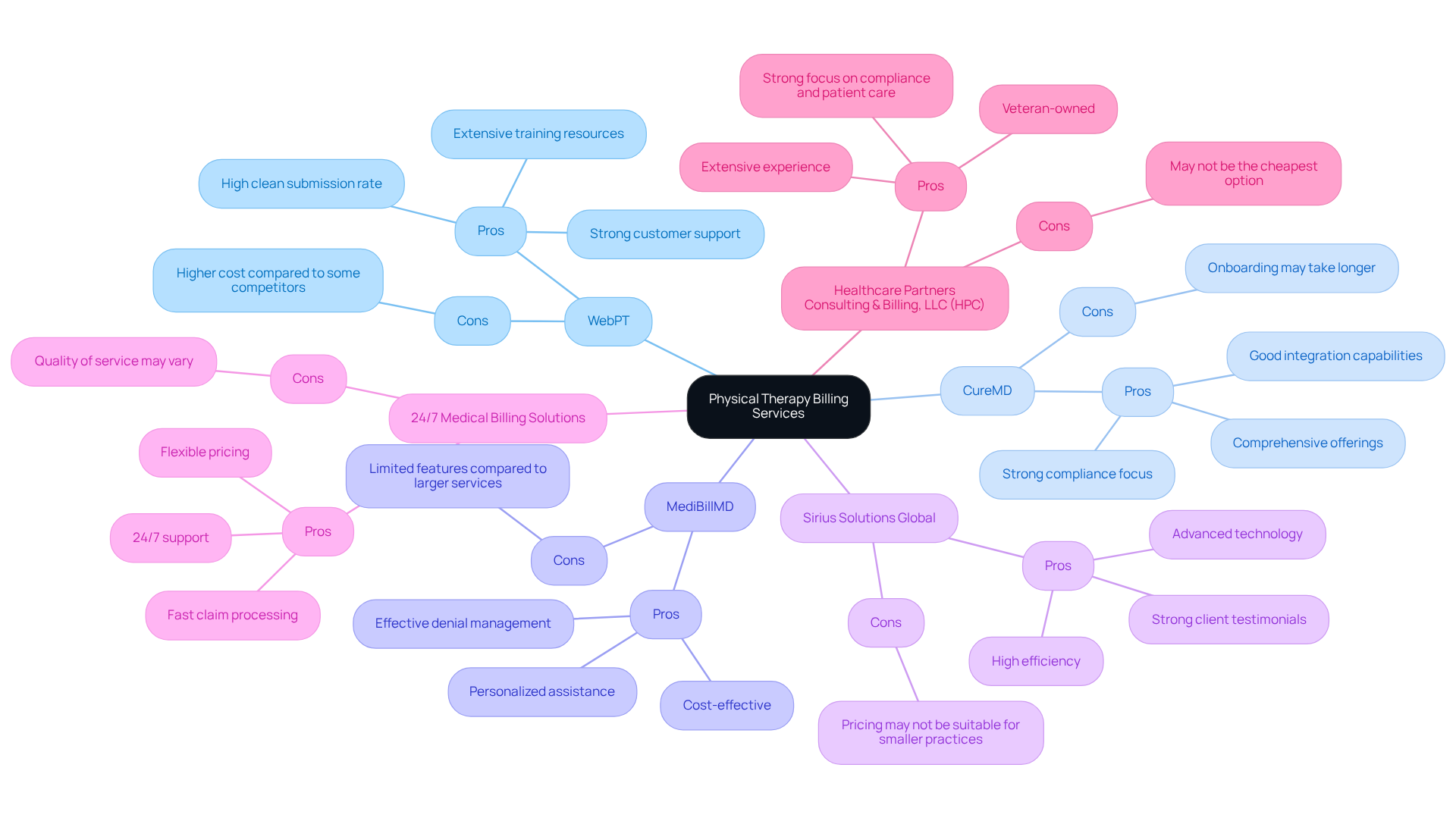
WebPT: Renowned for its robust EHR integration, WebPT boasts a clean submission rate of 98.5%. It provides comprehensive financial solutions tailored for physical therapy practices, including effective denial management and real-time reporting.
- Pros: High clean submission rate, strong customer support, and extensive training resources.
- Cons: Higher cost compared to some competitors.
-
CureMD: Specializing in physical therapy billing, CureMD provides a full revenue cycle management solution with a strong emphasis on compliance. Their dedicated team ensures thorough follow-ups on claims, enhancing the likelihood of successful reimbursements.
- Pros: Comprehensive offerings, strong compliance focus, and good integration capabilities.
- Cons: Onboarding may take longer due to its extensive features.
-
MediBillMD: Known for competitive pricing, MediBillMD focuses on maximizing reimbursements while providing personalized support. Their solid reputation for reducing denials makes them a reliable choice for practices looking to enhance their revenue cycle performance with physical therapy billing services.
- Pros: Cost-effective, personalized assistance, and effective denial management.
- Cons: Limited features compared to larger services.
-
Sirius Solutions Global: Recognized for innovative technology and efficient billing processes, Sirius Solutions Global aims to reduce administrative burdens for clinics. Their approach often leads to denial reductions of 20-30% and faster reimbursements within 30-90 days.
- Pros: Advanced technology, high efficiency, and strong client testimonials.
- Cons: Pricing may not be suitable for smaller practices.
-
24/7 Medical Billing Solutions: Providing continuous support and a flexible pricing structure, this offering is recognized for rapid turnaround times on submissions. Their dedication to support ensures that clinics can maintain operational efficiency.
- Pros: 24/7 support, flexible pricing, and fast claim processing.
- Cons: Quality of service may vary depending on the assigned team.
-
Healthcare Partners Consulting & Billing, LLC (HPC): As a veteran-owned company with 39 years of experience, HPC specializes in comprehensive revenue cycle management tailored primarily to behavioral and mental health practices. Their emphasis on compliance-first invoicing ensures that clinics can effectively manage underpayments and aging claims, allowing providers to concentrate on patient care.
- Pros: Veteran-owned, extensive experience, and a strong focus on compliance and patient care.
- Cons: May not be the cheapest option, but prioritizes quality and compliance.
This comparison highlights the variety of options clinics have in the market for physical therapy billing services, allowing them to choose a solution that aligns with their specific needs and operational goals. Ultimately, the right billing solution can transform a clinic’s financial landscape, allowing for a greater emphasis on patient care and operational efficiency.
Assessing Suitability for Different Practice Types
Navigating the complexities of billing in physical therapy necessitates the use of physical therapy billing services that provide tailored solutions to address the unique needs of various practice types. Here’s how the billing services from Healthcare Partners Consulting & Billing, LLC (HPC) cater to these differences:
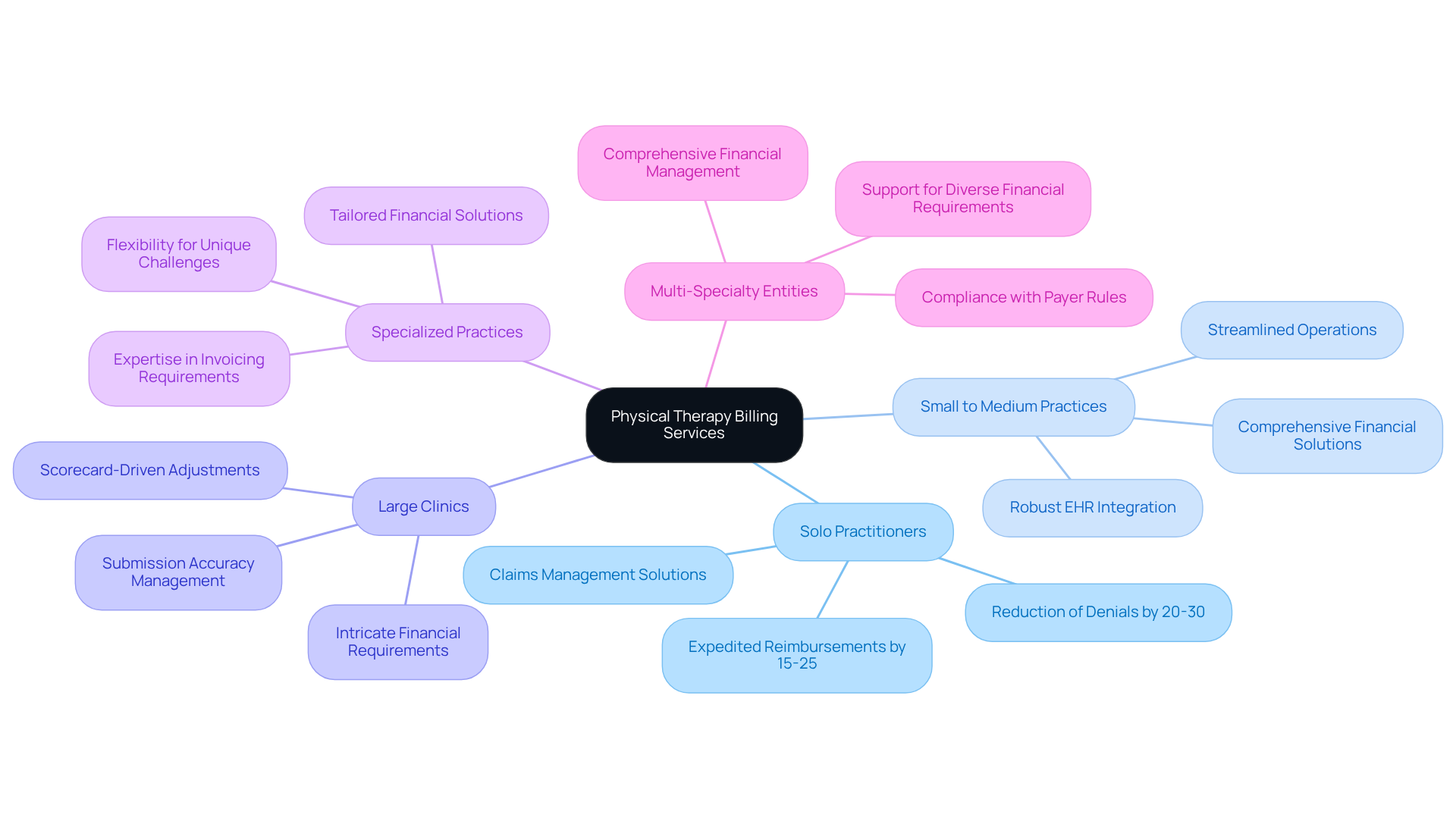
- Solo Practitioners: For solo practitioners, selecting a claims management solution that accommodates a range of claims without imposing excessive administrative challenges is crucial. HPC’s specialized financial solutions, particularly physical therapy billing services, can reduce denials by 20-30% and expedite reimbursements by 15-25% within 30-90 days. This improvement enhances revenue cycle performance.
- Small to medium practices require robust EHR integration and comprehensive financial solutions, such as physical therapy billing services, to streamline operations and enhance cash flow, which is essential for practices with limited resources. HPC’s integration of financial processes with EHR systems, such as TherapyNotes and SimplePractice, enables seamless data transfer, minimizing manual entry mistakes and rejected submissions.
- Large Clinics: Larger clinics frequently have intricate financial requirements and need a solution that can handle substantial volumes of submissions effectively. The operational rigor provided by HPC, with scorecard-driven adjustments linked to submission accuracy and denial rates, ensures that these clinics maintain optimal financial performance through their physical therapy billing services.
- Specialized Practices: Clinics focusing on niche areas like pediatric or geriatric therapy can benefit from HPC’s tailored financial solutions, including physical therapy billing services, which provide the necessary flexibility and expertise to address unique challenges. Their proficiency in managing specific invoicing requirements can significantly reduce the risk of claim denials.
- Multi-Specialty Entities: For entities that offer a variety of options beyond physical therapy, HPC’s comprehensive solution delivers essential support for managing diverse financial requirements across specialties. This adaptability is crucial for ensuring compliance with various payer rules and maximizing reimbursement potential.
Ultimately, selecting the right financial solutions can transform operational efficiency and elevate the standard of patient care across practices.
Impact on Practice Efficiency and Revenue
The choice of payment processing significantly impacts the operational efficiency and financial health of clinics that utilize physical therapy billing services. Here are some key considerations:
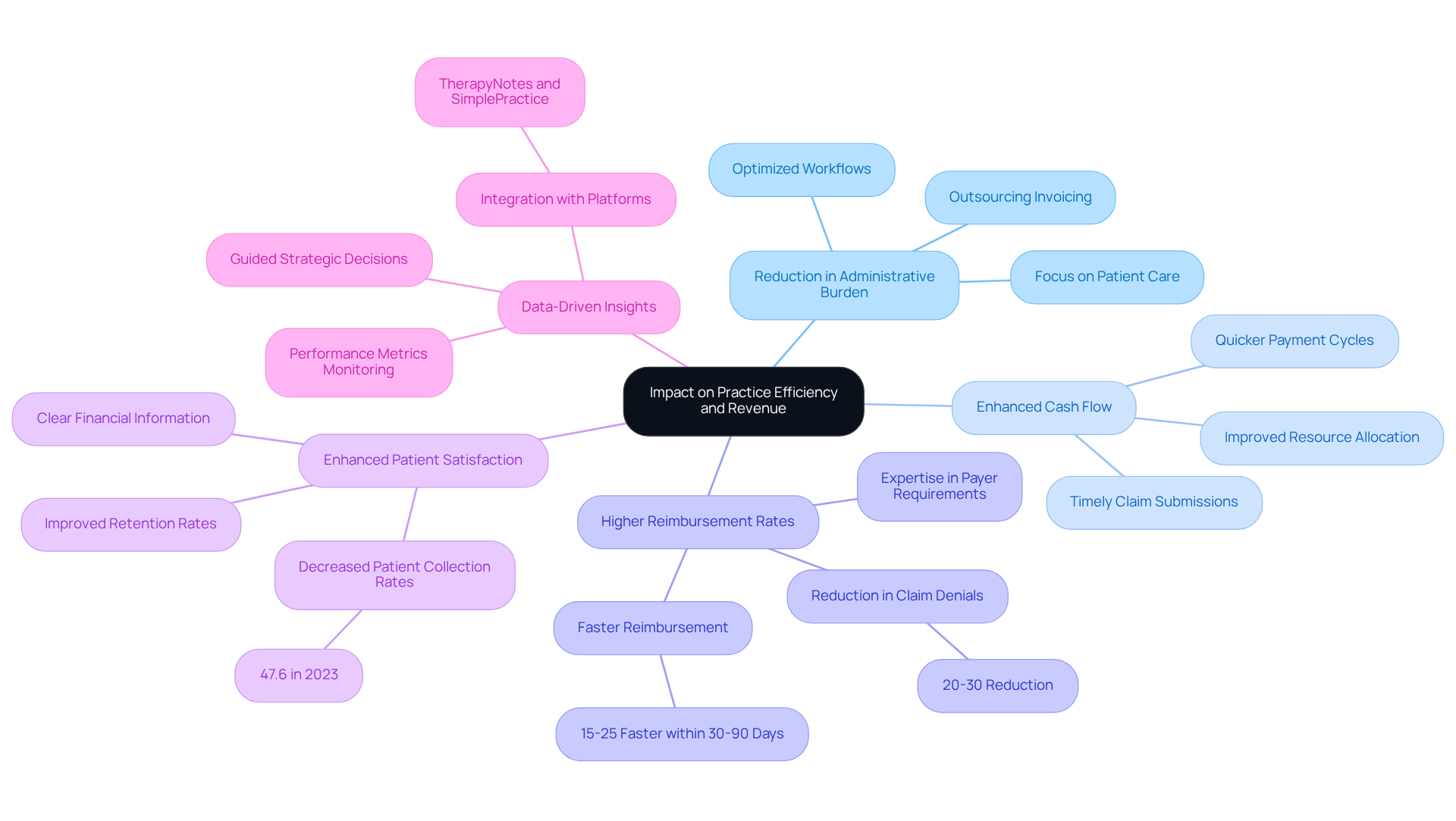
- Reduction in Administrative Burden: Outsourcing invoicing minimizes time spent on administrative tasks, allowing healthcare providers to concentrate more on patient care. Effective invoicing solutions, such as physical therapy billing services, optimize workflows, resulting in a more efficient operation overall. Healthcare Partners Consulting & Billing, LLC (HPC), a veteran-owned company with 39 years of experience, specializes in this area, ensuring that practices can focus on what matters most – their patients.
- Enhanced Cash Flow: Timely claim submissions and thorough follow-ups are key to improving cash flow through effective billing solutions. Clinics that implement these offerings often report quicker payment cycles, contributing to financial stability and improved resource allocation. With a focus on behavioral and mental health practices, HPC brings specialized expertise in revenue cycle management, optimizing cash flow effectively.
- Higher Reimbursement Rates: Specialized invoicing services frequently achieve higher reimbursement rates due to their expertise in navigating complex payer requirements. This proficiency can result in increased revenue for clinics, allowing them to invest in quality care and operational improvements. HPC’s compliance-first approach in physical therapy billing services ensures adherence to payer rules, which can lead to a 20-30% reduction in claim denials and a 15-25% faster reimbursement within 30-90 days.
- Enhanced Patient Satisfaction: Clear and timely invoicing processes significantly improve the patient experience. When patients receive clear financial information, they are less likely to encounter confusion or frustration, enhancing overall satisfaction and retention rates. Notably, patient collection rates decreased to 47.6% in 2023, down from 54.8% in 2021, highlighting the importance of effective financial procedures.
- Data-Driven Insights: Many billing services offer analytics and reporting tools that help clinics monitor performance metrics, such as days in accounts receivable and denial rates. This data-driven approach guides strategic decisions and fosters continuous enhancements in management. Utilizing scorecard-driven adjustments tied to claims accuracy and denial rates can further enhance operational rigor. HPC integrates seamlessly with platforms like TherapyNotes and SimplePractice, providing comprehensive insights that empower clinics.
Ultimately, the right physical therapy billing services not only enhance operational efficiency but also position clinics for sustainable growth in a competitive landscape.
Conclusion
Selecting the right billing services is crucial for physical therapy clinics aiming to enhance operational efficiency and financial success. By focusing on specialized solutions that alleviate administrative burdens, healthcare providers can redirect their attention to what truly matters: patient care. This article highlights the critical importance of selecting the right billing service that aligns with the unique needs of each practice type, ultimately fostering a more effective and patient-centered approach.
Key criteria for evaluating billing services include:
- Experience and specialization
- Technology integration
- Compliance knowledge
- Customer support
Each of these factors plays a critical role in optimizing revenue cycle management and improving cash flow. The comparison of leading physical therapy billing services highlights how Healthcare Partners Consulting & Billing, LLC (HPC) stands out with its veteran-owned status, extensive experience, and commitment to compliance-first practices. This focus not only enhances reimbursement rates but also reduces claim denials, allowing clinics to thrive in a competitive landscape.
In conclusion, the choice of billing services can significantly impact a clinic’s operational efficiency and financial health. By prioritizing compliance and leveraging specialized expertise, practices can achieve sustainable growth while enhancing patient satisfaction. If you’re looking for tailored solutions that truly empower healthcare providers, consider contacting Healthcare Partners Consulting & Billing, LLC (HPC) to optimize your billing processes and enhance your clinic’s success. For personalized consultation, contact HPC at info@hpcbilling.com or call 888-517-4992.
Frequently Asked Questions
What are the key criteria for evaluating billing services for physical therapy clinics?
The key criteria include experience and specialization in physical therapy billing, technology integration with existing EHR systems, claim management efficiency, compliance and regulatory knowledge, cost structure, customer support quality, and performance metrics.
Why is experience and specialization important in billing services?
Experience and specialization ensure that the billing service has a proven track record and familiarity with specific CPT codes and payer requirements, which is essential for effective claims processing.
How does technology integration impact billing services?
Effective technology integration with existing EHR systems can streamline workflows, minimize errors, and enhance overall efficiency in billing processes.
What should be assessed regarding claim management efficiency?
It is important to evaluate the service’s submission process, focusing on clean submission rates, denial management strategies, and addressing issues like underpayments and aging claims to optimize revenue cycle management.
Why is compliance and regulatory knowledge crucial for billing services?
Compliance knowledge ensures adherence to healthcare regulations, such as HIPAA and Medicare guidelines, which helps avoid costly penalties and ensures smooth operations.
What should clinics understand about the cost structure of billing services?
Clinics should understand the pricing model, whether it’s a percentage of collections or a flat fee, and ensure transparency in costs to prevent unexpected expenses.
How important is customer support in billing services?
Quality customer support is crucial as it enhances the partnership experience, providing responsiveness and availability for inquiries.
What performance metrics should clinics look for in billing services?
Clinics should seek transparency in performance metrics such as average days in accounts receivable and net collection rates to assess the effectiveness of the billing service.
What benefits can clinics expect by focusing on these evaluation criteria?
By focusing on these criteria, clinics can reduce claim denials by 20-30% and improve reimbursement timelines by 15-25% within 30-90 days.
What additional step can clinics take to enhance their billing operations?
Regular internal audits should be conducted to identify and correct documentation weaknesses, further enhancing operational rigor.