Introduction
In mental health care, inefficient scheduling can jeopardize patient well-being, making effective appointment management crucial. Patient scheduling software serves as a crucial resource, allowing clinics to streamline operations while enhancing client engagement and care quality. Effective scheduling is critical to ensuring optimal patient care. Clinics must carefully evaluate various options to identify software that aligns with their specific needs and enhances operational efficiency.
Understanding Patient Scheduling Software for Mental Health Clinics
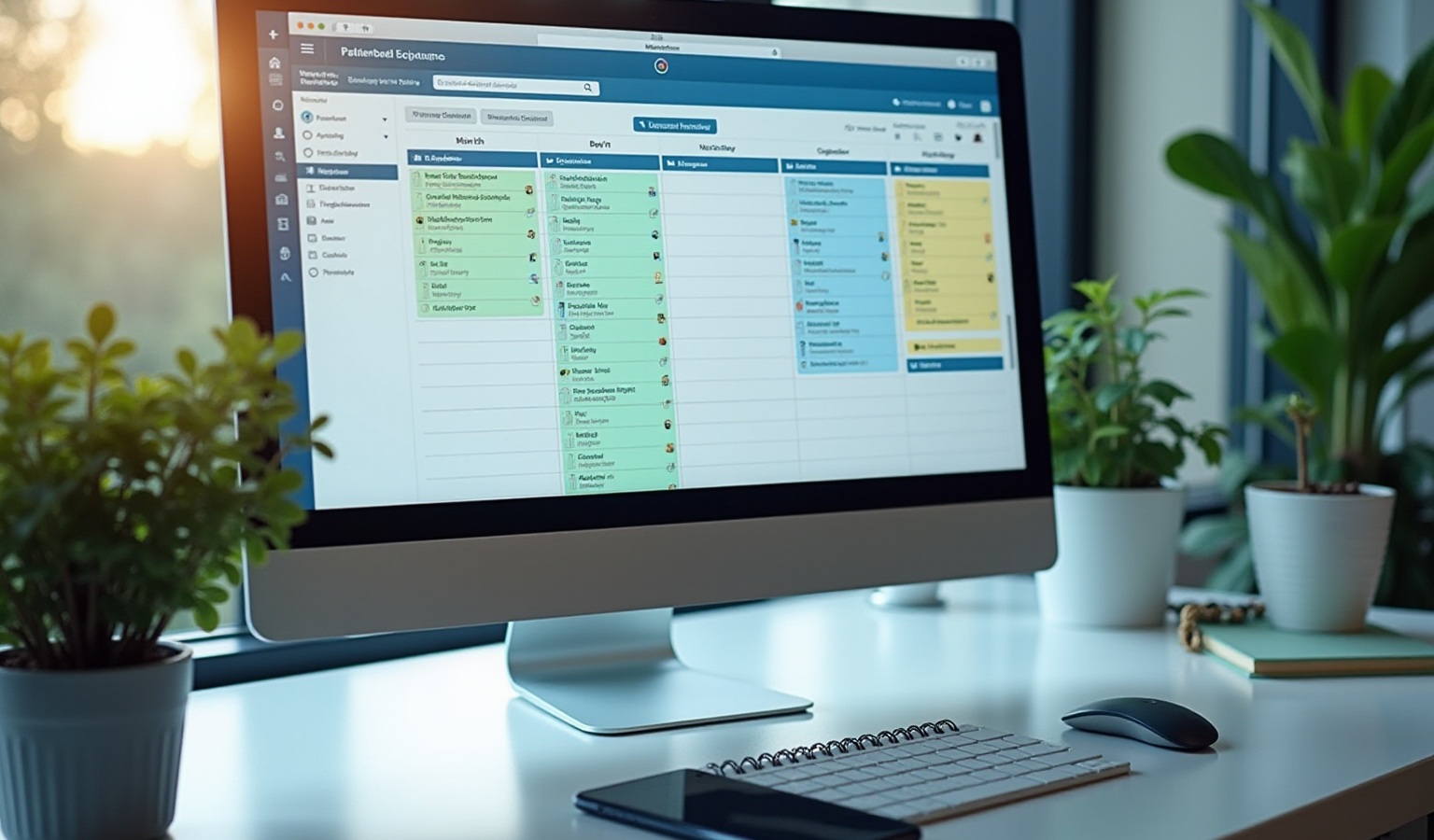
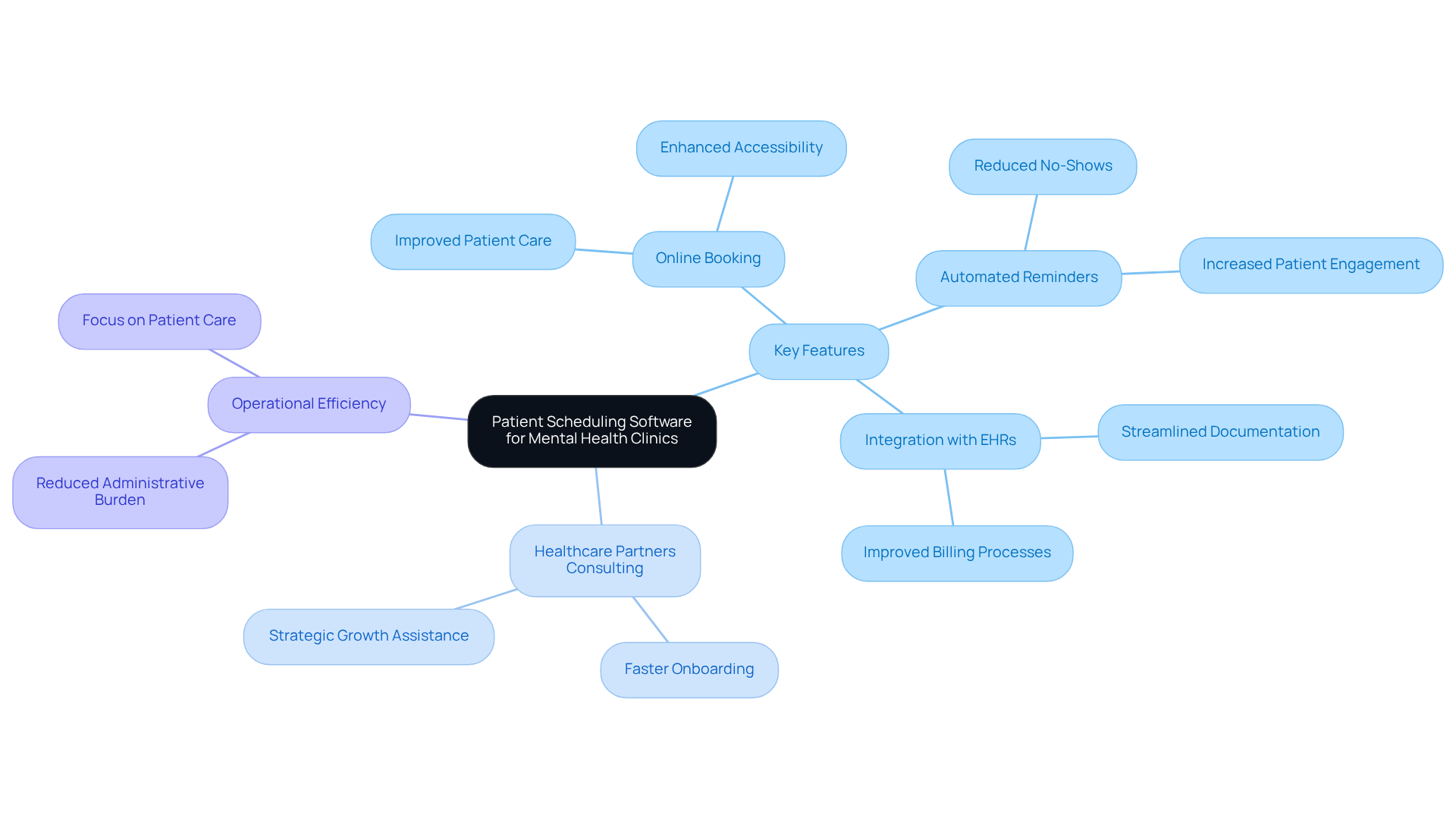
In the fast-paced environment of mental health care, managing appointments efficiently is more critical than ever. Patient schedule software enhances the booking process in mental health facilities, enabling both individuals and providers to manage timetables effortlessly. These systems include features such as:
- online booking
- automated reminders
- seamless integration with electronic health records (EHRs)
Clinics often struggle with the overwhelming administrative tasks that detract from patient care. By automating appointment tasks, clinics can focus more on patient care. This shift ultimately leads to improved treatment results. As the behavioral health landscape evolves, the integration of patient schedule software is expected to play a crucial role in enhancing operational efficiency and client engagement in the coming years.
Partnering with Healthcare Partners Consulting further enhances this efficiency. Their services ensure faster onboarding, allowing providers to see patients and bill without administrative delays. With consistent payor compliance, healthcare facilities can avoid unexpected rejections or credentialing-based denials, thereby minimizing the administrative burden. Furthermore, Partners Consulting provides strategic growth assistance, allowing facilities to expand services, locations, or providers with assurance.
The essential toolkit provided by Healthcare Partners Consulting simplifies credentialing and administrative tasks, featuring clear action steps and resources tailored for therapists and behavioral health groups. This transformation not only streamlines operations but also significantly enhances the quality of care patients receive.
Key Features Essential for Mental Health Scheduling Software
When selecting patient scheduling software for mental health clinics, it is crucial to prioritize features that enhance operational efficiency and client engagement:
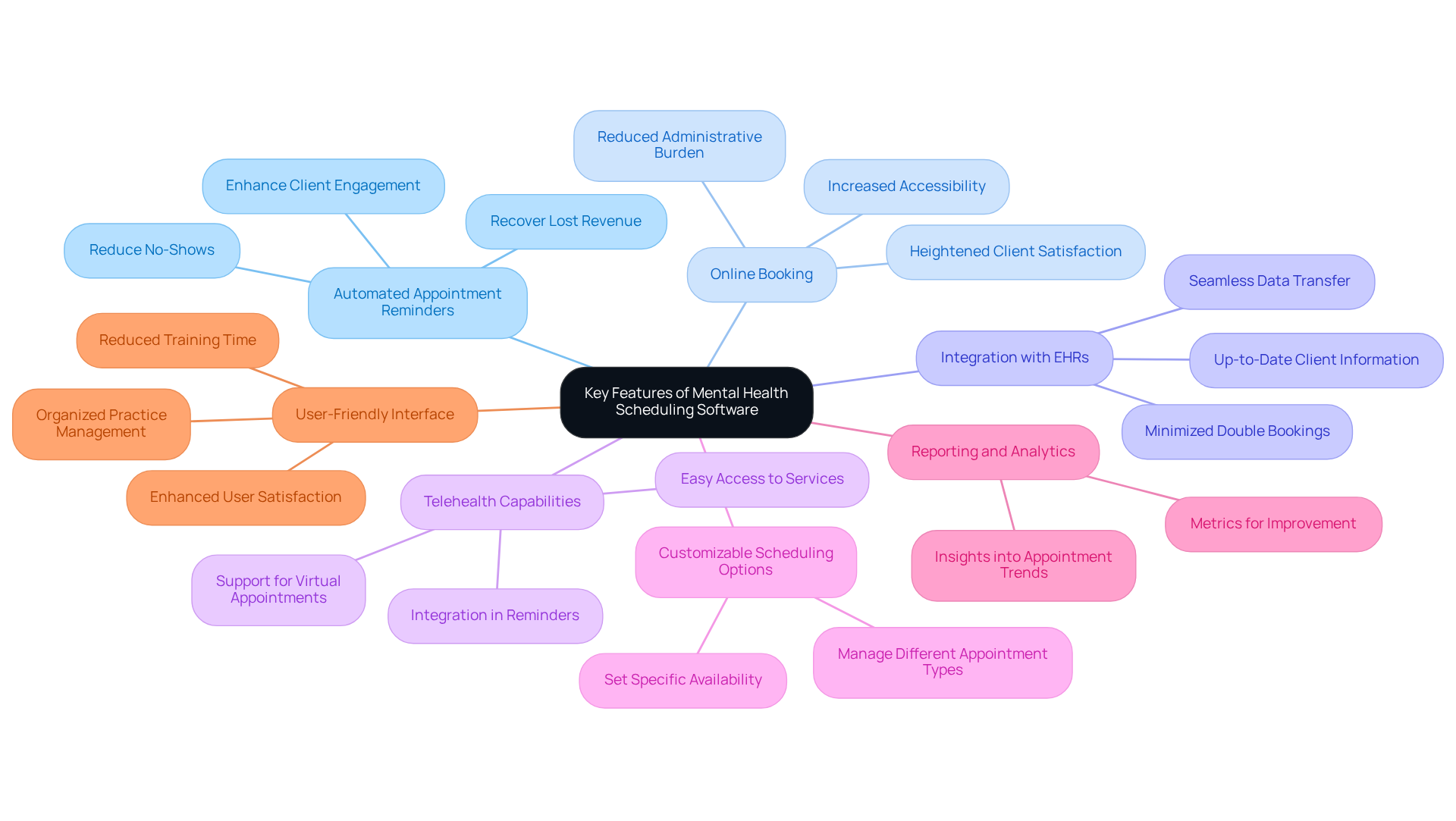
- Automated Appointment Reminders: These reminders significantly reduce no-shows by sending notifications via SMS or email. Studies show reductions in non-attendance rates by up to 38%. Automated reminders improve client engagement. They also safeguard revenue by recovering thousands lost to missed appointments. Healthcare Partners Consulting can assist clinics in effectively implementing patient schedule software, ensuring optimal interaction with individuals.
- Online Booking: This feature enables individuals to schedule appointments at their convenience, enhancing accessibility and addressing the growing demand for mental health services. Clinics that implement online booking often see heightened client satisfaction and reduced administrative burdens. Partners Consulting provides advisory services to assist medical facilities in establishing and enhancing their patient schedule software systems.
- Integration with EHRs: Seamless data transfer between scheduling and client records enhances workflow efficiency. This minimizes the risk of double bookings and ensures that individual information is always up to date. Healthcare Partners Consulting can guide clinics in selecting patient schedule software that integrates smoothly with existing EHR systems.
- Telehealth Capabilities: Supporting virtual appointments has become increasingly important in mental health care, especially as patients seek flexible options. Effective patient schedule software should facilitate easy access to telehealth services by integrating links directly into appointment reminders. Partners Consulting offers insights on best practices for telehealth integration.
- Customizable Scheduling Options: Clinics should be able to set specific availability and manage different types of appointments, such as initial consultations and follow-ups, to better meet the diverse needs of their patients. Healthcare Partners Consulting can assist in customizing patient schedule software to meet the distinct needs of each medical facility.
- Reporting and Analytics: Offering insights into appointment trends assists clinics in enhancing their booking practices. Metrics such as no-show rates and client satisfaction scores are essential for measuring the impact of scheduling strategies. Partners Consulting can assist in interpreting these metrics to enhance operational efficiency.
- User-Friendly Interface: A system that is simple to navigate for both staff and clients reduces training time and enhances user satisfaction. This ultimately contributes to a more organized practice. Healthcare Partners Consulting emphasizes the importance of user experience when selecting patient schedule software for appointments.
By adopting these features, clinics can significantly improve their operational efficiency and enhance the quality of care provided to patients.
Comparative Analysis of Top Patient Scheduling Software for 2026
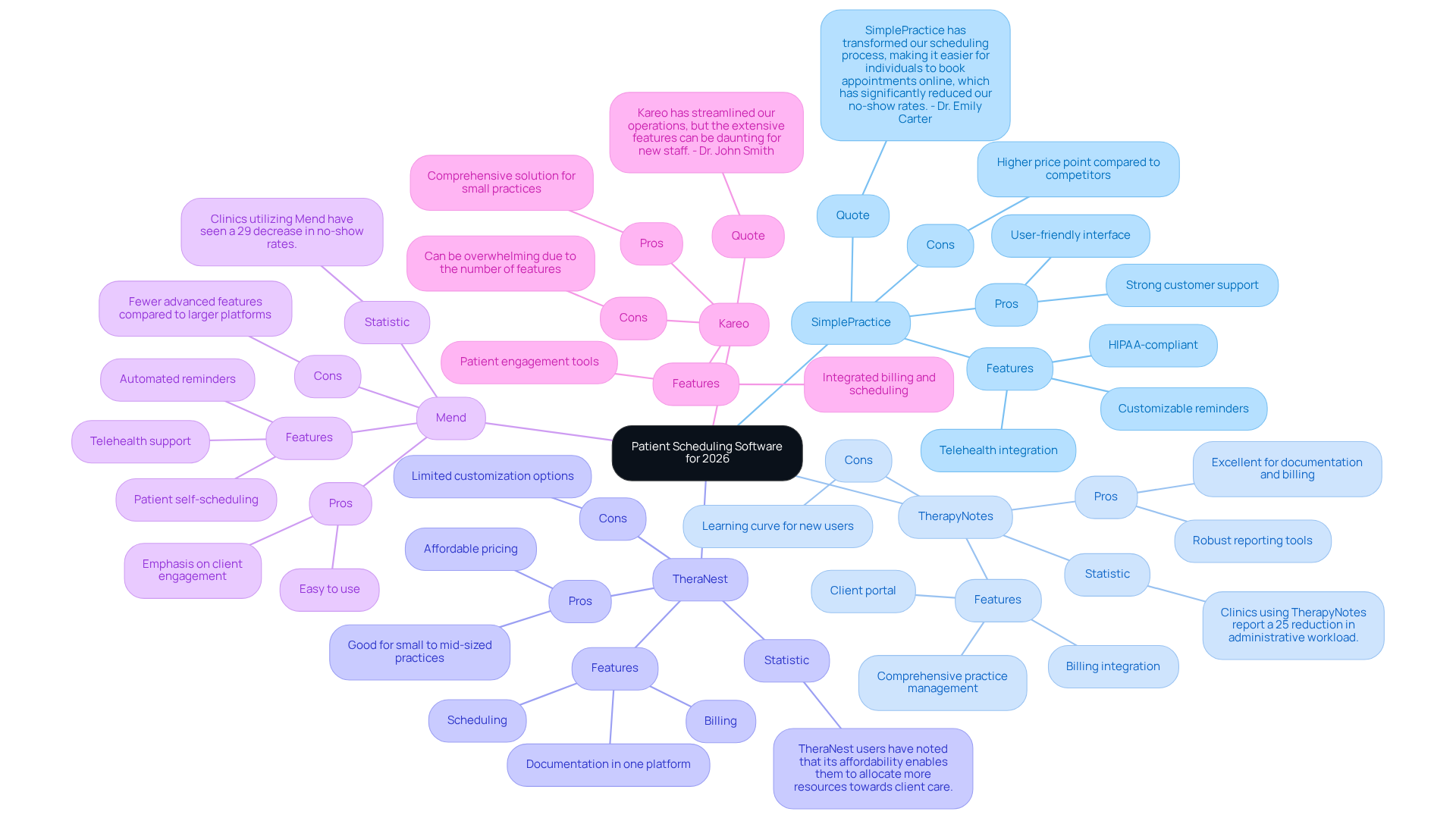
In an era where patient preferences are shifting towards online solutions, mental health clinics must adapt to remain competitive and efficient. In 2026, several patient schedule software options stand out for mental health clinics, especially since 67% of patients prefer online booking. This analysis helps clinics evaluate their choices based on budget, features, and user experience:
-
SimplePractice:
- Features: HIPAA-compliant, telehealth integration, customizable reminders.
- Pros: User-friendly interface, strong customer support.
- Cons: Higher price point compared to competitors.
- Quote: “SimplePractice has transformed our scheduling process, making it easier for individuals to book appointments online, which has significantly reduced our no-show rates.” – Dr. Emily Carter, Mental Health Clinic Owner.
-
TherapyNotes:
- Features: Comprehensive practice management, billing integration, client portal.
- Pros: Excellent for documentation and billing, robust reporting tools.
- Cons: Learning curve for new users.
- Statistic: Clinics using TherapyNotes report a 25% reduction in administrative workload due to its integrated features.
-
TheraNest:
- Features: Scheduling, billing, and documentation in one platform.
- Pros: Affordable pricing, good for small to mid-sized practices.
- Cons: Limited customization options.
- Statistic: TheraNest users have noted that its affordability enables them to allocate more resources towards client care.
-
Mend:
- Features: Patient self-scheduling, automated reminders, telehealth support.
- Pros: Emphasis on client engagement, easy to use.
- Cons: Fewer advanced features compared to larger platforms.
- Statistic: Clinics utilizing Mend have seen a 29% decrease in no-show rates due to its automated reminder system.
-
Kareo:
- Features: Integrated billing and scheduling, patient engagement tools.
- Pros: Comprehensive solution for small practices.
- Cons: Can be overwhelming due to the number of features.
- Quote: “Kareo has streamlined our operations, but the extensive features can be daunting for new staff.” – Dr. John Smith, Mental Health Clinic Owner.
The right patient schedule software can significantly improve patient care and operational performance, leading to better outcomes for clinics.
Impact of Scheduling Software on Clinic Efficiency and Patient Care
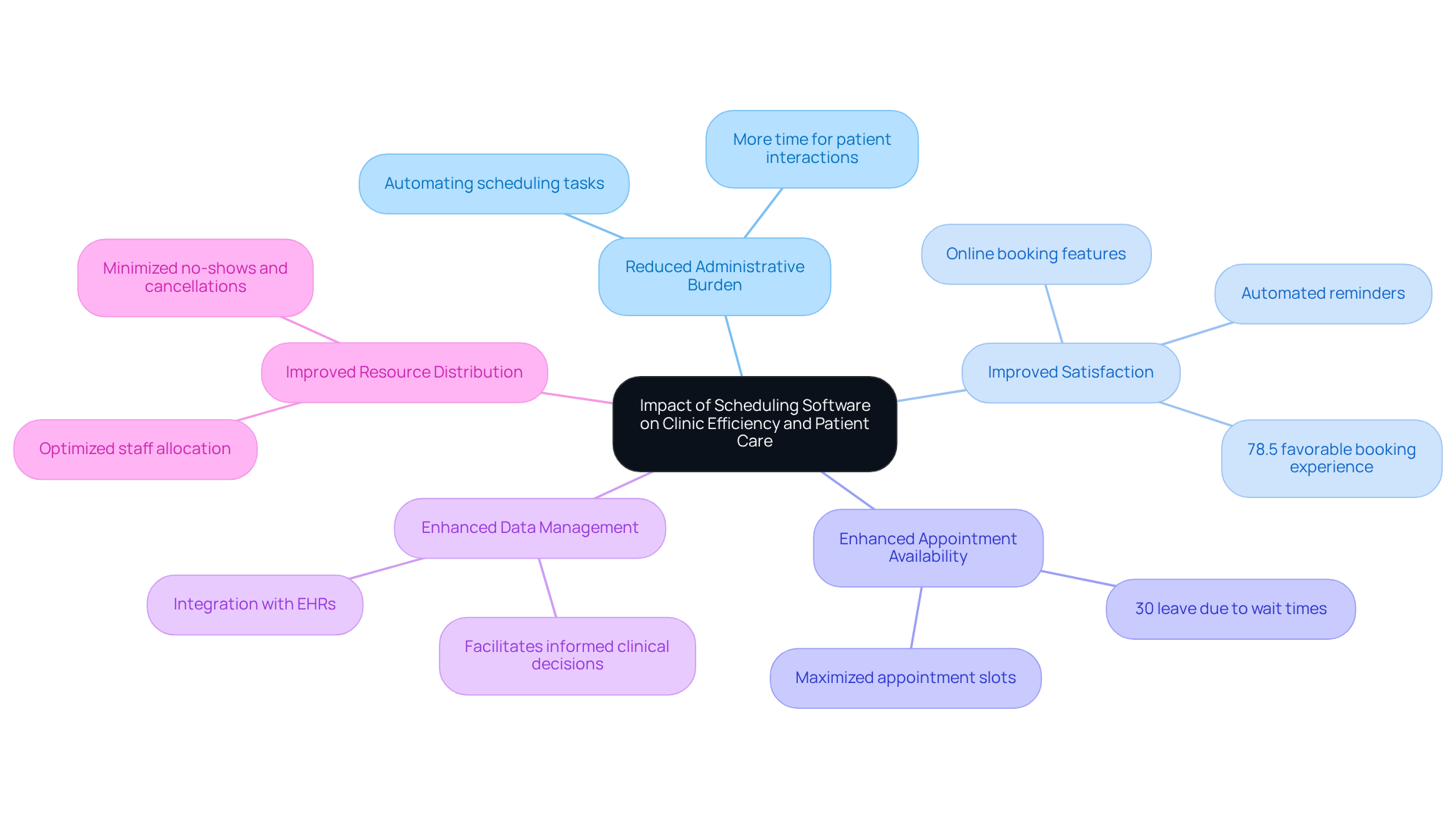
The implementation of patient scheduling software in mental health clinics addresses critical operational challenges while enhancing patient care:
- Reduced Administrative Burden: Automating scheduling tasks allows staff to dedicate more time to patient interactions rather than paperwork, fostering a more engaged and responsive care environment. Collaborating with Healthcare Partners Consulting allows clinics to streamline administrative tasks, focusing more on patient care and strategic growth.
- Improved Satisfaction: Features such as online booking and automated reminders streamline the appointment process, making it easier for individuals to manage their schedules and reducing frustration associated with missed appointments. This highlights the importance of effective scheduling in enhancing patient experiences, as research indicates that around 78.5% of individuals express a favorable assessment of their booking experience.
- Enhanced Appointment Availability: Efficient scheduling maximizes appointment slots, accommodating more individuals and significantly reducing wait times. Long wait times can deter individuals from seeking necessary healthcare services, as studies indicate that 30% of individuals leave healthcare facilities due to prolonged wait times.
- Enhanced Data Management: Integration with Electronic Health Records (EHRs) ensures that patient information is readily accessible, facilitating better-informed clinical decisions and continuity of care. Accurate coding, a cornerstone of Healthcare Partners Consulting’s services, is essential for timely reimbursement and compliance, ensuring that every claim submitted reflects the services provided.
- Improved Resource Distribution: Clinics can examine appointment data to optimize staff allocation and types of appointments, ensuring effective use of resources. Automated reminders greatly minimize no-shows and cancellations, further enhancing facility efficiency and enabling staff to concentrate more on care.
In summary, utilizing patient scheduling software streamlines operations and elevates patient care quality, making it essential for mental health practices. Ultimately, the integration of patient scheduling software is not merely an operational upgrade; it is a strategic imperative for mental health practices aiming to thrive in a competitive landscape.
Conclusion
The integration of patient scheduling software fundamentally alters the operational dynamics of mental health clinics. Streamlining administrative tasks and enhancing patient engagement allows clinics to concentrate on delivering quality care. This software alleviates the burden of scheduling and fosters a more responsive, patient-centered environment, ultimately leading to improved treatment outcomes.
Key insights from the article highlight the essential features of effective patient scheduling software, such as:
- Automated reminders
- Online booking
- EHR integration
These functionalities significantly reduce no-show rates, enhance accessibility, and ensure that patient information is always current. Furthermore, partnering with Healthcare Partners Consulting can help clinics navigate the complexities of implementation, allowing them to maximize the benefits of these tools while ensuring compliance and operational efficiency.
In conclusion, the strategic implementation of patient scheduling software is essential for clinics to enhance care quality and remain competitive in the evolving healthcare landscape. Embracing these advancements will not only streamline operations but also pave the way for better patient outcomes, reinforcing the importance of effective scheduling in mental health care.
Frequently Asked Questions
What is patient scheduling software for mental health clinics?
Patient scheduling software is a tool that enhances the booking process in mental health facilities, allowing both individuals and providers to manage appointments efficiently.
What features are commonly included in patient scheduling software?
Common features include online booking, automated reminders, and seamless integration with electronic health records (EHRs).
How does patient scheduling software benefit mental health clinics?
It automates appointment tasks, allowing clinics to focus more on patient care, which ultimately leads to improved treatment results.
Why is managing appointments efficiently important in mental health care?
Efficient appointment management is critical in the fast-paced environment of mental health care to reduce administrative burdens and enhance patient care.
How does Healthcare Partners Consulting enhance the efficiency of mental health clinics?
They provide faster onboarding, ensuring providers can see patients and bill without administrative delays, and help maintain consistent payor compliance to avoid unexpected rejections.
What kind of support does Healthcare Partners Consulting offer to mental health facilities?
They offer strategic growth assistance, helping facilities expand services, locations, or providers, along with a toolkit that simplifies credentialing and administrative tasks.
What impact does patient scheduling software have on client engagement?
The integration of patient scheduling software is expected to enhance operational efficiency and client engagement as the behavioral health landscape evolves.
How does the use of patient scheduling software affect the quality of care?
By streamlining operations and reducing administrative tasks, patient scheduling software significantly enhances the quality of care that patients receive.