

Introduction
Effective management of accounts receivable (AR) is essential for the operational health of mental health clinics, as it directly impacts their capacity to deliver quality care. With nearly 60 million adults in the U.S. seeking mental health services annually, the financial stability of these facilities hinges on efficient billing practices that ensure timely payments from patients and insurers alike.
Managing accounts receivable effectively poses significant challenges for clinics, impacting their cash flow and sustainability. This article explores best practices and innovative strategies. These approaches empower mental health facilities to optimize their accounts receivable processes, fostering financial health and enhancing patient care.
Understand Accounts Receivable in Healthcare
In healthcare, AR accounts receivable represents a critical financial metric that directly impacts service delivery and operational viability. AR accounts receivable refers to the outstanding amounts owed to providers for services delivered, including therapy sessions, consultations, and other mental health services. For mental health facilities, effective management of AR accounts receivable is essential as it directly influences cash flow and operational sustainability. Nearly 60 million adults in the U.S. seek mental health care each year. This underscores the importance of effective billing methods to ensure timely payments from individuals and insurance providers.
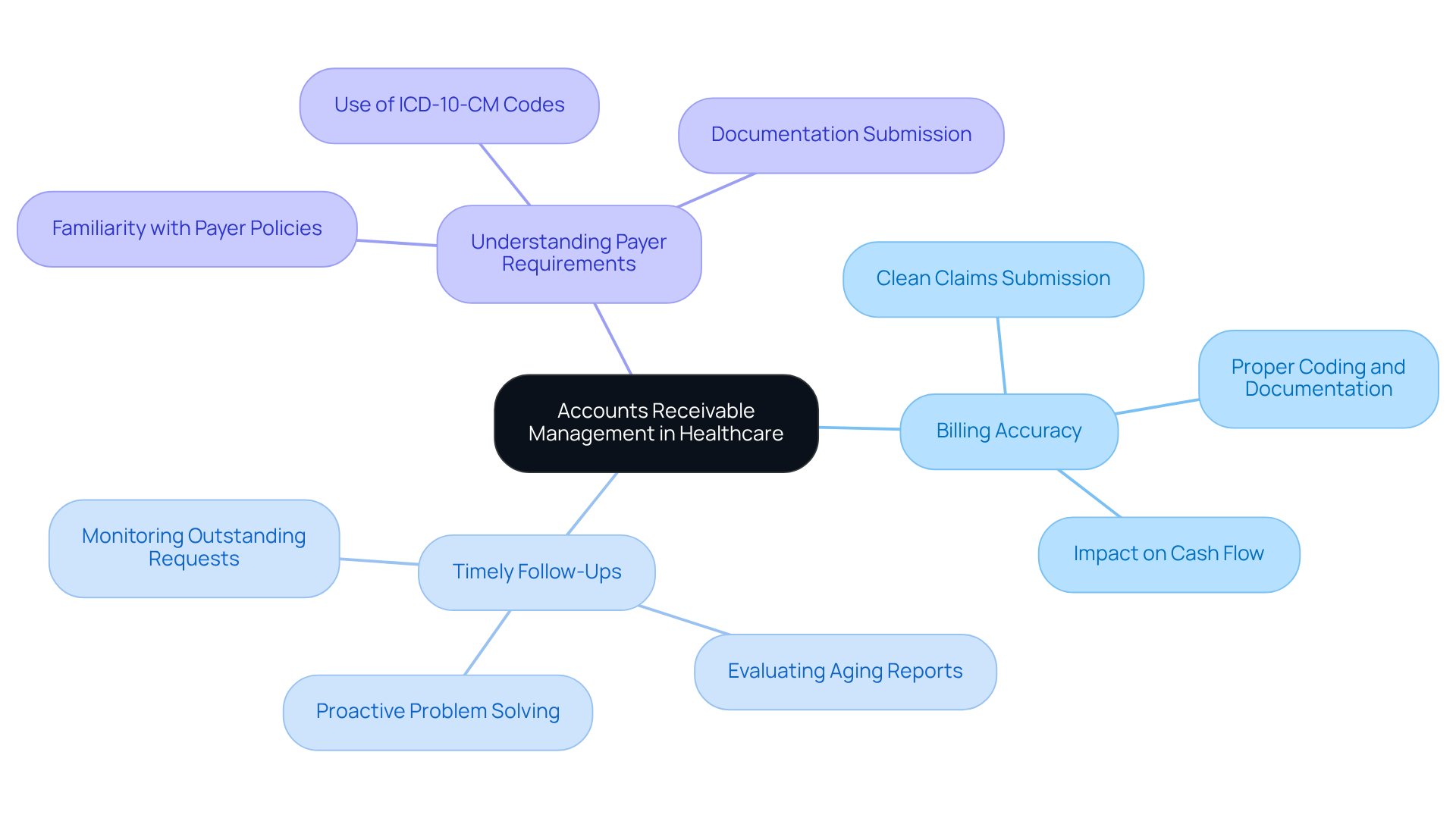
At Healthcare Partners Consulting, we offer comprehensive AR accounts receivable management services designed to help facilities improve patient statements and address issues like underpayments and outstanding invoices. Key components of successful AR management include:
- Billing Accuracy: Submitting clean claims – defined as accurate, complete, and properly coded upon initial submission – ensures faster reimbursement and reduces the likelihood of denials. Without accurate billing, cash flow can become unstable, jeopardizing operational sustainability.
- Timely Follow-Ups: Consistent monitoring of outstanding requests is vital. Frequent evaluations of aging reports assist in recognizing outstanding balances and recurring issues, enabling healthcare facilities to tackle problems proactively and reduce revenue losses.
- Understanding Payer Requirements: Familiarity with the specific requirements of different payers can prevent delays and denials. This includes using proper ICD-10-CM codes and ensuring all necessary documentation is submitted with claims.
Experts in healthcare finance emphasize that effective AR accounts receivable management fosters financial stability and enables mental health facilities to reinvest in their services, ultimately enhancing patient care. For instance, effective AR management can lead to a 30% increase in revenue, enabling practices to focus more on enhancing their service offerings and improving patient care rather than being bogged down by administrative tasks. Ultimately, prioritizing effective AR management not only secures financial health but also empowers facilities to elevate the quality of care provided to their patients.
Implement a Step-by-Step Accounts Receivable Process
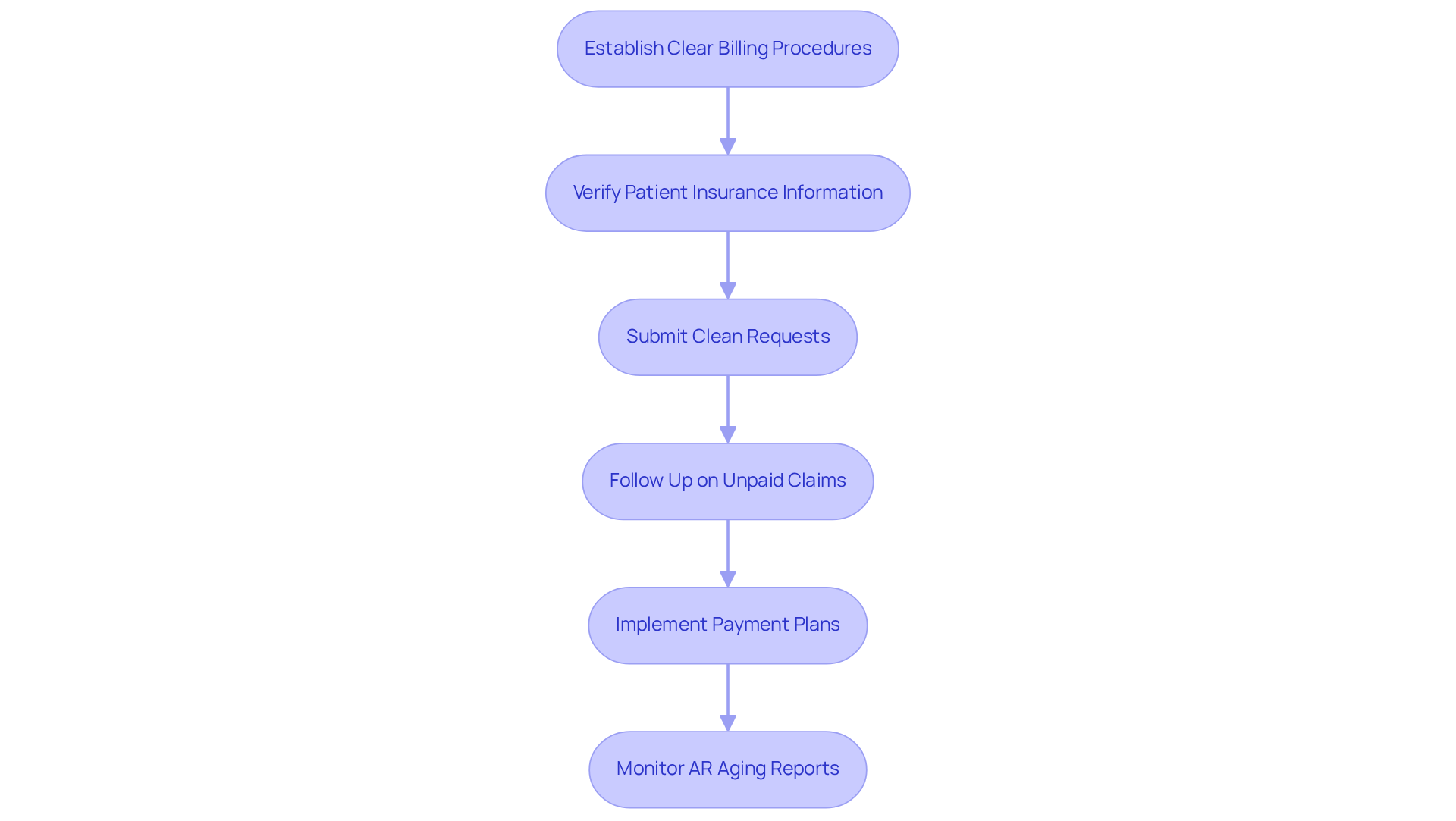
To optimize financial performance, mental health clinics must implement a robust accounts receivable process that minimizes errors and enhances patient satisfaction. Here are several best practices to consider:
- Establish Clear Billing Procedures: Define the billing cycle, specifying when invoices are generated and sent to individuals and payers. Ensure that all staff are trained on these procedures to maintain consistency and accuracy.
- Verify Patient Insurance Information: Prior to rendering services, confirm patients’ insurance coverage and eligibility. Mistakes in insurance verification can lead to significant financial setbacks for clinics, as studies show that incomplete information is a primary cause of denial of reimbursements.
- Submit Clean Requests: Ensure that all requests are accurate and complete before submission. Utilizing checklists can help verify that all necessary information is included, thereby reducing the likelihood of denials. In fact, practices that implement thorough scrubbing processes for requests see denial rates drop significantly.
- Follow Up on Unpaid Claims: Establish a timeline for following up on unpaid claims, typically 30 days after submission. Consistent follow-ups can significantly shorten the duration required to obtain funds, improving cash flow and operational efficiency.
- Implement Payment Plans: Provide flexible payment options for individuals who may have difficulty paying their bills in full. By offering flexible payment options, clinics can not only enhance collections but also foster stronger relationships with patients.
- Monitor AR Aging Reports: Regularly review accounts receivable aging reports to identify overdue accounts. Prioritizing follow-up actions based on this analysis can lead to more effective collections and enhanced financial well-being for the practice.
Ultimately, a well-structured accounts receivable process not only safeguards revenue but also enhances the clinic’s relationship with its patients.
Adopt Best Practices for Effective AR Management
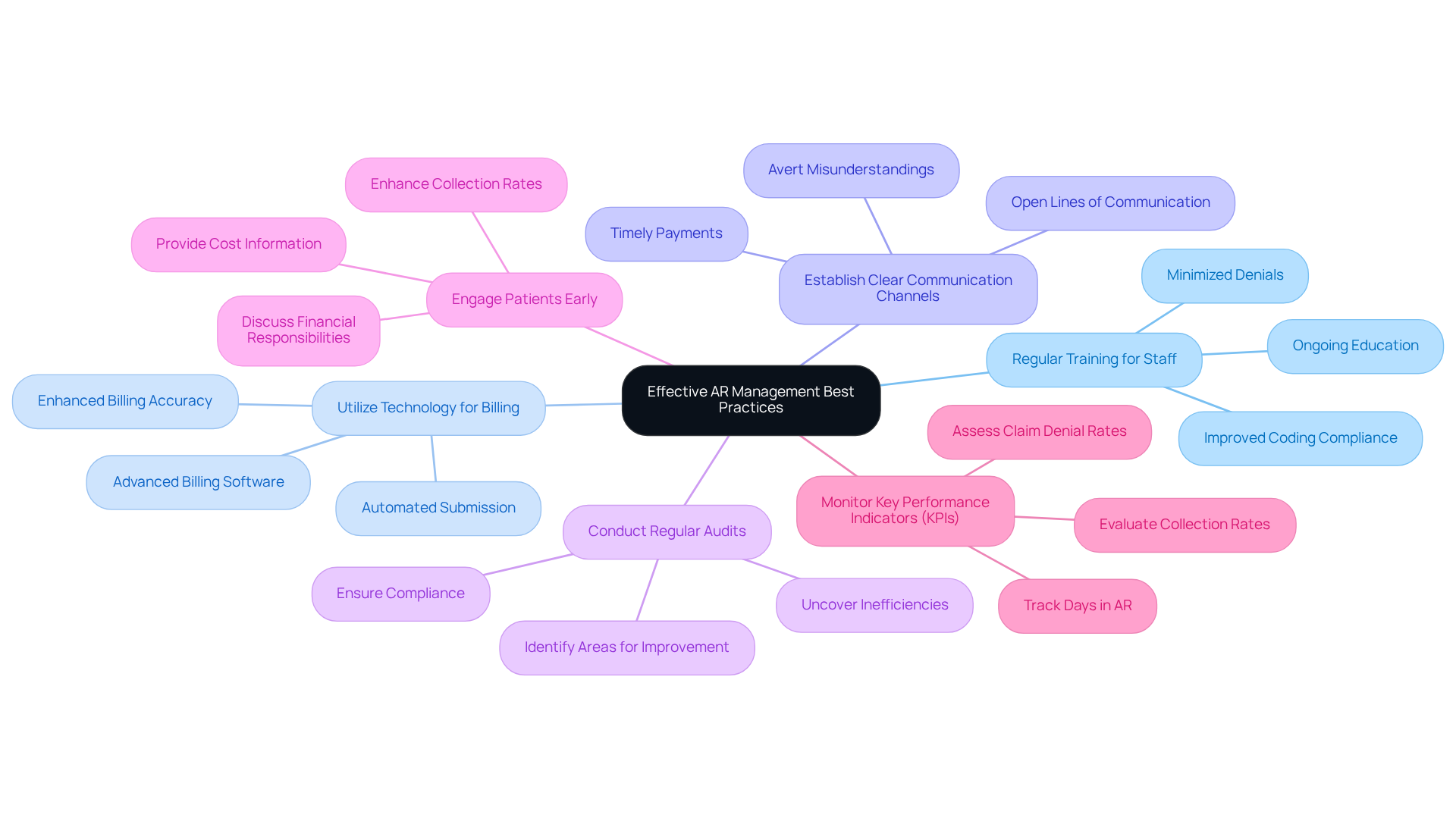
To enhance accounts receivable (AR) management, mental health clinics must implement strategic best practices that address current challenges in the healthcare billing landscape:
- Regular Training for Staff: It is essential that all personnel involved in billing and collections receive ongoing training on the latest billing codes, payer requirements, and compliance regulations. Continuous education improves coding compliance and clean-claim rates, which are crucial for minimizing denials.
- Utilize Technology for Billing: Clinics should implement advanced billing software that automates the submission of requests and tracks payments. This technology reduces manual errors and enhances billing accuracy. As claim denials rise and regulations evolve, clinics face increasing challenges in maintaining billing accuracy.
- Establish Clear Communication Channels: Maintaining open lines of communication with individuals regarding their financial responsibilities is vital. Effective communication can avert misunderstandings and delayed payments, which are frequent problems in billing, particularly with the growing complexity of high-deductible insurance plans.
- Conduct Regular Audits: Periodically reviewing billing practices and AR processes helps identify areas for improvement. Regular audits uncover inefficiencies and ensure compliance with regulations, which is essential given the stricter audits and AI scrutiny affecting outpatient claims.
- Engage Patients Early: Discussing financial responsibilities with patients during their initial visit is crucial. When clinics provide clear information about costs and payment options, they often see better payment outcomes. Proactive engagement is key to enhancing collection rates.
- Monitor Key Performance Indicators (KPIs): Tracking metrics such as days in AR, claim denial rates, and collection rates allows healthcare facilities to assess the effectiveness of AR management strategies. Monitoring these KPIs enables clinics to make informed modifications to their processes, ensuring sustained financial health and operational efficiency.
Furthermore, mental wellness centers can evaluate their profitability using a brief quiz provided by Healthcare Partners Consulting. This evaluation not only offers tailored suggestions to boost efficiency and billing precision but also assists healthcare facilities in pinpointing specific areas where they can enhance their financial performance. Engaging in a consultation can further help identify optimal administrative solutions tailored to the specific needs of each healthcare practice. By adopting these practices, clinics can not only improve their financial performance but also ensure a more sustainable operational model in an increasingly complex healthcare environment.
Leverage Technology for AR Optimization
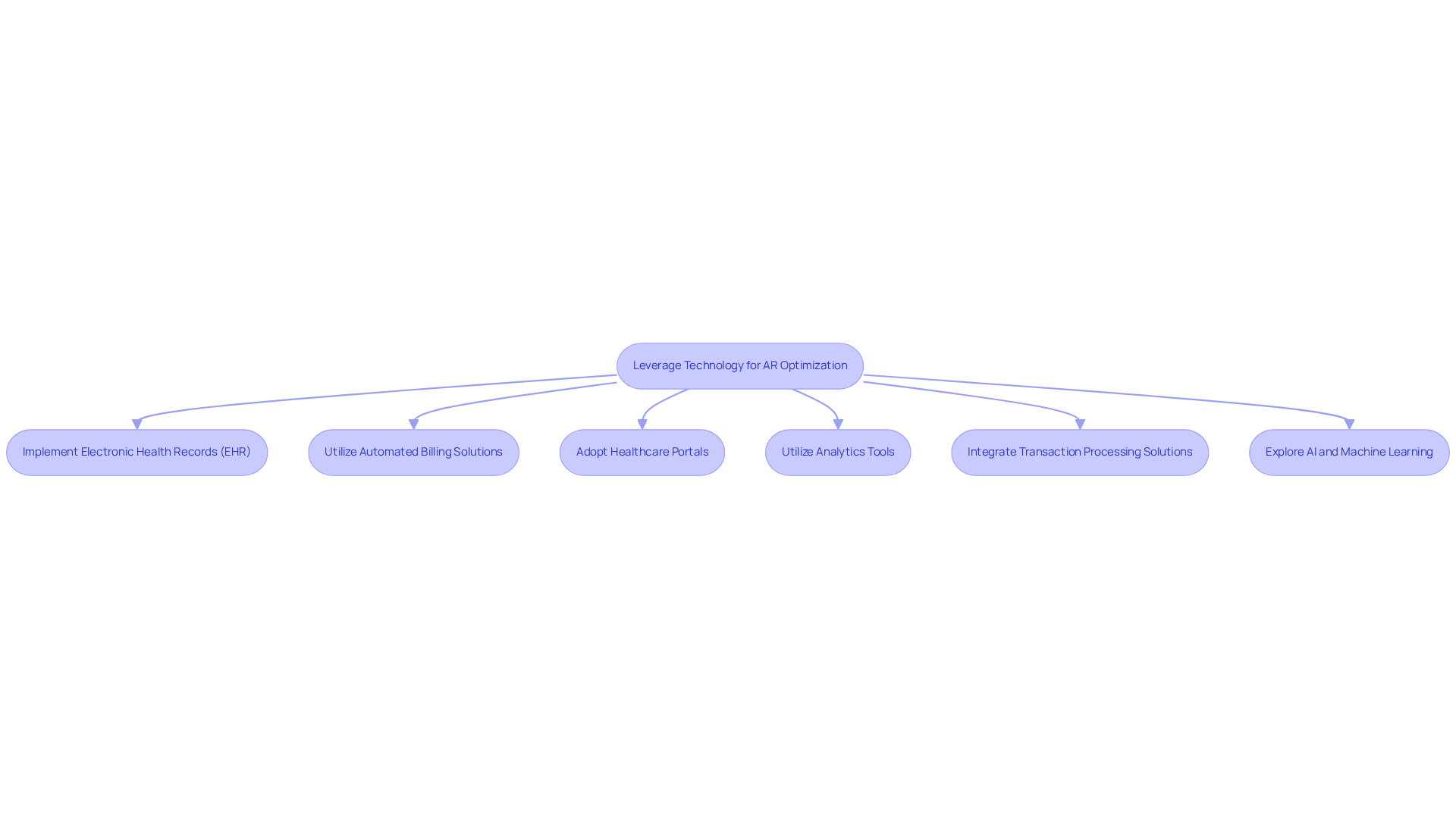
Many mental health clinics struggle with inefficient accounts receivable processes, which can hinder their financial stability and patient care. To address these challenges, clinics can significantly enhance their accounts receivable (AR) processes by leveraging advanced technology in several impactful ways:
- Implement Electronic Health Records (EHR): EHR systems streamline billing by integrating clinical and billing information, minimizing errors and enhancing claim accuracy. This integration is crucial for maintaining compliance with healthcare regulations while improving operational efficiency.
- Utilize automated billing solutions to manage accounts receivable: Automated billing systems enable the prompt dispatch of invoices and reminders to clients, reducing the administrative load on staff. Clinics utilizing these systems have reported collection rates as high as 94%, significantly above the industry average of 68%.
- Adopt Healthcare Portals: Healthcare portals enable individuals to view their bills, make payments, and communicate with the facility regarding their accounts. This transparency fosters greater patient engagement and satisfaction, which is essential for timely collections.
- Utilize analytics tools to monitor accounts receivable performance, identify trends, and make data-driven decisions. By examining transaction patterns, clinics can enhance their collection strategies and decrease denial rates, resulting in ongoing improvements in revenue.
- Integrate Transaction Processing Solutions: Providing various transaction options, including online transactions and mobile transaction applications, can accelerate collections and improve client satisfaction. Flexible financing plans, such as interest-free alternatives, can also promote prompt remittances from patients.
- Explore AI and Machine Learning: AI-driven tools can analyze payment behaviors and predict which accounts are at risk of becoming overdue. This proactive method enables facilities to intervene early, enhancing overall collection rates and minimizing the risk of bad debt.
Without embracing these technological advancements, clinics risk falling behind in a competitive healthcare landscape, ultimately affecting their ability to provide quality care.
Conclusion
Effective management of accounts receivable (AR) is crucial for the operational efficiency of mental health clinics. Prioritizing best practices in AR management enables facilities to secure timely payments and minimize revenue losses, thereby enhancing patient care quality. Streamlined processes, technology, and staff training safeguard financial health and allow clinics to prioritize patient care over administrative tasks.
Key insights from the discussion highlight the importance of:
- Accurate billing
- Timely follow-ups
- Understanding payer requirements
Establishing clear procedures, leveraging technology, and engaging patients early in the billing process are vital steps that can significantly improve collection rates and financial performance. Regular audits and monitoring of key performance indicators further contribute to identifying areas for improvement, ensuring that clinics remain competitive in a challenging healthcare landscape.
As mental health clinics navigate the complexities of accounts receivable, embracing these strategies is essential. This proactive approach not only stabilizes revenue but also enhances the quality of care delivered to patients. By embracing these strategies, mental health clinics can not only secure their financial future but also significantly improve patient care outcomes.
Frequently Asked Questions
What does accounts receivable (AR) mean in healthcare?
In healthcare, accounts receivable refers to the outstanding amounts owed to providers for services delivered, such as therapy sessions and consultations.
Why is effective management of AR accounts receivable important for mental health facilities?
Effective management of AR accounts receivable is crucial as it directly influences cash flow and operational sustainability, allowing facilities to maintain financial health and continue providing services.
How many adults in the U.S. seek mental health care each year?
Nearly 60 million adults in the U.S. seek mental health care each year.
What services does Healthcare Partners Consulting offer related to AR management?
Healthcare Partners Consulting offers comprehensive AR accounts receivable management services to help facilities improve patient statements and address issues like underpayments and outstanding invoices.
What are key components of successful AR accounts receivable management?
Key components include billing accuracy, timely follow-ups, and understanding payer requirements.
What is the significance of billing accuracy in AR management?
Billing accuracy ensures that claims are accurate, complete, and properly coded upon initial submission, leading to faster reimbursement and reducing the likelihood of denials.
Why are timely follow-ups important in AR management?
Timely follow-ups involve consistent monitoring of outstanding requests, which helps recognize outstanding balances and recurring issues, enabling proactive problem-solving and reducing revenue losses.
How does understanding payer requirements affect AR management?
Familiarity with the specific requirements of different payers can prevent delays and denials, ensuring that claims are submitted correctly with all necessary documentation.
What impact can effective AR management have on revenue?
Effective AR management can lead to a 30% increase in revenue, allowing practices to focus more on enhancing service offerings and improving patient care.
How does prioritizing effective AR management benefit patient care?
Prioritizing effective AR management secures financial health, empowering facilities to elevate the quality of care provided to their patients.