Introduction
Clinics often struggle to navigate the complexities of telehealth modifier codes, which can lead to billing errors and reduced revenue. These codes, such as 95 and GT, are crucial for accurately representing telehealth services, ensuring compliance, and minimizing claim denials. As telehealth continues to evolve, clinics must adapt to regulatory changes and best practices to remain compliant and effective. By mastering these codes, healthcare providers can ensure compliance and elevate the quality of care they deliver.
Define Telehealth Modifier Codes and Their Importance
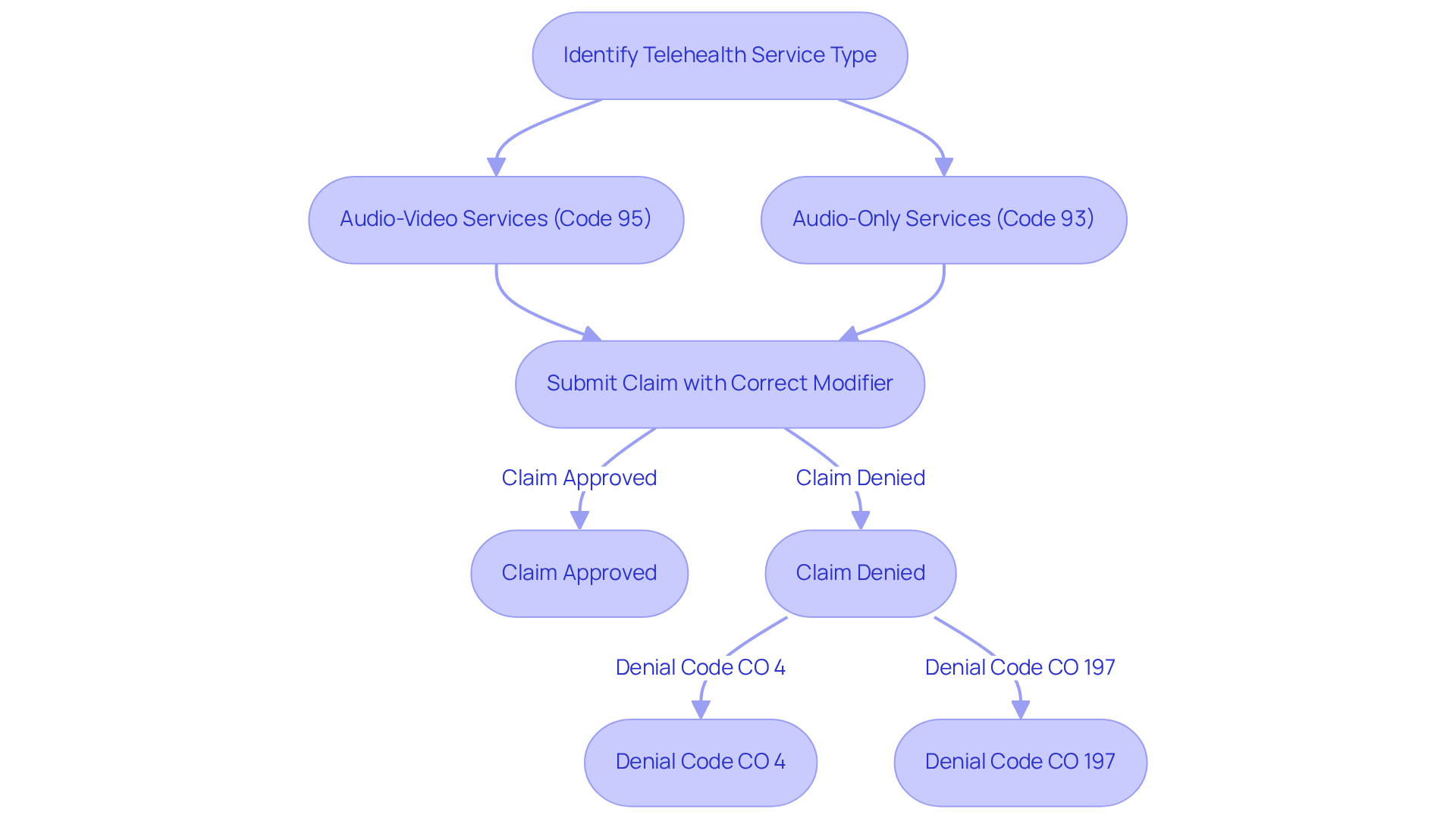
The modifier code for telehealth serves as an essential identifier in medical billing, delineating the nature of telehealth interactions provided, whether through audio-video technology or audio-only communication. The most frequently used codes include Code 95, which indicates that a service was performed through real-time interactive audio and video telecommunications, and Code 93, assigned for audio-only services, as well as the modifier code for telehealth. Clinics must master these elements to adhere to billing regulations and minimize claim denials. Incorrect usage of qualifiers can lead to denial codes such as CO 4 and CO 197, which indicate issues with application or absence, respectively.
The precise use of the modifier code for telehealth not only supports appropriate reimbursement but also enhances a clinic’s reputation with payers and regulatory authorities. Effective use of these codes can reduce denial rates by 20-30% and speed up reimbursement timelines by 15-25% within 30-90 days. For example, a research analysis on the application of FQ illustrates how healthcare providers can ensure proper billing for remote care delivered to patients at home, thereby enhancing access and adherence.
Clinics can show operational rigor by implementing scorecard-driven adjustments that focus on claims accuracy and denial rates. Regular evaluations of billing practices can assist in identifying issues with remote healthcare service usage, ensuring that clinics stay proactive in their financial strategies. By prioritizing education and adopting strategic practices, clinic owners can safeguard their revenue streams while enhancing the quality of care they deliver.
Explore Key Telehealth Modifiers: 95, GT, and Others
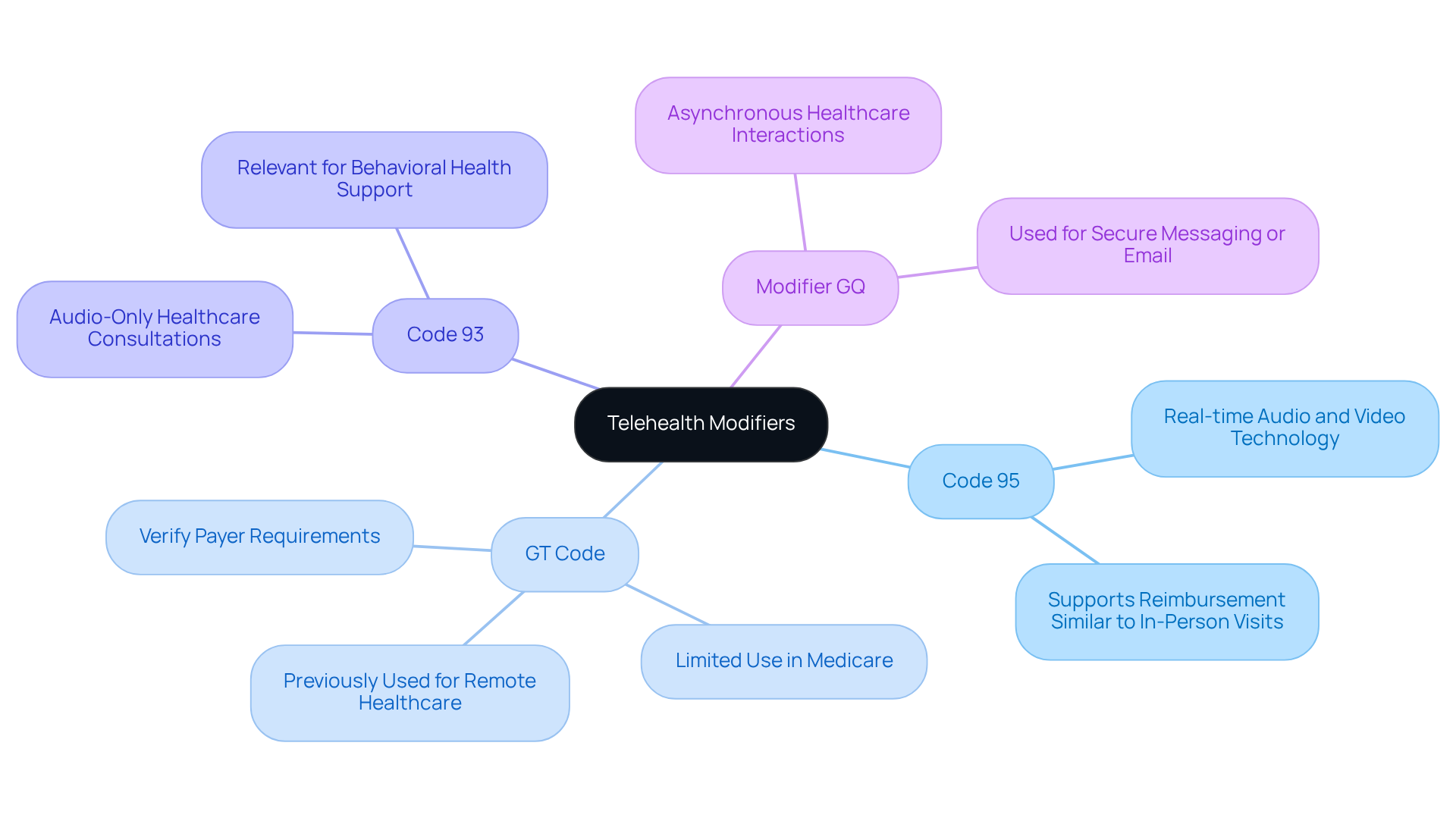
Understanding the nuances of remote healthcare billing, particularly the modifier code for telehealth, is essential for clinics aiming to optimize their revenue cycle management. This designation signifies that a procedure was conducted using real-time audio and video technology, which is crucial for billing remote healthcare services effectively. When utilized correctly, Code 95 can support reimbursement rates similar to in-person visits, significantly enhancing revenue cycle performance.
- GT Code: Previously used to indicate remote healthcare options, GT Code has largely been supplanted by Code 95 for most billing situations. However, some payers may still accept it, making it essential to verify specific payer requirements to avoid claim rejections.
- 93: This designation is intended for audio-only healthcare consultations, indicating that the assistance was provided without video. It is especially pertinent for behavioral health support where video may not be feasible, enabling providers to sustain access to care for patients who may lack the necessary technology.
- Modifier GQ: Utilized for asynchronous healthcare interactions, such as those conducted through secure messaging or email, Modifier GQ is less prevalent but still significant for certain remote consultations. Proper use of the modifier code for telehealth can ensure adherence and suitable reimbursement for remote healthcare services.
Understanding these billing adjustments, particularly the modifier code for telehealth, is vital for clinics to avoid denials and improve their financial outcomes. Accurate application of descriptive terms can lead to a reduction in denials by 20-30% and facilitate faster reimbursement, improving cash flow by 15-25% within 30-90 days. When clinics align their billing practices with payer policies, they can significantly boost their revenue cycle management and meet remote care requirements effectively.
Apply Telehealth Modifiers: Best Practices and Common Pitfalls
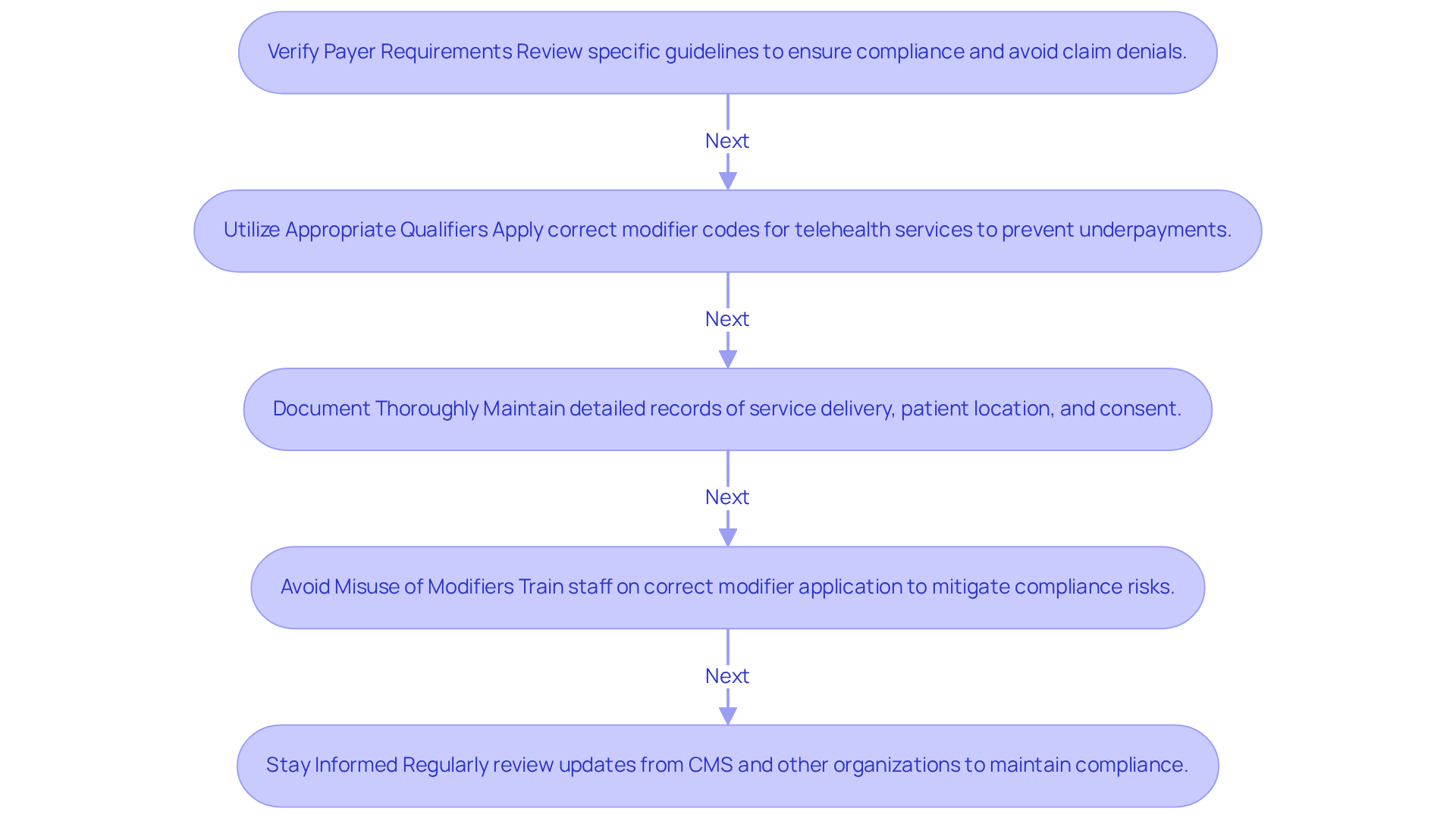
Navigating the complexities of telehealth billing requires meticulous attention to payer requirements and the use of the modifier code for telehealth.
- Verify Payer Requirements: Each payer may have distinct guidelines for telehealth billing codes. It is essential to review these specific requirements to ensure compliance and avoid claim denials. This verification process is crucial for managing patient statements effectively, as payer requirements can influence how claims are processed and underpayments are addressed.
- Utilize the appropriate qualifier for the type of assistance, as it is crucial. For example, the modifier code for telehealth, Modifier 95, should be utilized for synchronous audio-video interactions, while Modifier 93 is designated for audio-only interactions. Correctly applying adjustments is crucial to prevent underpayments and ensure accurate billing, directly impacting patient statements.
- Document Thoroughly: Thorough documentation is essential for substantiating claims. This encompasses outlining the method of delivery (audio/video), the patient’s location, and any required consent documentation. Proper documentation practices can significantly reduce denial rates by 20-30% and enhance operational efficiency, thereby improving the management of patient statements and claims.
- Avoid Misuse of Modifiers: Incorrectly applying descriptive terms can lead to claim denials. For example, using Modifier 95 for an audio-only service can trigger compliance issues. Training staff on the correct application of adjustments, including the modifier code for telehealth, is essential to mitigate these risks and ensure that patient statements reflect accurate billing practices.
- Stay Informed: Telehealth regulations and adjustment requirements are frequently updated. Regularly reviewing changes from CMS and other relevant organizations is crucial to maintaining compliance and optimizing billing practices. Staying informed is vital for managing patient statements effectively, as it directly impacts how underpayments and aging claims are handled.
Neglecting these practices can lead to higher claim denials and slower reimbursements, jeopardizing financial stability.
Understand Future Changes in Telehealth Modifiers and Regulations
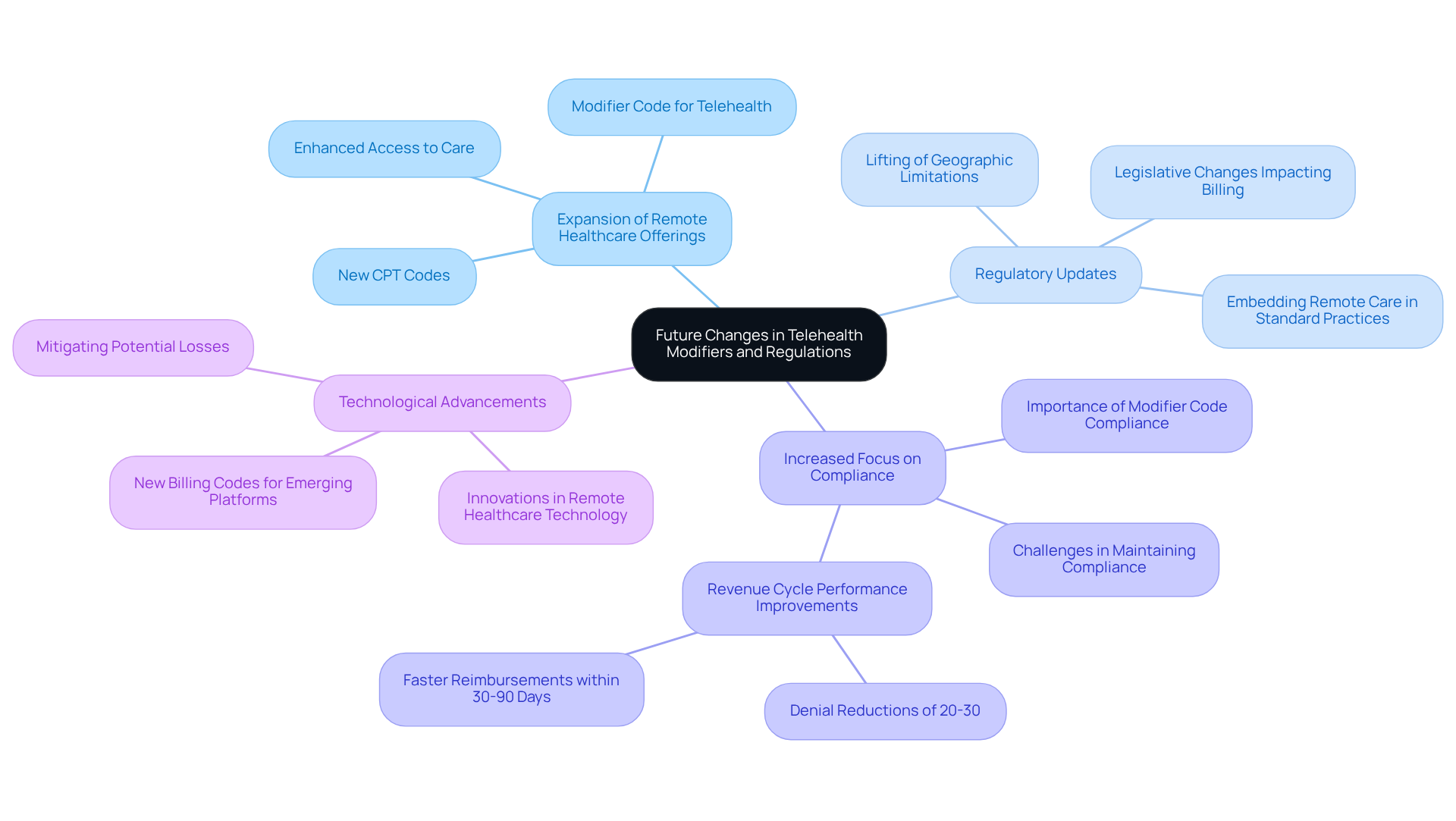
As telehealth evolves, significant changes in modifiers and regulations are on the horizon, impacting how remote healthcare is delivered and reimbursed:
- Expansion of Remote Healthcare Offerings: The ongoing acceptance of virtual care is likely to lead to the addition of more options to the list of reimbursable remote healthcare provisions. This expansion may include new CPT codes and a modifier code for telehealth that reflects the evolving landscape of healthcare delivery, thereby enhancing access to care for patients.
- Regulatory Updates: Legislative changes are anticipated to influence how remote healthcare practices are billed and reimbursed. The recent lifting of geographic limitations for remote healthcare options is merely the start; additional changes are expected as remote care becomes more embedded in standard treatment practices, ensuring that patients can access essential support from home.
- Increased Focus on Compliance: Clinics may face challenges in maintaining compliance as scrutiny from payers and regulatory bodies increases. Therefore, clinics must prioritize compliance with all billing regulations, particularly the modifier code for telehealth, to avoid penalties and ensure timely reimbursement. Practices that proactively prepare for these changes can improve their revenue cycle performance, with denial reductions of 20-30% and faster reimbursements observed within 30-90 days.
- Technological Advancements: Innovations in remote healthcare technology are likely to lead to new billing codes that reflect the capabilities of emerging platforms and services. Clinics that prepare for these changes can enhance their revenue cycle performance and mitigate potential losses, ensuring they remain competitive in the evolving healthcare landscape.
Adapting to these anticipated changes will be crucial for clinics aiming to sustain high-quality telehealth services amidst evolving regulations.
Conclusion
Optimizing billing processes through mastery of telehealth modifier codes is critical for clinics aiming to enhance patient care and operational efficiency. Understanding and applying these codes correctly enables healthcare providers to reduce claim denials significantly. This, in turn, improves reimbursement timelines, allowing them to focus more on delivering quality care rather than navigating administrative hurdles.
The article highlights the importance of specific telehealth modifier codes, such as 95 and 93, and emphasizes best practices for their application. Key insights include:
- The necessity of verifying payer requirements
- Thorough documentation
- Staying informed about regulatory changes
Implementing these strategies safeguards revenue streams and ensures compliance, which is essential for maintaining compliance and operational efficiency in telehealth.
As telehealth continues to expand, staying ahead of changes in regulations and billing practices will be vital for clinics. Embracing a proactive approach to understanding and applying telehealth modifier codes not only enhances operational efficiency but also empowers healthcare providers to prioritize patient care. For clinics, the commitment to mastering these codes is not merely advantageous; it is a fundamental requirement for sustained success in the telehealth arena.
Frequently Asked Questions
What are telehealth modifier codes?
Telehealth modifier codes are essential identifiers in medical billing that specify the nature of telehealth interactions, whether conducted through audio-video technology or audio-only communication.
What are the most commonly used telehealth modifier codes?
The most frequently used telehealth modifier codes include Code 95, which indicates services performed through real-time interactive audio and video telecommunications, and Code 93, which is assigned for audio-only services.
Why is it important for clinics to master telehealth modifier codes?
Mastering telehealth modifier codes is crucial for clinics to adhere to billing regulations, minimize claim denials, and ensure appropriate reimbursement for services provided.
What are the potential consequences of incorrect usage of telehealth modifier codes?
Incorrect usage of telehealth modifier codes can lead to denial codes such as CO 4 and CO 197, indicating issues with application or absence, which can negatively impact a clinic’s revenue.
How can the proper use of telehealth modifier codes affect reimbursement?
Proper use of telehealth modifier codes can reduce denial rates by 20-30% and speed up reimbursement timelines by 15-25% within 30-90 days.
What strategies can clinics implement to improve billing practices for telehealth services?
Clinics can implement scorecard-driven adjustments focusing on claims accuracy and denial rates, and conduct regular evaluations of billing practices to identify issues with remote healthcare service usage.
How can prioritizing education and strategic practices benefit clinic owners?
Prioritizing education and adopting strategic practices can help clinic owners safeguard their revenue streams while enhancing the quality of care they deliver.