
Introduction
Outstanding payments owed to healthcare providers represent a critical challenge for operational sustainability in the healthcare sector. Hospital accounts receivable (A/R) plays a pivotal role in ensuring that clinics maintain cash flow, meet operational costs, and ultimately provide quality patient care. However, many healthcare organizations face challenges due to inefficient billing processes that result in extended A/R days and significant financial strain.
What strategies can clinics implement to optimize their accounts receivable management, thereby enhancing revenue and improving patient relationships in a competitive landscape?
Define Hospital Accounts Receivable and Its Importance
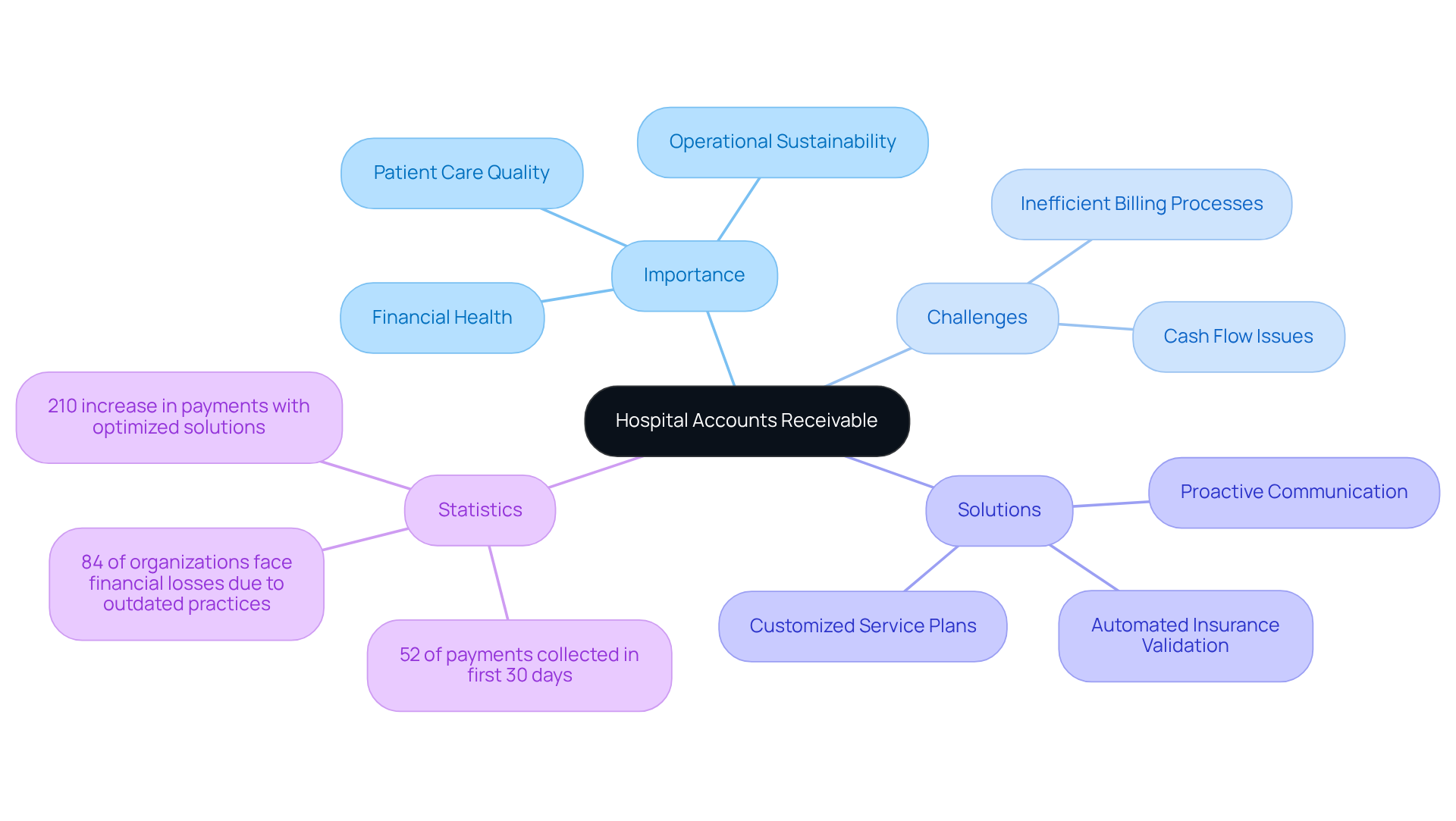
Outstanding payments owed to healthcare providers represent a critical aspect of financial health in the healthcare sector. Hospital accounts receivable (A/R) includes the outstanding payments owed to healthcare providers for services rendered, which encompasses amounts due from both insurance companies and individuals. A/R is crucial for a healthcare facility’s financial health. It represents anticipated revenue essential for operational sustainability. Efficient management of hospital accounts receivable is vital for sustaining cash flow, enabling clinics to meet operational costs and invest in enhancements for care. Inefficient billing processes can lead to prolonged hospital accounts receivable days, resulting in significant cash flow challenges. This not only affects financial health but also compromises patient care quality.
Healthcare Partners Consulting provides customized solutions designed to enhance medical billing workflows, focusing on specialty-driven, relationship-oriented service. Their expertise in managing underpayments, unprocessed requests, and aging submissions aims to improve billing statements and streamline request management. For instance, healthcare organizations that have implemented automated insurance validation have seen a significant increase in first-time claim acceptance, reducing processing costs and potentially generating millions in additional revenue. Moreover, proactive communication techniques, such as automated reminders and follow-up calls, can improve collection rates by addressing late transactions and understanding individuals’ reasons for delays.
Significantly, 52% of client payments are collected in the first 30 days with Healthcare Partners Consulting, compared to the industry average of 28%, highlighting the effectiveness of timely hospital accounts receivable management strategies. Additionally, 84% of healthcare organizations are experiencing financial losses due to outdated hospital accounts receivable practices, highlighting the urgency for clinics to adopt modern techniques. These practices not only improve financial stability but also foster better patient relationships, ensuring that clinics can thrive in a competitive healthcare landscape. A compelling example is Maine Optometry, which increased monthly collections by $10,000 to $15,000 after implementing Healthcare Partners’ services, demonstrating the practical benefits of improved hospital accounts receivable management.
To further enhance their offerings, Healthcare Partners Consulting provides flexible service plans tailored to the size of your practice and billing volume, with transparent pricing models that include:
- Percentage-based fees
- Flat rates for defined scopes
- Custom subscription packages
This comprehensive approach ensures that clinics receive the support they need to optimize their revenue cycle effectively.
Identify Core Components of Hospital Accounts Receivable
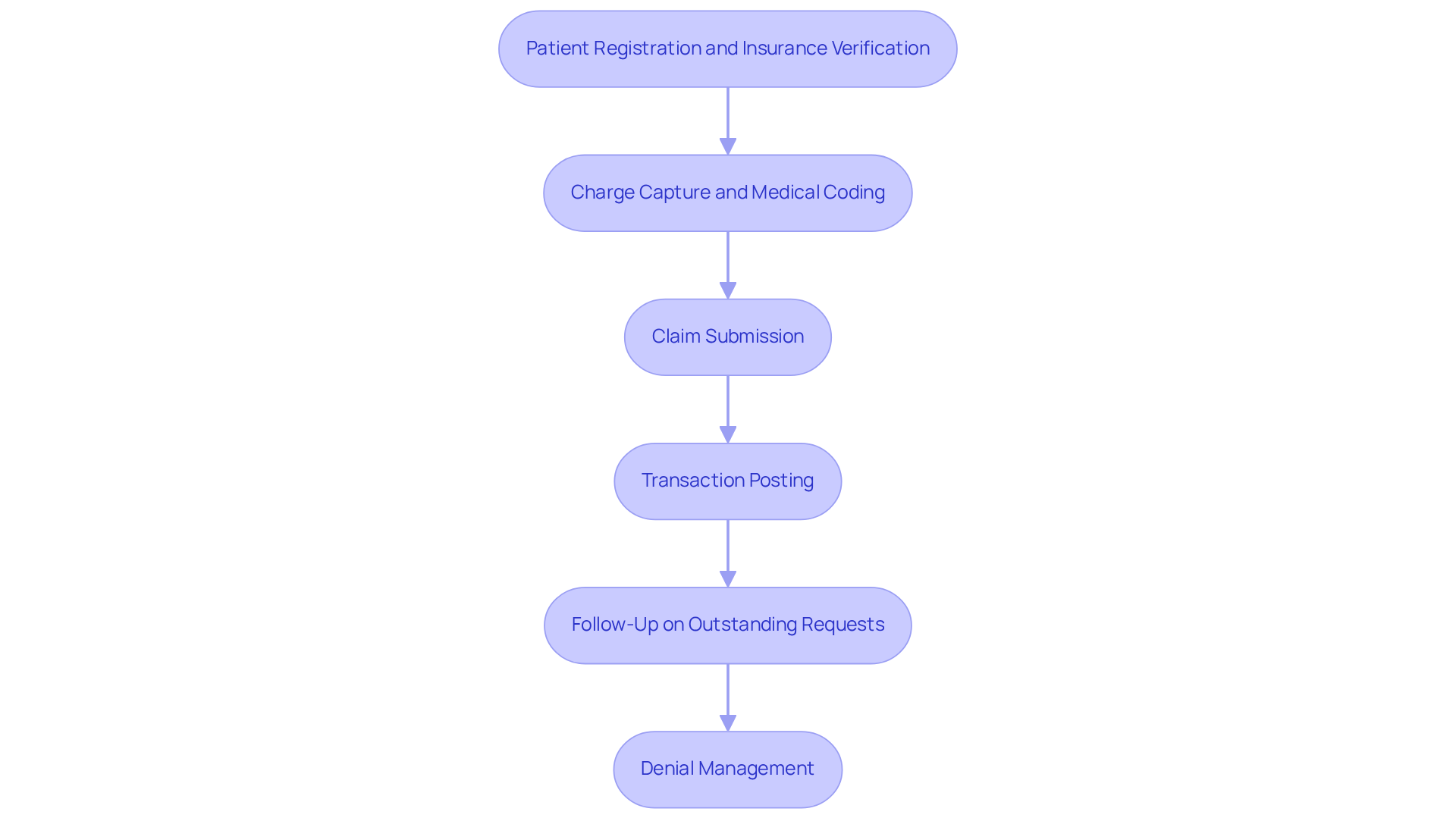
Inefficient management of hospital accounts receivable can result in significant financial challenges. The core components of hospital accounts receivable are essential for maintaining financial health and ensuring timely payments. Key elements include:
- Patient Registration and Insurance Verification: Correct patient information and insurance specifics are essential for processing requests accurately and swiftly. Efficient registration methods help prevent errors that lead to request denials.
- Charge Capture and Medical Coding: Accurate documentation and coding of services rendered are essential for submitting clear requests to payers. This minimizes the risk of denials and ensures that healthcare providers receive appropriate reimbursement for services rendered.
- Claim Submission: Timely submission of claims to insurance companies is critical for reducing A/R days. Delays in this process can prolong waiting times for compensation, negatively impacting cash flow.
- Transaction Posting: Precisely documenting funds received from both patients and insurers is vital for keeping an accurate view of outstanding balances. This practice helps identify discrepancies and ensures that financial records are accurate.
- Follow-Up on Outstanding Requests: Regular follow-up on unpaid requests is necessary to ensure timely payments and address any issues that may arise during the requests process. Proactive communication with payers can significantly reduce A/R days.
- Denial Management: Understanding denial reasons and implementing reduction strategies is essential for optimizing A/R. A structured approach to managing hospital accounts receivable can lead to improved recovery rates and enhanced financial stability. Without a robust denial management strategy, hospitals risk not only their cash flow but also their overall financial health.
Implement Best Practices for Optimizing Accounts Receivable Management
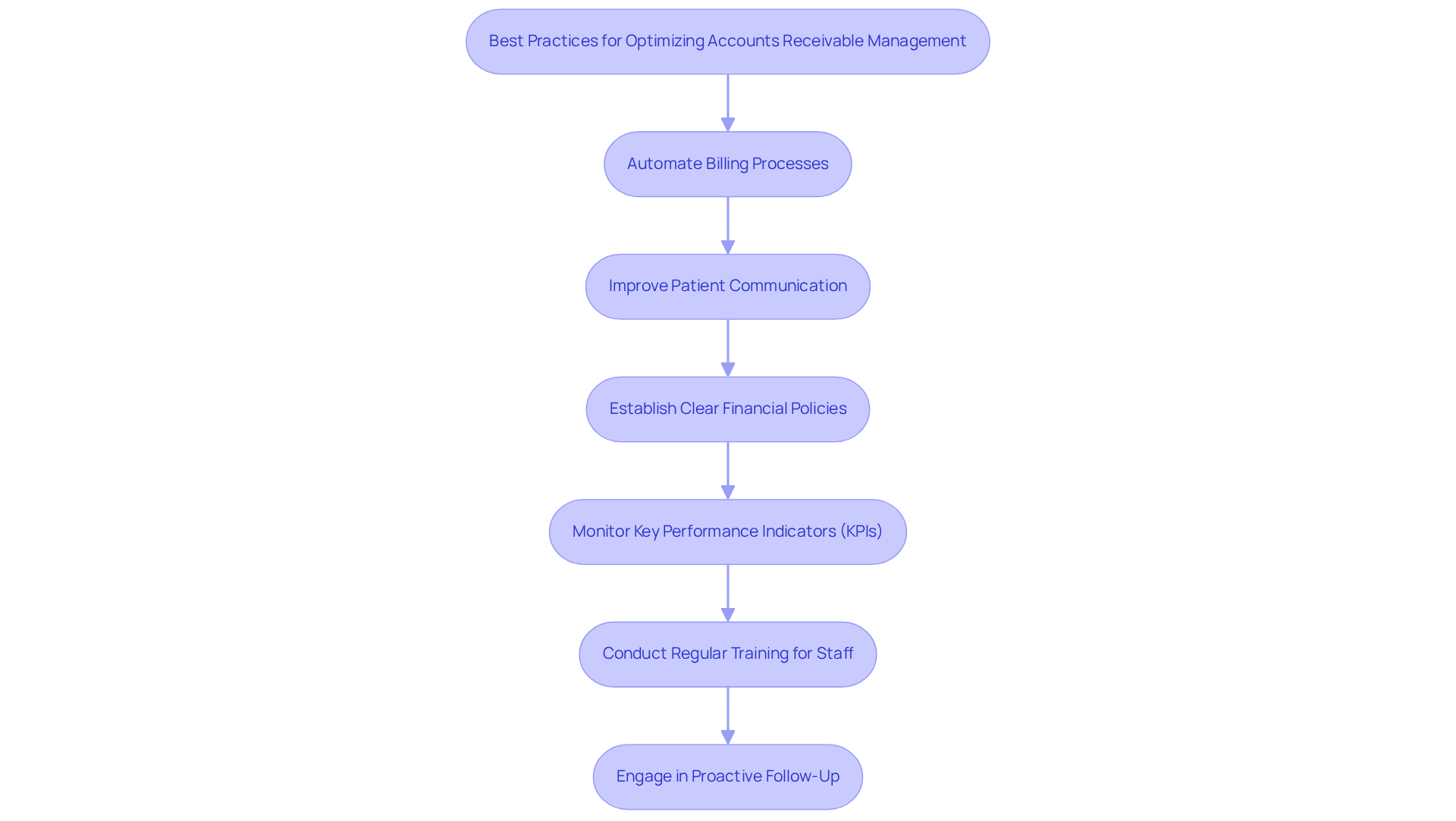
To enhance financial performance, clinics must adopt strategic practices in accounts receivable management. Here are several best practices to consider:
- Automate Billing Processes: Implementing automated billing systems streamlines invoicing, significantly reducing errors and accelerating claim submissions. This automation lowers the cost-to-collect metric and enhances overall efficiency, allowing staff to focus on more complex tasks.
- Improve Patient Communication: It’s essential to communicate financial obligations clearly to ensure quicker settlements. Offering comprehensive statements and prompt reminders helps individuals understand their invoices, resulting in improved timelines for settling accounts. Research indicates that maintaining open communication reduces delays in accounts receivable.
- Establish Clear Financial Policies: Setting transparent financial terms manages client expectations and minimizes confusion. Clear policies facilitate smoother transactions and enhance the overall patient experience, ultimately leading to faster payments.
- Monitor Key Performance Indicators (KPIs): Regularly tracking metrics such as days in A/R, denial rates, and clean submission rates is crucial for identifying areas needing improvement. Effective A/R management typically aims for an average of 35 days in A/R and keeps A/R over 90 days below 10% to ensure financial health.
- Conduct Regular Training for Staff: Ensuring that billing staff are well-trained in coding, billing procedures, and denial management significantly reduces errors. Continuous education helps maintain high standards in billing practices, which is vital for operational efficiency.
- Engage in Proactive Follow-Up: Establishing a routine for following up on unpaid requests is critical. Regular follow-ups accelerate transactions and decrease overall A/R days, as prompt interventions prevent accounts from becoming overdue. Effective teams frequently assess requests over 30 days old weekly, ensuring outstanding payments are handled swiftly.
By implementing these strategies, clinics can significantly improve their financial health and operational efficiency.
Leverage Technology and Tools for Enhanced A/R Management
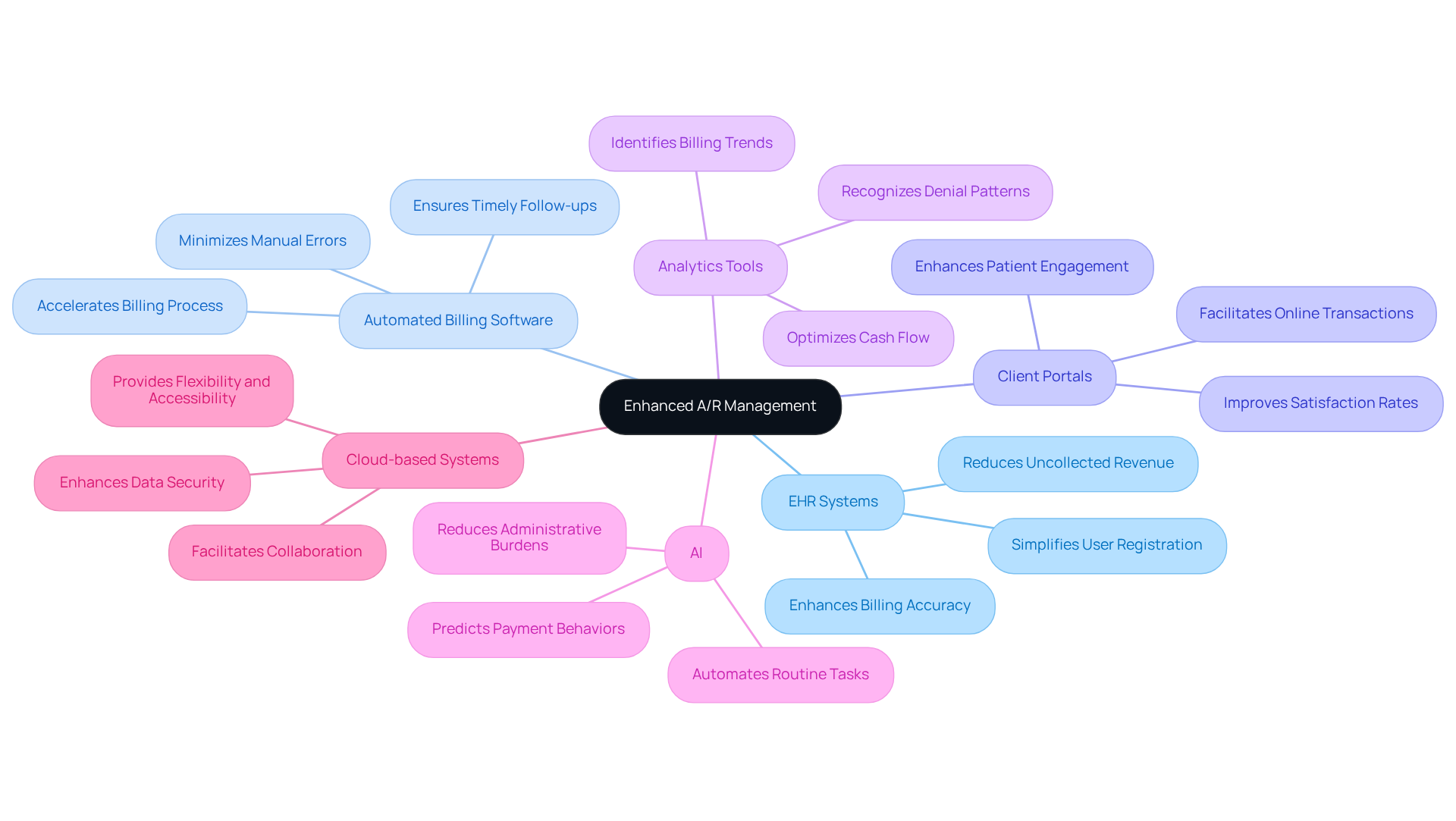
Many clinics struggle with inefficient billing processes that lead to lost revenue, yet technology offers a solution. To enhance accounts receivable management, clinics should leverage technology and tools such as:
- Electronic Health Records (EHR) Systems: EHRs simplify user registration, charge capture, and billing procedures, ensuring that all essential information is easily accessible for submission of requests. Integrating EHRs with hospital accounts receivable systems reduces the risk of uncollected revenue and enhances billing accuracy.
- Automated Billing Software: Utilizing automated billing software minimizes manual errors, accelerates the billing process, and ensures timely follow-ups on outstanding claims. For instance, practices that have adopted such solutions report significant improvements in efficiency and revenue collection.
- Client Portals: Establishing client portals enables individuals to view their bills, make transactions online, and communicate with the clinic concerning their accounts. This enhances patient engagement and contributes to higher satisfaction rates, with studies indicating a 98% patient satisfaction level when using these tools.
- Analytics Tools: Advanced analytics offer insights into billing trends, assisting clinics in recognizing patterns in denials and delays in receiving funds. By analyzing hospital accounts receivable aging reports, clinics can proactively adjust their billing practices to optimize cash flow.
- Artificial Intelligence (AI): AI assists in predicting payment behaviors, optimizing follow-up strategies, and automating routine tasks. For example, AI-driven systems can identify likely claim denials before submission, significantly reducing administrative burdens and enhancing revenue cycle efficiency.
- Cloud-based accounts receivable management systems provide flexibility and accessibility, enabling staff to manage hospital accounts receivable from anywhere. This is particularly beneficial for multi-location practices, as it facilitates collaboration and ensures compliance with coding standards while enhancing data security.
Embracing these advancements can ultimately lead to a more profitable and efficient practice.
Conclusion
Without effective accounts receivable management, healthcare facilities face significant financial challenges. Understanding the importance of timely payments and implementing best practices is crucial for clinics to enhance cash flow and ensure operational sustainability. Effective accounts receivable management is critical for healthcare providers to maintain high-quality patient care.
Key insights include:
- The necessity of automating billing processes
- Improving patient communication
- Leveraging technology to streamline operations
Core components such as:
- Accurate patient registration
- Timely claim submissions
- Proactive follow-up on outstanding requests
are vital for reducing A/R days and minimizing financial losses. Additionally, advanced tools and systems can facilitate better billing accuracy and enhance patient engagement, ultimately leading to improved revenue collection.
In a competitive healthcare landscape, adopting these best practices is not merely beneficial – it is crucial for survival. Clinics that prioritize optimizing their accounts receivable management will not only improve their financial stability but also foster stronger relationships with patients. Clinics that fail to adapt their financial strategies risk falling behind in both operational success and patient care quality.
Frequently Asked Questions
What is hospital accounts receivable (A/R)?
Hospital accounts receivable (A/R) refers to the outstanding payments owed to healthcare providers for services rendered, including amounts due from both insurance companies and individuals.
Why is hospital accounts receivable important for healthcare facilities?
Hospital accounts receivable is crucial for a healthcare facility’s financial health as it represents anticipated revenue essential for operational sustainability, cash flow, and the ability to invest in care enhancements.
What challenges can arise from inefficient hospital accounts receivable management?
Inefficient billing processes can lead to prolonged hospital accounts receivable days, resulting in significant cash flow challenges, which can affect financial health and compromise the quality of patient care.
How does Healthcare Partners Consulting assist in managing hospital accounts receivable?
Healthcare Partners Consulting provides customized solutions to enhance medical billing workflows, focusing on managing underpayments, unprocessed requests, and aging submissions to improve billing statements and streamline request management.
What impact does automated insurance validation have on hospital accounts receivable?
Implementing automated insurance validation can significantly increase first-time claim acceptance, reduce processing costs, and potentially generate millions in additional revenue for healthcare organizations.
What are some effective techniques for improving collection rates in hospital accounts receivable?
Proactive communication techniques, such as automated reminders and follow-up calls, can improve collection rates by addressing late transactions and understanding individuals’ reasons for delays.
How do the collection rates of Healthcare Partners Consulting compare to industry averages?
Healthcare Partners Consulting collects 52% of client payments in the first 30 days, compared to the industry average of 28%, demonstrating the effectiveness of their timely A/R management strategies.
What percentage of healthcare organizations experience financial losses due to outdated A/R practices?
84% of healthcare organizations are experiencing financial losses due to outdated hospital accounts receivable practices, highlighting the need for modern techniques.
Can you provide an example of a healthcare organization that benefited from improved A/R management?
Maine Optometry increased its monthly collections by $10,000 to $15,000 after implementing Healthcare Partners Consulting’s services, showcasing the practical benefits of enhanced hospital accounts receivable management.
What service plans does Healthcare Partners Consulting offer for hospital accounts receivable management?
Healthcare Partners Consulting offers flexible service plans tailored to the size of practices and billing volume, including percentage-based fees, flat rates for defined scopes, and custom subscription packages.