

Introduction
Understanding CPT code 97802 is crucial for clinics seeking to enhance their billing efficiency and improve patient outcomes. This code, pivotal for medical nutrition therapy, not only facilitates proper reimbursement but also ensures compliance with insurance requirements. Navigating the complexities of documentation and billing requirements presents significant challenges for many clinics.
What strategies can healthcare providers implement to enhance billing practices, reduce denials, and ensure a focus on quality patient care? Addressing these challenges is vital for clinics to ensure financial stability and maintain a focus on quality patient care.
Understand CPT Code 97802: Definition and Importance
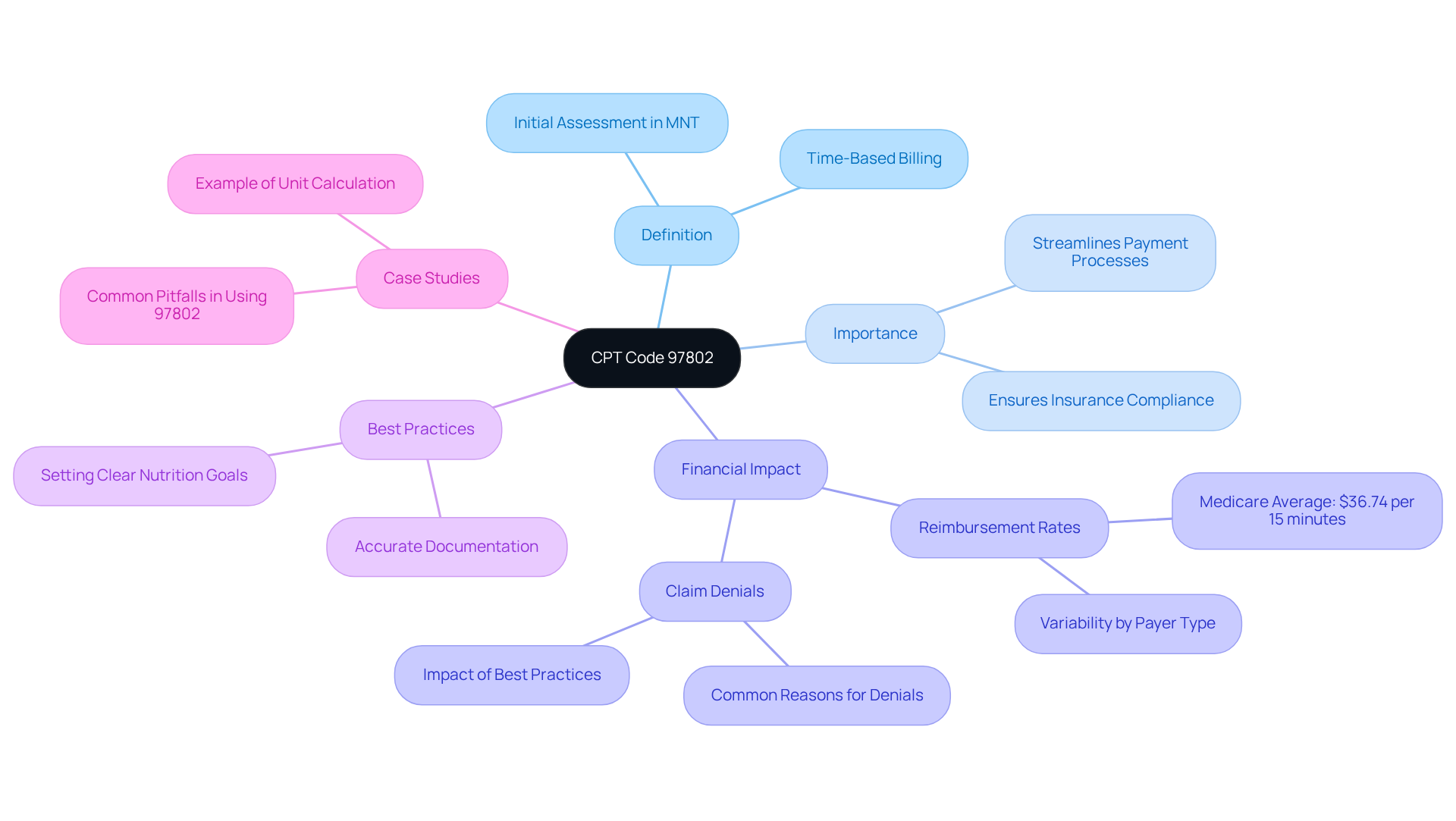
The 97802 code plays a pivotal role in the financial and operational success of clinics that provide medical nutrition therapy. The 97802 code is essential for processing the initial assessment in medical nutrition therapy (MNT), which is vital for patients needing dietary management. Mastery of the 97802 code is crucial for clinics, as it streamlines payment processes and ensures adherence to insurance requirements. The initial assessment must last a minimum of 15 minutes and is billed in 15-minute increments, which often leads clinics to struggle with time tracking, essential for successful reimbursement. This script serves as the foundation for subsequent visits, charged under CPT 97803. Utilizing the 97802 code enables clinics to improve financial efficiency and ensure proper compensation for their services.
Research shows that accurate coding with the 97802 code often results in higher reimbursement rates, with Medicare averaging $36.74 per 15-minute unit in 2026. Moreover, clinics that adopt best practices in documentation can decrease claim denials by 20-30% and achieve quicker reimbursement within 30-90 days. Case studies demonstrate that clinics adhering to proper coding practices not only enhance their revenue cycle performance but also improve outcomes through personalized nutrition therapy. At Healthcare Partners Consulting & Billing, LLC (HPC), our veteran-owned team brings 39 years of experience specializing in medical and mental health financial management and practice administration services nationwide. Understanding and implementing the 97802 code is not just beneficial; it is imperative for clinics aiming to thrive in a competitive healthcare landscape.
Gather Required Documentation and Understand Billing Requirements
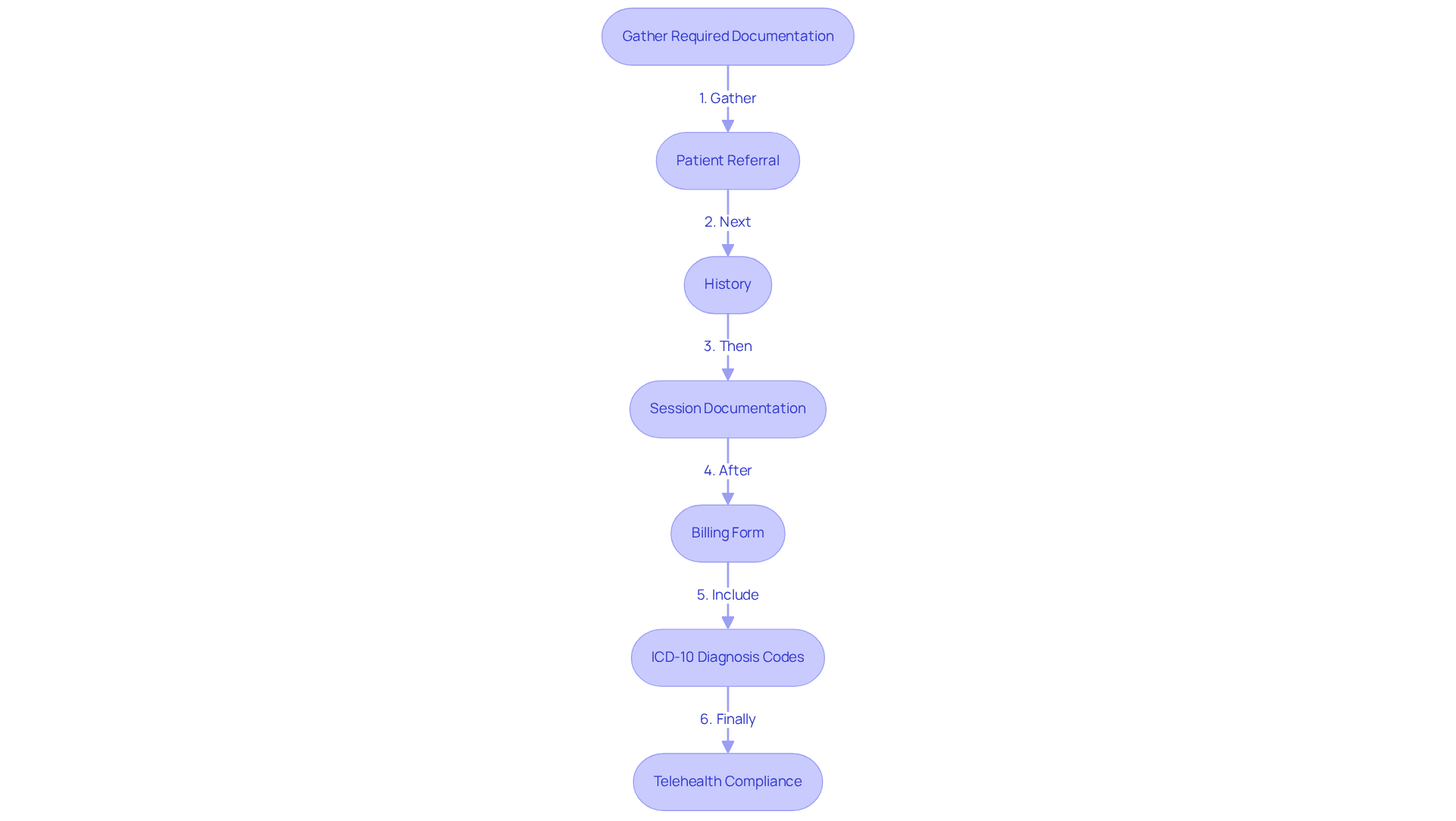
To successfully bill for the 97802 code, clinics must navigate a series of stringent documentation and billing requirements. Essential documents include:
- Patient Referral: A physician referral is mandatory, as it is often a prerequisite for insurance reimbursement.
- History: Comprehensive history should be collected, detailing dietary habits, medical conditions, and any prior nutrition therapy.
- Session Documentation: Accurate documentation of the total face-to-face time spent with the patient is crucial, ensuring it meets the minimum requirement of 15 minutes. Each session must be meticulously recorded, including the goals set and recommendations made. The 97802 code is based on time, with charges determined by the session duration, where 1 unit equals 15 minutes.
- Billing Form: Claims should be submitted using the CMS-1500 form or its electronic equivalent, ensuring that CPT 97802 is correctly entered in field 24D.
- ICD-10 Diagnosis Codes: Specific ICD-10 codes, such as E11 for Type 2 Diabetes and N18 for Chronic Kidney Disease, must be included to justify the medical necessity of the service.
- When charging for telehealth services under the 97802 code, it is important to ensure compliance with payer-specific rules, as telehealth practices are evolving.
- Modifiers: Use appropriate modifiers when processing with evaluation and management (E/M) codes to avoid claim rejections.
Without a clear understanding of these requirements, clinics may face increased claim denials and delayed payments. Case studies have shown that practices implementing structured documentation protocols have experienced a reduction in claim denials by 20-30% and improved reimbursement timelines by 15-25% within 30-90 days. This structured approach not only minimizes denials but also accelerates payment cycles. For personalized consultation on how Healthcare Partners Consulting can assist your practice in navigating these financial requirements, please reach out via email at info@hpcbilling.com or call 888-517-4992. We are available nationwide, Monday-Friday, to help streamline your administrative and billing services. By adhering to these guidelines, clinics can significantly enhance their billing efficiency and patient care focus.
Follow the Step-by-Step Billing Process for CPT Code 97802
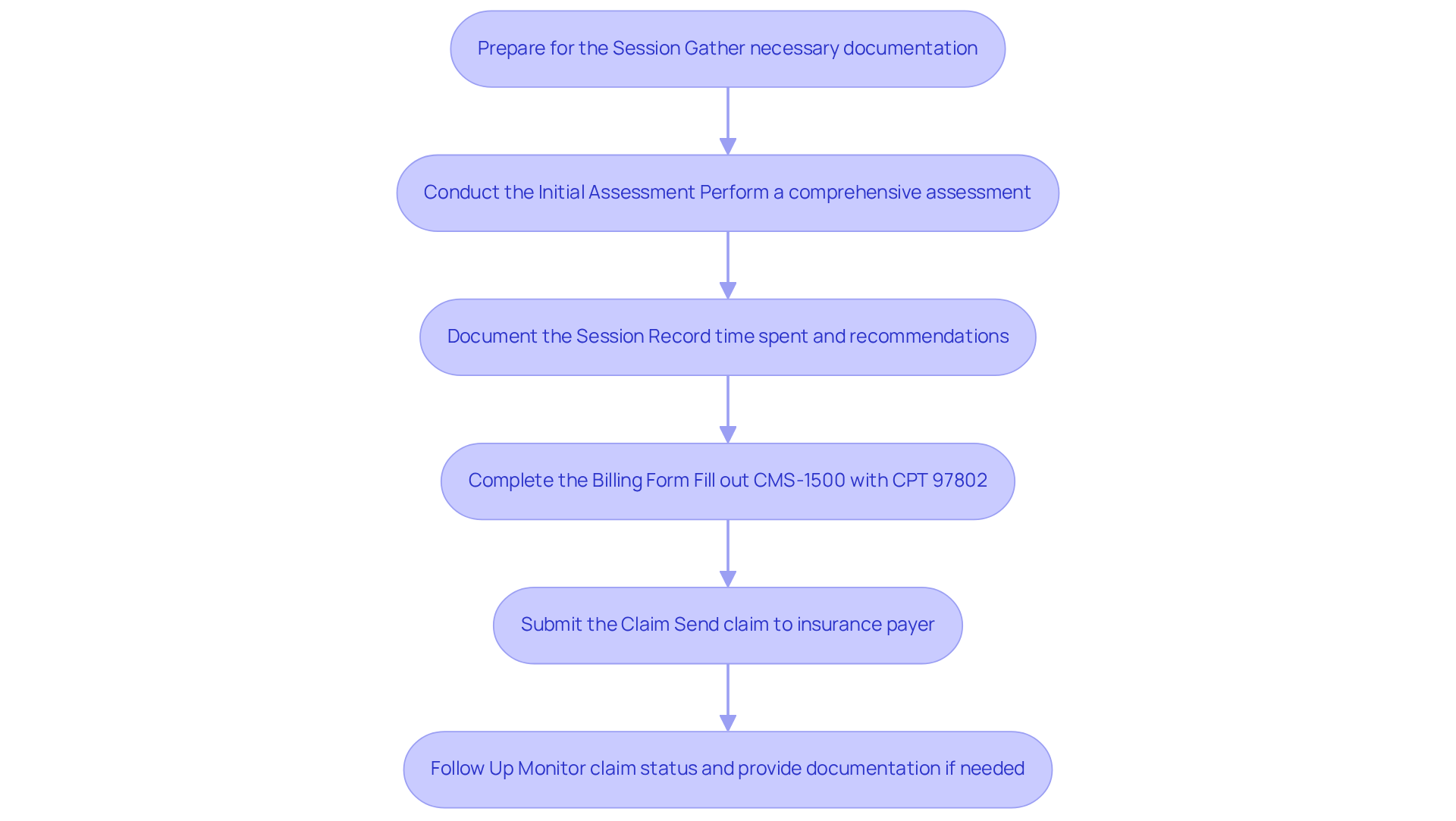
Navigating the complexities of billing for the 97802 code requires a systematic approach to ensure compliance and maximize reimbursement. To effectively bill for CPT Code 97802, follow this structured process:
- Prepare for the Session: Gather all necessary documentation, including the referral and any previous medical records, before the individual arrives.
- Conduct the Initial Assessment: During the face-to-face session, perform a comprehensive assessment lasting at least 15 minutes. Document the individual’s dietary history, current health status, and specific dietary needs.
- Document the Session: After the session, accurately record the total time spent with the individual, including a detailed account of the assessment and any recommendations made. This documentation is vital for compliance and reimbursement.
- Complete the Billing Form: Fill out the CMS-1500 form, ensuring that CPT 97802 is entered in field 24D. Include all relevant client information and session details. Claims submitted without a required diagnosis will be denied starting August 3, 2026, so ensure a valid diagnosis is included to avoid claim denials.
- Submit the Claim: Send the completed claim to the appropriate insurance payer, ensuring that all supporting documentation is attached. Note that the 97802 code can only be billed once for the initial assessment of a new patient.
- Follow Up: Monitor the claim status and follow up with the payer if necessary. Be prepared to provide additional documentation if requested.
By following these steps, clinics can streamline their payment processes. This approach significantly reduces the risk of claim denials and can enhance reimbursement timelines by 15-25% within 30-90 days. Grasping the intricacies of CPT 97802, including its revenue collection limitations and documentation requirements, is crucial for enhancing revenue cycle performance. Moreover, practices that correctly categorize the initial encounter using the 97802 code can avoid claim denials and ensure proper reimbursement for Medical Nutrition Therapy services.
Healthcare Partners Consulting, a veteran-owned firm with 39 years of expertise in medical and mental health revenue management, provides denial management strategies that enhance revenue recovery. With HPC’s comprehensive medical billing solutions, clinics can benefit from personalized service teams and strategic consulting, empowering them to focus on care while optimizing their administrative processes.
Troubleshoot Common Billing Challenges with CPT Code 97802
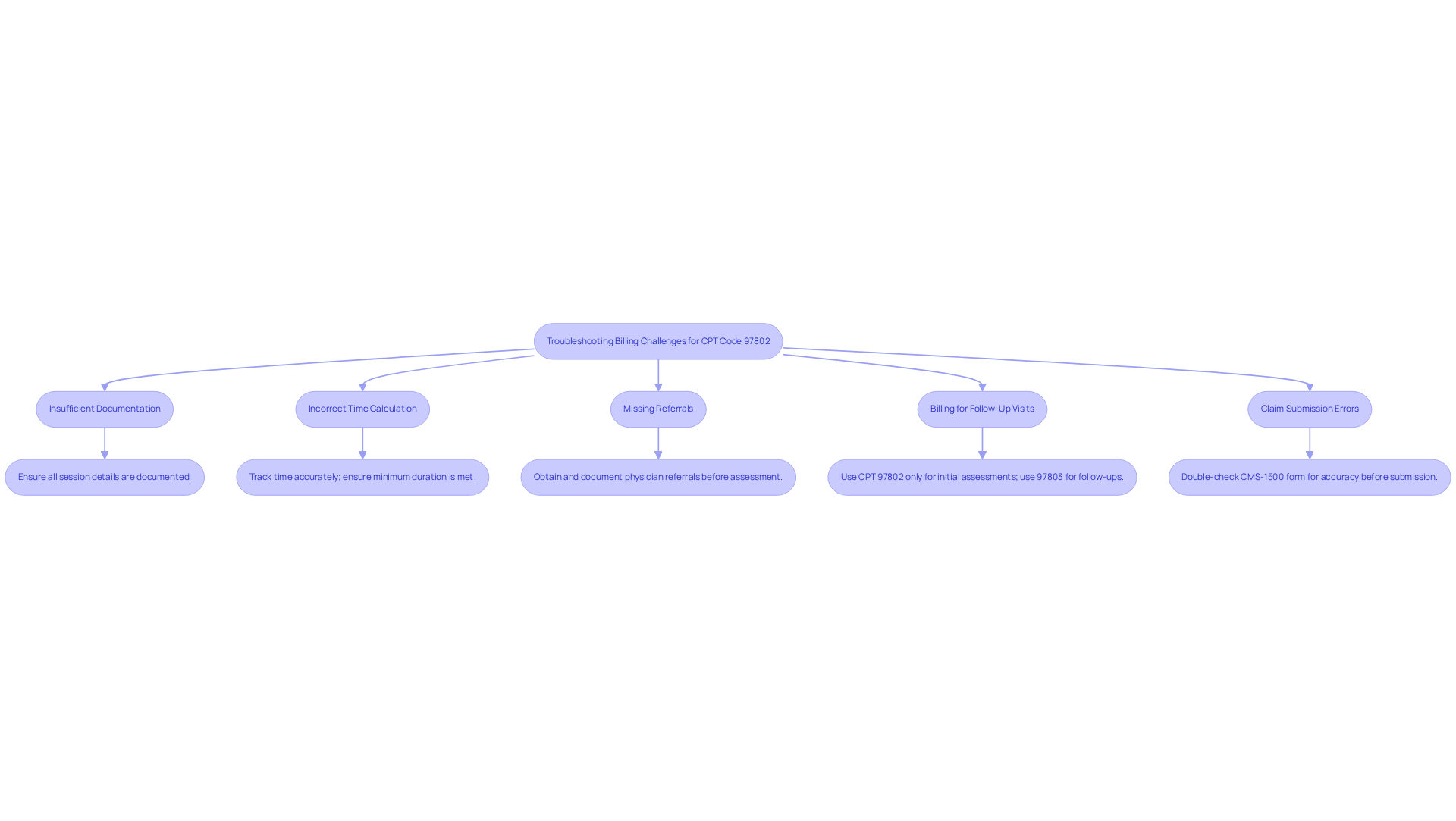
Billing for the 97802 code poses several challenges that can affect reimbursement outcomes. Here are common issues and how to troubleshoot them:
- Insufficient Documentation: Claims may be denied if the documentation does not support the billed service. Clinics must ensure that all session details, including time spent and patient history, are thoroughly documented. Comprehensive documentation enhances the quality of claims and supports tailored nutritional guidance.
- Incorrect Time Calculation: Billing for less than the required 15 minutes can lead to denials. Always track the time accurately and ensure that the session meets the minimum duration. For instance, a session lasting 60 minutes allows billing for 4 units of the 97802 code, while a 45-minute session can be billed as 3 units of the 97802 code.
- Missing Referrals: Claims may be denied if a physician referral is not included. Always obtain and document referrals before the initial assessment, as a written physician referral is required for all MNT services.
- Billing for Follow-Up Visits: Ensure that the 97802 code is only utilized for initial assessments. Subsequent visits should be billed under CPT Code 97803. Misusing these codes is a frequent error in invoicing that can lead to claim denials and audits.
- Claim Submission Errors: Double-check the CMS-1500 form for accuracy before submission. Ensure that all fields are completed accurately, particularly field 24D, which is essential for proper processing.
By recognizing these challenges and implementing proactive measures, clinics can enhance their billing processes and improve reimbursement outcomes. Addressing these billing challenges is essential for optimizing revenue and ensuring the sustainability of clinical practices.
Conclusion
Navigating the complexities of CPT code 97802 is a challenge that clinics must overcome to optimize billing and improve patient care. This code is crucial for both the initial assessment in medical nutrition therapy and for securing appropriate reimbursement for clinics. Understanding this code helps healthcare providers streamline operations, lessen administrative burdens, and prioritize quality patient care.
Throughout this guide, we have thoroughly explored key aspects such as the importance of accurate documentation, the step-by-step billing process, and common challenges associated with CPT code 97802. Emphasizing a compliance-first approach, clinics can significantly decrease claim denials and improve their revenue cycle performance. The insights provided highlight the necessity of meticulous record-keeping and adherence to billing requirements, which are crucial for successful reimbursement.
In conclusion, mastering CPT code 97802 is not merely a technical requirement; it is a vital component of a clinic’s financial health and operational efficiency. By implementing the strategies outlined in this guide, healthcare providers can navigate the complexities of billing with confidence. Without expert guidance, clinics risk falling short in their billing practices, ultimately impacting patient care.
Frequently Asked Questions
What is CPT code 97802?
CPT code 97802 is used for billing the initial assessment in medical nutrition therapy (MNT), which is essential for patients requiring dietary management.
Why is the 97802 code important for clinics?
The 97802 code is crucial for processing payments, ensuring adherence to insurance requirements, and improving financial efficiency for clinics providing medical nutrition therapy.
How long must the initial assessment last when using the 97802 code?
The initial assessment must last a minimum of 15 minutes and is billed in 15-minute increments.
What challenges do clinics face when using the 97802 code?
Clinics often struggle with time tracking, which is essential for successful reimbursement when billing under the 97802 code.
How does the 97802 code relate to subsequent visits?
The initial assessment billed under the 97802 code serves as the foundation for subsequent visits, which are charged under CPT 97803.
What are the financial benefits of accurately using the 97802 code?
Accurate coding with the 97802 code can lead to higher reimbursement rates, with Medicare averaging $36.74 per 15-minute unit in 2026.
How can clinics reduce claim denials when using the 97802 code?
Clinics that adopt best practices in documentation can decrease claim denials by 20-30% and achieve quicker reimbursement within 30-90 days.
What impact does proper coding have on clinic revenue cycle performance?
Clinics that adhere to proper coding practices not only enhance their revenue cycle performance but also improve patient outcomes through personalized nutrition therapy.