

Introduction
Clinics face significant challenges in TRICARE provider enrollment, yet overcoming these hurdles is crucial for operational success. This guide provides a structured approach to streamline the enrollment process, allowing healthcare providers to focus on delivering quality care. Clinics must navigate common pitfalls and regulatory complexities to maximize their operational efficiency and ensure compliance.
Understand TRICARE Provider Enrollment Requirements
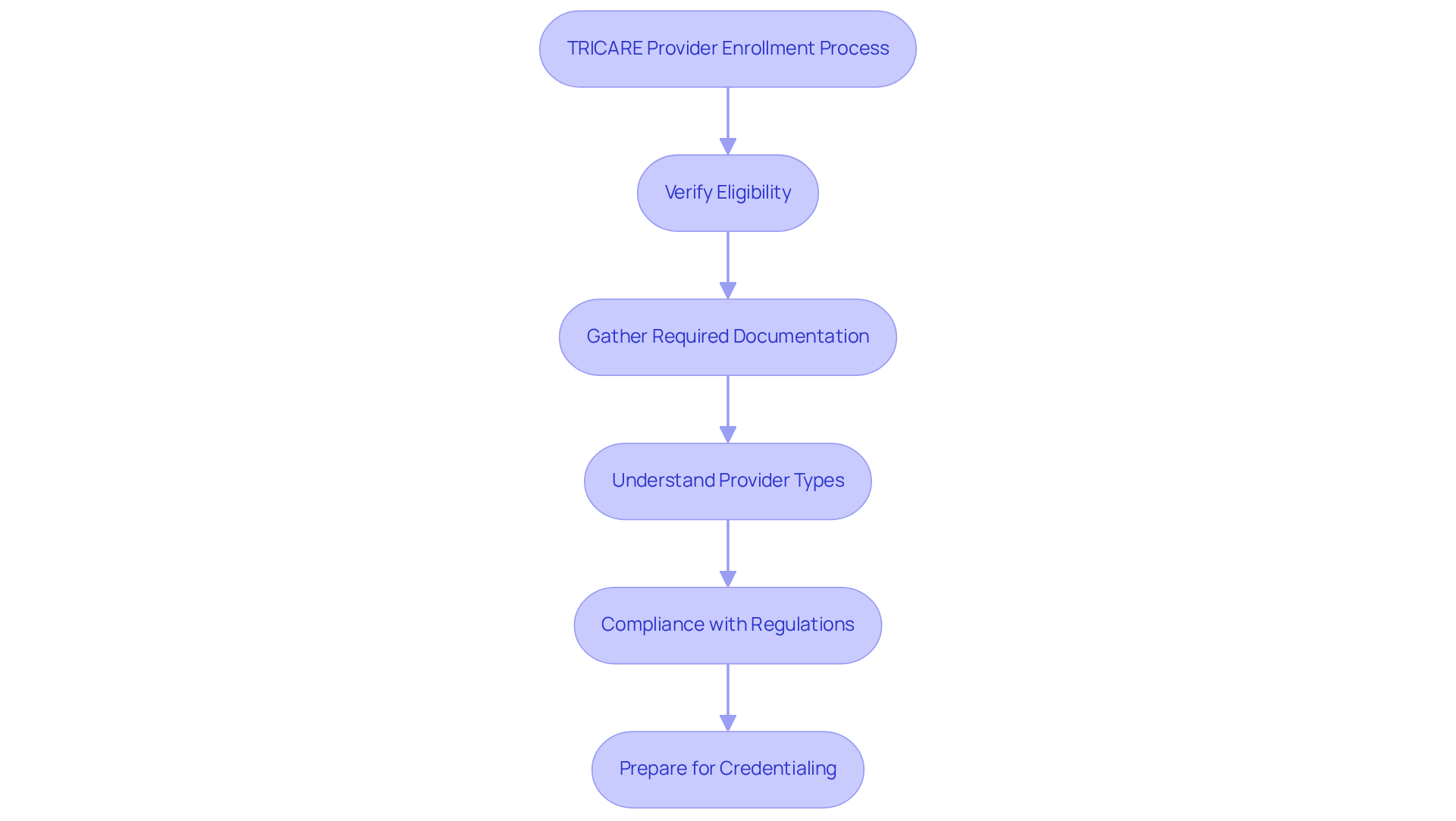
Navigating the complexities of tricare provider enrollment can be daunting, yet understanding the specific requirements is crucial for success. Here are the key steps:
- Verify Eligibility: Ensure that your facility meets the eligibility criteria to provide services under the specified program, including being a licensed healthcare provider in your state.
- Gather Required Documentation: Collect all necessary documents, including:
- Proof of state licensure
- National Provider Identifier (NPI)
- Tax Identification Number (TIN)
- Professional liability insurance details
- Curriculum vitae (CV) or resume
- Criminal History Background Check covering the last 10 years
- Understand Provider Types: Familiarize yourself with the various categories of providers (e.g., network vs. non-network) and the implications of each on your practice.
- Compliance with Regulations: Ensure that your clinic complies with all federal and state regulations related to healthcare services, including HIPAA and billing practices. Proactive compliance is essential, as failure to adhere to TRICARE provider enrollment regulations can lead to application denials and legal risks.
- Prepare for Credentialing: Be ready for the credentialing process, which may involve background checks and verification of your professional qualifications. Individual provider registration typically takes 60 to 90 days, but expert handling can reduce this timeline to 45 to 70 days.
For personalized consultation to identify the optimal administrative solutions for your practice, consider scheduling a 30-minute call with Healthcare Partners Consulting. Our dedicated virtual assistant services can assist with scheduling, client intake, and communications, while our billing team, including a billing manager and accounts receivable manager, ensures compliance and efficiency in your revenue cycle management.
Ultimately, a meticulous approach to registration can transform potential pitfalls into pathways for success.
Complete the TRICARE Provider Enrollment Application
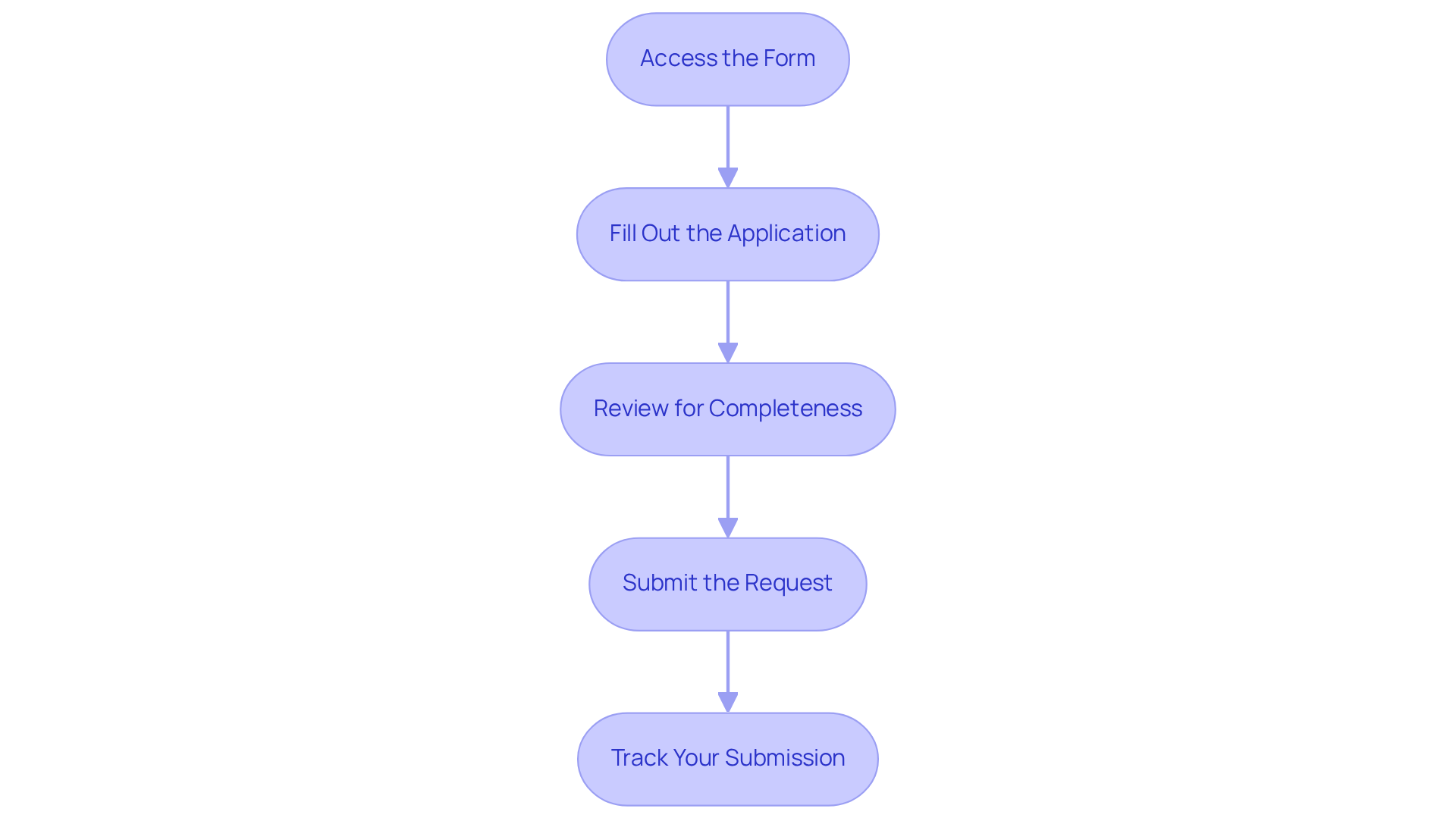
To successfully complete the TRICARE provider enrollment application, follow these essential steps:
- Access the Form: Navigate to the healthcare program website or your regional contractor’s site to download the correct form tailored for your practice.
- Fill Out the Application: Carefully complete every section, ensuring that:
- All information is accurate and aligns with your supporting documentation.
- You provide comprehensive descriptions of your services and specialties to avoid confusion.
- Review for Completeness: Before submission, meticulously check that all required fields are filled and that you have attached all necessary documents. Missing documents can significantly delay your application, impacting your practice’s revenue.
- Submit the Request: Adhere to the submission guidelines outlined on the TRICARE website, which may involve online submission or mailing the request to the designated address.
- Track Your Submission: After sending, maintain a record of your submission and any confirmation received. This documentation will be crucial for follow-up inquiries if needed.
By diligently completing the application, healthcare facilities can reduce the risk of registration delays. Such delays can adversely affect revenue. Proper registration, particularly through TRICARE provider enrollment, ensures faster reimbursements, higher clean claim rates, and a more stable revenue cycle, with potential improvements in revenue cycle performance of 15-25% within 30-90 days. Additionally, maintaining an updated CAQH profile and verifying licenses is essential, as ignoring CAQH accuracy can lead to delays. Taking this proactive approach can significantly boost the facility’s operational efficiency.
As a veteran-owned business with 39 years of experience, Healthcare Partners Consulting & Billing, LLC (HPC) specializes in comprehensive revenue cycle management tailored to behavioral and mental health practices. For tailored support in navigating the provider registration process, consider scheduling a consultation with HPC. Our dedicated team can help map your current workflow and identify the services that will enhance your practice’s efficiency and patient care. Ultimately, a well-executed registration process can transform your practice’s financial health and operational efficiency.
Identify and Resolve Common Enrollment Challenges
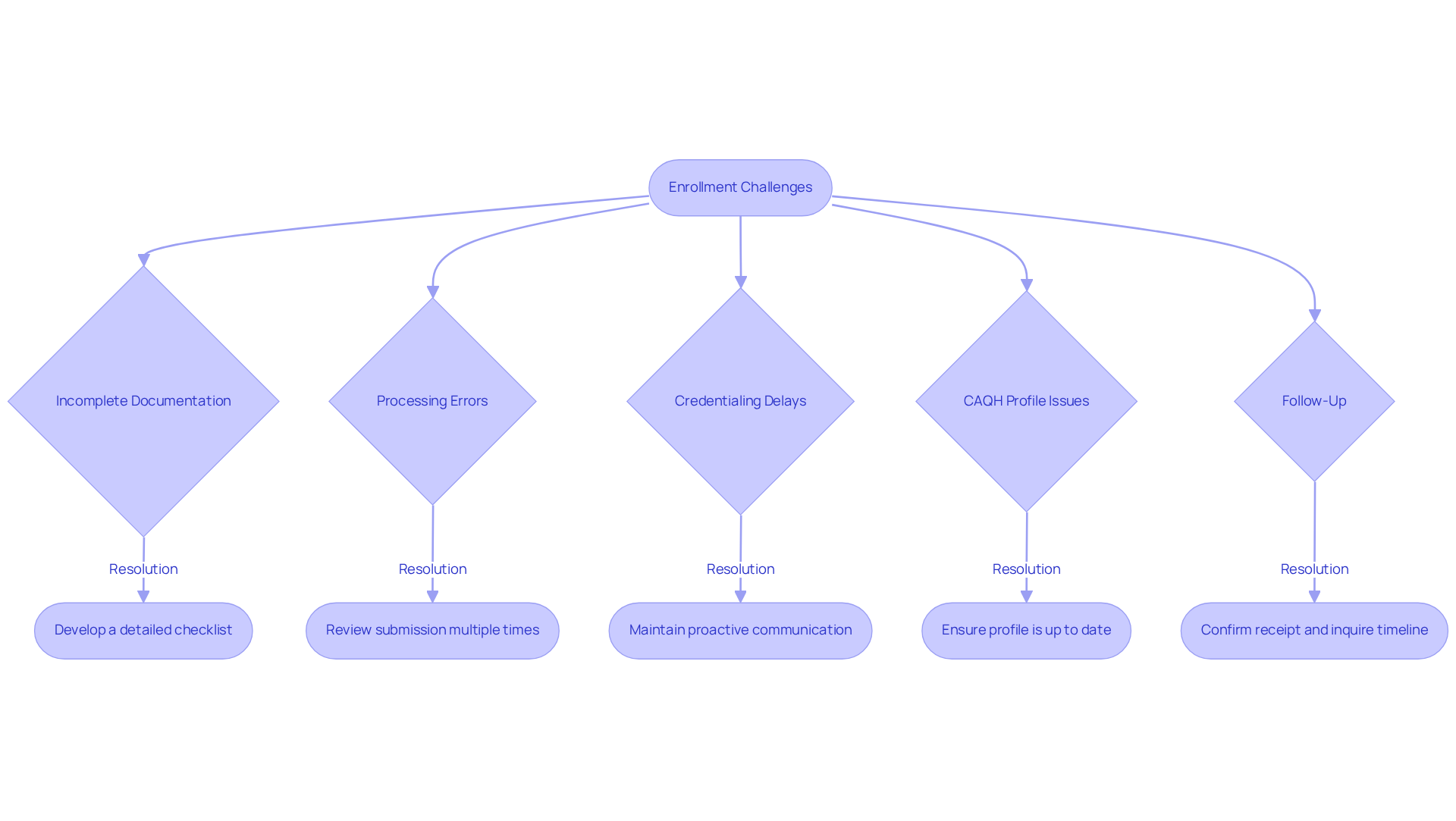
Clinics often face significant challenges during the provider registration process that can hinder timely approvals. Here’s how to identify and resolve these issues:
- Incomplete Documentation: Submitting incomplete documentation is a prevalent issue that can lead to significant delays, with providers losing 30-40% of expected revenue due to incomplete enrollment. To mitigate this risk, develop a detailed checklist based on TRICARE provider enrollment requirements, ensuring that all necessary documents are included before submission.
- Processing Errors: Mistakes in the system can lead to delays in processing. Review the submission multiple times and consider having a colleague perform a thorough check for any errors. Minor errors in enrollment can significantly disrupt the approval timeline, highlighting the necessity for careful attention to detail.
- Credentialing Delays: Credentialing issues can cause submissions to stall. Maintain proactive communication with representatives to stay informed about your application status and any additional requirements that may arise. Understanding the regulatory landscape affecting credentialing is essential for navigating these complexities.
- CAQH Profile Issues: An outdated or inaccurate CAQH profile can significantly impede the enrollment process. Ensure that your profile is up to date and accessible to the relevant organization to avoid unnecessary delays. Maintaining an updated CAQH profile is critical for compliance and smooth processing.
- Follow-Up: After submitting your request, it is essential to follow up with the organization to confirm receipt and inquire about the expected processing timeline. Contractor silence can lead to approval delays, so this proactive approach can help prevent misunderstandings and keep your application on track.
Addressing these challenges not only streamlines the TRICARE provider enrollment process but also enhances overall financial performance.
Evaluate the Impact of TRICARE Enrollment on Revenue and Compliance
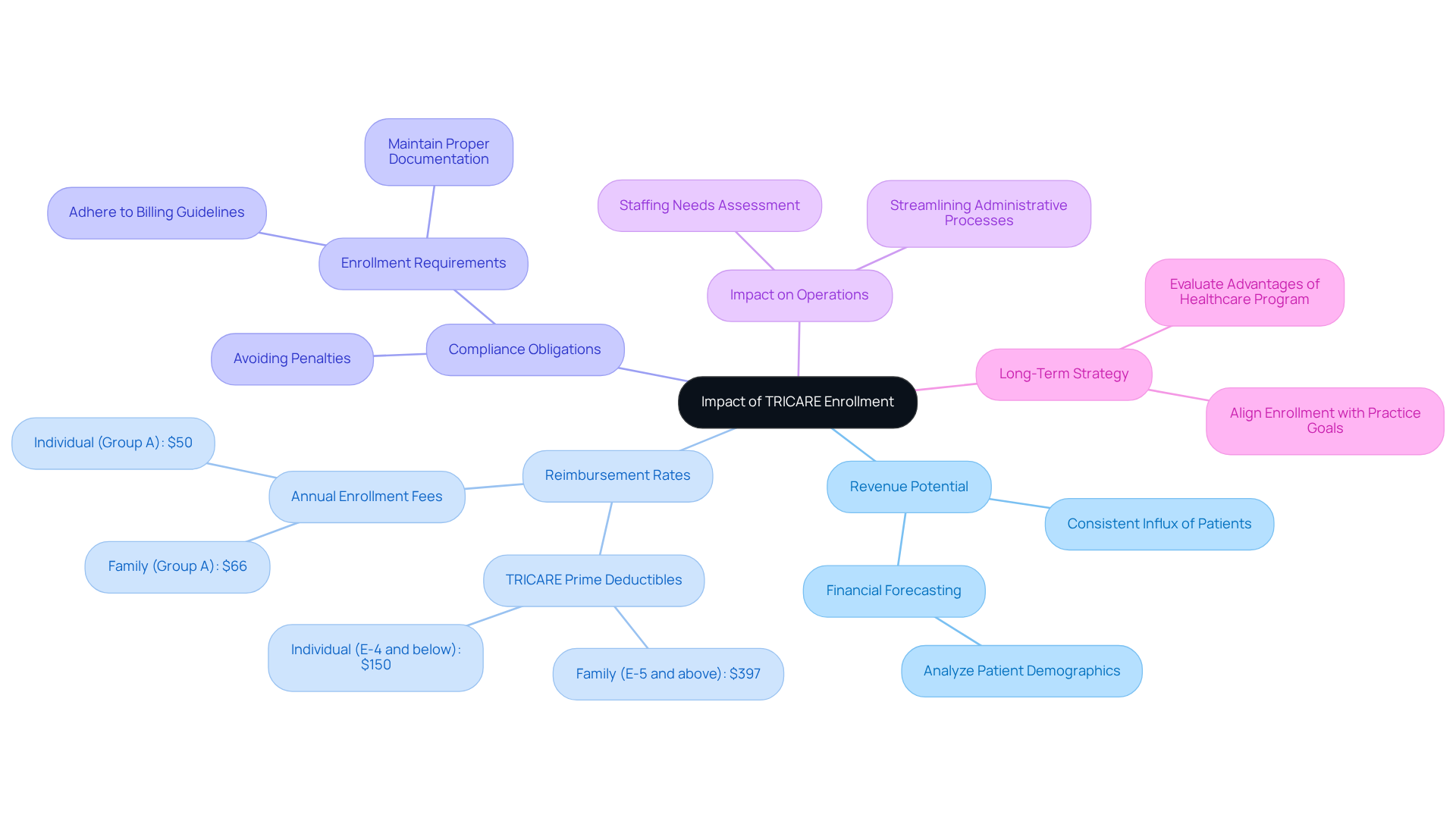
Understanding the implications of program enrollment on revenue and compliance is crucial for operational success. Here are key considerations:
- Revenue Potential: The program can significantly enhance your clinic’s revenue by providing a consistent influx of patients. Analyzing your current patient demographics will help estimate the potential increase in patient volume, allowing for better financial forecasting.
- Familiarity with the reimbursement rates of the program is essential. For example, the yearly deductible for Prime families (E-5 and above) is $397, whereas for individuals, it is $150. Understanding these rates allows healthcare facilities to project revenue accurately and adjust billing practices accordingly.
- Compliance obligations associated with tricare provider enrollment entail specific requirements for enrolling as a military healthcare provider. Clinics must be prepared to meet these obligations, which include maintaining proper documentation and adhering to billing guidelines to avoid penalties.
- Impact on Operations: Evaluating how enrollment in the program influences facility operations is essential. This includes assessing staffing needs and administrative processes. Streamlining these operations can maximize efficiency and ensure that patient care remains a priority.
- Long-Term Strategy: Consider how the enrollment process aligns with your practice’s long-term objectives. Assessing the advantages of the healthcare program against your goals for growth and patient care will assist in making informed choices.
A strategic approach to tricare provider enrollment can ultimately determine the sustainability and growth of your practice.
Conclusion
The complexities of the TRICARE provider enrollment process present significant challenges for clinics seeking operational efficiency and revenue enhancement. Understanding the requirements and adopting a structured approach enables healthcare providers to streamline enrollment, ensuring compliance and enhancing patient care. This guide highlights the need for meticulous preparation and proactive management to convert challenges into growth opportunities.
Common enrollment challenges, including incomplete documentation and credentialing delays, often hinder the application process. Addressing these issues is crucial for maintaining a smooth application process. Implementing these strategies not only improves revenue cycle performance but also ensures timely reimbursements, which are vital for financial stability.
Ultimately, a strategic approach to TRICARE provider enrollment enhances financial health and empowers healthcare providers to focus on delivering quality patient care. Engaging with a dedicated billing team, like that of Healthcare Partners Consulting & Billing, LLC (HPC), can further alleviate administrative burdens, allowing practices to thrive in a competitive landscape. Optimizing your enrollment process is not just a strategic necessity; it is a pivotal step toward ensuring your practice’s long-term success in delivering exceptional patient care.
Frequently Asked Questions
What are the key steps to understand TRICARE provider enrollment requirements?
The key steps include verifying eligibility, gathering required documentation, understanding provider types, ensuring compliance with regulations, and preparing for credentialing.
How can I verify my eligibility to provide services under TRICARE?
You need to ensure that your facility meets the eligibility criteria, which includes being a licensed healthcare provider in your state.
What documentation is required for TRICARE provider enrollment?
Required documentation includes proof of state licensure, National Provider Identifier (NPI), Tax Identification Number (TIN), professional liability insurance details, a curriculum vitae (CV) or resume, and a criminal history background check covering the last 10 years.
What types of providers should I be aware of when enrolling in TRICARE?
It is important to familiarize yourself with various categories of providers, such as network and non-network providers, and understand the implications of each on your practice.
Why is compliance with regulations important for TRICARE provider enrollment?
Compliance with federal and state regulations, including HIPAA and billing practices, is essential to avoid application denials and legal risks associated with TRICARE provider enrollment.
What should I expect during the credentialing process for TRICARE?
The credentialing process may involve background checks and verification of your professional qualifications. Individual provider registration typically takes 60 to 90 days, but expert handling can reduce this timeline to 45 to 70 days.
How can Healthcare Partners Consulting assist with TRICARE provider enrollment?
Healthcare Partners Consulting offers personalized consultations to identify optimal administrative solutions, as well as virtual assistant services for scheduling, client intake, and communications, and a billing team to ensure compliance and efficiency in revenue cycle management.