

Introduction
Navigating Medicare reimbursement rates is crucial for clinics aiming to enhance their financial viability. When clinics adopt strategic billing practices and comply with healthcare regulations, they can see a significant boost in their reimbursement outcomes. Clinics often struggle with the complexities of Medicare billing, which can hinder their financial health. Without a clear strategy, clinics risk leaving potential revenue unclaimed. This article delves into key strategies that empower healthcare providers to:
- Streamline their billing processes
- Reduce administrative burdens
- Ultimately secure the maximum reimbursement rates available
Understand Medicare Reimbursement Rate Determination
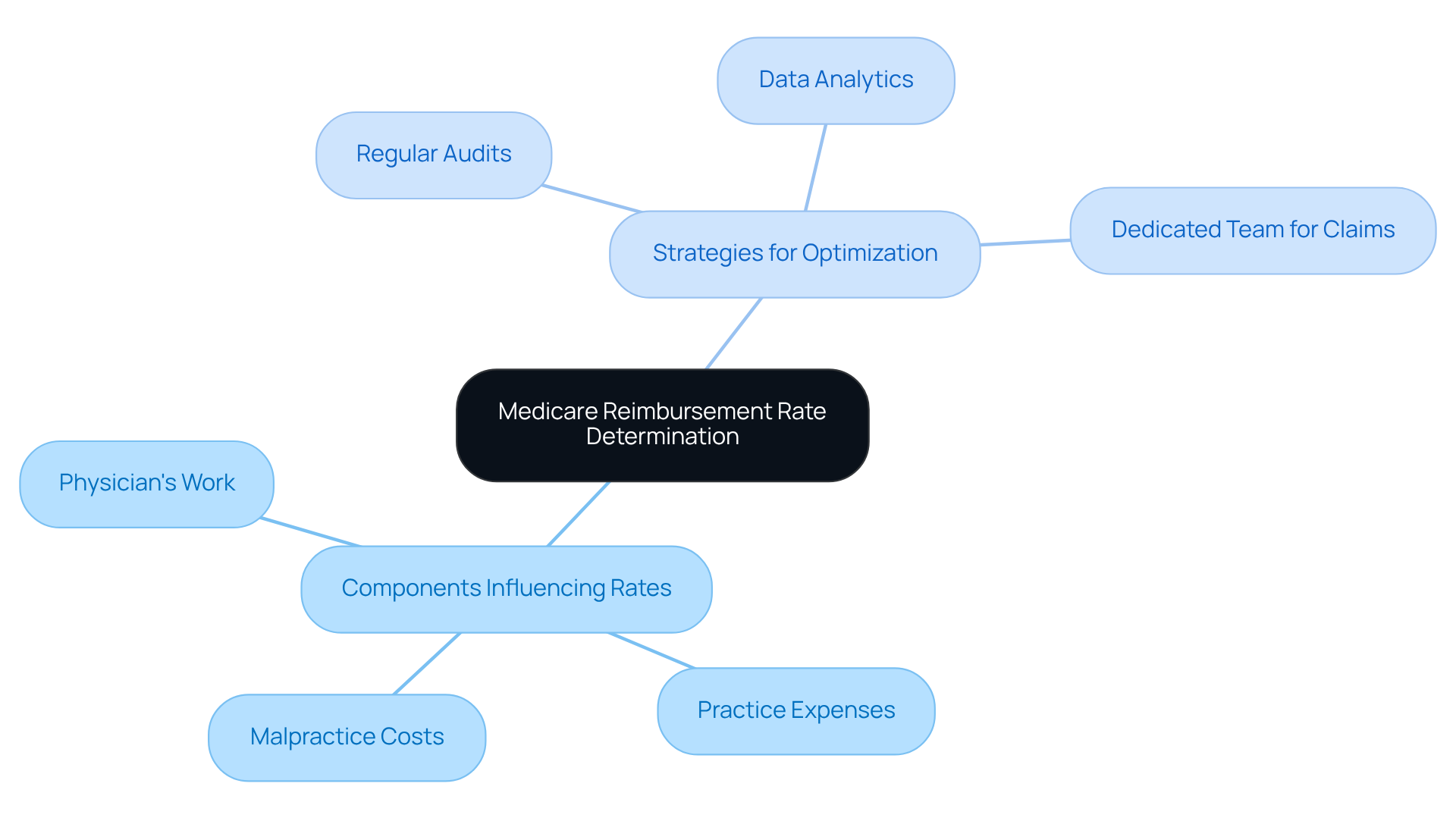
Understanding Medicare reimbursement rates is essential for healthcare facilities aiming to optimize their financial practices. The reimbursement rates Medicare receives are primarily determined by the Physician Fee Schedule (PFS), which utilizes the Resource-Based Relative Value Scale (RBRVS) to assign payment figures. This scale evaluates three critical components: the physician’s work, practice expenses, and malpractice costs.
For healthcare facilities aiming to enhance their financial practices, it is crucial to consistently review updates to the PFS from the Centers for Medicare & Medicaid Services (CMS), as these modifications can greatly influence reimbursement rates Medicare. Furthermore, healthcare facilities should adopt specific strategies such as:
- Performing regular audits of patient statements
- Leveraging data analytics for performance benchmarking
- Creating a dedicated team to effectively address underpayments and unprocessed claims
Healthcare facilities can enhance their revenue cycle performance by understanding how these figures are computed and leveraging their veteran-owned status and extensive experience. By implementing effective revenue collection strategies, practices can reduce claim rejections by 20-30% and receive reimbursements more quickly, often within 15-25 days instead of the typical 30-90 days. Ultimately, the right strategies can transform financial challenges into opportunities for growth.
Implement Effective Billing Strategies for Mental Health Services
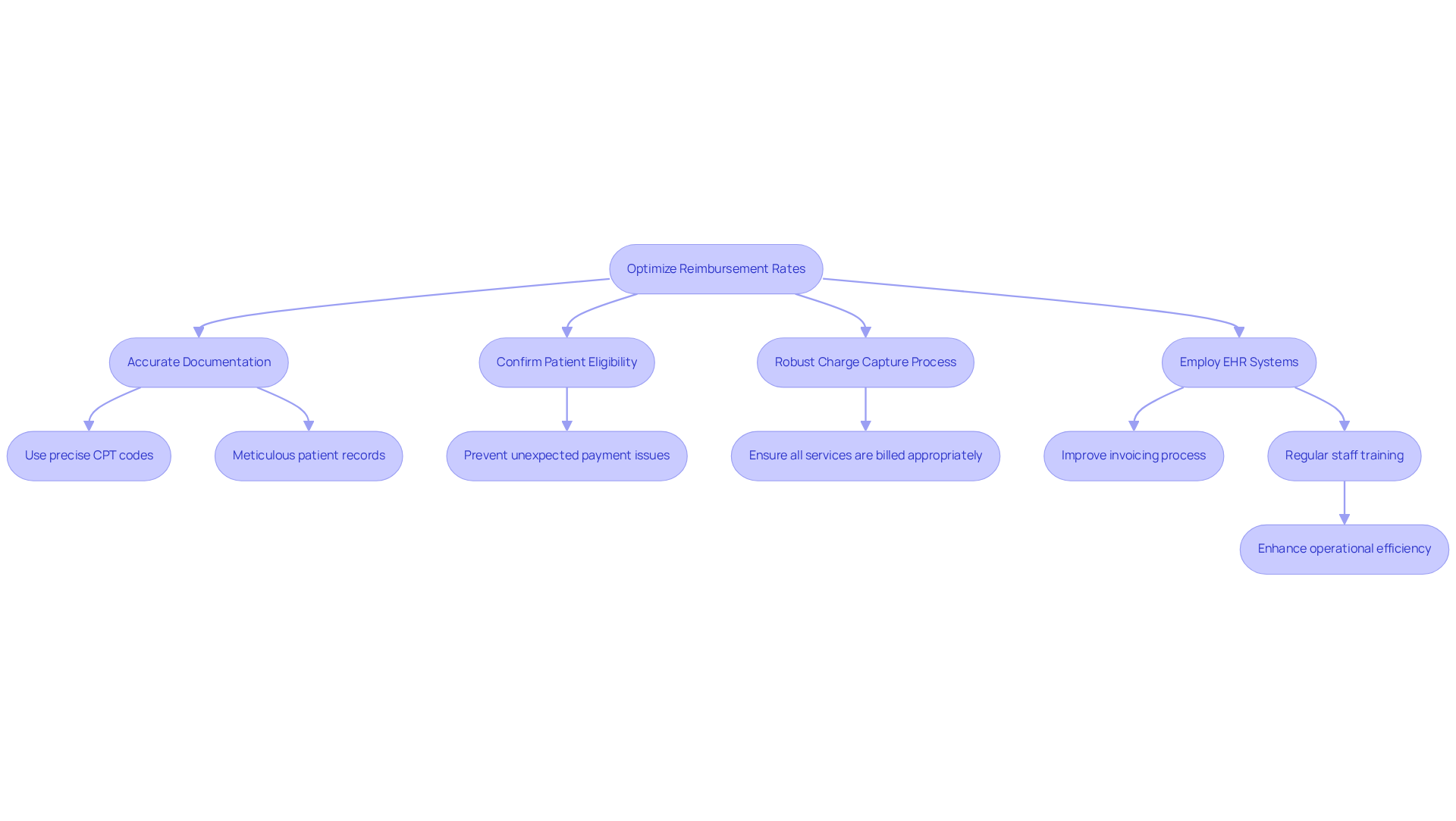
To optimize reimbursement rates Medicare, mental health facilities must implement strategic financial practices that ensure compliance and efficiency. First, accurate and detailed documentation of all services provided is crucial. This requires the use of precise CPT codes and meticulous patient records, as thorough documentation significantly reduces the likelihood of claim rejections. Second, clinics must confirm patient eligibility for Medicare coverage before appointments to prevent unexpected payment issues. A robust charge capture process is essential to ensure that all services rendered are billed appropriately, which can lead to a reduction in denials by 20-30% and faster reimbursement timelines of 15-25% within 30-90 days.
Furthermore, employing electronic health record (EHR) systems that incorporate financial functionalities improves the invoicing process and minimizes errors. Regular training for staff on coding updates and financial practices is also essential to ensure compliance and enhance revenue. For instance, facilities that standardize financial workflows and offer regular training experience improved cash flow and a clean claim rate surpassing 95%. By adopting these strategies, mental health facilities can enhance their operational efficiency and ensure they receive the maximum reimbursement rates Medicare offers. Ultimately, these strategies not only secure maximum reimbursement but also fortify the financial stability of mental health facilities in a competitive landscape. Moreover, collaborating with Healthcare Partners Consulting, a veteran-owned firm with 39 years of expertise in medical and mental health revenue management, can offer customized solutions that foster sustainable growth and adherence to compliance in financial practices.
Ensure Compliance with Healthcare Regulations
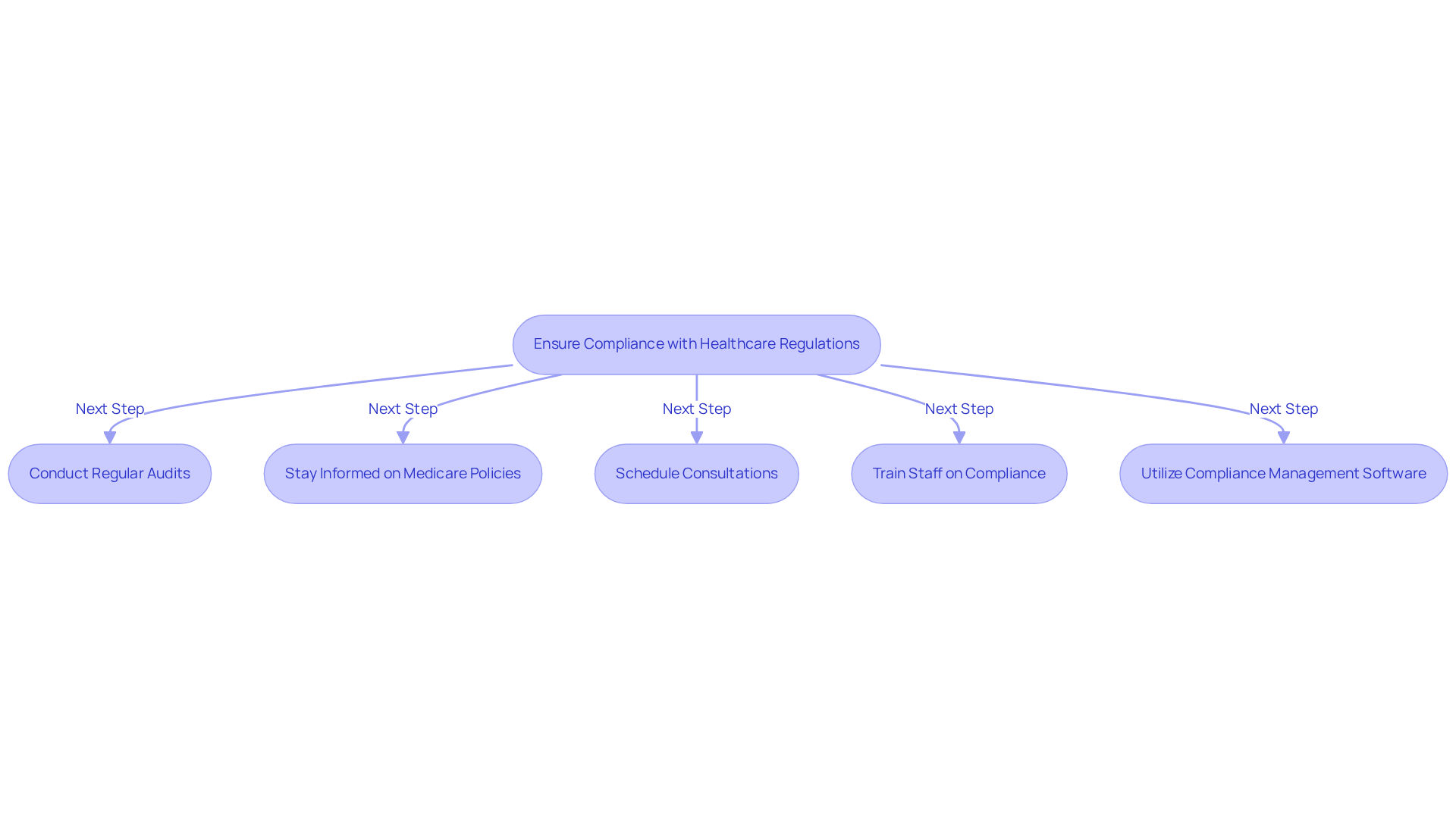
Adhering to healthcare regulations is crucial for mental health facilities seeking to optimize reimbursement rates from Medicare. A robust compliance program, featuring regular audits of billing practices and documentation, is essential. These audits help identify potential areas of non-compliance, enabling healthcare facilities to implement corrective actions swiftly. Staying informed about changes in Medicare policies and regulations is equally important, as these can significantly impact reimbursement rates from Medicare.
Healthcare Partners Consulting provides personalized consultations to enhance compliance and optimize administrative solutions. By scheduling a 30-minute call, healthcare facilities can discuss their current workflows, allowing our experts to outline the services that will drive the most significant improvements for their practice. Training staff on compliance requirements and the significance of precise coding is essential for reducing errors that could result in claim rejections. Effective training programs can lower rejection rates by 20-30%, improving the revenue cycle performance of the healthcare facility. Additionally, utilizing compliance management software can streamline processes, ensuring that all claims submitted adhere to necessary regulatory standards. This proactive strategy not only protects against compliance violations but also cultivates a culture of accountability within the facility, ultimately resulting in enhanced financial outcomes. Non-compliance can lead to severe fines and reputational damage, highlighting the urgent need for effective compliance measures.
Adopt Effective Denial Management Techniques
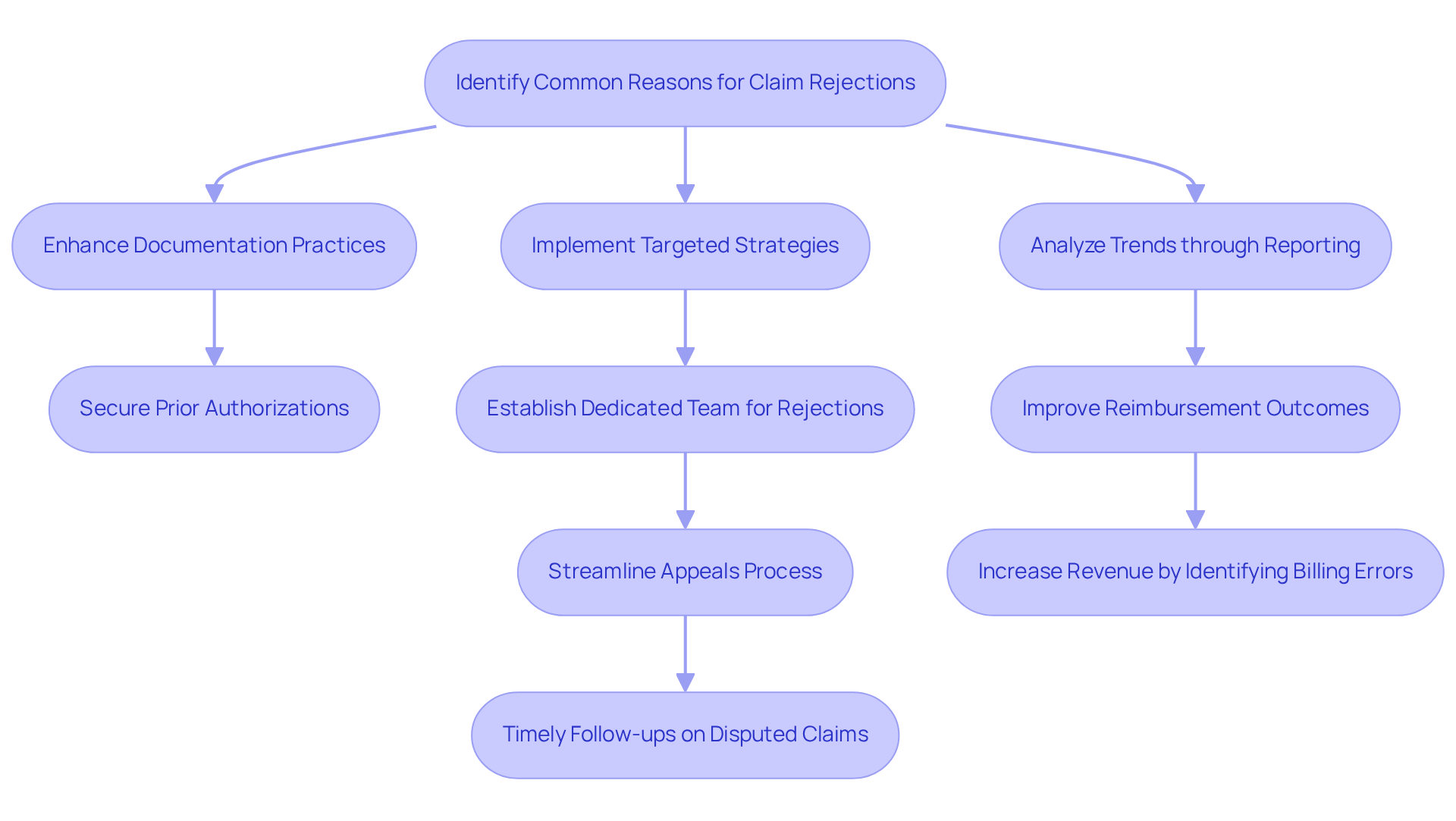
Mental health facilities face significant financial challenges due to ineffective claims management, which can jeopardize their operational viability. Clinics must adopt a systematic approach to identify common reasons for claim rejections and analyze trends through regular reporting and data analysis. Implementing targeted strategies can lead to a 20-30% reduction in claim rejections and a 15-25% faster reimbursement within 30 to 90 days.
Once the reasons for rejection are understood, clinics can enhance documentation practices and ensure that prior authorizations are secured when necessary. Establishing a dedicated team to manage rejections streamlines the appeals process and ensures timely follow-ups on disputed claims. Case studies show that organized refusal handling processes can lead to improved reimbursement outcomes, potentially increasing revenue by 30% through the identification and rectification of persistent billing errors.
Without proactive denial management, clinics risk not only their revenue but also their ability to provide high-quality patient care.
Conclusion
Navigating the complexities of Medicare reimbursement rates is crucial for healthcare facilities, especially those focused on mental health services. Understanding how reimbursement rates are determined and implementing effective billing strategies can lead to substantial financial improvements for clinics. A strong focus on compliance and proactive denial management safeguards revenue, allowing healthcare providers to concentrate on delivering quality patient care.
Key strategies include:
- The importance of accurate documentation
- Regular audits
- The use of advanced billing technologies
These practices streamline operations, reduce claim rejections, and expedite reimbursements. Collaborating with a dedicated billing team, such as Healthcare Partners Consulting & Billing, LLC, ensures that clinics benefit from tailored solutions that align with compliance standards and enhance operational efficiency.
Ultimately, a commitment to a compliance-first approach and the adoption of best practices in billing and denial management are vital for the sustainability of mental health facilities. By prioritizing these strategies, clinics can transform financial challenges into opportunities for growth, ensuring they remain equipped to provide exceptional care while navigating the complexities of Medicare reimbursement. Engaging with industry experts can solidify these strategies, ultimately enhancing the financial resilience of mental health practices.
Frequently Asked Questions
What determines Medicare reimbursement rates?
Medicare reimbursement rates are primarily determined by the Physician Fee Schedule (PFS), which uses the Resource-Based Relative Value Scale (RBRVS) to assign payment figures based on the physician’s work, practice expenses, and malpractice costs.
Why is it important for healthcare facilities to understand Medicare reimbursement rates?
Understanding Medicare reimbursement rates is essential for healthcare facilities to optimize their financial practices and enhance their revenue cycle performance.
How can healthcare facilities stay updated on changes to reimbursement rates?
Healthcare facilities should consistently review updates to the Physician Fee Schedule (PFS) from the Centers for Medicare & Medicaid Services (CMS), as these modifications can significantly influence reimbursement rates.
What strategies can healthcare facilities implement to improve their financial practices?
Healthcare facilities can implement strategies such as performing regular audits of patient statements, leveraging data analytics for performance benchmarking, and creating a dedicated team to address underpayments and unprocessed claims.
How can effective revenue collection strategies impact claim rejections?
By implementing effective revenue collection strategies, practices can reduce claim rejections by 20-30% and receive reimbursements more quickly, often within 15-25 days instead of the typical 30-90 days.
What is the potential outcome of understanding how reimbursement figures are computed?
Understanding how reimbursement figures are computed can help healthcare facilities transform financial challenges into opportunities for growth.