

Introduction
The healthcare billing landscape is undergoing significant transformation, with medical billing clearinghouses playing a crucial role in optimizing revenue cycle management. These services streamline the claims process and empower healthcare providers by reducing administrative burdens, allowing them to focus on what truly matters: patient care.
Selecting the right clearinghouse can be a daunting task for many practices, leading to critical questions:
- How can providers ensure they are maximizing their revenue potential?
- What strategies can be employed to mitigate claim denials and improve cash flow?
This article delves into best practices for leveraging medical billing clearinghouse services, offering insights that can transform financial operations and bolster the sustainability of healthcare practices. By implementing these best practices, healthcare providers can enhance their financial operations and ensure long-term viability.
Define Medical Billing Clearinghouses and Their Role in Revenue Cycle Management
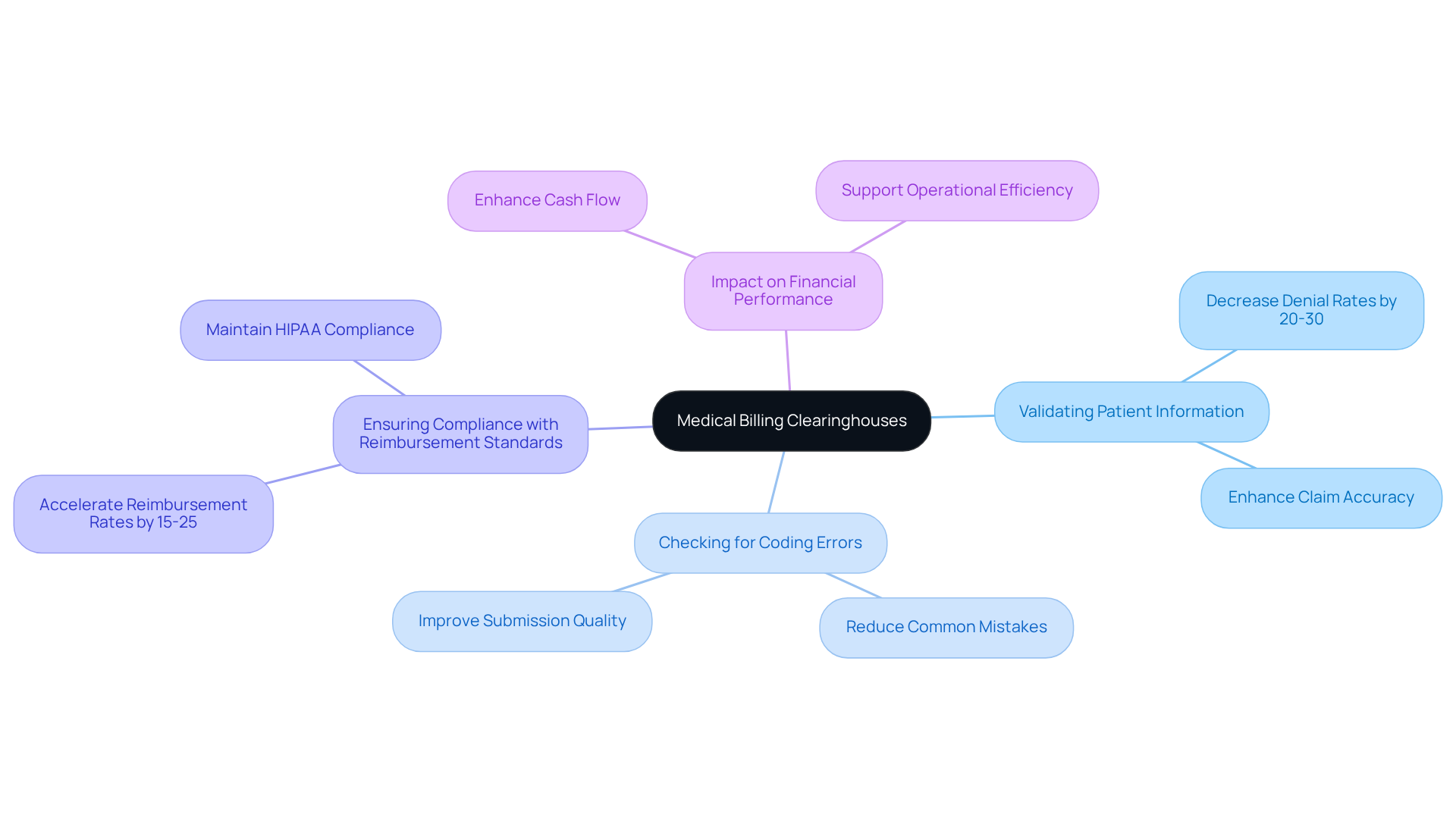
Medical billing clearinghouse services serve as crucial intermediaries in the healthcare revenue cycle, ensuring compliance and accuracy in submissions. Their role in revenue cycle management is crucial. They ensure submissions are accurately formatted and compliant with payer requirements before sending. By acting as a quality control layer, clearinghouses help decrease denial rates by as much as 20-30% and accelerate payment processes, which directly enhances the financial performance of medical practices.
Key functions of clearinghouses include:
- Validating patient information
- Checking for coding errors
- Ensuring that submissions adhere to necessary reimbursement standards
This meticulous attention to detail minimizes errors and accelerates reimbursement rates, which can improve by 15-25% within 30-90 days. Furthermore, robust security measures and HIPAA compliance are vital for protecting sensitive patient data and maintaining trust.
However, many practices struggle with underpayments and unprocessed requests, leading to cash flow challenges. Effective management of patient statements is essential in addressing these issues. Healthcare Partners Consulting & Billing, LLC (HPC) utilizes effective data scrubbing techniques that result in a significant decrease in reimbursement rejections, thereby enhancing the overall efficiency of the revenue cycle. Furthermore, HPC employs scorecard-driven adjustments linked to the accuracy of submissions and denial rates, showcasing operational rigor that enables practices to monitor performance metrics and make informed choices. When choosing a clearinghouse provider, consider how their customer support can help tackle the operational challenges mental health clinic owners often face.
As healthcare evolves, medical billing clearinghouse services will play an increasingly vital role in optimizing revenue cycle performance. Their ability to facilitate real-time eligibility verification and provide detailed reporting on claim performance further underscores their value in ensuring timely payments and maintaining financial stability for healthcare providers. Emerging technologies like artificial intelligence and blockchain are anticipated to impact the future of clearinghouses, promising enhanced efficiency and security in medical payment services.
Explore Key Functions of Medical Billing Clearinghouses for Enhanced Efficiency
Without the strategic integration of medical billing clearinghouse services, healthcare providers risk inefficiencies that can hinder revenue cycles and patient care. Medical billing clearinghouses play a crucial role in enhancing efficiency within the revenue cycle through several key functions:
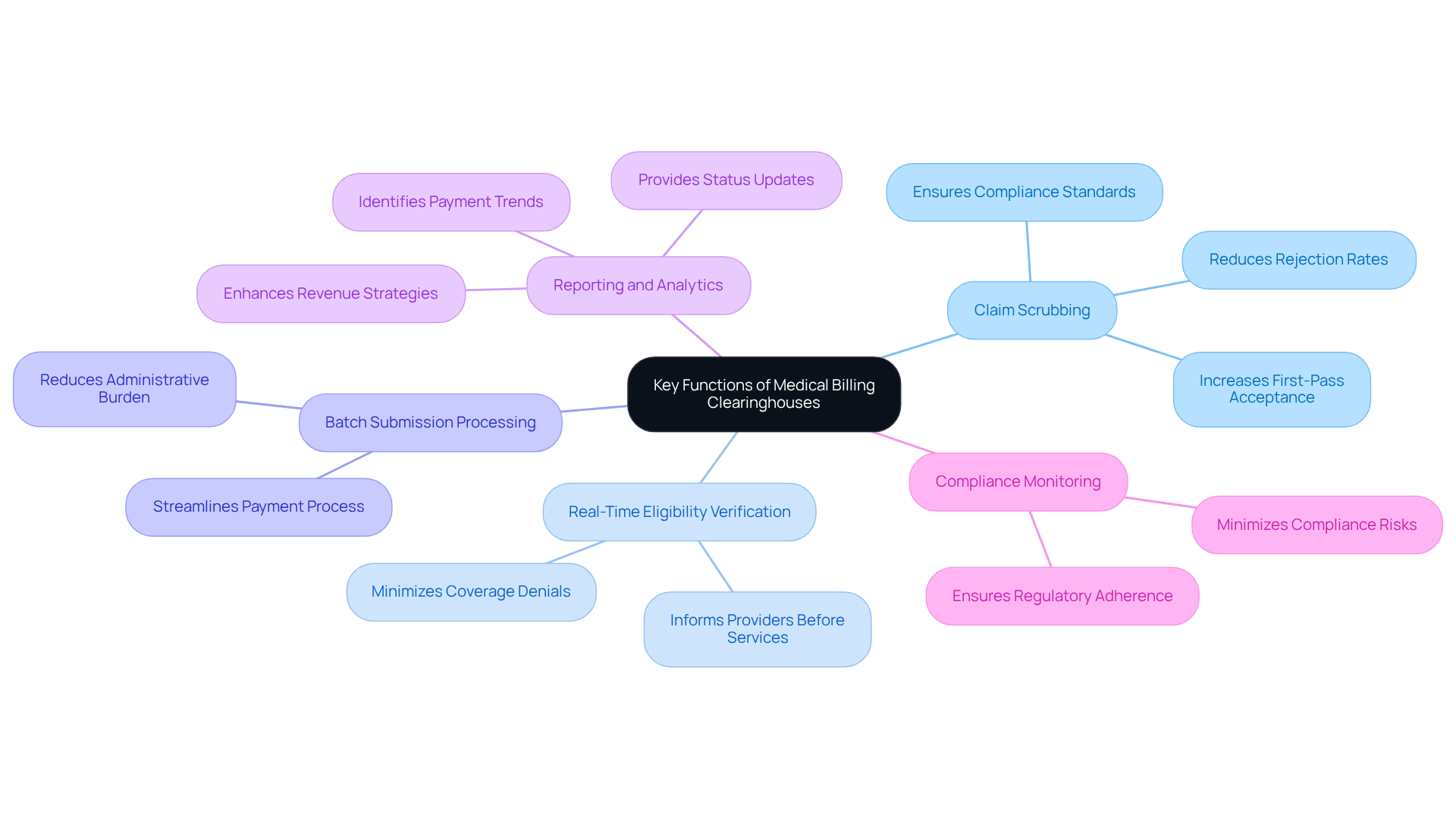
- Claim Scrubbing: Clearinghouses thoroughly examine submissions for mistakes and discrepancies before sending them, which can result in a notable decrease in rejection rates by 20-30%. This proactive approach ensures that submissions are accurate and meet compliance standards, which enhances the chances of first-pass acceptance when utilizing medical billing clearinghouse services.
- By utilizing medical billing clearinghouse services for real-time eligibility verification, providers can ensure they are fully informed about patient insurance coverage details before services are rendered. This minimizes the risk of unexpected denials due to coverage issues.
- Batch Submission Processing: Clearinghouses enable the simultaneous submission of multiple requests, streamlining the payment process and significantly alleviating the administrative burden for healthcare providers. This efficiency allows practices to concentrate more on patient care instead of the administrative complexities associated with medical billing clearinghouse services.
- Reporting and Analytics: Comprehensive reports on status updates, denials, and payment trends are supplied by medical billing clearinghouse services, enabling practices to make informed choices and enhance their revenue strategies. These insights can lead to improved operational performance and revenue cycle management.
- Compliance Monitoring: Medical billing clearinghouse services help ensure that claims comply with the latest healthcare regulations and payer requirements, thereby minimizing compliance risks. This is particularly important in the evolving landscape of healthcare regulations, where adherence is critical to avoid penalties and maintain operational integrity.
Ultimately, the strategic use of clearinghouses can redefine financial operations, ensuring that healthcare providers not only receive timely reimbursements but also maintain focus on patient care.
Select the Right Medical Billing Clearinghouse for Your Practice Needs
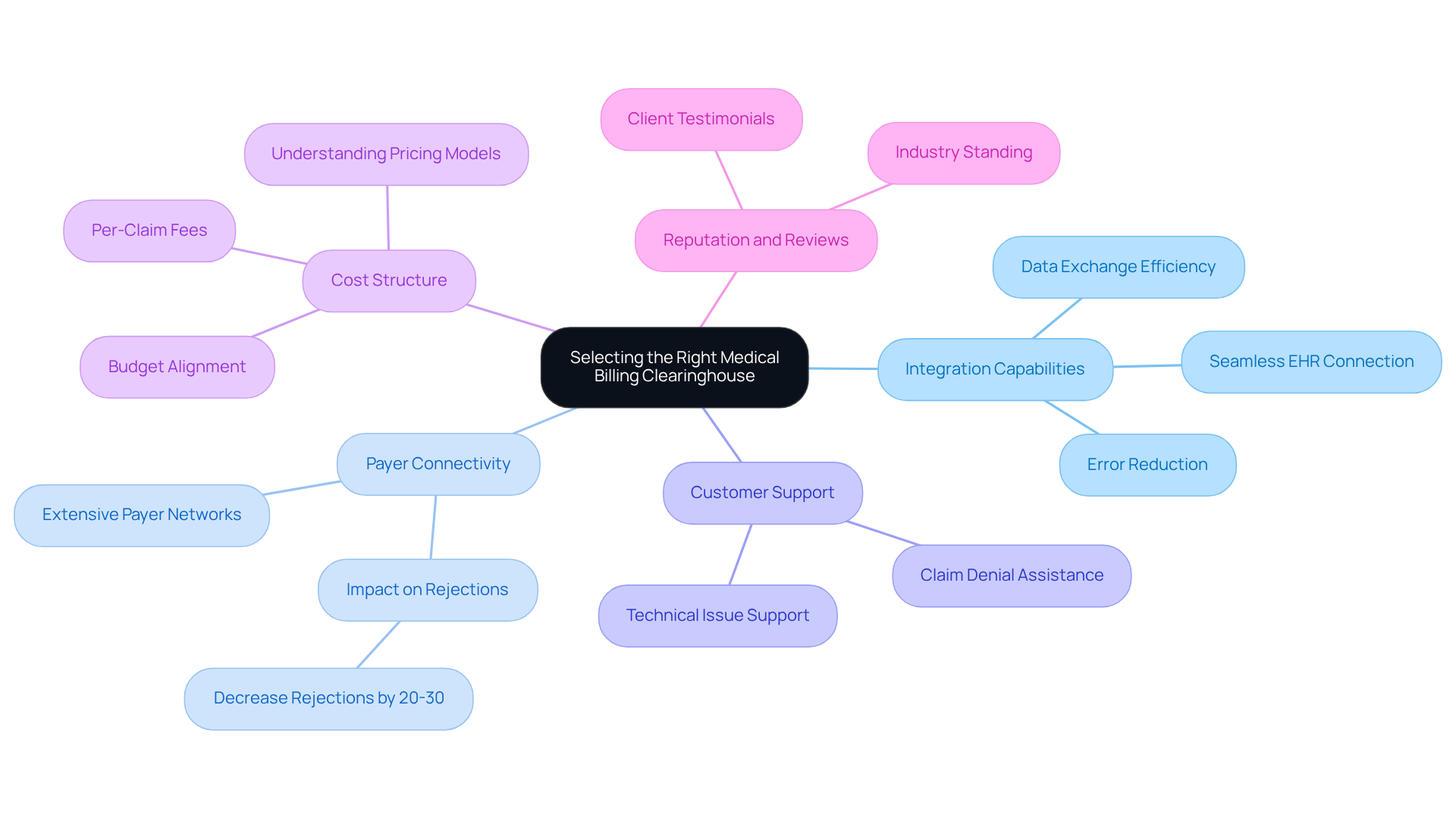
Selecting the right medical billing clearinghouse services can be a daunting task for mental health practices, yet it is crucial for optimizing revenue cycle administration. Here are the key factors to consider:
- Integration Capabilities: Ensure the platform can seamlessly connect with your existing electronic health record (EHR) and financial systems. This integration facilitates smooth data exchange, reduces the risk of errors, and enhances operational efficiency.
- Payer Connectivity: Assess the connections of the intermediary with various payers. An organization with extensive payer networks can greatly enhance your practice’s billing capabilities, ensuring prompt reimbursements and decreasing rejections by 20-30%.
- Customer Support: Robust customer support is essential. Seek an organization that offers support with claim denials and technical issues, ensuring that your practice can navigate challenges effectively.
- Cost Structure: Understand the pricing model of the organization, including any per-claim fees. This knowledge assists in aligning the costs of the organization with your budget, facilitating improved financial planning.
- Reputation and Reviews: Research the organization’s standing within the industry. Reading client testimonials and reviews can provide insights into their reliability and effectiveness, helping you make an informed decision.
Ultimately, the right choice can lead to significant improvements in cash flow and operational efficiency, transforming the financial health of your practice.
Implement Effective Claims Management and Denial Strategies Using Clearinghouses
In an environment where revenue loss due to claim denials is prevalent, effective claims management strategies are essential for healthcare providers. To maximize revenue through effective claims management and denial strategies, healthcare providers should consider the following best practices:
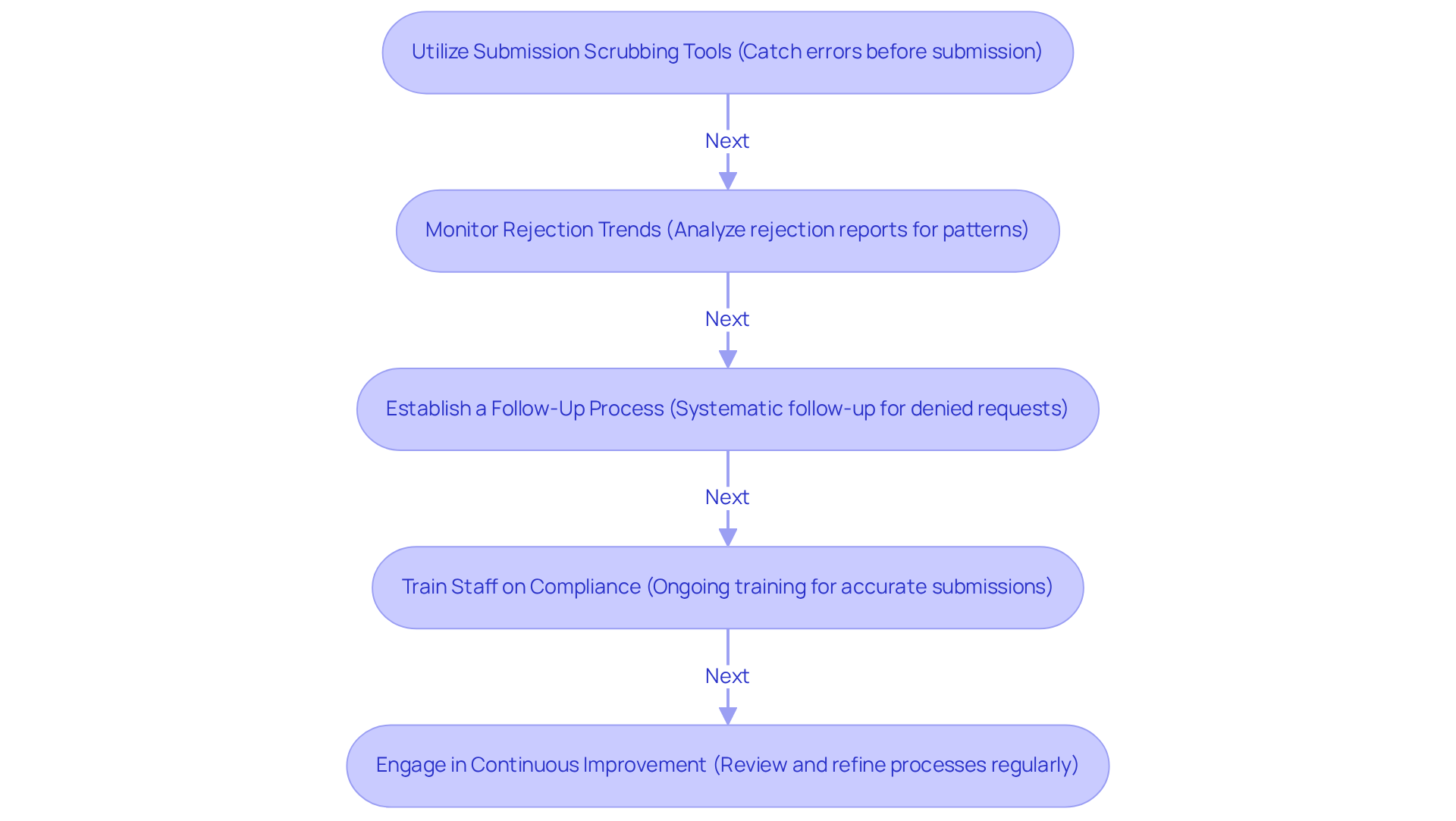
- Utilize Submission Scrubbing Tools: Leverage the scrubbing features of your service provider to catch errors before submission. This proactive strategy can greatly diminish the chances of rejections, with advanced healthcare claims management software achieving reductions of up to 85%.
- Monitor rejection trends by regularly analyzing rejection reports provided by medical billing clearinghouse services to identify patterns and root causes. This data-driven approach allows for targeted improvements in documentation and coding practices, which can lead to a 20-30% reduction in denials and enhance overall revenue cycle performance.
- Establish a Follow-Up Process: Implement a systematic follow-up procedure for denied requests. Ensuring timely resubmission and appeals where necessary can accelerate reimbursement, with improvements of 15-25% within 30-90 days being achievable through diligent follow-up.
- Train Staff on Compliance: Ongoing training is crucial for reducing errors and ensuring submissions are accurate. Regular education helps personnel navigate the complexities of medical billing and compliance requirements.
- Engage in Continuous Improvement: Regularly review and refine your processes based on feedback and performance metrics. Using scorecards to track claims accuracy, denial rates, and accounts receivable days can show operational effectiveness and help optimize revenue cycle management with medical billing clearinghouse services.
Ultimately, the adoption of these best practices can transform the financial health of healthcare organizations, ensuring sustainability and growth.
Conclusion
Healthcare providers must prioritize maximizing revenue through medical billing clearinghouse services to enhance financial performance while maintaining a focus on patient care. Leveraging the capabilities of clearinghouses allows practices to streamline revenue cycle management. This reduces administrative burdens and improves the bottom line.
The article highlights several key functions of medical billing clearinghouses, including:
- Claim scrubbing
- Real-time eligibility verification
- Comprehensive reporting
These functions not only minimize errors and accelerate payment processes but also empower healthcare providers to make informed decisions that enhance operational efficiency. Furthermore, selecting the right clearinghouse provider is crucial, as it can significantly impact cash flow and overall practice performance.
In a rapidly evolving healthcare landscape, effective revenue cycle management is crucial for success in today’s healthcare environment. By adopting best practices and utilizing the expertise of Healthcare Partners Consulting & Billing, LLC (HPC), healthcare providers can navigate the complexities of billing with confidence. HPC, a veteran-owned leader with 39 years of experience in medical and mental health billing, emphasizes compliance and operational integrity. Engaging with HPC not only streamlines financial operations but also allows providers to prioritize exceptional patient care, a critical aspect of healthcare delivery. For further assistance, reach out to HPC at info@hpcbilling.com or call 888-517-4992.
Frequently Asked Questions
What is the role of medical billing clearinghouses in revenue cycle management?
Medical billing clearinghouses serve as intermediaries in the healthcare revenue cycle, ensuring compliance and accuracy in submissions. They help decrease denial rates and accelerate payment processes, enhancing the financial performance of medical practices.
What are the key functions of medical billing clearinghouses?
Key functions include validating patient information, checking for coding errors, and ensuring submissions adhere to necessary reimbursement standards.
How do clearinghouses impact denial rates and reimbursement speeds?
Clearinghouses can decrease denial rates by 20-30% and improve reimbursement rates by 15-25% within 30-90 days through meticulous attention to detail.
Why is HIPAA compliance important for clearinghouses?
HIPAA compliance is vital for protecting sensitive patient data and maintaining trust between healthcare providers and patients.
What challenges do practices face regarding underpayments and unprocessed requests?
Many practices struggle with underpayments and unprocessed requests, leading to cash flow challenges, which necessitate effective management of patient statements.
How does Healthcare Partners Consulting & Billing, LLC (HPC) enhance revenue cycle efficiency?
HPC utilizes effective data scrubbing techniques to decrease reimbursement rejections and employs scorecard-driven adjustments linked to submission accuracy and denial rates.
What should be considered when choosing a clearinghouse provider?
Consider how the clearinghouse provider’s customer support can help address the operational challenges faced by mental health clinic owners.
How are emerging technologies expected to impact medical billing clearinghouses?
Emerging technologies like artificial intelligence and blockchain are anticipated to enhance efficiency and security in medical payment services, further optimizing revenue cycle performance.