

Introduction
Navigating the complexities of the Florida Medicaid Fee Schedule is essential for healthcare providers seeking to enhance their financial viability. Effective billing strategies and compliance with healthcare regulations are vital for enhancing financial performance while prioritizing patient care. Healthcare providers often face challenges due to the evolving nature of Medicaid regulations and billing complexities. Failure to adapt to these changes can lead to significant revenue losses for healthcare practices. This article outlines best practices that enable healthcare professionals to optimize operations and enhance financial outcomes.
Understand the Florida Medicaid Fee Schedule
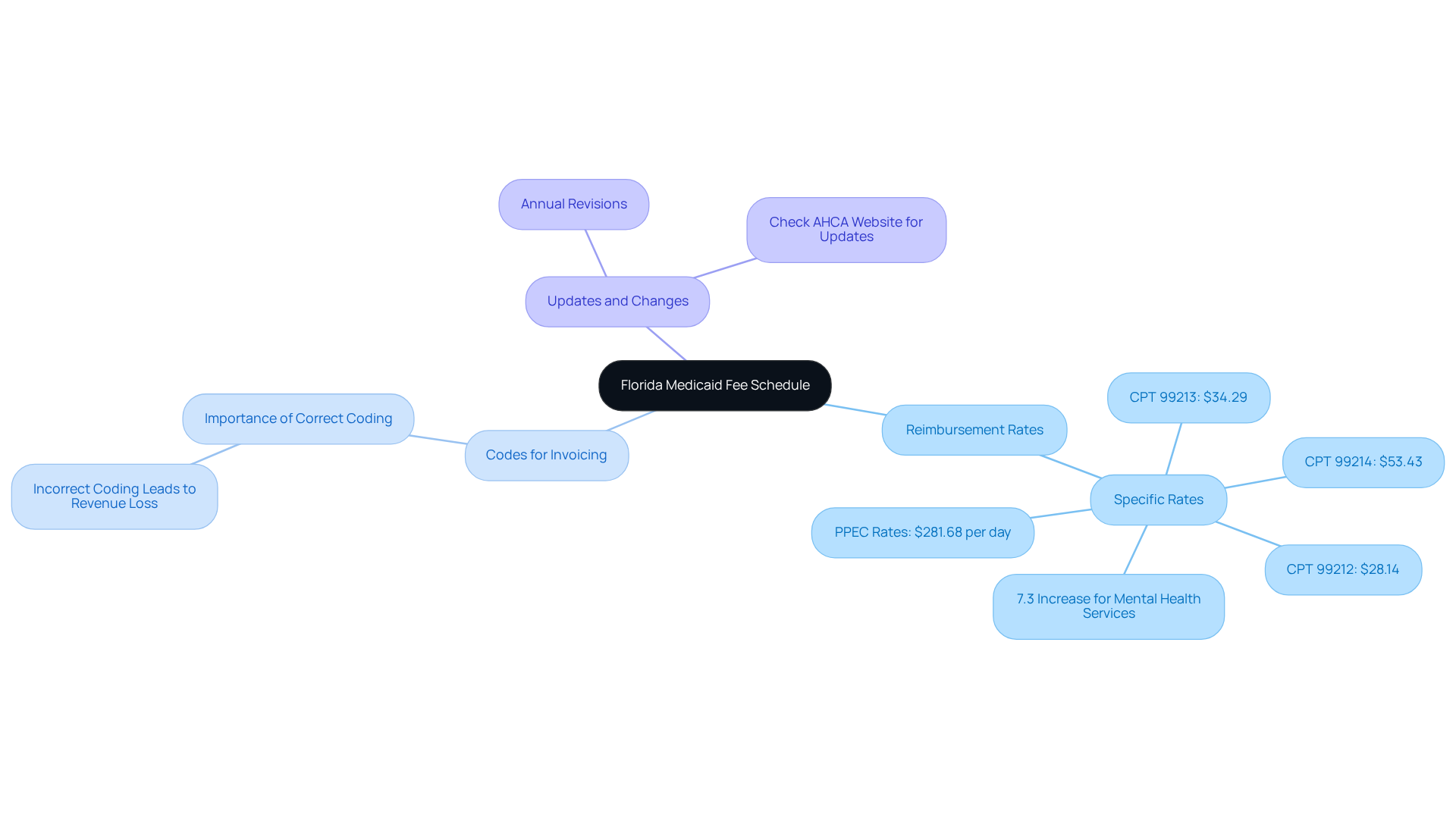
Understanding the Florida Medicaid Fee Schedule is essential for healthcare professionals dealing with reimbursement complexities. This schedule outlines the maximum reimbursement rates for healthcare services offered to Medicaid recipients, making it essential for healthcare professionals to comprehend the Florida Medicaid fee schedule to improve billing and revenue. Key components include:
- Reimbursement Rates: Each service is assigned a specific rate, which can fluctuate based on provider type and service complexity. Significantly, the 2026 Florida Medicaid fee schedule indicates a 7.3% increase for certain mental health services, reflecting legislative efforts to enhance compensation for practitioners.
- Codes for Invoicing: Accurate code usage is essential. Providers must ensure they utilize the correct codes corresponding to the services rendered. Incorrect coding can lead to significant revenue loss, which can significantly impact overall financial health.
- Updates and Changes: The Florida Medicaid fee schedule undergoes annual revisions, making it essential for healthcare professionals to stay informed about these updates for compliance and financial planning. Healthcare professionals should regularly check the Florida Agency for Health Care Administration (AHCA) website for the latest updates.
Thoroughly grasping these elements enables organizations to navigate the complexities of Medicaid reimbursement effectively. This understanding ultimately improves financial performance and ensures appropriate compensation for services.
Implement Effective Billing Strategies
Claim denials pose a significant challenge for healthcare providers, impacting both revenue and operational efficiency. To address this, they should adopt the following effective billing strategies:
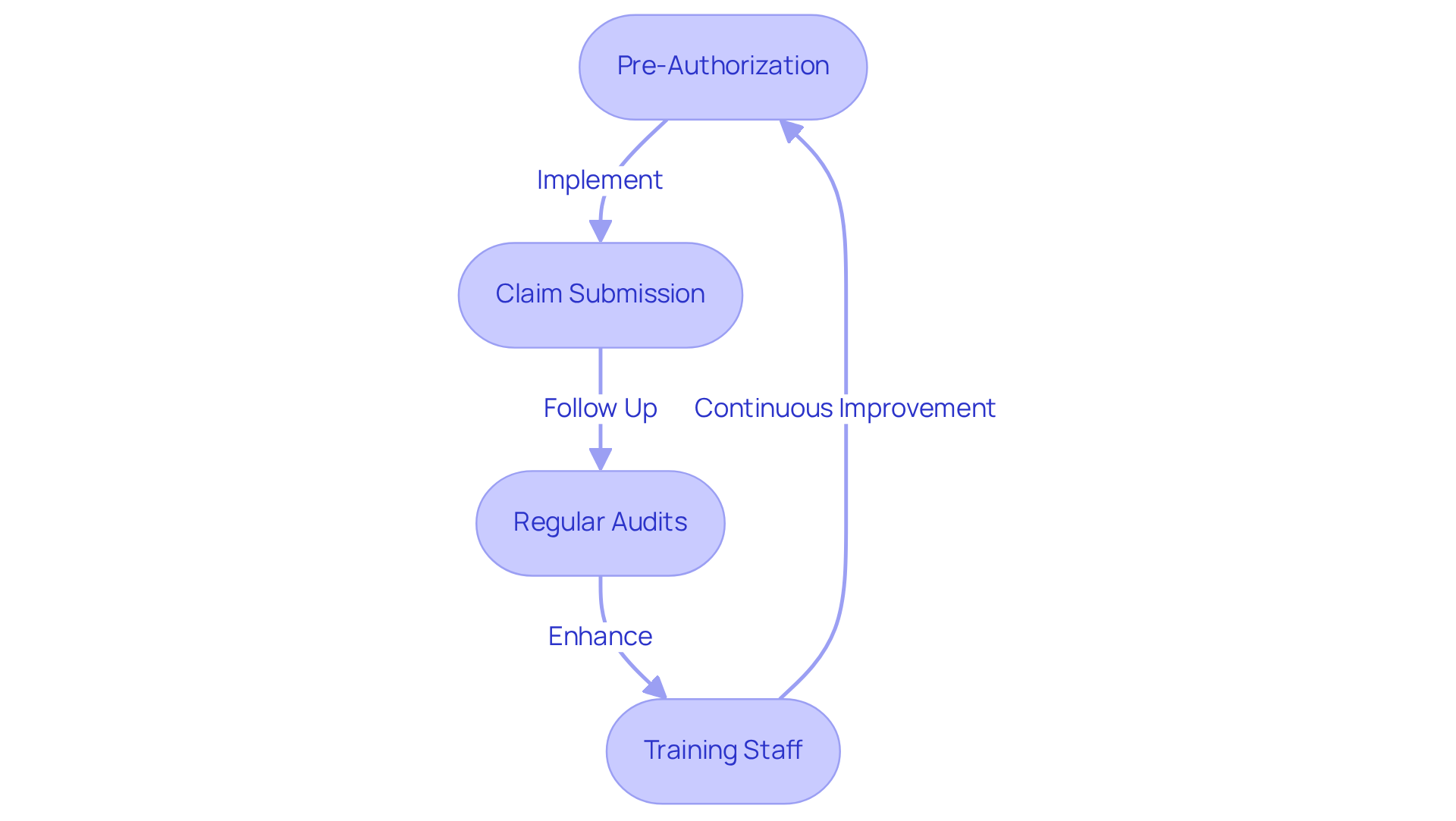
- Pre-Authorization: Obtain pre-authorization for services that require it before providing care. This proactive step can prevent claim denials and ensure timely reimbursement.
- Claim Submission: Submit claims promptly and accurately using electronic invoicing systems to streamline the process and minimize errors. Adhering to the Florida Medicaid fee schedule’s specified submission timeframe is crucial to avoid payment delays.
- Regular Audits: Conduct regular audits of invoicing practices to identify and rectify errors. This proactive approach helps maintain compliance and improves the accuracy of submitted claims.
- Training Staff: Invest in comprehensive training for staff involved in invoicing to ensure they are well-versed in the latest codes and compliance requirements. A knowledgeable team can significantly reduce claim denials and enhance overall efficiency.
By adopting these strategies, healthcare providers can not only enhance their revenue but also streamline their administrative processes. Ultimately, these strategies can transform the billing process, ensuring that healthcare providers maximize their revenue potential while minimizing administrative burdens.
Ensure Compliance with Healthcare Regulations
Entities participating in the Florida Medicaid fee schedule must adhere to stringent healthcare regulations to ensure operational integrity. Here are key compliance practices to implement:
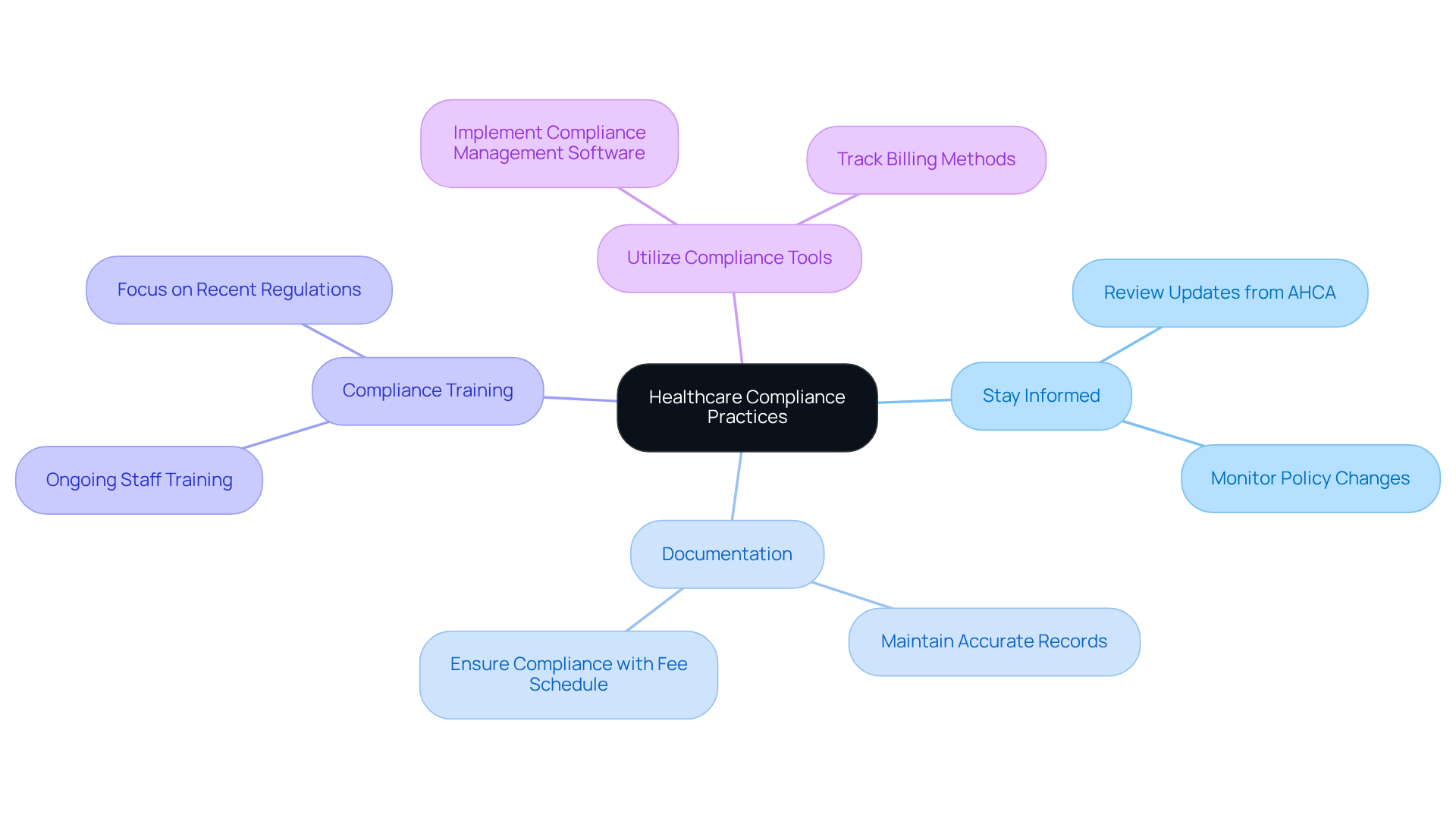
- Stay Informed: Regularly review updates from the Florida Agency for Health Care Administration (AHCA) regarding Medicaid policies and billing requirements. Remaining up-to-date ensures that providers are informed of any modifications that may affect their financial procedures.
- Documentation: Maintain thorough documentation for all services rendered. Accurate records support claims and are crucial for audits. Ensure that documentation meets the Florida Medicaid fee schedule to avoid penalties.
- Compliance Training: Provide ongoing compliance training for all staff involved in coding and documentation. This training should address the most recent regulations, coding standards, and ethical financial methods to reduce the risk of fraud and misuse.
- Utilize Compliance Tools: Implement compliance management software to track billing methods, flag potential issues, and ensure adherence to regulations. These tools can streamline compliance efforts and reduce administrative burdens.
Prioritizing compliance is essential for healthcare professionals to mitigate legal risks and enhance their standing in the healthcare community. Recent updates from CMS highlight the necessity for states to submit a comprehensive two-year revalidation strategy for healthcare professionals, focusing on high-risk individuals, which underscores the importance of maintaining accurate and current Medicaid enrollment. Additionally, case studies indicate that effective compliance practices can lead to a reduction in claim denials by 20-30% and faster reimbursements within 30-90 days, ultimately improving revenue cycle performance. Neglecting these compliance practices can lead to severe financial penalties and a tarnished professional reputation.
Leverage Administrative Support for Operational Efficiency
To enhance operational efficiency, healthcare organizations must strategically leverage support services. Here are key strategies to consider:
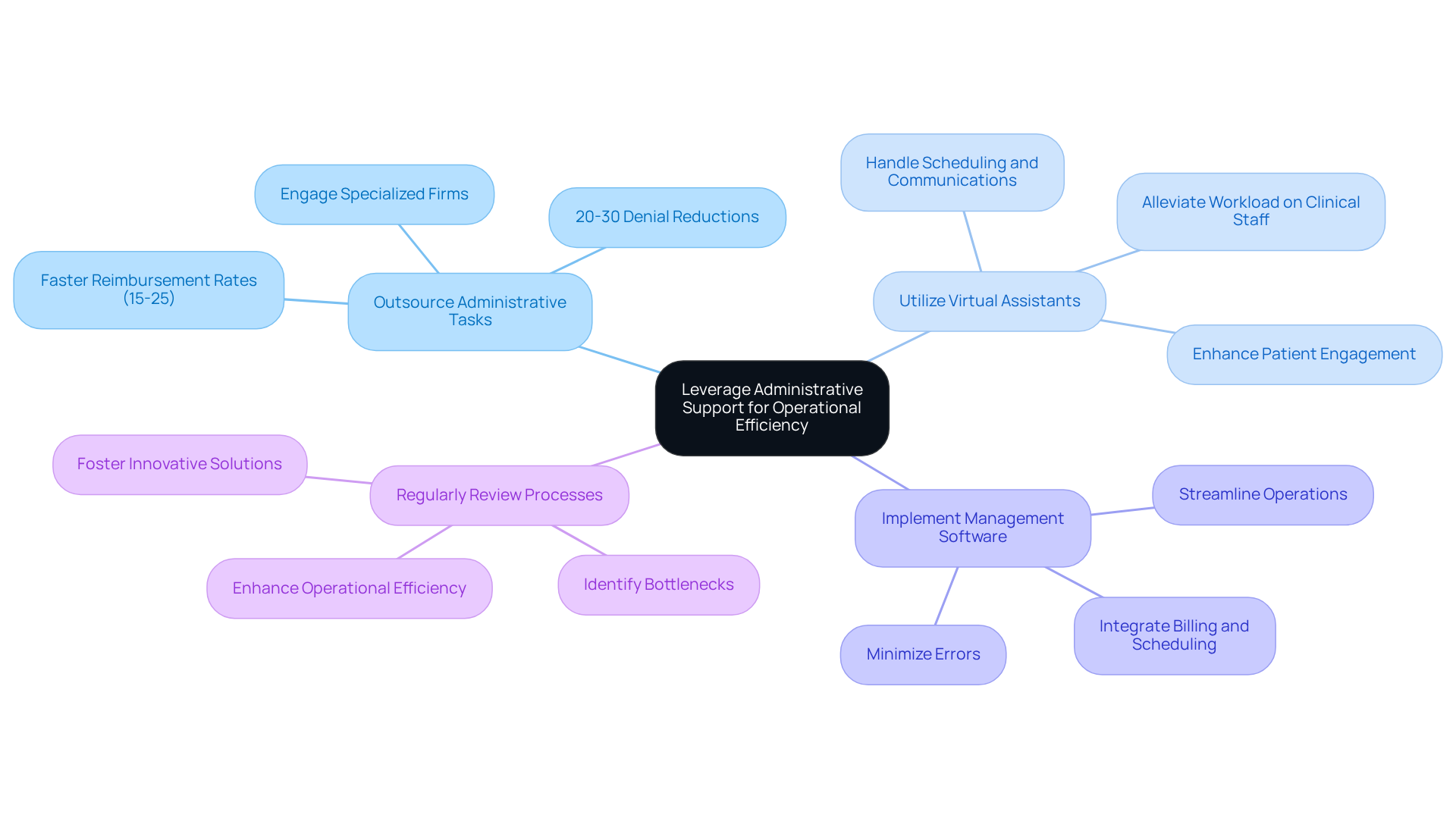
- Outsource Administrative Tasks: Engaging specialized firms like Healthcare Partners Consulting & Billing, LLC (HPC) for billing, scheduling, and other administrative functions reduces operational burdens, enabling organizations to focus on delivering quality care. Studies indicate that outsourcing operational tasks can improve revenue cycle performance, with potential denial reductions of 20-30% and faster reimbursement rates of 15-25% within 30-90 days.
- Utilize Virtual Assistants: HPC emphasizes that tailored virtual assistant services for behavioral and mental health can significantly reduce operational strain on physicians. By handling scheduling, patient communications, and follow-ups, virtual assistants alleviate the workload on clinical staff, enhancing patient engagement and overall productivity.
- Implement Management Software: Investing in comprehensive management software that integrates billing, scheduling, and patient records streamlines operations. Such technology minimizes errors and enhances efficiency, allowing for smoother workflows. HPC’s services include seamless integration with platforms like TherapyNotes and SimplePractice, ensuring compatibility with existing systems.
- Regularly Review Processes: Many healthcare organizations struggle with inefficiencies that hinder patient care. Conducting periodic reviews of operational processes helps identify bottlenecks and areas for improvement. Involving staff in these discussions fosters innovative solutions that enhance operational efficiency. A pertinent case study from HPC demonstrates how organizations that consistently evaluate their workflows can achieve substantial enhancements in efficiency and patient care. Additionally, HPC offers a quick quiz to assess your mental health operations’ profitability, providing personalized recommendations to improve efficiency and billing accuracy.
This strategic approach not only alleviates operational burdens but also positions healthcare providers to deliver superior patient care. Client testimonials from practitioners like Dr. Sarah Mitchell and Dr. Michael Rodriguez highlight the positive impact of HPC’s services on revenue increase and administrative burden reduction.
Conclusion
Navigating the complexities of the Florida Medicaid Fee Schedule presents significant challenges for healthcare providers. By focusing on reimbursement rates, coding accuracy, and annual updates, healthcare professionals can enhance their financial performance and secure appropriate compensation for their services.
The article outlines several best practices that empower healthcare providers to streamline their billing processes. Implementing effective billing strategies, such as:
- Obtaining pre-authorizations
- Conducting regular audits
- Investing in staff training
can mitigate claim denials and improve operational efficiency. Additionally, prioritizing compliance with healthcare regulations safeguards against legal risks and fosters a reputation of integrity within the healthcare community.
Leveraging administrative support from specialized services like Healthcare Partners Consulting & Billing, LLC (HPC) helps alleviate billing and operational burdens, allowing providers to focus on quality patient care. By adopting these strategies, healthcare organizations can transform their revenue cycle management, ensuring they thrive in a complex regulatory landscape while enhancing patient outcomes. A compliance-first approach is essential for healthcare organizations to thrive in a complex regulatory landscape and improve patient outcomes.
Frequently Asked Questions
What is the Florida Medicaid Fee Schedule?
The Florida Medicaid Fee Schedule outlines the maximum reimbursement rates for healthcare services provided to Medicaid recipients, which is crucial for healthcare professionals to understand for effective billing and revenue management.
Why is it important for healthcare professionals to understand the Florida Medicaid Fee Schedule?
Understanding the fee schedule is essential for navigating reimbursement complexities, improving billing accuracy, and ensuring appropriate compensation for services rendered.
How are reimbursement rates determined in the Florida Medicaid Fee Schedule?
Each service is assigned a specific reimbursement rate that can vary based on the provider type and the complexity of the service. For example, the 2026 fee schedule indicates a 7.3% increase for certain mental health services.
What role do codes play in the Florida Medicaid Fee Schedule?
Accurate code usage is critical for invoicing. Providers must use the correct codes that correspond to the services rendered, as incorrect coding can lead to significant revenue loss.
How often does the Florida Medicaid Fee Schedule get updated?
The Florida Medicaid Fee Schedule is revised annually, making it important for healthcare professionals to stay informed about updates for compliance and financial planning.
Where can healthcare professionals find the latest updates on the Florida Medicaid Fee Schedule?
Healthcare professionals should regularly check the Florida Agency for Health Care Administration (AHCA) website for the latest updates and changes to the fee schedule.