

Introduction
The intricate nature of the Medi-Cal Fee Schedule presents significant challenges for healthcare providers in California, necessitating effective strategies to optimize revenue while maintaining quality care. This article explores strategies that enable providers to improve their billing practices, lessen administrative burdens, and concentrate more on patient care. Adapting to these changes is crucial for providers to enhance their financial viability and ensure compliance in a dynamic healthcare environment.
Understand the Medi-Cal Fee Schedule: Definition and Importance
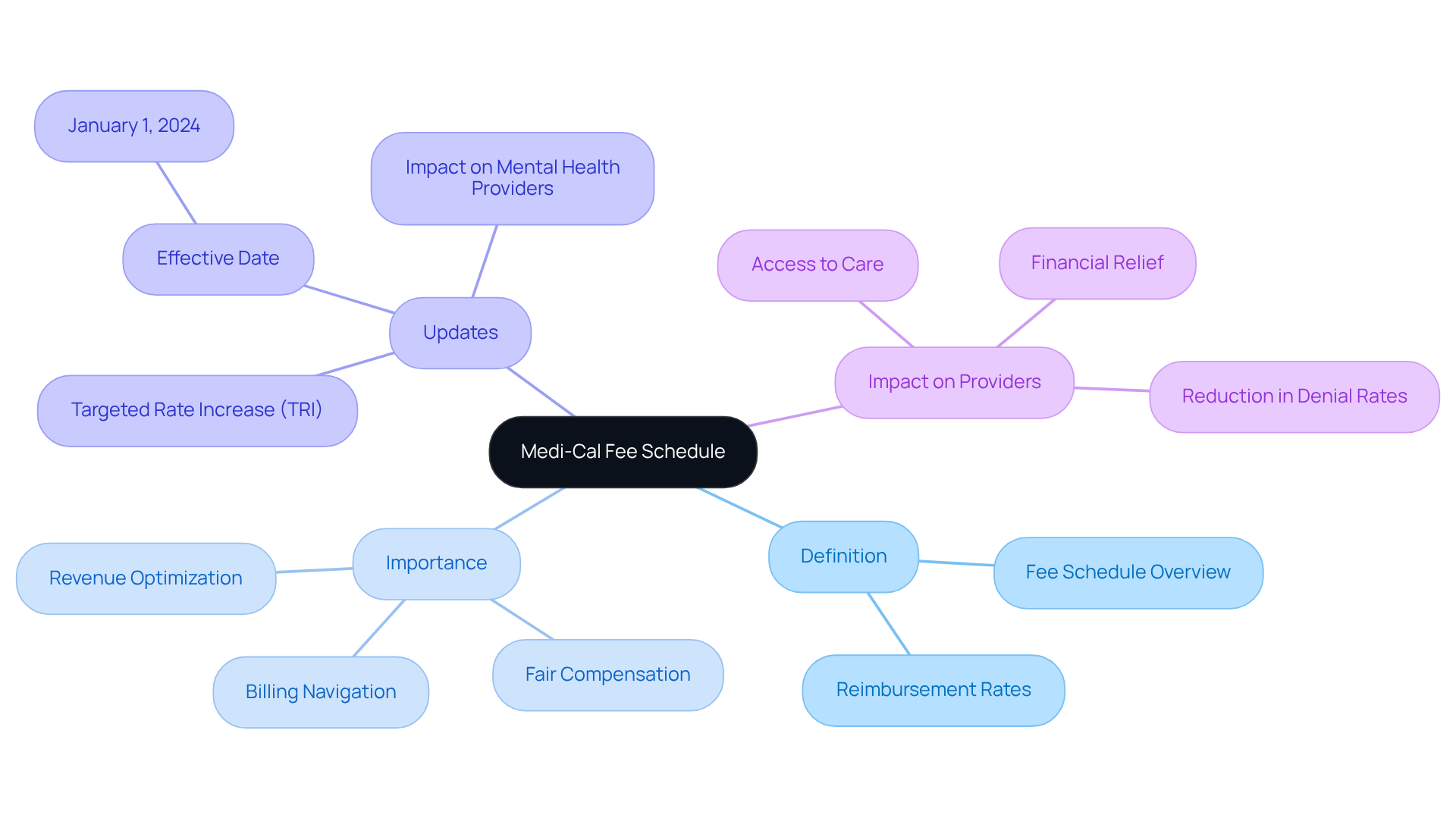
Navigating the complexities of reimbursement rates is crucial for healthcare providers in California. The Fee Schedule is an extensive compilation of reimbursement rates established by the California Department of Health Care Services (DHCS) for care provided to beneficiaries. Grasping this schedule is essential for healthcare providers, as it determines the maximum allowable payments for various offerings, including mental health care. The significance of the Medi-Cal Fee Schedule California lies in its function of ensuring that providers receive fair compensation for their work while adhering to state regulations. Familiarity with the fee schedule helps providers navigate billing processes and optimize revenue, ensuring they do not miss out on payments. For instance, as of the latest updates, certain services may receive payment augmentations funded by a Managed Care Organization (MCO) Tax, which can significantly impact a practice’s financial outcomes.
The forthcoming Targeted Rate Increase (TRI) Fee Schedule, effective January 1, 2024, aims to enhance access to healthcare for millions of Californians, with targeted rates established at a minimum of 87.5% of the lowest Medicare rate. This adjustment is expected to provide substantial financial relief to mental health providers, allowing them to serve more patients effectively. Furthermore, the program covers over half of California’s children and a significant portion of seniors and individuals with disabilities, highlighting the fee schedule’s essential role in supporting vulnerable populations.
As healthcare providers face increasing administrative burdens, understanding and leveraging the Medi-Cal Fee Schedule California can lead to a reduction in denial rates by 20-30% and faster reimbursement cycles of 15-25% within 30-90 days. This support allows providers to concentrate on delivering quality care. For personalized consultation to identify optimal administrative solutions for your healthcare facility, get in touch with Healthcare Partners Consulting by emailing info@hpcbilling.com or calling 888-517-4992. Arrange a meeting to explore how we can assist in optimizing your invoicing procedures and improving your operational efficiency.
Implement Effective Billing Practices for Medi-Cal Services
Many healthcare providers struggle to maximize revenue from state-funded programs due to inefficient invoicing practices. To address this challenge, healthcare providers should adopt several effective invoicing strategies.
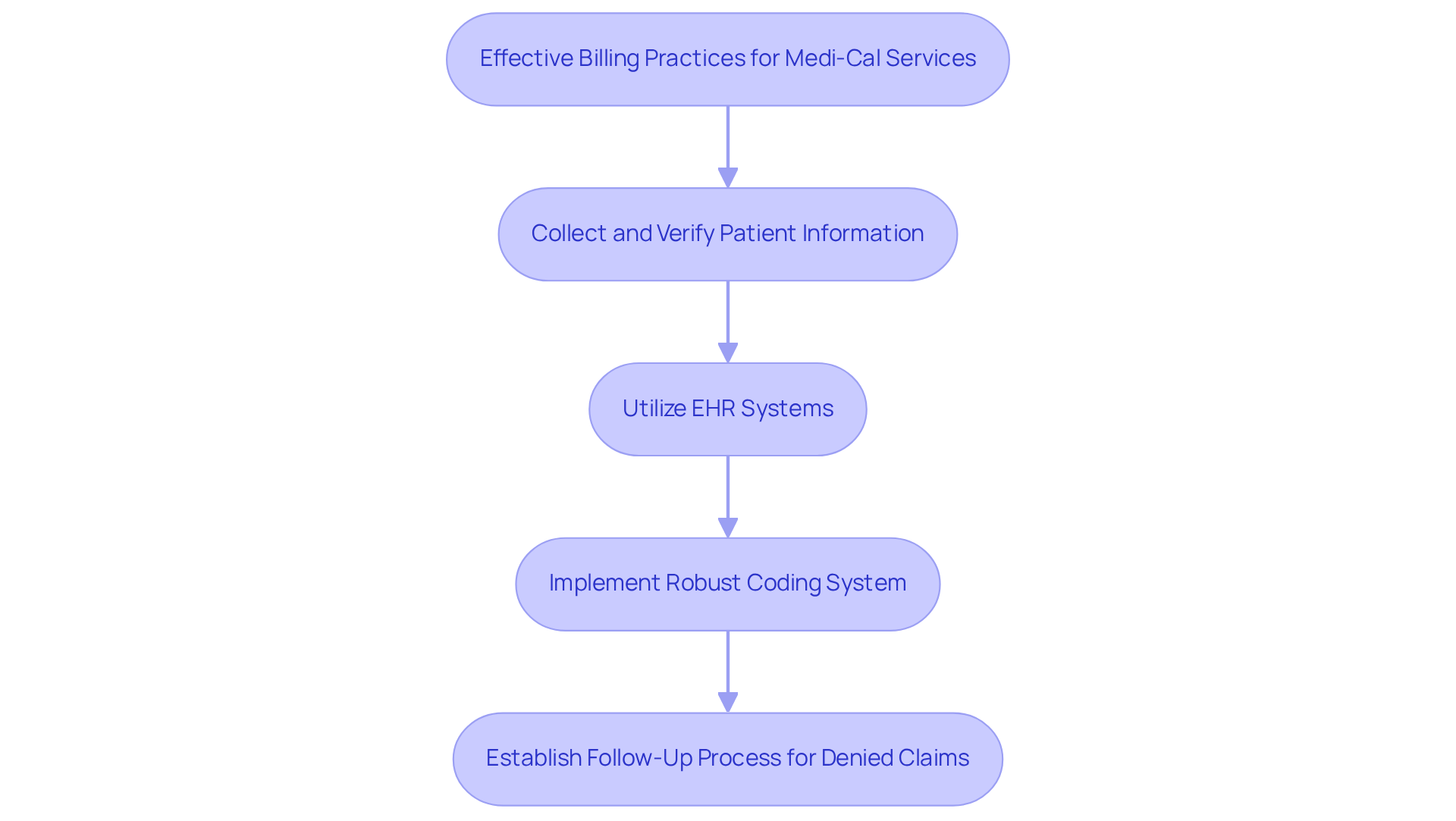
- It is crucial to accurately collect and verify all patient information before services are rendered, including confirming eligibility and understanding the specific services covered under the Medi-Cal fee schedule California.
- Utilizing electronic health records (EHR) systems can streamline documentation and financial processes, significantly reducing errors and improving the speed of claims submissions.
- A robust coding system that aligns with the latest CPT and HCPCS codes is essential for precise invoicing. Regular training for staff on coding updates and payment procedures is vital to uphold compliance and efficiency.
- Establishing a clear follow-up process for denied claims ensures that all denials are addressed promptly, allowing organizations to recover lost revenue.
For instance, a mental health clinic that adopted these strategies saw a 25% increase in successful claims submissions within six months, demonstrating the potential for improved revenue cycle performance. By partnering with Healthcare Partners Consulting & Billing, LLC (HPC), mental health clinics can access dedicated administrative support services tailored to their needs, including efficient scheduling, document management, and claims processing. This collaboration not only enhances patient care and operational efficiency but also significantly improves the financial sustainability of mental health services.
Stay Informed: Monitor Changes in Medi-Cal Regulations and Fee Structures
Healthcare providers face a dynamic regulatory environment that demands constant vigilance and adaptation. To ensure compliance and optimize billing practices, providers can achieve this by:
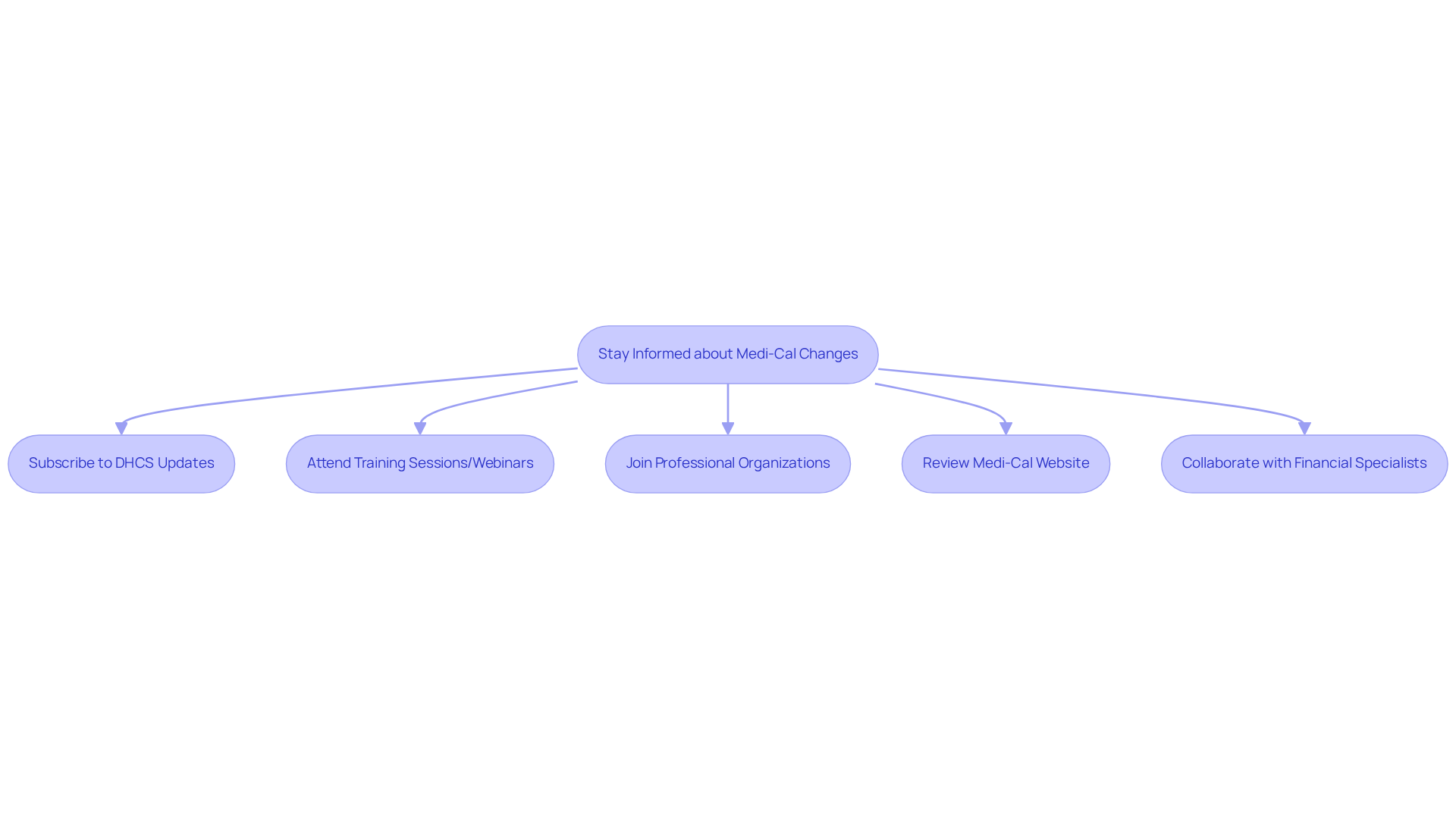
- Subscribing to updates from the California Department of Health Care Services (DHCS)
- Attending relevant training sessions or webinars
- Joining professional organizations for access to valuable resources and networking opportunities that keep providers informed about industry changes
Recent updates to the Medi-Cal fee schedule in California, including significant rate increases for certain services, underscore the necessity of remaining informed about regulatory changes. For instance, starting January 1, 2026, new applications for the program will be subject to stricter eligibility criteria, including the reinstatement of the Asset Assessment and Lookback Rule. Failure to adapt to these changes can lead to significant financial losses and compliance challenges.
Consistently reviewing the Medi-Cal website and collaborating with financial specialists can assist organizations in staying ahead of the curve. Healthcare Partners Consulting & Billing, LLC (HPC), a veteran-owned organization with 39 years of experience, provides personalized consultations to identify optimal administrative solutions tailored to your needs. Our committed services encompass:
- Scheduling
- Document management
- Insurance claims assistance
This enables you to concentrate more on patient care while we manage the intricacies of financial processes and compliance. Additionally, our quick quiz helps you assess the profitability of your mental health operations, identify hidden revenue leaks, and receive personalized recommendations to enhance efficiency and billing accuracy.
Case studies indicate that practices that actively monitor these changes can reduce denial rates by 20-30% and achieve faster reimbursement within 15-25% of 30-90 days. By implementing scorecard-driven adjustments tied to claims accuracy and operational rigor, providers can enhance their revenue cycle performance and ensure they are well-prepared for the evolving landscape of the Medi-Cal fee schedule California regulations. Ultimately, proactive engagement with regulatory changes is essential for sustaining financial health and compliance in the healthcare sector.
Leverage Administrative Support for Enhanced Billing Efficiency
To enhance invoicing efficiency, healthcare providers must prioritize administrative support, either through dedicated staff or specialized outsourcing solutions. HPC, a veteran-owned company with 39 years of experience, alleviates the administrative burden on clinical staff, enabling a stronger focus on patient care.
Administrative support streamlines the invoicing process by ensuring precise and timely claims submissions, thereby minimizing the likelihood of claim denials. A dedicated team managing payment inquiries and follow-ups enhances cash flow and boosts patient satisfaction.
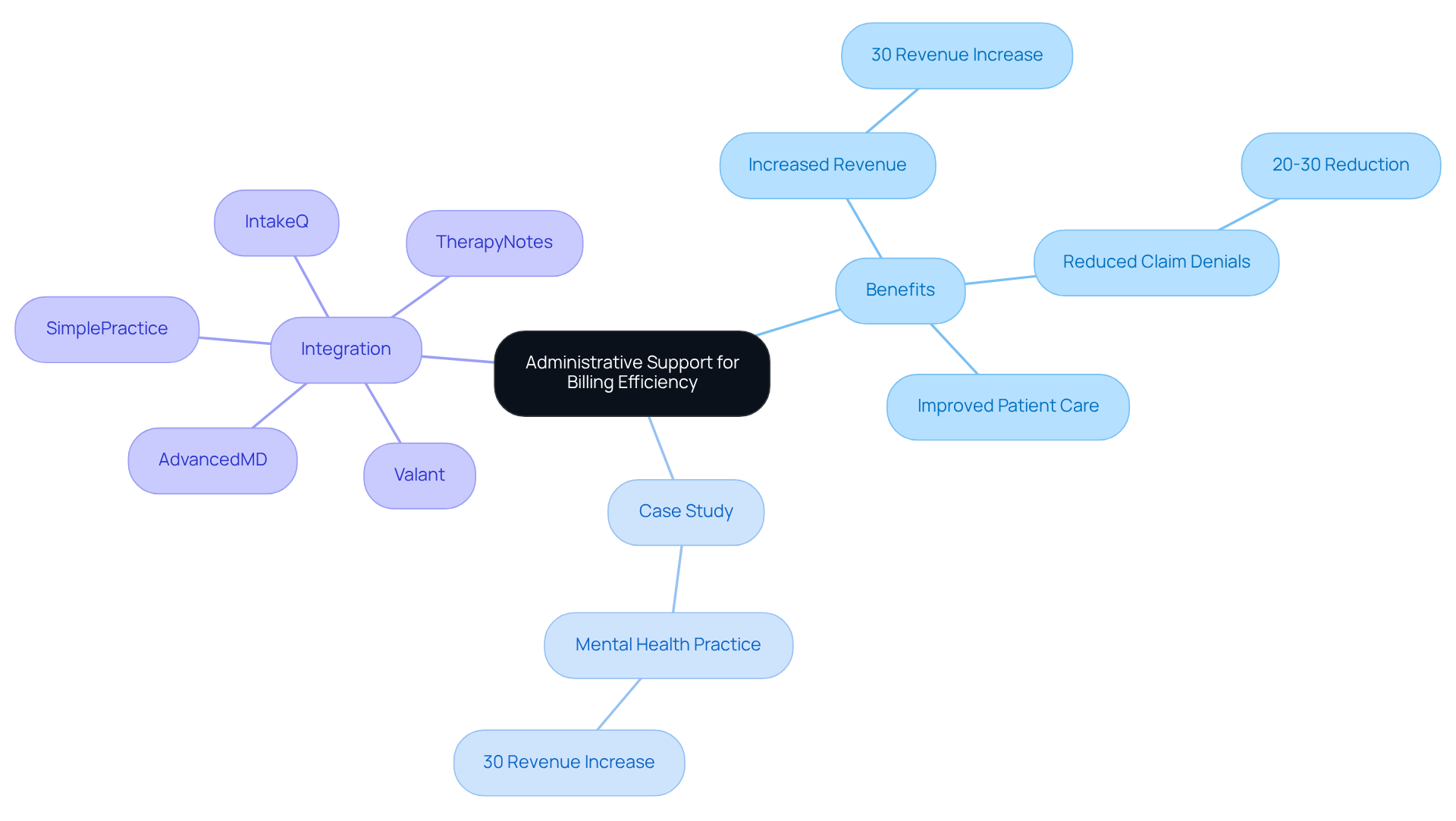
For instance, a mental health practice that collaborated with HPC experienced a notable 30% increase in revenue due to improved payment processes and a reduction in claim denials. This case illustrates the critical role of effective administrative support in optimizing revenue cycle performance.
Furthermore, outsourcing billing functions can lead to a 20-30% reduction in claim denials and accelerate reimbursement by 15-25% within 30-90 days. HPC also integrates seamlessly with platforms like TherapyNotes, SimplePractice, Valant, AdvancedMD, and IntakeQ, further demonstrating the advantages of administrative support in the healthcare sector.
The integration of administrative support not only optimizes revenue cycles but also elevates the overall quality of patient care delivered by healthcare providers.
Conclusion
Effectively navigating the Medi-Cal Fee Schedule is crucial for healthcare providers in California, especially in mental health services. Mastering this fee schedule ensures fair compensation for providers. It also helps them navigate the complexities of billing and compliance. This knowledge enhances financial outcomes and empowers practitioners to concentrate on delivering quality patient care without the burden of administrative inefficiencies.
Key strategies discussed include:
- The importance of accurate patient information collection
- The use of electronic health records for streamlined documentation
- The implementation of robust coding systems
These practices can significantly reduce claim denials and improve reimbursement timelines, which has been demonstrated in various successful case studies. Additionally, staying informed about regulatory changes and leveraging dedicated administrative support can further optimize billing processes, ensuring that providers remain compliant and financially healthy.
Ultimately, proactive engagement with the Medi-Cal Fee Schedule and effective billing practices are vital for sustaining healthcare providers’ financial health. By prioritizing administrative support and compliance, practices enhance their revenue cycle performance and improve the quality of care for their patients. By embracing these practices, healthcare providers can ensure they remain focused on delivering exceptional patient care.
For tailored assistance in optimizing your billing practices, contact Healthcare Partners Consulting & Billing, LLC at info@hpcbilling.com or call 888-517-4992.
Frequently Asked Questions
What is the Medi-Cal Fee Schedule?
The Medi-Cal Fee Schedule is a comprehensive list of reimbursement rates established by the California Department of Health Care Services (DHCS) for healthcare services provided to beneficiaries in California.
Why is the Medi-Cal Fee Schedule important for healthcare providers?
It is crucial for healthcare providers as it determines the maximum allowable payments for various services, ensuring fair compensation while adhering to state regulations. Familiarity with the schedule helps optimize revenue and navigate billing processes.
How does the Medi-Cal Fee Schedule impact mental health care providers?
The Fee Schedule includes specific provisions for mental health care, and recent updates, such as the Targeted Rate Increase (TRI) Fee Schedule effective January 1, 2024, aim to enhance financial support for mental health providers, allowing them to serve more patients.
What is the Targeted Rate Increase (TRI) Fee Schedule?
The TRI Fee Schedule, effective January 1, 2024, establishes targeted reimbursement rates at a minimum of 87.5% of the lowest Medicare rate, aimed at improving access to healthcare for Californians, particularly benefiting mental health providers.
Who does the Medi-Cal program cover?
The Medi-Cal program covers over half of California’s children, as well as a significant portion of seniors and individuals with disabilities, highlighting its role in supporting vulnerable populations.
How can understanding the Medi-Cal Fee Schedule benefit healthcare providers?
By understanding the Fee Schedule, providers can reduce denial rates by 20-30% and achieve faster reimbursement cycles of 15-25% within 30-90 days, allowing them to focus more on delivering quality care.
How can healthcare providers get assistance with optimizing their invoicing procedures?
Providers can contact Healthcare Partners Consulting for personalized consultation by emailing info@hpcbilling.com or calling 888-517-4992 to explore ways to improve operational efficiency.