

Introduction
In the intricate landscape of healthcare, the significance of medical billers and coders is frequently overlooked, yet their impact on financial stability is profound. Misunderstandings about the roles of medical billers and coders can lead to inefficiencies in revenue cycle management. Clarifying the distinct responsibilities and skills of these professionals is crucial for effective revenue cycle management.
How can healthcare providers navigate the intricacies of billing and coding to ensure compliance and enhance patient care, all while minimizing administrative burdens? This article will explore the critical distinctions between medical billers and coders, shedding light on their unique contributions and the implications for practices striving for efficiency and accuracy. Understanding these distinctions is not merely academic; it is a strategic necessity for practices aiming to thrive in a competitive environment.
Define Medical Billing and Medical Coding
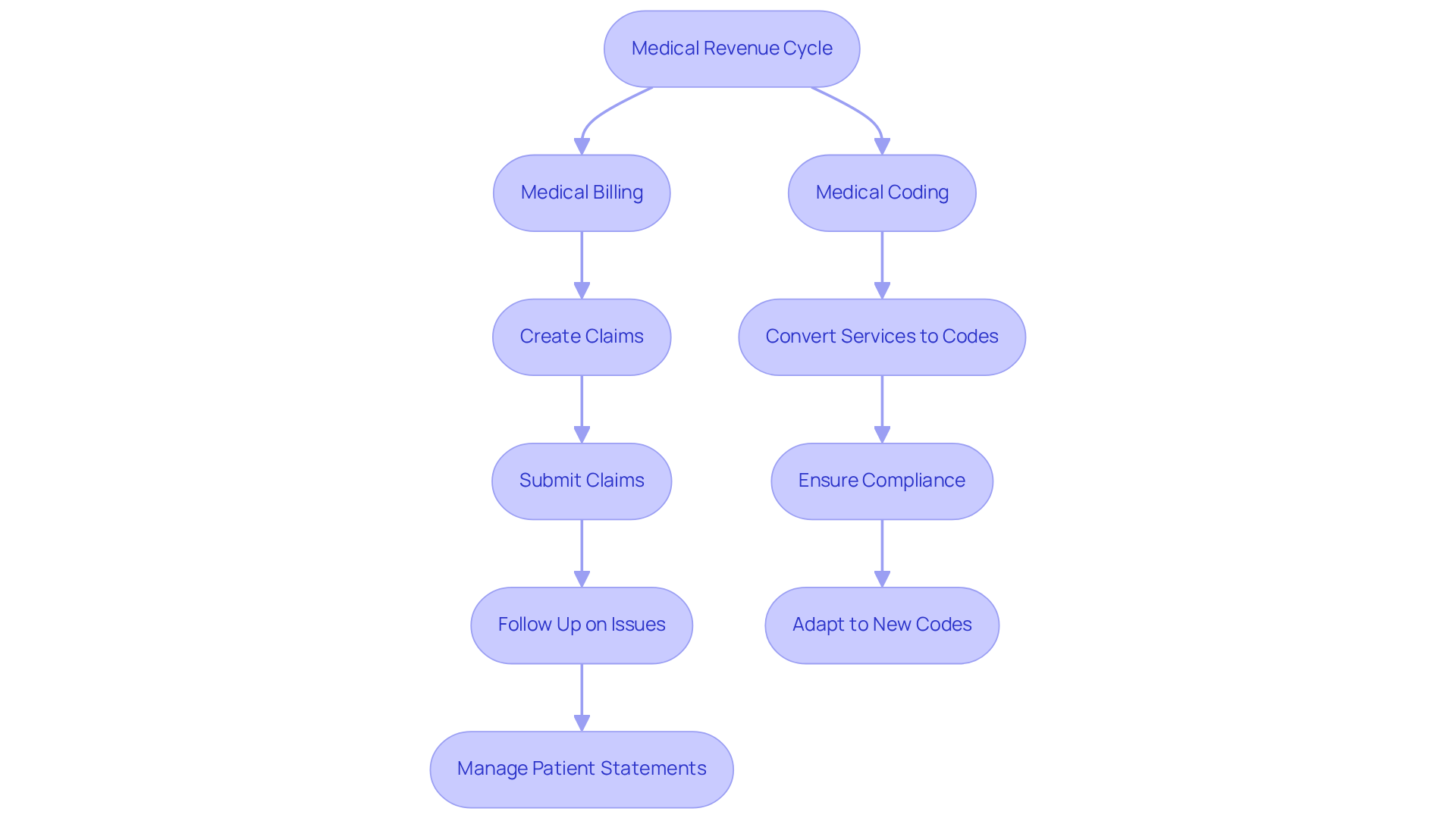
In the intricate landscape of the medical revenue cycle, understanding the differences between a medical biller vs medical coder is essential, as both play pivotal and interdependent roles. Medical billing involves creating and submitting claims to insurance companies for reimbursement of medical services provided to patients. Billers are responsible for ensuring claims are accurate and for following up on any issues that may arise during the payment process, including underpayments, unprocessed claims, and aging claims. In 2026, new codes and stricter documentation requirements will increase the need for accuracy in billing, as practices will face higher denial rates and longer accounts receivable timelines. Managing patient statements effectively is crucial; it directly influences cash flow and enhances patient satisfaction.
Conversely, health classification converts diagnoses, procedures, and services into standardized codes using systems such as ICD-10, CPT, and HCPCS. It’s essential for coders to accurately document and bill medical services to stay compliant with healthcare regulations. As the programming landscape evolves, particularly with the anticipated changes in 2026, coders will need to adapt to new codes and documentation standards to avoid potential revenue losses and compliance challenges. Practices are advised to schedule training with certified coders and update charge masters and invoicing software before these changes take effect.
While billing emphasizes the financial elements of medical services, the distinction between medical biller vs medical coder is that the process is primarily focused on accurately depicting these services in a coded format. Together, these roles ensure that providers receive appropriate compensation for their services while maintaining compliance with regulations. Effective collaboration between billers and coders is vital, especially as practices prepare for the complexities introduced by the upcoming coding changes, which could significantly impact revenue cycle performance. Additionally, conducting internal audits and maintaining coder education logs can help mitigate audit risks and enhance overall operational efficiency, particularly in managing aging claims and ensuring timely follow-up on patient statements. Without proactive measures, practices risk not only financial setbacks but also jeopardizing their compliance standing in an evolving regulatory environment.
Compare Key Responsibilities of Medical Billers and Coders
The distinct roles of medical billers vs medical coders are critical to the efficiency and accuracy of mental health practices, where precision is paramount.
Medical Billers:
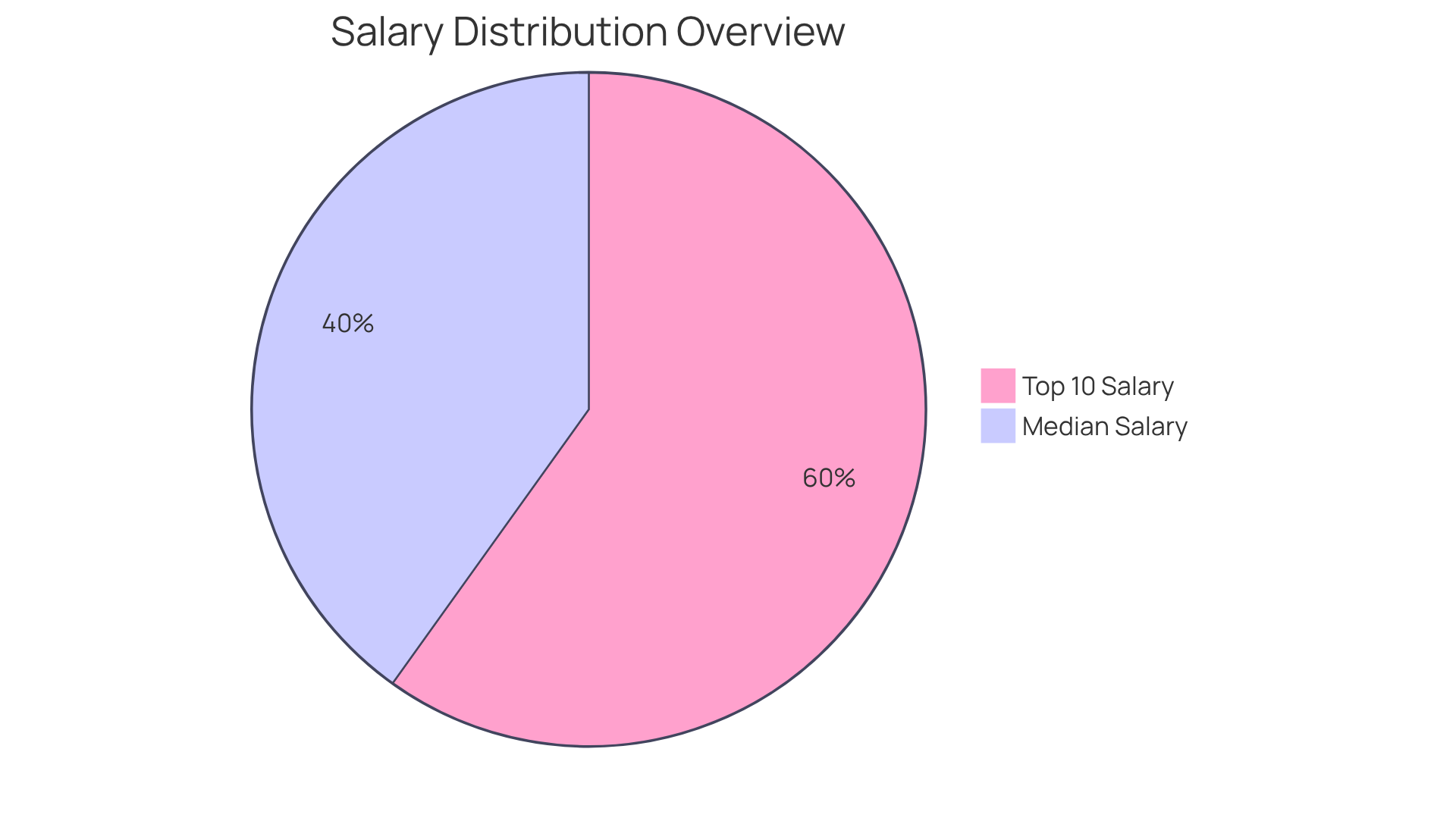
- Generate and submit claims to insurance companies and patients, ensuring timely processing to enhance overall profitability.
- Follow up on unpaid claims and resolve any issues that arise during the payment process, which is crucial as approximately 30% of insurance claims are denied on first submission. This underscores the importance of having robust administrative support in place.
- Communicate with patients regarding their bills and payment options, fostering transparency and trust, which is essential for patient retention and satisfaction.
- Ensure adherence to medical regulations and invoicing guidelines to prevent expensive mistakes that can result in considerable revenue loss. Poor billing practices cost providers an estimated $125 billion annually, emphasizing the necessity of a compliance-first approach.
- Maintain accurate records of payments and outstanding balances, contributing to effective financial management and operational efficiency.
Medical Coders:
- Review patient records and assign appropriate codes for diagnoses and procedures, ensuring accuracy and compliance with current regulations, which is vital for reducing claim denials.
- Collaborate with medical providers to clarify any discrepancies in documentation, essential since billing errors account for about 32% of first-submission denials. This collaboration can be enhanced through personalized consultations offered by HPC to identify optimal administrative solutions.
- Stay informed about changes in guidelines and regulations, adapting to the evolving landscape of healthcare.
- Utilize coding software and databases to facilitate accurate coding, enhancing efficiency in the billing process.
The distinction between a medical biller vs medical coder is that billers focus on financial transactions and patient interactions, while coders work behind the scenes to ensure that medical services are accurately represented and documented. Recognizing the distinction of medical biller vs medical coder is vital for ensuring that medical practices operate efficiently, as effective collaboration between billers and coders can lead to a reduction in claim denials by 20-30% and faster reimbursement rates of 15-25% within 30-90 days. Understanding these roles not only streamlines operations but also significantly impacts the financial health of medical practices, allowing providers to prioritize patient care more effectively.
Contrast Skills and Certifications for Each Role
The roles of medical billers vs medical coders are defined by specific skills and certifications that ensure efficiency and compliance within the healthcare system.
Skills for Medical Billers:
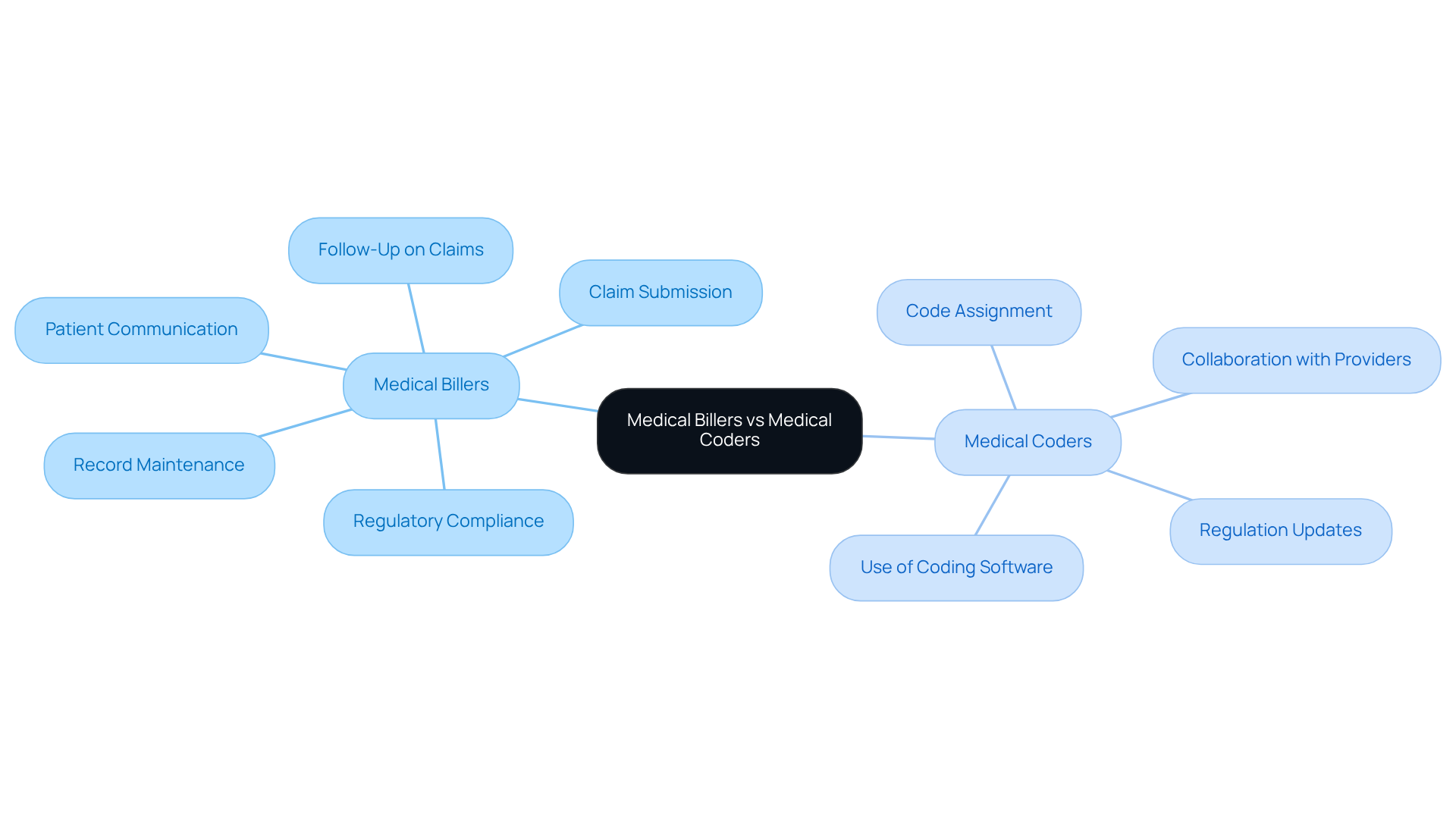
- Effective patient interaction and resolving billing issues hinge on strong communication skills.
- Attention to detail is crucial for ensuring accuracy in invoicing and claims submission, which minimizes errors.
- Proficiency in invoicing software and electronic health record (EHR) systems is necessary for efficient operations.
- Additionally, a solid understanding of insurance policies and healthcare regulations is vital for compliance and successful claims processing.
Certifications for Medical Billers:
- The AAPC’s Certified Professional Biller (CPB) credential serves as a testament to one’s expertise in medical billing practices.
- Furthermore, the Certified Billing and Coding Specialist (CBCS) certification from the National Healthcareer Association (NHA) enhances a biller’s qualifications.
Skills for Medical Coders:
- In-depth knowledge of medical terminology, anatomy, and coding systems such as ICD-10 and CPT is crucial for accurate code assignment.
- Strong analytical skills are necessary to interpret clinical documentation and ensure appropriate classification.
- Familiarity with programming software and databases is essential for efficient workflow.
- Staying updated on programming guidelines and regulations is necessary to maintain compliance and accuracy.
Certifications for Medical Coders:
- The Certified Professional Coder (CPC) credential from the AAPC is recognized as a standard for coding professionals.
- The Certified Coding Specialist (CCS) certification from the American Health Information Management Association (AHIMA) emphasizes proficiency in complex classification scenarios.
While both roles, medical biller vs medical coder, require attention to detail and a strong understanding of healthcare regulations, the specific skills and certifications highlight the unique contributions each role makes to the healthcare revenue cycle. As the healthcare landscape evolves, the demand for skilled billers and coders will only intensify, underscoring the importance of continuous professional development in these fields.
Analyze Salary and Job Market Trends for Billers and Coders
The projected salary and job market trends for billers and coders in 2026 reveal a significant demand for skilled professionals in the healthcare sector, particularly in the areas of patient statements and claims management.
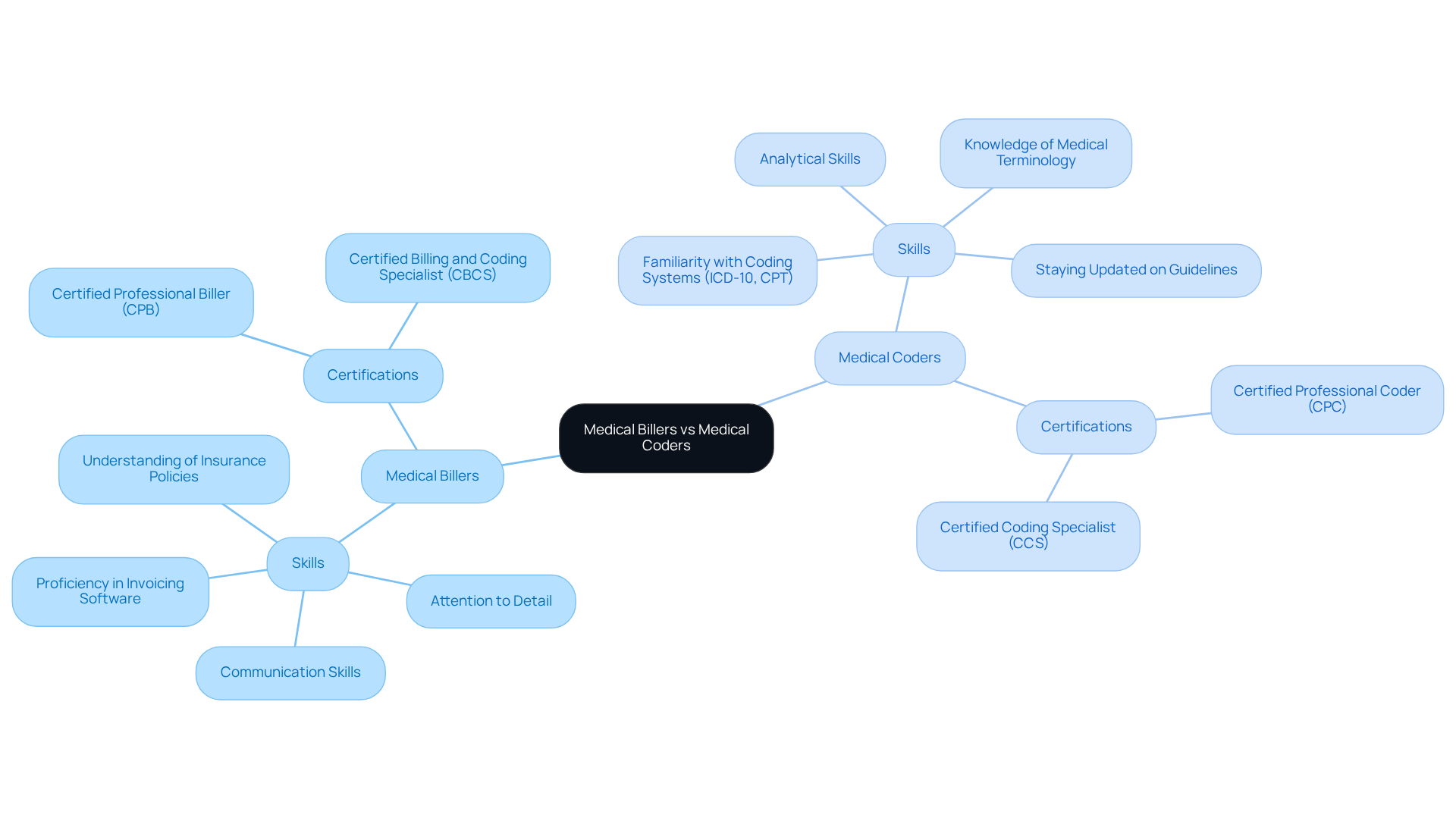
Salary Trends: According to the Bureau of Labor Statistics (BLS), the median annual salary for billers and coders is projected to be $50,230 in 2025, with the top 10% of coders earning over $75,000 annually. This highlights the specialized skills required, including a thorough understanding of healthcare terminology and compliance regulations. As healthcare practices face challenges with underpayments and unprocessed claims, the need for skilled billers and coders is becoming more critical.
Job Market Trends: The BLS forecasts a 13% growth in employment for medical records and health information technicians, encompassing both billers and coders, from 2024 to 2034. This growth rate is quicker than the national average for all professions and is fueled by the rising complexity of medical coding processes, along with the continuous need for adherence to regulations. Medical coders, in particular, are experiencing heightened demand due to their specialized skills, which not only enhance job security but also lead to higher salaries compared to their coding counterparts. With Healthcare Partners Consulting’s focus on specialty-driven services tailored to mental and behavioral health, practices can expect measurable improvements in their revenue cycle management, often within 30-90 days.
In conclusion, while discussing medical biller vs medical coder, it is clear that both play essential roles in the revenue cycle of the medical system, but coders typically experience higher earning potential and job stability, reflecting the specialized nature of their work. As the healthcare landscape continues to evolve, the specialized skills of billers and coders will be pivotal in refining medical billing processes and ensuring compliance, thereby allowing healthcare providers to prioritize patient care.
Conclusion
A lack of clarity between the roles of medical billers and coders can lead to inefficiencies in the revenue cycle management of healthcare practices. While both roles are integral to ensuring that providers receive appropriate compensation for their services, they focus on different aspects of the billing process. Medical billers manage financial transactions and patient communications, while medical coders translate medical services into standardized codes, ensuring compliance and accuracy. Their collaboration is vital for reducing claim denials and improving operational efficiency.
Key insights from the article highlight the specific responsibilities, skills, and certifications required for each role. Medical billers must excel in communication and possess a strong understanding of healthcare regulations, while coders need in-depth knowledge of medical terminology and coding systems. The projected salary trends indicate a growing demand for both professions, with coders typically enjoying higher earning potential due to their specialized skills. As the healthcare landscape evolves, the importance of these roles in maintaining compliance and improving revenue cycle management cannot be overstated.
Healthcare providers must invest in developing their billing and coding teams. By prioritizing compliance and fostering collaboration between billers and coders, practices can enhance their financial health and ultimately focus more on delivering quality patient care. This proactive approach not only mitigates risks but also positions healthcare providers for long-term financial success. For tailored support in optimizing revenue cycle management, consider reaching out to Healthcare Partners Consulting & Billing, LLC (HPC) at info@hpcbilling.com or call 888-517-4992.
Frequently Asked Questions
What is the role of a medical biller?
A medical biller is responsible for creating and submitting claims to insurance companies for reimbursement of medical services provided to patients. They ensure claims are accurate and follow up on any issues that may arise during the payment process.
What does a medical coder do?
A medical coder converts diagnoses, procedures, and services into standardized codes using systems such as ICD-10, CPT, and HCPCS. Their role is essential for accurately documenting and billing medical services to comply with healthcare regulations.
How do medical billing and coding differ?
Medical billing focuses on the financial aspects of medical services, ensuring accurate claims submission and payment follow-up, while medical coding is primarily concerned with accurately depicting medical services in a coded format.
Why is accuracy in medical billing becoming more important?
In 2026, new codes and stricter documentation requirements will increase the need for accuracy in billing, as practices will face higher denial rates and longer accounts receivable timelines.
What impact do upcoming changes in 2026 have on medical coders?
Coders will need to adapt to new codes and documentation standards to avoid potential revenue losses and compliance challenges due to the anticipated changes in 2026.
How can practices prepare for the changes in medical coding?
Practices are advised to schedule training with certified coders and update charge masters and invoicing software before the changes take effect.
Why is collaboration between billers and coders important?
Effective collaboration is vital to ensure that providers receive appropriate compensation for their services while maintaining compliance with regulations, especially as practices prepare for upcoming coding changes.
What measures can practices take to mitigate audit risks?
Conducting internal audits and maintaining coder education logs can help mitigate audit risks and enhance operational efficiency, particularly in managing aging claims and ensuring timely follow-up on patient statements.