
Introduction
Healthcare finance relies heavily on two pivotal functions: medical billing and medical coding, each playing a unique role in financial outcomes. Both roles are crucial for ensuring timely and accurate payments to healthcare providers, yet they serve distinct purposes that significantly affect a clinic’s financial health.
This article examines the key differences between medical billing and coding, highlighting their contributions to revenue cycle management, especially in behavioral and mental health practices. A thorough understanding of these roles is essential for clinics aiming to improve financial efficiency and patient care in an evolving healthcare environment.
Define Medical Billing and Medical Coding: Key Roles in Healthcare
In the intricate landscape of healthcare finance, the comparison of medical billing vs medical coding highlights their pivotal roles that directly impact revenue generation.
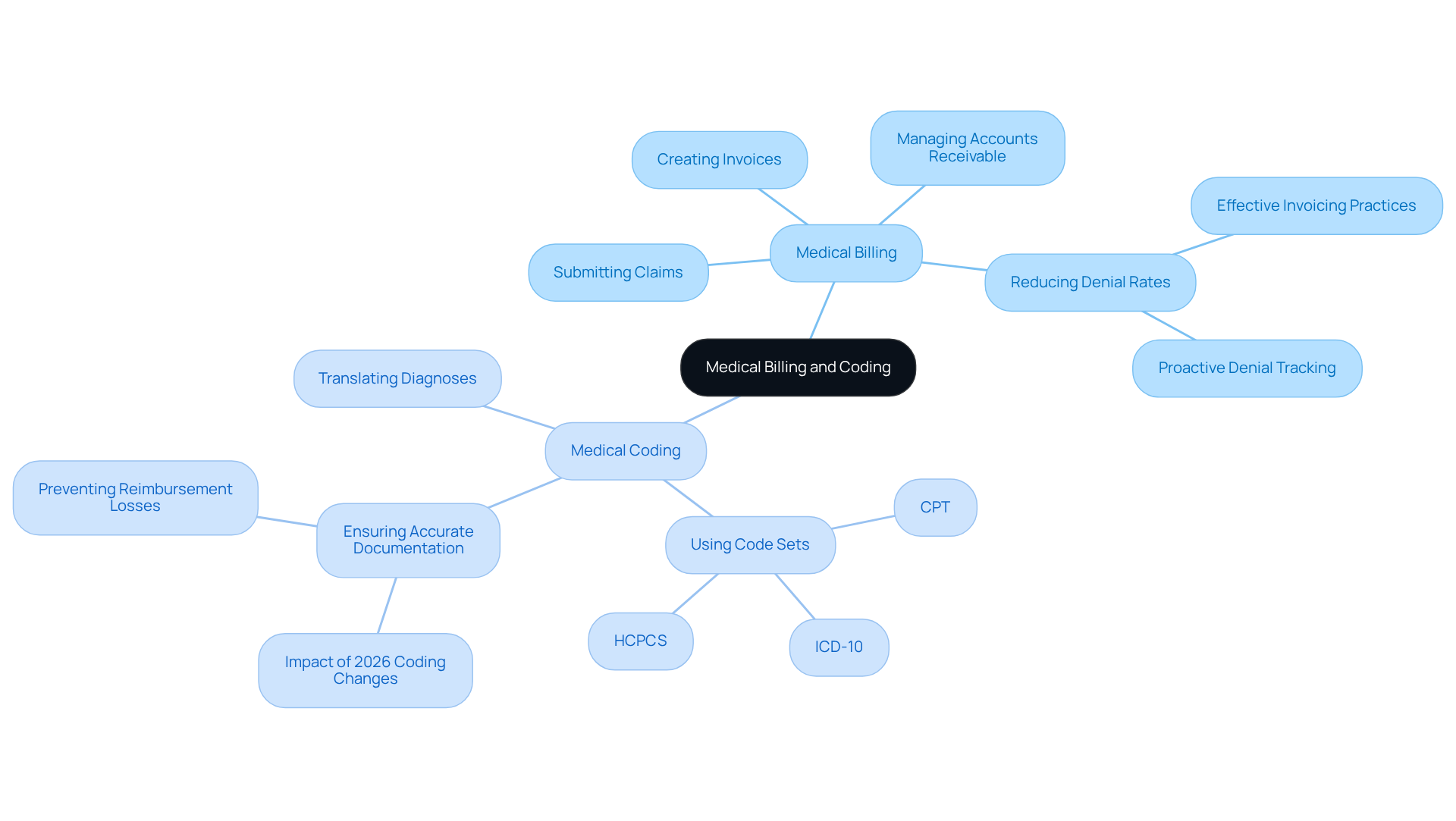
Medical Billing is the process of submitting and managing requests with health insurance companies to secure payment for services rendered. Billers create invoices, verify the accuracy of claims, and oversee accounts receivable. They serve as the crucial link between healthcare providers and payers, ensuring that the financial aspects of patient care are handled efficiently. By implementing effective invoicing practices, healthcare providers can reduce denial rates by as much as 30%, significantly enhancing revenue flow.
Medical Coding, in contrast, involves translating healthcare diagnoses, procedures, medical services, and equipment into standardized alphanumeric codes. Coders utilize established code sets such as ICD-10, CPT, and HCPCS to ensure that documentation accurately reflects the services provided. This coding is crucial for accurate invoicing, as it directly influences the reimbursement amounts that healthcare providers receive. With the introduction of hundreds of new diagnostic codes in 2026, especially for behavioral health, precise documentation will be more essential than ever to prevent reimbursement losses.
In summary, while medical financial management focuses on overseeing monetary transactions and submissions, the comparison of medical billing vs medical coding highlights that medical coding is dedicated to the precise representation of medical services through coding. Understanding the distinct yet interconnected functions of billing and coding is vital for optimizing revenue cycle management in healthcare.
Compare Responsibilities: What Medical Billers and Coders Do
The distinct responsibilities of medical billers and coders play a pivotal role in the healthcare system, particularly in optimizing financial processes and ensuring compliance.
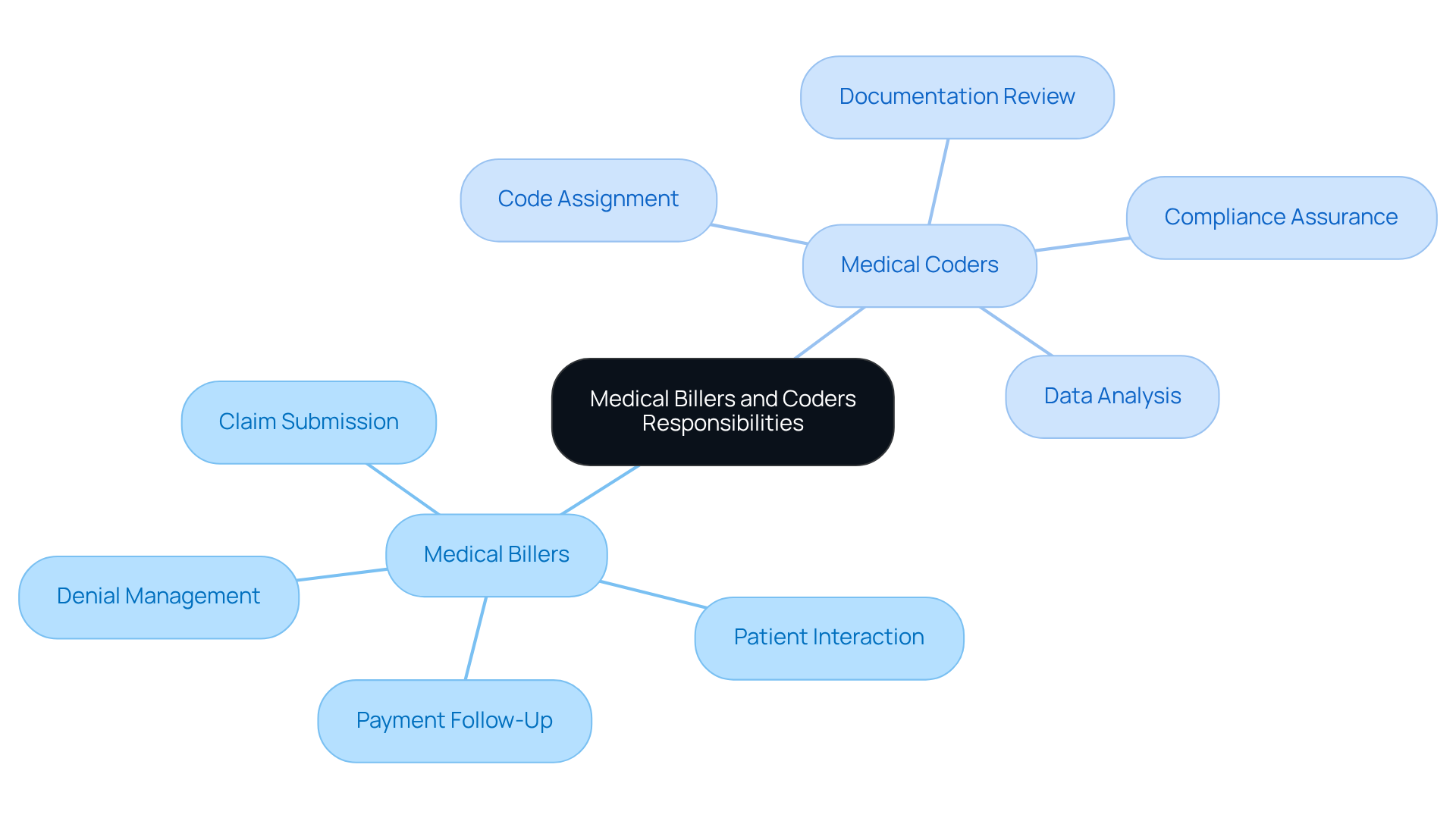
Responsibilities of Medical Billers:
- Claim Submission: Billers prepare and submit claims to insurance companies based on the codes provided by coders, ensuring accuracy to minimize denials. This process is crucial for addressing underpayments and ensuring efficient handling of all submissions, including those that remain unprocessed.
- Payment Follow-Up: They monitor the status of submissions, follow up on unpaid claims, and resolve any issues that arise during the billing process, which is essential for maintaining cash flow and addressing aging submissions. This includes balance follow-up to ensure all accounts are settled.
- Patient Interaction: Billers often communicate with patients regarding their bills, payment plans, and insurance coverage, fostering transparency and trust. This interaction is essential for effective management of patient statements.
- Denial Management: They address denial issues by examining the reasons for rejection and resubmitting requests with necessary corrections, which can lower denial rates by 20-30% when managed effectively.
Responsibilities of Medical Coders:
- Code Assignment: Coders review clinical documentation and assign appropriate codes for diagnoses and procedures, ensuring that all coding aligns with current regulations. This accuracy is essential for minimizing unprocessed claims.
- Documentation Review: They ensure that the documentation meets development guidelines and is complete before billing, which is essential for compliance and accuracy. The anticipated changes in 2026 will require more detailed documentation, including severity, laterality, and comorbidities.
- Compliance Assurance: Coders need to remain informed about regulations and guidelines to ensure compliance, particularly with the upcoming changes in 2026 that will necessitate more detailed documentation.
- Data Analysis: They may examine data related to programming to identify trends and enhance methods within the clinic, contributing to overall operational efficiency.
In essence, the distinction between medical billing vs medical coding lies in the fact that billers focus on the financial aspects and patient interactions, while coders concentrate on the technical side of documentation and compliance. Both roles are crucial for the seamless functioning of healthcare operations, especially in light of changing regulations and the growing intricacy of payment processes. Furthermore, the medical reimbursement and classification sector is anticipated to expand by 9% from 2023 to 2033, highlighting the rising need for these positions. As the healthcare landscape evolves, the demand for skilled billers and coders will only intensify, underscoring the importance of their expertise in navigating complex reimbursement frameworks.
Examine Interdependencies: The Synergy Between Billing and Coding
The financial stability of healthcare organizations hinges on the seamless integration of medical billing and coding processes. At Healthcare Partners Consulting & Billing, LLC (HPC), we recognize that optimizing these functions is vital for mental health organizations striving to enhance profitability.
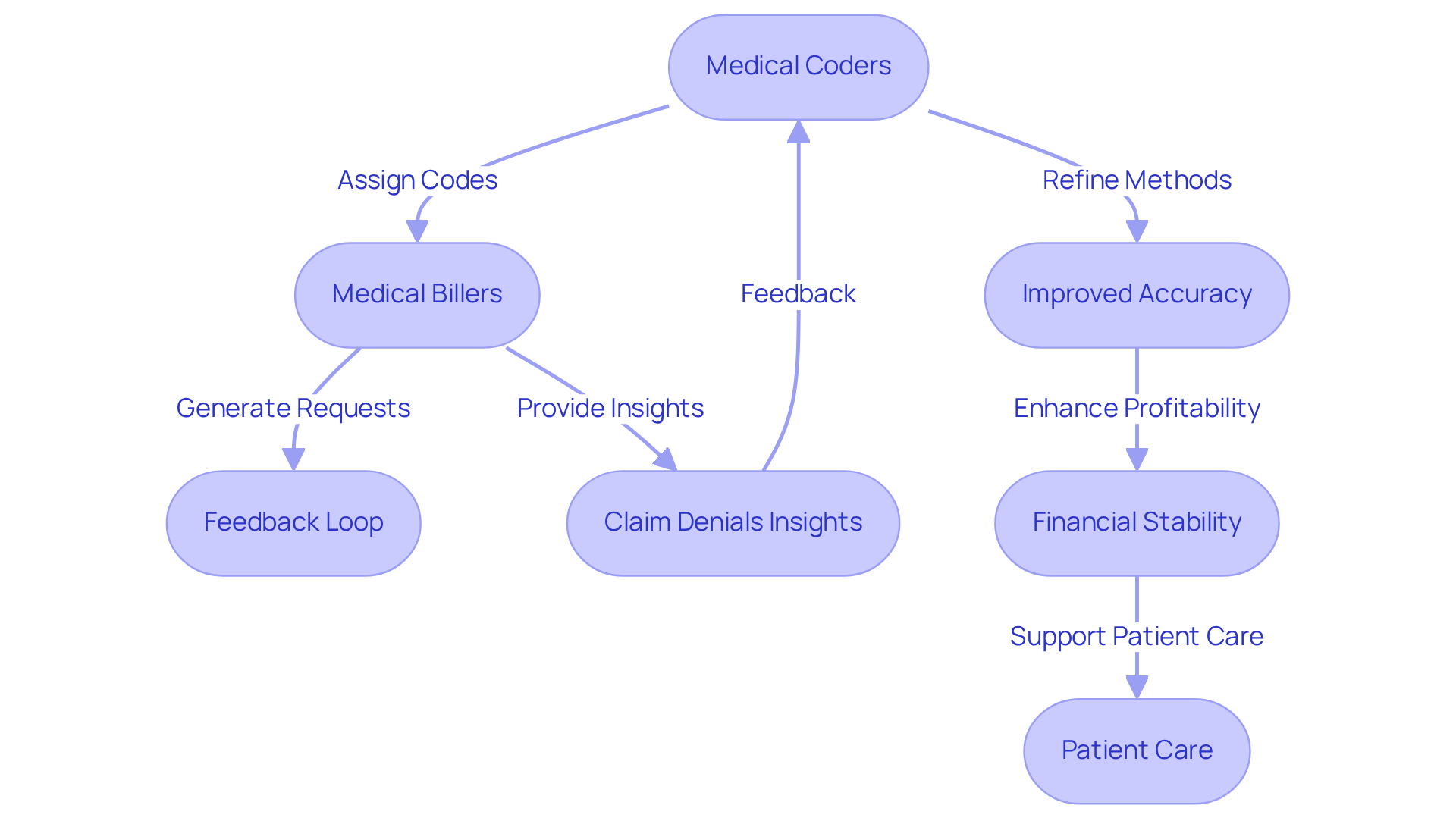
- Collaboration for Accuracy: Medical coders assign the necessary codes that billers utilize to generate requests. Incorrect coding can lead to claim denials and delayed payments, resulting in significant financial losses for the organization. Therefore, when considering medical billing vs medical coding, coders must prioritize precision and compliance with regulations to safeguard revenue. HPC offers customized strategies to improve billing accuracy, helping organizations identify potential revenue losses through targeted assessments.
- Feedback Loop: Billers play a crucial role by providing coders with insights into common reasons for claim denials. This feedback loop fosters continuous improvement, enabling coders to refine their methods and maintain compliance with evolving healthcare regulations. HPC’s administrative support services ensure that organizations receive the guidance necessary to navigate these complexities effectively.
- Streamlined Processes: Effective communication between billers and coders can significantly enhance the payment process, reducing the time required to receive payments. When both parties understand each other’s roles and challenges, they can collaborate more effectively, ultimately improving cash flow for the organization. HPC empowers healthcare providers by managing financial complexities, allowing them to focus on patient care.
The collaboration between invoicing and documentation is essential for the success of healthcare operations, ensuring that claims are submitted accurately and promptly. This partnership not only improves financial outcomes but also enhances the overall quality of patient care. By leveraging HPC’s specialized knowledge, clinic owners can not only streamline operations but also significantly enhance their financial performance.
Assess Technology’s Role: Innovations in Billing and Coding
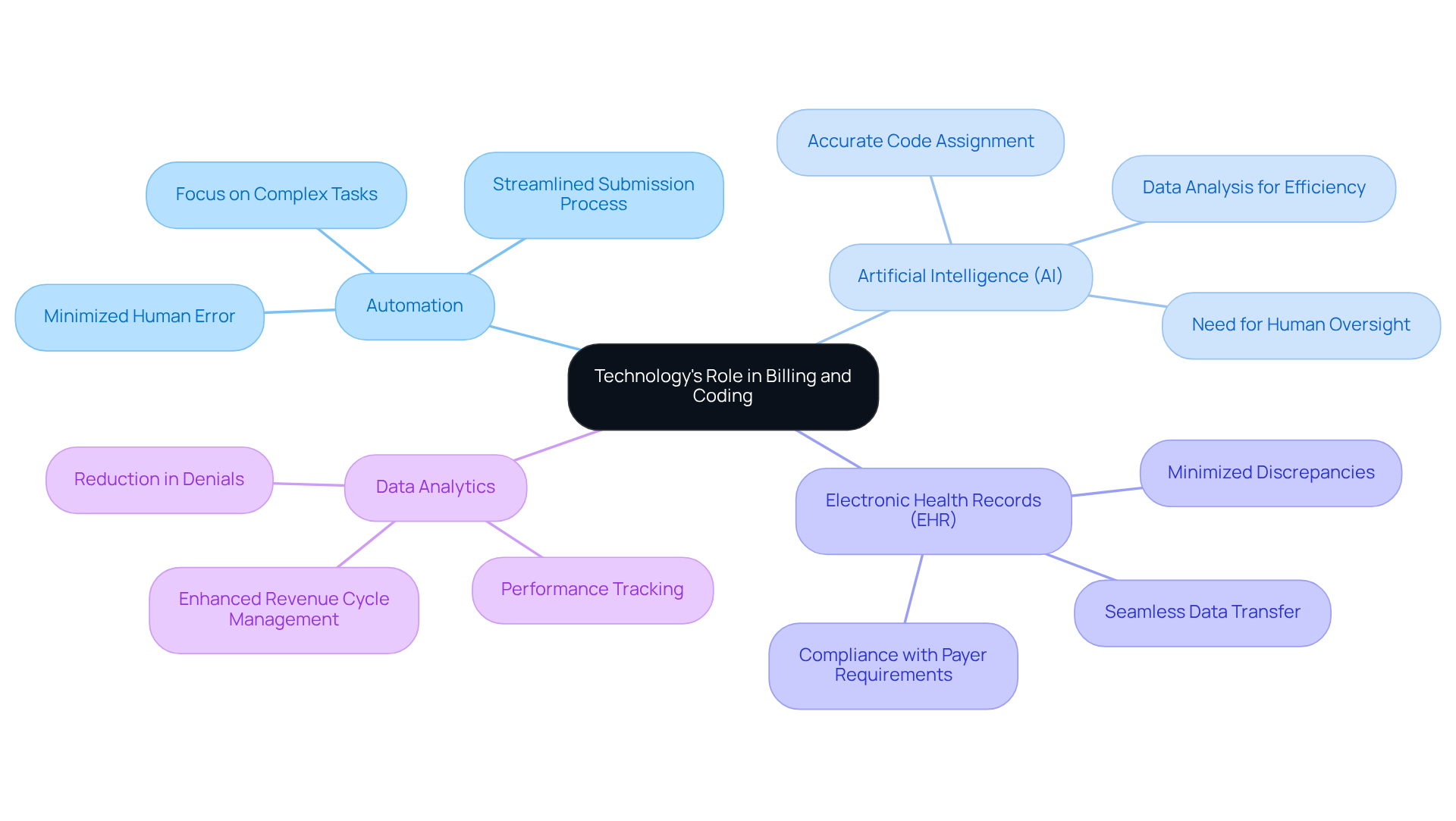
Technology is transforming medical coding, introducing innovations that significantly enhance efficiency, accuracy, and compliance within healthcare practices, particularly in mental and behavioral health.
- Automation: Healthcare providers are increasingly adopting automated invoicing systems that streamline the submission process for requests. This automation minimizes human error and accelerates processing. Consequently, billing professionals can concentrate on more complex tasks, like resolving denials and addressing patient inquiries. With 39 years of experience, Healthcare Partners Consulting, a veteran-owned company, provides flexible service plans tailored to your practice’s size and claim volume, ensuring you receive the necessary support.
- Artificial Intelligence (AI): The use of AI in programming is on the rise, assisting coders in accurately assigning codes based on clinical documentation. AI algorithms can swiftly analyze vast amounts of data, enhancing accuracy in programming and decreasing the time spent on manual tasks. However, relying solely on AI can lead to oversights in critical medical contexts, which emphasizes the critical need for trained professionals in the coding process. This technology is especially advantageous in handling the intricacies of behavioral health invoicing, where accurate classification is crucial for adherence and reimbursement.
- Electronic Health Records (EHR): Integrating EHR systems with coding software facilitates seamless data transfer between clinical documentation and financial processes. This integration minimizes discrepancies and guarantees that the information utilized for invoicing is both precise and up-to-date, which is essential for upholding compliance with payer requirements. Healthcare Partners Consulting’s expertise in this area ensures that providers can leverage systems like TherapyNotes and SimplePractice for optimal results.
- Data Analytics: Advanced analytics tools enable organizations to examine financial data, recognizing patterns, tracking performance, and enhancing revenue cycle management. By leveraging data analytics, clinics can make informed decisions that enhance operational efficiency and compliance, ultimately leading to improved financial outcomes. Organizations can achieve a 20-30% reduction in denials through enhanced documentation and charge capture, highlighting the effectiveness of these technological advancements.
Incorporating these technological advancements not only streamlines operations but also supports compliance with regulatory requirements, which is vital for delivering high-quality patient care. Additionally, the growing demand for certified medical administrative assistants in healthcare underscores the importance of skilled professionals in navigating these evolving technologies. As technology continues to evolve, organizations must adapt to maintain compliance and ensure high-quality patient care.
Conclusion
Recognizing the distinct yet interconnected roles of medical billing and coding is crucial for healthcare providers seeking to enhance their revenue cycle management. Billers and coders play critical roles that are interdependent, each contributing to the overall financial health of healthcare facilities. Medical billing focuses on managing financial transactions and interactions with payers, while medical coding ensures that services are accurately documented and represented through standardized codes.
Billers manage claims submissions and follow up on payments, while coders ensure that clinical documentation is precise and compliant with regulations. This synergy is vital, especially in the evolving landscape of healthcare, where accurate coding directly impacts reimbursement rates. Additionally, the integration of technology, including automation and AI, is reshaping these roles, enabling professionals to concentrate on more complex tasks and enhance efficiency.
However, the separation of these roles can lead to inefficiencies if not managed properly. Failure to align these functions may result in decreased revenue and compromised patient care. As healthcare evolves, the need for skilled medical billers and coders is set to rise significantly. Embracing a compliance-first approach and leveraging innovative technologies can empower healthcare providers to navigate the complexities of billing and coding effectively. By prioritizing the integration of billing and coding functions, clinics can enhance their financial outcomes and ultimately improve the quality of care they provide to patients. Engaging with experienced partners like Healthcare Partners Consulting & Billing, LLC (HPC) can further streamline these processes, allowing providers to focus on what truly matters: delivering exceptional patient care.
Frequently Asked Questions
What is medical billing?
Medical billing is the process of submitting and managing requests with health insurance companies to secure payment for services rendered. It involves creating invoices, verifying the accuracy of claims, and overseeing accounts receivable.
What role do medical billers play in healthcare?
Medical billers serve as the crucial link between healthcare providers and payers, ensuring that the financial aspects of patient care are handled efficiently. They implement effective invoicing practices to reduce denial rates and enhance revenue flow.
What is medical coding?
Medical coding involves translating healthcare diagnoses, procedures, medical services, and equipment into standardized alphanumeric codes. Coders use established code sets such as ICD-10, CPT, and HCPCS to ensure accurate documentation of services provided.
Why is medical coding important for invoicing?
Medical coding is crucial for accurate invoicing because it directly influences the reimbursement amounts that healthcare providers receive. Precise coding ensures that the services rendered are accurately represented, which is essential for financial reimbursement.
What changes are expected in medical coding in 2026?
In 2026, hundreds of new diagnostic codes, particularly for behavioral health, will be introduced. This will make precise documentation even more essential to prevent reimbursement losses.
How do medical billing and coding work together in healthcare?
Medical billing focuses on overseeing monetary transactions and submissions, while medical coding is dedicated to the precise representation of medical services through coding. Both functions are interconnected and vital for optimizing revenue cycle management in healthcare.