Introduction
Navigating the complexities of billing and compliance is a significant challenge for mental health clinics, making an understanding of the National Provider Identifier (NPI) crucial. This discussion highlights the critical differences between NPI Type 1 and Type 2, emphasizing how these distinctions empower healthcare providers by streamlining administrative processes and enhancing patient care. Understanding how the right NPI selection can ensure compliance and improve operational efficiency is essential for healthcare providers.
Understand NPI: Definition and Importance
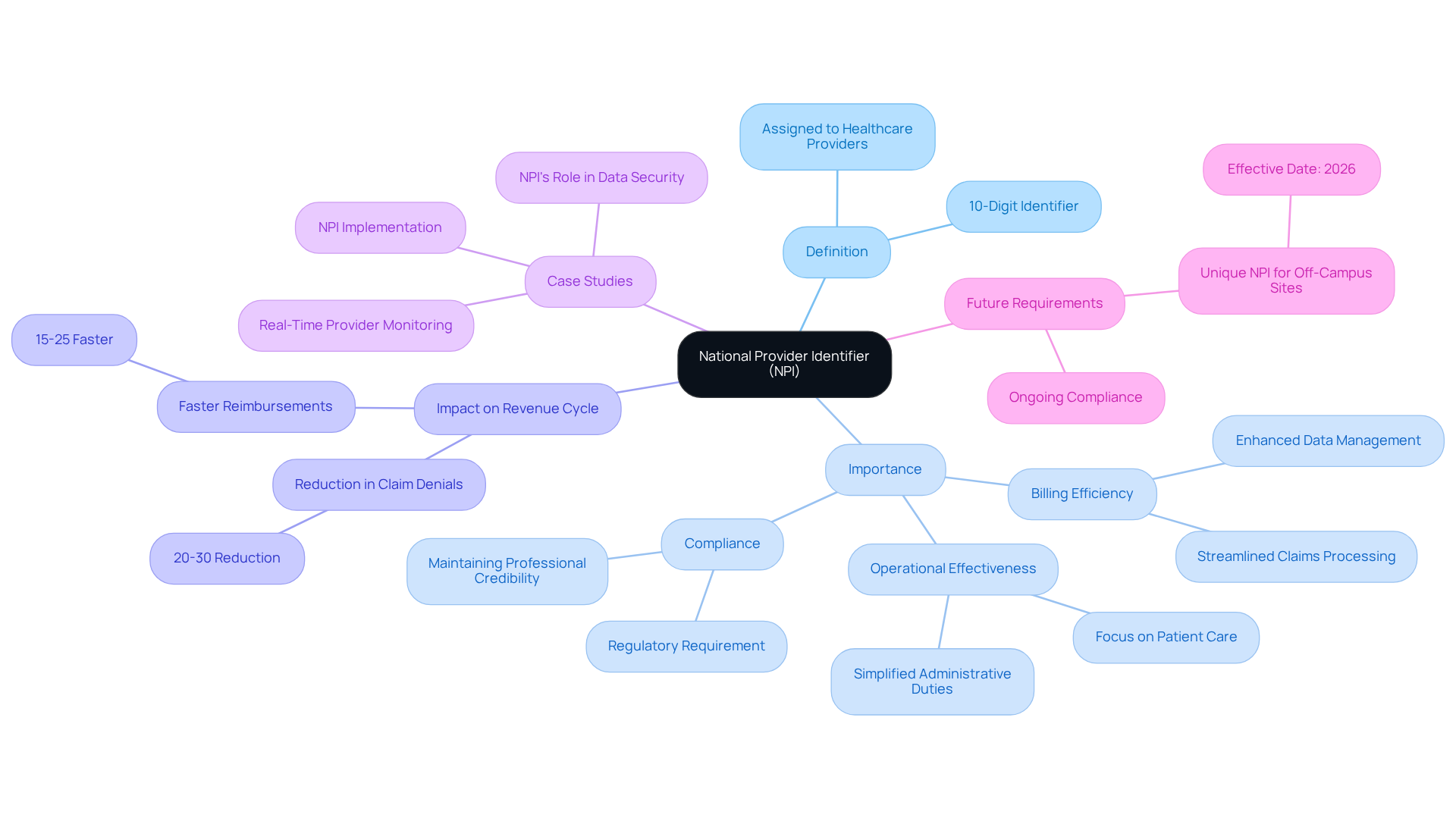
The National Provider Identifier (NPI) serves as a critical asset for healthcare providers in the United States, influencing billing and compliance processes. This identifier simplifies provider recognition in electronic transactions. It ensures claims are processed both efficiently and accurately. For mental wellness facilities, having an NPI is not just a regulatory requirement; it is a crucial component of operational effectiveness that simplifies administrative duties, enabling providers to focus more on patient care.
The importance of the NPI is underscored by its impact on revenue cycle performance. Research indicates that the requirement for NPIs in HIPAA-covered transactions has led to a reduction in claim denials by 20-30% and faster reimbursements by 15-25% within 30-90 days. This enhancement is especially advantageous for mental wellness facilities, where prompt reimbursements can greatly influence financial viability.
Case studies illustrate how NPIs significantly improve claims processing efficiency. For instance, hospitals that adopted unique NPIs for off-campus locations reported enhanced transparency in claims data, facilitating better payment reform. Additionally, the integration of NPI data with electronic medical records, including platforms like TherapyNotes and SimplePractice, has enhanced quality reporting and diminished fraud risks, further highlighting the NPI’s role in upholding compliance and operational integrity.
As the medical landscape evolves, mental wellness facilities face challenges in compliance and operational integrity without NPIs. The forthcoming distinct NPI requirement for off-campus sites set to take effect in 2026 makes it imperative for these facilities to prioritize acquiring and sustaining their NPIs. This proactive strategy not only guarantees adherence but also improves the clinic’s capacity to provide quality care while managing the complexities of financial processes and credentialing.
To further evaluate your practice’s financial status, consider taking the ‘Discover Your Mental Health Practice Profitability Score’ quiz, which offers tailored suggestions to enhance efficiency and payment accuracy. Keeping NPI information current is essential for ongoing compliance and operational efficiency, as emphasized by experts in the field. Healthcare Partners Consulting & Billing, LLC (HPC) is here to support mental wellness practices in this endeavor, providing personalized consultations to identify optimal administrative solutions that empower providers and enhance patient care.
Differentiate Between NPI Type 1 and Type 2
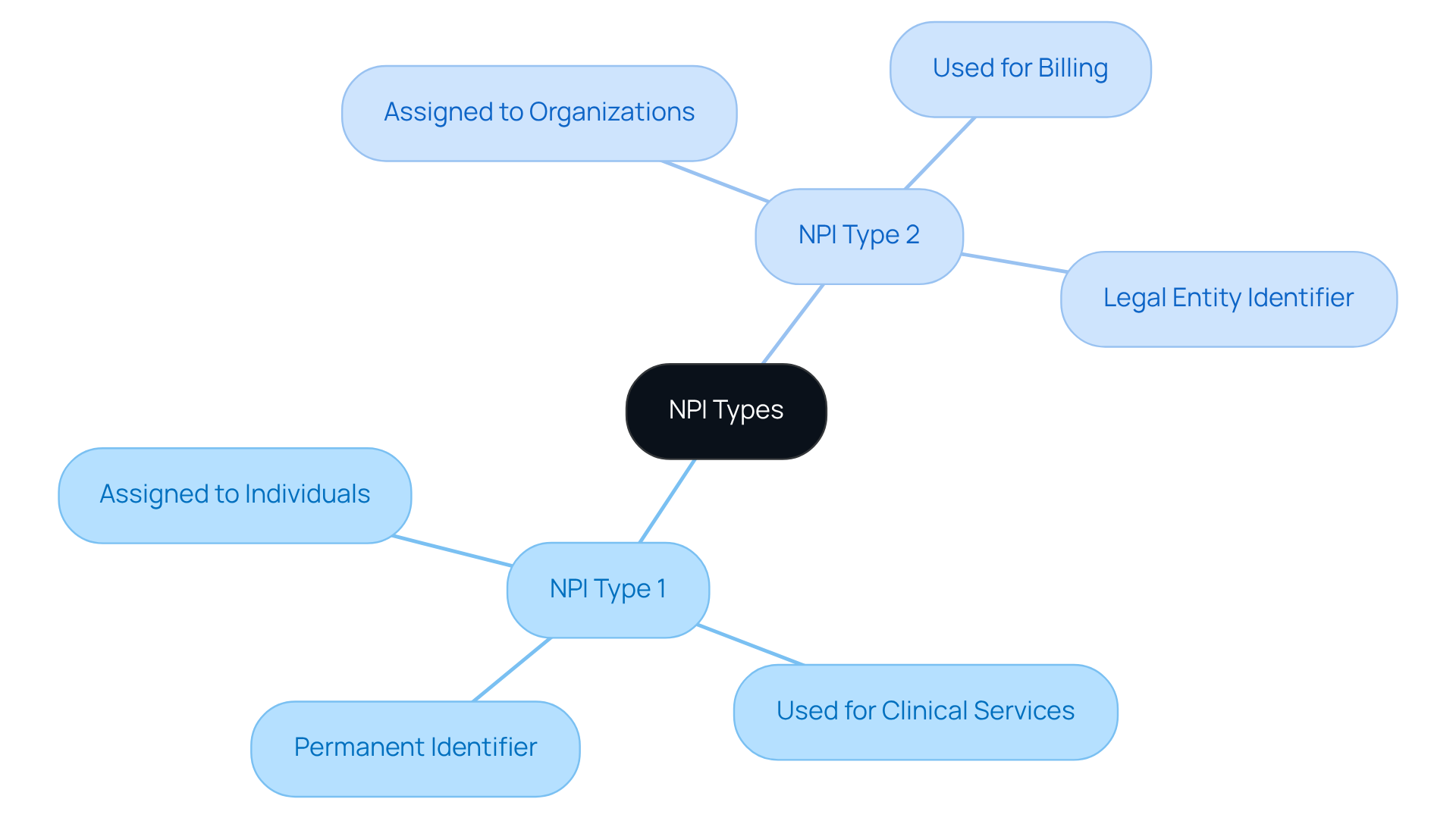
Understanding the distinction of NPI Type 1 vs Type 2 is critical for healthcare providers and organizations alike. NPI Type 1 is specifically assigned to individual healthcare providers, such as therapists and psychologists, who deliver clinical services. This identifier remains with the individual throughout their career, underscoring its significance for personal invoicing and credentialing. In contrast, NPI Type 2 is designated for organizations, including mental wellness facilities and group practices, that bill for services provided by their staff. This type enables organizations to manage invoicing and claims more effectively, as it identifies the legal entity responsible for the services provided.
Understanding the distinctions of NPI Type 1 vs Type 2 is essential for mental health organizations to ensure compliance and enhance their billing processes. For instance, organizations that utilize both NPI types can enhance their revenue cycle performance, experiencing a reduction in claim denials by 20-30% and faster reimbursements within 15-25% of 30-90 days. Case studies indicate that proper NPI setup significantly reduces credentialing delays and claim rejections, leading to enhanced operational efficiency and financial outcomes for organizations. This underscores the critical role of effective claims management in achieving financial success.
Moreover, the NPI system supports the separation between individual providers and their organizations, which is particularly important for therapists operating under an LLC. Navigating insurance processes without an NPI Type 2 can jeopardize the protections offered by an LLC structure. Therefore, mental health facilities must navigate these requirements carefully to align with the healthcare system’s intended operations and ensure financial sustainability. As Maja Popovska notes, Type 1 NPIs are permanent and remain with the provider regardless of changes in employment or practice settings. Clinics can benefit from the tailored administrative support offered by Healthcare Partners Consulting & Billing, LLC (HPC), which enhances efficiency and accuracy in financial processes, leading to better profitability. Navigating these complexities is essential for maintaining compliance and ensuring the financial health of mental health facilities.
Evaluate Benefits and Drawbacks of Each NPI Type
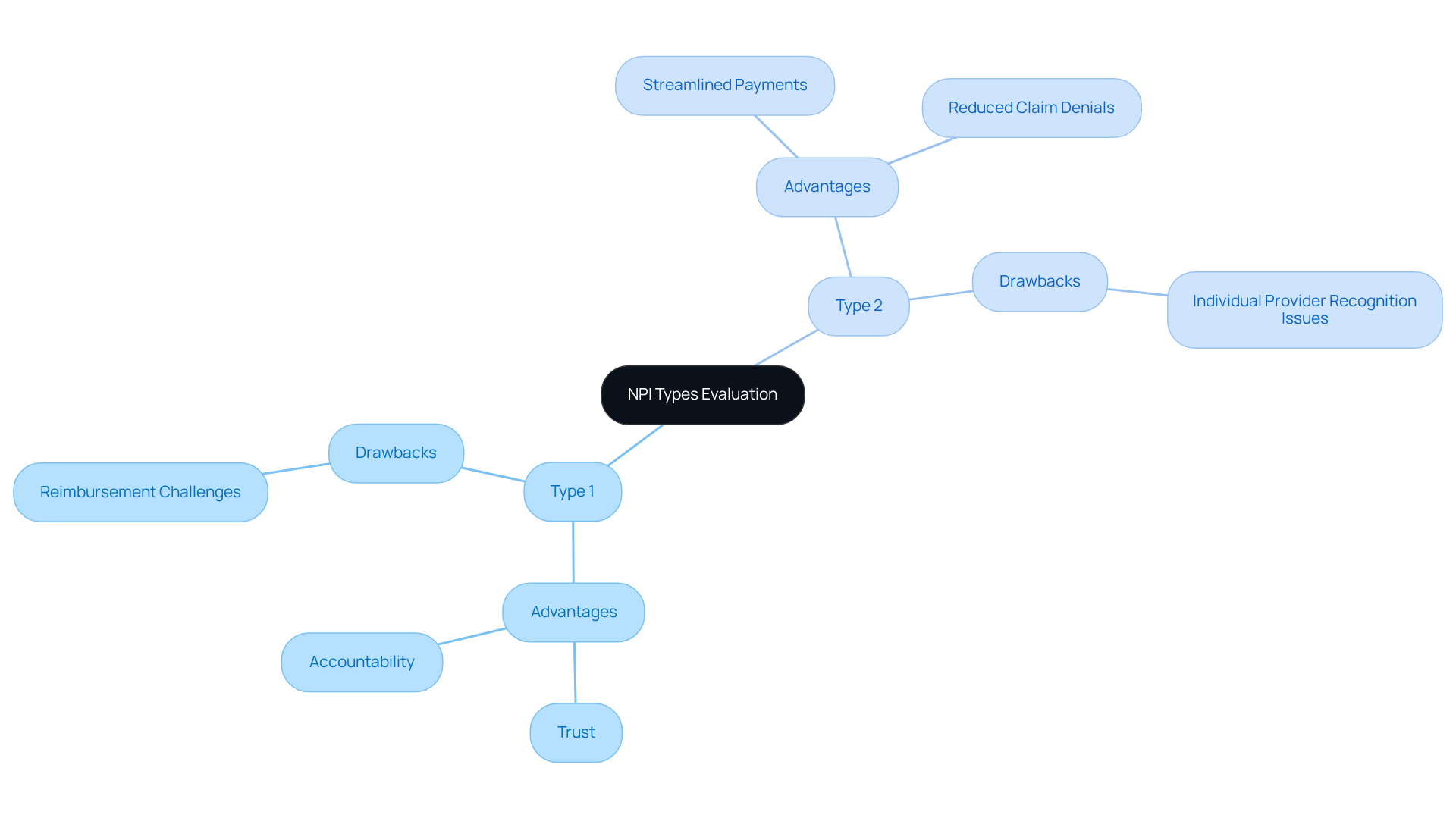
When considering NPI Type 1 vs Type 2, it is clear that Type 1 presents unique advantages, particularly in fostering trust and accountability in patient care. This is especially beneficial for solo practitioners who need to establish a direct connection with their patients. However, this limitation can create challenges in the reimbursement process for group practices, as claims must be submitted under the individual’s NPI, potentially complicating the reimbursement process.
When considering NPI Type 1 vs Type 2, it is evident that Type 2 offers organizational identification, facilitating streamlined payment processes and enabling multiple providers to be credentialed under one entity. This can significantly reduce administrative burdens, streamline claims management, and enhance operational efficiency for healthcare facilities. Practices utilizing Type 2 NPIs have reported a reduction in claim denials by 20-30% and faster reimbursements within 15-25% in 30-90 days.
Nonetheless, the use of Type 2 NPIs may complicate individual provider recognition in claims, leading to potential confusion if not managed effectively. Mental wellness facilities must consider these factors thoughtfully when determining which NPI type to adopt, taking into account their unique operational framework and financial requirements. Ultimately, the decision regarding NPI Type 1 vs Type 2 can significantly impact operational efficiency and revenue cycle management.
Assess Practical Considerations for NPI Selection
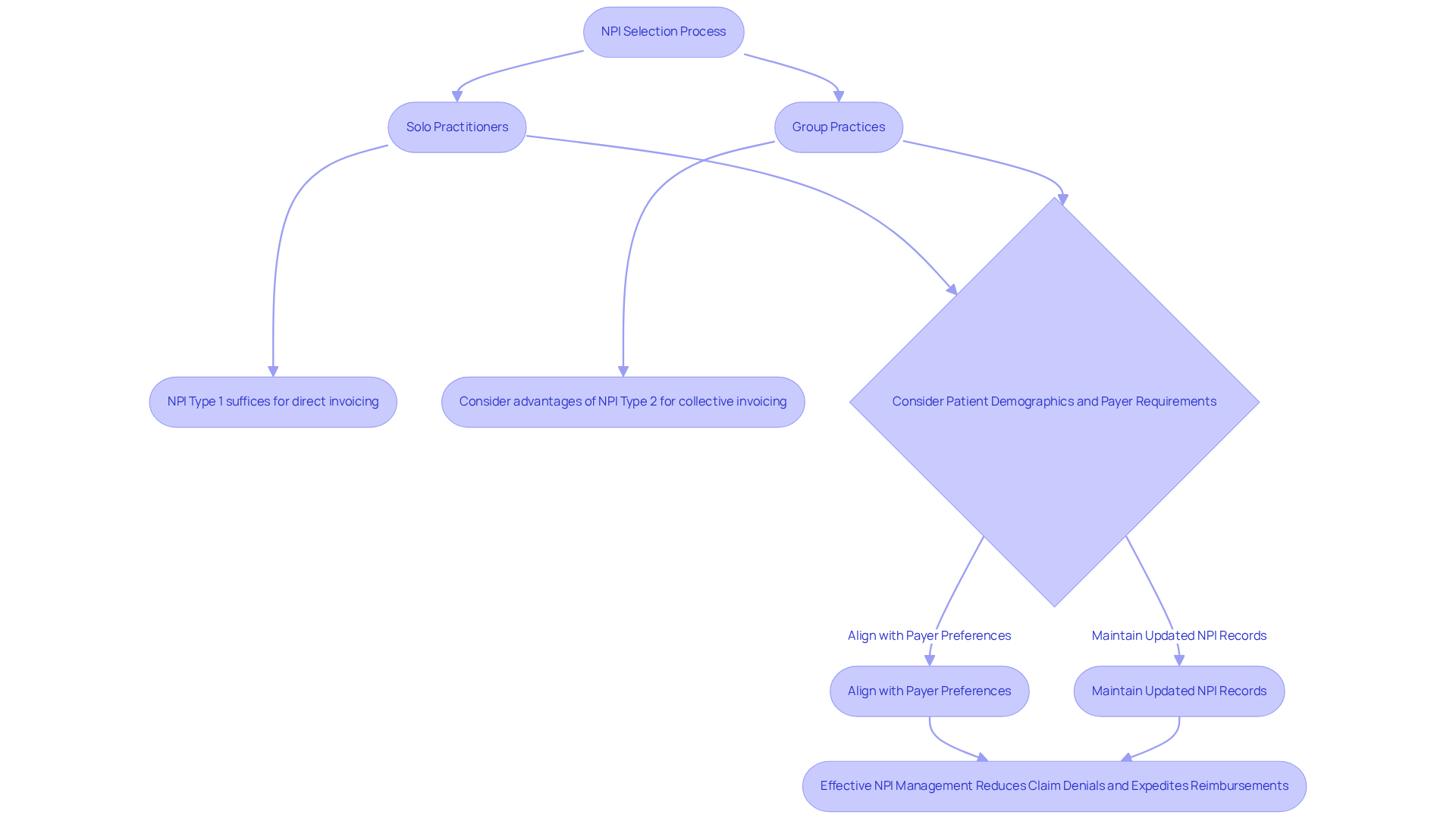
When choosing between NPI Type 1 vs Type 2, mental health practices face critical decisions that impact their operational efficiency and compliance. Solo practitioners typically find that when considering NPI Type 1 vs Type 2, NPI Type 1 suffices, as it allows for direct invoicing and personal identification. In contrast, group practices or healthcare facilities gain considerable advantages from understanding the differences in NPI Type 1 vs Type 2, which enhances collective invoicing and simplifies credentialing procedures.
Clinics need to think about their patient demographics and the specific requirements of payers, since some insurers have distinct preferences for NPI types. Maintaining updated NPI records is critical for compliance and efficient billing operations. Outdated NPI records can create significant challenges, leading to credentialing mismatches and payer rejections.
The choice of an NPI must align with the practice’s operational goals and regulatory obligations, minimizing administrative burdens while focusing on quality patient care. Effective management of NPI selection and adherence to payer-specific rules can reduce claim denials by 20-30%. Additionally, it can expedite reimbursements by 15-25% within 30-90 days, thereby enhancing overall revenue cycle performance.
Healthcare Partners Consulting offers comprehensive revenue cycle management services tailored to behavioral and mental wellness practices, ensuring that clinics can navigate the complexities of NPI selection while optimizing their billing processes. As noted by the Centers for Medicare and Medicaid Services, “An NPI helps providers communicate and process health information,” underscoring the importance of proper NPI management. Proper NPI management is not just a regulatory requirement; it is a strategic advantage that can significantly enhance a practice’s financial health.
Conclusion
Differentiating between NPI Type 1 and Type 2 is crucial for mental health clinics seeking to enhance their billing processes and ensure compliance. The National Provider Identifier serves as both a regulatory requirement and a key factor in enhancing operational efficiency. By distinguishing between individual and organizational identifiers, mental health providers can streamline their administrative tasks, enabling a greater focus on delivering quality patient care.
Throughout the article, key insights have been highlighted regarding the operational implications of each NPI type. NPI Type 1 is tailored for individual providers, fostering a personal connection with patients, while NPI Type 2 is designed for organizations, facilitating smoother claims management and reducing administrative burdens. The benefits of proper NPI management are evident, with significant reductions in claim denials and faster reimbursements, which are crucial for the financial health of mental wellness facilities.
In conclusion, clinics must carefully consider their specific needs and operational frameworks when choosing between NPI Type 1 and Type 2. By prioritizing compliance and effective billing strategies, clinics can enhance their revenue cycle performance and ultimately improve patient care. Engaging with experts like Healthcare Partners Consulting & Billing, LLC (HPC) can provide the necessary support to navigate these complexities, ensuring that healthcare providers are empowered to focus on what truly matters – caring for their patients. For further assistance, reach out to HPC at info@hpcbilling.com or call 888-517-4992.
Frequently Asked Questions
What is the National Provider Identifier (NPI)?
The National Provider Identifier (NPI) is a unique identifier for healthcare providers in the United States that simplifies provider recognition in electronic transactions and influences billing and compliance processes.
Why is having an NPI important for mental wellness facilities?
Having an NPI is crucial for mental wellness facilities as it is a regulatory requirement that enhances operational effectiveness, simplifies administrative duties, and allows providers to focus more on patient care.
How does the NPI impact revenue cycle performance?
The NPI requirement in HIPAA-covered transactions has led to a reduction in claim denials by 20-30% and faster reimbursements by 15-25% within 30-90 days, which is particularly beneficial for the financial viability of mental wellness facilities.
Can you provide an example of how NPIs improve claims processing efficiency?
Hospitals that adopted unique NPIs for off-campus locations reported enhanced transparency in claims data, which facilitated better payment reform and improved claims processing efficiency.
How does the integration of NPI data with electronic medical records benefit healthcare providers?
The integration of NPI data with electronic medical records enhances quality reporting and reduces fraud risks, thereby upholding compliance and operational integrity.
What upcoming changes regarding NPIs should mental wellness facilities be aware of?
A distinct NPI requirement for off-campus sites is set to take effect in 2026, making it essential for mental wellness facilities to prioritize acquiring and maintaining their NPIs.
How can healthcare providers ensure their NPI information remains current?
Keeping NPI information current is essential for ongoing compliance and operational efficiency, and providers are encouraged to seek support from consulting services to maintain this information.
What resources are available for mental wellness practices to improve their financial status?
Mental wellness practices can take the ‘Discover Your Mental Health Practice Profitability Score’ quiz for tailored suggestions to enhance efficiency and payment accuracy.