
Introduction
The upcoming 2026 coding updates are set to significantly alter billing practices and compliance requirements in mental health care. These changes introduce new classifications and modifications while emphasizing the importance of accurate documentation to safeguard revenue and enhance patient care.
Clinics face significant challenges in adapting to the new coding requirements, and as they prepare for these updates, they must ensure compliance and financial viability.
Strategic adaptation to these changes is essential for maintaining compliance and ensuring financial health in mental health practices.
Understand the 2026 Coding Updates and Their Implications
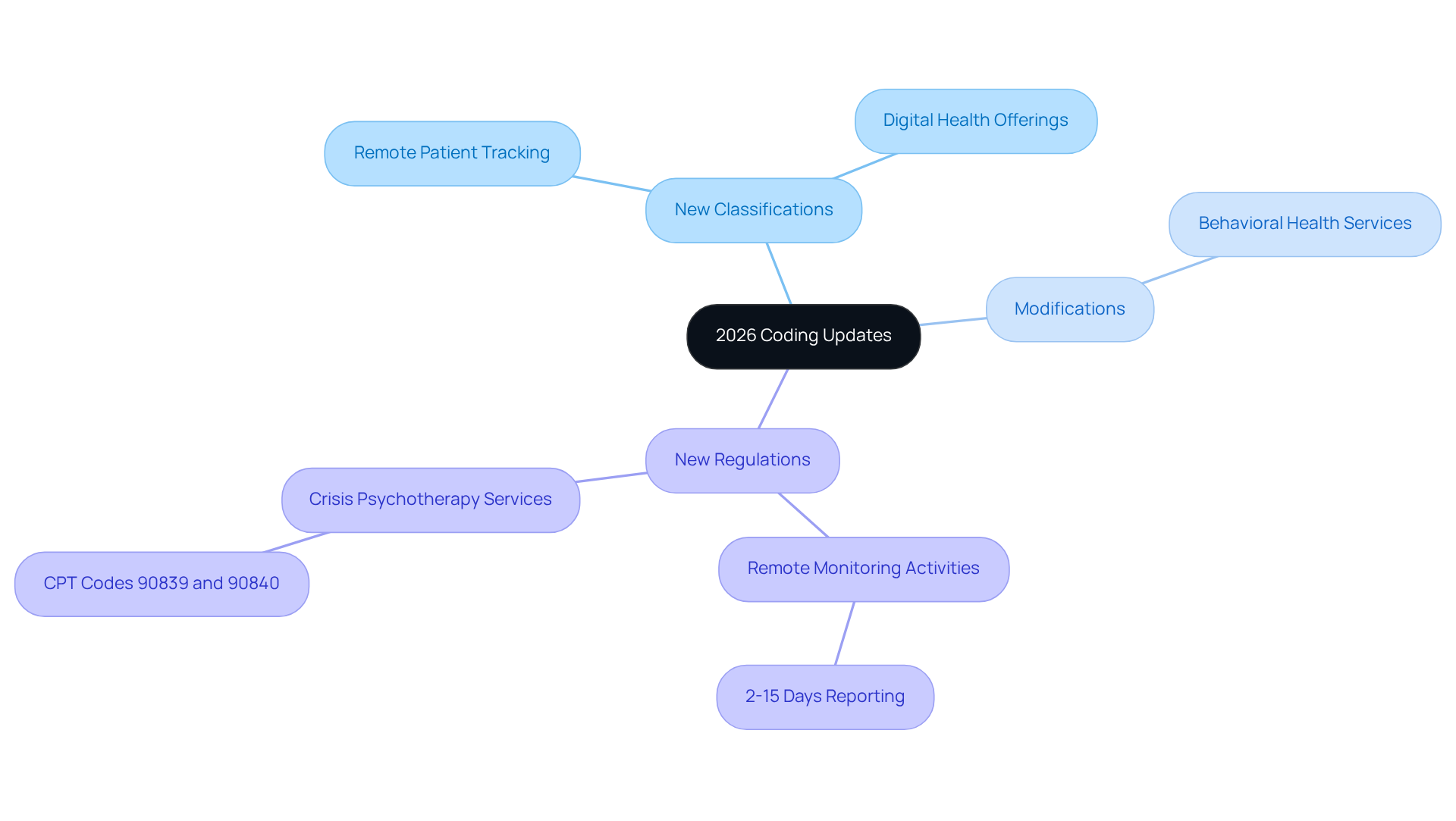
The 2026 coding updates to the Current Procedural Terminology (CPT) classifications introduce critical changes that mental health clinics must understand to maintain compliance and optimize reimbursement. These updates include:
- New classifications for remote patient tracking
- Modifications to existing classifications
- Introduction of categories that reflect advancements in digital health offerings
Notably, five new regulations have been established to report remote monitoring activities for durations of 2-15 days within a 30-day period, enhancing flexibility in patient care delivery. Additionally, the AMA has incorporated several existing classifications for behavioral health services in CPT appendices P and T, recognizing support provided through audio-video or audio-only technologies, particularly benefiting rural and underserved populations.
Clinics must grasp these updates to ensure compliance and enhance their reimbursement processes effectively. Accurate documentation is crucial, as incorrect coding can lead to significant revenue losses. For instance, CPT number 90837 requires at least 53 minutes of care; not meeting this requirement may lead to repayment requests. Furthermore, the introduction of new codes for crisis psychotherapy services, such as CPT codes 90839 and 90840, will be valued higher in 2026, underscoring the need for clinics to adjust their payment practices accordingly.
The evolving landscape of mental health financing necessitates that practices remain informed and proactive. Clinics that leverage specialized behavioral health technology and financial insights, like those from Healthcare Partners Consulting, can navigate these changes more effectively. By scheduling a personalized consultation, mental health clinics can identify optimal administrative solutions and align their billing practices with the 2026 coding updates, thus safeguarding their revenue and enhancing the quality of care provided to their patients.
For more information, email info@hpcbilling.com or call 888-517-4992. Available nationwide, Monday-Friday. Not sure which option suits best? Share details about your practice during a 30-minute call, and we’ll outline your existing workflow and direct you to the resources that will create the most significant impact quickly.
Identify Key Areas Affected by the 2026 Coding Changes
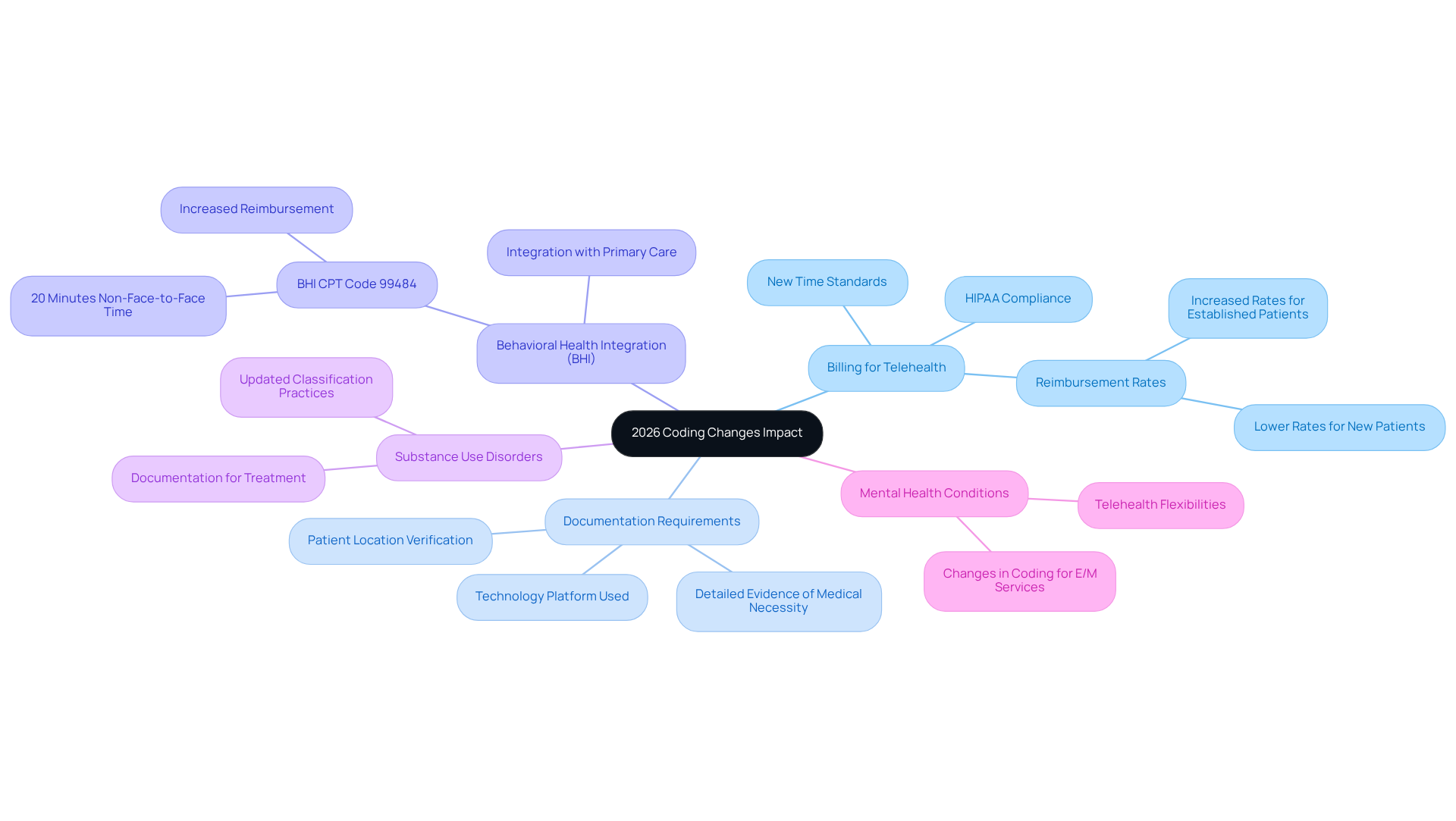
As the 2026 coding updates loom, clinics must navigate significant changes that could impact their billing and documentation practices. These updates will greatly affect billing for telehealth offerings, documentation requirements for psychotherapy sessions, and introduce new classifications for Behavioral Health Integration (BHI). Clinics must adapt to new time-related standards. Accurate documentation of service duration is now essential. For instance, the BHI CPT designation 99484 encompasses 20 minutes per calendar month of non-face-to-face BHI time, with the national average reimbursement currently around $57, indicating a rise of over $4 from the prior year.
Furthermore, updates encompass modifications to systems associated with substance use disorders and mental health conditions, necessitating a comprehensive examination of existing classification practices. It is also crucial for clinics to employ HIPAA-compliant technology for telehealth options and confirm patient locations for telehealth appointments. These modifications are critical for compliance with the 2026 coding updates.
By concentrating on these key areas, mental health clinics can ensure compliance with the latest regulations and maximize their reimbursement potential. Regular training sessions for programming personnel and updates to invoicing software will be crucial for successfully managing these changes.
Healthcare Partners Consulting provides flexible service plans that cater to the size of your practice and the volume of claims you handle, including percentage-based and flat-rate pricing models. This ensures that you have the expertise needed to streamline your billing processes and enhance patient care. Ultimately, adapting to these changes is not just about compliance; it’s about ensuring the sustainability and efficiency of mental health services.
Prepare Your Practice for Successful Implementation of Coding Updates
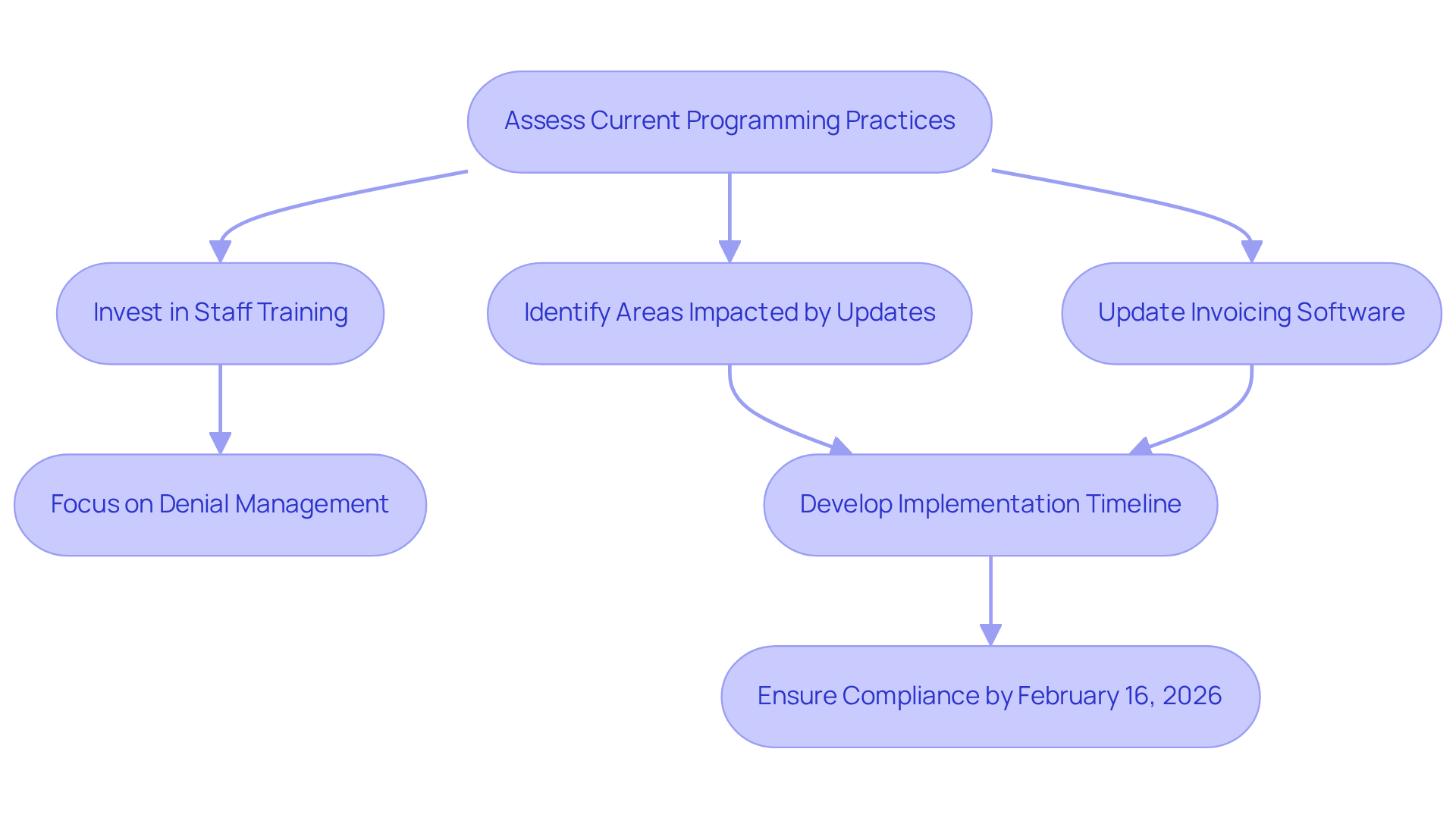
To ensure a seamless transition to the 2026 coding updates, mental health clinics must adopt a strategic approach. First, assess current programming practices. Identify areas impacted by the 2026 coding updates that will be effective on January 1, 2026. Next, invest in training for administrative and invoicing staff to ensure they are well-versed in the new coding requirements and documentation standards, particularly in light of the 2026 coding updates, especially considering that behavioral health denial rates range from 15 to 25 percent nationally. Effective denial management strategies are essential for revenue recovery.
Healthcare Partners Consulting can help appeal denials swiftly to recover lost revenue. Furthermore, updating invoicing software to accommodate the new codes is essential; Healthcare Partners Consulting provides customized software solutions to assist with the 2026 coding updates transition. Providers must also list the exact start and stop times of each session for compliance verification.
Finally, develop an implementation timeline with milestones for training, software updates, and payment process reviews to ensure compliance with the 2026 coding updates by February 16, 2026. These steps will help clinics minimize disruptions and sustain their revenue flow. Considering the complexities of the new programming demands, contracting invoicing services from Healthcare Partners Consulting can enhance precision and productivity. Clinics can also determine their profitability score through a quick evaluation, which provides tailored suggestions for enhancing efficiency and revenue accuracy, ensuring they are well-prepared for the 2026 coding updates.
Leverage Technology for Efficient Coding Update Implementation
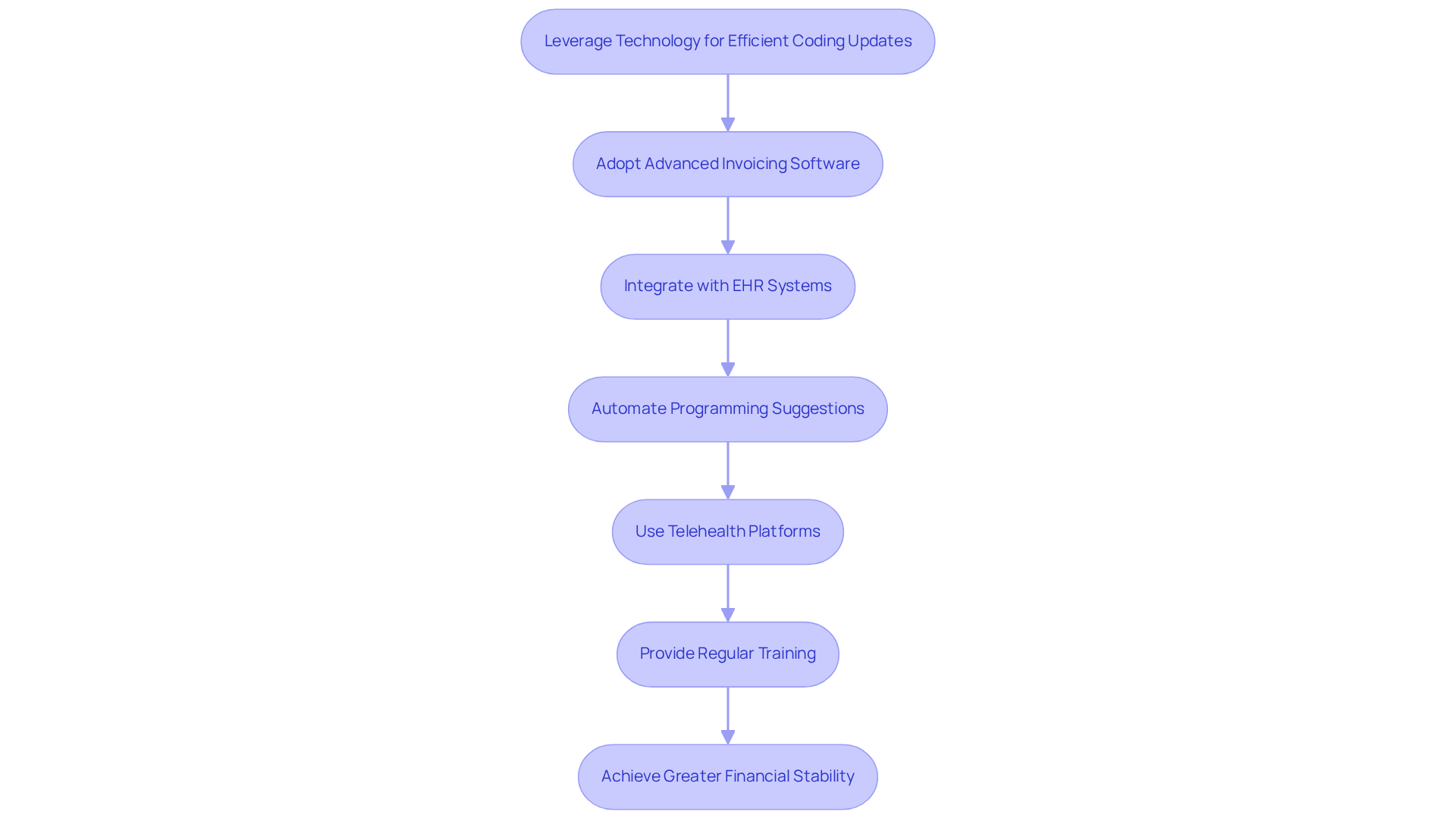
Clinics must adapt to evolving programming requirements to maintain operational efficiency and compliance. Mental health clinics should consider adopting advanced invoicing software that integrates seamlessly with electronic health records (EHR) systems. This software automates programming suggestions derived from clinician notes. This reduces errors and ensures compliance with the latest standards.
Furthermore, using telehealth platforms that incorporate the 2026 coding updates can simplify invoicing for remote services. Regular updates and training on these technologies keep staff informed about best practices and features.
By embracing advanced technology, clinics can transform their billing processes and achieve greater financial stability.
Conclusion
The upcoming 2026 coding updates represent a pivotal moment for mental health clinics, necessitating a thorough understanding of new regulations and classifications to ensure compliance and optimize reimbursement. Clinics must adapt their billing practices and documentation standards to meet the new requirements, especially in remote patient monitoring and behavioral health integration.
Accurate coding and documentation are crucial. Clinics should invest in training and technology to ensure compliance with the new standards. Implementing advanced invoicing software and telehealth platforms can streamline processes, ultimately enhancing the quality of care provided to patients while safeguarding revenue streams.
Given these changes, mental health clinics must proactively prepare for the 2026 coding updates. Leveraging technology and expert guidance will help clinics navigate these updates effectively, ensuring compliance and enhancing service sustainability in mental health care.
Frequently Asked Questions
What are the main changes introduced by the 2026 coding updates to the CPT classifications?
The 2026 coding updates introduce new classifications for remote patient tracking, modifications to existing classifications, and categories that reflect advancements in digital health offerings.
What new regulations have been established for remote monitoring activities?
Five new regulations have been established to report remote monitoring activities for durations of 2-15 days within a 30-day period, enhancing flexibility in patient care delivery.
How do the updates benefit rural and underserved populations?
The updates recognize support provided through audio-video or audio-only technologies, which particularly benefits rural and underserved populations.
Why is accurate documentation important with the new coding updates?
Accurate documentation is crucial because incorrect coding can lead to significant revenue losses, and clinics must ensure compliance to enhance their reimbursement processes.
What specific requirements must be met for CPT code 90837?
CPT code 90837 requires at least 53 minutes of care; failing to meet this requirement may lead to repayment requests.
What new codes have been introduced for crisis psychotherapy services?
New codes for crisis psychotherapy services include CPT codes 90839 and 90840, which will be valued higher in 2026.
How can mental health clinics navigate the changes brought by the 2026 coding updates?
Clinics can navigate these changes by leveraging specialized behavioral health technology and financial insights, and by scheduling personalized consultations to identify optimal administrative solutions.
How can clinics get more information about the 2026 coding updates?
Clinics can email info@hpcbilling.com or call 888-517-4992 for more information.