
Introduction
Clinics face significant challenges in mental health billing and coding, which can jeopardize their financial health and operational efficiency. This tutorial provides a comprehensive guide that empowers healthcare providers by streamlining administrative processes, allowing them to focus more on patient care. To navigate these challenges, mental health practices must adopt effective billing strategies that enhance both financial health and operational efficiency.
Define Mental Health Billing and Coding
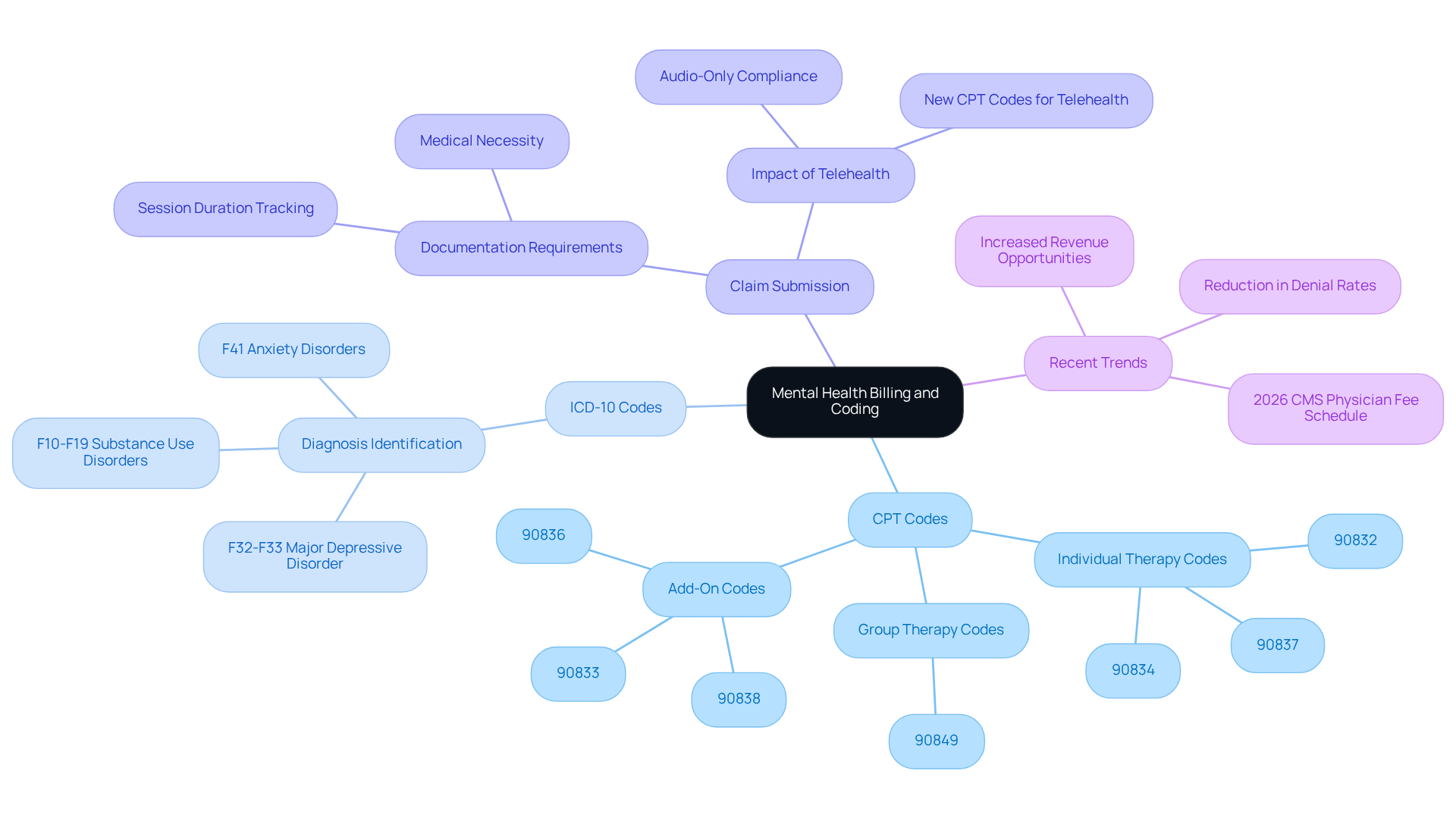
Navigating the complexities of mental health billing and coding is crucial for ensuring timely reimbursement and compliance. Mental health billing and coding involve submitting requests to insurance firms for reimbursement of services provided by therapists, psychologists, and psychiatrists. This requires the accurate application of codes, including Current Procedural Terminology (CPT) codes, to reflect the services provided. Mastering these definitions is essential for ensuring that requests are processed efficiently and that providers receive appropriate compensation. Key components include:
- CPT Codes: These codes describe specific services delivered during therapy sessions, including individual and group therapy.
- ICD-10 Codes: These codes identify the diagnosis for which the patient is being treated, ensuring alignment between financial processes and services rendered.
- Claim Submission: This process involves sending completed claims to insurance companies for reimbursement, necessitating accurate coding and thorough documentation to reduce rejections.
Recent trends in mental wellness coding for 2026 emphasize the significance of adhering to updated regulations and incorporating telehealth services. The 2026 CMS Physician Fee Schedule introduces new CPT and HCPCS codes, expanding reimbursement opportunities while increasing the need for precise documentation. Organizations that implement structured payment models report significant increases in both revenue and patient encounters, with denial rates potentially reduced by 20-30% and faster reimbursement achieved within 15-25% in 30-90 days.
Case studies illustrate optimal practices in mental wellness coding and documentation. For instance, organizations that recalibrate their workflows to align with the 2026 requirements have seen improvements in compliance and revenue optimization. By concentrating on precise documentation and coding, mental wellness providers can navigate the financial landscape of mental health billing and coding more effectively, ensuring compliance and maximizing revenue. Ultimately, the ability to adapt to evolving coding standards will determine the financial health of mental wellness practices.
Explore Challenges in Mental Health Billing
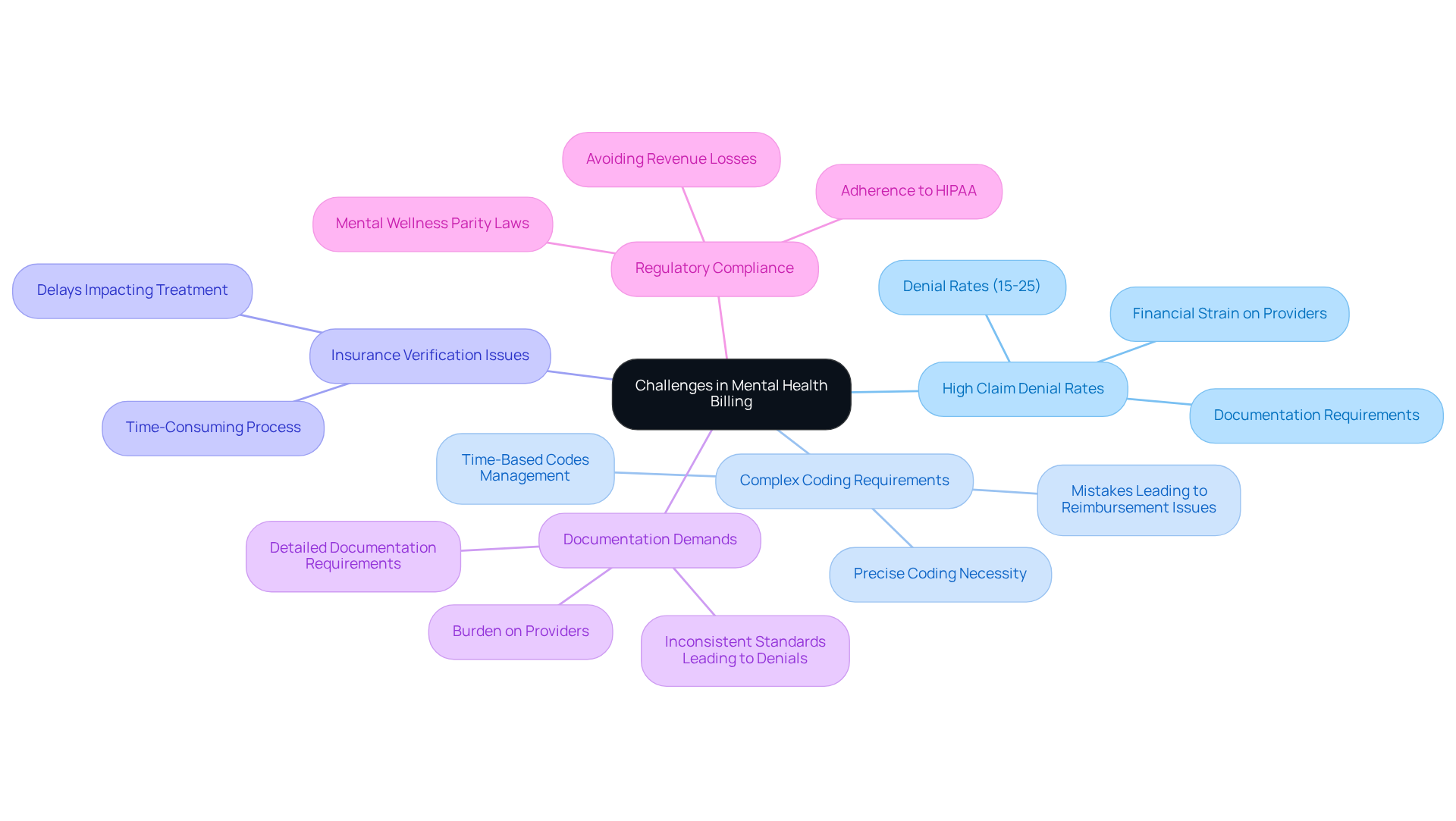
Navigating the reimbursement landscape for mental wellness invoicing in 2026 poses significant challenges for providers, necessitating a thorough understanding of the complexities involved. Key issues include:
- High Claim Denial Rates: Mental health claims experience denial rates ranging from 15 to 25 percent, significantly higher than other medical specialties. These high denial rates create significant financial strain on providers, complicating their ability to sustain operations. This is often due to stringent documentation requirements and varying payer policies that can lead to confusion and errors.
- Complex Coding Requirements: The necessity for precise coding, especially with time-based codes for therapy sessions, can result in mistakes if not managed properly. Precise coding is crucial to prevent reimbursement issues and guarantee prompt payments.
- Insurance Verification Issues: Verifying patient insurance coverage and benefits can be a time-consuming process. Delays in this area can hinder treatment and negatively impact patient care.
- Documentation Demands: Insurers frequently require detailed documentation to support claims, which can be burdensome for providers already managing heavy caseloads. Inconsistent documentation standards can lead to denials for lack of medical necessity or authorization lapses.
- Regulatory Compliance: Adhering to regulations such as HIPAA and mental wellness parity laws adds another layer of complexity to the billing process. Compliance is critical to avoid potential revenue losses and legal issues.
By recognizing these challenges, mental health providers can implement strategies to mitigate their impact. This proactive approach not only reduces reimbursement issues but also enhances overall operational efficiency. For example, practices that participate in regular compliance audits and staff training on mental health-specific coding regulations can decrease reimbursement issues by 20 to 30%. Additionally, utilizing scorecard-driven adjustments tied to claims accuracy and denial rates can enhance operational rigor, leading to faster reimbursement timelines of 15 to 25% within 30 to 90 days. Case studies, such as the Hispanic Counseling Center’s collaboration with specialized financial services, illustrate how streamlined processes can enhance efficiency and financial performance. Addressing these challenges head-on allows mental wellness providers to optimize their financial operations, ultimately leading to improved patient care outcomes.
Implement Step-by-Step Billing Procedures
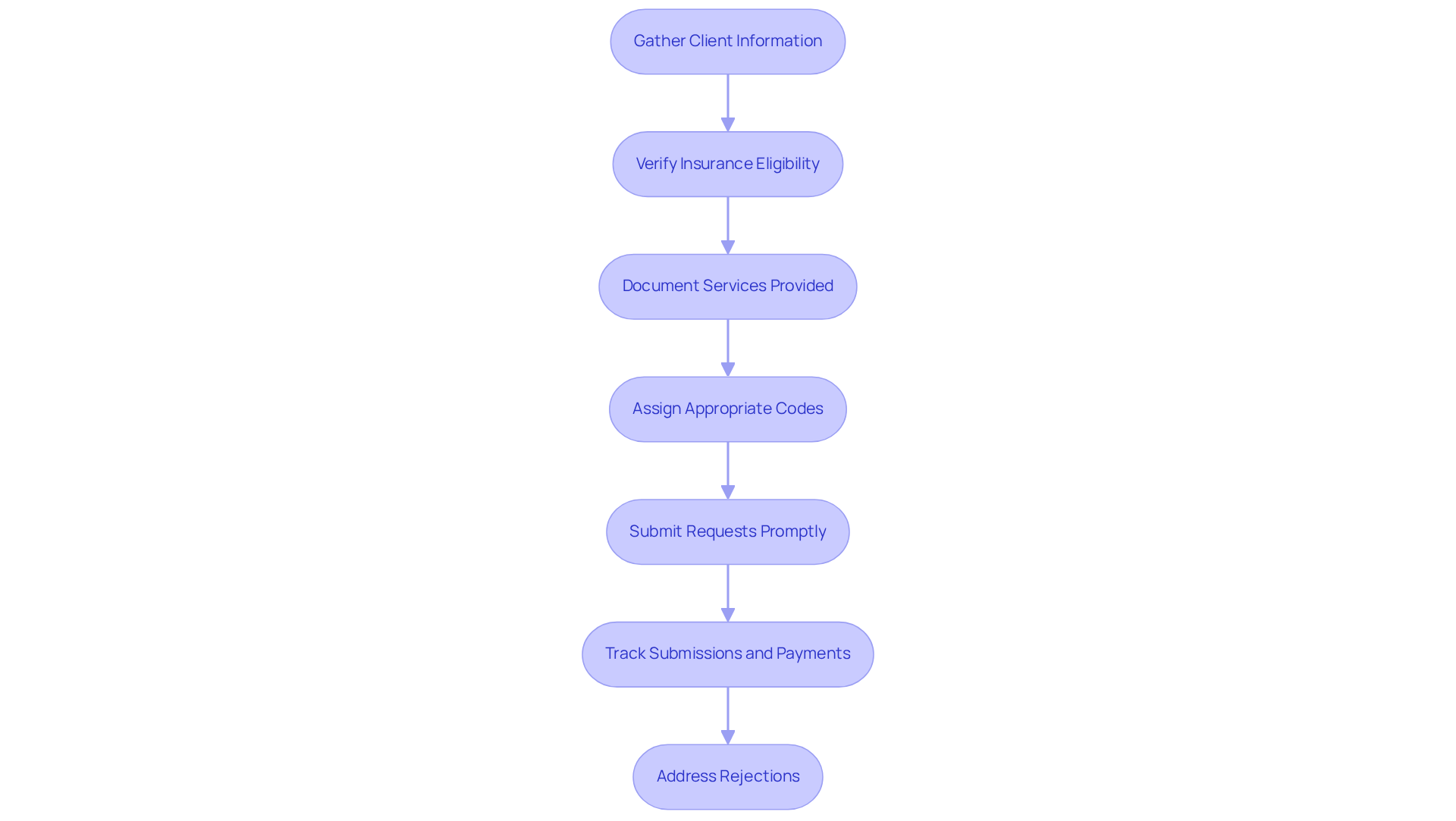
A systematic approach to mental health billing and coding is essential for optimizing billing efficiency and ensuring financial stability. Here’s a comprehensive guide to implementing effective billing procedures:
- Gather Client Information: Collect all necessary client details, including personal information, insurance information, and consent forms.
- Verify Insurance Eligibility: Confirm the client’s insurance coverage and benefits before the first appointment to avoid surprises later. This step is crucial as nearly one in four individuals seeking mental health treatment encounter rejection of coverage by their insurance.
- Document Services Provided: After each session, accurately document the services rendered, including the duration and type of therapy. Thorough documentation is essential for compliance and can greatly decrease denial of requests.
- Assign Appropriate Codes: Use the correct CPT and ICD-10 codes that correspond to the services provided and the client’s diagnosis. Accurate coding is essential for ensuring proper reimbursement and compliance with payer rules.
- Submit Requests Promptly: File requests with the insurance provider as soon as possible to ensure timely reimbursement. Research indicates that timely submissions can increase reimbursement rates by 15-25% within 30-90 days.
- Track Submissions and Payments: Monitor the status of submitted requests and follow up on any outstanding payments or refusals. Effective tracking can lead to a reduction of 20-30% in claims issues, enhancing overall revenue cycle performance.
- Address Rejections: If a submission is turned down, examine the reasons for rejection, rectify any mistakes, and resubmit the submission without delay. Handling rejections can be challenging, but understanding the reasons behind them is essential for improvement. Persistence in reworking and appealing denied requests can significantly impact a practice’s revenue.
Following these steps allows mental wellness providers to enhance invoicing efficiency and reduce claim rejections, which in turn supports better patient care and financial health through effective mental health billing and coding. Ultimately, refining these processes can lead to a more sustainable practice and improved patient outcomes.
Ensure Compliance and Best Practices in Billing
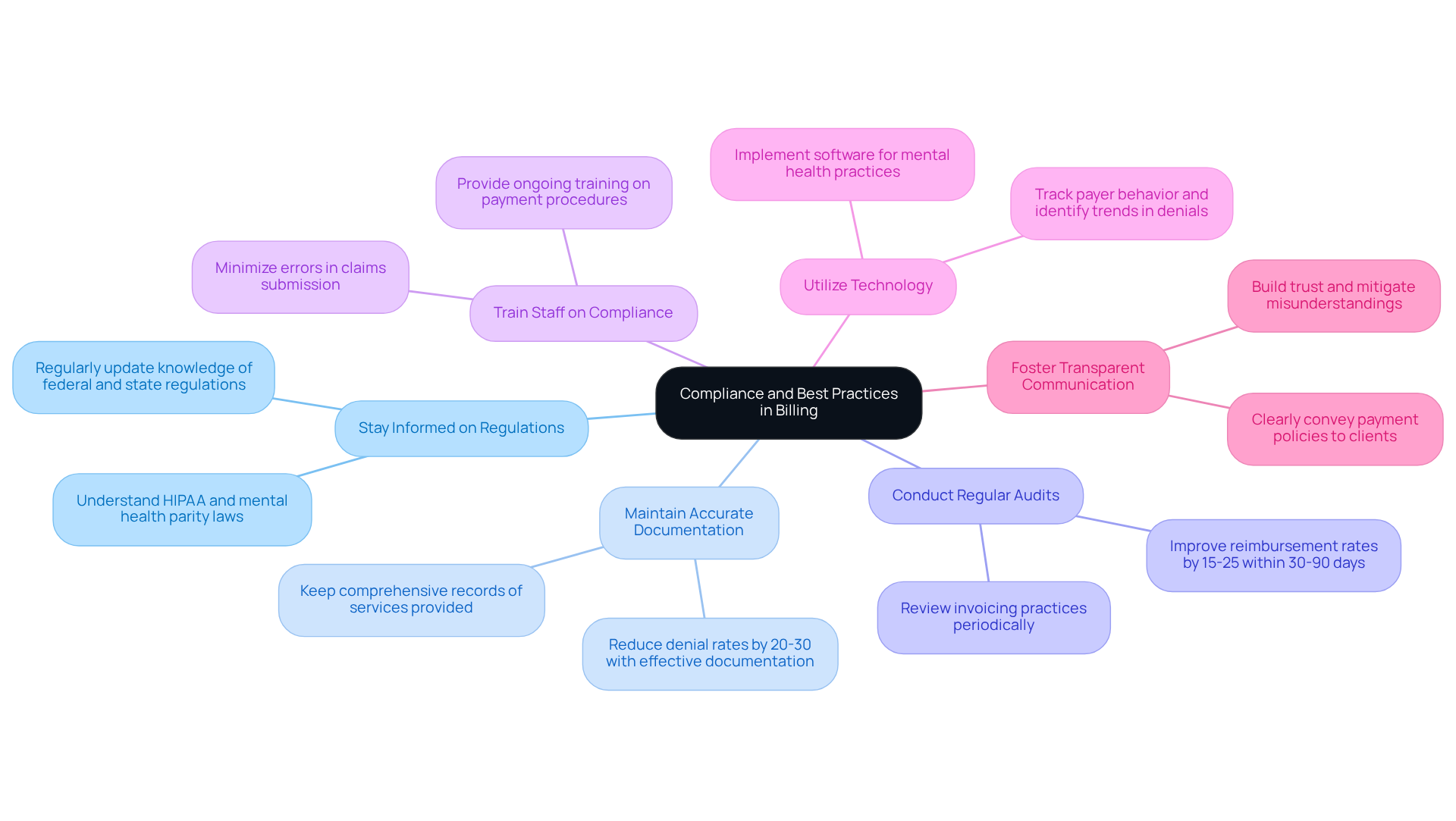
Failure to adhere to billing regulations can result in significant financial setbacks and operational disruptions for mental wellness providers. Adhering to these regulations is essential to safeguard practices and guarantee suitable reimbursement. Implementing the following key compliance measures and best practices can significantly enhance operational efficiency:
- Stay Informed on Regulations: Regularly update your knowledge of federal and state regulations, including HIPAA and mental health parity laws, to ensure compliance and avoid potential pitfalls.
- Maintain Accurate Documentation: Keep comprehensive records of all services provided, including session notes and treatment plans, to support requests and demonstrate medical necessity. This practice is essential for reducing denial rates, which can improve by 20-30% when documentation is effective.
- Conduct Regular Audits: Periodically review invoicing practices and documentation to identify areas for improvement and ensure adherence to compliance standards. This proactive approach can lead to faster reimbursement rates, increasing by 15-25% within 30-90 days.
- Train Staff on Compliance: Provide ongoing training for staff on payment procedures, coding updates, and compliance requirements to minimize errors and enhance overall accuracy in claims submission.
- Utilize Technology: Implement software specifically designed for mental health practices, which can streamline processes and ensure compliance with coding and documentation standards. Advanced revenue cycle management platforms can also help track payer behavior and identify trends in denials.
- Foster Transparent Communication: Clearly convey payment policies and insurance requirements to clients to set expectations and build trust. This transparency can mitigate misunderstandings and enhance patient satisfaction.
By prioritizing these compliance measures and best practices, mental health providers can improve their billing processes, reduce the risk of audits, and ultimately focus more on delivering quality patient care. Ultimately, these strategies not only enhance compliance but also position practices for sustainable financial growth.
Conclusion
Mastering mental health billing and coding is crucial for ensuring timely reimbursements and compliance with evolving regulations. By understanding the intricacies of this process, mental health professionals can focus more on patient care rather than administrative burdens. The tutorial outlined the importance of accurate coding, effective documentation, and adherence to compliance standards, all of which are critical for optimizing revenue cycle management in behavioral and mental health practices.
Key insights from the article highlighted the challenges faced by mental health providers, including:
- High claim denial rates
- Complex coding requirements
Mental health providers often struggle with high claim denial rates and intricate coding requirements, which can hinder their operational efficiency. Implementing a systematic approach to billing procedures, such as verifying insurance eligibility and maintaining accurate documentation, can significantly reduce these challenges. Additionally, fostering a culture of compliance through regular audits and staff training ensures that practices remain aligned with regulatory standards, ultimately leading to improved financial health and patient outcomes.
In conclusion, the effectiveness of mental health billing and coding is critical for operational success and compliance. By adopting best practices, mental health providers can enhance their operational efficiency and secure their financial future in a challenging reimbursement environment. For further assistance, reaching out to a dedicated billing team, such as the experts at Healthcare Partners Consulting & Billing, LLC (HPC), can provide invaluable support in navigating these challenges.
Frequently Asked Questions
What is mental health billing and coding?
Mental health billing and coding involve submitting requests to insurance companies for reimbursement of services provided by therapists, psychologists, and psychiatrists. It requires the accurate application of codes, such as Current Procedural Terminology (CPT) codes, to reflect the services delivered.
What are CPT codes and why are they important?
CPT codes describe specific services delivered during therapy sessions, including individual and group therapy. They are crucial for ensuring that requests for reimbursement are processed efficiently and that providers receive appropriate compensation.
What are ICD-10 codes and their role in mental health billing?
ICD-10 codes identify the diagnosis for which the patient is being treated. They ensure alignment between financial processes and the services rendered, which is essential for accurate billing and coding.
What is the claim submission process in mental health billing?
The claim submission process involves sending completed claims to insurance companies for reimbursement. This requires accurate coding and thorough documentation to reduce the likelihood of claim rejections.
What recent trends are influencing mental health coding for 2026?
Recent trends emphasize the importance of adhering to updated regulations and incorporating telehealth services. The 2026 CMS Physician Fee Schedule introduces new CPT and HCPCS codes, expanding reimbursement opportunities and increasing the need for precise documentation.
How can structured payment models impact mental health practices?
Organizations that implement structured payment models report significant increases in revenue and patient encounters. They may experience a reduction in denial rates by 20-30% and achieve faster reimbursement within 15-25% in 30-90 days.
What are some best practices for mental wellness coding and documentation?
Best practices include recalibrating workflows to align with updated coding requirements, focusing on precise documentation and coding, and adapting to evolving coding standards to ensure compliance and maximize revenue.
Why is it important for mental wellness providers to adapt to evolving coding standards?
Adapting to evolving coding standards is essential for navigating the financial landscape of mental health billing and coding effectively, ensuring compliance, and maximizing revenue for mental wellness practices.