

Introduction
Chiropractic medical billing presents significant challenges that can impact the financial viability of practices focused on patient care. Specialized billing services enable healthcare providers to streamline operations effectively, reduce administrative burdens, and concentrate on delivering quality care. However, chiropractors face significant hurdles in navigating complex coding and insurance regulations. Failure to address these challenges can lead to reduced revenue and compromised patient care. This article delves into the essential components of chiropractic medical billing services and their significant impact on practice efficiency and patient satisfaction.
Define Chiropractic Medical Billing Services
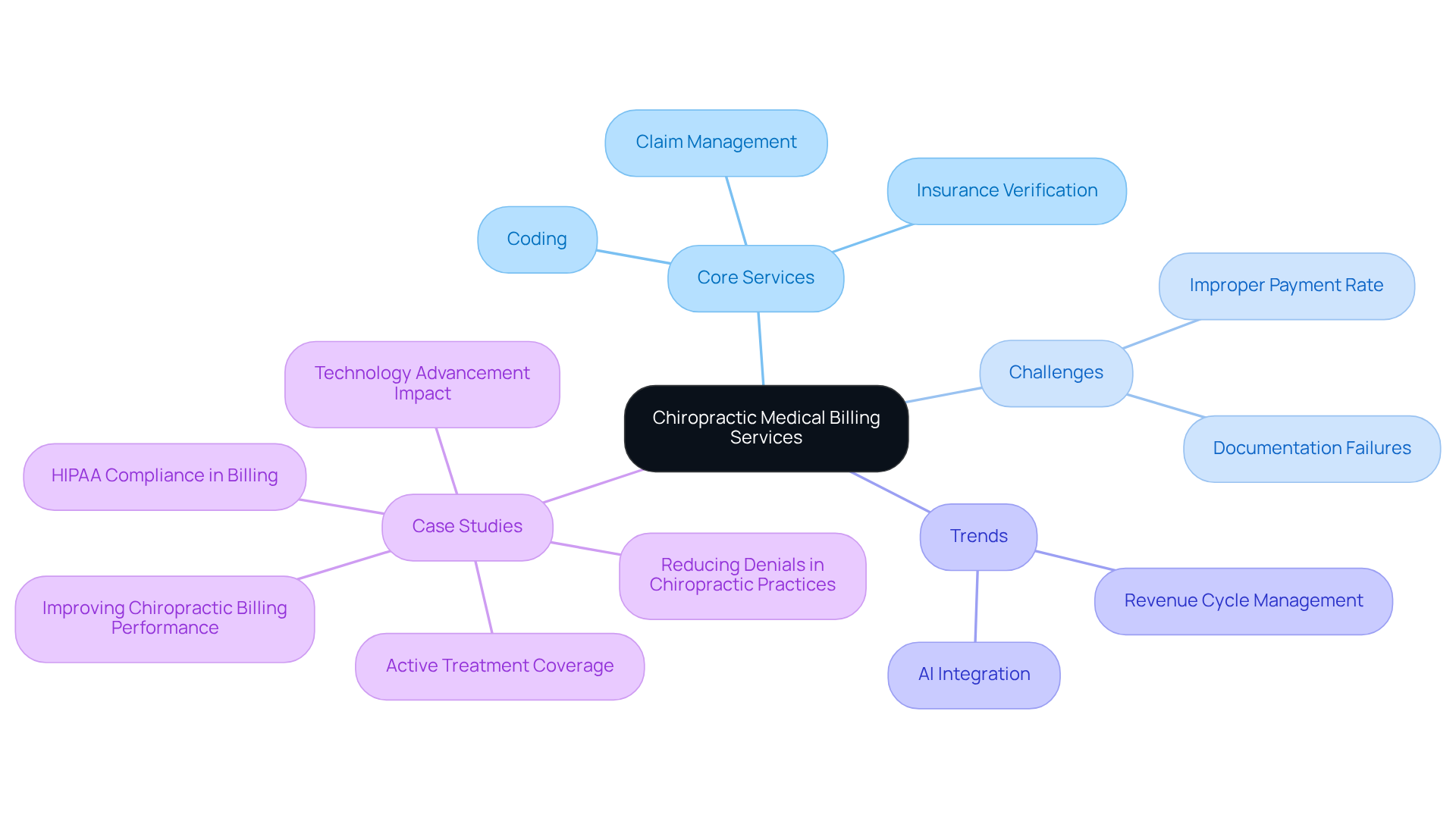
The complexity of chiropractic financial processes is increasing, necessitating specialized chiropractic medical billing services for effective insurance claim management. These chiropractic medical billing services include:
- Coding for various chiropractic procedures
- Verifying patient insurance eligibility
- Managing claim submissions to ensure timely reimbursement
Chiropractic medical billing services are unique, characterized by specific coding requirements and documentation standards that set them apart from other medical fields.
At Healthcare Partners Consulting & Billing, LLC (HPC), we understand the challenges practices face in optimizing their chiropractic medical billing services and payment workflows. Our adaptable service plans are tailored to the scale of your operation, claim volume, and preferred level of support, whether you require comprehensive cycle management or focused accounts receivable assistance. With 39 years of experience, our certified experts focus on enhancing revenue and minimizing denials for practices in mental and behavioral health.
In 2026, the landscape of chiropractic financial processes is shaped by several key trends. For instance, the integration of AI-driven tools is enhancing accuracy in coding and compliance while streamlining the revenue cycle. Practices that adopt these technologies can expect to see improvements in claim acceptance rates and reductions in denials, which are critical for maintaining financial health with chiropractic medical billing services.
Statistics show that around 75-80% of commercial health insurance plans include coverage for chiropractic care, emphasizing the significance of efficient reimbursement strategies to enhance returns. Furthermore, the improper payment rate in chiropractic invoicing stands at 33.6%, primarily driven by documentation failures. This high rate of improper payments highlights the challenges practices face in ensuring accurate invoicing, underscoring the necessity for robust verification processes and accurate coding within chiropractic medical billing services to avoid costly errors.
Case studies illustrate the effectiveness of organized invoicing workflows in chiropractic settings. For instance, organizations that implement comprehensive revenue cycle management (RCM) solutions, such as chiropractic medical billing services, report significant improvements in financial performance, including reduced denial rates and enhanced visibility into their revenue cycles. By concentrating on adherence and operational effectiveness, chiropractic medical billing services not only optimize the financial cycle but also enhance the overall economic well-being of healthcare facilities, enabling providers to focus on delivering exceptional patient care. Ultimately, the integration of advanced technologies and structured workflows is essential for chiropractic practices aiming to thrive in a competitive healthcare environment.
Explain the Importance of Chiropractic Billing Services
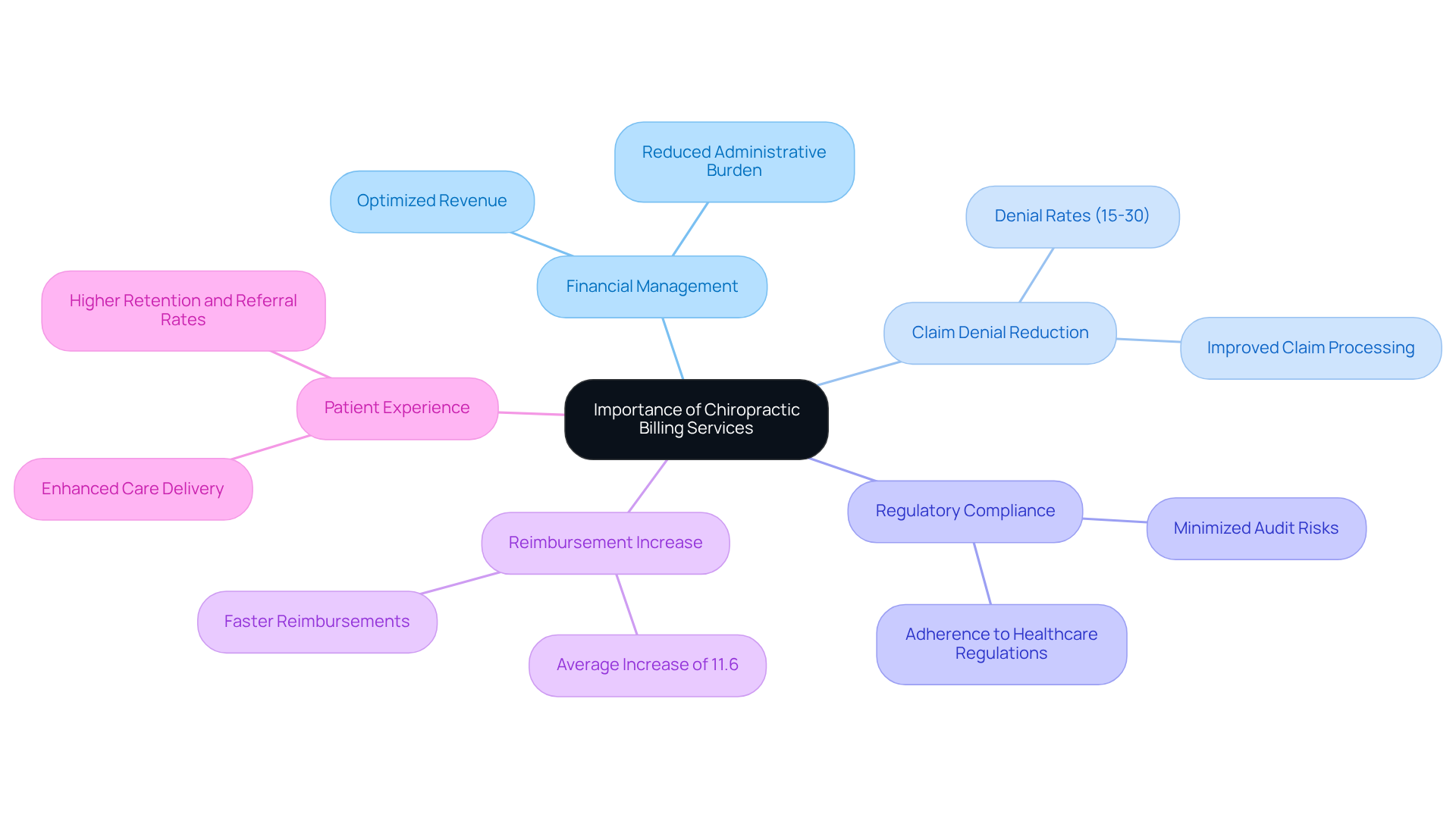
Effective financial management is critical for chiropractors seeking to optimize their revenue and enhance patient care. Chiropractic medical billing services are essential in ensuring that healthcare providers receive equitable remuneration for their offerings. By reducing denials and delays in submissions, these solutions greatly improve a facility’s cash flow. For example, entities that employ specialized invoicing solutions frequently observe a decrease in claim denial rates, which can vary from 15% to 30% for chiropractors in California. This reduction improves cash flow and allows chiropractors to spend more time on patient care rather than administrative tasks, leading to better care delivery.
Precise invoicing methods are crucial for adherence to healthcare regulations, thus minimizing the likelihood of audits and penalties. In 2026, the significance of these offerings is highlighted by the fact that organizations utilizing professional reimbursement support can experience an average rise in reimbursements of 11.6%. This statistic clearly illustrates how outsourcing financial functions can significantly boost reimbursements, as prompt reimbursements improve care delivery and enhance patient satisfaction.
Furthermore, effective invoicing processes enhance a practice’s reputation in a competitive healthcare landscape. By ensuring that claims are processed swiftly and accurately, chiropractic medical billing services not only enhance financial performance but also promote a positive patient experience, ultimately resulting in higher retention and referral rates. The integration of specialized financial solutions, particularly those offered by Healthcare Partners Consulting & Billing, LLC (HPC), emphasizes a compliance-first approach and reflects their veteran-owned status and 39 years of experience in medical and mental health financial management. This strategic investment is crucial for practices aiming to optimize their operations and focus on delivering exceptional patient care. Investing in specialized financial solutions is not just a choice; it is a necessity for practices aiming to thrive in a competitive healthcare environment.
Explore Unique Characteristics of Chiropractic Billing
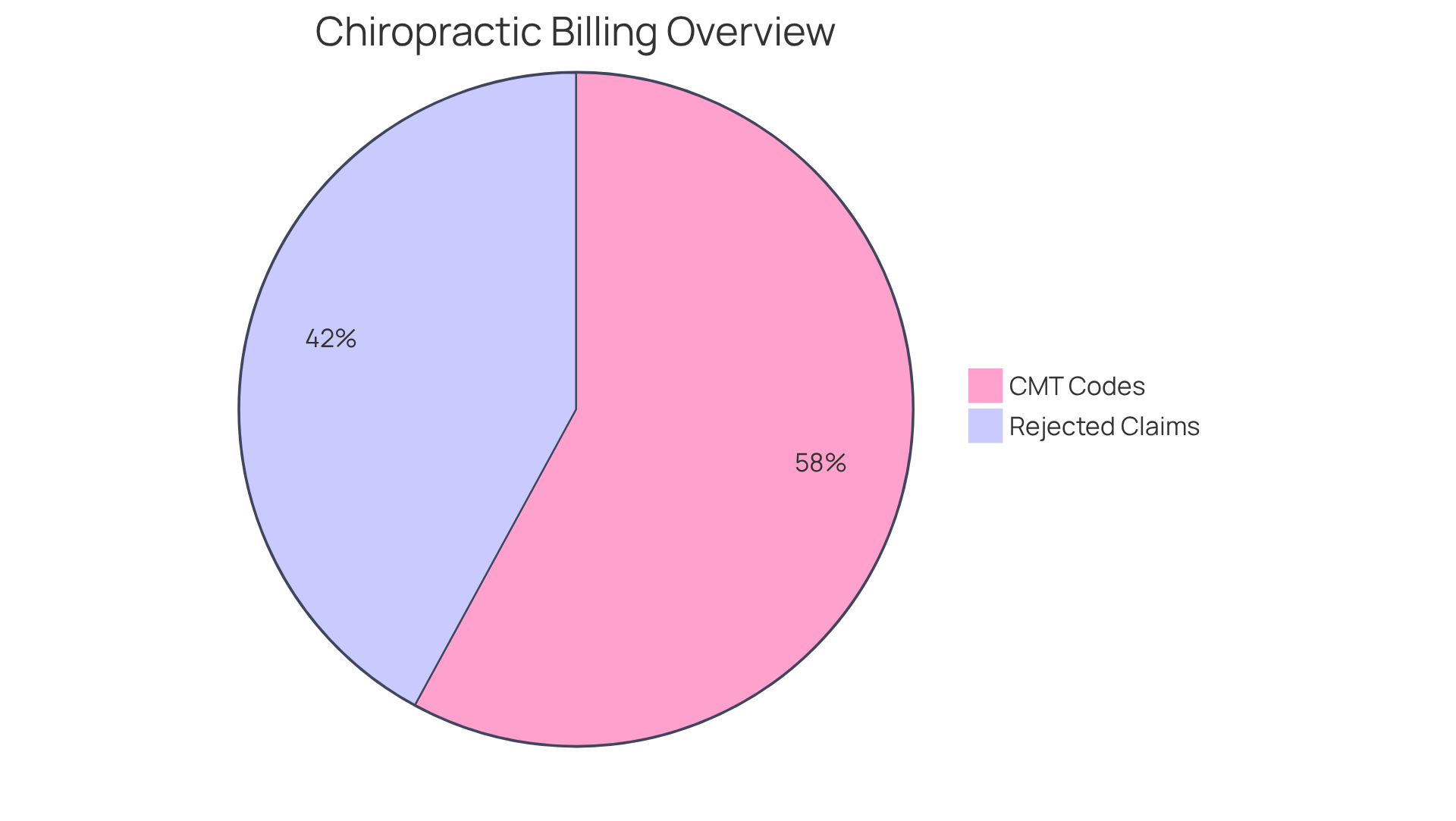
Chiropractic reimbursement presents unique challenges due to its dependence on specific coding systems, particularly the Current Procedural Terminology (CPT) codes that relate to spinal manipulation and other chiropractic services. Unlike general medical billing, chiropractic billing necessitates meticulous documentation to substantiate the medical necessity of treatments, especially for insurance reimbursements. For instance, the most common CPT code grouping in chiropractic settings is chiropractic manipulative therapy (CMT), which represents 42.7% of all CPT codes utilized. This underscores the necessity for accurate coding to prevent denials, as 31% of Medicare submissions are rejected due to missing modifiers.
Moreover, navigating the complex landscape of payer-specific guidelines can be daunting for chiropractors, as these guidelines vary significantly among insurance companies. A study highlights this complexity, revealing that comprehensive documentation of specific functional limitations leads to 42% fewer denials. Such detailed documentation not only supports successful claims but also demonstrates clinical reasoning, safeguarding practices during audits.
The unique characteristics of chiropractic invoicing extend beyond coding; they encompass a comprehensive understanding of compliance requirements and the regulatory environment. For example, the requirement of obtaining an Advance Beneficiary Notice of Noncoverage (ABN) for maintenance care invoicing illustrates the additional steps chiropractors must take to ensure compliance. As the landscape changes, especially with the introduction of new regulations for remote patient monitoring and AI-assisted solutions in 2026, the significance of specialized financial management becomes increasingly clear for effective management of healthcare operations.
At Healthcare Partners Consulting & Billing, LLC (HPC), a veteran-owned organization with 39 years of expertise, we empower chiropractic professionals by streamlining chiropractic medical billing services, allowing practitioners to focus on patient care. We customize our chiropractic medical billing services to address the unique challenges chiropractors face, including optimizing patient statements and effectively managing underpayments, unprocessed submissions, and aging submissions. With our deep understanding of payer behavior and a compliance-first approach, we ensure that your practice remains efficient and compliant, ultimately enhancing patient care and practice efficiency. As regulations evolve, the ability to navigate these complexities will determine the financial health of chiropractic practices.
Identify Common Challenges in Chiropractic Billing
Chiropractic billing presents significant challenges, primarily characterized by high denial rates and complex coding requirements. In 2026, the primary reason for chiropractic denials is missing or insufficient medical necessity, which highlights the significance of clear evidence of active care and measurable progress. Providers spend approximately $19.7 billion each year trying to overturn denied claims, underscoring the financial implications of these challenges.
Many chiropractors find it challenging to ensure that their invoicing accurately reflects the services provided. This often leads to disputes with insurance companies, complicating the reimbursement process. The evolving healthcare regulations further complicate matters, as organizations must continuously update their billing methods to remain compliant. For instance, the 2026 CPT code set introduces 288 new codes, necessitating that clinics adapt their documentation and coding strategies accordingly.
These complexities often lead to delayed payments and heavier administrative workloads. A proactive strategy, such as verifying patient insurance information every 30 days and confirming payer ID at check-in, can significantly decrease denial rates. Furthermore, approaches that strategically challenge denials and provide supporting clinical information often experience a higher success rate in overturning prior authorization denials.
Case studies illustrate that clinics adopting disciplined approaches to prior authorization and denial management experience significant operational improvements. By tracking denial patterns and implementing structured workflows, organizations can enhance their claim acceptance rates and ultimately improve their revenue performance. This necessity for specialized billing services is essential for practices aiming to enhance operational efficiency and patient care.

Conclusion
Chiropractic practices face significant challenges in managing their financial health, particularly in ensuring fair compensation for services rendered. Chiropractic medical billing services play a crucial role in this process, streamlining billing to enhance revenue and allowing healthcare providers to focus on quality patient care, free from administrative burdens.
Key insights throughout the article highlight the importance of specialized chiropractic billing services. These services address unique challenges such as complex coding requirements, high denial rates, and the need for meticulous documentation. By implementing effective billing strategies, practices can significantly reduce claim denials, improve cash flow, and enhance patient satisfaction. The focus on compliance is crucial for navigating the complexities of chiropractic billing, particularly from experienced providers like Healthcare Partners Consulting & Billing, LLC (HPC).
Investing in chiropractic medical billing services is not merely a financial decision; it is a strategic move that can transform the operational efficiency of practices. As the healthcare landscape continues to evolve, embracing specialized billing solutions will be essential for chiropractors aiming to thrive. Focusing on compliance and expert support helps practices maintain financial stability, allowing them to concentrate on what truly matters: exceptional patient care. For those seeking to optimize their billing processes, reaching out to Healthcare Partners Consulting & Billing, LLC (HPC) can be a pivotal step toward achieving these goals. Contact HPC at info@hpcbilling.com or call 888-517-4992 to explore tailored solutions that empower your practice.
Frequently Asked Questions
What are chiropractic medical billing services?
Chiropractic medical billing services are specialized services that manage the financial processes of chiropractic practices, including coding for procedures, verifying patient insurance eligibility, and managing claim submissions to ensure timely reimbursement.
How do chiropractic medical billing services differ from other medical billing services?
Chiropractic medical billing services are unique due to specific coding requirements and documentation standards that are distinct from other medical fields, necessitating specialized knowledge and expertise.
What challenges do chiropractic practices face in billing and reimbursement?
Chiropractic practices face challenges such as high improper payment rates, primarily due to documentation failures, and the need for accurate coding and verification processes to avoid costly errors.
What trends are shaping chiropractic financial processes in 2026?
Key trends include the integration of AI-driven tools that enhance accuracy in coding and compliance, streamline the revenue cycle, and improve claim acceptance rates while reducing denials.
What is the coverage rate for chiropractic care among commercial health insurance plans?
Approximately 75-80% of commercial health insurance plans include coverage for chiropractic care, highlighting the importance of efficient reimbursement strategies.
How can organized invoicing workflows impact chiropractic practices?
Implementing organized invoicing workflows and comprehensive revenue cycle management solutions can lead to significant improvements in financial performance, including reduced denial rates and better visibility into revenue cycles.
What is the role of Healthcare Partners Consulting & Billing, LLC (HPC) in chiropractic medical billing?
HPC offers tailored service plans to optimize chiropractic medical billing services and payment workflows, focusing on enhancing revenue and minimizing denials, backed by 39 years of experience in the field.