
Introduction
The role of medical credentialing specialists is critical to ensuring patient safety and compliance in healthcare. By meticulously verifying the qualifications of medical providers, these specialists uphold regulatory standards and empower healthcare organizations to focus on delivering quality patient care. Credentialing specialists must adapt to increasing regulatory demands while prioritizing patient safety. This article examines the essential functions, responsibilities, and skills of medical credentialing specialists, emphasizing their critical impact on the healthcare system.
Define the Role of a Medical Credentialing Specialist
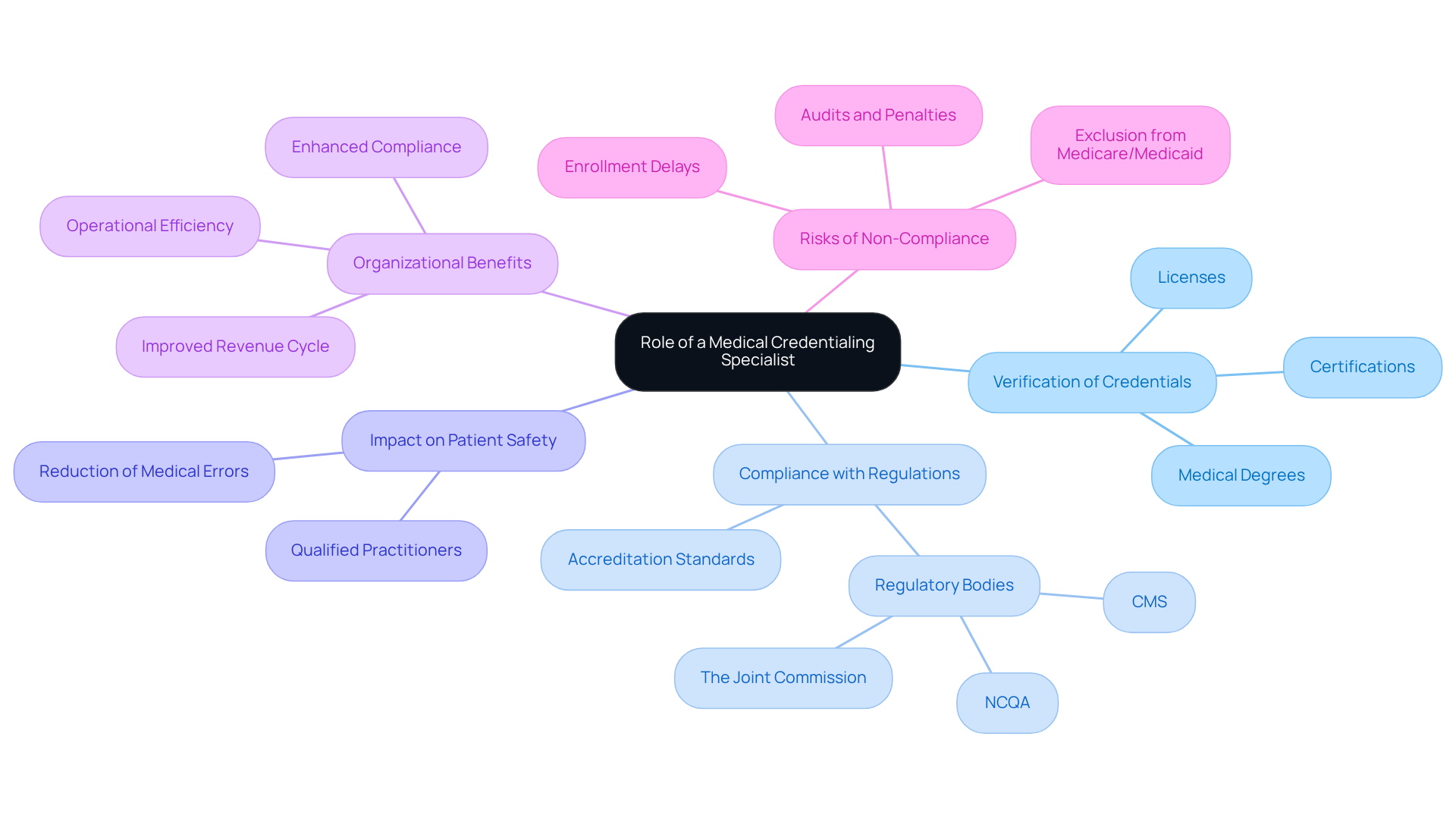
The role of a medical credentialing specialist is crucial in ensuring that the qualifications and credentials of medical providers are thoroughly verified. This professional verifies essential documents, including medical degrees, licenses, and certifications, to ensure compliance with regulatory and accrediting bodies. Their work is vital for maintaining the integrity and safety of medical services, as it protects patients by ensuring they receive care from qualified practitioners. In 2026, the demand for specialists in certification has risen due to increased regulatory oversight and the complexities of insurance networks, underscoring their critical role in navigating these complexities.
At Healthcare Partners Consulting & Billing, LLC (HPC), we recognize that the process of verifying qualifications is not solely about adherence to regulations; it is about optimizing administrative tasks to enable providers to focus on patient care. Adopting structured verification frameworks helps us standardize practices and minimize inconsistencies that might lead to payer denials or risks to patient safety. Organizations that acknowledge the strategic significance of certifying professionals tend to develop stronger programs, enhancing compliance and operational efficiency.
Without medical credentialing specialists, medical organizations face risks that compromise service integrity and patient safety. Their expertise is essential for ensuring that medical practices operate smoothly and effectively, ultimately contributing to better patient outcomes. As a veteran-owned company with 39 years of experience specializing in medical and mental health billing and practice management services nationwide, HPC is committed to a compliance-first approach that prioritizes the needs of behavioral, mental health, and integrated care practices.
Explore Key Responsibilities of Medical Credentialing Specialists
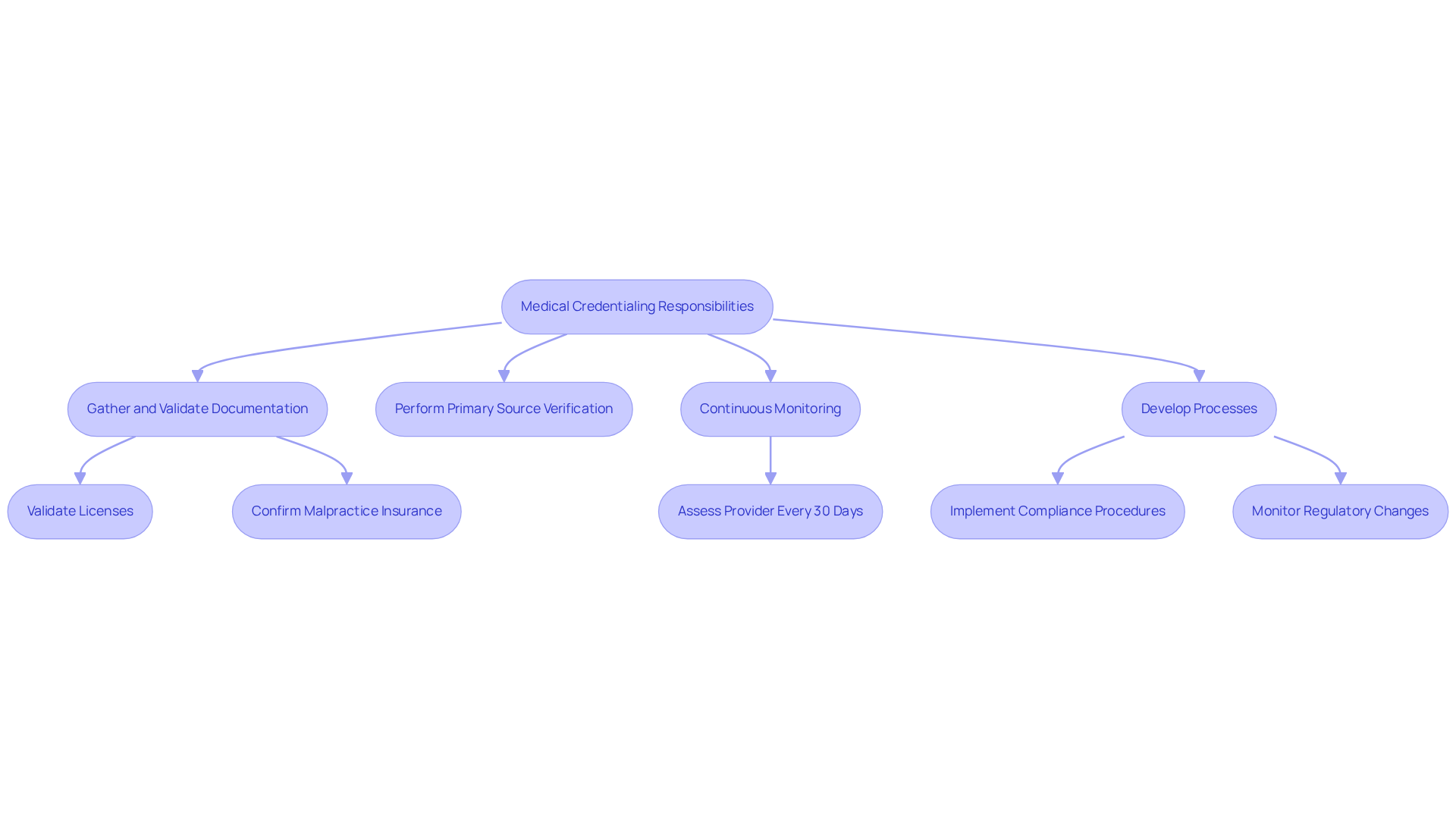
Medical credentialing specialists are essential to the healthcare system, ensuring that healthcare providers meet rigorous qualification standards. They gather and validate essential documentation, including licenses, certifications, and malpractice insurance. This documentation is crucial for compliance with federal, state, and local regulations. Credentialing specialists perform primary source verification, confirming credentials directly with issuing organizations, which is vital for maintaining the integrity of the verification process.
In 2026, the landscape of provider verification is changing significantly. Organizations will be required to assess every provider every 30 days for regulatory issues, including license status and malpractice insurance validation, as mandated by the NCQA starting July 1, 2025. This shift emphasizes the importance of continuous monitoring to prevent lapses that could jeopardize patient safety and organizational compliance. Verification specialists are also responsible for developing and implementing processes and procedures that align with the latest regulatory standards.
Statistics show that healthcare organizations with specialized verification departments process applications 35% faster than those that distribute these tasks among general administrative staff. Furthermore, the typical expense to verify a single provider ranges from $200 to $400, highlighting a considerable operational cost associated with the verification process. Credentialing errors can lead to substantial financial losses, with hospitals facing an estimated $1.2 million annually in denied claims due to such mistakes. This underscores the urgent need for meticulous verification processes to avoid costly errors.
Case studies illustrate the critical nature of these responsibilities. For example, recent changes in state Medicaid programs, such as California’s implementation of real-time primary source checks and Texas’s heightened documentation requirements, necessitate that specialists uphold strict documentation to prevent immediate payer rejections. Moreover, the growth of the Interstate Medical Licensure Compact to 40 states in 2026 enables quicker multi-state licensing, further highlighting the necessity for specialists to adapt to changing regulatory demands.
Ultimately, the meticulous attention to detail by medical credentialing specialists is vital for safeguarding patient safety and ensuring regulatory compliance. This diligence directly contributes to the operational success of healthcare organizations.
Understand the Importance of Credentialing in Healthcare
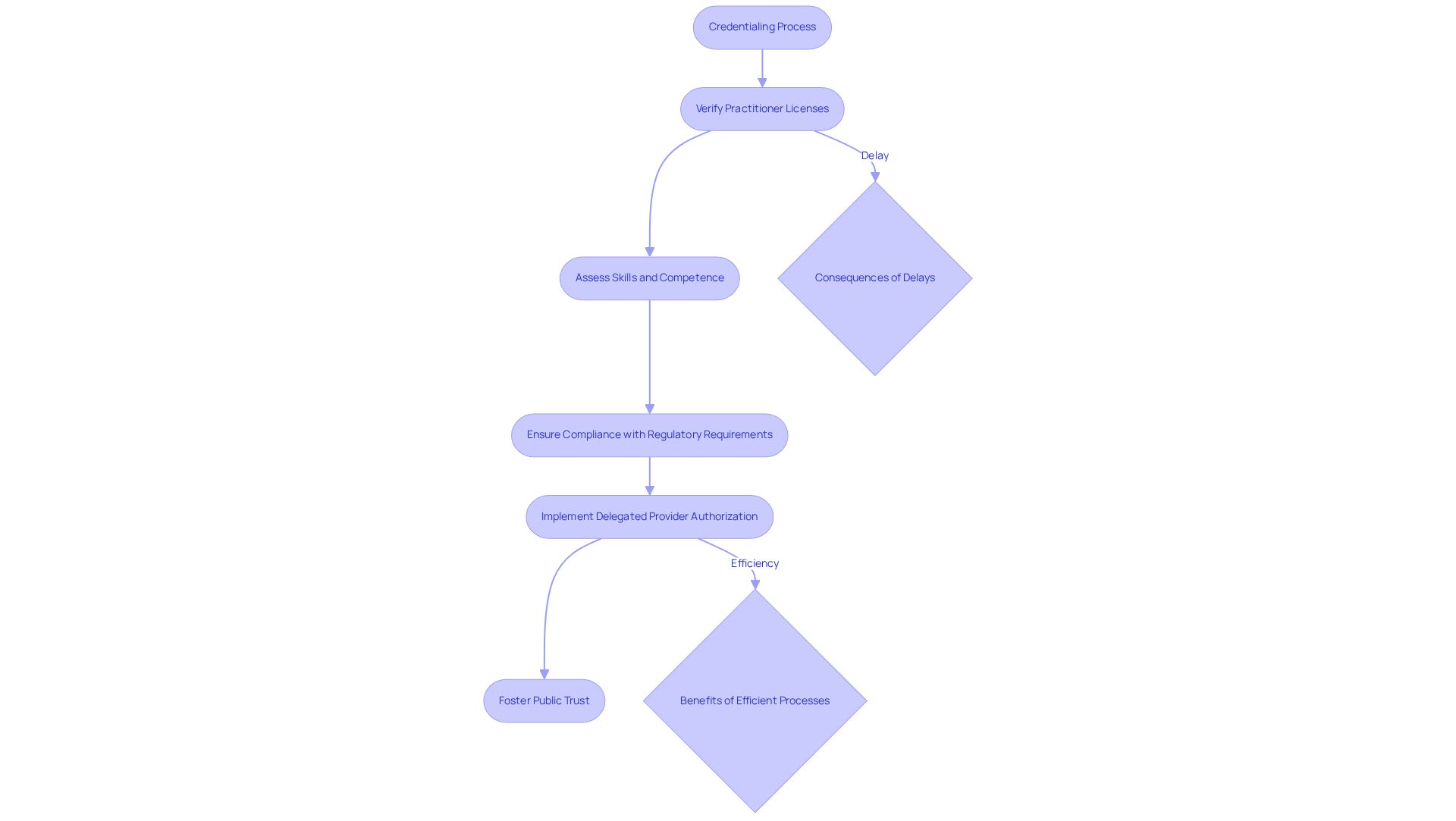
Credentialing is not just a formality; it is a critical process that underpins patient safety and organizational compliance. This process safeguards patients and is crucial for organizations to maintain compliance with stringent regulatory requirements. By confirming that practitioners are licensed and skilled, credentialing significantly reduces the risk of malpractice, thereby enhancing overall patient safety. As regulatory bodies enforce stricter verification timelines, such as the NCQA’s 90-day primary source verification requirement, the significance of effective qualification processes becomes even more evident.
Furthermore, the process of verifying qualifications fosters public trust in the healthcare system by ensuring that only competent individuals are allowed to practice. This trust is crucial for the overall quality of care provided to patients. For example, case studies have demonstrated that delayed verification processes can result in substantial revenue losses for clinics, highlighting the necessity for streamlined operations. Without timely credentialing, organizations risk operational disruptions and financial setbacks. Implementing delegated provider authorization has proven to be a game-changer, allowing organizations to expedite onboarding and improve operational efficiency.
At HPC, we recognize that every practice has its own unique requirements. That’s why we provide personalized consultations to assist in identifying the optimal administrative solutions for your practice. During a 30-minute call, we will outline your current workflow and direct you toward the services that will create the most significant impact quickly, ensuring that your verification tasks are as efficient as possible.
In 2026, as medical licensure and workforce requirements continue to change, the function of credential verification becomes even more essential. Organizations that prioritize effective verification processes not only enhance their adherence to regulations but also position themselves for sustainable growth in a competitive environment. Failing to implement these measures can hinder growth and compliance. Ultimately, the verification process serves as a safeguard, ensuring that medical providers meet established standards and are held accountable for their practice, which is vital for delivering exceptional patient care. In a rapidly evolving healthcare landscape, organizations that neglect credential verification may find themselves at a competitive disadvantage.
Identify Essential Skills and Qualifications for Credentialing Specialists
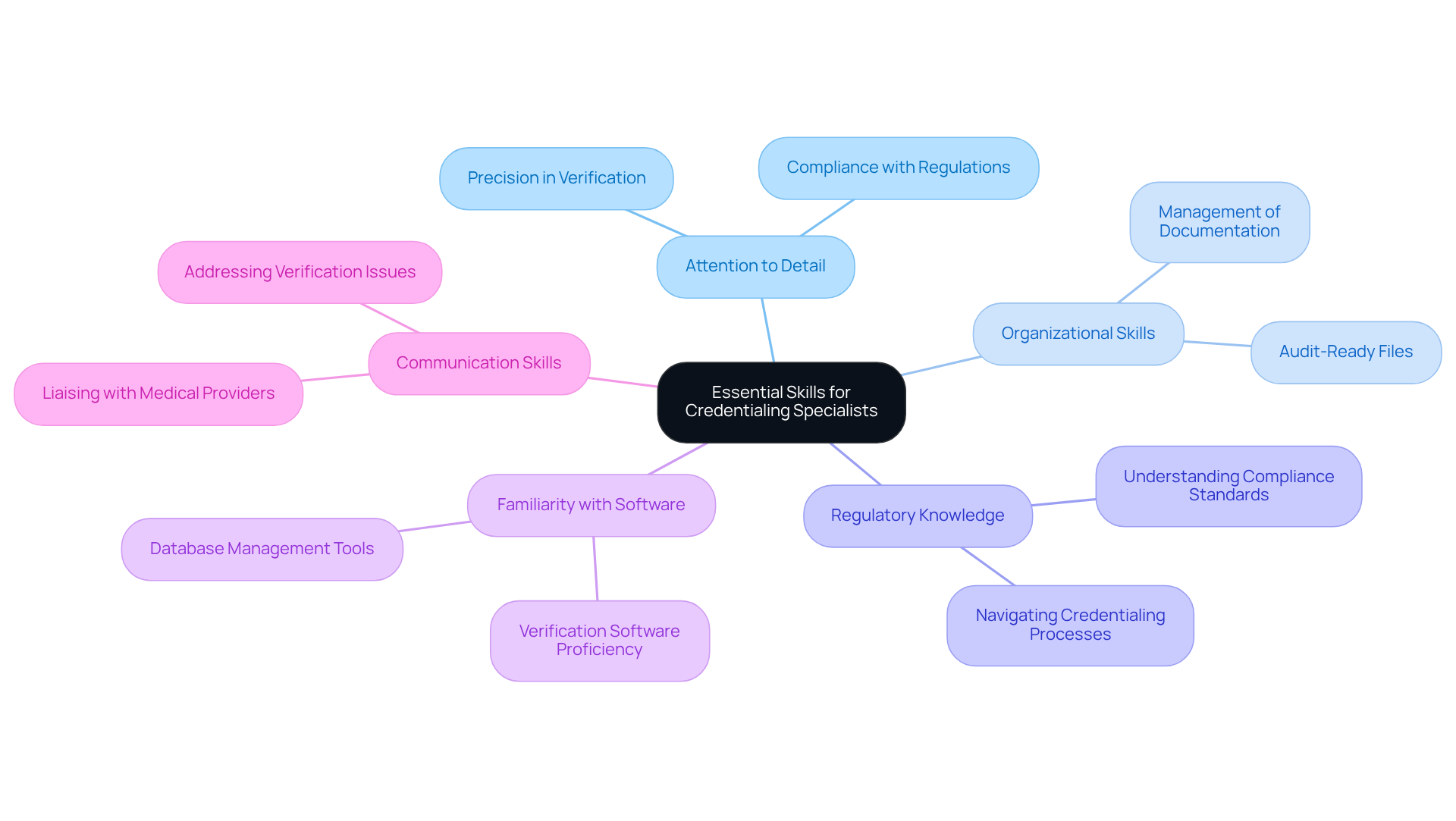
To excel as a medical credentialing specialist, one must master a combination of technical expertise and interpersonal skills. Key competencies include:
- Attention to Detail: Precision is critical in verifying provider qualifications and ensuring compliance with healthcare regulations.
- Organizational Skills: Effective management of documentation and records is essential for maintaining accurate and audit-ready files.
- Regulatory Knowledge: A comprehensive grasp of compliance standards in the medical field is essential to navigate the intricate process of obtaining qualifications.
- Familiarity with Software for Verification: Proficiency in utilizing verification software and database management tools is essential for effective record-keeping and automation of workflows.
- Communication Skills: Strong communication abilities are essential for liaising with medical providers and addressing any issues that may arise during the verification process.
Having a background in medical administration or a related field is advantageous. Additionally, earning certifications like the Certified Provider Credentialing Specialist (CPCS) can greatly improve a medical credentialing specialist’s qualifications and career opportunities. The average salary for a Credentialing Specialist in the United States is approximately $25.31 per hour, based on 2,000 salaries from job postings on Indeed, last updated on August 17, 2026, with salaries ranging from $17.67 to $36.25 per hour, depending on experience and location.
Case studies indicate that organizations investing in specialized certification staff see measurable benefits, including improved efficiency and compliance. As the regulatory environment continues to change, with 76% of healthcare organizations depending on manual methods for at least some part of their verification workflow, the need for skilled specialists in this area is anticipated to increase. Furthermore, the trend towards ongoing credential monitoring is becoming increasingly essential in the verification process. Thus, the evolving landscape of healthcare credentialing underscores the critical need for skilled medical credentialing specialists who are dedicated to maintaining compliance and accuracy.
Conclusion
In an era where healthcare compliance is increasingly scrutinized, the role of a medical credentialing specialist emerges as a critical factor in ensuring provider qualifications. This position serves as a cornerstone for verifying that medical providers meet necessary qualifications and compliance standards. By meticulously verifying credentials, these specialists uphold regulatory requirements while enhancing patient safety and trust in healthcare services. Their work empowers healthcare providers to focus on what truly matters – delivering quality patient care – by alleviating the administrative burdens associated with credentialing processes.
Throughout the article, key responsibilities of medical credentialing specialists have been highlighted, including the verification of licenses, certifications, and ongoing compliance with evolving regulatory standards. The importance of their role is underscored by the increasing demand for rigorous credentialing practices, particularly in light of new regulations that require continuous monitoring of provider qualifications. As demonstrated, organizations that prioritize credentialing not only mitigate risks associated with malpractice but also position themselves for operational success and financial stability.
However, the complexities of regulatory compliance can pose significant challenges for healthcare organizations. In today’s fast-evolving healthcare landscape, effective credentialing plays a pivotal role that organizations must recognize. It is essential for healthcare organizations to invest in skilled credentialing specialists who can navigate these complexities and ensure that only qualified practitioners provide care. This commitment not only safeguards patient welfare but also enhances the overall quality of healthcare delivery.
For practices seeking to optimize their credentialing processes, engaging with experts like Healthcare Partners Consulting & Billing, LLC (HPC) can provide tailored solutions that empower providers and streamline operations. For further assistance, reach out at info@hpcbilling.com or call 888-517-4992 to explore how HPC can support your practice in achieving compliance and operational excellence. Ultimately, the investment in credentialing expertise is not merely a regulatory obligation; it is a strategic imperative that shapes the future of healthcare delivery.
Frequently Asked Questions
What is the role of a medical credentialing specialist?
A medical credentialing specialist is responsible for verifying the qualifications and credentials of medical providers, including medical degrees, licenses, and certifications, to ensure compliance with regulatory and accrediting bodies.
Why is the work of medical credentialing specialists important?
Their work is vital for maintaining the integrity and safety of medical services, as it protects patients by ensuring they receive care from qualified practitioners.
What factors have increased the demand for medical credentialing specialists?
The demand for specialists has risen due to increased regulatory oversight and the complexities of insurance networks.
How does Healthcare Partners Consulting & Billing, LLC (HPC) approach the credentialing process?
HPC adopts structured verification frameworks to standardize practices, minimize inconsistencies, and optimize administrative tasks, allowing providers to focus on patient care.
What risks do medical organizations face without credentialing specialists?
Without medical credentialing specialists, organizations may face risks that compromise service integrity and patient safety, potentially leading to payer denials and negative patient outcomes.
What is the commitment of Healthcare Partners Consulting & Billing, LLC (HPC) regarding compliance?
HPC is committed to a compliance-first approach that prioritizes the needs of behavioral, mental health, and integrated care practices, leveraging their 39 years of experience in medical and mental health billing and practice management services.