

Introduction
The role of professional credential services in healthcare is pivotal for clinics seeking to enhance both patient care and operational efficiency. These services not only verify the qualifications of healthcare providers but also ensure compliance with regulatory standards, which is essential for maintaining trust and safety in patient interactions. Clinics often struggle with the intricate nature of credentialing processes, which can hinder their operational efficiency. Successfully addressing these challenges can lead to enhanced patient access and improved operational outcomes.
Define Professional Credential Service
Professional credential service is vital for ensuring healthcare providers meet essential qualifications and standards. This process verifies that practitioners meet the standards required for safe and effective care. Verification safeguards patient welfare and enhances care quality. In the realm of mental health clinics, a professional credential service is essential for verifying that therapists, counselors, and psychiatrists have the necessary licenses and certifications to practice.
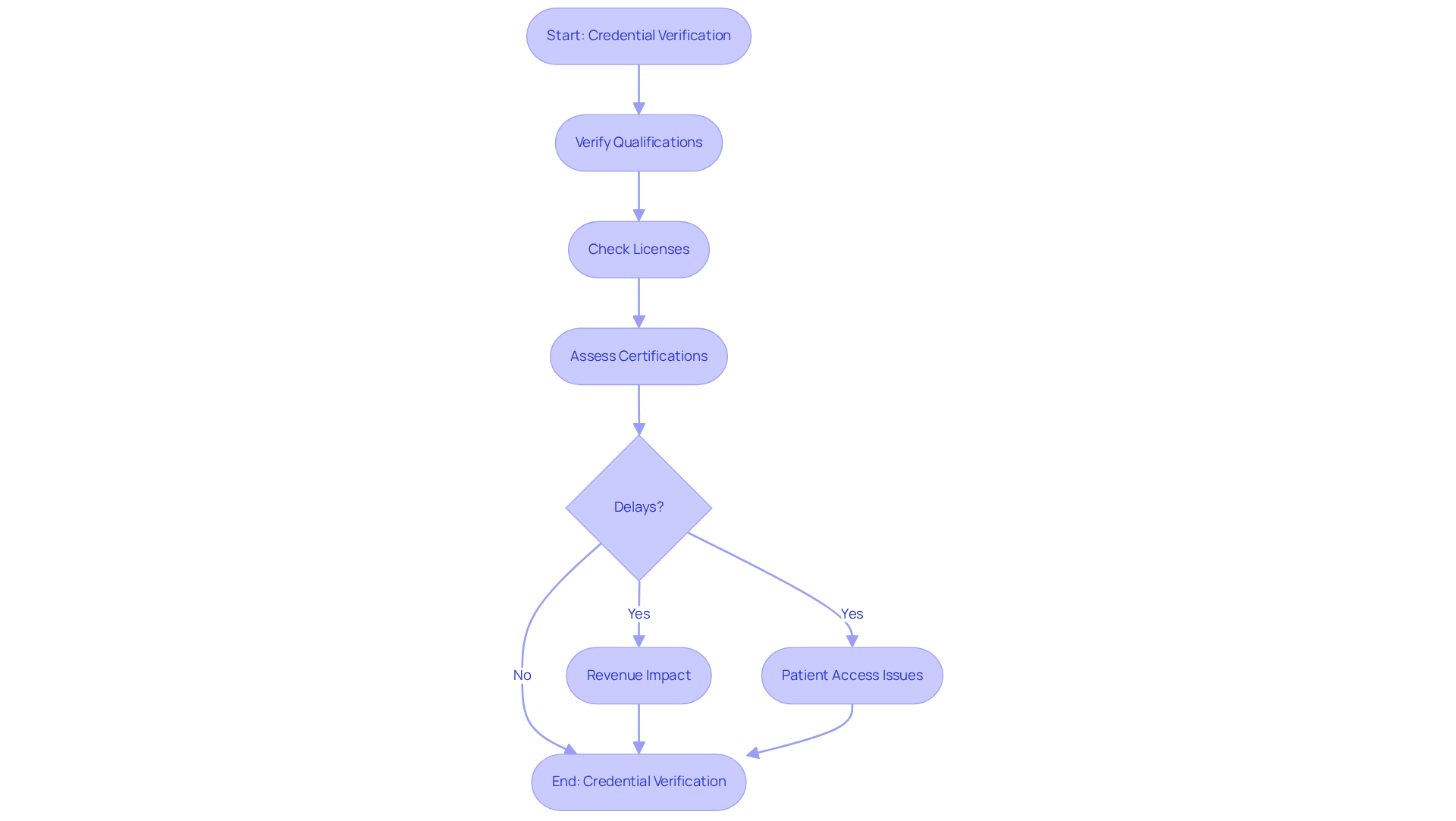
Statistics indicate that 74% of healthcare organizations recognize delays in the verification processes as a barrier to revenue optimization for healthcare professionals. The typical verification timeline can span from 90 to 180 days, resulting in significant delays in onboarding professionals and restricting patient access to care. Furthermore, organizations with streamlined verification systems encounter 30% fewer claim denials associated with enrollment issues, highlighting the significance of effective management.
Case studies demonstrate the impact of professional credential service. For example, organizations that collaborate with specialized accreditation agencies frequently observe enhanced success rates in their applications, as these agencies assist in minimizing errors and optimizing the process. By utilizing automated solutions, medical organizations can decrease credentialing turnaround times by an average of three weeks per practitioner, significantly improving operational efficiency.
Ultimately, the efficiency of credentialing processes directly influences the quality of care and financial viability of healthcare practices.
Context and Importance in Healthcare
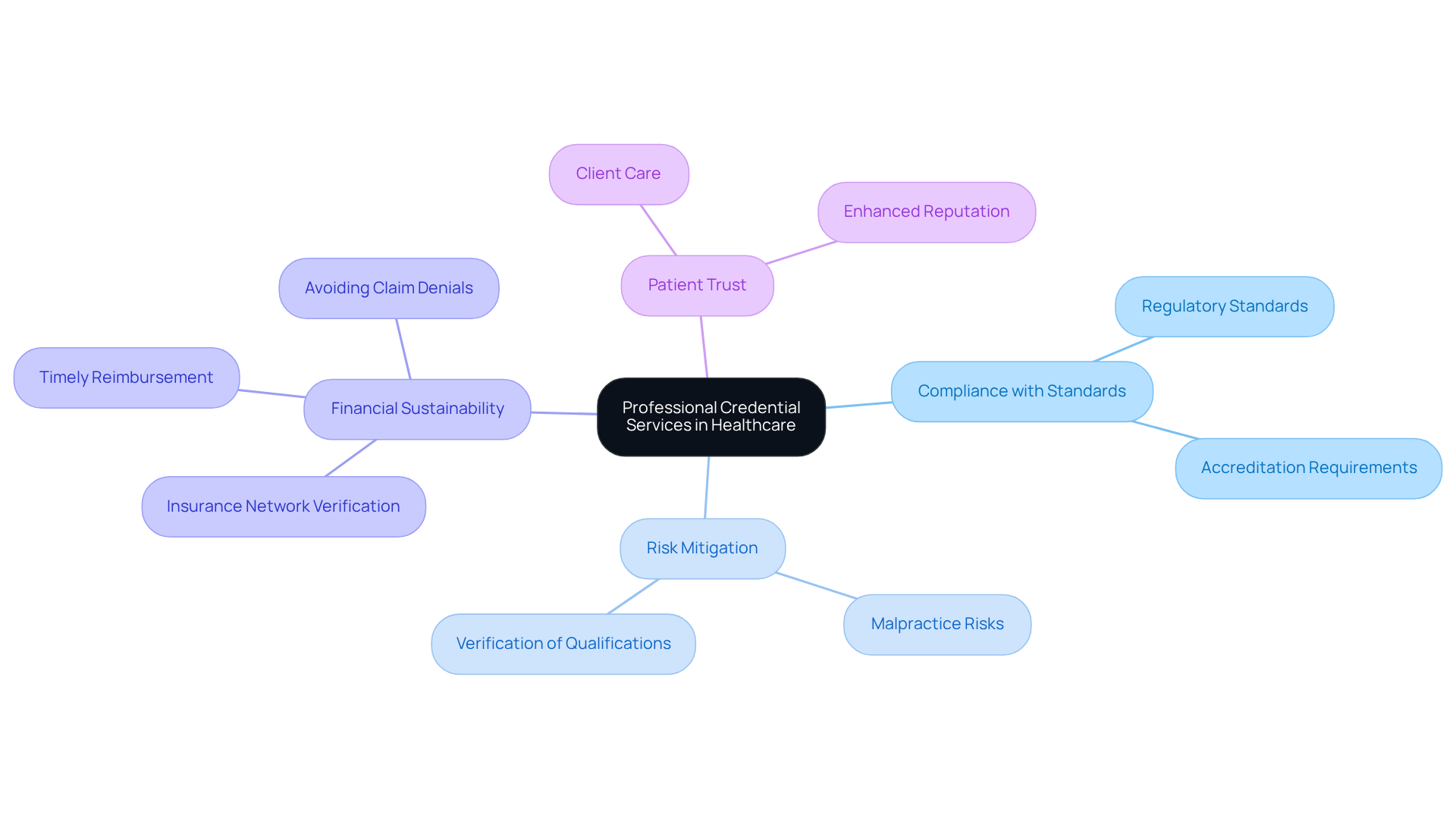
In the healthcare landscape, particularly within mental health clinics, a professional credential service is critical in ensuring provider qualifications. These services, such as a professional credential service, facilitate compliance with regulatory standards and accreditation requirements, which are vital for maintaining operational integrity. In mental health environments, the verification process not only ensures that practitioners are licensed but also affirms their training and experience to effectively manage complex patient needs. This process significantly mitigates risks associated with malpractice, fostering greater patient trust; clients are more inclined to seek care from credentialed professionals.
Furthermore, a professional credential service is vital for effective verification of medical providers seeking to join insurance networks, which is essential for financial sustainability and broadening access to care. Delays in verification can lead to substantial financial strain on practices. They may lose thousands of dollars weekly due to an inability to bill insurers.
As the healthcare landscape changes, especially with the forthcoming 2026 compliance requirements, the significance of efficient verification processes cannot be overstated. To determine the best service for your practice, consider scheduling a 30-minute call with us to discuss your current workflow. Addressing verification challenges is not merely an operational necessity; it is a strategic imperative for enhancing patient care and financial viability.
Origins and Evolution of Credential Services
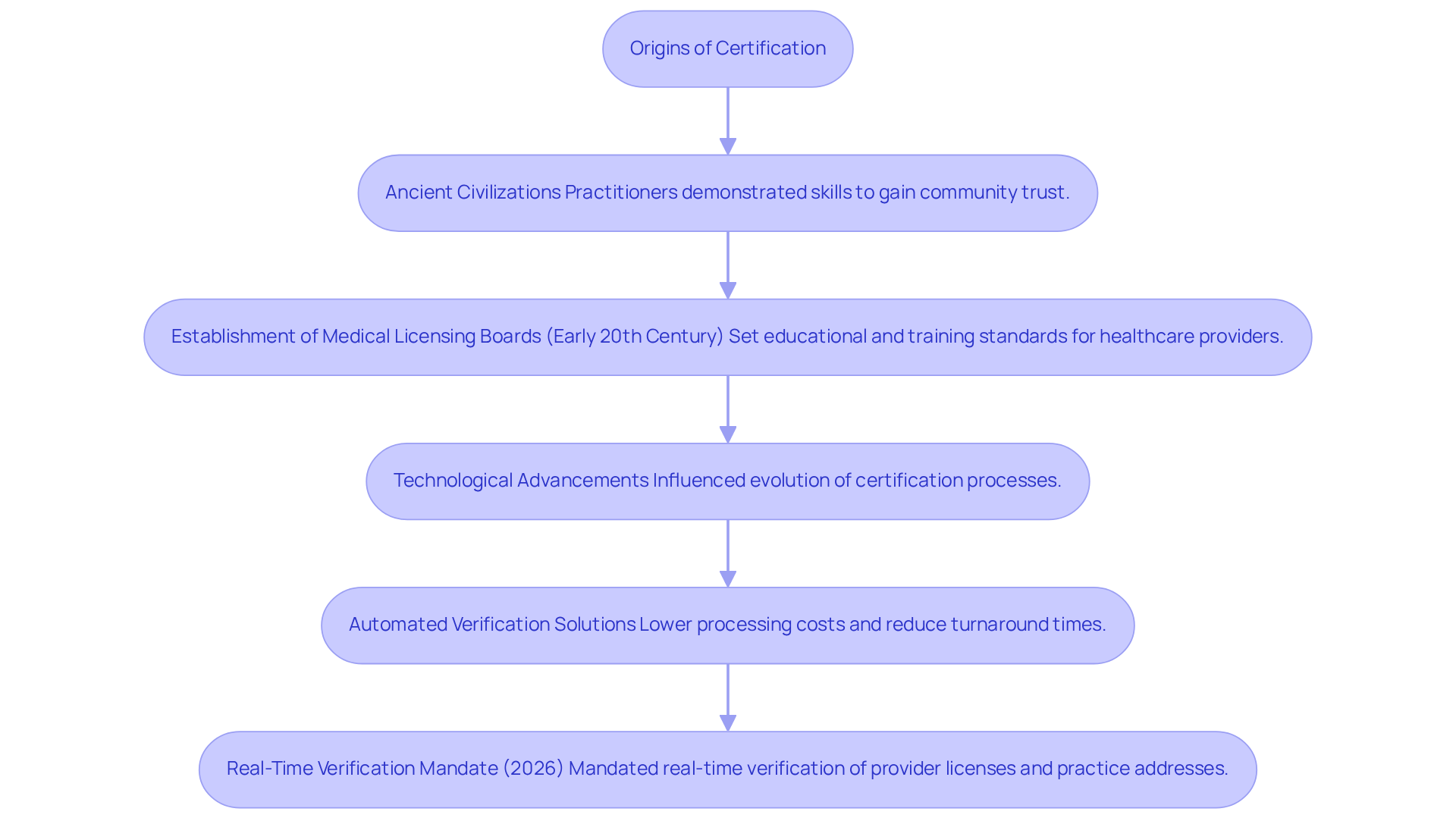
The historical context of certification reveals a longstanding need for trust and accountability in medical practice. The roots of certification can be traced back to ancient civilizations, where practitioners were required to demonstrate their skills and knowledge to gain the trust of their communities. As medical systems advanced, the necessity for structured qualification methods became clear. In the early 20th century, the establishment of medical licensing boards in the United States marked a pivotal moment, as these organizations began to set educational and training standards for healthcare providers. This shift established the foundation for the organized certification processes we observe today.
Technological advancements have significantly influenced the evolution of certification processes in recent years. Contemporary verification services now utilize digital platforms to enhance the collection and validation of practitioner information, ensuring adherence to swiftly evolving medical regulations. For example, automated verification solutions can lower processing expenses by up to 60%, and 63% of medical organizations have indicated shorter turnaround times for verification using these automated systems. Moreover, the transition towards continuous credential monitoring indicates an increasing acknowledgment of the significance of keeping credentials current to avoid lapses that could hinder enrollment and patient care.
As the regulatory environment becomes increasingly intricate, organizations in the medical field face challenges in adapting their verification methods to meet new regulatory standards. In 2026, the Centers for Medicare & Medicaid Services (CMS) mandated real-time verification of provider licenses and practice addresses as part of stricter enrollment processes. This shift necessitates immediate action from organizations to ensure compliance and maintain operational integrity. This evolution underscores the critical role of professional validation in safeguarding patient safety and ensuring quality care. As Hugh Greeley, an expert in professional qualifications and the medical industry, states, ‘The mantra, ‘Do it once, do it well, securely store it, and provide verified current data to all in need,’ is achievable today.’ Ultimately, the commitment to rigorous verification processes is not just a regulatory requirement but a cornerstone of patient trust and safety.
Key Characteristics of Credential Services
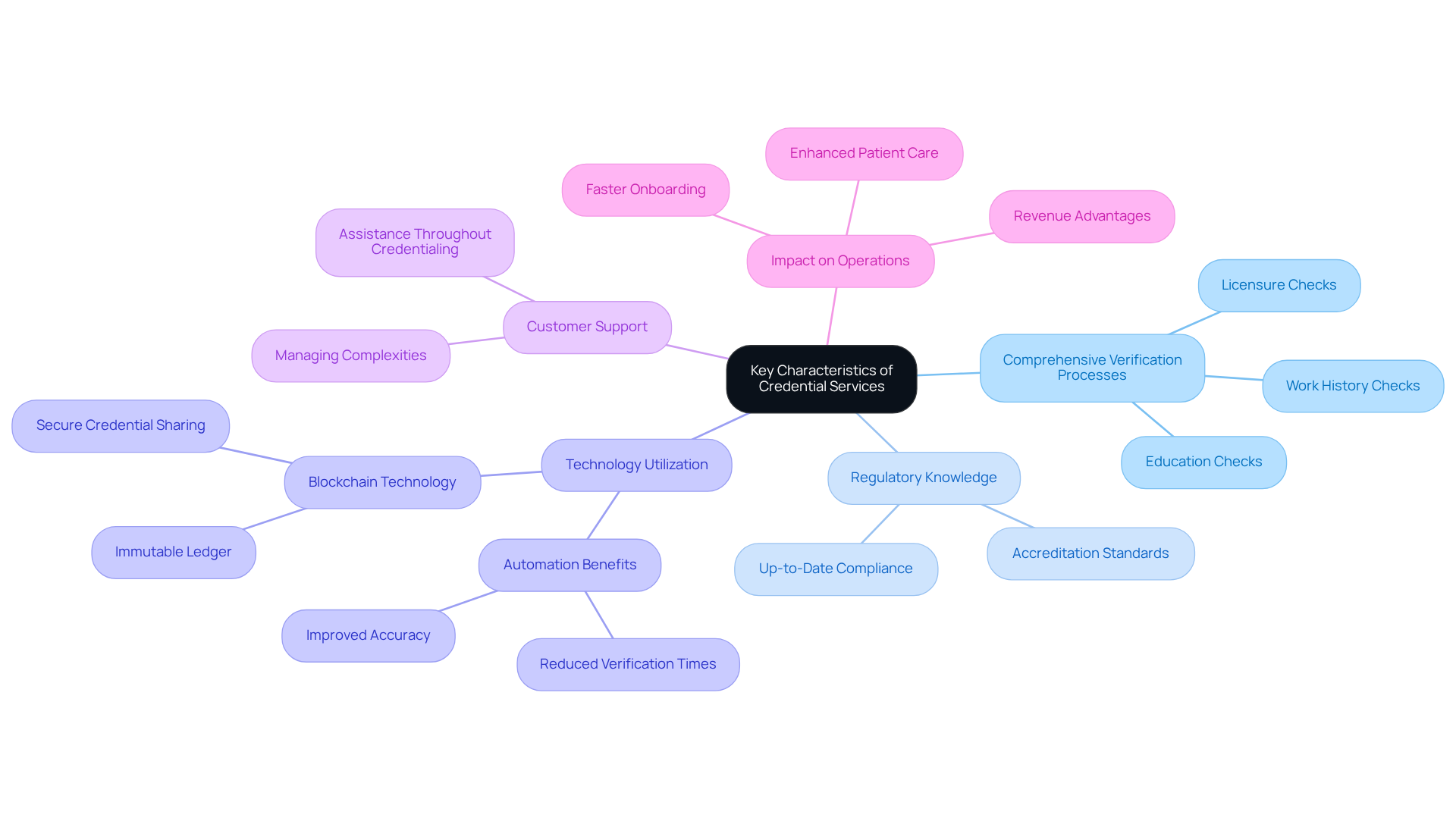
Effective credentialing services, particularly a professional credential service, are defined by their ability to enhance the verification process for healthcare professionals. Firstly, they should offer comprehensive verification processes that include education, training, licensure, and work history checks. This thorough approach ensures that all aspects of a healthcare professional’s qualifications are validated, which is crucial for maintaining patient safety and compliance.
Secondly, a robust verification service will maintain up-to-date knowledge of regulatory requirements and accreditation standards, ensuring compliance for their clients. This knowledge is vital for avoiding potential legal issues and maintaining operational integrity.
Delays in the verification process, which can last from 60 to 120 days, significantly hinder timely onboarding and billing. Services that utilize technology to automate data collection and verification can drastically reduce this timeframe. For instance, organizations using advanced verification technologies have seen an 80% reduction in manual data entry and a 30-40% improvement in accuracy on the first attempt. Automated primary source verification can reduce verification times from weeks to just minutes, resulting in faster onboarding of healthcare professionals and improved revenue flow.
Finally, robust customer support is crucial, as healthcare providers frequently require assistance throughout the qualification journey. Robust verification services from a professional credential service offer essential support to help healthcare providers manage the complexities of credentialing, ensuring a smooth experience for clinics.
Together, these traits enhance a streamlined verification system that enables clinics to concentrate on patient care while ensuring adherence to standards and quality. For instance, Modio Health’s technology has shown how automation can simplify the verification process, enabling organizations to oversee larger groups of practitioners with fewer staff, thereby facilitating scalability and ongoing verification. Additionally, blockchain technology is emerging as a revolutionary tool for credentialing, creating a distributed and immutable ledger of verified credentials that can be securely shared across organizations, reducing fraud and enhancing efficiency. As Dr. Heath emphasizes, “If you can reduce the standard 80 to 120 days to get professionals into a hospital, there’s a significant revenue advantage there.
Examples of Credential Services in Mental Health Clinics
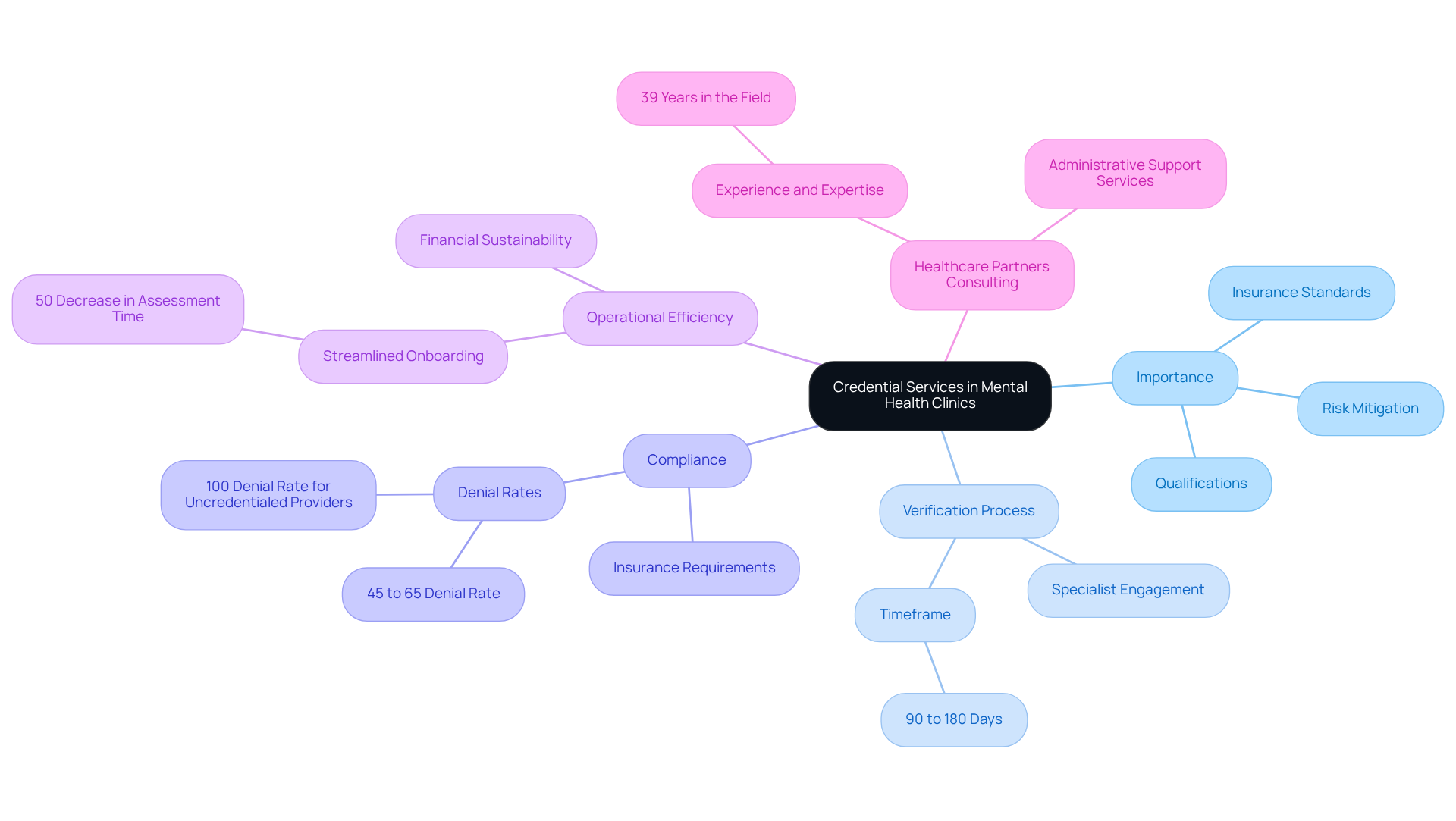
Professional credential service is vital in mental health clinics, ensuring that professionals meet qualifications and adhere to insurance standards. These services typically involve a professional credential service that verifies the educational backgrounds, licenses, and relevant certifications of new therapists prior to their commencement of patient care. For instance, a mental health clinic that collaborated with a verification service saw an impressive 50% decrease in the time needed to assess new practitioners. This streamlined onboarding approach enhanced operational efficiency and improved patient access to care.
Moreover, ongoing compliance with insurance requirements is crucial for clinics to accept third-party reimbursements. Credentialing services help maintain this compliance, which is vital for financial sustainability. Statistics show that incomplete or erroneous data from healthcare professionals can result in a denial rate of 45 to 65%. This high denial rate underscores the critical need for thorough verification. By utilizing a professional credential service, clinics can mitigate risks associated with claim denials and ensure that their providers are properly credentialed.
Additionally, the verification procedure usually requires between 90 to 180 days, depending on the completeness of the application and specific state requirements. This timeframe emphasizes the necessity of engaging specialists who can navigate the complexities of the process efficiently. Successful implementations of verification services not only shield clinics from potential financial losses but also improve the overall quality of care provided to patients.
Healthcare Partners Consulting (HPC), a veteran-owned company with 39 years of experience, offers a quick quiz to assess your mental health practice’s profitability, helping to spot hidden revenue leaks and providing personalized recommendations for improved efficiency and billing accuracy. HPC’s administrative support services, which include a professional credential service, facilitate operational efficiency, enabling clinics to prioritize patient care while navigating credentialing and compliance complexities. Based in Atlanta, Georgia, HPC is dedicated to empowering healthcare providers by removing administrative burdens and enhancing patient care.
Conclusion
In the evolving landscape of healthcare, professional credential services are essential for clinics, especially those specializing in mental health. By ensuring that healthcare providers meet essential qualifications and adhere to regulatory standards, these services not only safeguard patient welfare but also enhance the overall quality of care. Efficient credentialing processes are vital, directly influencing operational integrity and the financial sustainability of healthcare practices.
Throughout the article, key insights highlight the significance of professional credential services in streamlining verification processes, reducing onboarding times, and minimizing claim denials. The historical evolution of credentialing underscores the necessity for structured qualification methods, while advancements in technology have transformed how verification is conducted. With automated solutions and regulatory compliance in place, clinics can prioritize what matters most: exceptional patient care.
In a rapidly changing healthcare environment, the need for effective credentialing services is more pressing than ever. Clinics must prioritize engaging with professional credential services to navigate the complexities of compliance and operational efficiency. This engagement allows clinics to enhance their focus on patient care and improve community health outcomes. For those seeking to enhance their practice’s efficiency and profitability, reaching out to Healthcare Partners Consulting & Billing, LLC (HPC) can provide valuable insights and support tailored to the unique needs of mental health practices. Engaging with expert credentialing services can be the key to unlocking improved patient care and operational success.
Frequently Asked Questions
What is a professional credential service?
A professional credential service verifies that healthcare providers meet essential qualifications and standards necessary for safe and effective care, ensuring that practitioners have the required licenses and certifications to practice.
Why is professional credential service important in healthcare?
It is critical for ensuring provider qualifications, facilitating compliance with regulatory standards, and enhancing patient trust by confirming that practitioners are properly trained and licensed to manage complex patient needs.
How do delays in the verification process affect healthcare organizations?
Delays in verification can hinder revenue optimization, with statistics showing that 74% of healthcare organizations recognize these delays as a barrier. The typical verification timeline can take 90 to 180 days, leading to significant onboarding delays and restricted patient access to care.
What are the benefits of streamlined verification systems?
Organizations with streamlined verification systems experience 30% fewer claim denials related to enrollment issues, which highlights the importance of effective management in the credentialing process.
How can automated solutions impact credentialing turnaround times?
By utilizing automated solutions, medical organizations can reduce credentialing turnaround times by an average of three weeks per practitioner, significantly improving operational efficiency.
What role does professional credential service play in mental health clinics?
In mental health clinics, it ensures that therapists, counselors, and psychiatrists are properly licensed and qualified, which is essential for managing complex patient needs and mitigating malpractice risks.
How does verification affect financial sustainability for healthcare practices?
Effective verification is vital for medical providers seeking to join insurance networks. Delays can lead to substantial financial strain, potentially resulting in thousands of dollars lost weekly due to an inability to bill insurers.
What upcoming changes may impact the importance of verification processes in healthcare?
The forthcoming 2026 compliance requirements will increase the significance of efficient verification processes, making it essential for healthcare practices to address verification challenges as a strategic imperative for enhancing patient care and financial viability.