

Introduction
The healthcare financial landscape is becoming increasingly intricate, presenting challenges for providers in securing timely reimbursements amid complex billing processes. Revenue cycle specialists play a crucial role in this environment, focusing on optimizing financial workflows and ensuring compliance to enhance patient care. As technology and regulations evolve rapidly, specialists face significant challenges in keeping pace, and without effective adaptation, financial stability may falter, ultimately impacting patient care.
Define the Role of a Revenue Cycle Specialist
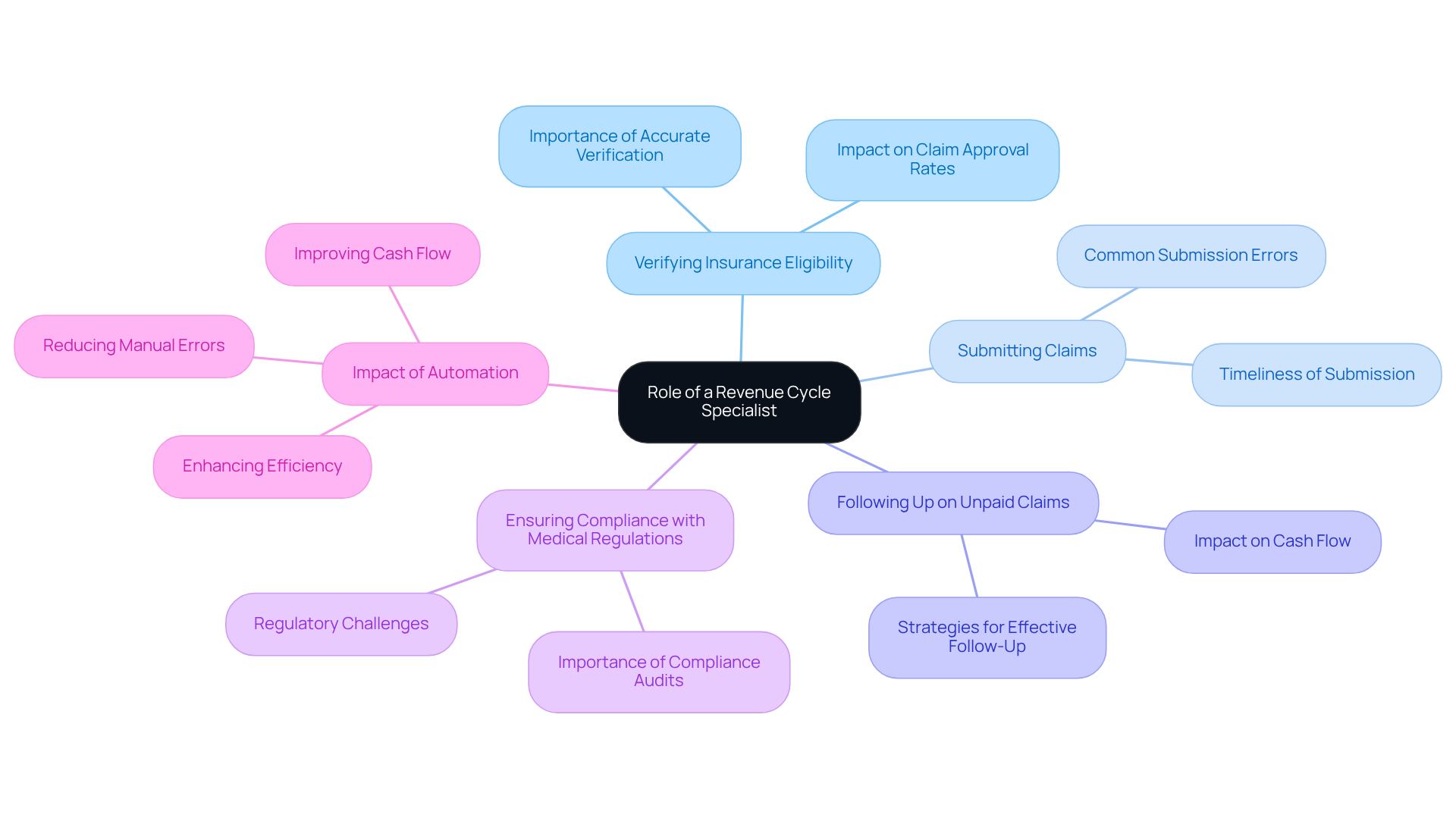
The role of a revenue cycle specialist is pivotal in ensuring the financial health of medical organizations amidst complex billing processes. They oversee billing, collections, and income processes that guarantee prompt and precise reimbursement for services rendered. Their responsibilities include:
- Verifying insurance eligibility
- Submitting claims
- Following up on unpaid claims
- Ensuring compliance with medical regulations
The role has evolved to incorporate advanced technology and data-driven approaches, focusing on automation to enhance efficiency and reduce manual errors. Organizations that have implemented automation in their financial cycle processes report improved cash flow and decreased days in accounts receivable.
Case studies emphasize that effective management of these processes not only stabilizes revenue but also allows providers to prioritize patient care. As the medical landscape evolves, the role of a revenue cycle specialist becomes increasingly clear in navigating the complexities of billing and reimbursement, ultimately supporting the financial well-being of medical organizations.
Furthermore, as a veteran-owned organization with 39 years of experience, Healthcare Partners Consulting & Billing, LLC (HPC) highlights its dedication to empowering providers by reducing administrative burdens. By providing a quick quiz to assess profitability, HPC ensures that providers can focus on what matters most – their patients.
Contextualize the Importance of Revenue Cycle Specialists in Healthcare
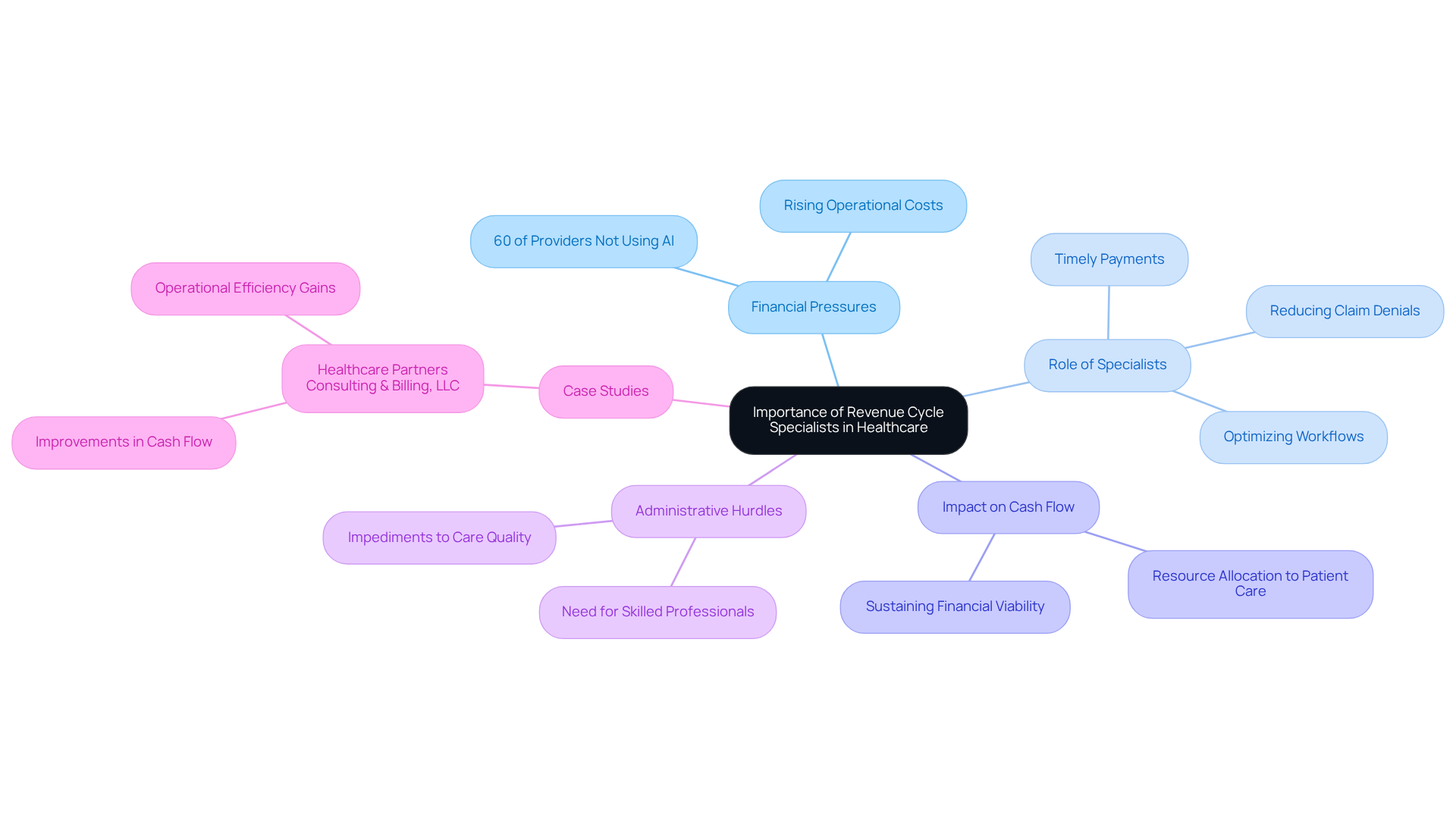
As financial pressures mount and regulatory complexities increase, medical providers struggle to maintain operational viability. The role of a revenue cycle specialist is crucial in addressing these challenges. Their expertise ensures that medical providers receive timely payments, which is vital for sustaining cash flow. In an environment where administrative hurdles can impede care quality, these specialists optimize workflows, reduce claim denials, and enhance overall financial integrity.
Significantly, a recent report highlighted that nearly 60% of medical providers have yet to adopt AI or automation in their financial cycle management. This underscores the necessity for skilled professionals to effectively navigate these complexities. Enhancing the financial cycle allows medical providers to allocate more resources to patient care, leading to improved outcomes and satisfaction.
Their strategic involvement is increasingly recognized as a crucial asset in adapting to the evolving healthcare landscape. Case studies demonstrate that organizations employing dedicated revenue cycle teams, such as those at Healthcare Partners Consulting & Billing, LLC (HPC), have seen significant improvements in cash flow and operational efficiency. With 39 years of experience and a veteran-owned status, HPC is dedicated to delivering customized administrative support services that enable healthcare professionals to concentrate on what matters most: quality care.
The absence of skilled revenue cycle specialists could jeopardize not only financial stability but also the quality of care delivered to patients.
Outline Key Responsibilities and Skills of Revenue Cycle Specialists
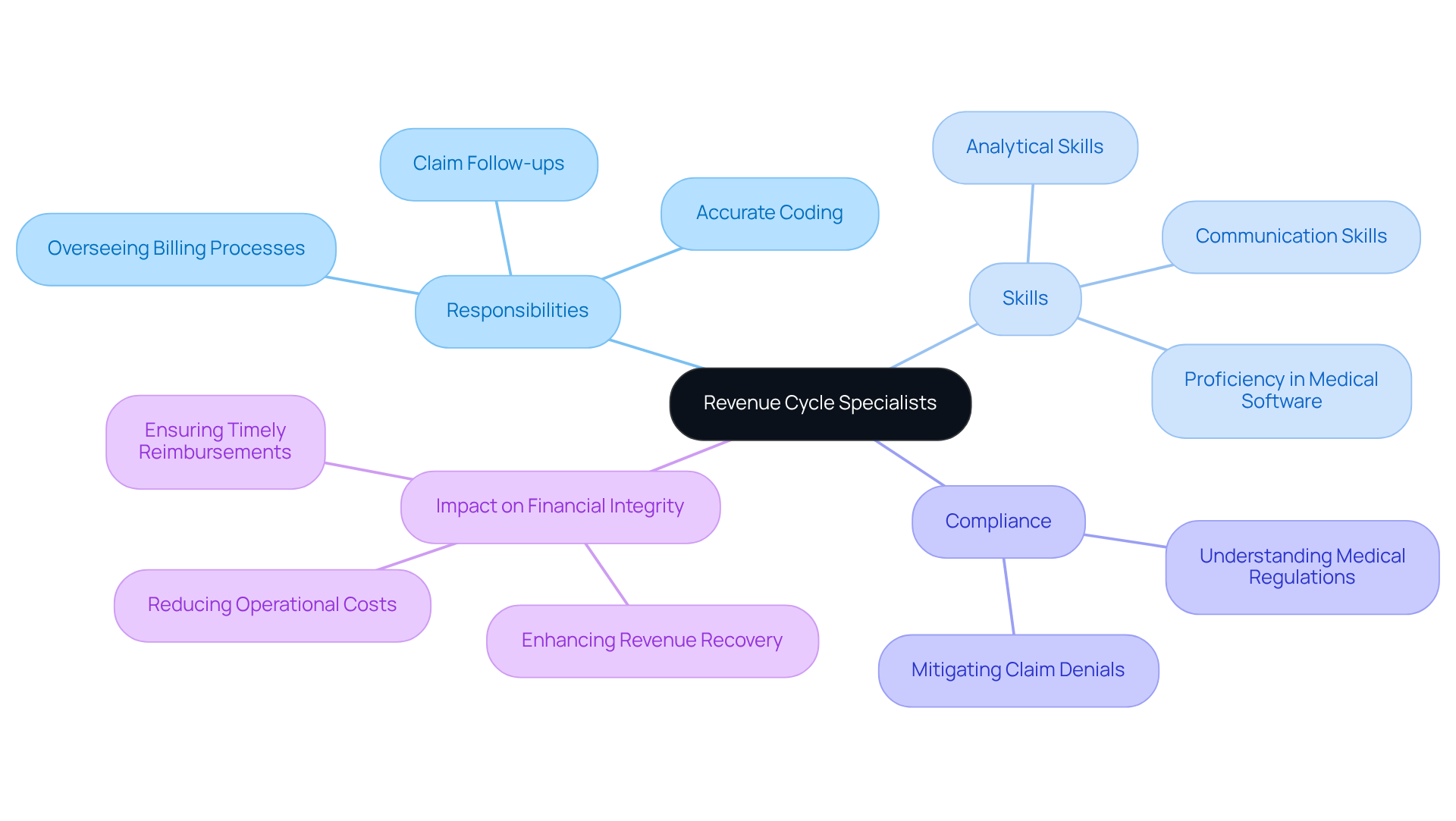
Revenue cycle specialists play a pivotal role in safeguarding the financial integrity of healthcare organizations, particularly within behavioral and mental health practices. Their responsibilities encompass overseeing billing processes, ensuring accurate coding, and following up on outstanding claims, particularly regarding underpayments, unprocessed claims, and aging claims. Analytical skills are vital for evaluating financial data and spotting trends that affect revenue. Effective communication is also essential, as RCS collaborate with insurance companies, medical providers, and patients to resolve billing issues.
Proficiency in medical software systems, such as electronic health records (EHR) and practice management tools, is critical for RCS to streamline operations and enhance efficiency. A comprehensive understanding of medical regulations ensures compliance and mitigates the risk of claim denials, which can cost hospitals approximately $262 billion annually. The ability to adapt to evolving regulations and technologies is increasingly important as the healthcare landscape continues to change.
Statistics show that coding errors frequently lead to claim denials, highlighting the need for RCS to achieve over 95% accuracy in coding productivity. Furthermore, fewer than 15% of claims should be over 90 days old in accounts receivable, underscoring the significance of timely billing methods. A compliance-first approach is essential, guaranteeing adherence to regulations and payer rules in all billing methods. Case studies demonstrate that implementing robust appeals mechanisms can significantly recover lost revenues, enhancing financial viability for practices. Ultimately, the expertise of a revenue cycle specialist is vital for balancing quality care with financial sustainability in an ever-evolving healthcare environment.
Trace the Evolution of the Revenue Cycle Specialist Role
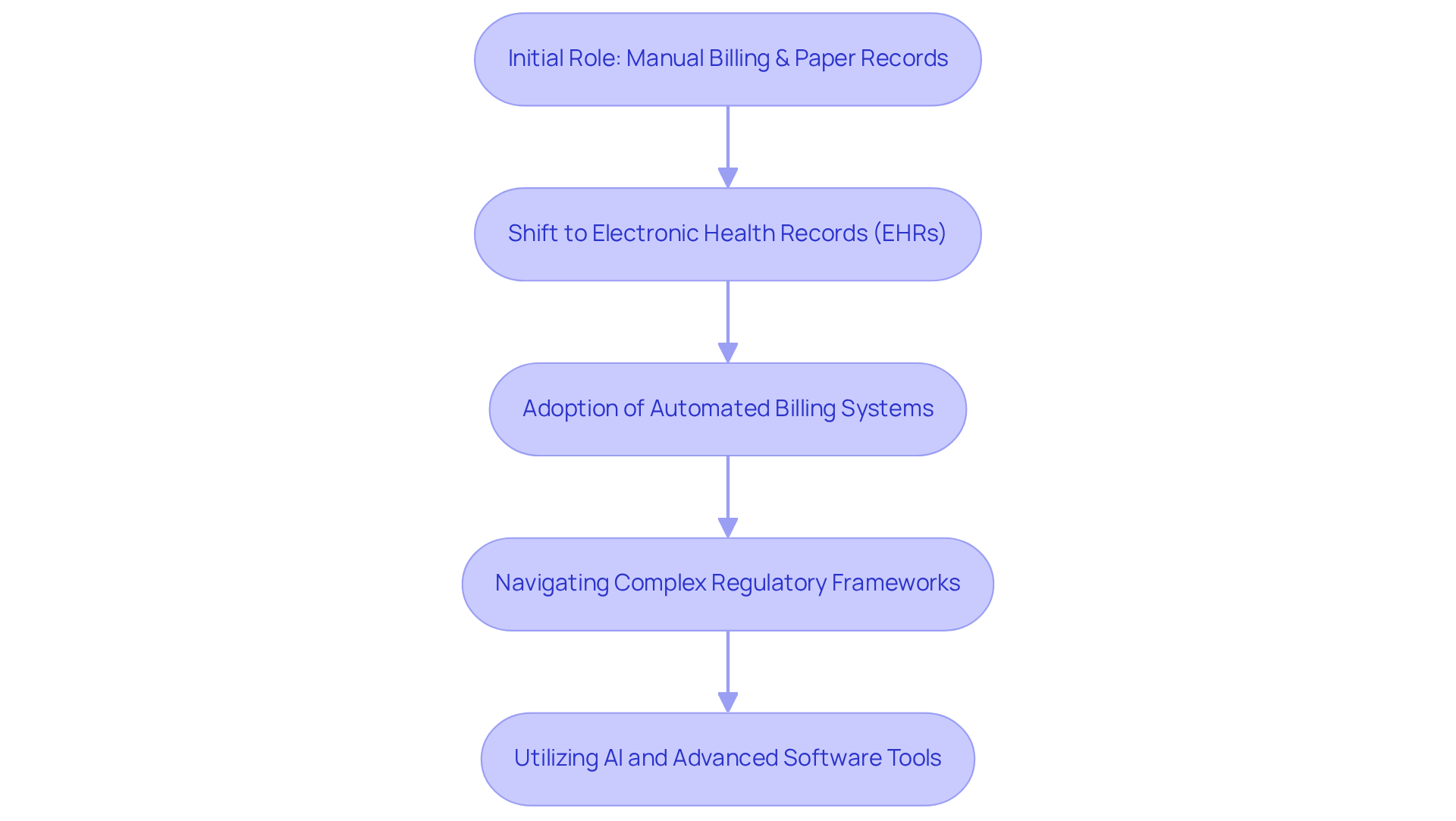
The role of the revenue cycle specialist has transformed dramatically, driven by technological advancements and evolving healthcare policies. Initially focused on manual billing and paper records, the shift to electronic health records (EHRs) and automated billing systems has expanded the responsibilities of these specialists. Today, they navigate complex regulatory frameworks, utilize sophisticated software tools, and apply optimal methods in financial cycle management.
Statistics indicate that as of 2026, the U.S. financial cycle management market is valued at around $90.6 billion, highlighting the essential nature of fiscal well-being in medical organizations. Moreover, a survey revealed that 42% of finance professionals in the medical sector are exploring AI or automation in their billing cycle processes, indicating a shift towards more efficient and accurate invoicing practices.
Case studies illustrate this evolution: for instance, medical organizations are increasingly integrating AI-driven automation to enhance billing processes, reduce errors, and improve financial performance. This shift streamlines operations and enables specialists to concentrate on strategic decision-making instead of routine tasks. As the landscape continues to evolve, the need for skilled revenue cycle specialists who can adapt to these advancements is more essential than ever, ensuring that providers maintain financial viability while delivering quality care.
At Healthcare Partners Consulting & Billing, LLC (HPC), we recognize how crucial this evolution is for healthcare providers. Our veteran-owned firm specializes in comprehensive financial cycle management tailored primarily to behavioral and mental health practices. We empower healthcare providers by removing administrative burdens, allowing them to focus on patient care. Our commitment to integrity, transparency, and innovation ensures that our clients receive the highest level of support in navigating the complexities of revenue cycle management. To assess your practice’s profitability, we invite you to take our quick quiz, which provides personalized recommendations to enhance efficiency and billing accuracy. This evolution underscores the necessity for specialists to remain agile and informed in a rapidly changing environment.
Conclusion
The role of revenue cycle specialists is pivotal in ensuring the financial health of healthcare organizations amidst increasing complexities. These professionals are essential in managing the intricate financial processes that ensure medical organizations remain financially viable while delivering quality patient care. Revenue cycle specialists oversee billing, collections, and compliance, helping providers navigate the complexities of healthcare reimbursement and focus on patient care.
Throughout the article, key insights have been highlighted regarding the responsibilities and skills required for revenue cycle specialists. Their expertise in verifying insurance eligibility, submitting claims, and ensuring compliance with medical regulations is vital for maintaining cash flow and reducing claim denials. The evolution of this role, particularly with the integration of technology and automation, further emphasizes the need for skilled professionals who can adapt to the changing landscape of healthcare finance. Organizations like Healthcare Partners Consulting & Billing, LLC (HPC) exemplify how dedicated revenue cycle teams can enhance operational efficiency and financial stability.
In a rapidly evolving healthcare environment, the role of revenue cycle specialists is increasingly vital as healthcare systems face mounting financial pressures. Their ability to streamline billing processes and ensure compliance not only safeguards the financial health of medical practices but also enhances the quality of care provided to patients. With healthcare providers facing rising administrative burdens, effective revenue cycle management is essential to empower them. For those seeking to improve their practice’s financial performance, engaging with experts like HPC can provide the necessary support to thrive in this complex landscape. Ultimately, the right support in revenue cycle management can transform financial challenges into opportunities for growth.
Frequently Asked Questions
What is the role of a revenue cycle specialist?
A revenue cycle specialist is responsible for overseeing billing, collections, and income processes to ensure prompt and accurate reimbursement for medical services. Their duties include verifying insurance eligibility, submitting claims, following up on unpaid claims, and ensuring compliance with medical regulations.
How has the role of a revenue cycle specialist evolved?
The role has evolved to incorporate advanced technology and data-driven approaches, focusing on automation to enhance efficiency and reduce manual errors. This evolution helps improve cash flow and decrease days in accounts receivable for organizations.
What are the benefits of effective revenue cycle management?
Effective management of revenue cycle processes stabilizes revenue and allows healthcare providers to prioritize patient care. Organizations that implement these practices often report improved financial health.
How does Healthcare Partners Consulting & Billing, LLC (HPC) support providers?
HPC, a veteran-owned organization with 39 years of experience, aims to empower providers by reducing administrative burdens. They offer a quick quiz to assess profitability, allowing providers to focus more on patient care.