

Introduction
Clinics must navigate the complexities of revenue cycle management (RCM) to ensure financial stability and enhance patient care. This process includes essential administrative tasks, such as patient registration and billing, and it significantly impacts a practice’s profitability and operational efficiency. As healthcare providers face increasing challenges, such as rising claim denials and complex insurance policies, effective RCM strategies can transform these challenges into opportunities for improved patient care and operational success.
Define Revenue Cycle Management in Healthcare
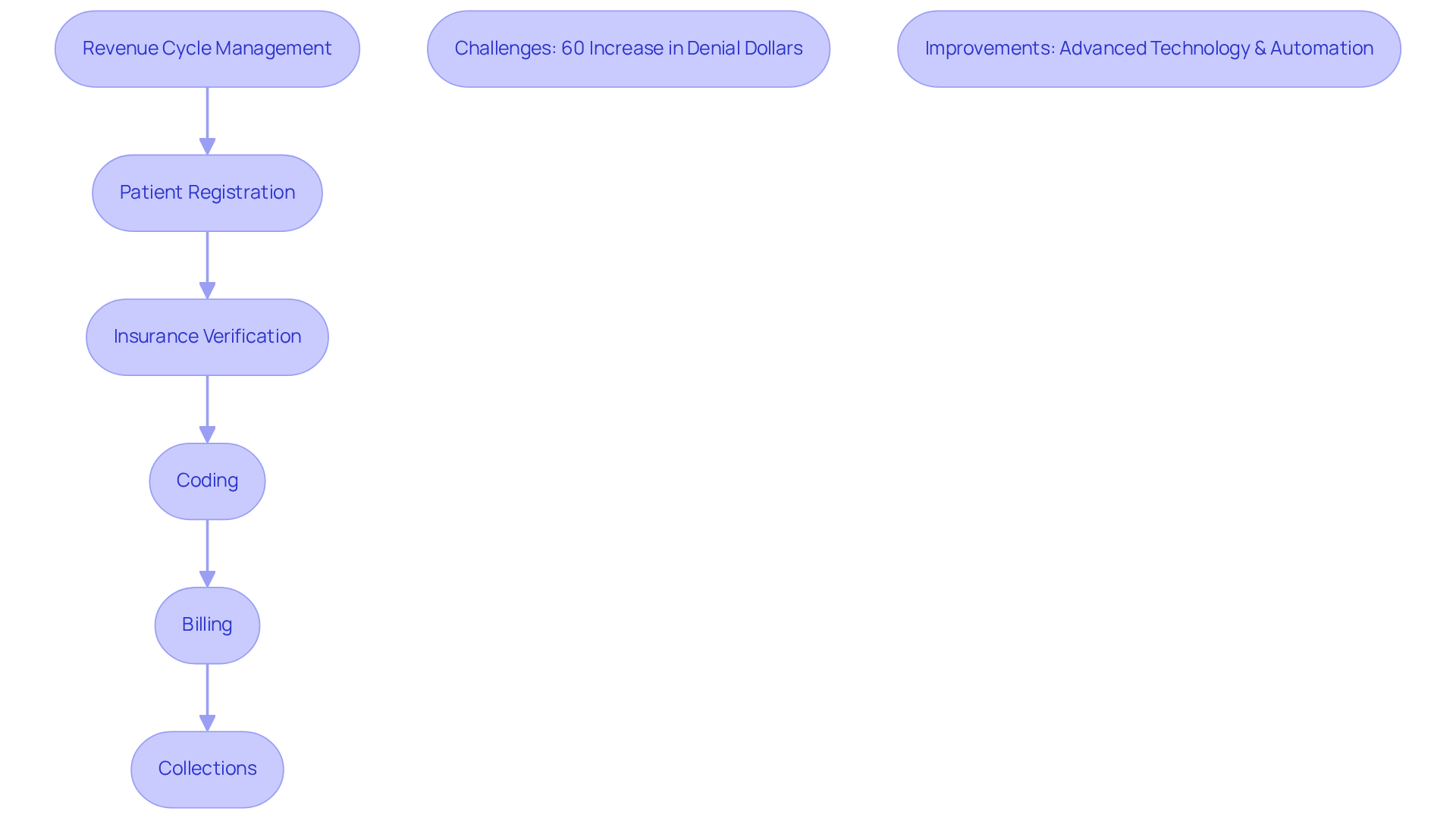
Understanding what’s revenue cycle management is essential as it is a critical process that directly impacts the financial health of medical organizations. This process encompasses key administrative and clinical functions, including:
- Patient registration
- Insurance verification
- Coding
- Billing
- Collections
What’s revenue cycle management is crucial as it ensures that medical providers receive timely and accurate reimbursements, which is vital for maintaining economic stability and operational efficiency in practices.
Recent statistics highlight the challenges faced in RCM, with average denial dollars increasing by 60% in professional settings in 2025 compared to the previous year. This rising denial rate presents a significant challenge for medical practices, threatening their financial health. Case studies demonstrate that practices implementing advanced technology and automation in their RCM processes have seen significant improvements in efficiency and reductions in claim denials. For example, organizations that have embraced predictive analytics and optimized workflows report improved economic outcomes and faster reimbursement cycles.
Understanding what’s revenue cycle management is vital for practices aiming to thrive in a competitive healthcare landscape through the integration of effective RCM strategies.
Explain the Importance of Revenue Cycle Management
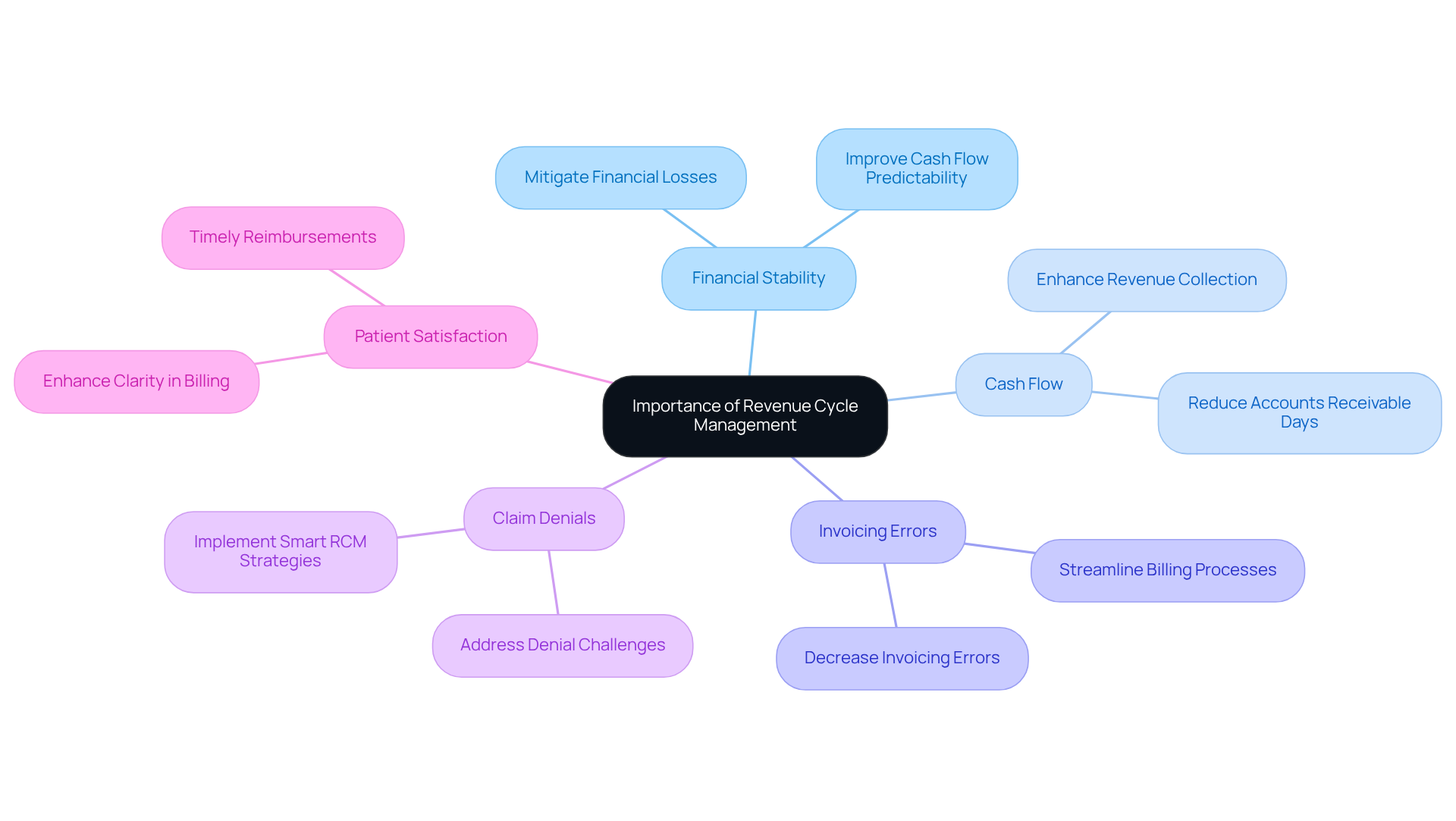
In the realm of healthcare, understanding what’s revenue cycle management is not just important; it is essential for financial stability. Understanding what’s revenue cycle management is vital for maintaining steady cash flow, decreasing invoicing errors, and lowering claim denials. Enhancing the invoicing process allows medical providers to focus more on patient care rather than administrative duties. In 2026, as patient responsibility for payments increases, a well-managed revenue cycle becomes even more critical.
Claim denials are a significant challenge for medical providers, with over one-third reporting losses of 10% or more. This underscores the necessity for robust strategies in what’s revenue cycle management to mitigate financial losses. Additionally, what’s revenue cycle management is crucial as it enhances patient satisfaction through accurate invoicing and timely reimbursements, both vital in today’s competitive healthcare landscape.
Case studies indicate that organizations implementing smart RCM strategies can significantly reduce revenue leakage and improve cash flow predictability, ultimately fostering a more sustainable practice. As financial pressures mount, the ability to manage revenue cycles effectively will determine the viability of practices in an increasingly competitive market.
Outline the Key Components of Revenue Cycle Management
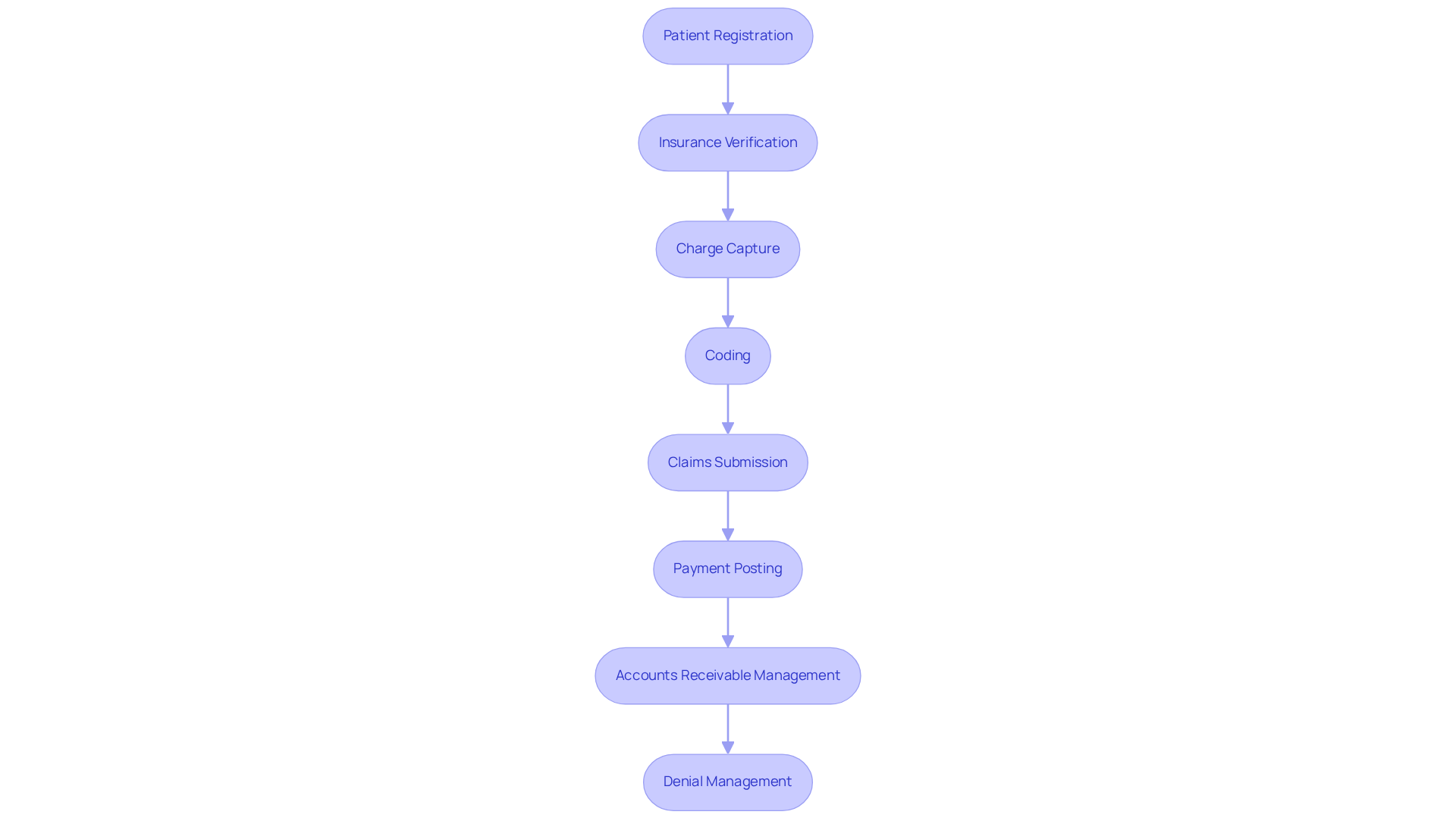
Effective Revenue Cycle Management (RCM) is critical for healthcare providers to understand what’s revenue cycle management in order to ensure accurate reimbursement for services rendered. Key components of RCM include:
- Patient Registration: This initial step involves gathering and confirming patient information prior to services being provided. A well-executed preregistration process can significantly reduce downstream collection issues. It also ensures timely payments, establishing the groundwork for precise invoicing.
- Insurance Verification: Confirming patient insurance coverage and benefits is essential to ensure accurate processing and minimize claim denials. Effective verification processes drive faster payments and enhance cash flow, leading to a more stable financial environment for healthcare providers.
- Charge Capture: Accurately documenting all services provided ensures that all billable items are captured. Without accurate documentation, potential revenue may be lost. Regular audits can improve charge capture accuracy and prevent revenue loss.
- Coding: Translating medical services into standardized codes for billing purposes is vital for compliance and reimbursement accuracy. Automation in coding can help flag documentation issues and reduce errors.
- Claims Submission: This step involves sending claims to insurance companies for reimbursement. Timely and accurate submissions can significantly impact cash flow. Submitting clean claims on the first attempt is crucial to avoid costly rework and maximize potential payouts.
- Payment Posting: Documenting payments received from insurers and patients is essential for maintaining precise records and tracking revenue. Effective payment posting processes assist in ensuring that practices can meet their monetary obligations.
- Accounts Receivable Management: Monitoring outstanding claims and following up on unpaid bills helps ensure that revenue is collected efficiently. Strategic accounts receivable recovery solutions can improve cash flow.
- Denial Management: Addressing and resolving denied claims is essential for recovering lost revenue and improving overall financial performance. Regular analysis of denial trends can help identify areas for improvement.
Understanding what’s revenue cycle management is crucial for service providers, especially in mental and behavioral health, to receive efficient and accurate reimbursement for their services. Healthcare Partners Consulting & Billing, LLC (HPC) emphasizes a compliance-first approach, leveraging 39 years of experience to empower practices by removing administrative burdens and allowing them to focus on patient care. With adaptable service plans customized to the scale of your practice and clear pricing models, including percentage-based and flat-rate options, HPC enhances operational efficiency and decreases claim denials. Ultimately, a robust RCM process not only safeguards revenue but also enhances the quality of patient care.
Identify Challenges in Revenue Cycle Management
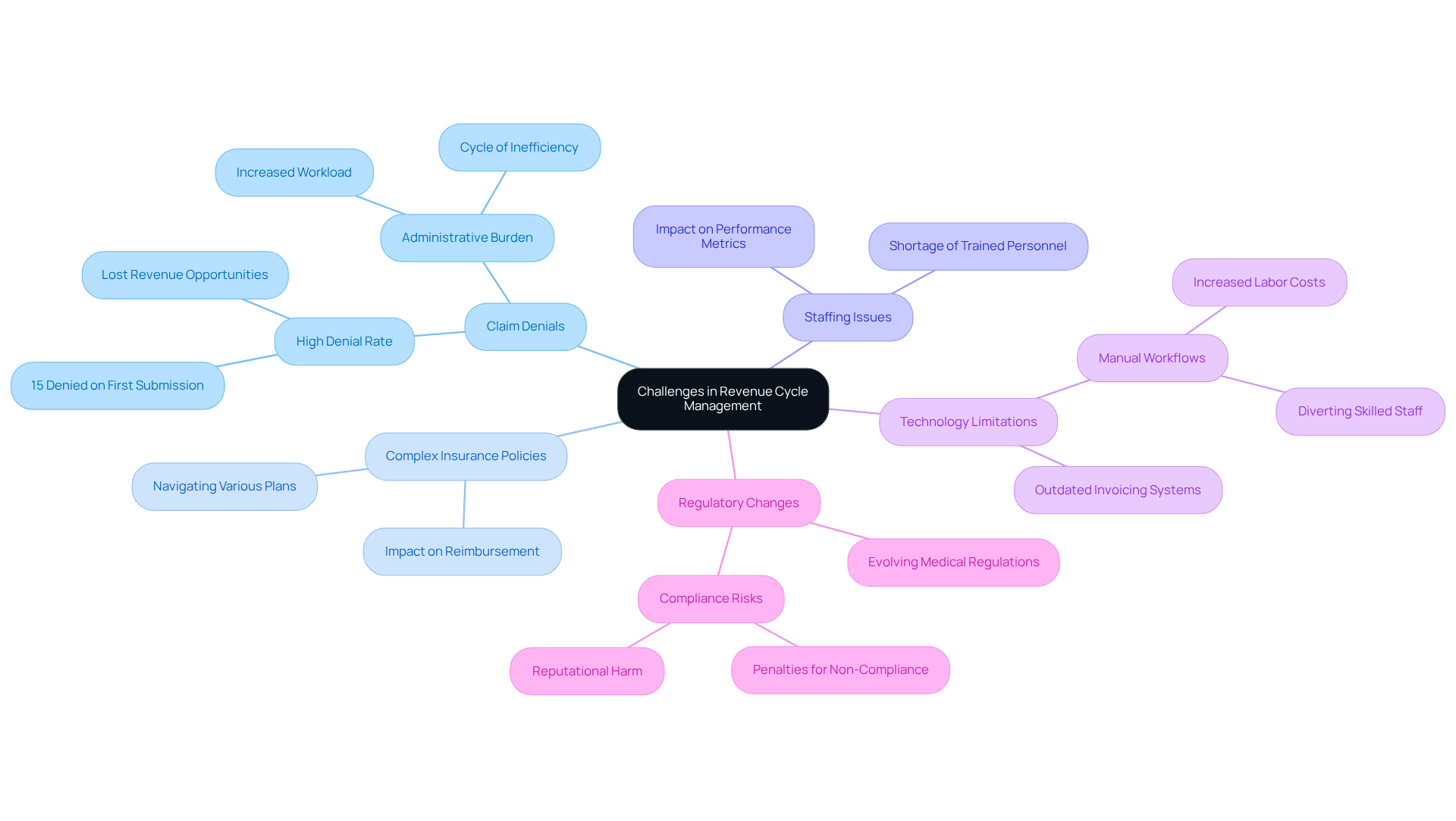
What’s revenue cycle management highlights significant challenges that can adversely impact a medical provider’s financial performance. Key challenges include:
- Claim Denials: High rates of claim denials, with nearly 15% of healthcare claims denied on the first submission, can lead to substantial revenue loss and increased administrative workload. This high denial rate not only impacts revenue but also burdens administrative resources, creating a cycle of inefficiency. Many denied claims go unaddressed, leading to lost revenue opportunities. Healthcare Partners Consulting (HPC) specializes in addressing these issues, leveraging 39 years of experience to improve revenue and reduce denials through tailored solutions, including flexible service plans that adapt to the specific needs of practices.
- Complex Insurance Policies: Navigating the intricacies of various insurance plans complicates reimbursement processes, making it difficult for providers to ensure accurate payments. HPC’s expertise in specialty-focused financial management, particularly for mental and behavioral health, empowers providers to navigate these complexities effectively.
- Staffing Issues: A shortage of trained personnel in medical billing and coding exacerbates inefficiencies in managing the revenue cycle. This shortage is a top concern for healthcare executives, as it directly affects the ability to maintain consistent performance metrics. HPC offers flexible service plans tailored to the size of practices, ensuring that staffing challenges do not hinder financial performance.
- Technology Limitations: Outdated or inadequate invoicing systems hinder effective RCM. Many organizations rely on manual workflows, which increase labor costs and divert skilled staff from strategic activities. HPC offers contemporary, compliant solutions that optimize invoicing processes and improve operational efficiency.
- Regulatory Changes: Keeping up with evolving medical regulations, such as new Medicare proposed rules, can be challenging and may require constant adjustments to invoicing practices. Non-compliance can lead to severe penalties and reputational harm. HPC prioritizes compliance to keep practices aligned with regulations.
Addressing these challenges is essential for maintaining financial health and understanding what’s revenue cycle management while prioritizing patient care in an increasingly complex healthcare landscape. Personalized consultations with HPC can help identify the optimal administrative solutions for healthcare practices, ultimately transforming their medical billing workflows.
Conclusion
For healthcare providers, mastering revenue cycle management (RCM) is crucial to achieving financial stability while delivering high-quality patient care. Effective management of the RCM process enables clinics to secure timely reimbursements and reduce administrative burdens. This, in turn, enhances the quality of care delivered to patients. Empowering healthcare providers to focus on patient care highlights the critical need for a well-structured RCM system.
Key insights from the article emphasize the essential components of RCM, including:
- Patient registration
- Insurance verification
- Coding
- Denial management
Each of these elements plays a vital role in ensuring accurate billing and minimizing revenue loss. Clinics often face challenges such as high claim denial rates and complex insurance policies, which threaten their financial stability. By leveraging expertise in behavioral and mental health billing, Healthcare Partners Consulting & Billing, LLC (HPC) provides tailored solutions that address these challenges while fostering compliance and operational efficiency.
In conclusion, prioritizing revenue cycle management is imperative for healthcare providers navigating an increasingly complex landscape. By prioritizing RCM, healthcare practices can not only secure their financial future but also elevate the standard of care they provide to patients. Embracing a compliance-first approach and seeking expert guidance from HPC can empower practices to thrive, ensuring that they remain focused on what truly matters-providing exceptional care to their patients. For further assistance, reach out to HPC at info@hpcbilling.com or call 888-517-4992 to explore how tailored RCM solutions can transform your practice.
Frequently Asked Questions
What is revenue cycle management (RCM) in healthcare?
Revenue cycle management (RCM) in healthcare is a critical process that encompasses key administrative and clinical functions, including patient registration, insurance verification, coding, billing, and collections.
Why is revenue cycle management important for medical organizations?
RCM is essential because it ensures that medical providers receive timely and accurate reimbursements, which is vital for maintaining economic stability and operational efficiency in practices.
What recent challenges have been observed in revenue cycle management?
Recent statistics indicate that average denial dollars have increased by 60% in professional settings in 2025 compared to the previous year, posing a significant challenge to the financial health of medical practices.
How can advanced technology and automation impact revenue cycle management?
Practices that implement advanced technology and automation in their RCM processes have reported significant improvements in efficiency and reductions in claim denials, leading to better economic outcomes and faster reimbursement cycles.
What strategies can help practices thrive in a competitive healthcare landscape?
Integrating effective revenue cycle management strategies, including the use of predictive analytics and optimized workflows, is vital for practices aiming to succeed in a competitive healthcare environment.